Grenades: Infantry Explosive Charges
The Systems Alliance Mark 14 and Its Variants
Grenades were hand-tossed explosive charges used by infantry across the galaxy. The Systems Alliance fielded the Mark 14, a fin-stabilized grenade that could be thrown like a discus or lobbed over cover, stuck to surfaces as a makeshift mine, and loaded with everything from incendiary paste to salted micro-nukes.
Grenades were hand-tossed explosive charges carried by infantry throughout the galaxy, appearing in many forms and used by soldiers of every species. Among the most fully documented was the model issued by the Systems Alliance, a versatile charge that could be thrown, planted, or remotely detonated and loaded with a wide range of warheads. (Mass Effect; Mass Effect 2; Mass Effect 3)
The Mark 14 grenade#
The standard grenade of the Systems Alliance was the Mark 14, distinguished by a set of retractable stabilizing fins that gave it two distinct throwing modes. With the fins extended, the grenade could be hurled like a discus and would glide across long distances, allowing a soldier to reach a distant target. With the fins retracted, it could instead be lobbed in a high arc over walls and other obstacles to strike enemies behind cover. (Mass Effect)
Most grenades, the Mark 14 among them, could adhere to flat surfaces and ran on a fuse of roughly ten seconds. This let them be planted as makeshift shaped-charge mines or booby traps rather than simply thrown. A soldier did not have to wait out the fuse, either: the charge could be triggered to detonate early by a signal from the built-in communications gear of any military hardsuit, giving the user precise control over the moment of the blast. (Mass Effect)
Warhead variants#
The Mark 14 was designed to be modified in the field for a range of purposes, so a single grenade body could be adapted to the needs of a given engagement. Common upgrades included high explosive charges, disorienting flashbang charges, and thermite paste incendiary charges. More exotic loadouts were also possible, among them charged-particle proton charges, Bose-Einstein condensate "cryo" charges, and cobalt-salted micro-nukes, the last representing some of the most destructive ordnance an individual soldier could carry. (Mass Effect)
Frequently asked questions
- What grenade did the Systems Alliance use?
- The Systems Alliance issued the Mark 14 grenade. It was designed with retractable stabilizing fins so that it could be thrown like a gliding discus over long distances when the fins were extended, or lobbed over walls and obstacles when they were retracted.
- Could grenades be used as mines?
- Yes. Most grenades could adhere to flat surfaces and ran on a roughly ten-second fuse, which let them serve as makeshift shaped-charge mines or booby traps. They could also be triggered to detonate early by a signal from the built-in communications gear of any military hardsuit.
- What kinds of grenade charges existed?
- The Mark 14 could be modified in the field for different effects. Common upgrades included high explosive, flashbang, and thermite paste incendiary charges, while more exotic varieties included charged-particle proton charges, Bose-Einstein cryo condensates, and cobalt-salted micro-nukes.
Sources
- GameMass Effect, BioWare, 2007
- GameMass Effect 2, BioWare, 2010
- GameMass Effect 3, BioWare, 2012
Spotted a factual error or a primary source we missed? Email a correction. Every flagged claim gets reviewed.
Also in Systems Alliance
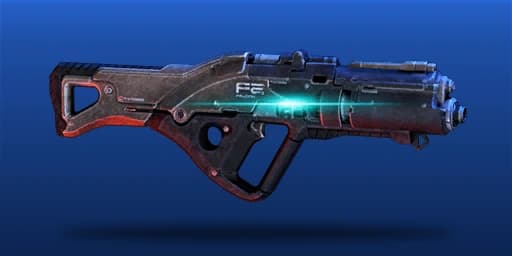
M-37 Falcon: Alliance Grenade Launcher Rifle
The M-37 Falcon was a Systems Alliance assault rifle that launched 25 millimeter mini-grenades instead of conventional rounds. Lighter and more accurate than most grenade launchers, it relied on a field fabrication kit to produce its specialized ammunition, leaving thermal clips as its only real constraint.
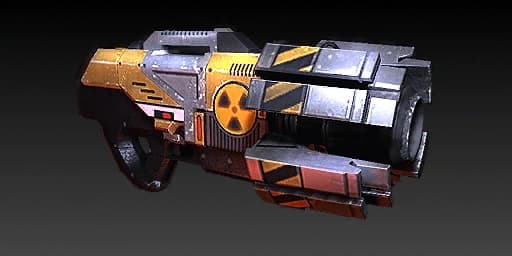
M-920 Cain: The Nuke Launcher
The M-920 Cain was a heavy weapon nicknamed the Nuke Launcher, a portable particle accelerator that hurled a high-explosive round capable of raising a mushroom cloud on impact. Despite the spectacle, its detonations produced no fallout.
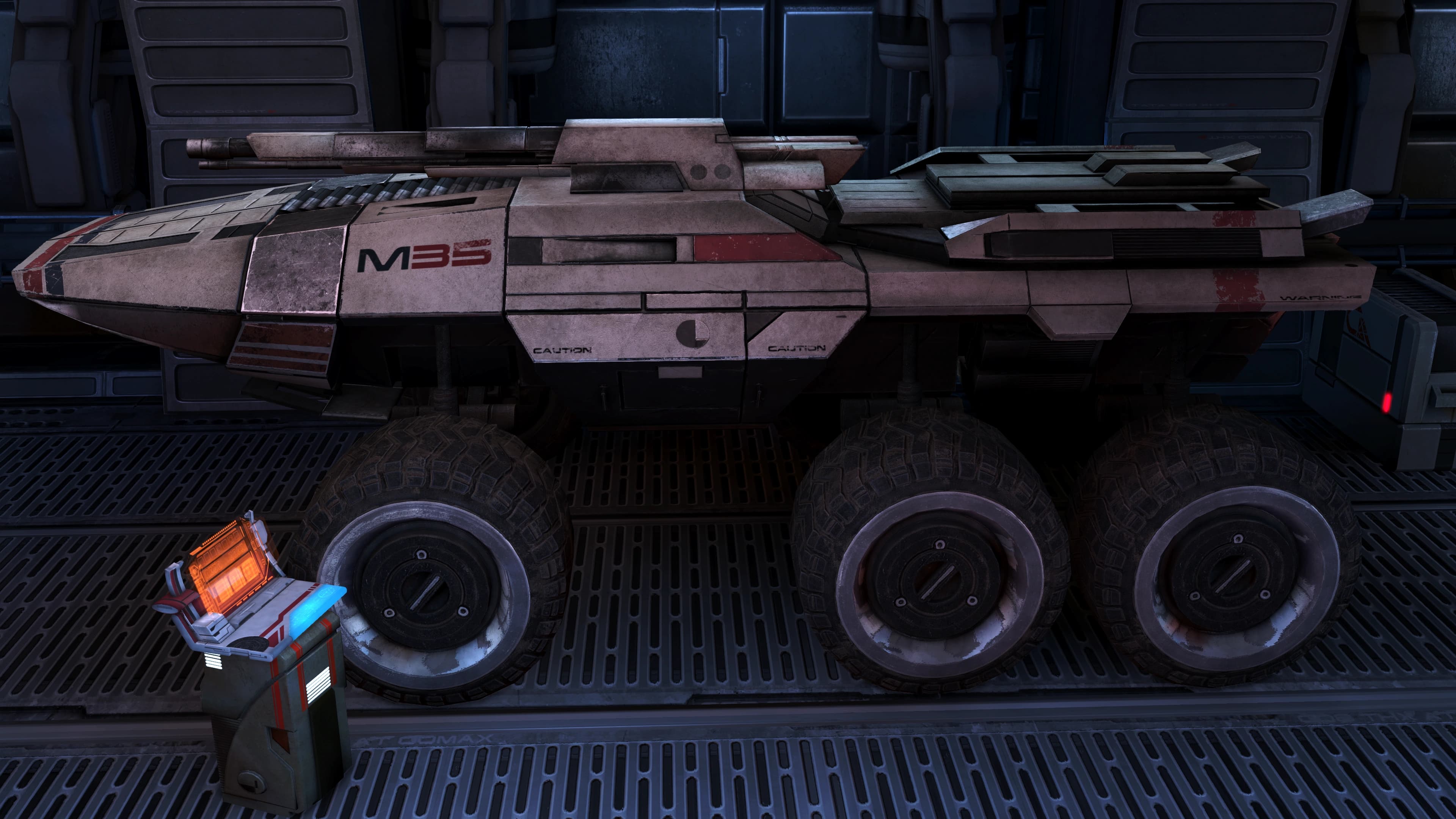
M35 Mako: the Normandy's air-dropped fighting vehicle
The M35 Mako was a Systems Alliance infantry fighting vehicle designed for rapid deployment from frigates onto any world. Compact, environmentally sealed, and famously rugged, it served as Commander Shepard's groundside transport during the hunt for Saren.
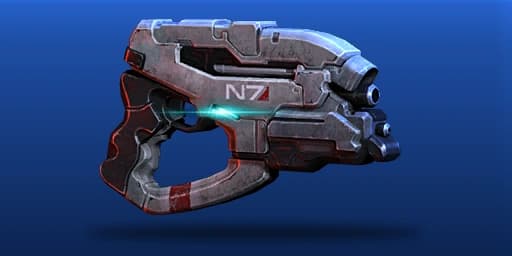
N7 Eagle: Alliance Automatic Pistol
The N7 Eagle was a compact, fully automatic pistol developed by the Systems Alliance as a redesign of the Phalanx handgun. Accurate and rapid firing, it was produced under the Alliance's Offensive Handgun Project and named after a classic Earth pistol, the Desert Eagle.
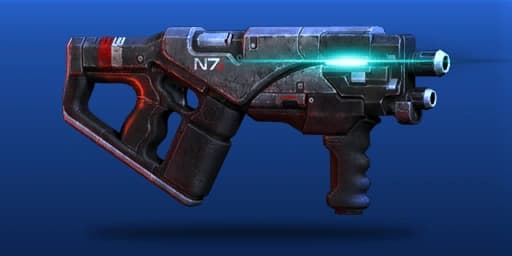
N7 Hurricane: Submachine Gun
The N7 Hurricane was a fully automatic submachine gun valued for its rapid rate of fire and suppressive power. Though some militaries passed it over for its lower accuracy, the Systems Alliance embraced it, making it standard issue for many of its squadrons.
Get new articles in your inbox
No spam. New lore drops, canon conflicts, and deep dives only when they’re worth reading.
Some links on Lore Fortress are affiliate links. If you buy through them we earn a small commission at no extra cost to you.