Franchise
God of War
The full reference to the God of War universe: every character, every god, every realm, and the real story of Kratos, the Olympian pantheon and the Norse Nine Realms, with citations across the God of War games and the companion material.
311 entries published, drawn from the God of War games, across the 11 cross-referenced topic categories below.
Pillar deep-dives
Long-form pieces under a named byline. The kind of article we wished existed when we first read the canon.
Long read · joe
Acmon: the elder of the thieving Kerkopes
Acmon was one of the Kerkopes, a pair of thieving monkey-like brothers who dwelt in the Laconian Woods. Blue-furred and long-suffering, he was the wilier of the two, and he crossed paths with the young Kratos and Deimos during their search through Laconia.
Long read · joe
Adrasteia: the griffin who raised Zeus
Adrasteia was a nymph in the service of Gaia who, with her sisters, hid and raised the infant Zeus beyond the reach of Cronos. For shielding the child she was cursed into the shape of a griffin and imprisoned within Mount Taygetos, until Kratos and Deimos set her free.
Long read · joe
Aegaeon: the Hecatonchires made a prison
Aegaeon was one of the three Hecatonchires, a giant of many hands who broke a blood oath with Zeus and was punished by the Furies. His vast body was transformed into the living dungeon called the Prison of the Damned, in which Kratos was once chained.
Long read · joe
Aesir Royal Family: the Ruling Dynasty of Asgard
The Aesir Royal Family was the ruling dynasty of gods who reigned from Asgard over the Nine Realms. Descended from the first god Buri and led by Odin the Allfather, the line counted Odin's brothers Vili and Ve and his sons Thor, Tyr, Heimdall, and Baldur among its most prominent members.
Long read · joe
Aesir-Vanir War
The Aesir-Vanir War was the long and brutal conflict between the two tribes of Norse gods, fought ages before Kratos came to the Northlands. It ended in an uneasy peace sealed by the marriage of Odin and Freya, only for Odin's treachery to reignite it.
Long read · joe
The Aesir
The Aesir were one of the two tribes of Norse gods, natives of Asgard known for their war-like nature and their hunger for knowledge. Descended from the slain primordial Ymir and ruled by Odin, they claimed dominion over all creation, waging genocide upon the Jotnar and war upon the Vanir before their fall in Ragnarok.
Long read · joe
The Afterlife
The Afterlife was the realm to which the dead passed, called the Underworld among the Greeks and Helheim among the Norse. Existing as physical places as much as spiritual ones, the various afterlives were ruled by powerful gods who judged the dead and shepherded their souls, with a different realm awaiting those who died within each mythology.
Long read · joe
Alchemist's Ring
The Alchemist's Ring was a green ring that held the soul of the dwarven alchemist Andvari, who locked himself within it to escape the Soul Eater of the Volunder Mines. Recovered by Kratos and Atreus, the ring still spoke with the voice of the dwarf trapped inside.
Long read · joe
Alecto
Alecto was the Queen of the Furies and the Goddess of Anger, the sister who ruled the trio that hunted Kratos. She mated with Ares to bear the disowned Orkos, ensnared her victims in illusion and black goo, and transformed into a monstrous sea creature before falling to the Spartan's blades.
Long read · joe
Alfheim
Alfheim was the realm of the Light and Dark Elves, divided by a centuries-long war over the Light of Alfheim, the source that powered the Bifrost. Kratos and Atreus came to claim a portion of the Light and ended up turning the war once more.
Long read · joe
Alrik
Alrik, the Barbarian King, was the leader of the Barbarian horde from the east and one of Kratos' oldest enemies. His assault drove Kratos to pledge his soul to Ares, beginning the Spartan's tragedy, and his hatred outlasted even death.
Long read · joe
Alvíss Stonefoot: the Warden of Svartalfheim
Alvíss Stonefoot was a dwarf of Svartalfheim, renowned as its warden. With his sharp mind he trapped the most dangerous creatures of the Nine Realms, and a great statue was raised in his honor for the protection he gave his people.
Long read · joe
Amphitrite
Amphitrite was the Olympian goddess of the sea and the wife of Poseidon. A chamber and a great statue were dedicated to her deep within Pandora's Temple.
Long read · joe
Amulet of Uroborus: the gem that bent time
The Amulet of Uroborus was a golden amulet set with a blue-green gem that could manipulate time and space. Stolen from the Oracle Aletheia and turned against Kratos, it passed into his hands and let him rebuild what had been broken.
Long read · joe
Amulet of Yggdrasil
The Amulet of Yggdrasil was a piece of jewellery Kratos claimed after slaying the dragon Nidhogg. Worn as part of his armour, it held empty settings into which he fitted enchantments gathered from across the Nine Realms.
Long read · joe
Ancient Egypt
Ancient Egypt was a distant southern land, home to the Egyptian gods and to a civilization both old and advanced. Known as the River Empire and the Land of the Pharaoh, it touched the saga of Kratos from the wars of Greece to the treasures of the Norse realms.
Long read · joe
Andvari's Hammer: the lost tool of the master smith
Andvari's Hammer was a smithing tool that belonged to Andvari, the renowned Dwarven alchemist and old friend of Brok. Long after Andvari's disappearance, Kratos recovered the hammer from the depths of the Landsuther Mines at Brok's request.
Long read · joe
Andvari: the enchanter trapped in a ring
Andvari was a dwarven enchanter and master of soul magic who created the dreaded Soul Eaters. When one of his own creations turned on him, he sealed his soul inside his ring to survive, and in that form he aided Kratos and Atreus before being lost.
Long read · joe
Angrboda
Angrboda was one of the last Jotnar of Jotunheim, a young giantess of Ironwood whose destiny was to reveal to Atreus his own. She became his closest friend and the keeper of the wolf Fenrir, and through her paintings she guided the course of his fate.
Long read · joe
Aphrodite's Handmaidens
Aphrodite's Handmaidens were two mortal women who served and attended the Goddess of Love in her chamber upon Olympus. Among the few mortals who showed no fear of Kratos, they remained at their mistress's side through the fall of the city.
Long read · joe
Aphrodite
Aphrodite was the Olympian Goddess of Love and Beauty, wife of the smith Hephaestus and one of the few deities to favor Kratos. She aided the Ghost of Sparta in Athens and remained in her chamber through the fall of Olympus.
Long read · joe
Apollo
Apollo was the Olympian God of Light, Music, the Sun, and Archery, the son of Zeus and twin of Artemis. Though he never appeared in person during the fall of Greece, his Flame guided Kratos to the Tree of Life, his Bow passed through the Underworld, and his colossal statue on Delos was raised once more by the Spartan's hand.
Long read · joe
The Arena
The Arena, also called the Forum, was a small coliseum at the edge of Mount Olympus where the gods watched and joined in battle. Hercules commanded it for his own amusement, and within it Kratos slew his half-brother.
Long read · joe
Ares
Ares was the first Olympian God of War, the eldest son of Zeus and Hera and the most hated god on Olympus. Coveting his father's throne, he tricked Kratos into killing his own family to forge the perfect weapon, and so set in motion the fall of the Gods before dying at that same Spartan's hand.
Long read · joe
Arms of Sparta
The Arms of Sparta were the spear and shield Kratos carried as a mortal general before he served Ares. The Last Spartan kept them in his absence and returned them to him during the search for Deimos, after which Kratos gave them to his brother and left them at his grave.
Long read · joe
Artemis
Artemis was the Olympian Goddess of the Hunt, daughter of Zeus and twin sister of Apollo. When Ares besieged Athens, she turned the beasts of the wild against his armies, and later gave Kratos the Blade of Artemis, a weapon she had wielded against the Titans, to aid him in the conquest of Pandora's Temple.
Long read · joe
Asgard
Asgard was the realm of the Aesir gods, perched in the crown of Yggdrasil and ruled by Odin from the hall of Gladsheim. Behind the great wall of Hrimthur it stood as a fortress against the prophesied doom of Ragnarok, until Kratos breached it and the realm fell.
Long read · joe
Athena
Athena was the Olympian Goddess of Wisdom, patron of Athens and chief ally of Kratos through his quests against Ares. She sacrificed herself to save Zeus, ascended beyond the Gods, and in the end turned against the very Spartan she had guided when she sought the power of Hope for herself.
Long read · joe
Athens
Athens was the great Greek city of the goddess Athena, a hub of culture and worship. When Ares laid siege to it, Kratos was sent to save the city, a quest that ended with his slaying of Ares and his rise as the new God of War.
Long read · joe
Atlantis
Atlantis was the great sea-faring city of Poseidon, home to his mightiest temple and guarded by the monster Scylla. It was where Kratos found his dying mother Callisto, and his battle there sank the ancient city beneath the waves.
Long read · joe
Atlas
Atlas was the four-armed General of the Titans, strongest of his kind, who hurled mountains in the great war. Condemned by Kratos to bear the world atop the Pillar of the World, he later aided the same Spartan against Zeus.
Long read · joe
Atreus
Atreus was the son of Kratos and the Jotunn Faye, born in Midgard and given the hidden name Loki. Across two great journeys he grew from a sickly boy into the prophesied champion of the Giants, the god of mischief whose fate was bound to Ragnarok.
Long read · joe
Atropos
Atropos was the eldest and cruelest Sister of Fate, the cutter who ended every life with her razor claws. She dragged Kratos into his own past to undo him, but the Spartan turned her sisters against one another and sealed her within a shattered mirror.
Long read · joe
Avalon
Avalon was a hidden land of the Fae far from the Nine Realms, ruled by the faerie King Oberon and his queen Titania. It was the homeland of Mimir before he wandered into the Norse world, a place of mischief, magic, and the Goodfellows.
Long read · joe
Baldur's Death
Baldur's death was the slaying of the Aesir god of light at the hands of Kratos, made possible only after the spell of invulnerability his mother Freya had laid upon him was broken by a mistletoe arrow. It served as the prelude to Fimbulwinter and the coming of Ragnarök.
Long read · joe
Baldur
Baldur was the Norse God of Light, made invulnerable by his mother Freya and driven mad by a curse that robbed him of all sensation. Sent by Odin to hunt a giant, he crossed paths with Kratos instead, and his death at the foot of Thamur's corpse set Fimbulwinter and Ragnarok in motion.
Long read · joe
Barbarian Hammer: the weapon of the Barbarian King
The Barbarian Hammer was a massive spiked warhammer wielded by Alrik, king of the Barbarians, with the power to summon Cursed Souls from the Underworld. Kratos took it for his own after crushing Alrik in battle.
Long read · joe
Beyla
Beyla was a Dark Elf warrior of Alfheim and the wife of the Light Elf Byggvir. Having fled the endless war over the Light, the two joined Freyr's resistance in Vanaheim, where Beyla stood among the allies who aided Kratos against the forces of Asgard.
Long read · joe
Birgir
Birgir was a Midgardian warrior and former Traveler who discovered that the Path he served was a lie of Odin, and forsook his brethren to fight for the Vanir. Branded a heretic, he became a loyal ally of Freyr in the resistance against Asgard.
Long read · joe
Blade of Artemis
The Blade of Artemis was a great curved sword once wielded by the Goddess of the Hunt to slay a Titan. Bestowed upon Kratos during his war against Ares, it carried him through that campaign and beyond before returning to its mistress.
Long read · joe
Blade of Olympus
The Blade of Olympus was the sword Zeus forged from the heavens and the earth to banish the Titans to Tartarus and end the Great War. Capable of slaying gods and Titans alike, it later held the godly power of Kratos and became one of the most powerful weapons in the world.
Long read · joe
Blade of the Gods
The Blade of the Gods was a colossal sword forged by the gods, set into the ground outside Athens as a footbridge to a great statue of Athena. Grown to the size of a god, Kratos wrenched it free and used it to kill Ares, claiming the mantle of God of War for himself.
Long read · joe
Blades of Athena
The Blades of Athena were the chained blades the goddess Athena bestowed upon Kratos when he became the God of War. They served as his primary weapons during and after his reign on Olympus, until they were ruined in the River Styx and reforged into the Blades of Exile.
Long read · joe
Blades of Chaos
The Blades of Chaos were a pair of fire-imbued chained blades forged in the Underworld for Ares and bound to the arms of Kratos. They became the signature weapons of his Greek era and the symbol of the bloodshed that earned him the name Ghost of Sparta, returning years later in the Norse realms.
Long read · joe
Blades of Exile
The Blades of Exile were a refashioned form of the Blades of Athena, the third and final set of chained blades that Kratos wielded in Greece. Created by the astral form of Athena from his ruined weapons, they carried him through his last war against Olympus.
Long read · joe
Boreas
Boreas was the Olympian God of the North Wind, Storms, and Winter, who led the Chariot of Helios across the sky as the Devouring One. Awakened by Kratos to find the captive Sun God, he lent his name and his frozen power to shrines, weapons, and beasts scattered across the snowbound reaches of Greece.
Long read · joe
Bow of Apollo
The Bow of Apollo was a fire-imbued bow named for the sun god Apollo. Kratos took it from Peirithous, the doomed lover of Persephone, who was imprisoned in the Underworld within a cage of brambles.
Long read · joe
Bragi
Bragi was the Norse god of poetry and music, husband of Idunn and a member of the Aesir. Though he never appeared in person, he was named among the gods who witnessed the First Great War.
Long read · joe
Brok
Brok was a dwarven blacksmith of the Nine Realms who, with his brother Sindri, forged both Thor's hammer Mjolnir and the Leviathan Axe. Crude, loyal, and unmatched at his craft, he aided Kratos and Atreus across their journeys until Odin took his life.
Long read · joe
Calliope
Calliope was the beloved daughter of Kratos and Lysandra, a gentle and innocent child of Sparta. Killed by her father during a frenzy contrived by Ares, she found rest in the Elysium Fields, only for Kratos to be forced to abandon her there to save the world.
Long read · joe
Callisto
Callisto was a Spartan woman and one of the many mortal lovers of Zeus, mother of Kratos and Deimos. Kept hidden in Atlantis and cursed by the King of the Gods, she died at her own son's hands while trying to name his father.
Long read · joe
The Captain
The Captain was the leading sailor of a fleet that sailed the Aegean Sea in the Greek era, swallowed by the Hydra King when his ship was cornered at sea. Kratos retrieved a key from him and let him fall to his death, a casual cruelty that haunted the Spartan for the rest of his life.
Long read · joe
Castor and Pollux
Castor and Pollux were conjoined Spartan twins, one mortal and one a son of Zeus, who seized the Temple of the Oracle at Delphi and posed as its prophet. Acting for the Furies, they imprisoned the true Oracle and stood as the first enemies Kratos faced in his quest to be free of his rage.
Long read · joe
Castor
Castor was the mortal Gemini twin who, with his conjoined demigod brother Pollux, usurped the Temple of the Oracle at Delphi and posed as its prophet. A cruel master who slew his own slaves, he wielded the Amulet of Uroborus against Kratos before the Spartan cast him to his death.
Long read · joe
Centaur
The Centaurs were monsters of the Greek world, part man and part horse, once renowned for poetry and wine-making in the forests of Mount Pelion. When the Lapiths encroached on their woods they took up arms, and in time were recruited across Greece for their martial prowess.
Long read · joe
Cerberus: the multi-headed hounds of Hades
The Cerberi were a race of fierce multi-headed hounds, most of them kept as the beasts of Hades in the Underworld. Kratos faced them across many of his journeys, from the breeders of Pandora's Temple to the Mole Cerberus that had swallowed Jason and the Golden Fleece.
Long read · joe
Ceryx
Ceryx was a demigod son of Hermes and a messenger of Olympus. Sent by Zeus to halt Kratos' pursuit of the truth behind the assassination of Argos, he fell to the Ghost of Sparta.
Long read · joe
Charon
Charon was the ferryman who carried the souls of the dead across the River Styx, a servant of Hades and Persephone. When Kratos came to his docks still living, Charon refused him passage and cast him into Tartarus before the Spartan returned to kill him.
Long read · joe
Chaurli: the tree-topped tortoise of Freya
Chaurli was the giant tortoise who sheltered Freya during her exile in Midgard, carrying her home upon his back beneath the great red-leaved tree of his shell. He grew into a quiet fixture of Kratos and Atreus's journeys through the Norse realms.
Long read · joe
Chimera
The Chimera was a great three-natured monster, bearing the heads of a goat and a lion and a serpent for a tail. Loosed as a minion of Olympus, it breathed fire and venom against Kratos in the temples and ruins of Greece.
Long read · joe
Claws of Hades
The Claws of Hades were chained weapons wielded by Hades, god of the Underworld, who used their magic to tear the souls from his enemies. Kratos stole them in battle, claimed the god's own soul with them, and carried them as a means of ripping and summoning the souls of the dead.
Long read · joe
Clotho
Clotho was the youngest of the three Sisters of Fate, the spinner who began each life and decided who would be born. Dwelling in the Loom Chamber of the Palace of the Fates, she warned Kratos against tampering with destiny, and when he defied her she became the only sister he killed in the flesh.
Long read · joe
Colossus of Rhodes
The Colossus of Rhodes was a towering bronze statue of the sun god Helios that stood over the port of Rhodes. Animated by Zeus to destroy Kratos, it tore through the city in pursuit of the Spartan, and its fall left him a mortal once more.
Long read · joe
Cronos
Cronos was the Titan of Time and Harvest, last and mightiest of the Titans born to Gaia and Ouranos. He overthrew his own father, was overthrown by his son Zeus, and was condemned to bear Pandora's Temple before dying at the hands of Kratos.
Long read · joe
Cursed Remains: the rising bones of the dead
The Cursed Remains were animated skeletons that rose from scattered piles of bone to fight the living. Encountered across the Greek lands, they were weak alone but dangerous in numbers, collapsing and reforming to escape a final death.
Long read · joe
Cyclopes: the one-eyed giants of Greece
The Cyclopes were a race of burly, one-eyed giants of the Greek world. Once peaceful shepherds and master craftsmen, they were banished underground, freed by Zeus to fight in the Great War, and bred thereafter as beasts of war.
Long read · joe
Cyclops Berserker
The Cyclops Berserker was the largest and fiercest breed of Cyclops, a club-wielding giant often loosed upon the field by the Beast Lords who rode upon its shoulders. Kratos broke many of these brutes across Greece and faced them again in the trials of Valhalla.
Long read · joe
Cyclops
The Cyclopes were a species of burly, one-eyed giants, once peaceful herders and stonemasons banished to the Underworld before Zeus freed them to fight the Titans. In time they became beasts of war in the armies of the gods, their near-divine strength enough to threaten even demigods.
Long read · joe
Daedalus
Daedalus was the master craftsman of Athens who built the great Labyrinth for Zeus in return for the promise of his lost son Icarus. Driven to madness in years of servitude and chained within his own creation, he was crushed when Kratos set the Labyrinth turning, and died grateful at last to be free.
Long read · joe
Dagr
Prince Dagr was the last surviving son of King Högni of Fjöturlund and the brother of the Valkyrie Sigrún. After King Helgi sacked his kingdom and slaughtered his family, Dagr avenged them by killing Helgi, only to be cursed by his grieving sister.
Long read · joe
Dark Elves
The Dark Elves, or Dokkalfar, were one of the two elven peoples of Alfheim, insectoid beings who dwelt in darkness and waged an endless war against the Light Elves for control of the Light. Their conflict ended only in the days of Ragnarok.
Long read · joe
Deimos
Deimos was the younger brother of Kratos, a Spartan demigod son of Zeus seized as a child to thwart a prophecy of Olympus' fall. After years of torment in the Domain of Death he was freed by his brother, only to be killed by Thanatos, a loss that set Kratos against the gods forever.
Long read · joe
Demeter
Demeter was the Olympian Goddess of the Harvest and Agriculture, a sister of Zeus and mother of Persephone. She held dominion over plants and grain, and her grief at the abduction of her daughter by Hades brought barren winter upon the earth.
Long read · joe
Demigod: the mortal children of the gods
Demigods were the offspring of a god and a mortal, half-human and half-divine. Mortal yet possessed of superhuman strength and the fighting prowess of a god, the worthiest among them could rise to godhood. Kratos himself was one such demigod before he claimed the throne of war.
Long read · joe
Dionysus: the Olympian god of wine
Dionysus was the Olympian god of wine, fertility, festivity, and revelry. Known for his lack of fidelity, he stole the love of Ariadne from the hero Theseus and set in motion the chain of grief that bound Theseus to the service of the Sisters of Fate.
Long read · joe
Dragons
Dragons were massive reptilian predators that roamed the Norse realms, breathing fire laced with lightning and capable of flight. Several distinct kinds existed, from the six-limbed Dragons of Midgard to the wingless Drakes of Alfheim.
Long read · joe
Draugr
The Draugr were undead warriors who died in battle yet refused the Valkyries' call to Valhalla, condemned to roam the Nine Realms as raging husks of their former selves. They were among the most common dangers Kratos and Atreus faced in the Norse lands.
Long read · joe
Draupnir Spear
The Draupnir Spear was a wind-imbued spear forged for Kratos from the enchanted ring Draupnir, created by the Lady of the Forge and sanctified with a drop of his blood. Built to be the undoing of Heimdall, it could endlessly duplicate itself and command the wind.
Long read · joe
Duraþrór
Duraþrór was one of the four seasonal stags that roamed the Nine Realms, the Stag of Winter known also as the Thriving Slumber. Honored by the Jotnar, his likeness aided Kratos and Atreus on their passage through the mountain of Midgard.
Long read · joe
Durlin
Durlin was a dwarven official of Nidavellir and a former rebel leader who, with Laufey, led a failed uprising against the Aesir. Years later he quietly aided Kratos and Atreus in their search for Tyr.
Long read · joe
Dwarves
The Dwarves were a race of short humanoids native to Svartalfheim, renowned across the Nine Realms as peerless smiths, builders, and alchemists. Their craft was sought by mortals and gods alike, though their service to Odin came at a bitter cost.
Long read · joe
Einherjar
The Einherjar were the warriors of the Norse realms who had died an honorable death and been raised again by Odin in Valhalla. Created to prepare for Ragnarök, they served as the endless military force of Asgard, reborn each time they fell.
Long read · joe
Eir
Eir was a mortal healer who became a Valkyrie, gentle and skilled in both herbal and magical medicine. Cursed by Odin and sealed in Midgard, she was freed by Kratos and Atreus and reborn by Freya as a Shield Maiden.
Long read · joe
Eis: the Spartan who gave Atreus his name
Eis, also called Atreus of Sparta, was a Spartan Agoge cadet who fought alongside Kratos and was known for his good nature even in the worst of times. He sacrificed himself in battle, and years later Kratos named his son after him.
Long read · joe
Eleonora
Eleonora was a Spartan temple maiden charged with the care of the interconnected temples of Laconia. Born to a family bound to that service, she tended the shrines of the gods and questioned the path her duty had denied her.
Long read · joe
Elves
The Elves were a race of winged, magical beings native to Alfheim, the realm of light among the Nine Realms. Divided into the luminous Light Elves and the insectoid Dark Elves, they waged an endless war over control of the Light of Alfheim.
Long read · joe
The Elysium Fields
The Elysium Fields were the part of the Underworld where the souls of the good and pure dwelt, a paradise that held the Pillar of the World. There Kratos was reunited with his daughter Calliope, and there he was forced to give her up again to stop Persephone.
Long read · joe
Eos
Eos was the goddess of the dawn, sister of Helios and daughter of the Titan Hyperion. When her brother vanished and the world fell to endless sleep, she sent Kratos to find him, her own powers fading with the missing sun.
Long read · joe
Epimetheus
Epimetheus was a Titan of Hindsight and Afterthought, cast down to Tartarus after the Great War. He marched on Mount Olympus during the second Titanomachy and was slain by Poseidon.
Long read · joe
Erinys
Erinys was the goddess of vengeance and death, daughter and messenger of Thanatos. She hunted Kratos across Greece after the fall of Atlantis, killing Spartans as a warning, until he slew her in the Mounts of Aroania.
Long read · joe
Euryale
Euryale was an immortal Gorgon and the sister of Medusa, who took the throne of the Gorgons after Kratos slew her kin. From her temple on the Island of Creation she sought to sacrifice the Ghost of Sparta to the Sisters of Fate, until he cut off her head and turned it against his enemies.
Long read · joe
Extermination of the Giants of Midgard: the Aesir Carnage
The Extermination of the Giants of Midgard, also called the Aesir Carnage, was the last great genocide ordered by Odin against the Jotnar. Enraged at his banishment from Jotunheim, he sent Thor to slaughter every giant in Midgard, driving the race to the edge of extinction.
Long read · joe
The Eyes of Odin
The Eyes of Odin were spectral ravens dispatched by the Allfather to spy throughout the Nine Realms. Once human children sacrificed to Odin and transformed by his acolyte the Raven Keeper, they were freed by Kratos and returned to the Raven Tree in Niflheim.
Long read · joe
Faye
Laufey, known to her family by the alias Faye, was a Jotunn warrior of Midgard, the second wife of Kratos and the mother of Atreus. Renowned across the realms as Laufey the Just, she used her gift of foresight to set in motion the journey her husband and son would take after her death.
Long read · joe
Fenrir
Fenrir was the beloved wolf of Kratos and Atreus, who died of old age and whose soul Atreus unknowingly carried in his knife. Transplanted into the body of the realm-tearing hound Garm, Fenrir was reborn as a giant wolf and a loyal ally during Ragnarök.
Long read · joe
Fimbulwinter
Fimbulwinter was the great three-year winter that fell upon the Norse realms after the death of Baldur, foretold as the herald of Ragnarok. Its blizzards froze Midgard, weakened ancient magic across the realms, and lifted the curse that had bound Freya.
Long read · joe
Flame of Olympus
The Flame of Olympus was an absolute power, mightier than the gods themselves and lethal to any who touched it. Within it Pandora's Box was hidden, and only by extinguishing the flame could the King of the Gods be made to fall.
Long read · joe
Forseti
Forseti was the Norse god of justice and reconciliation, son of Baldur and a member of the Aesir royal family. Paranoid and watchful, he uncovered the truth of Heimdall's death and set the Valkyries after Atreus.
Long read · joe
Freya
Freya was the Vanir goddess of love, war, and magic who married Odin to end the Aesir-Vanir War and was cursed to remain in Midgard. Once the Witch of the Woods, she aided Kratos and Atreus, swore vengeance after the death of her son Baldur, and at last turned her wrath on Odin himself.
Long read · joe
Freyr
Freyr was the Vanir god of fertility and prosperity, twin brother of Freya, and leader of the Vanir resistance against Odin. He gave his life blocking the fire giant Ragnarok long enough for his allies to escape Asgard.
Long read · joe
Göndul
Göndul was a Valkyrie cursed by Odin to remain trapped in a corporeal form, driven toward madness until she was sealed away in Muspelheim. Freed by Kratos and Atreus and later restored by Freya, she fought among the Shield Maidens in the final assault on Asgard.
Long read · joe
Gaia
Gaia was the Primordial Goddess of the Earth, mother of the Titans and grandmother of the Olympians. She raised the infant Zeus, mourned the fall of her children, and bound her fate to Kratos in a war of vengeance that ended with both betrayed.
Long read · joe
Garm
Garm was a soulless, near-unkillable Jötunn wolf who could tear holes between the realms and devour entire concepts of reality. Chained in Helheim by Tyr and freed by Atreus, he was at last subdued and became the vessel for the resurrection of Fenrir.
Long read · joe
Gauntlet of Zeus
The Gauntlet of Zeus was a colossal gauntlet forged by Hephaestus and used by Zeus to chain the Titans in the depths of Tartarus. Recovered by Kratos from the Temple of Zeus, it became the weapon with which he slew Persephone.
Long read · joe
Geirdriful
Geirdriful was one of the nine Valkyries cursed by Odin into a corrupting physical form. Sealed away in Midgard until Kratos and Atreus freed her, she later returned restored as a Shield Maiden in the war on Asgard.
Long read · joe
Gladsheim: the hall of Odin
Gladsheim was the great hall and central settlement of Asgard, the heart of Odin's power. Sheltered behind the wall of Hrimthur, it was the seat of the Aesir and the place where Odin met his end during Ragnarok.
Long read · joe
Gna
Gna was the Vanir goddess of swift travel and Freya's former handmaiden, who pledged herself to Odin and rose to become the final Queen of the Valkyries. Loyal to Asgard until death, she fell at last to Freya's blade in Muspelheim.
Long read · joe
God of War: the divine title
The God of War was a title held by a deity unmatched in battle, wielding peerless combat skill and brutal godly power. It passed from Ares to Kratos in the Greek age, while the Norse realms knew their own God of War in Tyr.
Long read · joe
Golden Fleece
The Golden Fleece was a powerful golden armlet that had once belonged to the Argonaut Jason. Worn by Kratos, it could turn aside and reflect any attack, from a Gorgon's stone stare to a blow from the Blade of Olympus itself.
Long read · joe
Gondul
Gondul was one of the nine Valkyries cursed by Odin into a corrupting physical form. Imprisoned in Muspelheim and reckoned among the mightiest of her sisters, she was freed by Kratos and Atreus and later restored as a Shield Maiden.
Long read · joe
Gorgon
The Gorgons were a serpentine race of female monsters whose gaze turned the living to stone. Ruled by three matriarchs, Medusa, Euryale, and Stheno, they marched in the army of Ares and were hunted across Greece by Kratos, who claimed their severed heads as weapons.
Long read · joe
Gróa
Gróa was a Jötunn seeress and the most powerful practitioner of seidr in the Nine Realms. The first being ever to foresee Ragnarok, she hid the true prophecy behind a lie and was murdered by Odin, who stole her library and her life to hoard her knowledge for himself.
Long read · joe
Grýla
Grýla was an elderly Giantess of Jotunheim and the grandmother of Angrboda. Broken by the loss of her family and the slow ruin of her kind, she used an enchanted cauldron to steal the souls of animals, until Atreus and Angrboda destroyed it.
Long read · joe
Grave Digger
The Grave Digger was a mysterious old man who dug graves outside the Temple of the Oracle in Athens and aided Kratos in his darkest hours. He was in truth Zeus, the King of the Gods, watching over the Ghost of Sparta in disguise.
Long read · joe
Greek Gods
The Greek Gods were the pantheon that ruled over Greece across three generations, the Primordials, the Titans, and the Olympians. Once the masters of mortals, monsters, and the natural world, they were brought to near extinction by Kratos in his war of vengeance against Olympus.
Long read · joe
Guardian Shield
The Guardian Shield was a retractable round shield worn on Kratos's gauntlet through the Norse era. A gift from his wife Faye, it served him to parry, block, and turn aside attacks until Thor's hammer shattered it.
Long read · joe
Gulltoppr
Gulltoppr was the personal mount of the god Heimdall, a great horned beast of Asgard the watchman tamed and prized above all other creatures. He fell in battle against Kratos in the war that came to Vanaheim.
Long read · joe
Gungnir
Gungnir, the Spear of Heaven, was the signature weapon of Odin, forged by the master smith Ivaldi. It slew the primordial giant Ymir to ensure Odin's rise as the All-Father, and was the weapon with which Odin once stabbed himself in his quest for knowledge.
Long read · joe
Gunnr
Gunnr was a fearless Midgardian fighter taken under the wing of the Valkyrie Queen Sigrun and raised into the order. Cursed by Odin and sealed in Midgard, she was freed by Kratos and Atreus and reborn as a Shield Maiden.
Long read · joe
Hades' Helm
Hades' Helm, known also as the Helm of Darkness and the Cap of Hades, was a helm forged by the Cyclopes that granted invisibility to its wearer. Given to Hades after the Great War, a second such helm was borne by the hero Perseus in his duel against Kratos.
Long read · joe
Hades
Hades was the Olympian God of the Dead and ruler of the Underworld, the eldest son of Cronos and brother of Zeus and Poseidon. He kept the balance of life and death over the Greek world until Kratos turned his own Claws against him and tore out his soul, loosing chaos upon the realm of the dead.
Long read · joe
Harpies
Harpies were monstrous winged creatures of the Greek world, part woman and part bird or bat, that hunted in flocks across Greece and the Underworld. They served the God of War Ares and were the beasts that first carried the Blades of Chaos to Kratos.
Long read · joe
Harpy
The Harpies were winged monsters with the heads of hideous women and the bodies of bats or birds, found in flocks throughout the Greek world. Servants of Ares, it was they who first carried the Blades of Chaos to Kratos, and they appeared in many forms across the lands of the living and the Underworld.
Long read · joe
Hecatonchires
The Hecatonchires were three giants of immense strength born of Ouranos and Gaia, mightier even than the Titans they helped to overthrow. One of their number, Aegaeon, was transformed by the Furies into a vast living prison for those who broke a blood oath with the gods.
Long read · joe
Heimdall
Heimdall was the Norse God of Foresight, the all-seeing watchman of Asgard and bearer of the Gjallarhorn destined to sound at Ragnarok. His unmatched intuition made him untouchable until his arrogance led him to a brutal death at the hands of Kratos.
Long read · joe
Hel: Goddess of the Dishonored Dead
Hel was the foretold daughter of Loki and Angrboda, prophesied to become the goddess of death and ruler of Helheim. In the age of Kratos she remained unborn, though the giants had long recorded her destiny among the children of Loki who were fated to shape the end of the Aesir.
Long read · joe
Helgi
King Helgi, called the Mad King, was a Midgardian ruler who sought the hand of the Valkyrie Sigrún. When her father refused the match, Helgi sacked the kingdom of Fjöturlund and slaughtered her family, and he died on the spear of her brother Dagr.
Long read · joe
Helheim
Helheim was the realm of the dishonorable dead, a land of unyielding cold where no fire of the Nine Realms could burn. Ruled by the eagle Hraesvelgr, it was the destination of those who died of age, disease, or mishap, and a place even Odin feared.
Long read · joe
Helios
Helios was the God of the Sun and Guardian of Oaths, second only to the greatest Olympians in might. Once saved by Kratos from the Titan Atlas, he later fell to the same Spartan, who tore off his head and used it as a lantern through Olympus.
Long read · joe
Hephaestus
Hephaestus was the Craftsman of Olympus, the smith who forged Pandora's Box, the Blades of Chaos, and the Gauntlet of Zeus. Cast down to the Underworld and stripped of his standing, he died protecting his daughter Pandora from Kratos.
Long read · joe
Hera
Hera was the Olympian Goddess of Marriage and Queen of the Gods, the sister and wife of Zeus and mother of Ares. Embittered by her husband's affairs and her withering garden, she set Hercules against Kratos before the Spartan snapped her neck and the world's flora died with her.
Long read · joe
Hercules
Hercules was a son of Zeus and the mortal Alcmene, a demigod raised to godhood after completing twelve labors. Consumed by jealousy of his half-brother Kratos, he named the killing of the Ghost of Sparta his unofficial thirteenth labor and died for it in the Forum of Olympus.
Long read · joe
Hermes
Hermes was the Olympian God of Travelers and Messengers, son of Zeus and famed for his unmatched speed. Arrogant and swift, he taunted Kratos through a long chase across Olympus before the Spartan cornered him and severed his legs to claim his winged boots.
Long read · joe
Hestia
Hestia was the Olympian Goddess of the Hearth, Fire, and Family, the firstborn child of Cronos and Rhea. A virgin goddess who tended the royal hearth of Olympus, she did not appear during the fall of Greece, but voiced her contempt for the destruction Kratos and his Spartan armies brought upon the worshipers of the gods.
Long read · joe
Hildisvíni: the Vanir archer and Freya's advisor
Hildisvíni was a Vanir god, master archer, and counselor to Freya. Exiled to Midgard and trapped in the form of a boar, he was later restored to his true shape and helped lead the war against Asgard.
Long read · joe
Hildisvini
Hildisvini was a Vanir god, master archer, and advisor to Freya. Exiled to Midgard in the form of a boar, he was first encountered as Freya's wounded companion before later returning to his human shape to join the resistance against Odin.
Long read · joe
Hildr
Hildr was one of the nine Valkyries cursed by Odin, sealed within the icy maze of Niflheim. Though close to the All-Father, she shared her sisters' curse, and was freed by Kratos and Atreus before Freya reborn her as a Shield Maiden.
Long read · joe
Hodr: the Blind God
Hodr was an Aesir god of Asgard, the blind deity of darkness and winter. Born in Gladsheim and loyal to Odin, he was remembered in the lost pages of Norse myth as one of the gods who witnessed the great war between the Aesir and the Vanir.
Long read · joe
Hofuð
Hofuð was the magic sword of Heimdall, watchman of the Aesir. Forged by the Asgardian master-smiths and imbued with Bifröst energy, it granted its wielder the power to realm shift. Kratos claimed it from Heimdall's corpse after slaying him in Vanaheim.
Long read · joe
Hræzlyr
Hræzlyr was a great dragon that made its lair in the Heart of the Mountain, the highest peak in Midgard. He attacked Kratos and Atreus on their ascent and was killed when Kratos drove his neck into a spike of crystallized World Tree sap. One of his teeth was used to imbue Atreus' bow with lightning.
Long read · joe
Hræsvelgr
Hræsvelgr was the Jötunn ruler of Helheim, a colossal eagle perched atop the realm's tallest spire and known to the Nine Realms as Hel. Indifferent to the living and the dead alike, she sought only someone to take her place so that she might at last lay down her long reign.
Long read · joe
Hrimthur's Wall: the rampart of Asgard
Hrimthur's Wall was the colossal rampart that ringed Asgard, raised by the giant Hrimthur after the Aesir left their defences half built. Into it he set a secret flaw, a hidden weakness meant to one day bring the fortress down.
Long read · joe
Hrimthur: the stonemason who doomed Asgard
Hrimthur was a Jotunn stonemason, the son of Thamur, who completed the Great Walls of Jotunheim and then sought vengeance on the Aesir. Disguised as a mortal, he rebuilt the walls of Asgard and hid a weakness within them that would one day open the realm to its destruction.
Long read · joe
Hrist
Hrist was one of the last Valkyries who stayed loyal to Odin after her sisters were freed. With her sister Mist she served as an enforcer of Asgard, and the two died together at the Spark of the World.
Long read · joe
Hrungnir
Hrungnir was a Jotunn born without head or heart, his body completed with stone, who became a drunken plaything in Odin's court before Thor crushed his skull with Mjolnir. His true story showed how myth was made from ugly truth.
Long read · joe
Huginn and Muninn
Huginn and Muninn were a pair of ravens who served as the personal spies of Odin, flying across the Nine Realms to bring him word of all that passed. Bound to the All-Father's will and granted speech and unnatural speed, the two were among the few creatures Odin truly cherished.
Long read · joe
Hydra
The Hydra was a colossal multi-headed sea serpent that terrorized the Aegean Sea, sinking ships and devouring sailors at the bidding of the gods. A child of Typhon and Echidna roughly the size of a small island, it was slain at last by Kratos in the service of Poseidon.
Long read · joe
Hyperion
Hyperion was the Titan of the Sun and Light, eldest and wisest of the sons of Ouranos, who first bore the Power of the Sun before his son Helios. He fell with his kind in the great war, and the gates that bear his name still cross the world.
Long read · joe
Iapetus
Iapetus was a Titan of the first generation, son of Ouranos and Gaia, and the father of Atlas, Prometheus and Epimetheus. He fought against Zeus in the war of the Titans and was cast into Tartarus when the Olympians prevailed.
Long read · joe
Icarus
Icarus was the son of the inventor Daedalus, who fell to his death and was driven mad in the Underworld. Decades of crude repairs let him graft wings to his own flesh and escape, and he sought the Sisters of Fate to undo his fate, until Kratos tore the wings from his back at the Great Chasm.
Long read · joe
Immortal: the deathless beings of the realms
Immortality marked the gods, titans, and certain great creatures of the Greek and Norse worlds, who could not die by age or disease. Yet it was never true invulnerability, for sufficient power could still bring even the mightiest of them down.
Long read · joe
Imposter Tyr
The Imposter Tyr was Odin disguised as his son, the Aesir God of War. Posing as the long lost Tyr that Kratos and Atreus freed in Svartalfheim, the All-Father infiltrated their circle to learn their plans and uncover the hidden prophecies of the Jotnar, holding the ruse until his temper betrayed him.
Long read · joe
Ingrid
Ingrid was a sentient sword forged by the Vanir god Freyr, imbued with its own will and said to be impossible to steal. Lost to Odin, lent to Atreus, and reclaimed by Freyr at Ragnarok, the blade fought on its own in the hand of its rightful bearer.
Long read · joe
Ironwood
Ironwood was a region in Jotunheim, the home of Angrboda and Fenrir and the birthplace of a young Jormungandr. Long thought a mere metaphor for paradise, it proved to be a real and hidden sanctuary of the last giants.
Long read · joe
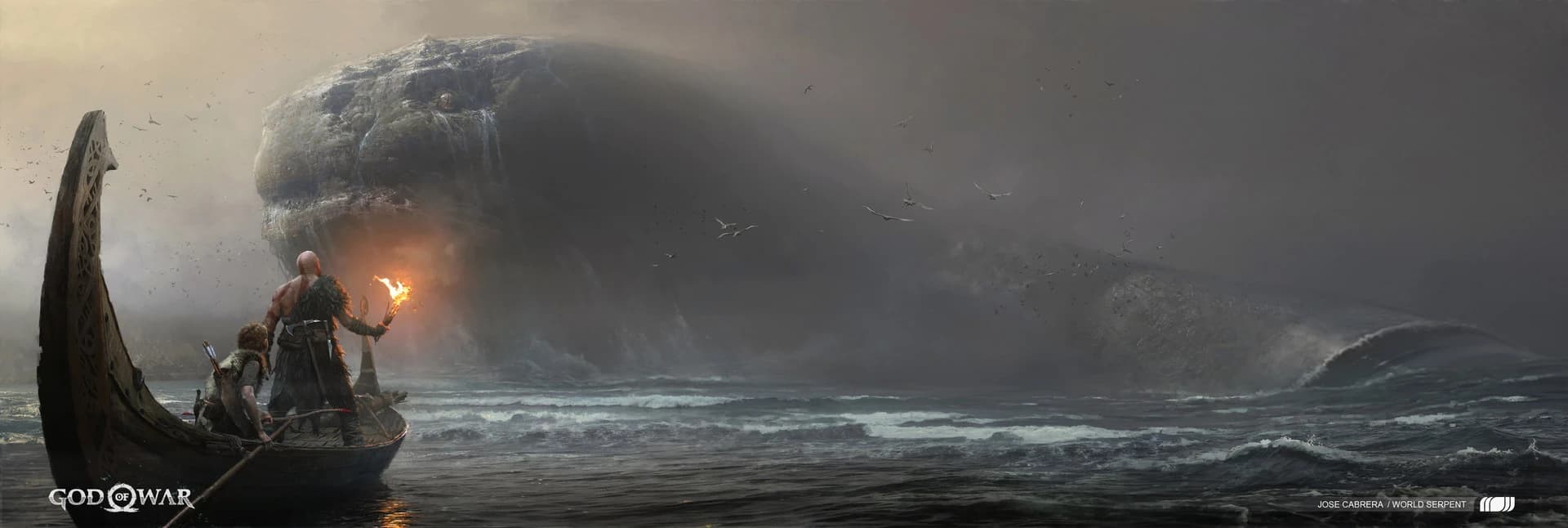
Jörmungandr: the World Serpent
Jörmungandr, the World Serpent, was a colossal Jotunn serpent who grew so vast that he encircled all of Midgard. Awoken from the Lake of Nine by Kratos and Atreus, he became their ally, and was destined to fight Thor at Ragnarok.
Long read · joe
Járnsaxa: the giantess mother of Magni
Járnsaxa was a Jotunn, the lover of Thor and the mother of his eldest son Magni. Spoken of only in passing as part of a sordid story, she was long dead by the time Kratos came to the Norse realms.
Long read · joe
Jötnar Shrines
The Jötnar Shrines were wooden triptychs carved by the Giants to record the histories and prophecies of their kind. Scattered across the Nine Realms, they foretold Ragnarok and the fates of those caught up in it, including Kratos and his son.
Long read · joe
Jotnar
The Jotnar, commonly called the Giants, were the most ancient race of the Norse cosmos, born of Ymir and native to Jotunheim. Gifted with precognition, magic, and the power to shapeshift, they were hunted toward extinction by Odin and Thor, and locked their souls away in marbles in the hope of one day returning.
Long read · joe
Jötunheim: realm of the giants
Jötunheim, also called Utgard, was one of the Nine Realms and the homeland of the Jotnar. Sealed off by Tyr to shelter the giants from Odin's slaughter, it became both their tomb and the final destination of Kratos and Atreus.
Long read · joe
Jormungandr
Jormungandr was the World Serpent, a Jötunn so vast he encircled all of Midgard within the Lake of Nine. Sworn enemy of Thor and fated to clash with him at Ragnarök, he aided Kratos and Atreus and was revealed to be a giant reborn from a serpent and cast backward through time.
Long read · joe
Jotunheim
Jotunheim was the homeland of the ancient Jotnar, hidden away by Tyr after Odin's genocide drove the giants to the brink of extinction. It became the tomb of their race and the final destination of Kratos and Atreus on their journey to scatter Faye's ashes.
Long read · joe
Juggernaut
The Juggernaut, once called the Elephantaur, was a towering elephant-shaped monster that walked upright and bore Persian war-armor. Loosed against Greece during the assault on Attica, it stood among the heaviest beasts Kratos faced in his hunt for the Furies.
Long read · joe
Kara
Kara was one of the nine Valkyries cursed by Odin and sealed beneath the Witch's Cave in Midgard. Freed by Kratos and Atreus, she was reborn by Freya as a Shield Maiden and fought in the assault on Asgard.
Long read · joe
King Hrólf Kraki
King Hrólf Kraki was a Midgardian warrior who seized the kingdom of Lejre with a band of twelve Berserkers, bound in death to the cursed blade Skofnung. The mightiest of all the Berserkers, he was hunted down and slain by Kratos so that Mimir might at last be avenged.
Long read · joe
Konunsgard
Konunsgard was a region of Midgard once ruled by the dwarven king Motsognir, who built a great stronghold there in pursuit of a legendary armor. His obsession destroyed his people and himself, leaving the land overrun by the vengeful dead.
Long read · joe
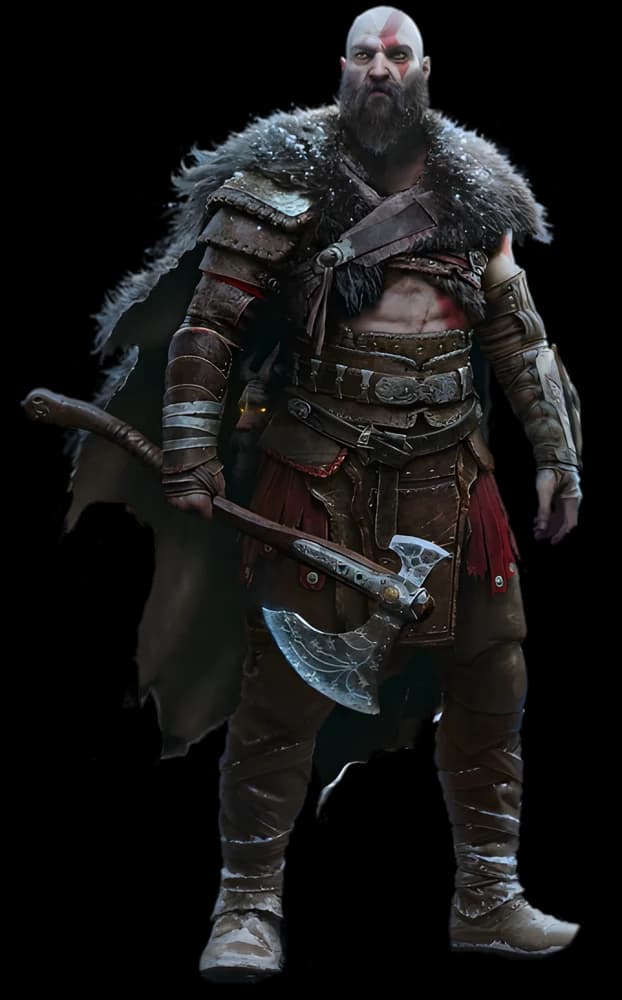
Kratos
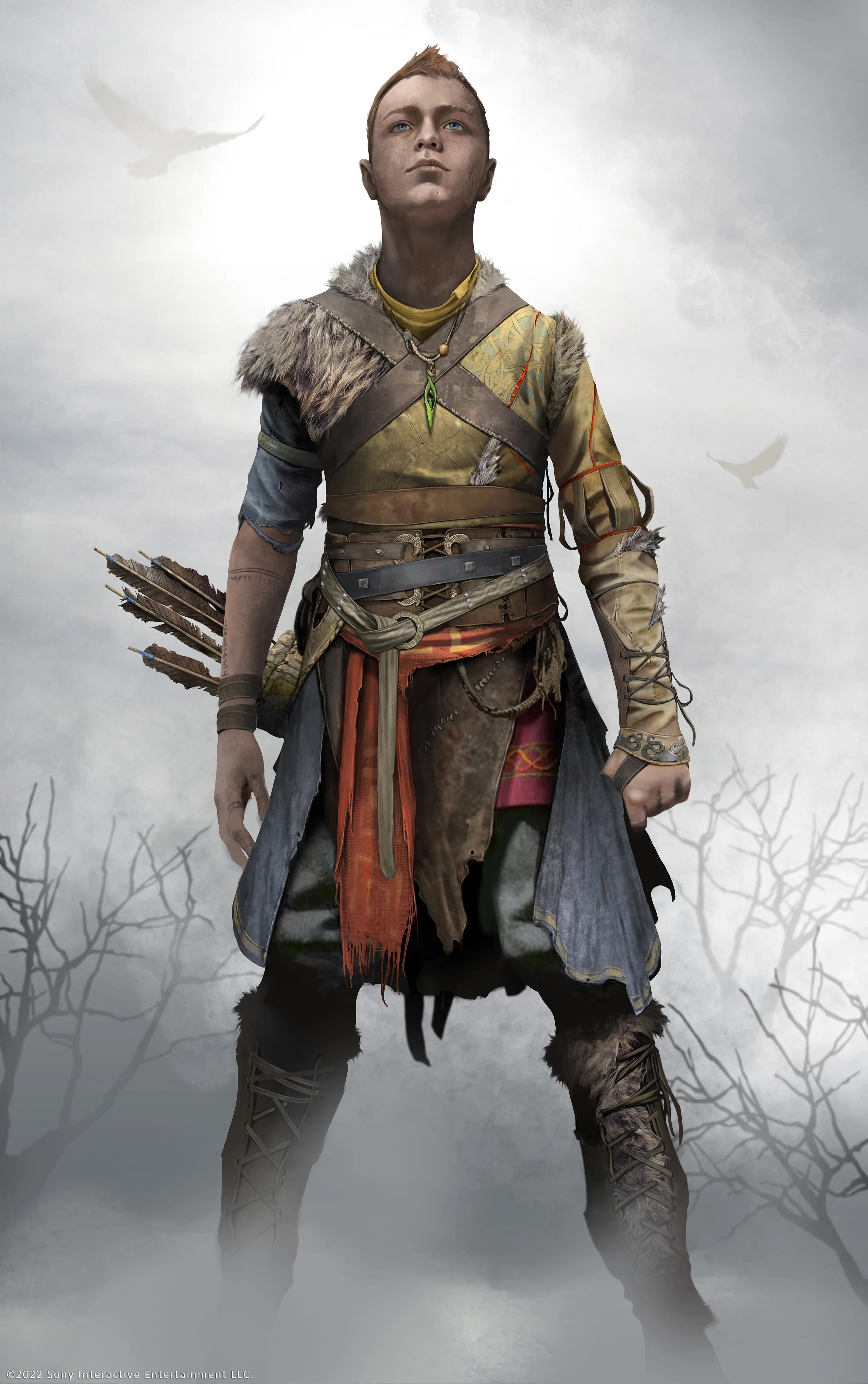
Kratos was the demigod son of Zeus who rose from a Spartan general to the Greek God of War, destroyed the pantheon of Olympus in a quest for vengeance, and then began again in the Norse realms as a father seeking to leave his bloody past behind.
Long read · joe
Lúnda: Blacksmith of the Resistance
Lúnda was a dwarven blacksmith and old friend of Brok and Sindri, whose skill rivaled that of the Huldra Brothers. She forged weapons and armor for Freyr's resistance in Vanaheim and aided Kratos throughout his war against Asgard.
Long read · joe
Lahkesis
Lahkesis was the middle Sister of Fate, the measurer who determined the length and course of every life. Loyal to Zeus, she barred Kratos from the Loom of Fate and fought him alongside her sister Atropos before being trapped within a shattered mirror.
Long read · joe
Lake of Nine
The Lake of Nine was the great central lake of Midgard, ringed by the towers of the Nine Realms and crossed by the World Serpent. It served as the hub from which Kratos and Atreus reached the far regions of the realm.
Long read · joe
The Last Spartan
The Last Spartan was a young Spartan commander loyal to Kratos, the only mortal to survive the destruction of Sparta by Zeus. He kept the Arms of Sparta for his absent lord and later died at Kratos's own hand in the Palace of the Fates, neither warrior knowing the other in the dark.
Long read · joe
Leviathan Axe
The Leviathan Axe was a frost-imbued axe forged by the Huldra Brothers Brok and Sindri to oppose the power of Mjolnir. Granted to Laufey and passed to Kratos before her death, it became his primary weapon throughout the Norse era and the counter to Thor's hammer.
Long read · joe
Light Elves
The Light Elves, or Ljosalfar, were one of the two elven peoples of Alfheim, luminous beings who claimed to be the rightful masters of the Light. Their endless war with the Dark Elves for control of that power ended only when Freyr returned to unite the two races in the days of Ragnarok.
Long read · joe
Lunda
Lunda was a dwarven blacksmith and old friend of Brok, whose skill rivaled the Huldra Brothers. She armed Freyr's resistance and supported Kratos and Atreus in the war against Asgard.
Long read · joe
Lyngbakr Island
Lyngbakr Island was a strange rocky island in Svartalfheim where Mimir had long ago chained a great Lyngbakr to harvest its fat. Returning centuries later, Kratos, Atreus, and Mimir freed the captive creature.
Long read · joe
Lysandra
Lysandra was a Spartan woman, the first wife of Kratos and mother of his daughter Calliope. Unafraid of his savagery and the voice of reason against it, she was slain by Kratos' own hand during a blood frenzy engineered by Ares.
Long read · joe
Mótsognir: the Dwarven King
Mótsognir was a dwarf who became a king of Midgard, ruling humans from his castle at Konunsgard. Once a good king, his obsession with a legendary dwarven armor drove him to atrocity and madness, and he met his end among the dead he could not escape.
Long read · joe
Máttugr Helson: the Bridge Keeper of Helheim
Máttugr Helson, the Bridge Keeper, was a being of troll and Jötunn blood born and raised in Helheim and set to guard the Bridge of the Damned. Kratos slew him to claim his heart, the one ingredient that could cure the ailing Atreus.
Long read · joe
Magni's Death
The death of Magni, eldest son of Thor, came at the hands of Kratos upon the frozen plain of Thamur's corpse. Though Magni was only a minor Aesir, his fall kindled the lasting hatred of Thor and Sif and set the gods of Asgard against Kratos and Atreus.
Long read · joe
Magni
Magni was the eldest son of Thor and the favored grandson of Odin, a towering warrior who joined his uncle Baldur in hunting Kratos and Atreus across Midgard. His confidence proved his undoing when Kratos killed him at the foot of Thamur's corpse.
Long read · joe
Manticore
The Manticore was a flying monster of the Greek world, a creature with a lion's face, dragon wings, and the venomous tail of a scorpion. A great female of its kind nested in Delphi, and Kratos fought and slew the beast both at the Tower of Delphi and again on the island of Delos.
Long read · joe
Mask of Creation
The Mask of Creation was a primordial wooden mask bound to the Rift of Creation, sought by Odin for the boundless knowledge it was said to grant. Its pieces were scattered across the Nine Realms, and Atreus restored it before destroying it during Ragnarok.
Long read · joe
Medusa
Medusa was a Gorgon queen who fought among the armies of Ares during the siege of Athens. Slain by Kratos at the command of Aphrodite, her severed head granted him the petrifying power of Medusa's Gaze.
Long read · joe
Megaera
Megaera was one of the three Furies, the Physical Fury who tormented her victims with brute force and parasitic monsters. After Kratos severed her arm in an earlier clash, she tortured him in the Prison of the Damned, until his escape led to her death and the recovery of the Amulet of Uroborus.
Long read · joe
Midas
King Midas of Phrygia was a mortal cursed with the golden touch, by which all he laid hands upon turned to gold, his own daughter among them. Kratos found him weeping in the Canyons of Sorrow and cast him into a river of lava, turning the king and the stream alike to solid gold.
Long read · joe
Midgard
Midgard was the realm of mortals, shaped by Odin from the body of the giant Ymir and set between Asgard and Helheim. It was the home Kratos chose after leaving Greece, the land where Atreus was born, and the realm where the great winter of Fimbulwinter fell.
Long read · joe
Midgardians
The Midgardians, also called Norsemen, were the mortal inhabitants of Midgard, divided into warring Nordic clans by their worship of the Aesir or the Vanir. Short-lived yet fearless, they sought glorious deaths in battle to claim a place among the honored dead.
Long read · joe
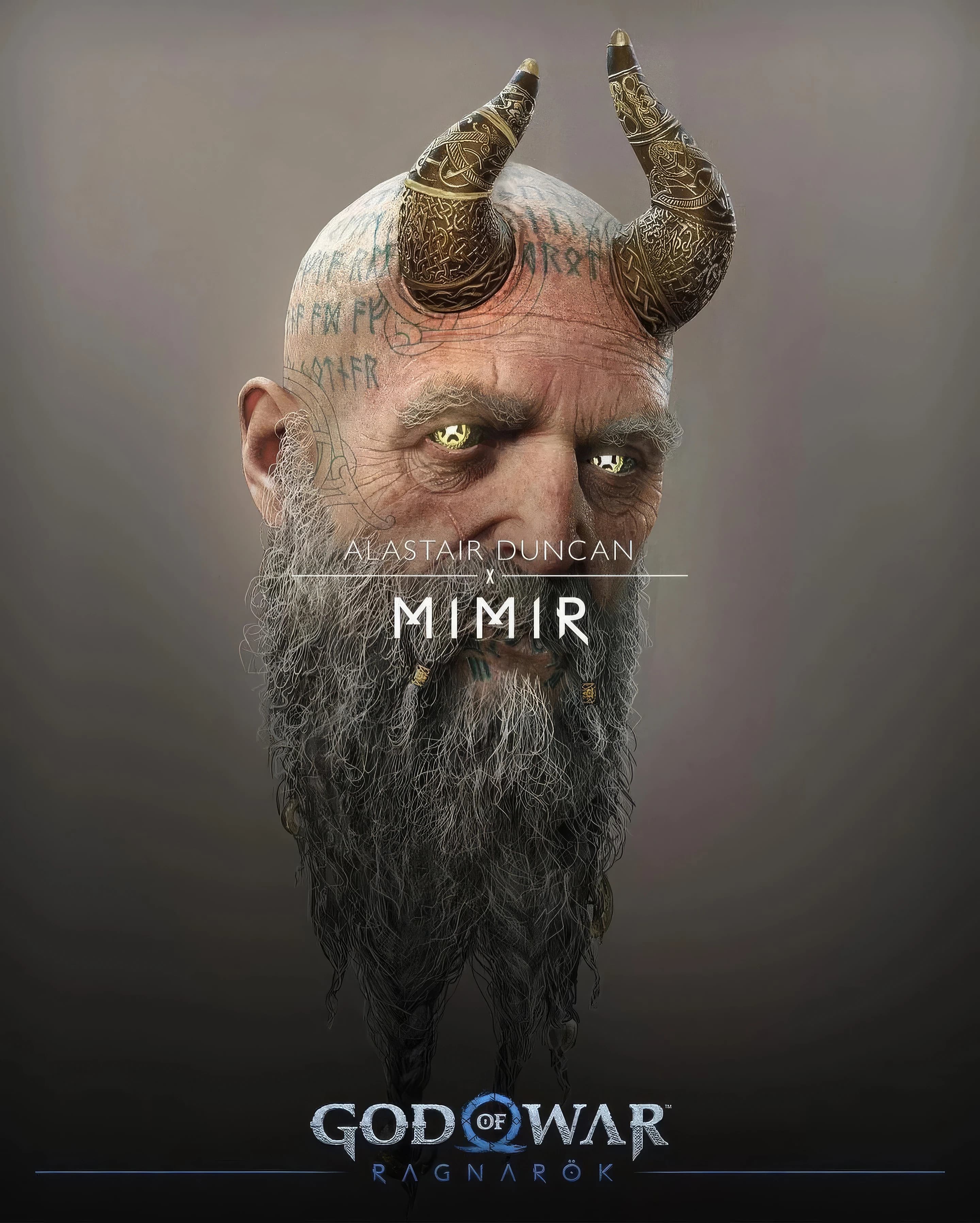
Mimir
Mimir was a Celtic fae who rose to become Odin's advisor and the ambassador of the Aesir before the All-Father imprisoned him for over a century. Freed and reanimated as a disembodied head by Kratos and Atreus, he became their guide, conscience, and friend across the Nine Realms.
Long read · joe
Minotaur
The Minotaurs were a species of towering bull-headed warriors first bred by Ares as brutes for his armies. From the labyrinth-bound Asterion of legend to the armored guardian of Pandora's Temple, they served as beasts of war across Greece and were a recurring foe of Kratos.
Long read · joe
Mist
Mist was one of the last Valkyries loyal to Odin after her sisters were freed. With her sister Hrist she enforced the All-Father's will, and the two died together in battle at the Spark of the World.
Long read · joe
Mjolnir
Mjolnir was the legendary hammer of Thor, forged by the Huldra Brothers Brok and Sindri. Infamous for the death it brought upon the Jotnar, it was among the most powerful weapons in the Nine Realms, rivaled only by the Leviathan Axe made to oppose it.
Long read · joe
Mnemosyne
Mnemosyne was the Titaness of Memory and Remembrance, a daughter of Gaia and Ouranos who defected to the Olympians in the Great War. She became the lover of Zeus and bore him the nine Muses, but for opposing his cruelty she was at last cast down into Tartarus.
Long read · joe
Modi's Death
The death of Modi, younger son of Thor, came at the hands of Atreus upon the mountain of Midgard. Broken in body and spirit, the demigod returned to face his enemies a final time, and a vengeful Atreus stabbed him in the throat and cast him into a chasm against the wishes of Kratos.
Long read · joe
Modi
Modi was the younger son of Thor, a demigod who lived in the shadow of his favored brother Magni. After Magni's death he was beaten by his own father and broken in body and spirit, meeting his end at the hands of a vengeful Atreus.
Long read · joe
Morpheus
Morpheus was the Greek primordial God of Dreams, an Agent of Night who ruled the Realm of Dreams. When Helios was torn from the sky, he seized his chance to cast the gods and mortals into slumber and wrap the world in black fog, retreating only when Kratos returned the sun to the heavens.
Long read · joe
Mount Olympus
Mount Olympus was the sacred home of the Olympian gods and the center of all Greece, ruled by Zeus from a golden palace. It rose from the Underworld after the first Titanomachy and was destroyed by Kratos in his war of vengeance against the gods.
Long read · joe
Muspelheim
Muspelheim was one of the Nine Realms of the World Tree, the fiery homeland of the Fire Giants and the source of all heat in the realms. From it Ragnarok was prophesied to arise, and from it Kratos sought the aid of Surtr.
Long read · joe
Nemean Cestus
The Nemean Cestus were a pair of great metal gauntlets shaped as snarling lion heads, said to have come to Hercules after he slew the Nemean Lion. Kratos tore them from his half-brother in battle and used them to shatter both the demigod and the rare stone called Onyx.
Long read · joe
Nemesis Whip
The Nemesis Whip was a weapon of paired chains tipped with claw-like daggers, crafted by Hephaestus from the Omphalos Stone. Intended to kill Kratos, it was instead turned against its maker and wielded by the Ghost of Sparta.
Long read · joe
Nemesis: the goddess of retribution
Nemesis was the Greek goddess of retribution and revenge, who enacted punishment upon those who fell to hubris before the gods. Though she never appeared, the weapon called the Nemesis Whip was named for her and forged as an instrument of vengeance against Zeus.
Long read · joe
Nidhogg
Nidhogg was a primordial Lindwyrm who gnawed and guarded the roots of the World Tree. Made an unwitting pawn by Odin, she was slain by Kratos and Freya, leaving her six orphaned children to scatter across the realms.
Long read · joe
Niflheim
Niflheim was one of the Nine Realms of the World Tree, a frozen world of fog, ice, and endless mist. Once cursed into a poisonous fog by the Dwarf alchemist Ivaldi, it later returned to its frigid state and held a secret prison of Odin.
Long read · joe
Nike
Nike was the Olympian goddess of victory, daughter of the Titan Pallas and the water goddess Styx. Though she never crossed Kratos' path in the flesh, her likeness was honored across Greece in statues, carvings, and murals raised to celebrate triumph in war.
Long read · joe
The Nine Realms
The Nine Realms were the worlds of the Norse gods and the countless races who dwelt along the branches of Yggdrasil. From the void of Ginnungagap and the body of Ymir they took shape, and they endured through the fall of Asgard at Ragnarok.
Long read · joe
Njörd: Vanir god of the sea and king of Vanaheim
Njörd was the Vanir god of the sea and the ruler of Vanaheim, father of Freyr and Freya and grandfather of Baldur. He fought in the Aesir-Vanir War, losing his wife Nerthus to the sons of Thor and his daughter Freya to a marriage with Odin.
Long read · joe
The Nornir: the Norse goddesses of fate
The Nornir were the three Norse goddesses of fate, Urd, Verdandi, and Skuld, who dwelt at the hidden Well of Urd. The Norse counterparts of the Greek Sisters of Fate, they offered cryptic wisdom to those who reached them and insisted that no such thing as destiny truly existed.
Long read · joe
Nyx
Nyx was the Primordial of Night, one of the first beings born from Chaos and the sister-consort of Erebus. From the darkness she brought forth a host of lesser primordial gods and helped fashion the Island of Creation, drawing her cloak of night across the Greek heavens before withdrawing to her own world of eternal gloom.
Long read · joe
Oberon
Oberon was the High King of the Fae, a capricious and cruel monarch of Fairyland. His fickle favor drove his servant Mimir to flee the realm of the Fae, a flight that carried Mimir into the Nine Realms.
Long read · joe
Oceanus
Oceanus was the elder Titan who ruled the infinite waters of the young cosmos before Poseidon usurped his domain. Defeated in the Great War yet never imprisoned in Tartarus, he rose again during the siege of Olympus only to be cast down by Hades.
Long read · joe
Odin's Wedding to Freya
Odin's marriage to Freya was a peace treaty that ended the war between the Aesir and the Vanir. Though it brought a fragile harmony to the realms, the Vanir branded Freya a traitor, and the union ended in her banishment.
Long read · joe
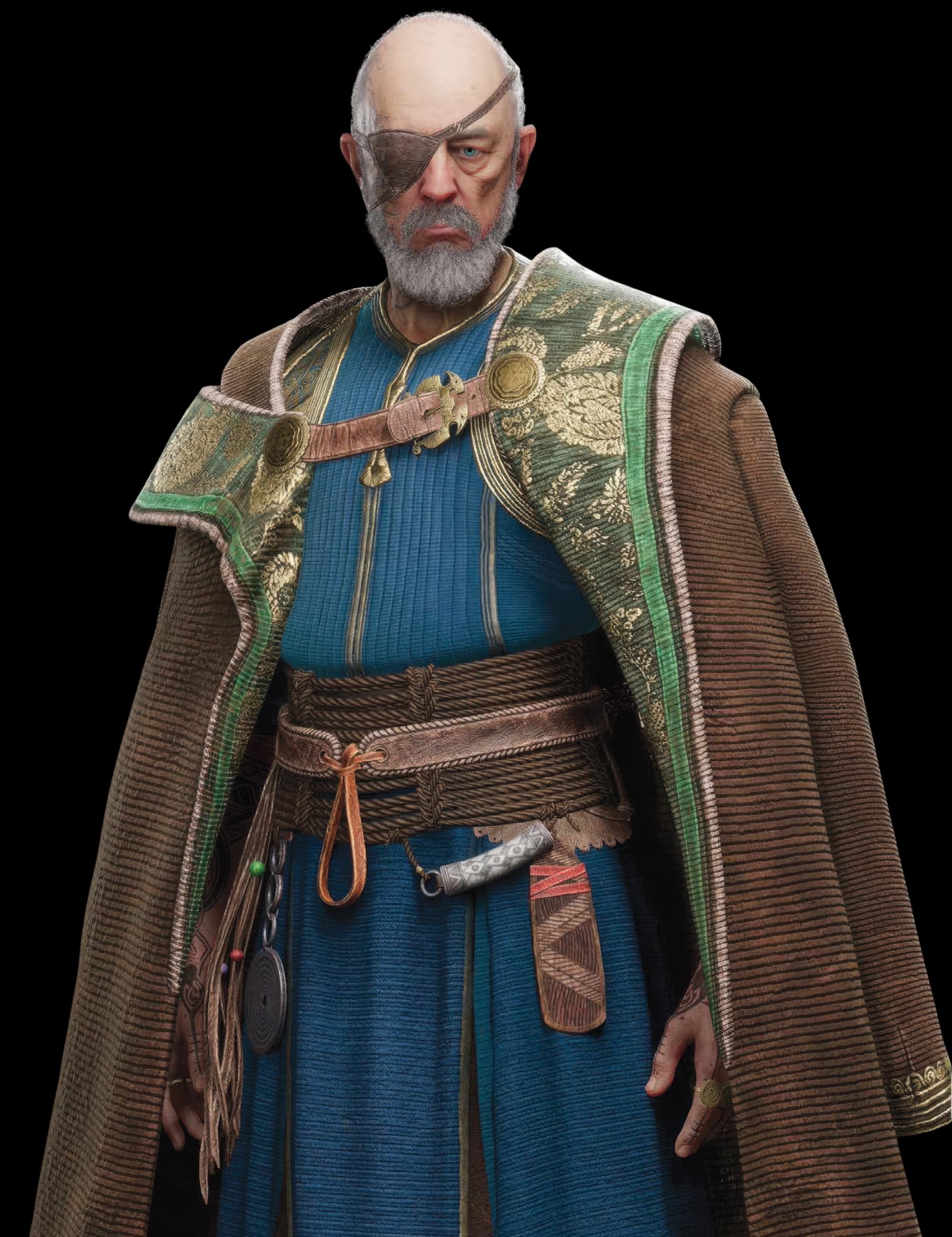
Odin
Odin was the King of the Aesir and ruler of the Nine Realms, the All-Father who slew the first giant Ymir to found Asgard. Obsessed with knowledge and terrified of his own prophesied death, he waged war across the realms and orchestrated the events that brought Ragnarok to his doorstep.
Long read · joe
Ogre
The Ogres were burly, savage monsters of the Nine Realms, hulking brutes with tusks and crushing strength who roamed the outskirts of Midgard. Carnivorous and fierce, they were among the most dangerous beasts Kratos and Atreus faced.
Long read · joe
Ogres
Ogres were a species of burly, brutal monsters of the Nine Realms, hulking brutes of great strength and little wit. They roamed the outskirts of Midgard and were pressed into Odin's army during Ragnarök, and Kratos felled many across his Norse journey.
Long read · joe
Olrun
Olrun was a chieftain's daughter who, after her death, devoted herself to knowledge and was made the Valkyries' historian by Odin. Cursed and sealed in Alfheim, she was freed by Kratos and Atreus, then died at Ragnarok by Gna's hand.
Long read · joe
Olympians
The Olympians were the third and final generation of gods to rule over Greece, led by Zeus after they overthrew the Titans in the Titanomachy. First the allies of Kratos and then his enemies, they were slain almost to the last across his years of vengeance, their fall bringing ruin upon all of Greece.
Long read · joe
Orkos
Orkos was a Fury, the half-god son of Ares and the Fury queen Alecto, made Oath Keeper after his father disowned him. Seeing the injustice of Kratos' blood oath to Ares, he aided the Spartan against the Furies, and in the end begged Kratos to grant him an honorable death so both might be freed.
Long read · joe
Ouranos
Ouranos was the primordial god of the sky and the first true ruler of all creation, who shaped the heavens and fathered the Titans with Gaia. His tyranny and his banishment of his monstrous children led his son Cronos to castrate and overthrow him.
Long read · joe
Pandora's Box
Pandora's Box was the artifact forged by Hephaestus to contain the Evils born of the Great War. Hidden within the Flame of Olympus and guarded across an age, it granted the power to slay a god to whoever opened it, and held within it one final power: Hope.
Long read · joe
Pandora
Pandora was the living creation and adoptive daughter of Hephaestus, forged as the key to Pandora's Box. Imprisoned by Zeus and freed by Kratos, she sacrificed herself in the Flame of Olympus to release the power of Hope.
Long read · joe
Pandora's Box: the vessel of Olympus's evils and the power of Hope
Pandora's Box was an artifact forged by Hephaestus on Zeus's order to contain the Evils unleashed by the Titanomachy. It was the only means by which a mortal could gain the power to slay a god, and it carried within it the hidden power of Hope.
Long read · joe
Pandora's Temple: The Vault of Pandora's Box
Pandora's Temple was a vast trap-laden temple built upon the back of the wandering Titan Cronos to house Pandora's Box and keep it from the enemies of Olympus. After 2,500 years of failed attempts by countless heroes, Kratos became the only mortal to reach the Box within.
Long read · joe
Passalus: the younger of the thieving Kerkopes
Passalus was one of the Kerkopes, the pair of thieving monkey-like brothers of the Laconian Woods. Orange-furred and as child-like as he was monkey-like, he was the simpler of the two, content to follow his brother's lead through their endless petty schemes.
Long read · joe
Pathos Verdes III
Pathos Verdes III was the mortal architect chosen by the Olympian gods to raise Pandora's Temple upon the back of the bound Titan Cronos. Driven mad by grief and zeal, he turned the temple into a maze of lethal traps before taking his own life and cursing the gods he had served.
Long read · joe
Pegasus
Pegasus was a great winged horse of the Greek world, gray of coat with wings wreathed in flame. Sent forth by Gaia, he carried Kratos through the skies on his second war against Olympus until the Dark Rider struck him from the air above the Island of Creation.
Long read · joe
Peirithous
Peirithous was a demigod of Thessaly who descended into the Underworld to claim Persephone and was condemned by Hades to eternal suffering. Caged behind brambles, he bargained the Bow of Apollo for his freedom and burned to death at Kratos' hand.
Long read · joe
Persephone
Persephone was the Goddess of Spring and Queen of the Underworld, embittered by a marriage she never wanted. She conspired to destroy the world and herself with it, freeing Atlas to shatter the Pillar of the World before Kratos struck her down.
Long read · joe
Perses: the Titan of Destruction
Perses was the Titan of Destruction, a great being of lava and rock who rose with Gaia in the Second Titanomachy. He crushed the sun god Helios against his own chariot before Kratos drove the Blade of Olympus into his eye and cast him from Mount Olympus.
Long read · joe
Perseus
Perseus was a Greek demigod hero, a son of Zeus and half-brother of Kratos. Driven mad by his imprisonment on the Island of Creation, where he sought the Sisters of Fate to revive his lost love Andromeda, he was slain by Kratos.
Long read · joe
Petros: the Krypteia of Sparta
Petros, known to most only as the Krypteia, was a Spartan special operative who hunted alone and unseen across the Laconian lands. He crossed paths with the young Kratos and Deimos on Mount Taygetos and pressed upon them his own brutal philosophy of war.
Long read · joe
Phoenix
The Phoenix was a legendary fire bird said to rise reborn from its own ashes. Within the Palace of the Fates it slept as ash in the Phoenix Chamber until Kratos rekindled it, and the great bird bore him up the Ashen Spire toward the Temple of the Fates.
Long read · joe
Pillar of the World
The Pillar of the World was a great column in the Underworld that held up the Greek world and kept it from collapse. Partly broken in the battle between Kratos and Persephone, it became the eternal burden of the Titan Atlas.
Long read · joe
Piraeus Lion: the caged beast of the temple dungeon
The Piraeus Lion was a gigantic lion held beneath the Temple of Ares in Sparta. Released by a dissenter fleeing Kratos, the arrow-scarred beast turned its claws and stunning roar against the Spartan before it was gutted and slain.
Long read · joe
Pollux
Pollux was the demigod son of Zeus and half-brother of Kratos, the divine half of the conjoined Gemini twins who usurped the Temple of the Oracle at Delphi. A powerful sorcerer bound to the body of his brother Castor, he was severed from him by Kratos and crushed beneath the Spartan's boot.
Long read · joe
Polyphemus
Polyphemus was a gigantic one-eyed Cyclops, a son of Poseidon counted among the greatest of his kind. Famed in older tales for his clash with Odysseus, in the age of Kratos he was bound in chains within the Desert of Lost Souls.
Long read · joe
Poseidon's Princess
Poseidon's Princess was a mortal noblewoman held in bondage as the unwilling concubine of the Sea God. Freed from her chains by Kratos during his assault on Olympus, she was used and then crushed in the workings of the god's chambers.
Long read · joe
Poseidon
Poseidon was the Olympian God of the Seas and the brother of Zeus and Hades, his power second only to the King of Olympus. He helped subdue the Titans in the Great War and stood among the defenders of Olympus, until Kratos gouged out his eyes and broke his neck, drowning Greece beneath his death.
Long read · joe
Primordials: the First Beings in Existence
The Primordials were the first beings to come into existence at the dawn of creation, ancient cosmic forces who predated the Titans and Olympians of Greece and the Jotnar, Aesir, and Vanir of the Nine Realms. From their wars and unions the worlds themselves were formed.
Long read · joe
Prometheus
Prometheus was the Titan of forethought and the creator of mankind, who defected to the Olympians in the Great War. When Zeus withheld fire from mortals, Prometheus stole it and was condemned to have his liver devoured each day until Kratos granted him death.
Long read · joe
Prophecy of Loki
The Prophecy of Loki was the giants' carved mural foretelling Atreus' role in Ragnarok and the fall of Asgard. It predicted Kratos and Atreus' journey with uncanny accuracy, including Kratos' death, a fate he ultimately averted by choosing to change.
Long read · joe
Raeb
Raeb was a dwarven musician and tavern keeper of Nidavellir. Blunt and cynical, he pointed Kratos toward Durlin, and later performed the music for Brok's funeral.
Long read · joe
Ragnarok
Ragnarok was the prophesied final battle of the Norse world, foreseen to bring the death of the gods and the end of all things. When the armies of the realms rose against Asgard, it ended not as the apocalypse the Aesir feared but as the fall of Odin and the destruction of his realm alone.
Long read · joe
Raiders
The Raiders were berserker marauders of Midgard who chose to endure the killing cold of Fimbulwinter rather than flee. By twisting their guardian spirits they took on the traits of beasts, and they fell upon any outsider who crossed into their lands.
Long read · joe
Ratatoskr
Ratatoskr was the squirrel who tended the World Tree of Yggdrasil and watched over the Nine Realms. Bound forever to the Tree, he sent spectral aspects of his own personality out in his stead, including the foul-mouthed Bitter Squirrel.
Long read · joe
Rhea
Rhea was a Titaness, the wife of Cronos and the mother of the first six Olympian gods. When her husband devoured their children one by one, she hid her sixth child away and gave Cronos a stone in his place, setting in motion the war that would end the reign of the Titans.
Long read · joe
Rhodes
Rhodes was the great harbor city of ancient Greece and home of the legendary Colossus. It was the last city-state to fall in Kratos' Spartan conquest, and the place where Zeus betrayed him with the Blade of Olympus.
Long read · joe
Rota
Rota was one of the nine Valkyries cursed by Odin and sealed within Helheim. Freed by Kratos and Atreus, she was reborn by Freya as a Shield Maiden and fought in the assault on Asgard during Ragnarok.
Long read · joe
Satyr
The Satyrs were fierce goat-headed creatures of the Greek world, half man and half goat, counted among the most formidable monsters Kratos ever faced. Once companions of revelry in the older myths, in the age of the gods they became disciplined warriors who fought in coordinated bands under their generals and commanders.
Long read · joe
Second Titanomachy
The Second Titanomachy was the war Kratos set in motion against the Olympian Gods, when he led the Titans up Mount Olympus to take his vengeance on Zeus. It ended with the death of nearly every god and Titan and the ruin of Greece.
Long read · joe
Shores of Nine
The Shores of Nine were the great body of water and surrounding coast at the heart of Midgard, ringing the Lake of Nine and the Realm Towers. They served as the central crossroads from which Kratos and Atreus reached the far regions of the realm.
Long read · joe
Siege of Rhodes
The Siege of Rhodes was a Spartan assault on the Greek city of Rhodes, waged under Kratos during his reign as the God of War. It was at Rhodes that Zeus stripped his son of divine power and struck him down, the betrayal that began Kratos' war against Olympus.
Long read · joe
Sif
Sif was the Aesir goddess of wheat, earth, harvest, and family, the second wife of Thor and mother of Thrud. Grief for her dead sons turned her against Odin, and she survived Ragnarok to become the new leader of the Aesir.
Long read · joe
Sigrún: the Valkyrie Queen
Sigrún was the Valkyrie Queen, the most lethal of the nine Valkyries cursed by Odin into madness. Freed by Kratos and Atreus after a punishing battle, she was restored by Freya and fought beside them in the final assault on Asgard.
Long read · joe
Sigrun
Sigrun was the Valkyrie Queen, the most powerful of the cursed Valkyries who fell to Odin's madness. Freed by Kratos and Atreus after a grueling battle, she was later restored as a Shield Maiden and fought against Asgard during Ragnarok.
Long read · joe
Sindri
Sindri, also called Eitri, was a dwarven smith of the Nine Realms who, with his brother Brok, forged Mjolnir and the Leviathan Axe. Polite, fastidious, and haunted by a secret resurrection, his grief after Brok's death drove him to a cold and vengeful end.
Long read · joe
Siren
The Sirens were female monsters whose enchanting song lured sailors to crash their ships upon the rocks. Beautiful from afar yet decayed beneath their guise, they wielded magical powers and were found in the deserts, temples, and shores of the Greek world.
Long read · joe
The Sisters of Fate
The Sisters of Fate were three Primordial sisters who held absolute power over time and the destiny of every mortal, god, and Titan. Loyal to Zeus, they stood between Kratos and the Loom of Fate, until he slew them and seized the power to change his own past.
Long read · joe
Sköll and Hati
Sköll and Hati were two giant wolves, sons of the archwolf Hróðvitnir, captured by Odin as pups and cast into the heavens to chase the Sun and Moon. Their endless pursuit was foretold to end on the day of Ragnarok.
Long read · joe
Skaði
Skadi was a Jotunn huntress of the Norse realms, daughter of the shapeshifter Thiazi and a hunter without equal. Coveted by Odin and tricked into killing her own father, she perished in the snow holding him in an eternal embrace.
Long read · joe
Skadi
Skadi was a Jotunn huntress without equal, daughter of the shapeshifter Thiazi. When Odin could not have her as a wife, he tricked her into slaying her own father, and grief carried her to her death in the snow.
Long read · joe
Skoll and Hati
Skoll and Hati were two giant celestial wolves, sons of the archwolf Hrodvitnir, who chased the sun and moon across the sky. Cast to the heavens by Odin, their eventual catch of their prey was foretold to mark the dawn of Ragnarok.
Long read · joe
Skorpius
Skorpius was the Queen of the Scorpions, a vast scorpion that dwelt in the Labyrinth deep beneath Mount Olympus. Her exoskeleton was infused with onyx crystals, and Kratos slew her amid the rising cubes of the Labyrinth to claim Boreas' Icestorm.
Long read · joe
Soul Eater
The Soul Eaters were corrupted Ancients, golem-like beings that fed on the souls of the living and trapped them forever, beyond any afterlife. Born from a dwarven scheme gone wrong, they became a danger to every soul that crossed their path.
Long read · joe
Sparta
Sparta was a militaristic city-state of southern Greece and the home of Kratos. Patron city first of Ares and then of Kratos himself, it rose to terror across Greece under his command before Zeus destroyed it in revenge.
Long read · joe
Spartans
The Spartans were the warrior people of the city of Sparta, a hardened army whose ruthless discipline made them feared across Greece. Under Kratos, their greatest general, they conquered city after city, and they remained loyal to him long after he rose to become the God of War.
Long read · joe
Spear of Destiny
The Spear of Destiny was a magical weapon belonging to the Sisters of Fate, held in reserve for emergencies. Kratos claimed it from the Dark Rider on the Island of Creation, taking up a weapon said to hold the power to kill Zeus himself.
Long read · joe
Stalker: the antlered hunters of the wilds
Stalkers were antlered, horse-bodied hunters who roamed Midgard and Vanaheim, worshippers of Skaði and masters of the hunt. Once peaceful, many turned savage with the coming of Fimbulwinter, set against the realms by the hand of Odin.
Long read · joe
Starkaðr: the eight-armed giant Odin feared
Starkaðr the Mighty was an eight-armed Jötunn warrior whose strength surpassed even Thor. Fearing that Starkaðr might one day lead the Giants as their general, Odin had him slandered throughout the realms and brought down by the combined armies of the Aesir, Vanir, and Midgard.
Long read · joe
Starkadr
Starkadr the Mighty was an eight-armed Jotunn warrior whose strength surpassed even Thor. Fearing he would lead the giants as their general, Odin ruined his name with slander and had Thor tear him apart on the battlefield.
Long read · joe
Surtr
Surtr was the first and last fire giant, born at the dawn of the Norse cosmos and destined to become Ragnarök itself. Torn between his doom and his love for Sinmara, he sacrificed himself to destroy Asgard, that the cycle of life might begin anew.
Long read · joe
Svartalfheim
Svartalfheim was one of the Nine Realms of the World Tree, the warm and water rich homeland of the Dwarves and the richest realm in minerals. Famed for its smiths, it fell under Asgard's economic dominion until the fall of Odin.
Long read · joe
Tyr's Temple
Tyr's Temple was a great structure raised in Midgard as a gateway between the Nine Realms. Built for the Aesir God of War by every people of the realms, it was twisted and sealed by Odin, sunk beneath the Lake of Nine, and at last reopened by Kratos and Atreus.
Long read · joe
Talon Bow
The Talon Bow was a yew longbow carved by Faye for her son Atreus and used by him throughout the Norse journeys. Though not magical by nature, it was enchanted over time to fire arrows of light and lightning, and later sigil and sonic shots.
Long read · joe
Tartarus
Tartarus was the primordial abyss born of Chaos and the deepest part of the Underworld, a prison where the Titans were bound after the first Titanomachy. Kratos descended into it twice, escaping its depths and later slaying Cronos within it.
Long read · joe
Tatzelwurm
The Tatzelwurms were serpentine, feline beasts of the Nine Realms that tunneled through the earth to ambush their prey, striking with sharp claws and teeth and a venomous barb in the tail. They roamed the wilds in packs.
Long read · joe
Thamur's Chisel
Thamur's Chisel was the great stonemason's tool, frozen within the head of his fallen corpse in Midgard. A shard of its magic tip could carve the secret rune that opened the way to Jotunheim, making it the key to the last hidden road into the realm of the Giants.
Long read · joe
Thamur
Thamur was a Jotunn mason of unmatched skill who tried to wall off Jotunheim against Thor. Slain by his own chisel in Midgard, his vast frozen corpse became a landmark, and his death froze a whole village in ice.
Long read · joe
Thamur's Chisel: the giant's tool that carved the way to Jotunheim
Thamur's Chisel was the great mason's chisel of the dead giant Thamur, frozen with his corpse in Midgard. A fragment of it could carve the travel rune to Jotunheim, making it the key Kratos and Atreus needed to reach the realm of the giants.
Long read · joe
Thamur's Corpse: the frozen grave of the giant stonemason
Thamur's Corpse was the vast frozen body of the giant stonemason Thamur, who fell upon a village in Midgard after a clash with Thor. The land around him remained an abandoned tundra, the site of two battles in Kratos and Atreus's journey.
Long read · joe
Thanatos
Thanatos was the primordial God of Death, an entity older than the Olympians who ruled the Domain of Death and imprisoned Deimos for years. When Kratos came to free his brother, Thanatos killed Deimos before the Spartan destroyed the God of Death.
Long read · joe
The Applecore
The Applecore was a sprawling, maze-like mining region of Svartalfheim, the realm of the Dwarves. It linked the Jarnsmida Pitmines to the Sverd Sands and the Aurvangar Wetlands, and Kratos and Atreus passed through it in their search for Tyr.
Long read · joe
The Crater
The Crater was a region in the north of Vanaheim, a vast and varied wilderness of plains, sinkholes, and abandoned ground left scarred by Fimbulwinter and haunted by the spirits of the fallen.
Long read · joe
The Cycle of Patricide
The Cycle of Patricide was the repeating doom by which the son of a deity rose to slay his father, only to fear the same fate from his own children. It bound the Greek pantheon from Ouranos to Zeus, and its shadow fell again upon the Norse gods.
Long read · joe
The Furies
The Furies were an ancient trio of sisters born of primordial rage who hunted those who broke their blood oaths to the gods. Once fair judges, they were corrupted by Ares and set upon Kratos after he renounced his bond, until the Spartan saw through their illusions and destroyed all three.
Long read · joe
The Great Lodge
The Great Lodge, also called Odin's Hall, was the seat of the All-Father's power, a vast Viking longhouse at the centre of Gladsheim where Odin lived, studied, and ruled the Nine Realms. It was built above the Rift, the place where Odin slew Ymir, and fell with the rest of Asgard at Ragnarok.
Long read · joe
The Lady of the Forge
The Lady of the Forge was a mermaid of great magical power who dwelt within an underwater forge in the depths of Svartalfheim. Renowned for the craft of her weapons, she forged the Draupnir Spear for Kratos.
Long read · joe
Theseus
Theseus was a Greek demigod, son of Poseidon and former hero-king of Athens, celebrated for slaying the Minotaur. Worn down by old griefs, he gave himself to the service of the Sisters of Fate as Keeper of the Horse Key, guarding the Steeds of Time until Kratos cut him down to claim the way forward.
Long read · joe
Thor
Thor was the Norse God of Thunder and the mightiest of Odin's sons, wielder of the hammer Mjolnir and the All-Father's chief enforcer. Raised to hate giants and broken to obedience, he carried out the genocide of the Jotnar before turning at last against his father, a defiance that cost him his life.
Long read · joe
Thoth
Thoth was the Egyptian god of the Moon, wisdom, writing, and judgment, and the eldest son of Ra. During Kratos' wandering through the deserts of Egypt, Thoth pursued the Ghost of Sparta in many forms, insisting that no man or god could outrun his destiny.
Long read · joe
Thrud
Thrud was the daughter of Thor and Sif, a headstrong young goddess who dreamed of becoming a Valkyrie. After her father's death in Ragnarok, she claimed his hammer Mjolnir and the mantle of Goddess of Thunder.
Long read · joe
Thrym
Thrym was a cunning Frost Giant King of Jötunheim who stole Thor's hammer Mjölnir while the thunder god slept. Rather than keep the bane of the Jötnar for himself, he offered to trade it back for Freya's hand, and was killed when Thor recovered the weapon at the wedding feast.
Long read · joe
Tisiphone
Tisiphone was one of the three Furies, the Fury of the Mind whose illusions were the cunningest and cruelest of her sisters. She summoned the creature Daimon, warped reality itself, and tormented Kratos with visions of his dead wife before he saw through her spells and broke her neck.
Long read · joe
Titanomachy
The Titanomachy, also called the Great War, was the long war between the Titans led by Cronos and the Olympians led by Zeus for mastery of Greece and all mortals. It ended in victory for the gods and the imprisonment of the Titans.
Long read · joe
Titans
The Titans were the second generation of Greek deities, born to Gaia and Ouranos on the Island of Creation. They ruled the cosmos through the Golden Age until Zeus and the Olympians cast them down into Tartarus, and ages later they rose one final time at the side of Kratos.
Long read · joe
Travelers
The Travelers were heavily armored warriors who followed a mysterious code called the Path, believing it led to enlightenment in Jötunheim. In truth the Path was a deception of Odin's, devised to send warriors to besiege the home of the Giants.
Long read · joe
Troll
The Trolls were towering, stone-skinned giants of the Nine Realms who wielded heavy rune-carved totems channeling fire, frost, or stone. Once a powerful civilization, they were reduced to a scattered remnant after a betrayal by the Aesir.
Long read · joe
Trolls
Trolls were a race of towering, stone-skinned giants native to the Nine Realms, each bearing a heavy rune-carved totem that granted it elemental power. Once a civilization that spread across Midgard, they were betrayed and broken by the Aesir, and the scattered survivors became some of the deadliest creatures Kratos and Atreus faced on their journey.
Long read · joe
Typhon
Typhon was the storm Titan, youngest child of Gaia and fathered by the abyss Tartarus. After his Giant brothers fell to Zeus, he challenged the King of the Gods and was sealed within a frozen mountain, where Kratos later blinded him to claim his power.
Long read · joe
Tyr
Tyr was the Aesir God of War who set aside conflict for peace, brokering between the giants and the gods until Odin imprisoned him and stole his name. Freed after the fall of Asgard, he guided Kratos through the trials of Valhalla to confront his past and take up the office of God of War.
Long read · joe
Tyr's Temple: the gate between realms
Tyr's Temple was a magnificent temple in Midgard dedicated to the Aesir God of War, built by all the races of the Nine Realms to allow travel between them. Hidden beneath the Lake of Nine, it was revealed by the stirring of the serpent.
Long read · joe
Undead Legionnaire
The Undead Legionnaires were the risen soldiers of the Greek world, demonic skeletons clad in the armor of ancient warriors. The most common of all the undead servants of the gods, they made up the bulk of Ares' army that fell upon Athens and stood guard within Pandora's Temple.
Long read · joe
The Underworld
The Underworld was the realm of the dead in Greece, a hellish landscape below the living world where the River Styx carried mortal souls to their rest. It was ruled by Hades until his death, and Kratos descended into it many times across his Greek campaigns.
Long read · joe
Valhalla
Valhalla was the golden hall of Asgard where the Valkyries gathered the honored dead to feast and train as Einherjar until Ragnarök. More than a hall of glory, it was a primordial force that tested the souls within it, and Odin himself could never master it.
Long read · joe
The Valkyries
The Valkyries were female warrior-spirits who served Odin by escorting the honored dead to Valhalla. After Freya fell from favor, the All-Father cursed nine of them into maddening corporeal forms, until Kratos and Atreus freed their spirits and Freya reborn them as the Shield Maidens.
Long read · joe
Vanaheim
Vanaheim was the lush jungle realm of the Vanir gods, ruled by Njord and associated with magic, fertility, and wisdom. The peaceful Vanir clashed with the warlike Aesir in a centuries-long war, and the realm was freed only with the fall of Asgard.
Long read · joe
The Vanir: the gods of nature and magic
The Vanir were one of the two tribes of Norse gods, natives of Vanaheim known for their bond with nature and their mastery of the magic called Seidr. Equal in the long war against the Aesir, they outlasted their rivals and gave the survivors refuge after Ragnarok.
Long read · joe
Veithurgard
Veithurgard was a region of Midgard once ruled by the dwarven king Motsognir, where farmers were forced to become monster hunters. After the king vanished, it fell to ruin and became infested with corrupted Reavers and the dead.
Long read · joe
War for the Light: the eternal conflict of the elves
The War for the Light was a centuries-long conflict between the Light Elves and Dark Elves of Alfheim for mastery of the Light. Control of it passed between the two races scores of times before a foreign god and a returned lord set them on a path toward peace.
Long read · joe
Wildwoods
The Wildwoods was the forested region of Midgard where Kratos and Faye made their home, shielded by her marked trees from the Aesir. It was from here that Kratos and Atreus set out on their journey after Faye's death.
Long read · joe
Wraiths
Wraiths were ghostly creatures of the Greek world, eyeless and emaciated spirits with bladed arms who burrowed beneath the earth. Consumed by the rage in which they died, they attacked any living thing that came near.
Long read · joe
Wulver
The Wulvers were ferocious wolfen beasts of the Nine Realms, immense in strength and speed, standing upright like men yet wolves in form. Cunning and savage, they hunted in packs across Vanaheim and Jotunheim.
Long read · joe
Yggdrasil
Yggdrasil was the World Tree at the center of the Norse cosmos, the great yew whose branches held the Nine Realms and bound their fates together. Said to transcend time and space, it shook to its roots when Asgard fell at Ragnarok.
Long read · joe
Zeus
Zeus was the King of Olympus and ruler of the Greek Pantheon, the youngest son of Cronos who freed his siblings, ended the Great War, and claimed the heavens. Father of Kratos, he became the great antagonist of the Greek age and fell at last to the very son he had tried to destroy.
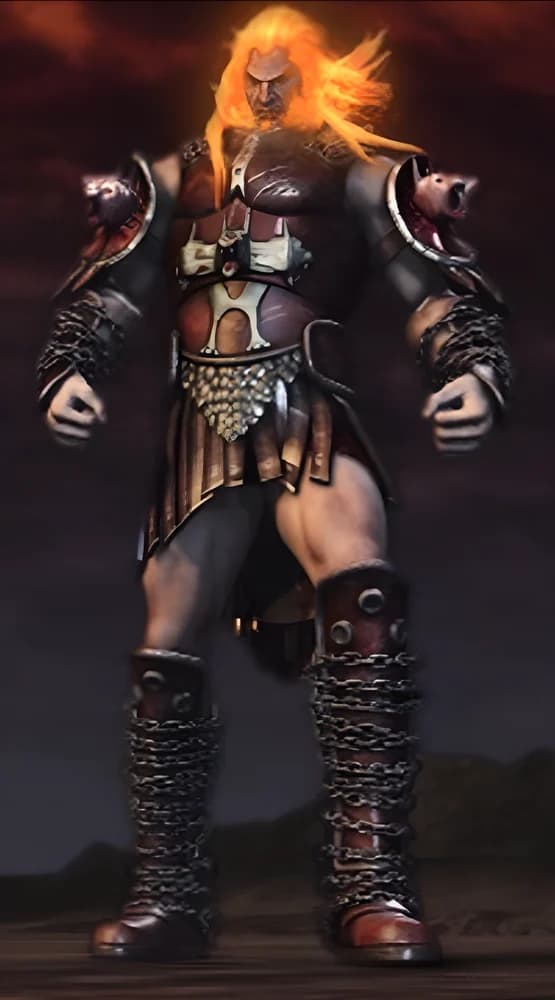
Recently published
Acmon: the elder of the thieving Kerkopes
Acmon was one of the Kerkopes, a pair of thieving monkey-like brothers who dwelt in the Laconian Woods. Blue-furred and long-suffering, he was the wilier of the two, and he crossed paths with the young Kratos and Deimos during their search through Laconia.
31 May 2026
Adrasteia: the griffin who raised Zeus
Adrasteia was a nymph in the service of Gaia who, with her sisters, hid and raised the infant Zeus beyond the reach of Cronos. For shielding the child she was cursed into the shape of a griffin and imprisoned within Mount Taygetos, until Kratos and Deimos set her free.
31 May 2026
Aegaeon: the Hecatonchires made a prison
Aegaeon was one of the three Hecatonchires, a giant of many hands who broke a blood oath with Zeus and was punished by the Furies. His vast body was transformed into the living dungeon called the Prison of the Damned, in which Kratos was once chained.
31 May 2026
Aesir Royal Family: the Ruling Dynasty of Asgard
The Aesir Royal Family was the ruling dynasty of gods who reigned from Asgard over the Nine Realms. Descended from the first god Buri and led by Odin the Allfather, the line counted Odin's brothers Vili and Ve and his sons Thor, Tyr, Heimdall, and Baldur among its most prominent members.
31 May 2026
Aesir-Vanir War
The Aesir-Vanir War was the long and brutal conflict between the two tribes of Norse gods, fought ages before Kratos came to the Northlands. It ended in an uneasy peace sealed by the marriage of Odin and Freya, only for Odin's treachery to reignite it.
31 May 2026
The Aesir
The Aesir were one of the two tribes of Norse gods, natives of Asgard known for their war-like nature and their hunger for knowledge. Descended from the slain primordial Ymir and ruled by Odin, they claimed dominion over all creation, waging genocide upon the Jotnar and war upon the Vanir before their fall in Ragnarok.
31 May 2026
The Afterlife
The Afterlife was the realm to which the dead passed, called the Underworld among the Greeks and Helheim among the Norse. Existing as physical places as much as spiritual ones, the various afterlives were ruled by powerful gods who judged the dead and shepherded their souls, with a different realm awaiting those who died within each mythology.
31 May 2026
Alchemist's Ring
The Alchemist's Ring was a green ring that held the soul of the dwarven alchemist Andvari, who locked himself within it to escape the Soul Eater of the Volunder Mines. Recovered by Kratos and Atreus, the ring still spoke with the voice of the dwarf trapped inside.
31 May 2026
Alecto
Alecto was the Queen of the Furies and the Goddess of Anger, the sister who ruled the trio that hunted Kratos. She mated with Ares to bear the disowned Orkos, ensnared her victims in illusion and black goo, and transformed into a monstrous sea creature before falling to the Spartan's blades.
31 May 2026
Alfheim
Alfheim was the realm of the Light and Dark Elves, divided by a centuries-long war over the Light of Alfheim, the source that powered the Bifrost. Kratos and Atreus came to claim a portion of the Light and ended up turning the war once more.
31 May 2026
Alrik
Alrik, the Barbarian King, was the leader of the Barbarian horde from the east and one of Kratos' oldest enemies. His assault drove Kratos to pledge his soul to Ares, beginning the Spartan's tragedy, and his hatred outlasted even death.
31 May 2026
Alvíss Stonefoot: the Warden of Svartalfheim
Alvíss Stonefoot was a dwarf of Svartalfheim, renowned as its warden. With his sharp mind he trapped the most dangerous creatures of the Nine Realms, and a great statue was raised in his honor for the protection he gave his people.
31 May 2026
Browse by category
All entries A–Z
- Acmon: the elder of the thieving Kerkopes
- Adrasteia: the griffin who raised Zeus
- Aegaeon: the Hecatonchires made a prison
- Aesir Royal Family: the Ruling Dynasty of Asgard
- Aesir-Vanir War
- Alchemist's Ring
- Alecto
- Alfheim
- Alrik
- Alvíss Stonefoot: the Warden of Svartalfheim
- Amphitrite
- Amulet of Uroborus: the gem that bent time
- Amulet of Yggdrasil
- Ancient Egypt
- Andvari: the enchanter trapped in a ring
- Andvari's Hammer: the lost tool of the master smith
- Angrboda
- Aphrodite
- Aphrodite's Handmaidens
- Apollo
- Ares
- Arms of Sparta
- Artemis
- Asgard
- Athena
- Athens
- Atlantis
- Atlas
- Atreus
- Atropos
- Avalon
- Baldur
- Baldur's Death
- Barbarian Hammer: the weapon of the Barbarian King
- Beyla
- Birgir
- Blade of Artemis
- Blade of Olympus
- Blade of the Gods
- Blades of Athena
- Blades of Chaos
- Blades of Exile
- Boreas
- Bow of Apollo
- Bragi
- Brok
- Calliope
- Callisto
- Castor
- Castor and Pollux
- Centaur
- Cerberus: the multi-headed hounds of Hades
- Ceryx
- Charon
- Chaurli: the tree-topped tortoise of Freya
- Chimera
- Claws of Hades
- Clotho
- Colossus of Rhodes
- Cronos
- Cursed Remains: the rising bones of the dead
- Cyclopes: the one-eyed giants of Greece
- Cyclops
- Cyclops Berserker
- Daedalus
- Dagr
- Dark Elves
- Deimos
- Demeter
- Demigod: the mortal children of the gods
- Dionysus: the Olympian god of wine
- Dragons
- Draugr
- Draupnir Spear
- Duraþrór
- Durlin
- Dwarves
- Einherjar
- Eir
- Eis: the Spartan who gave Atreus his name
- Eleonora
- Elves
- Eos
- Epimetheus
- Erinys
- Euryale
- Extermination of the Giants of Midgard: the Aesir Carnage
- Faye
- Fenrir
- Fimbulwinter
- Flame of Olympus
- Forseti
- Freya
- Freyr
- Gaia
- Garm
- Gauntlet of Zeus
- Geirdriful
- Gladsheim: the hall of Odin
- Gna
- God of War: the divine title
- Golden Fleece
- Gondul
- Göndul
- Gorgon
- Grave Digger
- Greek Gods
- Gróa
- Grýla
- Guardian Shield
- Gulltoppr
- Gungnir
- Gunnr
- Hades
- Hades' Helm
- Harpies
- Harpy
- Hecatonchires
- Heimdall
- Hel: Goddess of the Dishonored Dead
- Helgi
- Helheim
- Helios
- Hephaestus
- Hera
- Hercules
- Hermes
- Hestia
- Hildisvini
- Hildisvíni: the Vanir archer and Freya's advisor
- Hildr
- Hodr: the Blind God
- Hofuð
- Hræsvelgr
- Hræzlyr
- Hrimthur: the stonemason who doomed Asgard
- Hrimthur's Wall: the rampart of Asgard
- Hrist
- Hrungnir
- Huginn and Muninn
- Hydra
- Hyperion
- Iapetus
- Icarus
- Immortal: the deathless beings of the realms
- Imposter Tyr
- Ingrid
- Ironwood
- Járnsaxa: the giantess mother of Magni
- Jormungandr
- Jörmungandr: the World Serpent
- Jotnar
- Jötnar Shrines
- Jotunheim
- Jötunheim: realm of the giants
- Juggernaut
- Kara
- King Hrólf Kraki
- Konunsgard
- Kratos
- Lahkesis
- Lake of Nine
- Leviathan Axe
- Light Elves
- Lunda
- Lúnda: Blacksmith of the Resistance
- Lyngbakr Island
- Lysandra
- Magni
- Magni's Death
- Manticore
- Mask of Creation
- Máttugr Helson: the Bridge Keeper of Helheim
- Medusa
- Megaera
- Midas
- Midgard
- Midgardians
- Mimir
- Minotaur
- Mist
- Mjolnir
- Mnemosyne
- Modi
- Modi's Death
- Morpheus
- Mótsognir: the Dwarven King
- Mount Olympus
- Muspelheim
- Nemean Cestus
- Nemesis Whip
- Nemesis: the goddess of retribution
- Nidhogg
- Niflheim
- Nike
- Njörd: Vanir god of the sea and king of Vanaheim
- Nyx
- Oberon
- Oceanus
- Odin
- Odin's Wedding to Freya
- Ogre
- Ogres
- Olrun
- Olympians
- Orkos
- Ouranos
- Pandora
- Pandora's Box
- Pandora's Box: the vessel of Olympus's evils and the power of Hope
- Pandora's Temple: The Vault of Pandora's Box
- Passalus: the younger of the thieving Kerkopes
- Pathos Verdes III
- Pegasus
- Peirithous
- Persephone
- Perses: the Titan of Destruction
- Perseus
- Petros: the Krypteia of Sparta
- Phoenix
- Pillar of the World
- Piraeus Lion: the caged beast of the temple dungeon
- Pollux
- Polyphemus
- Poseidon
- Poseidon's Princess
- Primordials: the First Beings in Existence
- Prometheus
- Prophecy of Loki
- Raeb
- Ragnarok
- Raiders
- Ratatoskr
- Rhea
- Rhodes
- Rota
- Satyr
- Second Titanomachy
- Shores of Nine
- Siege of Rhodes
- Sif
- Sigrun
- Sigrún: the Valkyrie Queen
- Sindri
- Siren
- Skadi
- Skaði
- Skoll and Hati
- Sköll and Hati
- Skorpius
- Soul Eater
- Sparta
- Spartans
- Spear of Destiny
- Stalker: the antlered hunters of the wilds
- Starkadr
- Starkaðr: the eight-armed giant Odin feared
- Surtr
- Svartalfheim
- Talon Bow
- Tartarus
- Tatzelwurm
- Thamur
- Thamur's Chisel
- Thamur's Chisel: the giant's tool that carved the way to Jotunheim
- Thamur's Corpse: the frozen grave of the giant stonemason
- Thanatos
- The Aesir
- The Afterlife
- The Applecore
- The Arena
- The Captain
- The Crater
- The Cycle of Patricide
- The Elysium Fields
- The Eyes of Odin
- The Furies
- The Great Lodge
- The Lady of the Forge
- The Last Spartan
- The Nine Realms
- The Nornir: the Norse goddesses of fate
- The Sisters of Fate
- The Underworld
- The Valkyries
- The Vanir: the gods of nature and magic
- Theseus
- Thor
- Thoth
- Thrud
- Thrym
- Tisiphone
- Titanomachy
- Titans
- Travelers
- Troll
- Trolls
- Typhon
- Tyr
- Tyr's Temple
- Tyr's Temple: the gate between realms
- Undead Legionnaire
- Valhalla
- Vanaheim
- Veithurgard
- War for the Light: the eternal conflict of the elves
- Wildwoods
- Wraiths
- Wulver
- Yggdrasil
- Zeus
Get new articles in your inbox
No spam. New lore drops, canon conflicts, and deep dives only when they’re worth reading.