Kratos
The Ghost of Sparta, God of War
Kratos was the demigod son of Zeus who rose from a Spartan general to the Greek God of War, destroyed the pantheon of Olympus in a quest for vengeance, and then began again in the Norse realms as a father seeking to leave his bloody past behind.
Kratos, known in the Norse lands as Farbauti, was the demigod son of Zeus and the mortal Callisto, born in Sparta. Once the brutal captain of the Spartan army and later the Greek God of War, he destroyed the pantheon of Olympus in his rage before leaving Greece behind. In the Norse realms he sought to live as a man and a father, raising his son Atreus with the Jotunn Faye, until events drew him into the war that would topple Asgard. (God of War: Ghost of Sparta; God of War III; God of War (2018))
A Spartan son of Zeus#
Kratos was born in Sparta, the demigod son of Zeus and a mortal woman named Callisto, though he spent most of his life unaware of his divine father. He grew up trained for war alongside his younger brother Deimos, who was also a demigod. When prophecy warned Zeus of a marked warrior who would bring about his downfall, the King of the Gods sent Ares to take Deimos, who bore strange markings. Kratos tried to save his brother and was struck down, left with a scar across his eye and a hatred he would carry for years. His name comes from the Greek god of strength, and the Kratos of real Greek myth was a very different figure. (God of War: Ghost of Sparta)
In time Kratos became a respected warrior, married Lysandra, and fathered a daughter, Calliope. In the 2010 comic series, when the girl fell ill and Spartan law condemned her, he sought out the healing Ambrosia, a quest that doubled as a contest among the gods. He prevailed, saved his daughter, and was named a captain. Under his command served a young soldier named Atreus, who alone among the Spartans kept his joy even in battle; when the soldier died, Kratos bore him home and buried him with full honors, a memory he would one day pass to his own son. (God of War (2010 comic); God of War Ragnarök)
The Ghost of Sparta#
As a Spartan general, Kratos won battle after battle through brutal tactics, his pride swelling with each victory. When his army was overwhelmed by the Barbarian tribes led by his old enemy Alrik, Kratos pledged himself to Ares, the God of War, in exchange for his life. Ares accepted, slaughtered the Barbarians, and bound the Blades of Chaos to his arms as the mark of his servitude. Kratos served Ares for a time, raiding and slaughtering in his name and losing what humanity he had. The blades became the best known of the many weapons Kratos would carry in Greece and later the north. (God of War (2005))
During one raid on a village of Athena's followers, Ares secretly placed Lysandra and Calliope in the temple. In his blind rage Kratos cut down everyone inside, including his wife and child, before he realized what he had done. The village oracle cursed him to wear their ashes upon his skin forever, and from that day his skin was pale as the moon and he was known as the Ghost of Sparta. Tormented by the memory, he renounced Ares and sought escape from his nightmares. (God of War (2005))
The fall of Olympus#
For ten years Kratos served the other gods of Olympus, enduring their labors in the hope they would lift his torment. At last he confronted and killed Ares, claiming the vacant throne of the God of War. But godhood brought him no peace, and when Zeus betrayed and tried to kill him, Kratos turned against Olympus entirely. He learned that Zeus was his father, that Deimos had died, and that the gods had used him; his vengeance consumed everything. (God of War (2005); God of War II; God of War: Ghost of Sparta)
In a long war against the divine, Kratos slew Olympian after Olympian and toppled the Titans who had aided and then betrayed him. He killed his own father, Zeus, and in doing so unleashed devastation upon all of Greece. Yet through the bond he formed with Pandora, whom he came to love as a daughter, Kratos was inspired to release the power of Hope to mortals, a final act that ran counter to the vengeance that had defined him. With the pantheon destroyed and his home in ruins, Kratos left Greece behind. His Greek years were told across several games released out of sequence, which the God of War games in order page untangles. (God of War III)
A new life in Midgard#
Kratos wandered far from Greece, passing through distant lands before he came to Midgard and the realms of the Norse gods. Ashamed of his past, he set himself to grow beyond his self-destructive rage and to live quietly as a man. There he met Faye, a warrior he first met in a fight; in time the two fell in love. They built a home in the Wildwoods, where Kratos confided his history and hid the Blades of Chaos beneath the floorboards. Faye bore him a son, and at her urging he kept his godhood and his past secret from the boy. When Faye died, Kratos and Atreus set out to honor her last wish, to scatter her ashes from the highest peak of the Nine Realms. (God of War (2018); God of War Ragnarök)
The journey with his son#
The journey to the peak became far more than a funeral rite. Pursued by the Aesir Baldur, Kratos and Atreus freed the bound god Mimir, summoned the World Serpent, met the dwarves Brok and Sindri, and learned that the true highest peak lay in Jotunheim. Kratos struggled to guide a son whose emerging godhood made him arrogant and reckless, fearing he would repeat his own past. When Baldur threatened to kill his mother Freya, Kratos, hoping to end the cycle of children slaying their parents, broke the Aesir's neck. (God of War (2018))
In Jotunheim, the murals revealed that Faye had been a Giant and that Atreus was part Jotunn, named Loki in prophecy. Kratos at last confessed his own history to his son and resolved that they would learn to be better than the gods they had known. He returned home knowing that Baldur's death had triggered Fimbulwinter, the long winter before Ragnarok. (God of War (2018))
Ragnarok#
Three years into the winter, Thor and then Odin came to Kratos' door, offering peace in exchange for an end to Atreus' searching. Kratos refused, fought Thor to a brutal draw, and was drawn step by step into the war he had hoped to avoid. He reconciled with Freya, freed her from Odin's curse, consulted the Norns, and learned that he was fated to die, that no fate was fixed, and that Heimdall meant to kill his son. To protect Atreus, Kratos hunted and killed Heimdall with the Draupnir Spear, and gathered allies across the realms. (God of War Ragnarök)
When Odin, disguised as Tyr, murdered Brok, the loss drove Kratos and Freya to commit fully to Ragnarok. Named General of the Nine Realms, Kratos led the assault on Asgard, defeated Thor in single combat and spared him, and with Atreus and Freya overcame Odin. As Asgard fell to Surtr's fire, Kratos and his companions escaped through Fenrir's portal. (God of War Ragnarök)
Acceptance and the road ahead#
After the war, Atreus told his father that he meant to travel alone to seek the remaining Giants. Though it grieved him, Kratos embraced his son and gave his blessing, proud that the boy had become a man who no longer needed him. Behind Faye's shrine he discovered one of his own, a prophecy foretelling that he would not die by Thor's hand but would instead survive to become the beloved Allfather of the Nine Realms. Moved to tears, Kratos turned to the work of rebuilding the realms alongside Mimir and Freya. (God of War Ragnarök)
In time, drawn to the trials of Valhalla, Kratos confronted the full weight of his Greek past, the memories of Helios, Pandora, and his vengeance, guided by Tyr toward a hard-won inner peace. He came to terms at last with his rage and chose to be more than a God of War. Taking up that mantle once more, he resolved also to become a God of Hope, joining Freya's council and moving beyond the life of revenge that had defined him for so long. Most of the people who shaped his two lives, friends and enemies alike, appear in our list of God of War characters. (God of War Ragnarök: Valhalla)
Frequently asked questions
- Who is Kratos?
- Kratos was the demigod son of Zeus and the mortal Callisto, born in Sparta and known in the Norse lands as Farbauti. Once the brutal captain of the Spartan army and later the Greek God of War, he destroyed the pantheon of Olympus before settling in the Norse realm of Midgard to live as a man and father.
- Why is Kratos called the Ghost of Sparta?
- During a raid on a village of Athena's followers, Ares secretly placed Kratos' wife Lysandra and daughter Calliope in the temple, and in his blind rage Kratos cut down everyone inside, including them. The village oracle cursed him to wear their ashes upon his skin forever, leaving his skin pale as the moon, and from that day he was known as the Ghost of Sparta.
- How did Kratos kill Zeus?
- After learning that Zeus was his father and that the gods had used him, Kratos waged a long war of vengeance against Olympus. In their brutal final battle he beat Zeus to death, an act that unleashed devastation upon all of Greece.
- Why did Kratos leave Greece for the Norse realms?
- With the pantheon of Olympus destroyed and his home left in ruins, Kratos was ashamed of his past and wished to grow beyond his self-destructive rage. He wandered far from Greece, eventually coming to Midgard, where he met Faye, fathered Atreus, and tried to live quietly as a man.
- What happened to Kratos at the end of Ragnarok?
- Kratos led the realms against Asgard, defeated Thor, and helped end Odin before giving his blessing to Atreus' departure. He discovered a prophecy foretelling he would survive to become the beloved Allfather of the Nine Realms, came to terms with his rage in the trials of Valhalla, and resolved to become a God of Hope, joining Freya's council.
Sources
- GameGod of War (2005), Santa Monica Studio, 2005
- GameGod of War: Ghost of Sparta, Ready at Dawn, 2010
- GameGod of War II, Santa Monica Studio, 2007
- GameGod of War III, Santa Monica Studio, 2010
- GameGod of War (2018), Santa Monica Studio, 2018
- GameGod of War Ragnarök, Santa Monica Studio, 2022
- GameGod of War Ragnarök: Valhalla, Santa Monica Studio, 2023
- ComicGod of War (2010 comic), Marv Wolfman and Andrea Sorrentino, WildStorm/DC Comics, 2010 to 2011
Spotted a factual error or a primary source we missed? Email a correction. Every flagged claim gets reviewed.
Questions about Kratos
How Did Kratos Become the God of War?
Kratos became the God of War by killing the last one. After ten years serving Olympus, he used Pandora's Box to grow to a god's size, killed Ares with the Blade of the Gods, and was given his empty throne. Decades later he took the title again in the north.
How Did Kratos End Up in Midgard?
Kratos survived stabbing himself at the end of God of War III, left a ruined Greece behind and wandered until he settled in Midgard, where he married Faye. The games never show the trip itself. Here is what they do show, and what the Fallen God comic adds.
How Did Kratos Meet Faye?
Kratos met Faye in Midgard after he left Greece, and their first meeting was a fight. The games never show it, only the spot where it happened and what grew from it. Here is everything they do tell us about how the two came together.
Is Kratos Immortal?
Kratos is a god, so he won't die of age or illness, but he isn't unkillable. He has been killed more than once and come back, and he has survived things that should have ended him. Here is what the games show about how hard he is to kill.
What Happened to Kratos After Ragnarök?
Kratos survived Ragnarök, let Atreus go, and stayed in Midgard to help Freya and Mimir rebuild the Nine Realms. In the Valhalla epilogue he takes up the title God of War again, this time as a god of hope. Here is where his story stands.
What Happened to Kratos's Brother?
Kratos's younger brother Deimos was taken from Sparta as a boy by Ares and Athena, held for years in the Domain of Death, and killed by Thanatos soon after Kratos finally freed him. Here is the whole story from Ghost of Sparta, and how it still weighs on Kratos in Ragnarök.
Followed from this entry

How Did Kratos Meet Faye?
Kratos met Faye in Midgard after he left Greece, and their first meeting was a fight. The games never show it, only the spot where it happened and what grew from it. Here is everything they do tell us about how the two came together.
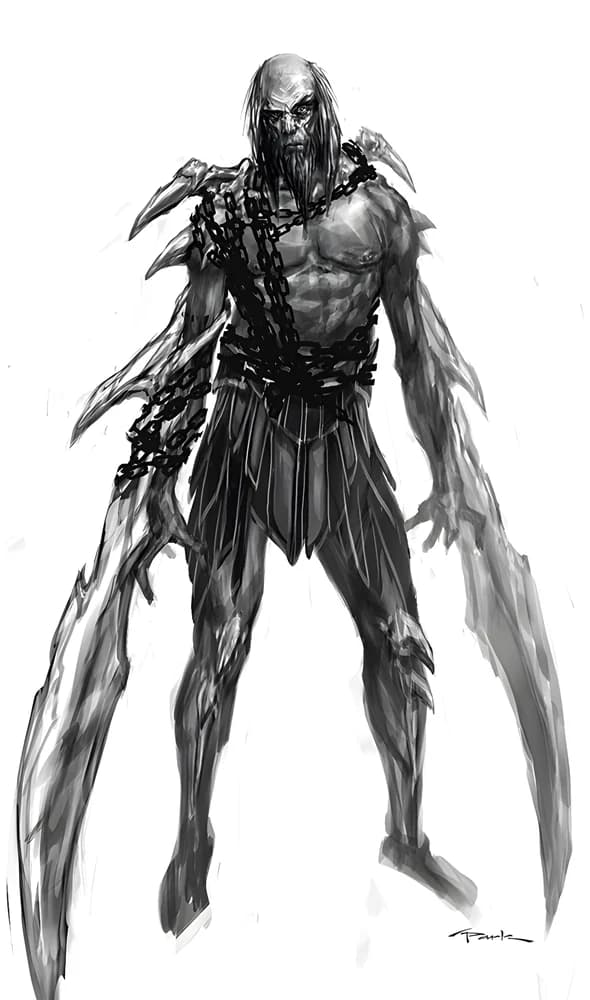
What Happened to Kratos's Brother?
Kratos's younger brother Deimos was taken from Sparta as a boy by Ares and Athena, held for years in the Domain of Death, and killed by Thanatos soon after Kratos finally freed him. Here is the whole story from Ghost of Sparta, and how it still weighs on Kratos in Ragnarök.
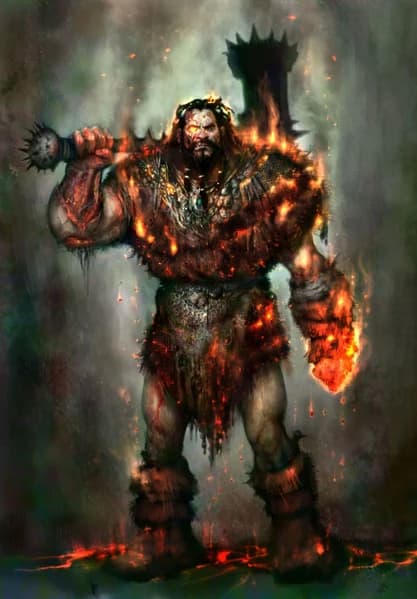
Alrik
Alrik, the Barbarian King, was the leader of the Barbarian horde from the east and one of Kratos' oldest enemies. His assault drove Kratos to pledge his soul to Ares, beginning the Spartan's tragedy, and his hatred outlasted even death.
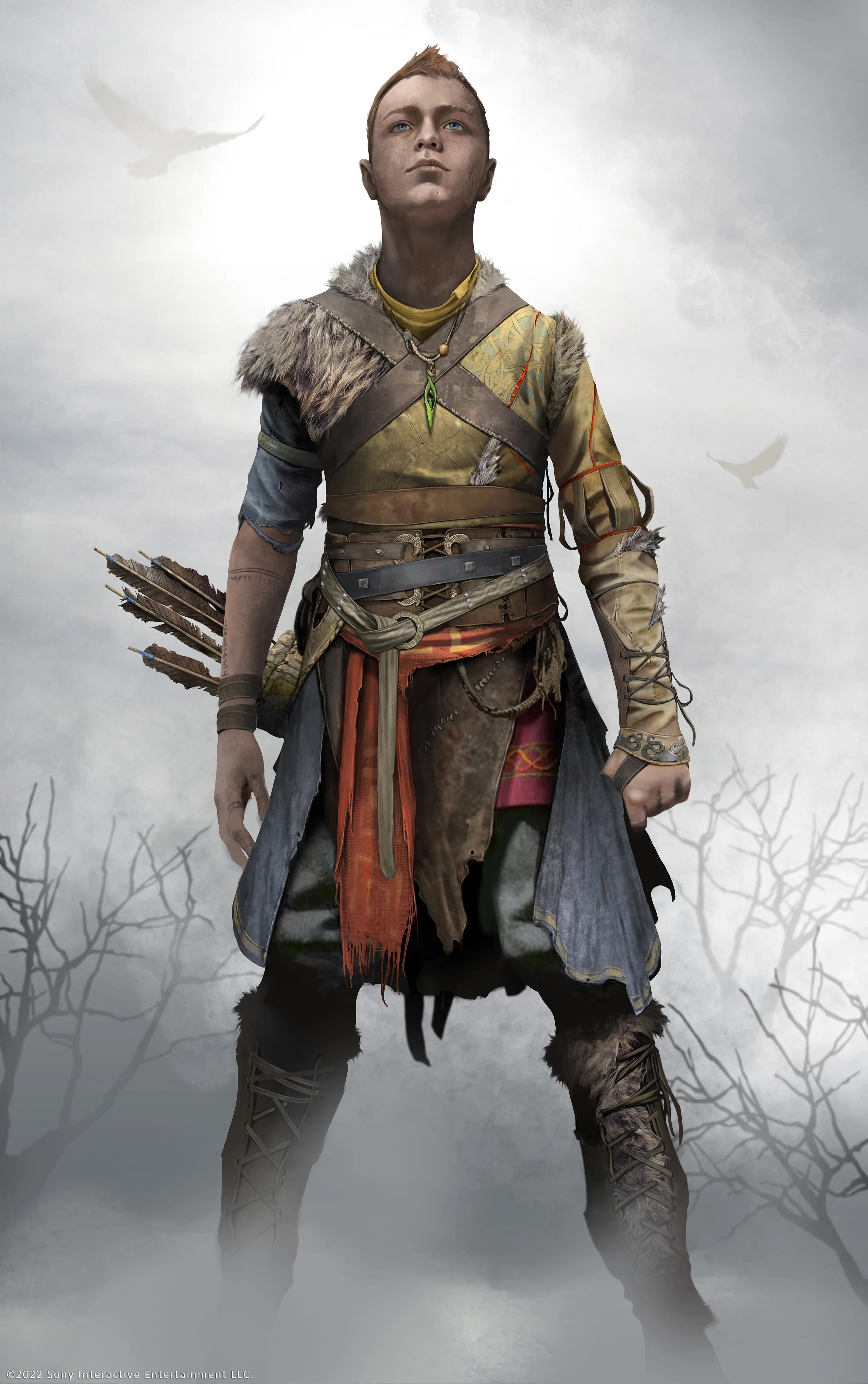
Atreus (Loki): Kratos's Son and the Truth of His Name
Atreus was the son of Kratos and the Jotunn Faye, born in Midgard and given the hidden name Loki. Across two great journeys he grew from a sickly boy into the prophesied champion of the Giants, the god of mischief whose fate was bound to Ragnarok.
Blades of Chaos: chained to Kratos' arms
The Blades of Chaos were forged in the Underworld for Ares, who seared their chains onto Kratos' forearms. They burn with the fire of Tartarus.
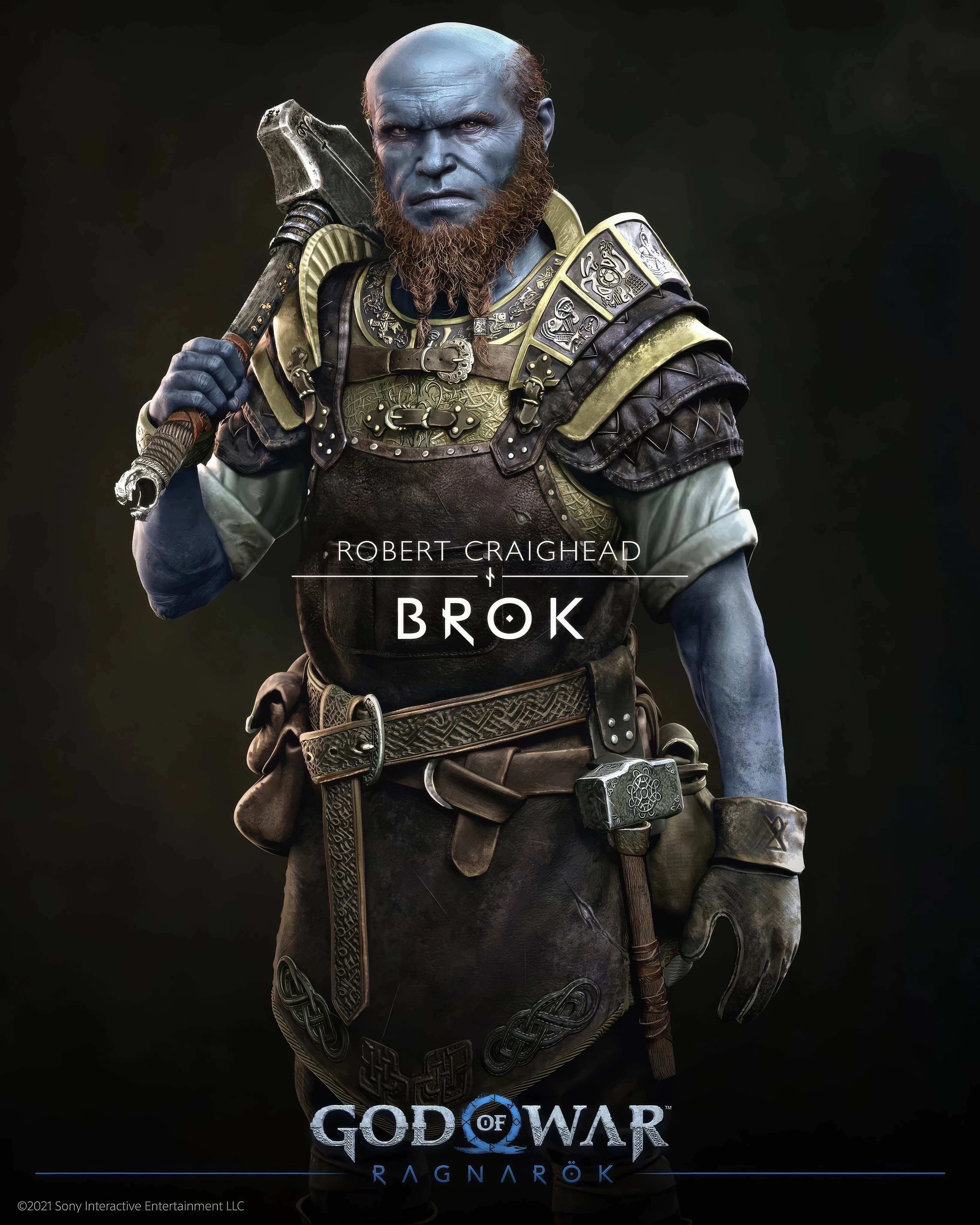
Brok: the Huldra brother Odin murdered
Brok forged Mjolnir and the Leviathan Axe with his brother Sindri. Killed once and revived with an incomplete soul, he was stabbed by Odin disguised as Tyr.
Mentioned in383 entries
Acmon: the brains of the thieving Kerkopes
Acmon was one of the Kerkopes, a pair of thieving monkey-like brothers who dwelt in the Laconian Woods. Blue-furred and long-suffering, he was the wilier of the two, and he crossed paths with the young Kratos and Deimos during their search through Laconia.
Adrasteia: the griffin who raised Zeus
Adrasteia was a nymph in the service of Gaia who, with her sisters, hid and raised the infant Zeus beyond the reach of Cronos. For shielding the child she was cursed into the shape of a griffin and imprisoned within Mount Taygetos, until Kratos and Deimos set her free.
Aeetes: the king of Colchis
Aeetes was the king of Colchis, a son of the sun god Helios and the father of the sorceress Medea. The Golden Fleece came to rest in his kingdom as a gift of gratitude, and its theft by Jason of the Argonauts cost the king his daughter, his son, and the greatest treasure of his house.
Aegaeon: the Hecatonchires made a prison
Aegaeon was one of the three Hecatonchires, a giant of many hands who broke a blood oath with Zeus and was punished by the Furies. His vast body was transformed into the living dungeon called the Prison of the Damned, in which Kratos was once chained.
Aesir Prison Wreckage: Odin's fallen prison in Niflheim
The Aesir Prison Wreckage was a region of Niflheim formed after Ragnarok, when an entire prison of Asgard crashed whole into the ice east of the Raven Tree. Within its cells Kratos and Freya found the true Tyr, whom Odin had hidden away, along with the tuning fork Sindri used to trigger Hrimthur's Flaw.
Aesir-Vanir War
The Aesir-Vanir War was the long and brutal conflict between the two tribes of Norse gods, fought ages before Kratos came to the Northlands. It ended in an uneasy peace sealed by the marriage of Odin and Freya, only for Odin's treachery to reignite it.
Alberich Hollow: tunnel road of the Bay of Bounty
Alberich Hollow was a tunnel region in the north of Svartalfheim's Bay of Bounty, entered from the great wooden walkway above Dragon Beach. Its abandoned dwarven works held half of the seed that opened the road to Muspelheim, a rift into Yggdrasil, and the lair of the dreadful Grim Ormstunga.
Alberich Island: deserted shore of the Bay of Bounty
Alberich Island was a small shoreline in the far north of Svartalfheim's Bay of Bounty, abandoned by the Dwarves and overgrown with dry vegetation. Kratos, Atreus, and Mimir passed its shore during their voyage across the bay, and its heights held a rift in Yggdrasil, the gravestone of a berserker, and a fragment of the Amulet of Yggdrasil.
Alchemist's Ring
The Alchemist's Ring was a green ring that held the soul of the dwarven alchemist Andvari, who locked himself within it to escape the Soul Eater of the Volunder Mines. Recovered by Kratos and Atreus, the ring still spoke with the voice of the dwarf trapped inside.
Alecto
Alecto was the Queen of the Furies and the Goddess of Anger, the sister who ruled the trio that hunted Kratos. She mated with Ares to bear the disowned Orkos, ensnared her victims in illusion and black goo, and transformed into a monstrous sea creature before falling to the Spartan's blades.
Aletheia: the Oracle of Delphi
Aletheia was the mortal Oracle of Delphi, a seer whose eyes granted her visions of the future and the power to pierce any illusion. When she uncovered the plot of Ares and the Furies to overthrow Olympus, the Furies tore out her eyes and forged them into the Eyes of Truth, and with her dying breath she set Kratos on the path that freed him from his blood oath.
Alfheim: the elves' war over the Light
Light and Dark Elves fought for centuries over the Light of Alfheim, the source that powers the Bifrost. It changed hands more than two hundred times.
+ 371 more
Get new articles in your inbox
No spam. New lore drops, canon conflicts, and deep dives only when they’re worth reading.
Some links on Lore Fortress are affiliate links. If you buy through them we earn a small commission at no extra cost to you.