Fimbulwinter: the three-year winter
The Mighty Winter
Fimbulwinter was the three-year winter that began with Baldur's death and ended with Ragnarok. Being magical, it weakened curses across the Nine Realms.
Fimbulwinter, or Fimbulvetr, the Mighty Winter, was a prophesied three-year period of extreme cold and environmental upheaval that fell upon the Norse realms as a herald of Ragnarok. It struck after the death of Baldur at the hands of Kratos, bringing heavy snow and relentless blizzards to Midgard and lesser disturbances to many of the other realms. Magical in nature, it weakened blessings and enchantments across the Nine Realms, and loosened the curse that Odin had laid upon Freya. (God of War (2018); God of War Ragnarök; Prose Edda)
The coming of the winter#
The Mighty Winter began in the wake of Baldur's death. The heavy snows took hold slowly at first, with the dwarf Brok noting their arrival while his brother Sindri tried not to believe what they meant. As the winter set in, it was understood as a foreboding sign of Ragnarok, the prophesied annihilation that the Aesir feared would consume all of the Nine Realms. The fight that killed Baldur comes near the end of God of War (2018)'s story. (God of War (2018))
Over the three years that followed, the snowfall worsened with each passing day, and blizzards became a constant feature of the land. The Lake of Nine froze over completely, locking down Tyr's Temple at its center and preventing travel between the realms. Sindri noted Hel-Walkers and strange new beasts roaming the frozen country, signs that the boundaries between the worlds of the living and the dead were growing thin. (God of War Ragnarök)
A magical winter#
Fimbulwinter was magical in nature, and over time it caused enchantments across the Nine Realms to weaken, with some blessings and enchanted items fading and others disappearing entirely. The effect was a boon to some and an inconvenience to others. The improvements that had been worked into Kratos' weapons eventually faded, reverting them to their base forms. More significantly, the weakening of magic allowed Freya to visit other realms despite Odin's curse, if only in a limited way, and to begin undoing the spell that had bound her to Midgard since her banishment from Asgard. (God of War Ragnarök)
Effects across the realms#
Beyond the snow and blizzards of Midgard, Fimbulwinter touched most of the other realms in different ways. Svartalfheim suffered random and intense earthquakes along with a heavy, humid air, while Vanaheim grew thick with humidity in its jungles. Alfheim saw violent flashes of light in its Lake of Souls, and Helheim grew colder and darker still, overrun with Hel-Walkers. Niflheim, long buried in toxic mist, appeared to freeze into a land of ice once more. (God of War Ragnarök)
The more primordial realms suffered little. Asgard, Jotunheim, and Muspelheim were almost untouched by the winter, leading Mimir to suppose that the more ancient and fundamental a Realm was, the less the Mighty Winter could affect it. (God of War Ragnarök)
The end of the winter#
Fimbulwinter came to a close with the beginning of Ragnarok itself, the very doom it had heralded. The final battle ended in the destruction of Asgard, bringing the centuries-long reign of the Aesir to an end and allowing the Nine Realms to thrive and find peace once more after the winter had passed. On the God of War timeline, those three winters sit between Baldur's death and the fall of Asgard. (God of War Ragnarök)
Frequently asked questions
- What was Fimbulwinter?
- Fimbulwinter, the Mighty Winter, was a prophesied three-year period of extreme cold and environmental upheaval that fell upon the Norse realms as a herald of Ragnarok. It brought heavy snow and relentless blizzards to Midgard and lesser disturbances to many of the other realms.
- What triggered Fimbulwinter?
- Fimbulwinter began in the wake of Baldur's death at the hands of Kratos. The dwarf Brok noted the arrival of the heavy snows, while his brother Sindri tried not to believe what they meant.
- Why was Fimbulwinter described as a magical winter?
- Fimbulwinter was magical in nature and caused enchantments across the Nine Realms to weaken, with some blessings and enchanted items fading or disappearing entirely. The improvements worked into Kratos' weapons faded, and the weakening of magic allowed Freya to begin undoing the spell that had bound her to Midgard.
- How did Fimbulwinter affect the different realms?
- Beyond Midgard's snow, Svartalfheim suffered earthquakes and humid air, Vanaheim grew thick with humidity, Alfheim saw flashes of light in its Lake of Souls, and Helheim grew colder and overrun with Hel-Walkers. The more primordial realms of Asgard, Jotunheim, and Muspelheim were almost untouched, leading Mimir to suppose that more ancient realms were less affected.
- How did Fimbulwinter end?
- Fimbulwinter came to a close with the beginning of Ragnarok itself, the very doom it had heralded. The final battle ended in the destruction of Asgard, bringing the reign of the Aesir to an end and allowing the Nine Realms to find peace once more.
Sources
- GameGod of War (2018), Santa Monica Studio, 2018
- GameGod of War Ragnarök, Santa Monica Studio, 2022
- BookProse Edda, Snorri Sturluson, around 1220
Spotted a factual error or a primary source we missed? Email a correction. Every flagged claim gets reviewed.
Followed from this entry
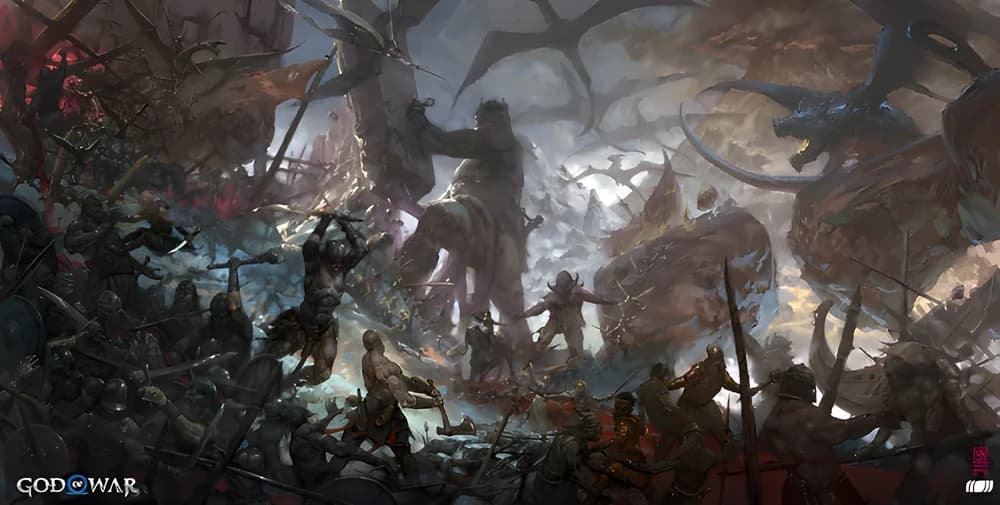
Ragnarok: the war that only Asgard lost
The seeress Groa foresaw the death of the gods. When it came, Odin and Thor died and Surtr burned Asgard, but the other eight realms survived.
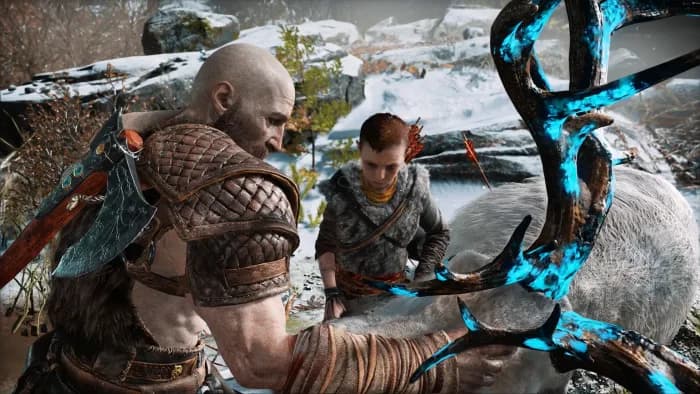
God of War (2018) Story Explained: Plot Summary and Ending
The full plot of God of War (2018) in order, from Faye's funeral pyre to the mural in Jotunheim. Kratos and Atreus set out to scatter her ashes, kill Baldur on the way, and learn who Atreus really is.
Alfheim: the elves' war over the Light
Light and Dark Elves fought for centuries over the Light of Alfheim, the source that powers the Bifrost. It changed hands more than two hundred times.
Asgard
Asgard was the realm of the Aesir gods, perched in the crown of Yggdrasil and ruled by Odin from the hall of Gladsheim. Behind the great wall of Hrimthur it stood as a fortress against the prophesied doom of Ragnarok, until Kratos breached it and the realm fell.
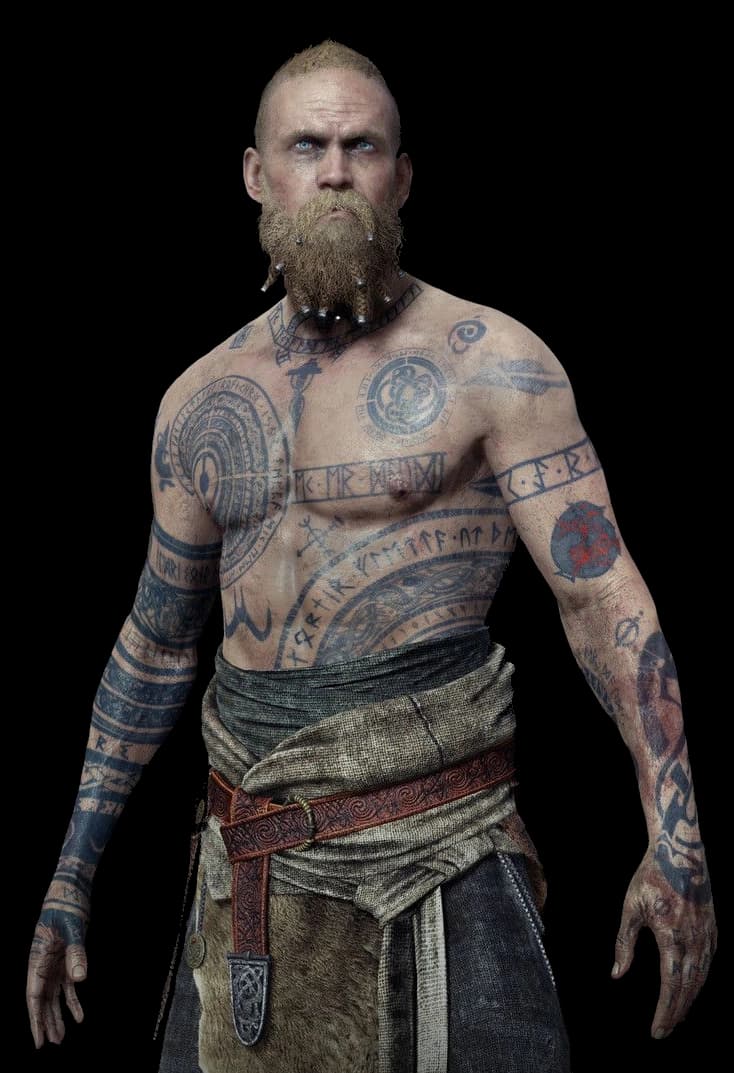
Baldur: the god who could feel nothing
Freya's spell made Baldur invulnerable but stripped every sensation from him, and a century of numbness drove him mad. Kratos killed him beside Thamur's corpse.
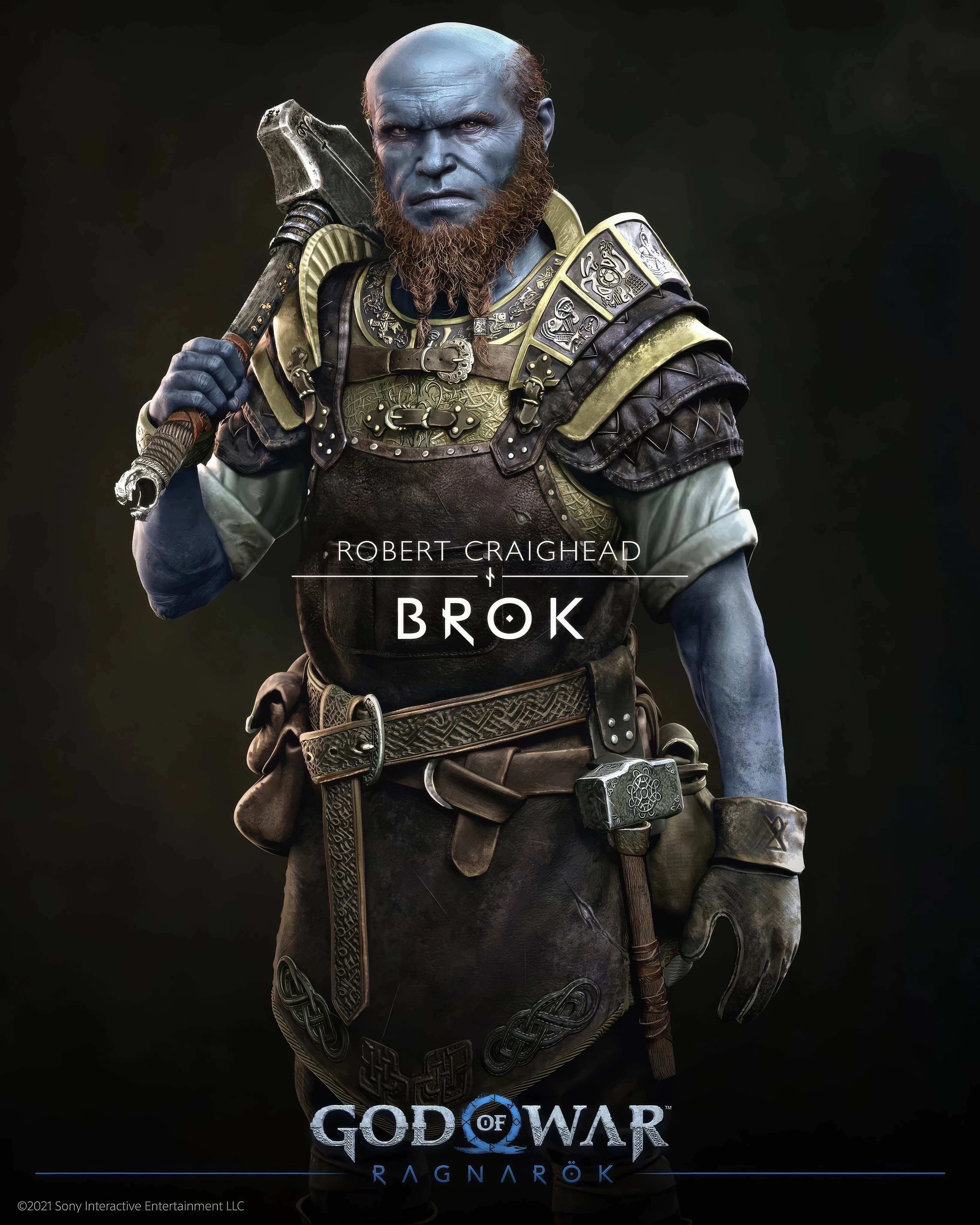
Brok: the Huldra brother Odin murdered
Brok forged Mjolnir and the Leviathan Axe with his brother Sindri. Killed once and revived with an incomplete soul, he was stabbed by Odin disguised as Tyr.
Mentioned in46 entries
Asgard
Asgard was the realm of the Aesir gods, perched in the crown of Yggdrasil and ruled by Odin from the hall of Gladsheim. Behind the great wall of Hrimthur it stood as a fortress against the prophesied doom of Ragnarok, until Kratos breached it and the realm fell.
Atreus (Loki): Kratos's Son and the Truth of His Name
Atreus was the son of Kratos and the Jotunn Faye, born in Midgard and given the hidden name Loki. Across two great journeys he grew from a sickly boy into the prophesied champion of the Giants, the god of mischief whose fate was bound to Ragnarok.
Aurvangar Wetlands: gateway swamps of Svartalfheim
The Aurvangar Wetlands were the warm, geyser dotted swamps at the southern entrance of Svartalfheim, the main waterway to the Dwarven city of Nidavellir. Abandoned by the Dwarves and infested with Grim and Wretches, they were the first ground Kratos and Atreus walked in the Dwarven domain during their search for Tyr.
Baldur: the god who could feel nothing
Freya's spell made Baldur invulnerable but stripped every sensation from him, and a century of numbness drove him mad. Kratos killed him beside Thamur's corpse.
Baldur's Curse: the spell of invulnerability
Baldur's curse was a spell of protection that Freya wove around her son to cheat a prophecy of his pointless death. It made Baldur impervious to every wound, whether dealt by weapon or sorcery, but it stripped him of all physical sensation, drove him into madness, and left mistletoe as its single fatal flaw.
Baldur's Death: mistletoe and a broken neck
A mistletoe arrow broke Freya's spell of invulnerability over Baldur, and Kratos snapped his neck as he moved to strangle her. Fimbulwinter followed.
Blades of Chaos: chained to Kratos' arms
The Blades of Chaos were forged in the Underworld for Ares, who seared their chains onto Kratos' forearms. They burn with the fire of Tartarus.
Chaurli: the tree-topped tortoise of Freya
Chaurli was the giant tortoise who sheltered Freya during her exile in Midgard, carrying her home upon his back beneath the great red-leaved tree of his shell. He grew into a quiet fixture of Kratos and Atreus's journeys through the Norse realms.
Council of Valkyries: The Hidden Throne Circle of Midgard
The Council of Valkyries, known in the old tongue as the Rocstoll aff Valkyrs, was a secluded council chamber in Midgard where the Valkyries met in private, away from the eyes of Odin. Left ruined and abandoned after the All Father cursed the sisterhood, it became the place where Kratos and Atreus summoned and slew Queen Sigrun, and later the campsite from which a vengeful Freya hunted them through Fimbulwinter.
Fenrir: the wolf whose soul Atreus carried in his knife
Fenrir was the old wolf Kratos and Atreus kept during Fimbulwinter. He died in Atreus' lap, his soul drawn into the boy's knife, and that knife later put him in the body of the Hel-hound Garm, reborn as a giant wolf who tore rifts between realms and fought at Ragnarök.
Freya
Freya was the Vanir goddess of love, war, and magic who married Odin to end the Aesir-Vanir War and was cursed to remain in Midgard. Once the Witch of the Woods, she aided Kratos and Atreus, swore vengeance after the death of her son Baldur, and at last turned her wrath on Odin himself.
Gna
Gna was the Vanir goddess of swift travel and Freya's former handmaiden, who pledged herself to Odin and rose to become the final Queen of the Valkyries. Loyal to Asgard until death, she fell at last to Freya's blade in Muspelheim.
+ 34 more
Get new articles in your inbox
No spam. New lore drops, canon conflicts, and deep dives only when they’re worth reading.
Some links on Lore Fortress are affiliate links. If you buy through them we earn a small commission at no extra cost to you.