Ragnarok: the war that only Asgard lost
The Twilight of the Gods
The seeress Groa foresaw the death of the gods. When it came, Odin and Thor died and Surtr burned Asgard, but the other eight realms survived.
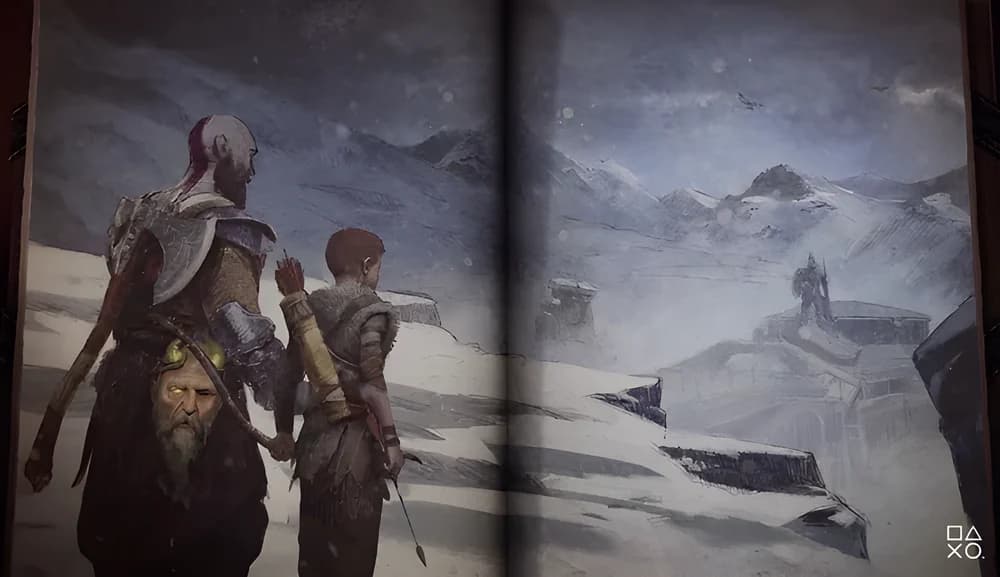
Ragnarok, called Ragnarokkr or the Twilight of the Gods, was the great war first prophesied by the Jotunn seeress Groa, foretold to end in the death of many gods, Odin and Thor among them. The prophecy placed Kratos and his son Atreus at the center of everything. The Aesir believed it meant the annihilation of the Nine Realms, but in truth it brought only the destruction of Asgard, leaving the other realms to thrive once the tyranny of Odin was broken. (God of War (2018); God of War Ragnarök)
The prophecy of Groa#
Ragnarok was first foreseen by the Jotunn seeress Groa, who glimpsed the coming events by accident while searching her library for knowledge that might help her find her lost husband Aurvandil. In her vision she saw the onset of Fimbulwinter, the wolves Skoll and Hati devouring the sun and moon, Surtr rising from Muspelheim, the gods turning on one another, and a white-skinned stranger from another land and his young son, at the center of it all. The vision was so powerful that Odin himself felt it. He came to her library and demanded to know what she had seen, and when she hesitated he strangled her, coldly revealing that Thor had killed her husband long before. (God of War Ragnarök)
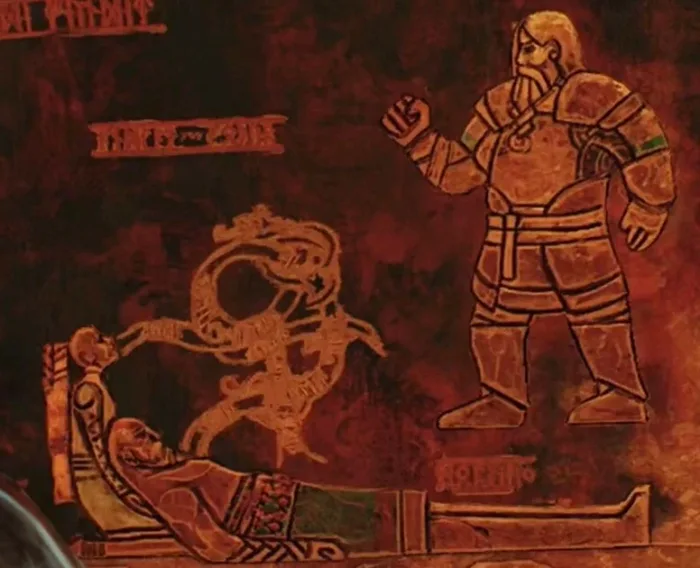
Groa had the last word even in death, for Odin could not take all of her knowledge and learned only some of the figures who would be involved. Knowing the rest of the Jotnar shared the gift of foresight, he manipulated his son Tyr into arranging a meeting with the giants in Jotunheim under the false pretense of brokering peace. There he caught a glimpse of a hidden mural that depicted Kratos and Atreus, but he did not recognize them, and the giants, realizing his treachery, banished him forever. As a result the Aesir never had a clear picture of Ragnarok, misjudging both the order of events and when they would come to pass, including the death of Baldur. (God of War Ragnarök)
The marks of its coming#
The giants, by contrast, foresaw everything and carved the events leading to Ragnarok into a mural on a wall in Jotunheim. Their guardian Faye destroyed half of that mural to shield her son and husband from their foretold fate. The prophecy held that the death of Baldur would be the first mark of Ragnarok's coming, followed by Fimbulwinter, a three-year winter whose end was the second mark. After it the wolves Skoll and Hati would devour the sun and moon, the war between Aesir and Vanir would resume, and a fierce battle between Jormungandr and Thor would occur. Kratos and Atreus would intervene, Atreus would offer his service to Odin, and Kratos would die at Thor's hands as his son cried out in grief. Finally Surtr would burn Asgard to the ground. (God of War (2018); God of War Ragnarök)
Restoring the sun and moon#
Three years after Baldur's death, as Fimbulwinter drew to a close, Kratos, Atreus, Mimir, and the man they took for Tyr, really Odin in disguise, discovered the true prophecy, which the giants had hidden in their shrines so that Odin could never find it. Part of it concerned the celestial wolves Skoll and Hati, once captured by Odin and freed by the Jotnar, who had taken refuge in Vanaheim. With the moon stolen away by the Einherjar, Hati had nothing to chase and Skoll had ceased his pursuit of the sun. Acting on what they had learned, Kratos, Atreus, and Mimir reclaimed the moon from the Einherjar and Atreus released it back into the sky, waking the wolves so that sun and moon joined in an eclipse. Atreus then loosed an arrow at the eclipse, sending Skoll back to its chase and fulfilling his part of the story. (God of War Ragnarök)
The invasion of Asgard#
After Odin murdered the dwarf Brok, the vengeful Freya and Kratos resolved to stop preventing Ragnarok and instead set it in motion. With Freyr and Hildisvini they planned the invasion, each going to a different Realm to raise an army. Kratos and Atreus went to Muspelheim for Surtr, Freya to Vanaheim for the Vanir and the freed Valkyries, Freyr to Alfheim for the Elves, Hildisvini to Helheim for the Army of the Dead, and Sindri to Svartalfheim for the dwarves, though in the end only Sindri himself came. Kratos agreed to serve as general, and in Tyr's Temple he blew Gjallarhorn, sending an earth-shaking blast across the Nine Realms. The doors between the realms opened at once, and the allied armies surged into Asgard. (God of War Ragnarök)
Kratos and his allies arrived on the plains of Vigridr to a scene of total chaos. The sky had turned blood red, riven by lightning, as the Elves, the Vanir, and the Dead crashed against Asgard's legions of Einherjar and war beasts before the great wall. The Asgardians fought back with dwarven war machines and the endless return of their fallen from Valhalla, but allied reinforcements continued to pour in, and the Einherjar were slowly driven back toward the wall. The giants Angrboda, Fenrir, Skoll, Hati, and a younger Jormungandr joined the battle, the serpent engaging Thor directly. (God of War Ragnarök)
Averting fate#
When the war machines wounded the people sheltering outside the wall, Kratos and Atreus realized they were captured Midgardians whom Odin had placed in their path to be killed. The discovery turned the battle. Rather than spend the innocents' lives, Kratos broke from the prophecy he had been told and chose justice over vengeance, sending allies to evacuate the Midgardians and ordering Freya and Freyr to slow Surtr while he and Atreus breached the wall through Hrimthur's Flaw. Thor's daughter Thrud, convinced of Odin's cruelty by her mother Sif, turned against her grandfather and joined them. (God of War Ragnarök)
Thor struck Jormungandr so hard that Yggdrasil splintered, sending the serpent back in time and off the battlefield. He then fell upon Kratos, and the two fought a savage battle that ended with Kratos refusing the killing blow, urging that they change for the sake of their children. Thor cast aside his hammer, and an enraged Odin impaled his own son with his spear. The All-Father then turned on Kratos, Atreus, and Freya, and though he proved a deadly foe, their combined strength brought him to his knees. Atreus sealed Odin's soul into a marble, which the grieving Sindri shattered in retribution for Brok's death. (God of War Ragnarök)
The fall and aftermath#
As the fight ended, Surtr, transformed into Ragnarok itself, plunged his burning sword into Asgard. Freyr held back the fire giant to shield his allies as they escaped through a Realm Tear, sacrificing himself in the explosion that killed both him and Surtr. Asgard imploded, the only one of the Nine that did not survive, and its burning remnants scattered across the other eight worlds. The destruction shook Yggdrasil to its roots. (God of War Ragnarök)
The death of Odin and the fall of Asgard broke the centuries-long grasp of the Aesir, freeing the other realms to thrive in peace at last. The Valkyrie Queen Gna claimed leadership over the Remnants of Asgard, while the surviving Aesir who rejected Odin's ways followed Sif to a new home in Vanaheim. Against everything the giants and the Norns had foreseen, Kratos lived, having proven that fate could be broken by a man willing to change. (God of War Ragnarök; God of War Ragnarök: Valhalla)
Frequently asked questions
- What is Ragnarok in God of War?
- Ragnarok, also called Ragnarokkr or the Twilight of the Gods, was the great war first prophesied by the Jotunn seeress Groa. It was foretold to end in the death of many gods, including Odin and Thor.
- Who first foresaw Ragnarok?
- The Jotunn seeress Groa first foresaw Ragnarok, glimpsing the coming events by accident while searching her library for knowledge to help find her lost husband Aurvandil. Her vision was so powerful that Odin felt it, came to her library, and strangled her after she hesitated to share what she had seen.
- What were the first marks of Ragnarok's coming?
- The prophecy held that the death of Baldur would be the first mark of Ragnarok's coming, followed by Fimbulwinter, a three-year winter whose end was the second mark. After it, the wolves Skoll and Hati would devour the sun and moon and the war between Aesir and Vanir would resume.
- How did the invasion of Asgard begin?
- After Odin murdered the dwarf Brok, Freya and Kratos resolved to set Ragnarok in motion, and with their allies each went to a different Realm to raise an army. Kratos agreed to serve as general and blew Gjallarhorn in Tyr's Temple, opening the doors between the realms so the allied armies surged into Asgard.
- What was the outcome of Ragnarok?
- Odin and Thor both died, and the fire giant Surtr, transformed into Ragnarok itself, plunged his burning sword into Asgard, which imploded as the only one of the Nine that did not survive. The fall of Asgard broke the centuries-long grasp of the Aesir, and against the prophecy Kratos lived by choosing compassion over vengeance while the other eight realms endured.
Sources
- GameGod of War (2018), Santa Monica Studio, 2018
- GameGod of War Ragnarök, Santa Monica Studio, 2022
- GameGod of War Ragnarök: Valhalla, Santa Monica Studio, 2023
Spotted a factual error or a primary source we missed? Email a correction. Every flagged claim gets reviewed.
Followed from this entry
Fimbulwinter: the three-year winter
Fimbulwinter was the three-year winter that began with Baldur's death and ended with Ragnarok. Being magical, it weakened curses across the Nine Realms.
God of War Ragnarök Ending Explained: the Full Story and What It Means
The whole plot of God of War Ragnarök in order, then the ending explained. Odin is destroyed, Thor and Freyr die, Asgard falls, Kratos survives the prophecy, and Atreus leaves to find the last of the giants.
The Aesir
The Aesir were one of the two tribes of Norse gods, natives of Asgard known for their war-like nature and their hunger for knowledge. Descended from the slain primordial Ymir and ruled by Odin, they claimed dominion over all creation, waging genocide upon the Jotnar and war upon the Vanir before their fall in Ragnarok.
Alfheim: the elves' war over the Light
Light and Dark Elves fought for centuries over the Light of Alfheim, the source that powers the Bifrost. It changed hands more than two hundred times.
Angrboda: the last giantess of Ironwood
Angrboda grew up almost alone in Ironwood, painting the prophecy of Ragnarok. She gave Atreus the soul marbles of the lost Giants and made him their keeper.
Asgard
Asgard was the realm of the Aesir gods, perched in the crown of Yggdrasil and ruled by Odin from the hall of Gladsheim. Behind the great wall of Hrimthur it stood as a fortress against the prophesied doom of Ragnarok, until Kratos breached it and the realm fell.
Mentioned in108 entries
Aesir Prison Wreckage: Odin's fallen prison in Niflheim
The Aesir Prison Wreckage was a region of Niflheim formed after Ragnarok, when an entire prison of Asgard crashed whole into the ice east of the Raven Tree. Within its cells Kratos and Freya found the true Tyr, whom Odin had hidden away, along with the tuning fork Sindri used to trigger Hrimthur's Flaw.
Aesir Royal Family: the Ruling Dynasty of Asgard
The Aesir Royal Family was the ruling dynasty of gods who reigned from Asgard over the Nine Realms. Descended from the first god Buri and led by Odin the Allfather, the line counted Odin's brothers Vili and Ve and his sons Thor, Tyr, Heimdall, and Baldur among its most prominent members.
Aesir-Vanir War
The Aesir-Vanir War was the long and brutal conflict between the two tribes of Norse gods, fought ages before Kratos came to the Northlands. It ended in an uneasy peace sealed by the marriage of Odin and Freya, only for Odin's treachery to reignite it.
Alfheim: the elves' war over the Light
Light and Dark Elves fought for centuries over the Light of Alfheim, the source that powers the Bifrost. It changed hands more than two hundred times.
Angrboda: the last giantess of Ironwood
Angrboda grew up almost alone in Ironwood, painting the prophecy of Ragnarok. She gave Atreus the soul marbles of the lost Giants and made him their keeper.
Asgard
Asgard was the realm of the Aesir gods, perched in the crown of Yggdrasil and ruled by Odin from the hall of Gladsheim. Behind the great wall of Hrimthur it stood as a fortress against the prophesied doom of Ragnarok, until Kratos breached it and the realm fell.
Atreus (Loki): Kratos's Son and the Truth of His Name
Atreus was the son of Kratos and the Jotunn Faye, born in Midgard and given the hidden name Loki. Across two great journeys he grew from a sickly boy into the prophesied champion of the Giants, the god of mischief whose fate was bound to Ragnarok.
Baldur: the god who could feel nothing
Freya's spell made Baldur invulnerable but stripped every sensation from him, and a century of numbness drove him mad. Kratos killed him beside Thamur's corpse.
Baldur's Curse: the spell of invulnerability
Baldur's curse was a spell of protection that Freya wove around her son to cheat a prophecy of his pointless death. It made Baldur impervious to every wound, whether dealt by weapon or sorcery, but it stripped him of all physical sensation, drove him into madness, and left mistletoe as its single fatal flaw.
Baldur's Death: mistletoe and a broken neck
A mistletoe arrow broke Freya's spell of invulnerability over Baldur, and Kratos snapped his neck as he moved to strangle her. Fimbulwinter followed.
Blades of Chaos: chained to Kratos' arms
The Blades of Chaos were forged in the Underworld for Ares, who seared their chains onto Kratos' forearms. They burn with the fire of Tartarus.
Brok: the Huldra brother Odin murdered
Brok forged Mjolnir and the Leviathan Axe with his brother Sindri. Killed once and revived with an incomplete soul, he was stabbed by Odin disguised as Tyr.
+ 96 more
Get new articles in your inbox
No spam. New lore drops, canon conflicts, and deep dives only when they’re worth reading.
Some links on Lore Fortress are affiliate links. If you buy through them we earn a small commission at no extra cost to you.