Valhalla: the hall older than Odin himself
The Golden Hall of the Chosen Dead
Valhalla was the golden hall where the Valkyries brought the honoured dead. It was not Odin's creation but a primordial force that tested every soul.
Valhalla was the famed golden hall presided over by Odin, where the Valkyries bore the honored dead so that they might feast and train as Einherjar until the coming of Ragnarök. Yet it was far more than a hall of glory. Beneath the legend lay a primordial force that judged and tested every soul who entered, a power that even the All-Father could never bend to his will. (God of War Ragnarök; God of War Ragnarök: Valhalla)
The hall of the chosen dead#
Valhalla was the home of the warriors gathered by the Valkyries, the winged figures charged with carrying the worthy dead from the field of battle. Half of those who fell in combat were borne there to become Einherjar, and within the great hall they would feast, drink, and train against the day of Ragnarök, when they would march out to face the giants of Jotunheim. Apart from the halls where the dead made their home, there was a separate part of Valhalla, unconnected to the rest, where the chosen warriors trained. (God of War (2018); God of War Ragnarök; Poetic Edda)
The exact place of Valhalla was a secret known only to Odin and the Valkyries. Freya said only that it existed within Asgard and beyond it at once, and the precise truth of where the dead passed remained uncertain. (God of War (2018); God of War Ragnarök)
A trial of the soul#
Valhalla was more than a place of reward. It served as a gauntlet to help the dead reckon with and resolve the lives they had lived. Those who found some measure of closure and proved themselves whole could move on, but those unable to make peace with their lives became permanently trapped within a Valhalla of their own. According to Sigrun, some of the chosen preferred to keep fighting in the gauntlet rather than depart, while elsewhere there were larger neighborhoods where the worthy dead lived, socialized, and trained until Ragnarök. (God of War Ragnarök: Valhalla)
The place drew upon the memories of those who entered, raising up the lands they had once walked and the enemies they had once faced. It sought wholeness and balance in those who came, demanding that a warrior master not only the trials before him but the manner in which he overcame them. While the Valkyries could guide those within, it was Valhalla itself that judged their progress, and it made and kept its own rules. (God of War Ragnarök: Valhalla)
The curse of the Valkyries#
When Odin cursed the Valkyries, they could no longer carry out their task of gathering the slain. The dead swelled within Helheim until it overflowed, and they began to walk the mortal world as savage corpses called Hel-Walkers. The freeing of the Valkyries offered to restore them to their duty and bring balance back to the realms. (God of War (2018))
Within Asgard, Valhalla also bound the Einherjar to endless rebirth: whenever they fell, they returned at once to the great hall to rise again. For this reason, during Ragnarök the link to Valhalla had to be severed, lest the slain of Asgard return without end. (God of War Ragnarök)
The truth of Valhalla and Tyr's challenge#
Though the people of the Nine Realms believed Valhalla to be Odin's own creation and a part of Asgard, this was a lie spread by the All-Father. Tyr revealed that Valhalla was in truth a primordial force, and that Odin had attempted to seize control of it and failed. Valhalla was meant for looking inward for answers, and Odin, who could only ever look outside himself, could never truly master it. Mimir likewise named Valhalla and the Valkyries a primordial power. (God of War Ragnarök: Valhalla)
To enter, one had to have died at some point in life, though the death need not have come in battle or even within the Nine Realms. This allowed Kratos, who had died several times during his years in Greece, and Mimir to pass within. Tyr got in on a technicality, an old attempt to win back the arm Garm bit off that had glancingly involved the underworld. Freya, who had never died, could not enter. (God of War Ragnarök: Valhalla)
After the war was won, Kratos and Mimir received a strange letter telling them where the entrance to Valhalla lay, and bidding them enter to master themselves and become whole. The letter had been sent by Tyr, who awaited Kratos at the summit of his own Valhalla within a recreation of Greece. There Tyr set himself as a self-chosen final challenge, to test whether Kratos was focused enough in spirit for the harsher trials the place would make of him. (God of War Ragnarök: Valhalla)
Frequently asked questions
- What is Valhalla in God of War?
- Valhalla was the golden hall associated with Asgard where the Valkyries brought half of the Norse warriors who died in battle. There the chosen dead, the Einherjar, would feast, drink, and train until the coming of Ragnarök.
- Who controls Valhalla in God of War?
- Though the Nine Realms believed Valhalla to be Odin's own creation, it was in truth a primordial force older than him. Odin tried to seize control of it and failed, because Valhalla was made for looking inward, and the All-Father could only ever look outside himself for answers.
- Who can enter Valhalla?
- One had to have died at some point to enter Valhalla, though the death need not have been in battle or even within the Nine Realms. This allowed Kratos, Mimir, and Tyr to enter, since each had died before, while Freya, who had never died, could not.
- What was Tyr doing in Valhalla?
- After the war, a letter led Kratos and Mimir to the entrance of Valhalla, inviting them to master themselves and become whole. The letter had been sent by Tyr, who awaited Kratos within a recreation of Greece as a final challenge to test whether his spirit was ready for the deeper trials of the place.
Sources
- GameGod of War (2018), Santa Monica Studio, 2018
- GameGod of War Ragnarök, Santa Monica Studio, 2022
- GameGod of War Ragnarök: Valhalla, Santa Monica Studio, 2023
- BookPoetic Edda, Eddic poems, Codex Regius, 13th century
Spotted a factual error or a primary source we missed? Email a correction. Every flagged claim gets reviewed.
Followed from this entry
Asgard
Asgard was the realm of the Aesir gods, perched in the crown of Yggdrasil and ruled by Odin from the hall of Gladsheim. Behind the great wall of Hrimthur it stood as a fortress against the prophesied doom of Ragnarok, until Kratos breached it and the realm fell.
Helheim: the frozen hell even Odin feared
Those who died of age, disease or crime were sent to Helheim, a dark and unyielding cold where no fire burned. Even Odin could not last there long.
Jotunheim: where Tyr hid the last giants
Tyr sealed the giants' homeland away as Odin hunted the Jotnar to extinction. Kratos and Atreus reached it at last to scatter Faye's ashes there.
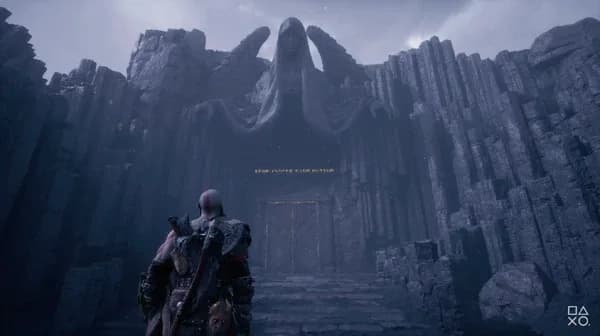
God of War Ragnarök: Valhalla Story Explained
The story of Valhalla, the 2023 epilogue to God of War Ragnarök, in order. Tyr's letter, Kratos's trials among his memories of Greece, the head of Helios, and why the ending has him take up the title of God of War again.

Einherjar: Odin's army that never dies
Warriors who died an honourable death were raised again in Valhalla. Odin built them into a standing army for Ragnarok, reborn each time they fell.

Freya
Freya was the Vanir goddess of love, war, and magic who married Odin to end the Aesir-Vanir War and was cursed to remain in Midgard. Once the Witch of the Woods, she aided Kratos and Atreus, swore vengeance after the death of her son Baldur, and at last turned her wrath on Odin himself.
Mentioned in50 entries
Aesir Royal Family: the Ruling Dynasty of Asgard
The Aesir Royal Family was the ruling dynasty of gods who reigned from Asgard over the Nine Realms. Descended from the first god Buri and led by Odin the Allfather, the line counted Odin's brothers Vili and Ve and his sons Thor, Tyr, Heimdall, and Baldur among its most prominent members.
Alrik
Alrik, the Barbarian King, was the leader of the Barbarian horde from the east and one of Kratos' oldest enemies. His assault drove Kratos to pledge his soul to Ares, beginning the Spartan's tragedy, and his hatred outlasted even death.
Asgard
Asgard was the realm of the Aesir gods, perched in the crown of Yggdrasil and ruled by Odin from the hall of Gladsheim. Behind the great wall of Hrimthur it stood as a fortress against the prophesied doom of Ragnarok, until Kratos breached it and the realm fell.
Blade of Olympus: Zeus' god-killing sword
Zeus forged the Blade of Olympus from the heavens and the earth to banish the Titans to Tartarus. It could kill gods and Titans, and it killed Zeus himself.
Calliope
Calliope was the beloved daughter of Kratos and Lysandra, a gentle and innocent child of Sparta. Killed by her father during a frenzy contrived by Ares, she found rest in the Elysium Fields, only for Kratos to be forced to abandon her there to save the world.
Cobweb: faerie maid of Queen Titania
Cobweb was a faerie of Avalon, one of the male maids of Queen Titania and a member of the Goodfellows, the band of tricksters who ran with the young Mimir in the days when he was called Puck. He never reached the Norse realms, and his name survived there only in Mimir's recollections within Valhalla.
Council of Valkyries: The Hidden Throne Circle of Midgard
The Council of Valkyries, known in the old tongue as the Rocstoll aff Valkyrs, was a secluded council chamber in Midgard where the Valkyries met in private, away from the eyes of Odin. Left ruined and abandoned after the All Father cursed the sisterhood, it became the place where Kratos and Atreus summoned and slew Queen Sigrun, and later the campsite from which a vengeful Freya hunted them through Fimbulwinter.
Cyclops Berserker
The Cyclops Berserker was the largest and fiercest breed of Cyclops, a club-wielding giant often loosed upon the field by the Beast Lords who rode upon its shoulders. Kratos broke many of these brutes across Greece and faced them again in the trials of Valhalla.
Desert of Lost Souls: the wasteland east of Athens
The Desert of Lost Souls was a vast, monster haunted desert far to the east of Athens, the place where Zeus condemned the Titan Cronos to wander with Pandora's Temple chained to his back. Kratos crossed its sands in his quest for Pandora's Box, and there Ares struck him down with a pillar hurled from the ruins of Athens.
Draugr
The Draugr were undead warriors who died in battle yet refused the Valkyries' call to Valhalla, condemned to roam the Nine Realms as raging husks of their former selves. They were among the most common dangers Kratos and Atreus faced in the Norse lands.
Draupnir Spear
The Draupnir Spear was a wind-imbued spear forged for Kratos from the enchanted ring Draupnir, created by the Lady of the Forge and sanctified with a drop of his blood. Built to be the undoing of Heimdall, it could endlessly duplicate itself and command the wind.
Einherjar: Odin's army that never dies
Warriors who died an honourable death were raised again in Valhalla. Odin built them into a standing army for Ragnarok, reborn each time they fell.
+ 38 more
Get new articles in your inbox
No spam. New lore drops, canon conflicts, and deep dives only when they’re worth reading.
Some links on Lore Fortress are affiliate links. If you buy through them we earn a small commission at no extra cost to you.