Alrik
the Barbarian King
Alrik, the Barbarian King, was the leader of the Barbarian horde from the east and one of Kratos' oldest enemies. His assault drove Kratos to pledge his soul to Ares, beginning the Spartan's tragedy, and his hatred outlasted even death.
Alrik, better known as the Barbarian King, was the leader of the Barbarian horde from the east and a fearsome warrior himself, counted among the oldest enemies of Kratos. It was his assault on the Spartans that drove Kratos to beg Ares for salvation, the act that bound the Spartan to the God of War and set in motion the whole of his tragedy. Alrik's hatred would outlast even death. (God of War (2005); God of War II)
The quest for Ambrosia#
The 2010 comic series tells of a contest created by several of the gods of Olympus, in which each of them chose a mortal to fight for him, the goal being the capture of the healing elixir Ambrosia. Hades chose Alrik. Alrik went after the Ambrosia because his father had fallen ill with a living sleep, a curse secretly placed upon him by Hades himself, a deceit Alrik never came to know. (God of War (2010 comic))
On his journey Alrik encountered Danaus, the man Hermes had chosen, and decapitated him before pressing on. He and his Barbarians then learned that Kratos, who fought for Ares, was searching for the same prize, and resolved to destroy the Spartans. Alrik first let Cereyon, chosen by Helios, fight the Spartans so they might wear each other down, but the Barbarians joined the battle after Kratos defeated Cereyon and seized the Ambrosia. In the struggle that followed, Alrik claimed the elixir and loosed the severed head of Danaus, a commander of beasts, using it to call a great flock of Rocs against the Spartans before flying away with the Ambrosia in hand. Kratos pursued, turning the head of Danaus against him, until the two fell to the ground and fought. Kratos at last took the Ambrosia and left Alrik bruised and near death. Hades healed the Barbarian and commanded him to slay the Spartan who had denied him victory. Returning home to find his father dead and being cremated, Alrik took up the mighty Barbarian Hammer as the new Barbarian King and swore vengeance upon Kratos. (God of War (2010 comic))
The battle against the Spartans#
During his conquests Kratos faced his most ruthless opponents, until he met the Barbarians from the east once more. Though the Spartans held the greater skill, the Barbarians numbered in the thousands, and Kratos saw that it was an unwinnable battle. Alrik began the slaughter by driving an arrow through the face of a single Spartan, and the horde showed no mercy, leaving the field heaped with the dead. (God of War (2005))
Even Kratos was no match for the wrath of this enemy. Standing atop a hill of bodies, Alrik raised his great hammer to end the young captain's life. Before the blow could fall, Kratos called upon Ares. Within moments the Barbarians were destroyed by the power of the God of War, their bodies split and burned, and Kratos was granted the Blades of Chaos. With them he beheaded the Barbarian King, who died shocked by the sudden intervention of a god. (God of War (2005))
Return from the Underworld#
Like the thousands of his men, Alrik fell into the Underworld, where he remained in torment and fire for years. There he learned of Kratos' exploits in the world above, first as the Fist of Ares and at last as the God of War. It enraged him beyond measure that the enemy who had begged for divine aid now enjoyed the privilege of godhood, while he himself rotted in Hades. After beseeching his former master for resurrection in vain, Alrik took matters into his own hands and battled through the many guardians of the Underworld until he rose again, his form radically altered by the fires of Hades and granted new magical powers. (God of War II)
Alrik journeyed to the Island of Creation, where he hoped, like others, to change his fate and gain his revenge. In the novelization of God of War II, the Sisters of Fate expect him to stop Kratos at the Bog of the Forgotten, while Lahkesis thinks him a fool for believing they would rewrite his destiny. (God of War II; God of War II (novelization))
The final battle and death#
As Kratos crossed the Bog of the Forgotten, Alrik attacked, dragging the Spartan through the bog with his demonic, flame-wreathed steed. The two came face to face on a platform in the middle of a poisonous swamp, and Alrik laughed as he looked upon his greatest enemy. He asked whether Kratos remembered the day that changed both their lives, and Kratos answered that he would never forget it as he looked upon the scar that ringed Alrik's neck. The Barbarian King swore that this time he would have Kratos' head. (God of War II)
The souls of the dead poured from Alrik's mighty hammer, and by absorbing them he grew three times larger than Kratos. In the end Kratos shrank the King back down to size, seized the hammer as the Barbarian charged, and crushed his head with it again and again until he was dead. With his oldest enemy slain at last, Kratos roared a war cry of triumph, a rare thing for him, and a measure of how personal this third and final battle had been. He claimed Alrik's hammer and the warrior souls held within it, and carried the weapon for the rest of his quest. (God of War II)
A shadow over the Spartan#
Even after his death, Alrik lingered in Kratos' memory. In the novelization, the Spartan is unsettled to see the scars the Barbarian had left him, for they bring back the nightmares of that fateful day. Long afterward, in the halls of Valhalla, the memory of Alrik rose again to confront Kratos with his guilt over having called upon Ares to save Sparta. There Tyr told him that the act had not been cowardly or selfish but far more complicated, done in the only way he knew to save his people. Kratos admitted that had he died at Alrik's hands that day, the Barbarian King would have gone on to invade Sparta and slaughter its women and children out of revenge. (God of War II (novelization); God of War Ragnarök: Valhalla)
Frequently asked questions
- Who was Alrik?
- Alrik, better known as the Barbarian King, was the leader of the Barbarian horde from the east and a powerful warrior in his own right. He was an old enemy of Kratos, and his assault on the Spartans drove Kratos to beg Ares for aid, leading to the events that began Kratos' tragedy.
- How did Alrik cause Kratos to serve Ares?
- During Kratos' conquests, Alrik's Barbarians, numbering in the thousands, overwhelmed the Spartans. As Alrik raised his hammer to deliver the killing blow, Kratos called upon Ares, who annihilated the Barbarians and granted Kratos the Blades of Chaos, which he used to behead the Barbarian King.
- Why did Alrik seek the Ambrosia?
- In the 2010 comic series, Hades chose Alrik as his champion in a contest of the gods to capture the healing elixir Ambrosia. Alrik sought it to save his father, who had fallen ill with a living sleep that was secretly a curse placed by Hades himself, though Alrik never knew it.
- How did Alrik return from the Underworld?
- After years of torment in the Underworld, Alrik fought his way through the guardians of Hades and rose again, his form altered by the fires. Enabled by the Sisters of Fate, who hoped he would stop Kratos, he gained magical powers and journeyed to the Island of Creation seeking revenge.
- How did Alrik finally die?
- Alrik attacked Kratos in the Bog of the Forgotten, growing three times his size by absorbing the souls held within his hammer. Kratos shrank him back down, seized the hammer, and crushed the Barbarian King's head with it, claiming the weapon and the warrior souls within for the rest of his quest.
Sources
- GameGod of War (2005), Santa Monica Studio, 2005
- GameGod of War II, Santa Monica Studio, 2007
- GameGod of War Ragnarök: Valhalla, Santa Monica Studio, 2023
- ComicGod of War (2010 comic), Marv Wolfman and Andrea Sorrentino, WildStorm/DC Comics, 2010 to 2011
- BookGod of War II (novelization), Robert E. Vardeman, Del Rey, 2013
Spotted a factual error or a primary source we missed? Email a correction. Every flagged claim gets reviewed.
Followed from this entry
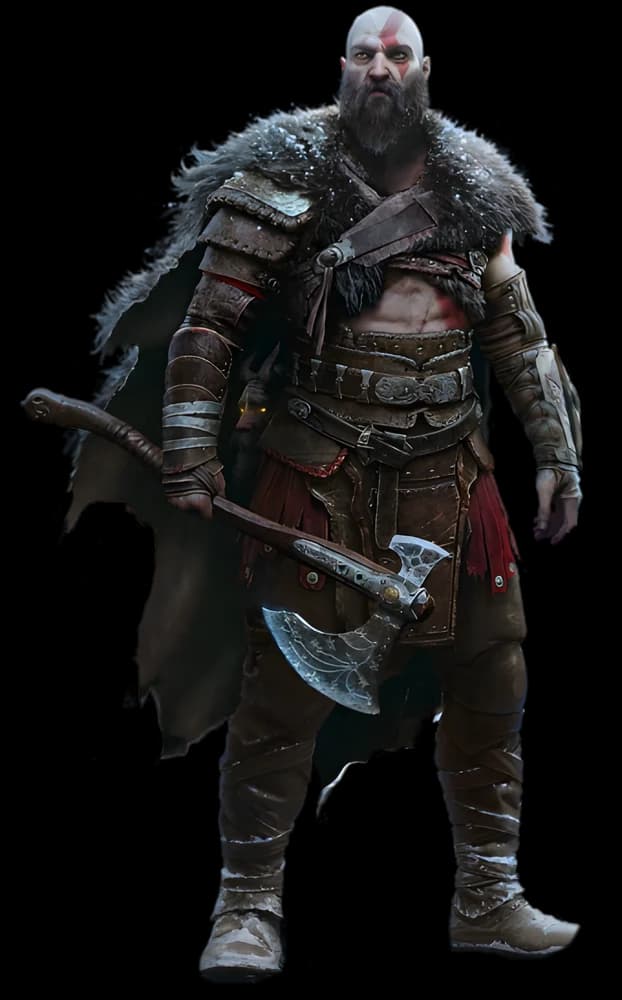
Kratos
Kratos was the demigod son of Zeus who rose from a Spartan general to the Greek God of War, destroyed the pantheon of Olympus in a quest for vengeance, and then began again in the Norse realms as a father seeking to leave his bloody past behind.
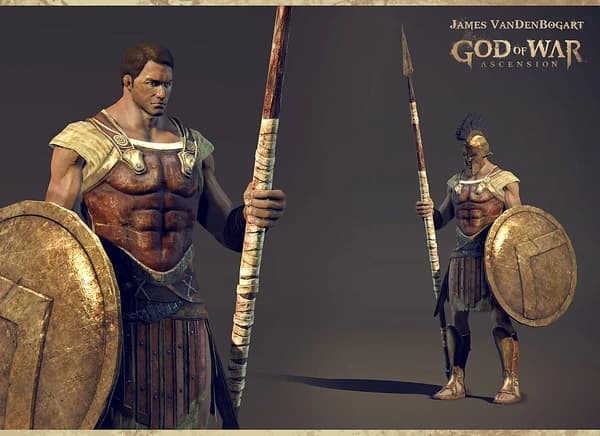
Spartans
The Spartans were the warrior people of the city of Sparta, a hardened army whose ruthless discipline made them feared across Greece. Under Kratos, their greatest general, they conquered city after city, and they remained loyal to him long after he rose to become the God of War.
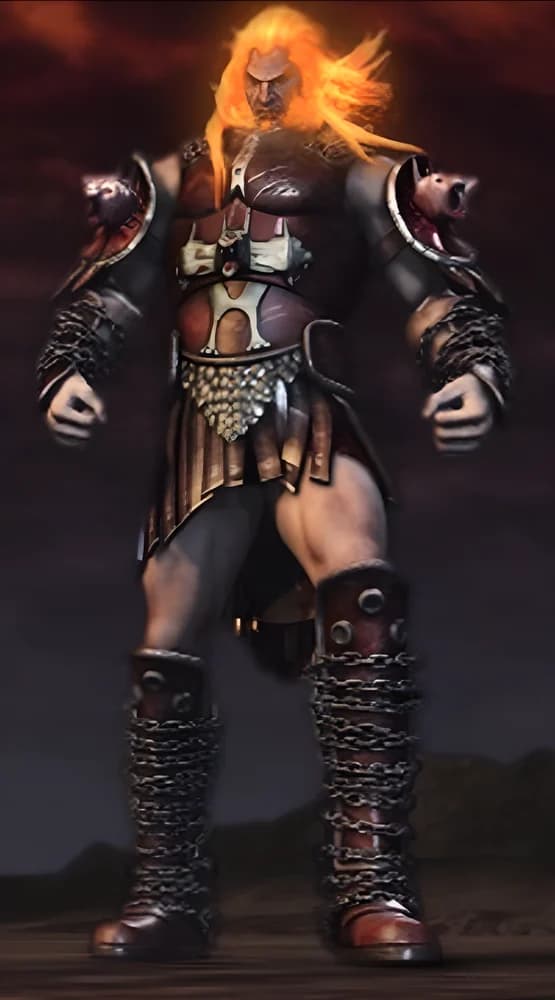
Ares: the god who made Kratos a killer
Ares tricked Kratos into slaughtering his own wife and daughter to bind him as a weapon. Kratos killed him at Athens and took his place as God of War.
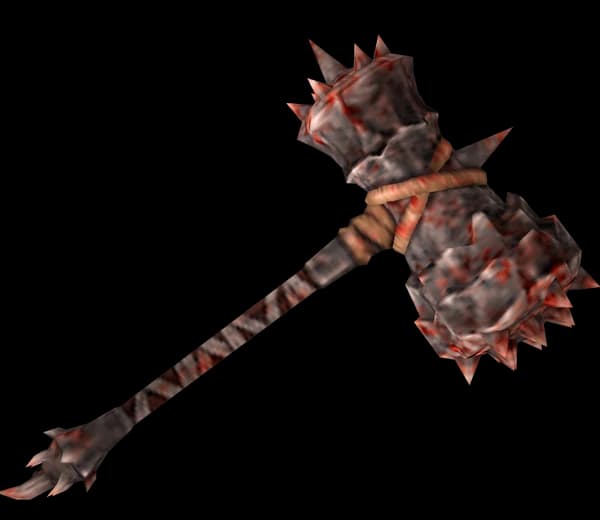
Barbarian Hammer: the weapon of the Barbarian King
The Barbarian Hammer was a massive spiked warhammer wielded by Alrik, king of the Barbarians, with the power to summon Cursed Souls from the Underworld. Kratos took it for his own after crushing Alrik in battle.
Blades of Chaos: chained to Kratos' arms
The Blades of Chaos were forged in the Underworld for Ares, who seared their chains onto Kratos' forearms. They burn with the fire of Tartarus.
God of War: the divine title
The God of War was a title held by a deity unmatched in battle, wielding peerless combat skill and brutal godly power. It passed from Ares to Kratos in the Greek age, while the Norse realms knew their own God of War in Tyr.
Mentioned in17 entries
Ares: the god who made Kratos a killer
Ares tricked Kratos into slaughtering his own wife and daughter to bind him as a weapon. Kratos killed him at Athens and took his place as God of War.
Barbarian Hammer: the weapon of the Barbarian King
The Barbarian Hammer was a massive spiked warhammer wielded by Alrik, king of the Barbarians, with the power to summon Cursed Souls from the Underworld. Kratos took it for his own after crushing Alrik in battle.
Blades of Chaos: chained to Kratos' arms
The Blades of Chaos were forged in the Underworld for Ares, who seared their chains onto Kratos' forearms. They burn with the fire of Tartarus.
God of War (2005) Story Explained: Plot Summary and Ending
The whole story of the first God of War in order, from the Hydra in the Aegean to the death of Ares at Athens. Then the ending in plain terms: why Kratos jumped from the cliff, why Athena saved him, and how he ended up on Ares's throne.
God of War II Story Explained: Plot Summary and Ending
The whole story of God of War II in order, from Zeus's betrayal at Rhodes to the Titans climbing Mount Olympus. Then the ending in plain terms: why Athena died, what she told Kratos about his father, and how it sets up God of War III.
God of War Timeline: every major event from the Primordials to Valhalla
The full in-universe chronology of God of War, from the war of the Primordials and the fall of the Titans to Kratos's life in Sparta, his war on Olympus, and the end of the Aesir at Ragnarök. The games give almost no calendar years, so events are ordered by story sequence and grouped into eras, with notes wherever the games' own placement is vague.
God of War Weapons List: the Name of Every Weapon Kratos Has Used
Kratos has carried two dozen weapons across two lifetimes, from a Spartan spear to a spear built from a ring that copies itself. This list runs through them in the order he got them, Greek era first, then Norse.
God of War: Ascension Story Explained
The plot of God of War: Ascension in story order, from Kratos breaking his blood oath to Ares to the deaths of the three Furies and Orkos. Plus how its ending sets up the rest of the Greek saga and where it sits in the timeline.
Hermes: the swift god Kratos crippled
Hermes taunted Kratos through a long chase across Olympus. The Spartan cornered him, severed his legs at the knee and took the winged boots for himself.
Island of Creation: cradle of the Greek world
The Island of Creation was the place where all life in Greece began, lying at the very edge of the world. It became the seat of the Sisters of Fate and one of the most heavily guarded places known to man, until Kratos broke through its defenses, slew its guardians, and left it in ruin.
Kraken: the sea beast of the Island of Creation
The Kraken was a giant meat-eating sea monster, an octopus-like horror of armored tentacles and a fanged maw. One rose against Kratos on the Island of Creation after the death of the Last Spartan and nearly crushed him before he impaled her through the mouth, while in the Norse realms a hatchling of the same breed lived as the pet of the dwarf Durlin.
Kratos
Kratos was the demigod son of Zeus who rose from a Spartan general to the Greek God of War, destroyed the pantheon of Olympus in a quest for vengeance, and then began again in the Norse realms as a father seeking to leave his bloody past behind.
+ 5 more
Get new articles in your inbox
No spam. New lore drops, canon conflicts, and deep dives only when they’re worth reading.
Some links on Lore Fortress are affiliate links. If you buy through them we earn a small commission at no extra cost to you.