Sparta: Kratos' city, razed by Zeus
the home city of Kratos
Sparta raised Kratos, worshipped Ares, then took Kratos himself as its patron god. Zeus destroyed the city in revenge for the Spartan's defiance.
Sparta was a city-state in the Peloponnesus, a region southwest of Athens in southern Greece, and the home of Kratos. A large and highly militaristic culture, it waged many wars against its Greek rivals and the Persians, and lived for ages in reverence of Ares, the God of War, whose statue stood watch over the city. After Kratos slew Ares it became his own patron city, until Zeus destroyed it in petty revenge. (God of War (2005); God of War II; God of War: Ghost of Sparta)
A militaristic city-state#
Sparta was a large city-state and a highly militaristic culture, waging many wars with Greek rivals such as Athens and fighting the Persians across its history. Kratos once referred to Sparta as having been an empire, suggesting it held territory beyond its own walls, and the novelization of God of War has it taking part in the legendary Trojan War of the distant past. For ages the city lived in reverence of Ares, who had taken up its patronage and whose statue stood guard on the highest plateau above the city, keeping watch over the lands of Laconia. The Temple of Ares stood as a symbol of the war god's presence in the mortal world, and Zeus too was held in worship for his rule over the world. (God of War (2005); God of War: Ghost of Sparta; God of War (novel))
The childhood of Kratos#
One of Zeus' mortal lovers, Callisto, bore two sons, Kratos and his younger brother Deimos, and settled in Sparta to escape the slander surrounding their father. The brothers trained and dreamed of becoming great soldiers. When the Oracle foretold the demise of the Olympian gods at the hands of a Marked Warrior, Zeus ordered Ares and Athena to raid the city and seize the marked one. They came with an army of centaurs and a barrage of flaming arrows, and Ares took Deimos away, leaving Kratos alone in the world save for his comrades in the Agoge, the Spartan training school that the comics describe. (God of War: Ghost of Sparta; God of War (2010 comic))
The rise of the Fist of Ares#
In the 2010 God of War comic, Kratos thrived in the Agoge and rose through the Spartan army with valor and skill. Chosen by Ares to fight for him in the Quest for the Ambrosia of Asclepius, he led his men on a costly journey to save Sparta from a plague, defeating the Barbarian prince Alrik and returning a hero to be made Captain. Years later, facing Alrik's overwhelming Barbarian army and certain defeat, Kratos called out to Ares to destroy his enemies in exchange for his life. The god answered, bestowing the Blades of Chaos and making Kratos his earthly servant. (God of War (2010 comic); God of War (2005))
With Kratos at its head as the Fist of Ares, Sparta rose to even greater devotion and became invincible, its armies marching through Greece in his conquests with total death, no quarter, and no mercy. The march ended only after Kratos slew his own family in a temple of Athena, becoming the Ghost of Sparta and losing his followers. (God of War (2005))
Pride and conquest#
A decade later, having slain Ares with the power of Pandora's Box, Kratos was welcomed among the rulers of Olympus as the new God of War, and a son of Sparta became its prime deity. The statues and symbols of Ares were torn down and replaced with those honoring Kratos, though some loyalists of the old war god rejected him as a usurper. When he returned to the city in search of the Skull of Keres in the Temple of Ares, Kratos faced and defeated a ghost in the image of his younger self before resolving to seek out Deimos in Atlantis. (God of War (2005); God of War: Ghost of Sparta)
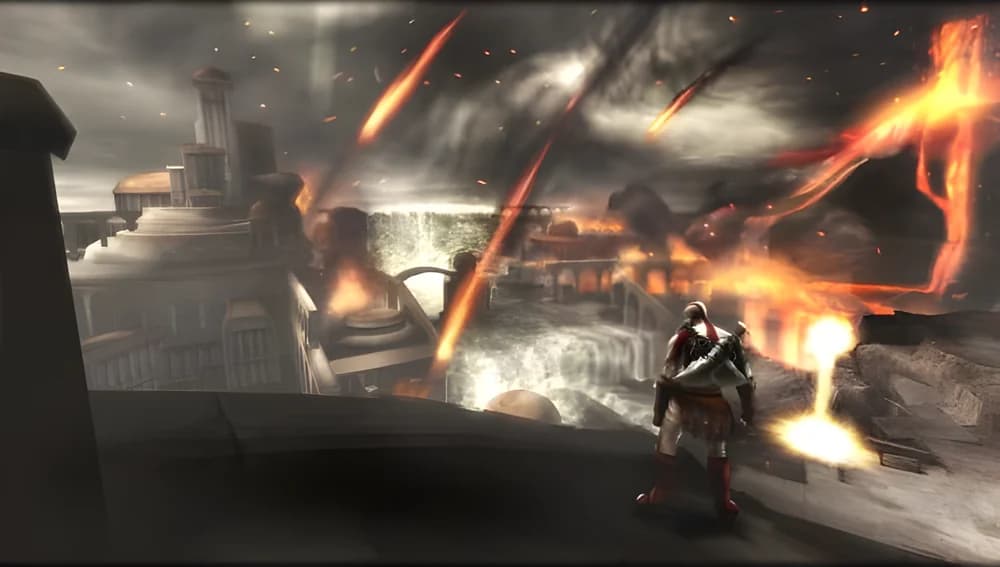
In the aftermath of his brother's death, Kratos ordered Sparta to conquer Greece and kill all who refused subjugation, all to spite the gods. The armies of Sparta became invincible through their training and the favor of the war god, and city after city fell until only Rhodes remained. The Siege of Rhodes proved the high point of the conquest, for there Zeus intervened in person, impaling Kratos with the Blade of Olympus and destroying the Spartan invasion army. (God of War II; God of War II (novel))
Destruction by Zeus#
The novelization of God of War II adds that in the desolation that followed Sparta's bloody march, mortals across Greece began raising shrines to Gaia and the Titans. When Athena let slip word of this during a heated argument, Zeus lost all restraint and destroyed Sparta to punish Kratos for his insolence, the latest being his alliance with the hated Titans. As large as Kratos and Ares had been in their own rampages, the King of the Gods ravaged the city, stomping and hurling buildings full of women and children and burning thousands to death with his lightning before returning to Olympus. To his outraged daughter he declared only that he had done what was necessary, that as Kratos had destroyed the other cities, so he had destroyed Sparta. (God of War II; God of War II (novel))
Though Kratos briefly altered the past to force Zeus to retreat and spare his home, it seems likely that the floods wrought by the death of Poseidon destroyed the city in the end. Its ruin is only one chapter of Kratos' full Greek saga, which ran from Sparta to the fall of Olympus. (God of War II; God of War III)
Frequently asked questions
- What is Sparta in God of War?
- Sparta was a large and highly militaristic city-state in the Peloponnesus of southern Greece, and the home of Kratos. It waged many wars against Greek rivals such as Athens and against the Persians, and for ages lived in reverence of Ares, the God of War.
- Why was Kratos raised in Sparta?
- Kratos was the son of Callisto, one of Zeus' mortal lovers, who bore him and his younger brother Deimos and settled in Sparta to escape the slander surrounding their father. The brothers trained there and dreamed of becoming great soldiers.
- How did Sparta come to worship Kratos as its patron god?
- After Kratos slew Ares with the power of Pandora's Box, he was welcomed among the rulers of Olympus as the new God of War, and a son of Sparta became its prime deity. The statues and symbols of Ares were torn down and replaced with those honoring Kratos, though some loyalists of the old war god rejected him as a usurper.
- Why did Zeus destroy Sparta?
- In the God of War II novelization, after Sparta's bloody march left mortals across Greece raising shrines to Gaia and the Titans, Athena let slip word of this during an argument, and Zeus lost all restraint and destroyed the city to punish Kratos for his insolence and his alliance with the Titans. He stomped and hurled buildings full of women and children and burned thousands to death with his lightning.
- What ultimately happened to Sparta?
- Though Kratos briefly altered the past to force Zeus to retreat and spare his home, it seems likely that the floods wrought by the death of Poseidon destroyed the city in the end.
Sources
- GameGod of War (2005), Santa Monica Studio, 2005
- GameGod of War II, Santa Monica Studio, 2007
- GameGod of War III, Santa Monica Studio, 2010
- GameGod of War: Ghost of Sparta, Ready at Dawn, 2010
- ComicGod of War (2010 comic), Marv Wolfman and Andrea Sorrentino, WildStorm/DC Comics, 2010 to 2011
- BookGod of War (novel), Matthew Stover and Robert E. Vardeman, Del Rey, 2010
- BookGod of War II (novel), Robert E. Vardeman, Del Rey, 2013
Spotted a factual error or a primary source we missed? Email a correction. Every flagged claim gets reviewed.
Followed from this entry

Athens: Athena's city, besieged by Ares
Ares laid siege to Athens out of hatred for his sister Athena. Kratos was sent to save it, and killed Ares there to become the new God of War.
Atlantis
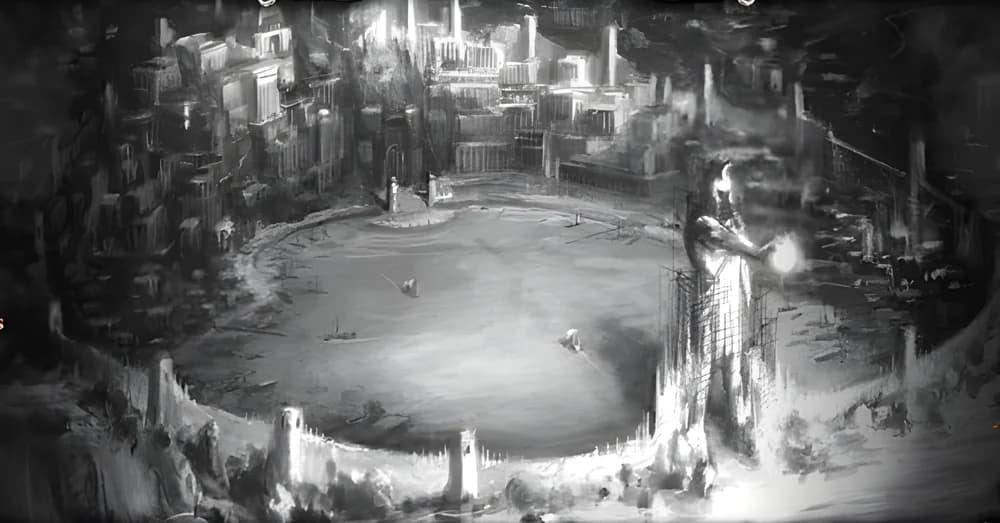
Atlantis was the great sea-faring city of Poseidon, home to his mightiest temple and guarded by the monster Scylla. It was where Kratos found his dying mother Callisto, and his battle there sank the ancient city beneath the waves.
Rhodes
Rhodes was the great harbor city of ancient Greece and home of the legendary Colossus. It was the last city-state to fall in Kratos' Spartan conquest, and the place where Zeus betrayed him with the Blade of Olympus.
Alrik
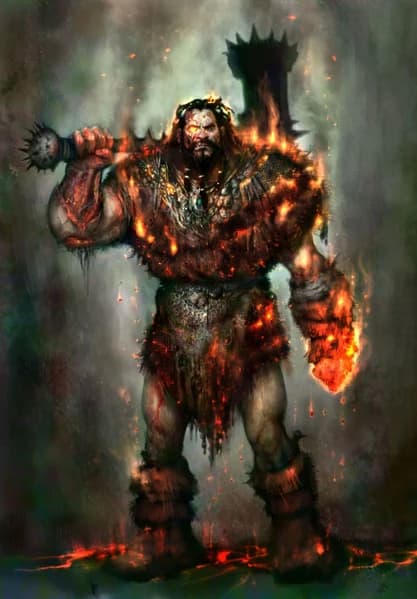
Alrik, the Barbarian King, was the leader of the Barbarian horde from the east and one of Kratos' oldest enemies. His assault drove Kratos to pledge his soul to Ares, beginning the Spartan's tragedy, and his hatred outlasted even death.
Ares: the god who made Kratos a killer
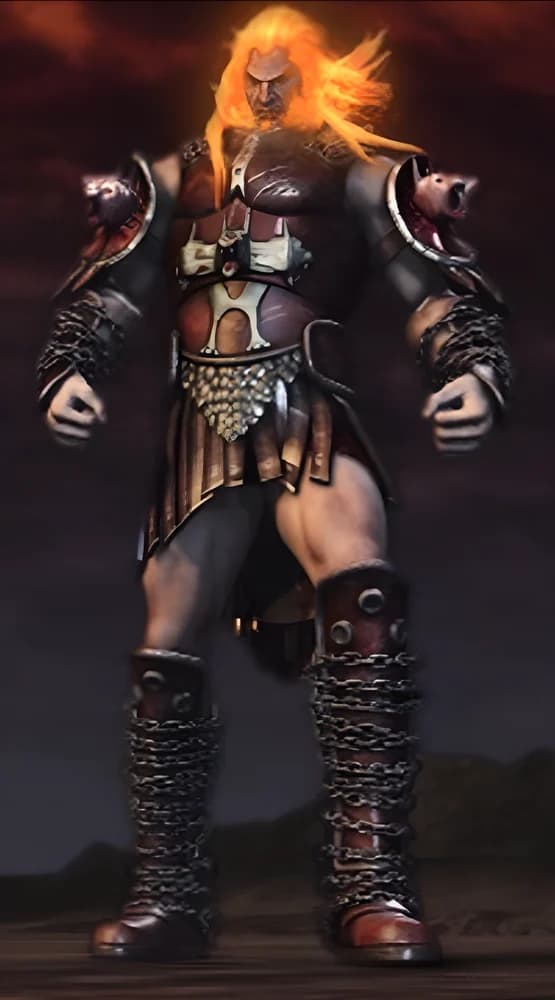
Ares tricked Kratos into slaughtering his own wife and daughter to bind him as a weapon. Kratos killed him at Athens and took his place as God of War.
Athena: from Kratos' guide to his enemy
Athena set Kratos against Ares to save Athens, then turned on him when his reign grew worse. She died taking a blow meant for Zeus, and named Kratos his son.
Mentioned in82 entries
Adrasteia: the griffin who raised Zeus
Adrasteia was a nymph in the service of Gaia who, with her sisters, hid and raised the infant Zeus beyond the reach of Cronos. For shielding the child she was cursed into the shape of a griffin and imprisoned within Mount Taygetos, until Kratos and Deimos set her free.
Alrik
Alrik, the Barbarian King, was the leader of the Barbarian horde from the east and one of Kratos' oldest enemies. His assault drove Kratos to pledge his soul to Ares, beginning the Spartan's tragedy, and his hatred outlasted even death.
Aphrodite: Hephaestus' wife, lover of Ares
Aphrodite was married to the smith Hephaestus but had no love for him. In myth she took Ares as a lover, and in the games she gave Kratos Medusa's gaze.
Aphrodite's Handmaidens
Aphrodite's Handmaidens were two mortal women who served and attended the Goddess of Love in her chamber upon Olympus. Among the few mortals who showed no fear of Kratos, and they stayed in her chamber while plague spread across Olympus.
Ares: the god who made Kratos a killer
Ares tricked Kratos into slaughtering his own wife and daughter to bind him as a weapon. Kratos killed him at Athens and took his place as God of War.
Arms of Sparta
The Arms of Sparta were the spear and shield Kratos carried as a mortal general before he served Ares. The Last Spartan kept them in his absence and returned them to him during the search for Deimos, after which Kratos gave them to his brother and left them at his grave.
Artemis
Artemis was the Olympian Goddess of the Hunt, daughter of Zeus and twin sister of Apollo. When Ares besieged Athens, she turned the beasts of the wild against his armies, and later gave Kratos the Blade of Artemis, a weapon she had wielded against the Titans, to aid him in the conquest of Pandora's Temple.
Athens: Athena's city, besieged by Ares
Ares laid siege to Athens out of hatred for his sister Athena. Kratos was sent to save it, and killed Ares there to become the new God of War.
Atlantis
Atlantis was the great sea-faring city of Poseidon, home to his mightiest temple and guarded by the monster Scylla. It was where Kratos found his dying mother Callisto, and his battle there sank the ancient city beneath the waves.
Blade of Artemis
The Blade of Artemis was a great curved sword once wielded by the Goddess of the Hunt to slay a Titan. Bestowed upon Kratos during his war against Ares, it carried him through that campaign and beyond before returning to its mistress.
Blade of Olympus: Zeus' god-killing sword
Zeus forged the Blade of Olympus from the heavens and the earth to banish the Titans to Tartarus. It could kill gods and Titans, and it killed Zeus himself.
Blades of Chaos: chained to Kratos' arms
The Blades of Chaos were forged in the Underworld for Ares, who seared their chains onto Kratos' forearms. They burn with the fire of Tartarus.
+ 70 more
Get new articles in your inbox
No spam. New lore drops, canon conflicts, and deep dives only when they’re worth reading.
Some links on Lore Fortress are affiliate links. If you buy through them we earn a small commission at no extra cost to you.