Siege of Rhodes
the assault that set Kratos against Olympus
The Siege of Rhodes was a Spartan assault on the Greek city of Rhodes, waged under Kratos during his reign as the God of War. It was at Rhodes that Zeus stripped his son of divine power and struck him down, the betrayal that began Kratos' war against Olympus.
The Siege of Rhodes was a battle in which the armies of Sparta laid siege to the Greek city of Rhodes under Kratos, their God of War. It was the final act of his conquest of Greece, and it provoked Zeus, already fearful of the prophecy of the Marked Warrior, into a scheme to be rid of his son. At Rhodes the King of Olympus stripped Kratos of his divinity and struck him down, the betrayal that turned the Ghost of Sparta against the gods for good. (God of War II; God of War: Ghost of Sparta)
A city under conquest#
During his reign as the God of War, Kratos turned the armies of Sparta against the cities of Greece, ordering them to conquer the land and put to the sword any who refused to submit. The endless slaughter served as a distraction from the visions of his past failures that the gods had refused to banish even after he killed Ares. Rhodes stood as the last city in Greece still resisting them, and as it fell, Olympus seethed at Kratos' arrogance and awaited their king's response. (God of War (2005); God of War II)
The descent from Olympus#
With the siege well advanced, Kratos watched the carnage through the deific vision granted by his godhood, barking orders from the heavens to allow no escape. Dismissing Athena, who pleaded with him to stop, he plunged earthward and struck Rhodes as Ares had once struck Athens, towering over the city and crushing mortals beneath his feet. He intended to topple the famous Colossus of Rhodes as the crowning act of his triumph. (God of War II)
The eagle and the Colossus#
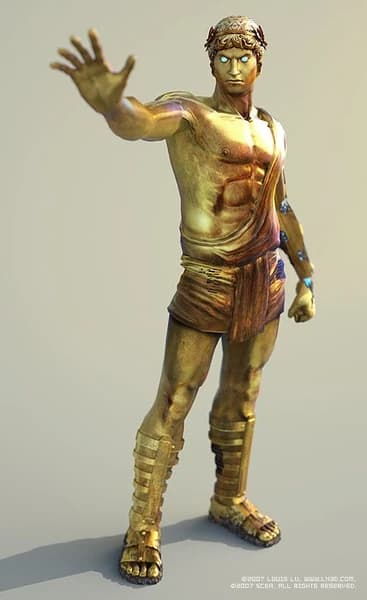
As Kratos joined the slaughter, a great eagle appeared and stripped him of the majority of his divine power, infusing it into the Colossus of Rhodes. Humiliated, Kratos shrank to mortal size before his own Spartans, swearing that Athena would pay for what he believed was her doing. The stolen power gave the Colossus life and a single purpose, to destroy the God of War. Robbed of the strength he had come to rely on, Kratos found himself in a desperate fight for his life as the statue grew ever stronger, and the defenders of Rhodes, sensing he had lost his divine status, pressed their counterattack. (God of War II)
Zeus and the Blade of Olympus#
Flung across the city in the struggle, Kratos was offered power by an unseen voice. Distrustful but desperate, he accepted the aid of the Blade of Olympus and drained the last of his divinity into it, then made quick work of the Colossus. As the lifeless statue collapsed, its hand left him gravely wounded, and he lost his grip on the Blade that held his godhood. The eagle then revealed itself as Zeus. The King of Olympus offered Kratos a chance to repent and pledge eternal servitude, and when Kratos refused, Zeus impaled him with the Blade of Olympus. Declaring that the cycle ended there, Zeus annihilated the entire Spartan army along with the defenders of Rhodes. (God of War II)
Aftermath#
The destruction at Rhodes marked the beginning of Kratos' war against the gods. Rescued from death by Gaia, an ancient enemy of Zeus, he was guided toward the Sisters of Fate so that he might undo the betrayal. Wielding the power of the Loom of Fate, Kratos would later return to the very moment of Zeus' treachery, reclaim the Blade of Olympus, and carry his vengeance to the Summit of Sacrifice. The whole revenge plot is told in order in our God of War II story guide. (God of War II)
Frequently asked questions
- What was the Siege of Rhodes?
- The Siege of Rhodes was a battle in which the armies of Sparta laid siege to the Greek city of Rhodes under their God of War, Kratos. It was the final stage of Kratos' conquest of Greece during his reign, and it ended with both the city and his own army annihilated.
- Why did Kratos attack Rhodes?
- As God of War, Kratos led Sparta in subjugating one Greek city after another, partly in spite of the gods who had refused to lift the visions of his past. Rhodes was the last city in Greece left standing against him.
- How did Zeus betray Kratos at Rhodes?
- Disguised as a giant eagle, Zeus drained the majority of Kratos' divine power and infused it into the Colossus of Rhodes. Reduced to mortal size, Kratos was lured into draining his remaining godhood into the Blade of Olympus, after which Zeus revealed himself, impaled him, and destroyed both armies.
- What did the Siege of Rhodes lead to?
- Kratos' death at Rhodes and his rescue by Gaia set him on the path to the Sisters of Fate, and ultimately to his war against Zeus and the rest of Olympus. He later returned to the moment of the betrayal through the power of the Loom of Fate to reclaim the Blade of Olympus.
Sources
- GameGod of War (2005), Santa Monica Studio, 2005
- GameGod of War II, Santa Monica Studio, 2007
- GameGod of War: Ghost of Sparta, Ready at Dawn, 2010
Spotted a factual error or a primary source we missed? Email a correction. Every flagged claim gets reviewed.
Followed from this entry
God of War II Story Explained: Plot Summary and Ending
The whole story of God of War II in order, from Zeus's betrayal at Rhodes to the Titans climbing Mount Olympus. Then the ending in plain terms: why Athena died, what she told Kratos about his father, and how it sets up God of War III.
Ares: the god who made Kratos a killer
Ares tricked Kratos into slaughtering his own wife and daughter to bind him as a weapon. Kratos killed him at Athens and took his place as God of War.
Athena: from Kratos' guide to his enemy
Athena set Kratos against Ares to save Athens, then turned on him when his reign grew worse. She died taking a blow meant for Zeus, and named Kratos his son.

Athens: Athena's city, besieged by Ares
Ares laid siege to Athens out of hatred for his sister Athena. Kratos was sent to save it, and killed Ares there to become the new God of War.
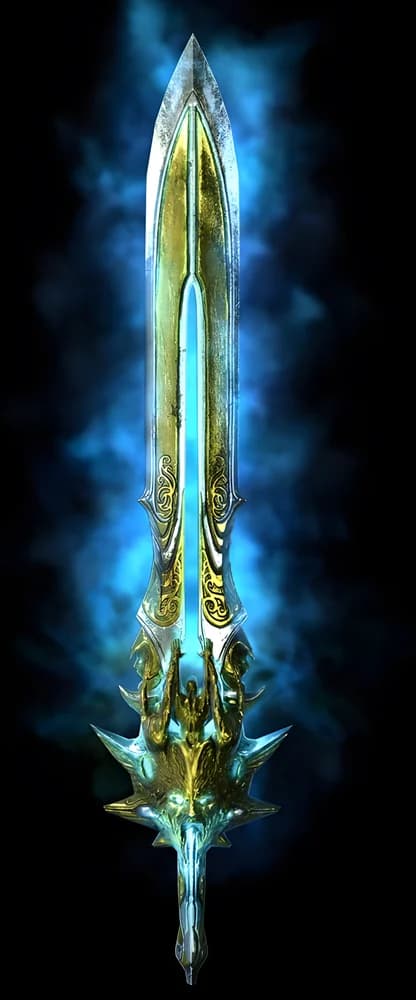
Blade of Olympus: Zeus' god-killing sword
Zeus forged the Blade of Olympus from the heavens and the earth to banish the Titans to Tartarus. It could kill gods and Titans, and it killed Zeus himself.
Colossus of Rhodes
The Colossus of Rhodes was a towering bronze statue of the sun god Helios that stood over the port of Rhodes. Animated by Zeus to destroy Kratos, it tore through the city in pursuit of the Spartan, and its fall left him a mortal once more.
Mentioned in5 entries
God of War II Story Explained: Plot Summary and Ending
The whole story of God of War II in order, from Zeus's betrayal at Rhodes to the Titans climbing Mount Olympus. Then the ending in plain terms: why Athena died, what she told Kratos about his father, and how it sets up God of War III.
God of War Story Explained: the Whole Saga from Sparta to Ragnarök
The full God of War story in order, one main game at a time. Kratos serves Ares, kills him, destroys Olympus, starts again in the Norse lands and finally ends Odin, with the Valhalla epilogue as the last word.
God of War Timeline: every major event from the Primordials to Valhalla
The full in-universe chronology of God of War, from the war of the Primordials and the fall of the Titans to Kratos's life in Sparta, his war on Olympus, and the end of the Aesir at Ragnarök. The games give almost no calendar years, so events are ordered by story sequence and grouped into eras, with notes wherever the games' own placement is vague.
Kratos' Throne Room: the seat of the God of War
Kratos' Throne Room was the chamber on Mount Olympus from which the God of War watched over every conflict in Greece. First the hall of Ares, it passed to Kratos for the years of his reign, and its throne returned to him long afterward in Valhalla as the symbol of an office he had to decide whether to reclaim.
Sparta: Kratos' city, razed by Zeus
Sparta raised Kratos, worshipped Ares, then took Kratos himself as its patron god. Zeus destroyed the city in revenge for the Spartan's defiance.
Get new articles in your inbox
No spam. New lore drops, canon conflicts, and deep dives only when they’re worth reading.
Some links on Lore Fortress are affiliate links. If you buy through them we earn a small commission at no extra cost to you.