Artemis
Goddess of the Hunt
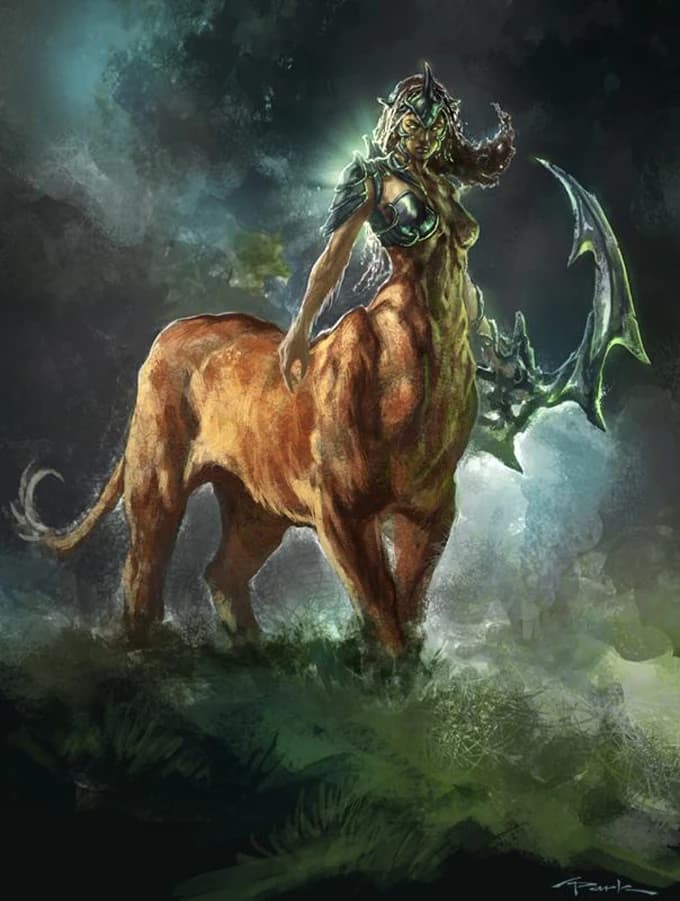
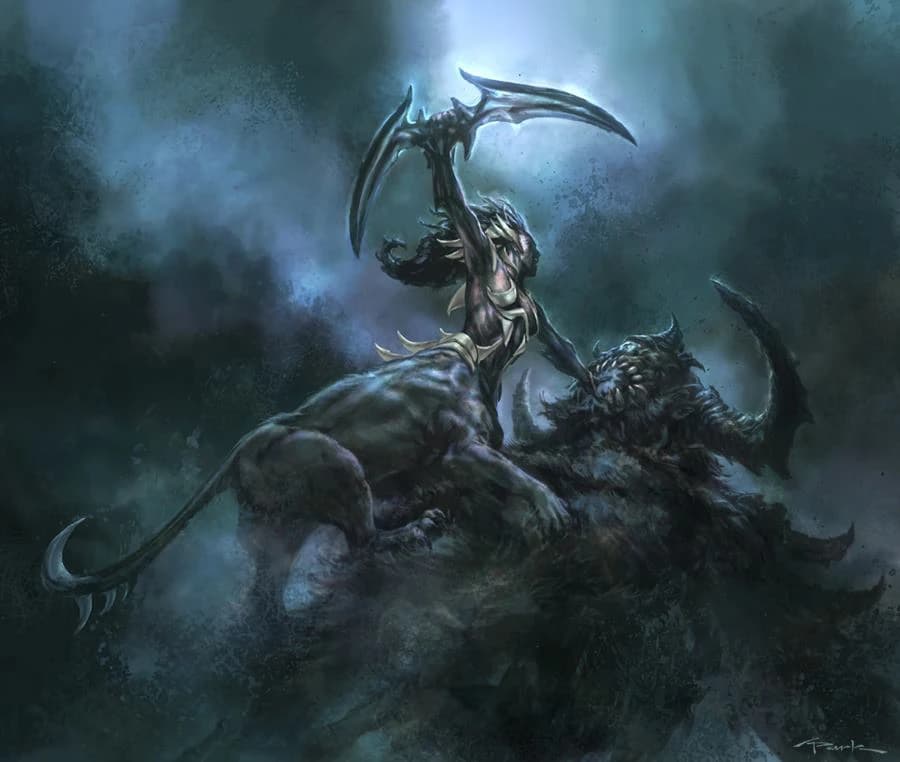
Artemis was the Olympian Goddess of the Hunt, daughter of Zeus and twin sister of Apollo. When Ares besieged Athens, she turned the beasts of the wild against his armies, and later gave Kratos the Blade of Artemis, a weapon she had wielded against the Titans, to aid him in the conquest of Pandora's Temple.
Artemis was the Olympian Goddess of the Hunt, mistress of the moon, the wilderness, and wild beasts. A daughter of Zeus and the elder twin of Apollo, she counted Athena among her sisters and Ares among her enemies. Though she withdrew from the affairs of Olympus more than most, she intervened decisively during the siege of Athens, and the legendary blade she once carried against the Titans passed into the hands of Kratos. (God of War (2005); God of War (novel))
Birth and domains#
In the Greek myths the series draws on, Artemis was born on the isle of Delos, where her mother Leto had found safe haven to bear her children. She came into the world first, and at once assisted Leto in delivering her twin Apollo, taking up from that moment the role of Goddess of Childbirth. Worshiped widely across Greece, she ruled the forests and the wild beasts within them, archery and the hunt, and held herself a protector of the young and the unmarried. A virgin goddess, she demanded chastity of her mortal companions and took no lovers, and those who pursued her or trespassed against her met grim ends. (Bibliotheca)
In the war against the Giants who rose to overthrow the gods, Artemis fought to defend Olympus and personally cut down the Giant Gration. Among her many mortal champions the greatest was Atalanta, whom she had a she-bear raise as an infant and who later helped bring down the Calydonian Boar that Artemis had sent against the city of Calydon. (Bibliotheca)
The siege of Athens#
The 2010 novelization of the first game gives Artemis a larger part. When Ares marched on Athens, the city of his sister Athena, the Goddess of Wisdom could not openly meet his challenge, for the Word of Zeus forbade war between the gods of Olympus. Seeking aid for her cause and for the Ghost of Sparta, who fought in her name, Athena came to Artemis in her private chambers on Olympus, which mirrored her domain of the wilderness on Earth. (God of War (novel))
The two daughters of Zeus found common ground in their shared disgust for Ares' armies of the dead and his monsters, which killed not to survive nor to honor the gods but for slaughter alone. The War God's legions ravaged the forested lands around Athens, the domain of Artemis and her creatures. With a promise that her woods would be left sacrosanct should the city survive, Artemis turned her beasts loose upon the invaders. Bears, elk, wolves, and eagles fell on the legions in swift ambushes, and even the mighty Cyclopes were undone by venomous vipers. (God of War (novel))
When Ares himself tore open the heavens and stepped down to berate his minions, Artemis revealed herself with her bow aimed at his face. The War God reminded her of their father's edict, and to make his point crushed her animals in his fist. In answer the Huntress lowered her bow, turned it on his army, and loosed a countless flight of arrows that shredded every monster and undead soldier across her domain. Ares conceded and swore a truce to leave her woodlands in peace, and the Athenian army, freed from threat through the forests, could concentrate on the assault at the Long Wall. (God of War (novel))
The Blade of Artemis#
In the first game Artemis bestows her Blade on Kratos during his quest for Pandora's Temple. The novelization sets the gift after the Oracle of Athens revealed that Kratos would need to conquer the temple and claim the power hidden within, when Artemis chose to bestow upon the Spartan her own Blade, a weapon she had wielded in battle against the Titans during the Great War. Shining with a golden light, the goddess gave him the gift, and Kratos inclined his head in genuine respect as he accepted it. (God of War (2005); God of War (novel))
Watching from Olympus, Zeus was startled to see a mortal bearing so powerful a weapon and demanded to know what trickery Athena had used to wring it from Artemis. Athena answered that she had done nothing, and believed her sister meant only to show her support, standing in solidarity against the cruelty and madness of Ares. The blade served Kratos through his quest, and he still carried it in God of War: Betrayal. (God of War (novel); God of War: Betrayal)
Withdrawal and fate#
After the fall of Athens Artemis does not appear again in the games, and her fate through the destruction of the Greek world is never shown. In the comics, where she backed the Kerosian queen Pothia in the Wager of the Gods, she was the only god who did not take revenge on Kratos after he cost her the bet. Her name lives on in the Norse era only in Wrath of Artemis, a runic attack Kratos can win in the Realm Between Realms. (God of War (2005); God of War (2010 comic); God of War (2018))
Frequently asked questions
- Who is Artemis in God of War?
- Artemis was the Olympian Goddess of the Hunt, mistress of the moon, the wilderness, and wild beasts. She was a daughter of Zeus and the elder twin of Apollo, and a virgin goddess who took no lovers.
- How did Artemis help defend Athens against Ares?
- In the 2010 novelization of the first game, Artemis sided with Athena and turned the beasts of the wild against Ares' undead legions. Bears, elk, wolves, eagles, and venomous vipers fell on the invaders until she loosed a flight of arrows that shredded every monster and undead soldier, and Ares swore a truce to leave her woodlands in peace.
- What is the Blade of Artemis?
- The Blade of Artemis was a weapon Artemis had wielded against the Titans during the Great War. She bestowed it on Kratos during his quest for Pandora's Temple, and in the novelization and Kratos inclined his head in genuine respect as he accepted it.
- How did Zeus react to Kratos carrying the Blade of Artemis?
- In the novelization, Zeus was startled to see a mortal bearing so powerful a weapon and demanded to know what trickery Athena had used to obtain it. Athena answered that she had done nothing and believed her sister meant only to show solidarity against the cruelty of Ares.
- What happened to Artemis after the fall of Athens?
- Artemis does not appear in the games after the fall of Athens, and her fate is never shown. In the comics she was the only god who did not take revenge on Kratos after he cost her the Wager of the Gods.
Gallery
Images via God of War Wiki
Sources
- GameGod of War (2005), Santa Monica Studio, 2005
- GameGod of War: Betrayal, Javaground and Sony Online Entertainment, Sony Pictures Digital, mobile phones, 2007
- GameGod of War (2018), Santa Monica Studio, 2018
- ComicGod of War (2010 comic), Marv Wolfman and Andrea Sorrentino, WildStorm/DC Comics, 2010 to 2011
- BookGod of War (novel), Matthew Stover and Robert E. Vardeman, Del Rey, 2010
- BookBibliotheca, Attributed to Apollodorus, 1st or 2nd century AD
Spotted a factual error or a primary source we missed? Email a correction. Every flagged claim gets reviewed.
Followed from this entry
Apollo: the Olympian who escaped Kratos
Apollo never faced Kratos in the flesh. His Flame lit the way to the Tree of Life, his Bow lay in the Underworld, and he survived the slaughter.
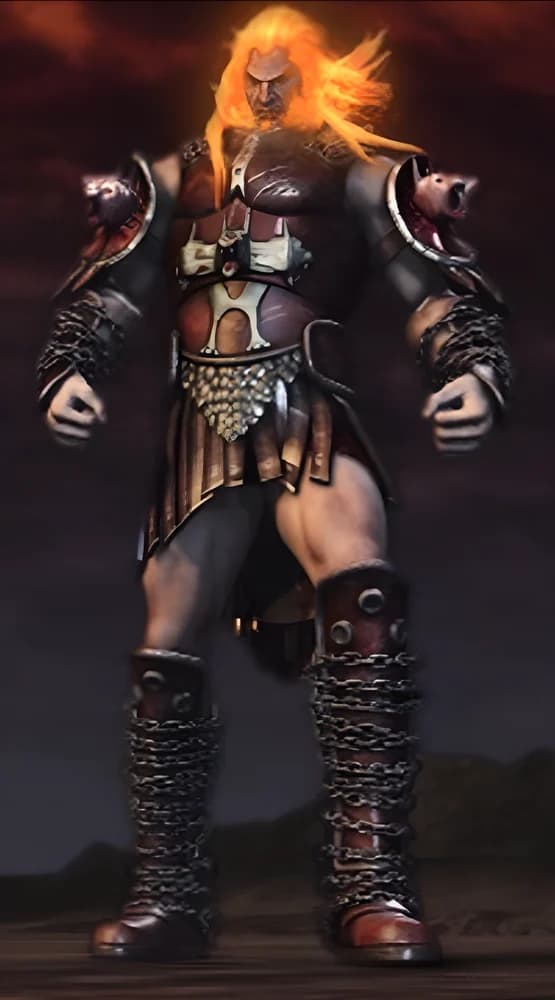
Ares: the god who made Kratos a killer
Ares tricked Kratos into slaughtering his own wife and daughter to bind him as a weapon. Kratos killed him at Athens and took his place as God of War.
Athena: from Kratos' guide to his enemy
Athena set Kratos against Ares to save Athens, then turned on him when his reign grew worse. She died taking a blow meant for Zeus, and named Kratos his son.

Titans: the elder gods Zeus cast down
Born to Gaia and Ouranos, the Titans ruled the Golden Age under Cronos until Zeus buried them in Tartarus. Kratos later raised them one last time.

Zeus
Zeus was the King of Olympus and ruler of the Greek Pantheon, the youngest son of Cronos who freed his siblings, ended the Great War, and claimed the heavens. Father of Kratos, he became the great antagonist of the Greek age and fell at last to the very son he had tried to destroy.

Oracle of Athens: seer of the besieged city
The Oracle of Athens was the mortal seer of Athena's city, gifted with foresight and the power to read the memories of any being. During the siege of Athens she alone held the secret of how a god could be killed, and she set Kratos on the road to Pandora's Box.
Mentioned in14 entries
Apollo: the Olympian who escaped Kratos
Apollo never faced Kratos in the flesh. His Flame lit the way to the Tree of Life, his Bow lay in the Underworld, and he survived the slaughter.
Ares: the god who made Kratos a killer
Ares tricked Kratos into slaughtering his own wife and daughter to bind him as a weapon. Kratos killed him at Athens and took his place as God of War.
Athens: Athena's city, besieged by Ares
Ares laid siege to Athens out of hatred for his sister Athena. Kratos was sent to save it, and killed Ares there to become the new God of War.
Blade of Artemis
The Blade of Artemis was a great curved sword once wielded by the Goddess of the Hunt to slay a Titan. Bestowed upon Kratos during his war against Ares, it carried him through that campaign and beyond before returning to its mistress.
Cyclops
The Cyclopes were burly, one-eyed giants who fought as beasts of war across the Greek games, from Ares's siege of Athens to the fall of Olympus. In the old myth the series draws on, they were sons of Heaven and Earth whom Zeus freed to fight the Titans.
Eleonora
Eleonora was a Spartan temple maiden charged with the care of the interconnected temples of Laconia. Born to a family bound to that service, she tended the shrines of the gods and questioned the path her duty had denied her.
God of War (2005) Story Explained: Plot Summary and Ending
The whole story of the first God of War in order, from the Hydra in the Aegean to the death of Ares at Athens. Then the ending in plain terms: why Kratos jumped from the cliff, why Athena saved him, and how he ended up on Ares's throne.
God of War Weapons List: the Name of Every Weapon Kratos Has Used
Kratos has carried two dozen weapons across two lifetimes, from a Spartan spear to a spear built from a ring that copies itself. This list runs through them in the order he got them, Greek era first, then Norse.
Greek Gods
The Greek Gods were the pantheon that ruled over Greece across three generations, the Primordials, the Titans, and the Olympians. Once the masters of mortals, monsters, and the natural world, they were brought to near extinction by Kratos in his war of vengeance against Olympus.
Hephaestus: the smith who made the Blades
He forged Pandora's Box for Zeus and the Blades of Chaos for Ares, and lost everything for it. Kratos killed him in the Underworld, defending his daughter.
Nike
Nike was the Olympian goddess of victory, daughter of the Titan Pallas and the water goddess Styx. Though she never crossed Kratos' path in the flesh, her likeness was honored across Greece in statues, carvings, and murals raised to celebrate triumph in war.
Olympians: the gods Kratos killed off
Zeus led the third generation of Greek gods to victory over the Titans. Kratos then destroyed almost every one of them, and Greece fell with them.
+ 2 more
Get new articles in your inbox
No spam. New lore drops, canon conflicts, and deep dives only when they’re worth reading.
Some links on Lore Fortress are affiliate links. If you buy through them we earn a small commission at no extra cost to you.