Greek Gods
the fallen pantheon of Olympus
The Greek Gods were the pantheon that ruled over Greece across three generations, the Primordials, the Titans, and the Olympians. Once the masters of mortals, monsters, and the natural world, they were brought to near extinction by Kratos in his war of vengeance against Olympus.
The Greek Gods were the pantheon that ruled over Greece, holding dominion over its mortals, animals, and monsters. Their king was Zeus, who reigned over both man and god from his throne on Mount Olympus. The pantheon spanned three generations, the Primordials, the Titans, and the Olympians, and for an age it shaped the fate of the entire Greek world. That age ended when Kratos, a Spartan turned god, waged a war of vengeance that brought the pantheon to near extinction. (God of War (2005); God of War II; God of War III)
Three generations of gods#
The pantheon was divided into three generations. In the beginning there was Chaos, the void from which all creation came, and from her emerged the Primordials, among them Ouranos, Nyx, Erebus, Tartarus, and Eros. The Titans were born of Gaia and Ouranos. One Titan, Cronos, overthrew his father Ouranos and became ruler of the cosmos, ushering in a golden age in which the Titans reigned over Greece. (Theogony; Works and Days)
The third generation, the Olympians, gained their supremacy after Zeus led his siblings to victory over the Titans. The first Olympians were the children of Cronos and Rhea: Zeus, Hera, Poseidon, Demeter, Hestia, and Hades. To them were added the children of Zeus, including Ares, Athena, Hermes, Hephaestus, Aphrodite, Apollo, and Artemis. They ruled from Mount Olympus, a place forbidden to mortals unless granted entry by the gods themselves. (God of War (2005); God of War II; God of War III)
The fall of the Titans#
Fearing a prophecy that his own children would overthrow him, Cronos devoured each child Rhea bore. When Zeus, the last, was to be swallowed, Rhea hid him away and gave Cronos a stone wrapped in cloth to swallow in his place. Raised in secret by Gaia, Zeus grew with the desire to free his siblings, and when he came of age he forced Cronos to disgorge them. The freed gods, now the Olympians, waged war on the Titans, the conflict known as the Titanomachy. (Theogony; God of War II)
Atlas led the Titans, while some, including Prometheus and Helios, betrayed their kin to fight for the Olympians. The war remade the face of the mortal world. Zeus forged the Blade of Olympus from heaven and earth and used it to banish the Titans into Tartarus, the darkest pit of the Underworld. With the Olympians victorious, Zeus, Poseidon, and Hades split the world among themselves: Zeus took the heavens and rule over all, Poseidon took the seas and weather, and Hades took the Underworld and the souls of the dead. (God of War II; God of War III)
Pandora's Box and the evils of the world#
The end of the war left behind a mass of evil spirits, manifestations of the world's vices and corruption. Zeus commissioned Hephaestus to forge a vessel to contain them, Pandora's Box, and Athena placed the Essence of Hope within it as a counter to the evils should the Box ever be opened. Rather than hide the Box in the Flame of Olympus as Zeus intended, Hephaestus advised placing it upon the back of Cronos, reasoning that none could defeat the mighty Titan to reach it. Cronos was made to carry the Box through the Desert of Lost Souls, and the architect Pathos Verdes III built a temple to house it. (God of War (2005); God of War III)
Allies, then enemies of Kratos#
For a time the Greek Gods aided Kratos, the Spartan who had pledged himself to Ares and later sought to atone for the murder of his own family. With the guidance of Athena and gifts from across the pantheon, Kratos retrieved Pandora's Box and killed Ares, taking the slain god's place as the new God of War. Yet the gods refused to free him from the memories of his crimes, and Kratos grew ruthless and bitter, leading Sparta to conquer city after city. (God of War (2005); God of War II)
Fearing the prophecy that one of his sons would overthrow him, Zeus stripped Kratos of his godhood and killed him with the Blade of Olympus. Saved from the Underworld by Gaia and the Titans, Kratos rose again, bent on revenge. He defeated the Sisters of Fate, traveled back to the moment of his betrayal, and dragged the Titans forward in time to assault Olympus in the Second Titanomachy. (God of War II)
The death of the pantheon#
The second war on Olympus became a march of slaughter. Kratos and Gaia killed Poseidon, whose death raised the seas and drowned much of Greece. In the Underworld he stole the Claws of Hades and took Hades' soul, freeing the dead. He decapitated Helios, and the sun was swallowed by darkness; he killed Hermes, and a plague of insects spread across the land; he beat Hercules to death and snapped Hera's neck, withering all green life. Each major death unleashed a catastrophe tied to what that god embodied. Athena, trying to protect her father, was stabbed by the Blade of Olympus and died, but she did not vanish as other gods did. Instead she ascended to an astral form. (God of War III)
At the ruins of Olympus, Kratos finally killed Zeus, beating his father to death. With the last Olympian gone, lightning poured from his body into the sky and Greece was plunged into chaos. Discovering that Pandora's Box was empty, Kratos realized he had carried the power of Hope within himself all along, used unknowingly to defeat Zeus. He impaled himself with the Blade of Olympus to release that Hope to the mortals of Greece, and the rule of the Olympian Gods came to an end. Each Olympian he killed has a short profile among the main God of War characters, next to the Norse gods he met later. (God of War III)
Legacy beyond Greece#
The gods not slain directly by Kratos perished in the chaos that followed, or vanished by unknown means. The only known survivors were Athena, who endured as a spectral presence, and Kratos himself, who left his ruined homeland and traveled far to the north. With the pantheon destroyed and Hope given to humanity, the people of Greece were left to rebuild without their old deities ruling over them. (God of War III; God of War (2018))
Word of the slaughter spread far beyond Greece, reaching even the Nine Realms. Mimir knew the stories well, and The Aesir, among them Thor and Odin, regarded the Ghost of Sparta with both awe and fear. Kratos himself later confirmed that the legends of his deeds against his pantheon were true, and that he could no longer call upon the powers of the Greek Gods, the magic of a homeland that had died. (God of War (2018); God of War Ragnarök)
Frequently asked questions
- Who were the Greek Gods in God of War?
- The Greek Gods were the pantheon that ruled over Greece, including its mortals, animals, and monsters. They were divided into three generations: the Primordials, the Titans, and the Olympians, with Zeus reigning as king from Mount Olympus.
- How were the Greek Gods divided into generations?
- The first beings were the Primordials, born from Chaos. From them came the Titans, who ruled during a golden age under Cronos. The Titans were overthrown by their own children, the Olympians, led by Zeus, who became the dominant gods of Greece.
- What happened to the Greek Gods?
- By the end of his war against Olympus, Kratos had killed nearly the entire pantheon one after another. The only known survivors were Kratos himself and Athena, who ascended to a higher existence. Their deaths plunged Greece into chaos before Kratos released the power of Hope to mortals.
- What happened when a Greek God died?
- The death of a major Olympian often triggered a catastrophe tied to what that god personified, such as floods when Poseidon fell, swarms of flies when Hermes died, and darkness when Helios was slain. Weaker gods could die without any such consequence.
- Are any Greek Gods still alive after God of War III?
- Athena survived by ascending to an astral form, and Kratos, himself the son of Zeus, lived on and traveled to the Norse lands. Word of the pantheon's destruction spread as far as the Nine Realms, where the Aesir regarded Kratos with awe and fear.
Sources
- GameGod of War (2005), Santa Monica Studio, 2005
- GameGod of War II, Santa Monica Studio, 2007
- GameGod of War III, Santa Monica Studio, 2010
- GameGod of War (2018), Santa Monica Studio, 2018
- GameGod of War Ragnarök, Santa Monica Studio, 2022
- BookTheogony, Hesiod, around 700 BC
- BookWorks and Days, Hesiod, around 700 BC
Spotted a factual error or a primary source we missed? Email a correction. Every flagged claim gets reviewed.
Followed from this entry
Erebus: the Primordial of Darkness
Erebus was the Primordial entity of Darkness, one of the first deities born from Chaos in the Void and the brother and consort of Nyx, the Night. His dark mists filled the deep hollows of the earth, his name clung to the netherworld of the dead, and later writers counted the ferryman Charon and the Fates among his children. His own end was never recorded.
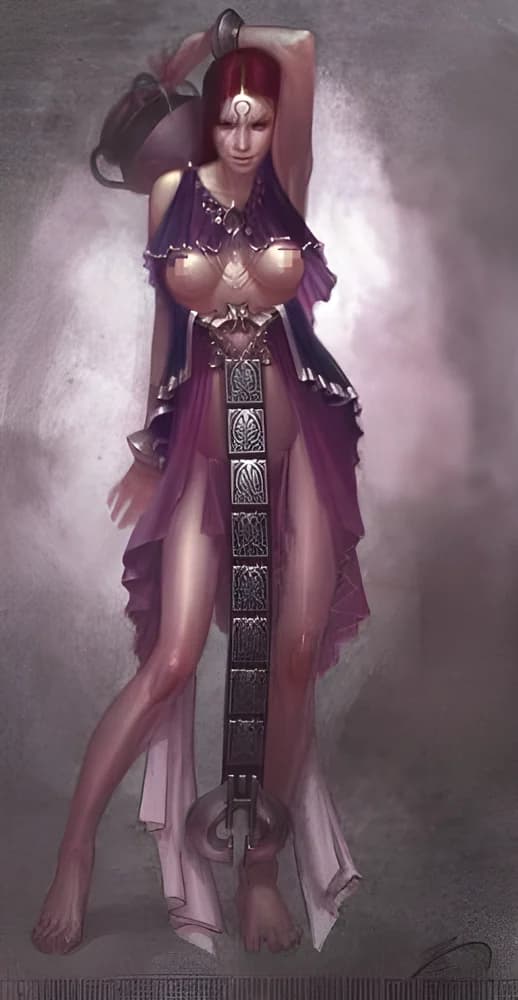
Aphrodite: Hephaestus' wife, lover of Ares
Aphrodite was married to the smith Hephaestus but had no love for him. In myth she took Ares as a lover, and in the games she gave Kratos Medusa's gaze.
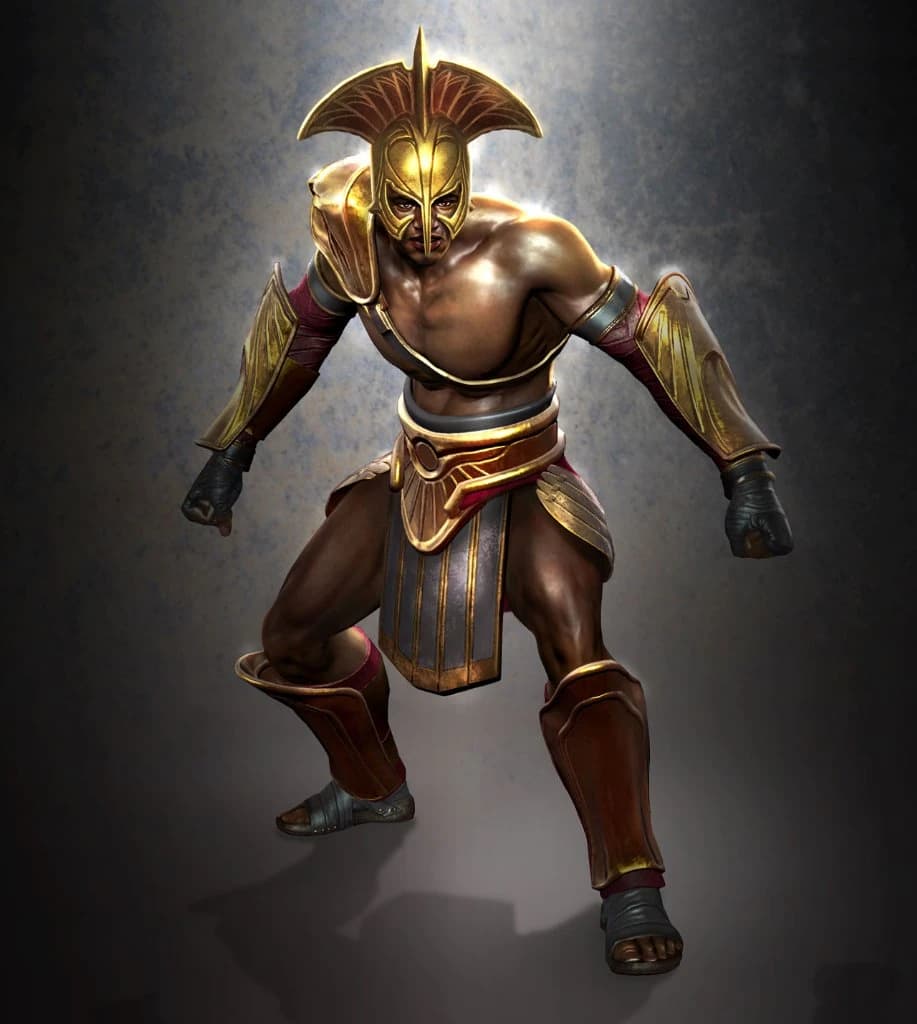
Apollo: the Olympian who escaped Kratos
Apollo never faced Kratos in the flesh. His Flame lit the way to the Tree of Life, his Bow lay in the Underworld, and he survived the slaughter.
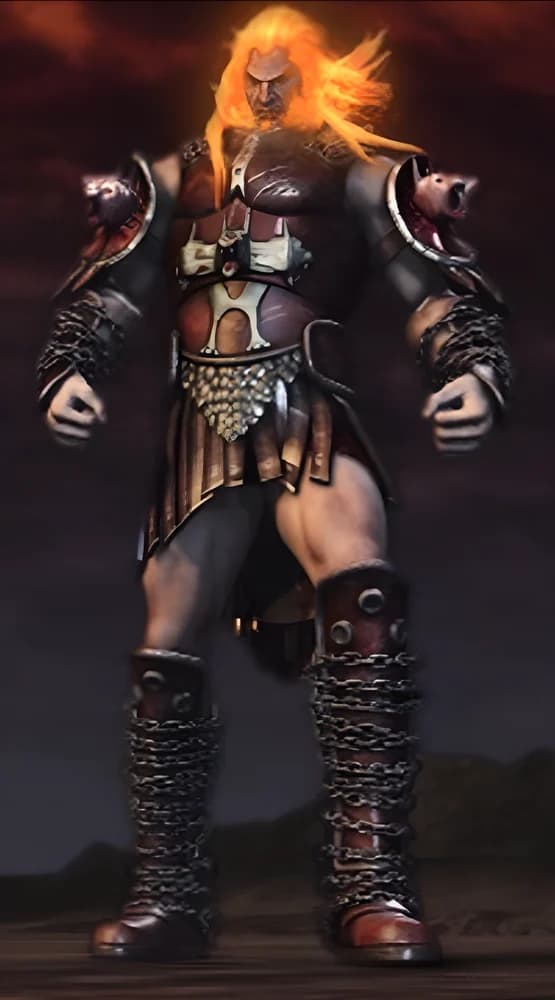
Ares: the god who made Kratos a killer
Ares tricked Kratos into slaughtering his own wife and daughter to bind him as a weapon. Kratos killed him at Athens and took his place as God of War.

Artemis
Artemis was the Olympian Goddess of the Hunt, daughter of Zeus and twin sister of Apollo. When Ares besieged Athens, she turned the beasts of the wild against his armies, and later gave Kratos the Blade of Artemis, a weapon she had wielded against the Titans, to aid him in the conquest of Pandora's Temple.
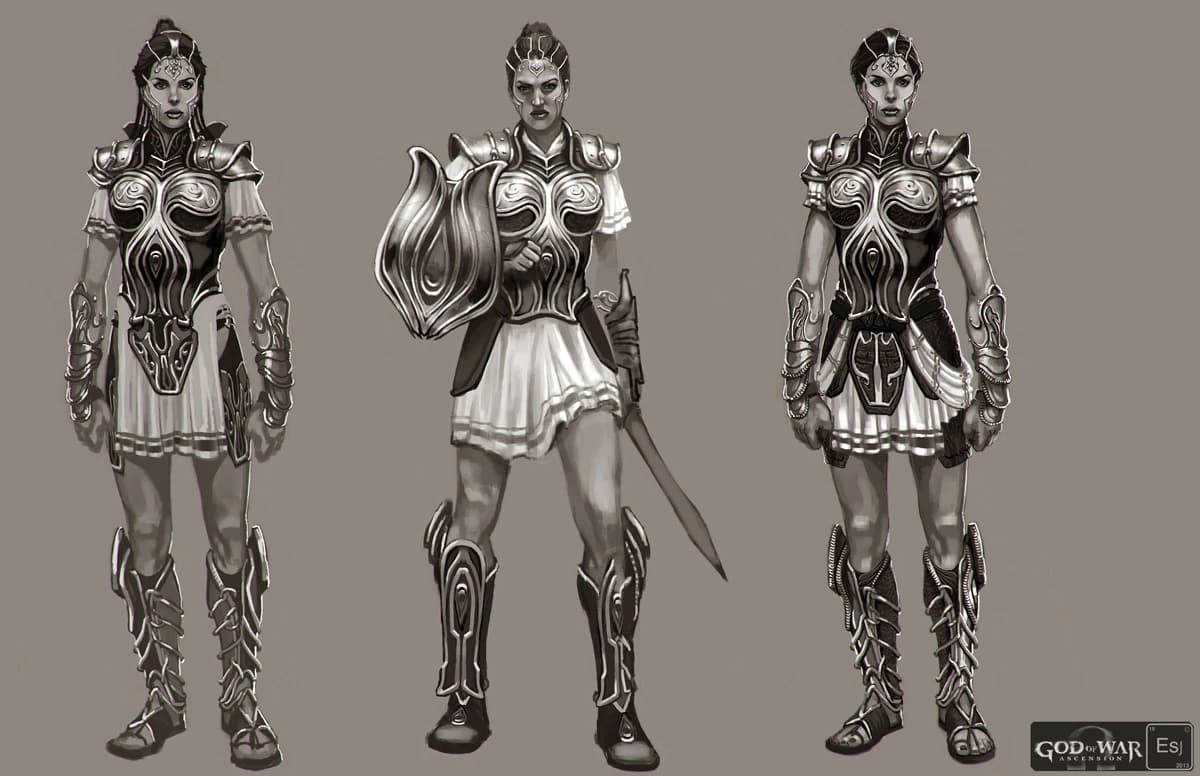
Athena: from Kratos' guide to his enemy
Athena set Kratos against Ares to save Athens, then turned on him when his reign grew worse. She died taking a blow meant for Zeus, and named Kratos his son.
Mentioned in4 entries
Astral Form: the higher existence of the gods
The Astral Form was a rare state in which a god existed without a physical body, appearing as a higher, transcendent version of themselves. Only Athena and, briefly, Zeus ever achieved it, and each reached it by a different road, she through selfless sacrifice and he through the evil of Fear.
Gods: the ageless rulers of the world
Gods were a race of ageless humanoids with magical powers who ruled over the lands of the world and were worshiped by the mortals beneath them. They gathered in distinct pantheons, from the Olympians and Titans of Greece to the Aesir and Vanir of Scandinavia, with still others reigning in distant lands.
Mythology: the many faiths of one world
In the world Kratos walked, mythology was not belief but fact. Every body of myth that mankind told was true within its own land, from the Olympians of Greece to the Aesir of the north, with the gods of Egypt, Persia, and lands further still holding dominion over their own corners of the earth.
Norse Gods: the pantheon of the Nine Realms
The Norse Gods were the pantheon that ruled over Scandinavia, the lands known in their own cosmos as the Nine Realms of Yggdrasil. Divided into the warlike Aesir of Asgard and the nature-bound Vanir of Vanaheim, they counted among the most powerful races of the realms and were held to be the protectors of Midgard and humanity.
Get new articles in your inbox
No spam. New lore drops, canon conflicts, and deep dives only when they’re worth reading.
Some links on Lore Fortress are affiliate links. If you buy through them we earn a small commission at no extra cost to you.