Second Titanomachy
the war that ended Olympus
The Second Titanomachy was the war Kratos set in motion against the Olympian Gods, when he led the Titans up Mount Olympus to take his vengeance on Zeus. It ended with the death of nearly every god and Titan and the ruin of Greece.
The Second Titanomachy was the cataclysmic war that Kratos set in motion against the Gods of Olympus, seeking vengeance for the betrayals he had suffered at their hands. Having traveled back to the first Great War and carried the Titans into his own time, he led them up Mount Olympus against Zeus. The war ended with the death of nearly every god and Titan and the ruin of Greece. (God of War II; God of War III)
The assault begins#
Having overcome the Sisters of Fate and failed in a first attempt to kill Zeus, Kratos returned to the final moments of the first Great War and carried the Titans back into his own time. Guided by Gaia, he led them in a full assault on Mount Olympus, where the Gods, stunned at the sight of the Titans climbing the mountain, swiftly rallied their forces. Helios summoned his fire steeds, Hermes ran down the slope on his winged boots, and Hades swung into the fray with his chains, while Zeus, still weakened from his earlier fight with Kratos, remained in the temple overlooking the battle. (God of War II; God of War III)
Poseidon leapt from the mountain, smashing through the Titan Epimetheus and taking his monstrous watery form to decimate the Titan army, his Hippocampi dragging Hyperion and others into the sea. Hades dislodged Oceanus and Helios struck Perses from the mountain, leaving only Kratos and Gaia to press on. Kratos fended off the Hippocampi attacking Gaia, and after a long battle the two knocked Poseidon from his watery construct, whereupon Kratos gouged out his eyes and broke his neck. The Sea God's death loosed a great flood that drowned much of humanity. (God of War III)
Betrayal and the Underworld#
Kratos and Gaia ascended to the summit, where Zeus struck them with a bolt of lightning that blasted them both from the mountain. Clinging to the rock, Gaia refused to save Kratos as he slipped from her back, declaring that he was a pawn whose usefulness had ended. Betrayed yet again, Kratos swore vengeance on both Zeus and Gaia as he fell into the Underworld. (God of War III)
With the aid of the astral form of Athena, who forged him the Blades of Exile from his ruined weapons, Kratos worked his way out of the kingdom of Hades, taunted all the while by its lord. He met the exiled smith god Hephaestus, who told him of the Flame of Olympus that housed the power to kill a god, and he recovered the Blade of Olympus. At last he confronted Hades himself, stole his claws, cracked his skull, and claimed his soul, the god's body washing away on the souls of the River Styx. (God of War III)
The killing of the Gods#
Emerging through a Hyperion Gate outside the city of Olympia, Kratos came again upon Gaia, who marveled that he yet lived and begged his aid. Still enraged at her betrayal, he cut the vines of her wounded hand and severed it with the Blade of Olympus, sending her falling once more. In the ruined city he aided Perses against Helios, then interrogated the wounded Sun God over the Flame's location before decapitating him with his bare hands, plunging the land into storm and darkness. He later slew Perses himself within an Icarus vent. (God of War III)
After finding the Flame and within it Pandora's Box, which he could not yet claim because the Flame killed all who touched it, Kratos hunted down and killed Hermes, whose body became plague-bearing flies. He bested his half-brother Hercules by stealing the Nemean Cestus and beating him to death. Tricked by Hephaestus into seeking the Omphalos Stone in Tartarus, he met his grandfather Cronos, cut his way out of the Titan's belly, and slew him. Returning to the forge, Kratos killed Hephaestus with his own anvil, and in the Garden of the Gods he snapped the neck of Hera, whose death withered all plant life in Greece. (God of War III)
The Flame and the final battle#
Kratos freed Pandora from the Labyrinth and brought her to the Flame of Olympus. As she walked toward it to extinguish it, he had second thoughts and pleaded for another way, but Pandora broke free and ran into the Flame, opening the way to Pandora's Box. Zeus had tried to stop her, and the two had brawled near the upper chambers before her fall. When Kratos at last opened the Box he found it empty, and Zeus mocked his failure, driving the Spartan into a deeper rage. (God of War III)
Gaia, the last great Titan still standing, returned to interrupt the final duel between father and son, intent on her own vengeance. Zeus and Kratos escaped into her heart chamber, where Kratos drove the Blade of Olympus through Zeus and into Gaia's heart, killing the Titan and collapsing much of Olympus beneath her. When Kratos drew the Blade from Zeus, the god's astral form rose, blasted him with lightning, and infected his mind with fear before draining his strength and snapping his neck. On the brink of death, Kratos journeyed through his own psyche with the spirit of Pandora, learned to forgive himself, and overcame the astral Zeus with the power of Hope, then beat the weakened King of the Gods to death. (God of War III)
Aftermath#
With Zeus dead, Athena demanded the power of Hope that Kratos now carried, which had been buried within him since he first opened the Box to slay Ares and infected the Gods with its evils. Kratos refused and instead impaled himself with the Blade of Olympus, releasing Hope to all mankind so that they might endure the chaos without the Gods, earning only Athena's disappointment as she departed. (God of War (2005); God of War III)
The Second Titanomachy brought the complete end of the reign of the Olympians, but at terrible cost: the deaths of the Gods unleashed flood, plague, famine, and disaster across Greece. The spread of Hope allowed the survivors to go on without divine aid. His sins too great to die, Kratos survived his own attempted suicide and was cursed to walk the earth. He left Greece and traveled until he settled in the Norse lands, where he would meet his second wife Faye and father a son, Atreus. The legend of the war that ended Olympus spread far beyond Greece, as far as the Nine Realms, instilling fear and awe in all who heard of the Ghost of Sparta. The full God of War timeline picks up from here, covering the quiet years before Midgard. (God of War III; God of War (2018); God of War Ragnarök)
Frequently asked questions
- What was the Second Titanomachy?
- The Second Titanomachy was the war Kratos set in motion against the Gods of Olympus, seeking vengeance for the betrayals he had suffered. He carried the Titans into his own time and led them up Mount Olympus against Zeus, and the war ended with the death of nearly every god and Titan and the ruin of Greece.
- How did Kratos bring the Titans into the war?
- Having trapped the Sisters of Fate and failed in a first attempt to kill Zeus, Kratos returned to the final moments of the first Great War and carried the defeated Titans back into his own time. Guided by Gaia, he led them in a full assault on Mount Olympus.
- Why did Gaia betray Kratos?
- After Zeus blasted Kratos and Gaia from the mountain with lightning, Gaia clung to the rock and refused to save Kratos as he slipped, declaring that he was a pawn whose usefulness had ended. Betrayed again, Kratos swore vengeance on both Zeus and Gaia as he fell into the Underworld.
- Which gods did Kratos kill during the Second Titanomachy?
- Kratos killed Poseidon, Hades, Helios, Hermes, Hercules, Hera, Hephaestus, his grandfather Cronos, and finally Gaia and Zeus together. The deaths of the gods unleashed flood, plague, famine, and disaster across Greece.
- How did the Second Titanomachy end?
- Kratos drove the Blade of Olympus through Zeus and into Gaia's heart, then overcame the astral Zeus with the power of Hope and beat the King of the Gods to death. He impaled himself to release Hope to all mankind, but his sins were too great to die, so he survived and eventually settled in the Norse lands.
Sources
- GameGod of War (2005), Santa Monica Studio, 2005
- GameGod of War II, Santa Monica Studio, 2007
- GameGod of War III, Santa Monica Studio, 2010
- GameGod of War (2018), Santa Monica Studio, 2018
- GameGod of War Ragnarök, Santa Monica Studio, 2022
Spotted a factual error or a primary source we missed? Email a correction. Every flagged claim gets reviewed.
Followed from this entry
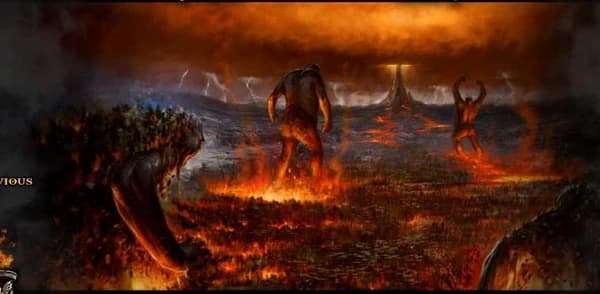
Titanomachy
The Titanomachy, also called the Great War, was the long war between the Titans led by Cronos and the Olympians led by Zeus for mastery of Greece and all mortals. It ended in victory for the gods and the imprisonment of the Titans.
River Styx: the river of hatred beneath Greece
The River Styx was the great river of the Greek Underworld, a barrier that killed the living on contact and carried the souls of the dead toward judgement. Charon ferried across it, the Path of Hades bridged it, and Kratos crossed, fell into and finally swam it more times than any mortal.
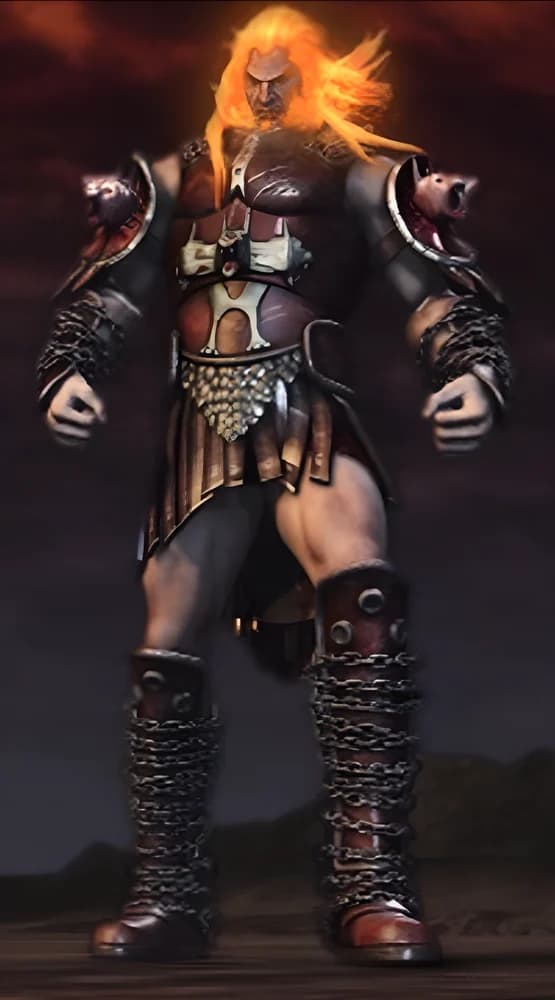
Ares: the god who made Kratos a killer
Ares tricked Kratos into slaughtering his own wife and daughter to bind him as a weapon. Kratos killed him at Athens and took his place as God of War.
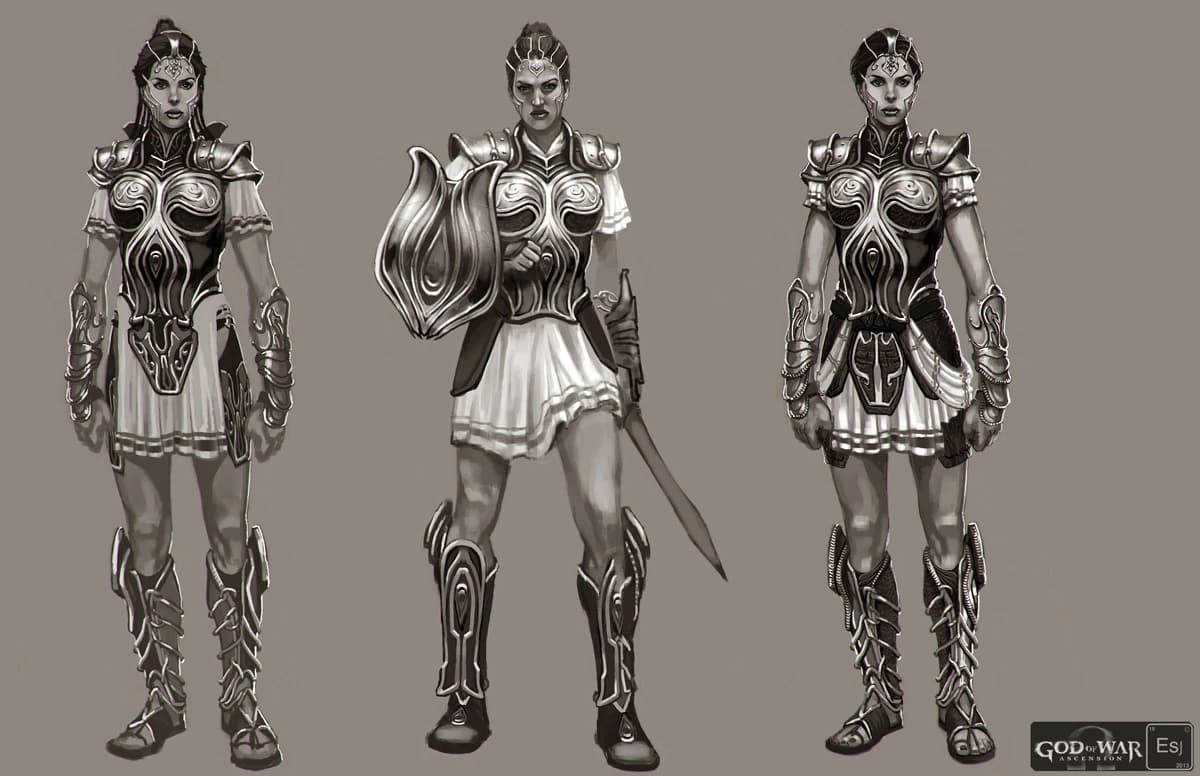
Athena: from Kratos' guide to his enemy
Athena set Kratos against Ares to save Athens, then turned on him when his reign grew worse. She died taking a blow meant for Zeus, and named Kratos his son.
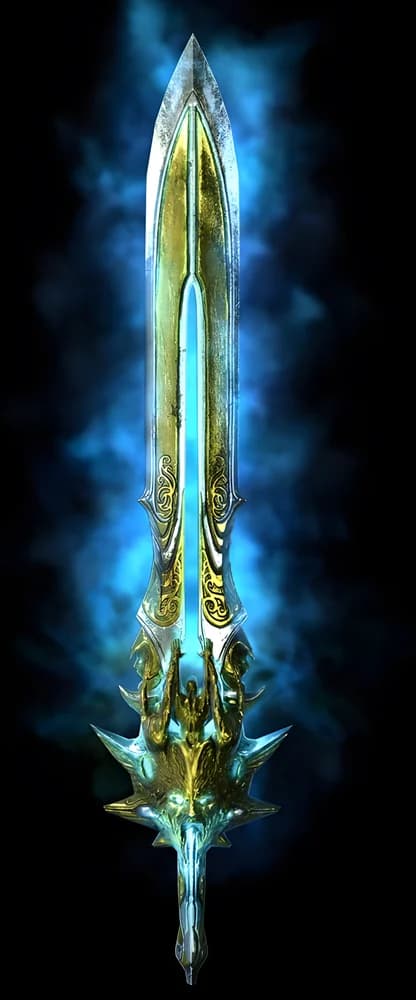
Blade of Olympus: Zeus' god-killing sword
Zeus forged the Blade of Olympus from the heavens and the earth to banish the Titans to Tartarus. It could kill gods and Titans, and it killed Zeus himself.
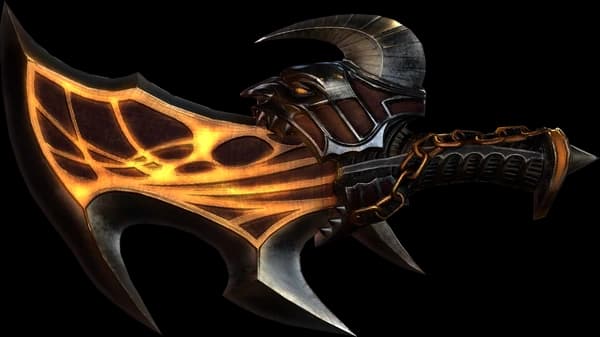
Blades of Exile
The Blades of Exile were a refashioned form of the Blades of Athena, the third and final set of chained blades that Kratos wielded in Greece. Created by the astral form of Athena from his ruined weapons, they carried him through his last war against Olympus.
Mentioned in14 entries
God of War II Story Explained: Plot Summary and Ending
The whole story of God of War II in order, from Zeus's betrayal at Rhodes to the Titans climbing Mount Olympus. Then the ending in plain terms: why Athena died, what she told Kratos about his father, and how it sets up God of War III.
God of War III Story and Ending Explained: Plot Summary
The whole story of God of War III in order, from the Titans' climb up Mount Olympus to the death of Zeus. Then the ending in plain terms: why Kratos drove the Blade of Olympus into himself, what Athena wanted, and where that trail of blood leads.
God of War Story Explained: the Whole Saga from Sparta to Ragnarök
The full God of War story in order, one main game at a time. Kratos serves Ares, kills him, destroys Olympus, starts again in the Norse lands and finally ends Odin, with the Valhalla epilogue as the last word.
God of War Timeline: every major event from the Primordials to Valhalla
The full in-universe chronology of God of War, from the war of the Primordials and the fall of the Titans to Kratos's life in Sparta, his war on Olympus, and the end of the Aesir at Ragnarök. The games give almost no calendar years, so events are ordered by story sequence and grouped into eras, with notes wherever the games' own placement is vague.
Greek Gods
The Greek Gods were the pantheon that ruled over Greece across three generations, the Primordials, the Titans, and the Olympians. Once the masters of mortals, monsters, and the natural world, they were brought to near extinction by Kratos in his war of vengeance against Olympus.
Hope: the greatest weapon in the world
Hope was a blessed power strong enough to kill a god, hidden by Athena at the bottom of Pandora's Box as a counterweight to the evils sealed there after the Great War. Kratos absorbed it without knowing when he opened the Box to slay Ares, awakened it through forgiveness to destroy Zeus, and released it to mankind on the point of the Blade of Olympus.
Mount Olympus: Zeus' seat, torn down
The golden mountain became the seat of the gods after the first Titanomachy, and none but a god could set foot on it. Kratos brought the whole thing down.
Nemesis: the goddess of retribution
Nemesis was the Greek goddess of retribution and revenge, who enacted punishment upon those who fell to hubris before the gods. Though she never appeared, the weapon called the Nemesis Whip was named for her and forged as an instrument of vengeance against Zeus.
Perses: the Titan of Destruction
Perses was the Titan of Destruction, a great being of lava and rock who rose with Gaia in the Second Titanomachy. He crushed the sun god Helios against his own chariot before Kratos drove the Blade of Olympus into his eye and cast him from Mount Olympus.
Poseidon: the sea god who drowned Greece
Brother to Zeus and Hades, Poseidon was second only to the King of Olympus. Kratos gouged out his eyes and broke his neck, and the seas swallowed Greece.
Rhea
Rhea was a Titaness, the wife of Cronos and the mother of the first six Olympian gods. When her husband devoured their children one by one, she hid her sixth child away and gave Cronos a stone in his place, setting in motion the war that would end the reign of the Titans.
Spear of Destiny
The Spear of Destiny was a magical weapon belonging to the Sisters of Fate, held in reserve for emergencies. Kratos claimed it from the Dark Rider on the Island of Creation, taking up a weapon the novelization says could kill Zeus himself.
+ 2 more
Get new articles in your inbox
No spam. New lore drops, canon conflicts, and deep dives only when they’re worth reading.
Some links on Lore Fortress are affiliate links. If you buy through them we earn a small commission at no extra cost to you.