Hercules
the Mightiest of Men
Hercules was a son of Zeus and the mortal Alcmene, a demigod who had completed twelve labors to atone for killing his family. Consumed by jealousy of his half-brother Kratos, he named the killing of the Ghost of Sparta his unofficial thirteenth labor and died for it in the Forum of Olympus.
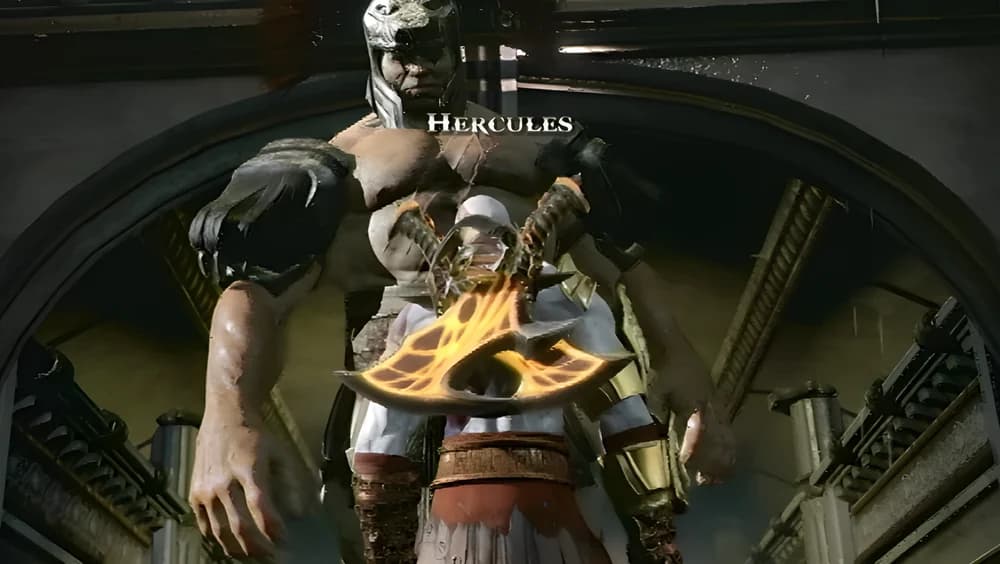
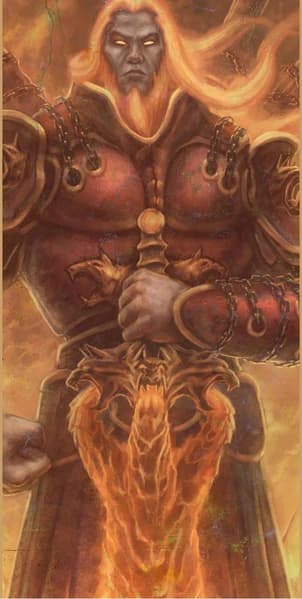
Hercules, also called Heracles and known across Greece as the Mightiest of Men and Protector of Mankind, was a son of Zeus and the mortal woman Alcmene, and thus a half-brother of Kratos. Born a demigod of prodigious strength, he won redemption by completing a series of twelve labors imposed upon him as penance for the murder of his own family. Fighting for Olympus and hungry for a place among its gods, he came to resent Kratos bitterly, convinced that their father had favored the Ghost of Sparta over him, and made the destruction of his brother his final ambition. (God of War III)
Birth and the twelve labors#
The games say little about his early life, which mostly follows the old myths. In those, Hercules was raised by his mother Alcmene and Amphitryon alongside a half-brother named Iphicles, blessed from birth with unnatural strength. He married Megara, daughter of King Creon of Thebes. A madness sent by Hera drove him to kill his wife and children, and on seeking guidance from the Oracle of Delphi he was sent to serve King Eurystheus and complete whatever tasks were set before him, so that the gods might forgive the slaughter. (Bibliotheca)
In the myths the labors began with the slaying of the Nemean Lion, which he killed bare-handed and whose hide he afterward wore as a mark of his power. He went on to destroy the Lernaean Hydra, capture the Ceryneian Hind and the Erymanthian Boar, cleanse the Augean stables in a single day, drive off the Stymphalian birds, capture the Cretan Bull, steal the man-eating Mares of Diomedes, take the belt of Hippolyta, and seize the cattle of Geryon. When Eurystheus claimed two of these did not count, he set two more: to steal the golden apples of the Hesperides, in the course of which Hercules freed Prometheus and tricked the Titan Atlas into resuming the burden of the sky, and finally to drag Cerberus out of the Underworld, which he accomplished to the dismay of Hades. Having completed every task, Hercules was forgiven, and the myths later raise him to Olympus as a god. In God of War III he hasn't got that far: he's a demigod fighting for Olympus who wants to be one of the Olympians. (Bibliotheca; God of War III)
Jealousy of Kratos#
It was during these labors, by his own account, that Hercules first measured himself against Kratos and found himself wanting in the eyes of their father. He recalled learning that Kratos had been chosen by Zeus to kill Ares while he himself was cleaning the Augean stables, and that Kratos had been crowned the new God of War while he was sent to fetch a single golden apple. Hercules came to regard nearly all of his labors as menial, holding only the slaying of the Nemean Lion to be a feat worthy of him, and grew certain that Zeus loved Kratos best and that the Spartan's fame had been spread across the world while his own was diminished. (God of War III)
This envy hardened into hatred. Hercules nursed the belief that he, not Kratos, deserved the title of God of War, and resolved to take it by killing his brother. He named this his unofficial thirteenth and final labor. (God of War III)
The Forum of Olympus#
When Kratos brought the Titans up from the past to assail Mount Olympus during the Second Great War, Hercules commanded its armies, ordering a host of Olympus Sentries to leap from the mountain and attack the Titans upon Gaia. Hera then set him on Kratos within the Forum. (God of War III)
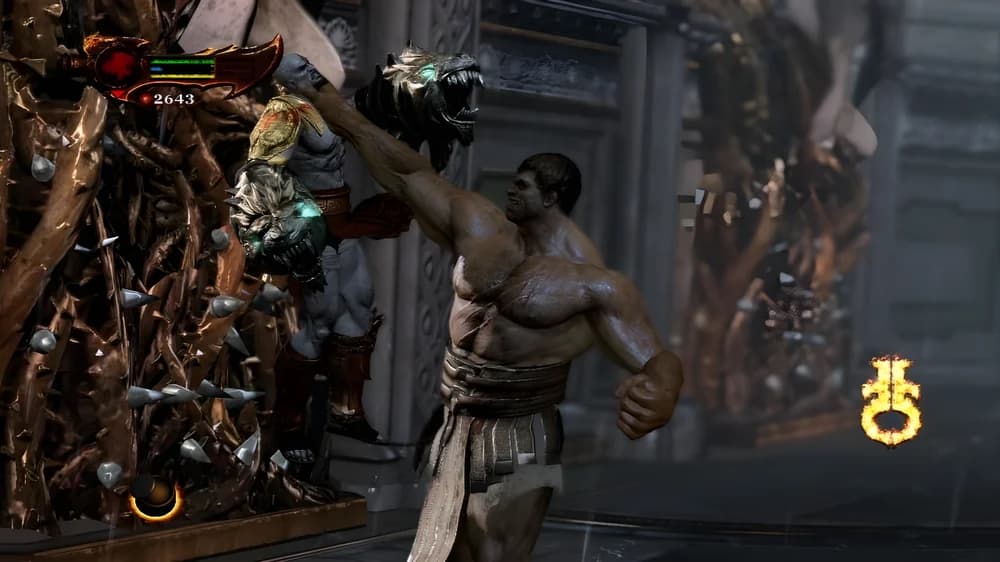
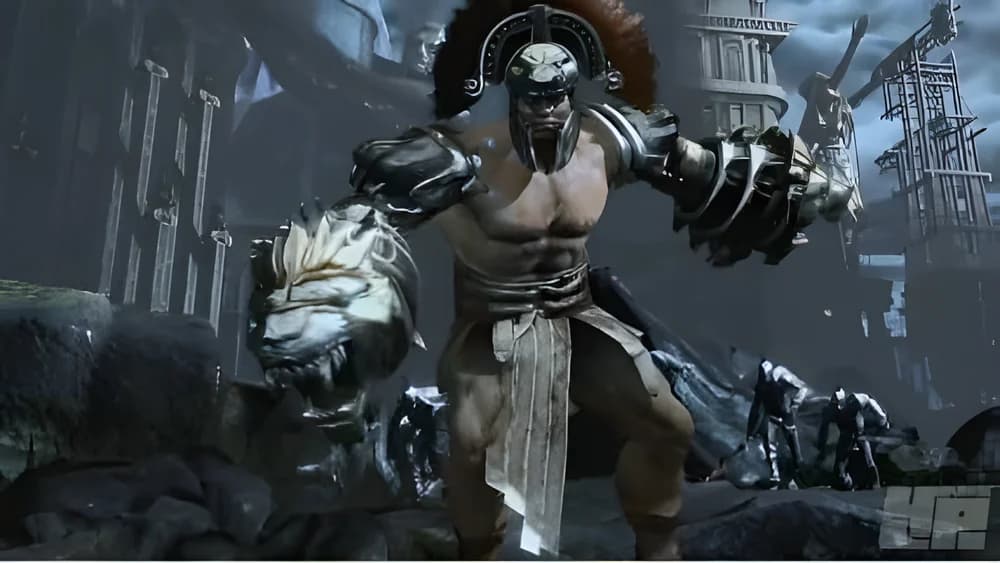
There Hercules confronted his brother and railed against the favoritism he believed Zeus had shown. Kratos tried to reason with him, telling him that their father had no favorites and that the reign of the gods was ending regardless, but Hercules would not listen. He armed himself with the Nemean Cestus, a pair of great lion-headed gauntlets, and fought first with a horde of undead soldiers at his side and then alone. After a punishing exchange of blows, Kratos broke his armor and helmet, stabbed his arm, and wrested the Cesti from him one by one. Hercules fought on with his bare hands, which he considered a true challenge, and at the climax tore up the floor of the arena in an effort to cast Kratos into the depths. Kratos clawed his way back, slammed the floor down upon his brother to pin him, and beat him to death with his own Nemean Cestus, smashing in his head. Both tumbled into the sewers beneath the Forum, where Kratos left the disfigured body to rot. (God of War III)
Strength and nature#
Hercules was one of the most powerful demigods Kratos ever faced. He could hurl Kratos across the arena, lift him overhead with a single hand, tear sections from the arena walls and throw them, and even raise the entire floor of the Forum while gravely wounded. His near-invulnerability let him absorb tremendous punishment, and his stamina was such that he never tired in battle. A master combatant trained through a lifetime of his labors, he was especially deadly with the Cestus, with which he could crush enemies or pound the ground into a shockwave, and he was formidable in unarmed grappling, favoring a crushing embrace. (God of War III)
In temperament he was prideful and quick to anger, yet devoted to the gods and above all to his father, whose respect he ceaselessly sought. That obsession fed his jealousy of Kratos. Despite their enmity, the two addressed each other as brothers, and Kratos was plainly reluctant to fight him, hinting at a kinship that had once existed between them. (God of War III)
Remembered in Valhalla#
Long afterward, while traveling through Valhalla in the Norse lands, Kratos came upon a replica of the Forum and spoke of Hercules to Mimir. When Tyr asked whether he regretted killing his half-brother, Kratos answered that he did not, reasoning that Hercules had wanted to be God of War only for his own gratification and had needed to be stopped. The Norse god of war commended his Greek counterpart for seeing the matter so clearly. (God of War Ragnarök: Valhalla)
Frequently asked questions
- Who is Hercules in God of War?
- Hercules, also called Heracles and known as the Mightiest of Men and Protector of Mankind, was a son of Zeus and the mortal woman Alcmene, making him a half-brother of Kratos. Born a demigod of great strength, he completed twelve labors to atone for killing his family, and fought for Olympus in God of War III while still longing to be counted among the Olympians.
- Why did Hercules have to complete the twelve labors?
- A madness inflicted on Hercules by the Oneiroi at Hera's behest drove him to kill his wife Megara and their children. The Oracle of Delphi sent him to serve King Eurystheus and complete the tasks set before him so the gods might forgive the slaughter.
- Why did Hercules hate Kratos?
- Hercules grew envious of Kratos, believing Zeus favored the Spartan over him. He recalled that Kratos was chosen to kill Ares and crowned the new God of War while he himself was performing menial labors, and he came to believe he, not Kratos, deserved the title of God of War.
- How did Hercules die in God of War?
- Hera set Hercules against Kratos as her champion in the Forum of Olympus. After a long and brutal duel, Kratos wrested the Nemean Cestus from him, pinned him under the arena floor, and beat him to death with his own weapon, smashing in his head.
- Did Kratos regret killing Hercules?
- Long afterward in Valhalla, when Tyr asked whether he regretted killing his half-brother, Kratos answered that he did not. He reasoned that Hercules had wanted to be God of War only for his own gratification and had needed to be stopped.
Gallery
Images via God of War Wiki
Sources
- GameGod of War III, Santa Monica Studio, 2010
- GameGod of War Ragnarök: Valhalla, Santa Monica Studio, 2023
- BookBibliotheca, Pseudo-Apollodorus, 1st or 2nd century AD
Spotted a factual error or a primary source we missed? Email a correction. Every flagged claim gets reviewed.
Followed from this entry
Kratos
Kratos was the demigod son of Zeus who rose from a Spartan general to the Greek God of War, destroyed the pantheon of Olympus in a quest for vengeance, and then began again in the Norse realms as a father seeking to leave his bloody past behind.
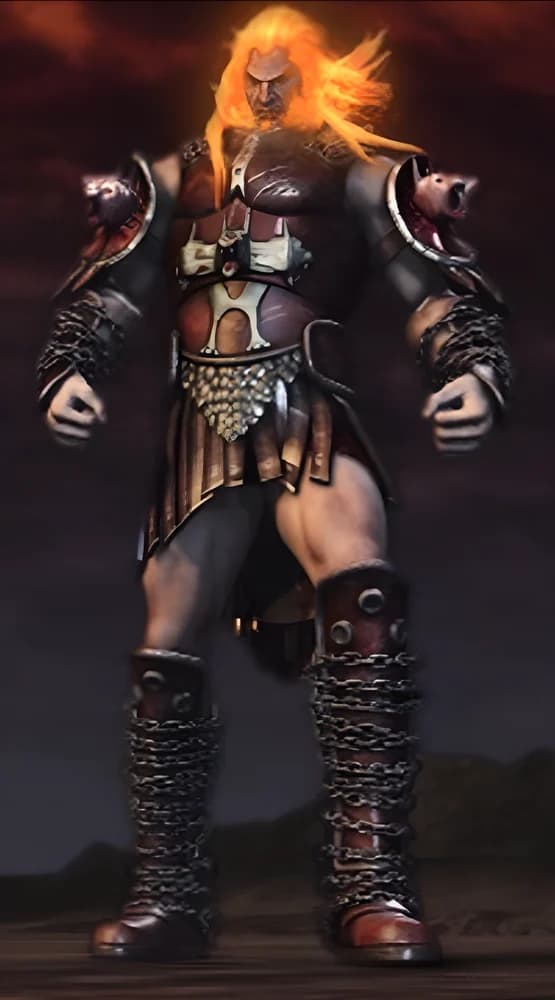
Ares: the god who made Kratos a killer
Ares tricked Kratos into slaughtering his own wife and daughter to bind him as a weapon. Kratos killed him at Athens and took his place as God of War.
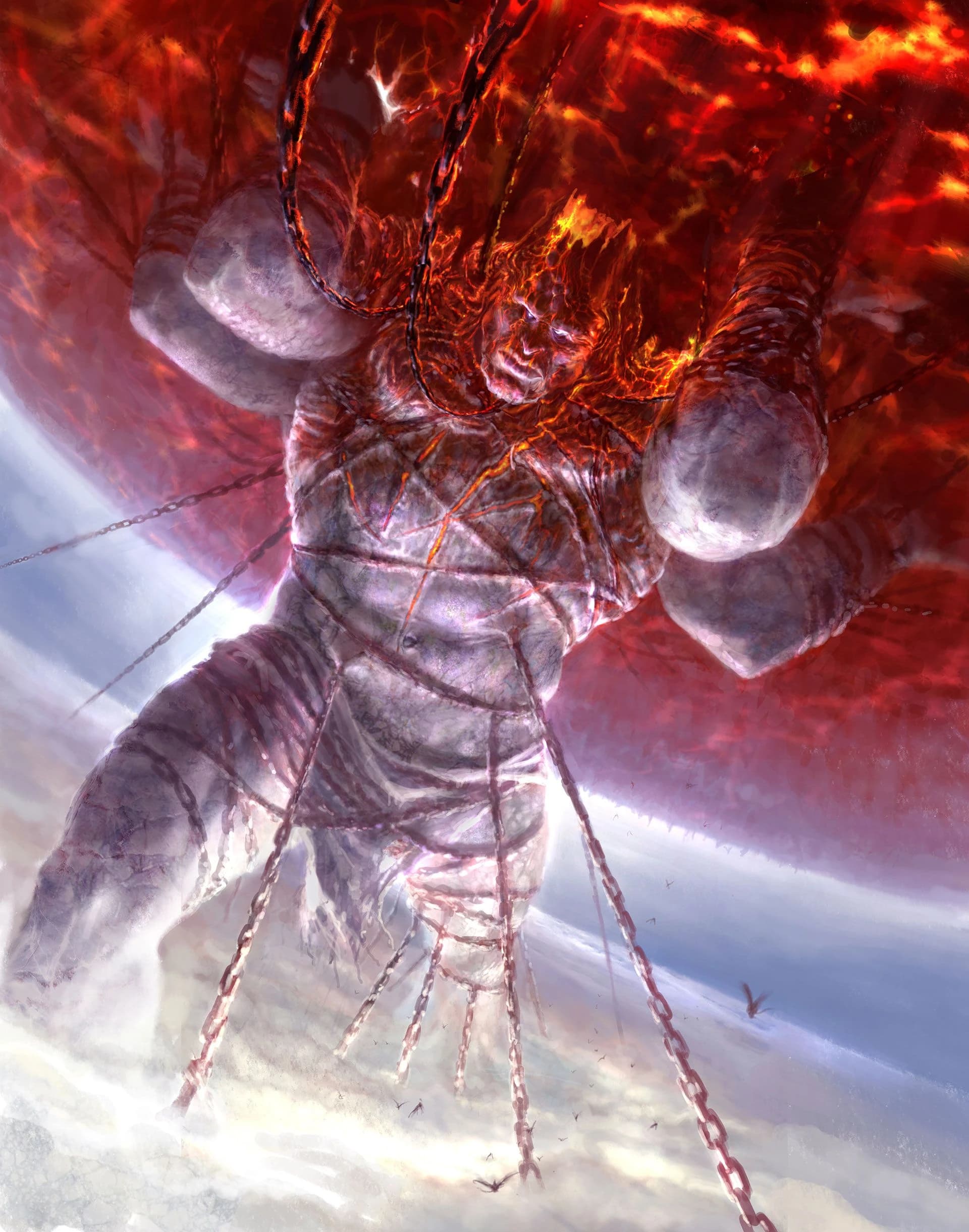
Atlas: the Titan who holds up the world
Four-armed general of the Titans and the strongest of them. Kratos condemned him to carry the world on the Pillar of the World, then took his help.
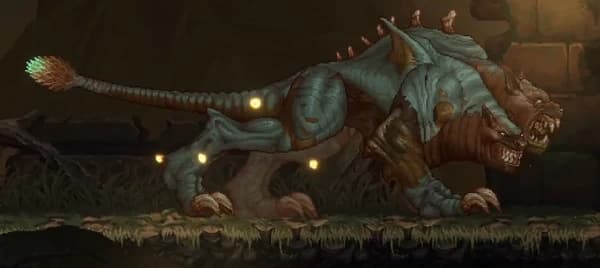
Cerberus: the multi-headed hounds of Hades
The Cerberi were a race of fierce multi-headed hounds, most of them kept as the beasts of Hades in the Underworld. Kratos faced them across many of his journeys, from the breeders of Pandora's Temple to the Mole Cerberus that had swallowed Jason and the Golden Fleece.
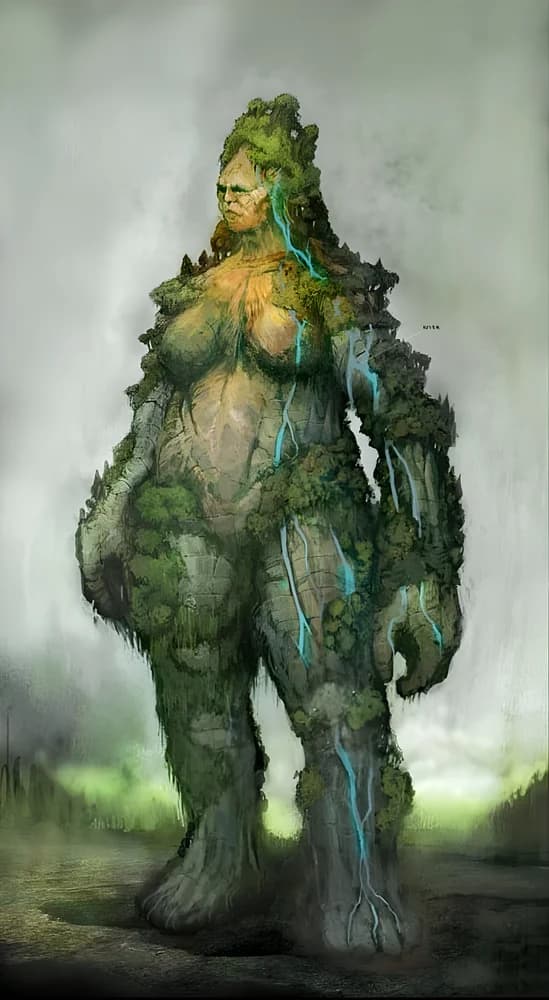
Gaia: Mother Earth, betrayed by Kratos
Gaia bore the Titans, hid the infant Zeus from Cronos, and allied with Kratos against Olympus. He ran the Blade of Olympus through her heart.
God of War: the divine title
The God of War was a title held by a deity unmatched in battle, wielding peerless combat skill and brutal godly power. It passed from Ares to Kratos in the Greek age, while the Norse realms knew their own God of War in Tyr.
Mentioned in23 entries
Atlantis
Atlantis was the great sea-faring city of Poseidon, home to his mightiest temple and guarded by the monster Scylla. It was where Kratos found his dying mother Callisto, and his battle there sank the ancient city beneath the waves.
Barbarian Hammer: the weapon of the Barbarian King
The Barbarian Hammer was a massive spiked warhammer wielded by Alrik, king of the Barbarians, with the power to summon Cursed Souls from the Underworld. Kratos took it for his own after crushing Alrik in battle.
Castor and Pollux
Castor and Pollux were conjoined Spartan twins, one mortal and one a son of Zeus, who seized the Temple of the Oracle at Delphi and posed as its prophet. Acting for the Furies, they imprisoned the true Oracle and stood as the first enemies Kratos faced in his quest to be free of his rage.
Centaur
The Centaurs were monsters of the Greek world, part man and part horse, once renowned for poetry and wine-making in the forests of Mount Pelion. When the Lapiths encroached on their woods they took up arms, and in time were recruited across Greece for their martial prowess.
Demigod: the mortal children of the gods
Demigods were the offspring of a god and a mortal, half-human and half-divine. Mortal yet possessed of superhuman strength and the fighting prowess of a god, the worthiest among them could rise to godhood. Kratos himself was one such demigod before he claimed the throne of war.
God of War Characters: Every Major Character, Greek and Norse
Every major God of War character in one place, from Kratos and the Olympians of the Greek games to Atreus, Freya, Odin and the Aesir of the Norse saga. Each entry says who they are, what they do in the story and how it ends for them.
God of War III Story and Ending Explained: Plot Summary
The whole story of God of War III in order, from the Titans' climb up Mount Olympus to the death of Zeus. Then the ending in plain terms: why Kratos drove the Blade of Olympus into himself, what Athena wanted, and where that trail of blood leads.
God of War Story Explained: the Whole Saga from Sparta to Ragnarök
The full God of War story in order, one main game at a time. Kratos serves Ares, kills him, destroys Olympus, starts again in the Norse lands and finally ends Odin, with the Valhalla epilogue as the last word.
God of War Timeline: every major event from the Primordials to Valhalla
The full in-universe chronology of God of War, from the war of the Primordials and the fall of the Titans to Kratos's life in Sparta, his war on Olympus, and the end of the Aesir at Ragnarök. The games give almost no calendar years, so events are ordered by story sequence and grouped into eras, with notes wherever the games' own placement is vague.
God of War Weapons List: the Name of Every Weapon Kratos Has Used
Kratos has carried two dozen weapons across two lifetimes, from a Spartan spear to a spear built from a ring that copies itself. This list runs through them in the order he got them, Greek era first, then Norse.
Greek Gods
The Greek Gods were the pantheon that ruled over Greece across three generations, the Primordials, the Titans, and the Olympians. Once the masters of mortals, monsters, and the natural world, they were brought to near extinction by Kratos in his war of vengeance against Olympus.
Hera
Hera was the Olympian Goddess of Marriage and Queen of the Gods, the sister and wife of Zeus and mother of Ares. Embittered by her husband's affairs and her withering garden, she set Hercules against Kratos before the Spartan snapped her neck and the world's flora died with her.
+ 11 more
Get new articles in your inbox
No spam. New lore drops, canon conflicts, and deep dives only when they’re worth reading.
Some links on Lore Fortress are affiliate links. If you buy through them we earn a small commission at no extra cost to you.