Hydra
the many-headed sea serpent of the Aegean
The Hydra was a colossal multi-headed sea serpent that terrorized the Aegean Sea, sinking ships and devouring sailors at the bidding of the gods. A child of Typhon and Echidna roughly the size of a small island, it was slain at last by Kratos in the service of Poseidon.
The Hydra was a colossal multi-headed sea serpent that terrorized the Aegean Sea, a beast roughly the size of a small island that sank ships and devoured sailors. A child of Typhon and Echidna, it was slain by Kratos in the service of Poseidon, the first great monster to fall in his long campaign of vengeance. (God of War (2005); God of War (novel))
The serpent of myth#
In the oldest tales of Greece the Hydra was a multi-headed serpent that dwelt in a swamp beyond the city of Lerna. It was most often said to bear nine heads, though the count changed from one telling to the next, and it was deadly poisonous. Worst of all, it could regrow its heads when they were severed, sprouting two for each one lost, and one head among them was held to be immortal. (Bibliotheca; Theogony)
That first Hydra was slain by Hercules, the son of Zeus, as the second of his labors. He cut away the heads and burned each stump so it could not grow again, and afterward dipped his arrows in the monster's poisonous blood. Its immortal head he buried and pinned beneath a great rock. The Hydra was counted among the mightiest and most terrible children of Typhon, the Father of Monsters. (Bibliotheca; Theogony)
The terror of the Aegean#
The Hydra that arose in the age of Kratos was a greater beast. In the novelisation, Athena calls it a freshly born serpent conceived by Typhon and Echidna, larger than the one Hercules had bested long before, and even Zeus is startled to see it. In the game it is a massive serpent roughly the size of a small island, its many lesser heads ruled by one dominant central head, the Hydra King; should the King fall, the whole beast dies with it. (God of War (2005); God of War (novel))
The monster challenged the dominion of Poseidon himself, wrecking ships and devouring their crews across the Aegean Sea, and so the Sea God charged Kratos with its destruction. The Hydra fell upon the Spartan's fleet as it neared Athens, and Kratos battled its heads one by one: first a lesser head that smashed up through the hull of his ship, then another that struck from above amid a flock of Harpies after gorging itself on the sailors. His final reckoning came upon the deck of another ship, where he faced the Hydra King together with two of its lesser heads and slew the beast at last by driving the ship's mast clean through the King's skull. (God of War (2005))
After the kill#
In the novelisation, the kill stirs a brief quarrel between Ares and Poseidon, with Ares suggesting that Athena had set the Hydra in the Spartan's path to trick Poseidon into empowering her chosen warrior. In the game, the Lord of the Oceans rewarded Kratos with a sliver of his own rage, a divine gift that served the Spartan well through the streets of Athens, through Pandora's Temple, and in his final reckoning with the God of War. (God of War (2005); God of War (novel))
The Hydra's hide was not forgotten. After Kratos became the God of War, the temple atop Olympus was found hung with the trophies of his past foes, and the long serpentine skin of the Hydra was displayed high behind the throne, its severed neck and head looming above all who entered. (God of War (2005))
Frequently asked questions
- What is the Hydra in God of War?
- The Hydra was a colossal multi-headed sea serpent that terrorized the Aegean Sea, roughly the size of a small island, sinking ships and devouring sailors. A child of Typhon and Echidna, it was the first great monster to fall in Kratos's long campaign of vengeance.
- How is the Hydra Kratos faced different from the Hydra of older myth?
- In the oldest tales the Hydra was a venomous multi-headed serpent in a swamp beyond Lerna, slain by Hercules as his second labor. The Hydra Kratos faced was a greater beast. In the novelisation Athena calls it a freshly born serpent conceived by Typhon and Echidna, larger than the first, and even Zeus is startled to see it.
- Why did Kratos hunt the Hydra?
- The monster challenged the dominion of Poseidon by wrecking ships and devouring their crews across the Aegean Sea, so the Sea God charged Kratos with its destruction. In the novelisation, Ares suggests that Athena set the Hydra in the Spartan's path to trick Poseidon into empowering her chosen warrior.
- How did Kratos kill the Hydra?
- The Hydra's many lesser heads were ruled by one dominant central head, the Hydra King, and the death of the King meant the death of the whole beast. Kratos battled its heads one by one and slew the creature upon the deck of a ship by driving the ship's mast clean through the King's skull.
- What happened after the Hydra was killed?
- Poseidon rewarded Kratos with a sliver of his own rage, and after Kratos became the God of War, the Hydra's long serpentine skin was displayed high behind the throne in the temple atop Olympus.
Sources
- GameGod of War (2005), Santa Monica Studio, 2005
- BookGod of War (novel), Matthew Stover and Robert E. Vardeman, Del Rey, 2010
- BookTheogony, Hesiod, around 700 BC
- BookBibliotheca, Attributed to Apollodorus, 1st or 2nd century AD
Spotted a factual error or a primary source we missed? Email a correction. Every flagged claim gets reviewed.
Followed from this entry
Harpies
Harpies were monstrous winged creatures of the Greek world, part woman and part bird or bat, that hunted in flocks across Greece and the Underworld. They served the God of War Ares and were the beasts that first carried the Blades of Chaos to Kratos.
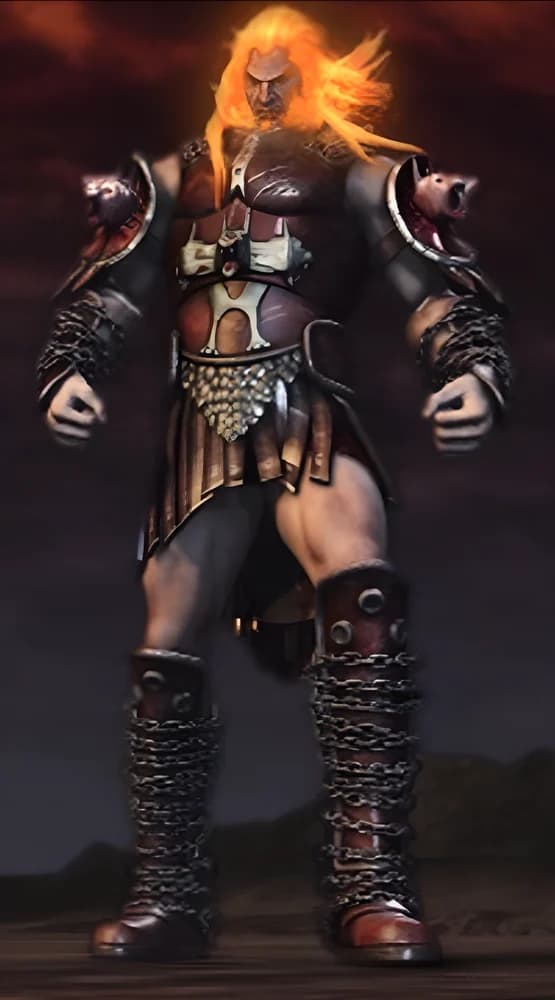
Ares: the god who made Kratos a killer
Ares tricked Kratos into slaughtering his own wife and daughter to bind him as a weapon. Kratos killed him at Athens and took his place as God of War.
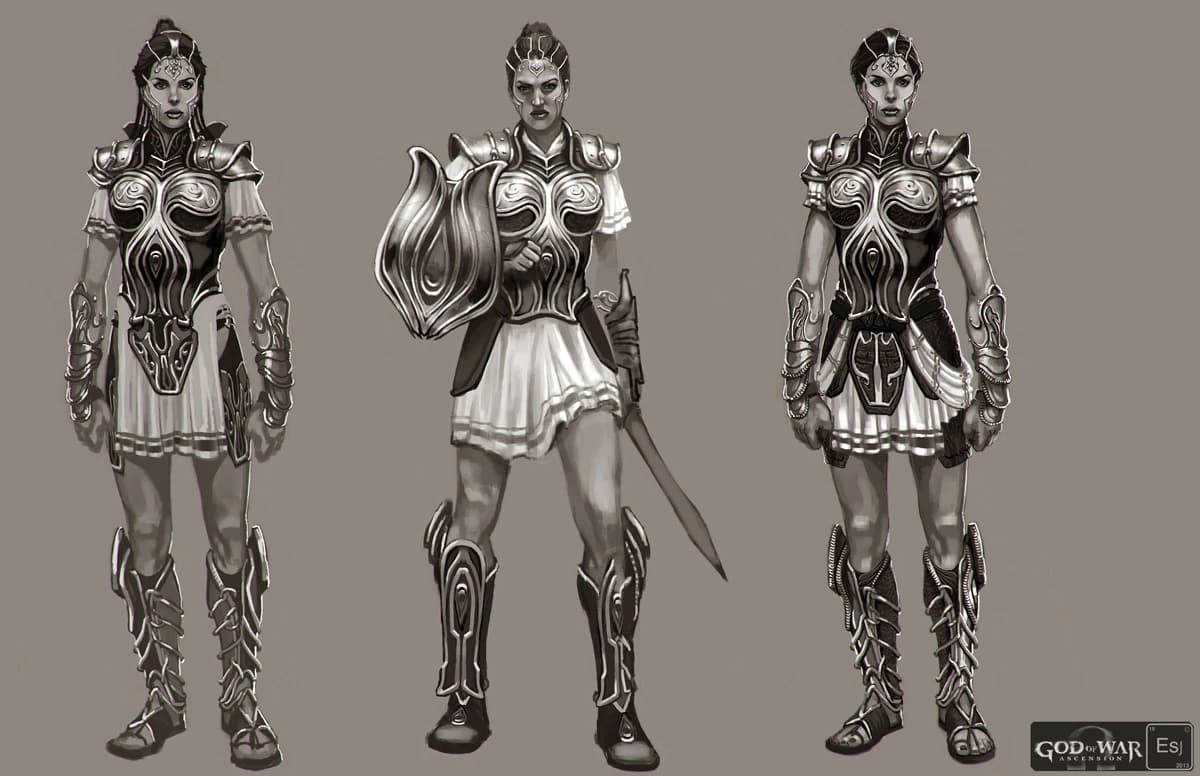
Athena: from Kratos' guide to his enemy
Athena set Kratos against Ares to save Athens, then turned on him when his reign grew worse. She died taking a blow meant for Zeus, and named Kratos his son.

Athens: Athena's city, besieged by Ares
Ares laid siege to Athens out of hatred for his sister Athena. Kratos was sent to save it, and killed Ares there to become the new God of War.
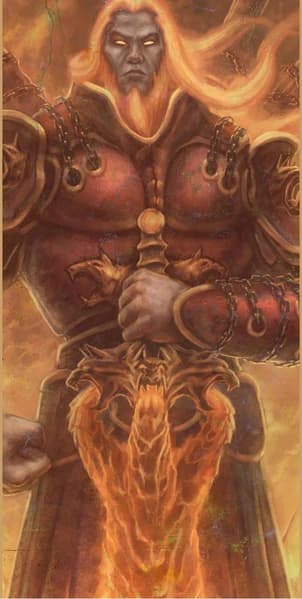
God of War: the divine title
The God of War was a title held by a deity unmatched in battle, wielding peerless combat skill and brutal godly power. It passed from Ares to Kratos in the Greek age, while the Norse realms knew their own God of War in Tyr.
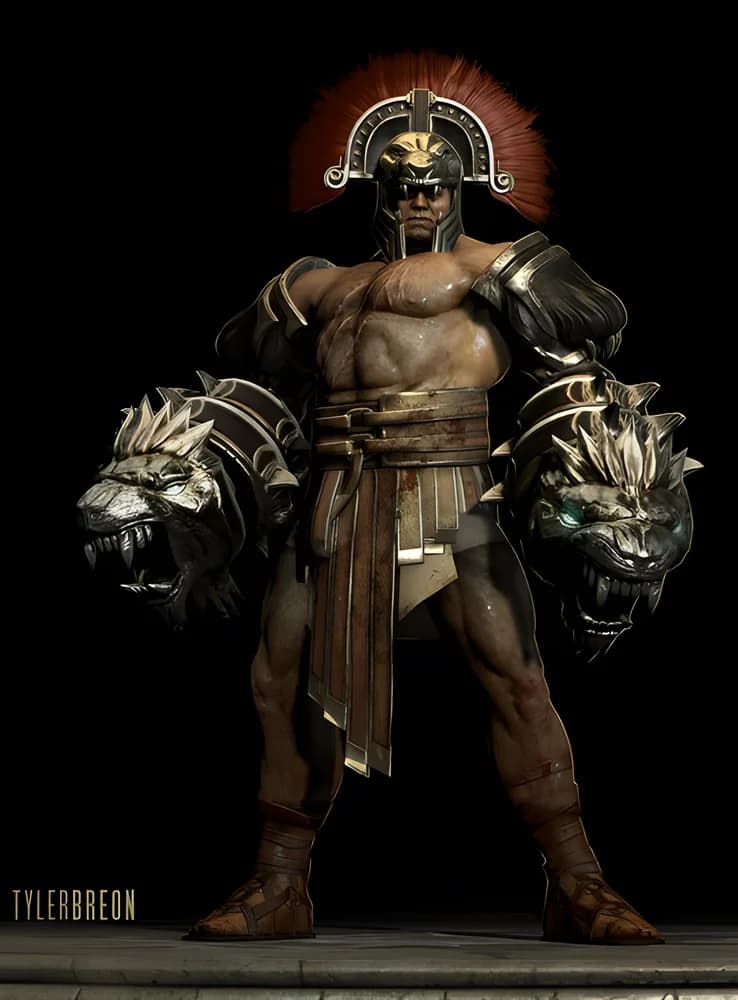
Hercules
Hercules was a son of Zeus and the mortal Alcmene, a demigod who had completed twelve labors to atone for killing his family. Consumed by jealousy of his half-brother Kratos, he named the killing of the Ghost of Sparta his unofficial thirteenth labor and died for it in the Forum of Olympus.
Mentioned in14 entries
Ancient Egypt
Ancient Egypt was a distant southern land, home to the Egyptian gods and to a civilization both old and advanced. Known as the River Empire and the Land of the Pharaoh, it touched the saga of Kratos from the wars of Greece to the treasures of the Norse realms.
Ares: the god who made Kratos a killer
Ares tricked Kratos into slaughtering his own wife and daughter to bind him as a weapon. Kratos killed him at Athens and took his place as God of War.
Blades of Chaos: chained to Kratos' arms
The Blades of Chaos were forged in the Underworld for Ares, who seared their chains onto Kratos' forearms. They burn with the fire of Tartarus.
Chimera
The Chimera was a great three-natured monster, bearing the heads of a goat and a lion and a serpent for a tail. Loosed as a minion of Olympus, it breathed fire and venom against Kratos in the temples and ruins of Greece.
God of War (2005) Story Explained: Plot Summary and Ending
The whole story of the first God of War in order, from the Hydra in the Aegean to the death of Ares at Athens. Then the ending in plain terms: why Kratos jumped from the cliff, why Athena saved him, and how he ended up on Ares's throne.
God of War Story Explained: the Whole Saga from Sparta to Ragnarök
The full God of War story in order, one main game at a time. Kratos serves Ares, kills him, destroys Olympus, starts again in the Norse lands and finally ends Odin, with the Valhalla epilogue as the last word.
God of War Timeline: every major event from the Primordials to Valhalla
The full in-universe chronology of God of War, from the war of the Primordials and the fall of the Titans to Kratos's life in Sparta, his war on Olympus, and the end of the Aesir at Ragnarök. The games give almost no calendar years, so events are ordered by story sequence and grouped into eras, with notes wherever the games' own placement is vague.
Hercules
Hercules was a son of Zeus and the mortal Alcmene, a demigod who had completed twelve labors to atone for killing his family. Consumed by jealousy of his half-brother Kratos, he named the killing of the Ghost of Sparta his unofficial thirteenth labor and died for it in the Forum of Olympus.
Kratos' Throne Room: the seat of the God of War
Kratos' Throne Room was the chamber on Mount Olympus from which the God of War watched over every conflict in Greece. First the hall of Ares, it passed to Kratos for the years of his reign, and its throne returned to him long afterward in Valhalla as the symbol of an office he had to decide whether to reclaim.
Perseus
Perseus was a Greek demigod hero, a son of Zeus and half-brother of Kratos. Driven mad by his imprisonment on the Island of Creation, where he sought the Sisters of Fate to revive his lost love Andromeda, he was slain by Kratos.
Poseidon: the sea god who drowned Greece
Brother to Zeus and Hades, Poseidon was second only to the King of Olympus. Kratos gouged out his eyes and broke his neck, and the seas swallowed Greece.
The Captain
The Captain was the leading sailor of a fleet that sailed the Aegean Sea in the Greek era, swallowed by the Hydra King when his ship was cornered at sea. Kratos retrieved a key from him and let him fall to his death, a casual cruelty that haunted the Spartan for the rest of his life.
+ 2 more
Get new articles in your inbox
No spam. New lore drops, canon conflicts, and deep dives only when they’re worth reading.
Some links on Lore Fortress are affiliate links. If you buy through them we earn a small commission at no extra cost to you.