Tyr: the god of war who chose peace
the Norse God of War
Tyr was the Aesir god of war who turned to peace and built the Temple in the Lake of Nine. Odin imprisoned him, faked his death, and took his face.
Tyr was the Aesir God of War, Law, Justice, and Honor, and a prince of Asgard. The son of Odin and the giantess Hrodr, and half-brother to Thor, Heimdall, and Baldur, he gave up the role of a war god after a spiritual awakening and devoted himself to peace. He served as his father's mediator and built bridges between the realms, until Odin came to see him as a threat, imprisoned him, and spread word that he had died. Long after, he was freed by Kratos and Freya, and guided Kratos through the trials of Valhalla. (God of War (2018); God of War Ragnarök; God of War Ragnarök: Valhalla)
A war god turned to peace#
Tyr was born to Odin and the giantess Hrodr and grew up as a prince of Asgard. When he came of age he chose to fight for peace rather than conquest, becoming a frequent traveller eager to learn from other cultures, which he believed was the only true path to peace. His kindness won him gifts wherever he went, which he kept in a personal vault, and his leadership brought the realms together to raise the Temple in the Lake of Nine, allowing swift travel between the Nine Realms. In this way he became a war god in name only, using his power not for himself but for a higher purpose. (God of War (2018))
So beloved was Tyr that even the Jötnar, sworn enemies of the Aesir, trusted him with their deepest secrets and gifted him bejeweled eyes of Bifrost crystal that allowed him to pass between realms. Mimir, who counted himself the smartest man alive, was deeply impressed by Tyr's cunning and resourcefulness. (God of War (2018))
Betrayal and imprisonment#
Following the truce between the Aesir and Vanir, Tyr sought to broker peace between his people and the giants. The Jötnar, though wary, trusted him enough to admit Odin into Jötunheim for negotiations. Odin, however, never meant to honor any deal, and used the visit to spy on the giants and steal their secret wisdom. When the giants saw through him they expelled him with a curse forbidding his return, and in his fury Odin set Thor to slaughter the giants of Midgard. (God of War (2018); God of War Ragnarök)
Feeling responsible for their suffering, Tyr aided Faye, the guardian of the Jötnar, in hiding the gate to Jötunheim in the space between realms, so that Odin could never reach it again. Odin came to suspect his son of plotting with the giants and had him secretly imprisoned in Asgard, spreading rumors of his death. Almost everyone in the Nine Realms came to believe Odin had killed him. Tyr remained imprisoned for the rest of Odin's reign, slowly erased from the memory of the Aesir. (God of War (2018); God of War Ragnarök)
The false Tyr#
When Kratos and Atreus set out to find Tyr after learning he might still live, Odin moved to keep them from his true prison. He took on Tyr's shape and imprisoned himself in a mine in Svartalfheim, posing as a broken and cowardly pacifist. The disguise served a double cruelty: it deceived his enemies while destroying his son's reputation, depicting the great God of War as a man who had lost all courage. As the false Tyr, Odin sowed mistrust within the group led by Kratos and drove a wedge between the Spartan and his son. The ruse held until the dwarf Brok called his claims into question, whereupon Odin stabbed Brok and revealed himself, leaving everyone to believe the real Tyr had been dead all along. (God of War Ragnarök)
Freedom after Ragnarök#
When Asgard was destroyed, Tyr's prison was among the few fragments that survived, landing in Niflheim. There Kratos and Freya, exploring the ruins, found the true Tyr alive in a cell, marking tally marks upon the wall, wholly unaware of all that had passed. Kratos at first took him for one of Odin's illusions, but Mimir judged him real. (God of War Ragnarök)
Tyr was overcome to learn that Odin was dead, Asgard destroyed, and the realms free of Aesir rule after so long. After taking time to absorb the news, he left his cell to wander the realms, and could be found in many of them: meditating in Vanaheim, sitting at the Spark of the World in Muspelheim where he mourned Surtr and Sinmara, communing silently with Hraesvelgr in Helheim, and watching the freed lyngbakr in Svartalfheim, where he offered comfort to Mimir as one former captive of Odin to another. (God of War Ragnarök)
The trials of Valhalla#
When Freya asked Kratos to join her council and take up the office of God of War, the request filled him with fear and guilt, and he avoided her. Tyr, seeing his struggle, sent Kratos an anonymous invitation to Valhalla, with directions and a message urging him to face his past there in order to master his future. Within Valhalla's chambers Kratos eventually found Tyr meditating at a recreation of the summit of Mount Olympus. Tyr revealed himself as the one who had summoned him, and offered to help him prepare for what lay behind a great door by sparring with him, for as gods of war, fighting was their way of clearing the mind. (God of War Ragnarök: Valhalla)
Through repeated duels and runs through Valhalla's memory chambers, Tyr questioned Kratos about his past: the deal he struck with Ares to save Sparta, his killing of Helios, and his final sacrifice after killing Zeus. Rather than letting Kratos bury these deeds in shame, Tyr helped him confront and accept them, for his refusal to face his old self was the very thing keeping him from becoming the new God of War. With each session Tyr drew on a different weapon won from foreign lands, a spear and shield, dual khopesh blades, a macuahuitl, and a nodachi, and on magic learned in his travels. When asked why he would not retake the office himself, Tyr explained that he was remembered only as an ancient myth, and that his own attempts to unite the realms against Odin had ended in failure. (God of War Ragnarök: Valhalla)
After their last bout, Tyr told Kratos that fear, hate, and love live in everyone, god or mortal, and reassured him that he had given hope to the Nine Realms. Ready at last, Kratos walked through the door, confronted his past self, and embraced the future as a God of Hope. Tyr congratulated him, and welcomed him to spar again whenever he wished. (God of War Ragnarök: Valhalla)
A god without peer#
Tyr had regrown the left arm that the wolf Garm bit off, with the help of magic learned from another pantheon, and Egyptian hieroglyphs still mark that arm. His method combined physical prowess with magic gathered across the realms, making his fighting style versatile and deadly. A mural suggested it took both Odin and Thor together to defeat and imprison him, and both Mimir and Sigrun called him the best, without peer, with the only possible exception being Kratos himself, who counted Tyr among the most formidable opponents he had ever faced. Unlike his kin, who were power-hungry and warmongering, Tyr was genuinely good, and one of the very few gods to earn Kratos' respect. (God of War Ragnarök; God of War Ragnarök: Valhalla)
Frequently asked questions
- Who is Tyr in God of War?
- Tyr was the Aesir God of War, Law, Justice, and Honor, and a prince of Asgard, the son of Odin and the giantess Hrodr. He gave up the role of a war god after a spiritual awakening and devoted himself to peace, serving as his father's mediator and building bridges between the realms.
- Why did Odin imprison Tyr?
- After Odin abused a summit Tyr had brokered to spy on Jotunheim, which led to the slaughter of the giants, Tyr helped Faye hide the gate to Jotunheim so Odin could never reach it again. Odin came to suspect his son of plotting with the giants, had him secretly imprisoned in Asgard, and spread rumors that he had died.
- Who was the false Tyr in God of War Ragnarok?
- When Kratos and Atreus set out to find Tyr, Odin took on Tyr's shape and imprisoned himself in a mine in Svartalfheim, posing as a broken and cowardly pacifist. The disguise deceived his enemies while destroying his son's reputation, and it held until the dwarf Brok questioned his claims, whereupon Odin stabbed Brok and revealed himself.
- How was the real Tyr found?
- When Asgard was destroyed, Tyr's prison was among the few fragments that survived, landing in Niflheim. There Kratos and Freya found the true Tyr alive in a cell, marking tally marks upon the wall, wholly unaware of all that had passed.
- How did Tyr help Kratos in Valhalla?
- Tyr sent Kratos an anonymous invitation to Valhalla, urging him to face his past in order to master his future. Through repeated duels and runs through Valhalla's memory chambers, Tyr questioned Kratos about his past deeds and helped him confront and accept them, which was the very thing keeping him from becoming the new God of War.
Sources
- GameGod of War (2018), Santa Monica Studio, 2018
- GameGod of War Ragnarök, Santa Monica Studio, 2022
- GameGod of War Ragnarök: Valhalla, Santa Monica Studio, 2023
Spotted a factual error or a primary source we missed? Email a correction. Every flagged claim gets reviewed.
Followed from this entry
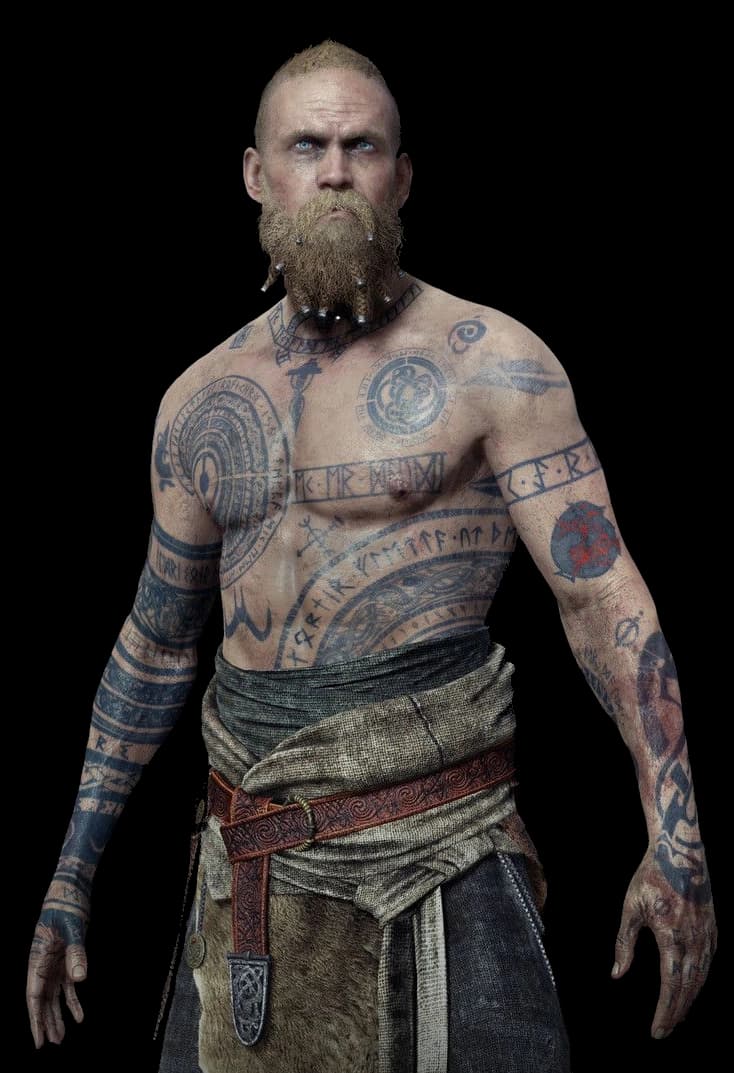
Baldur: the god who could feel nothing
Freya's spell made Baldur invulnerable but stripped every sensation from him, and a century of numbness drove him mad. Kratos killed him beside Thamur's corpse.

Freya
Freya was the Vanir goddess of love, war, and magic who married Odin to end the Aesir-Vanir War and was cursed to remain in Midgard. Once the Witch of the Woods, she aided Kratos and Atreus, swore vengeance after the death of her son Baldur, and at last turned her wrath on Odin himself.
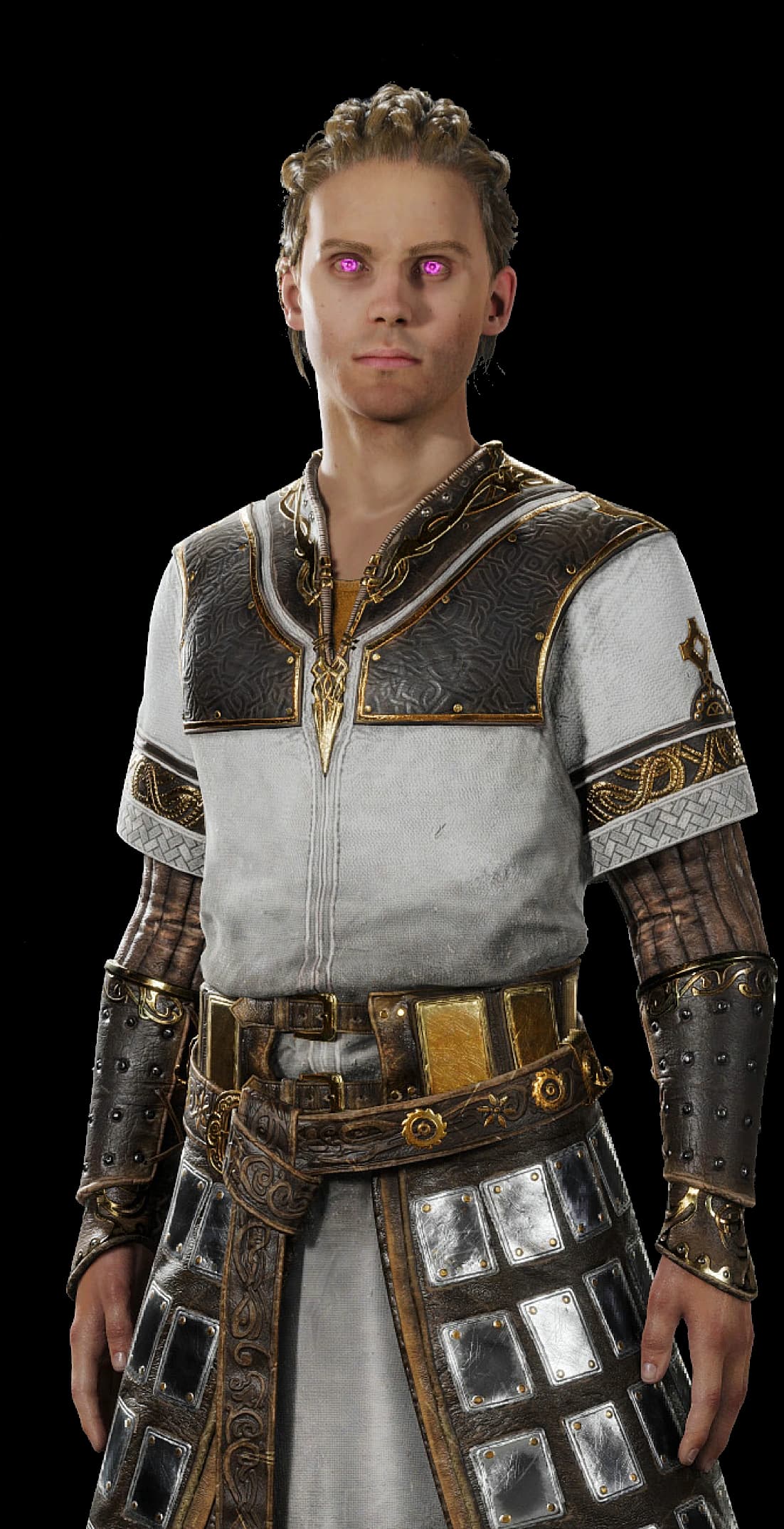
Heimdall: the watchman who saw every attack
Heimdall's foresight let him read minds and dodge any blow, until Brok worked out it could be overwhelmed. The Draupnir Spear got past it, and Kratos killed him.
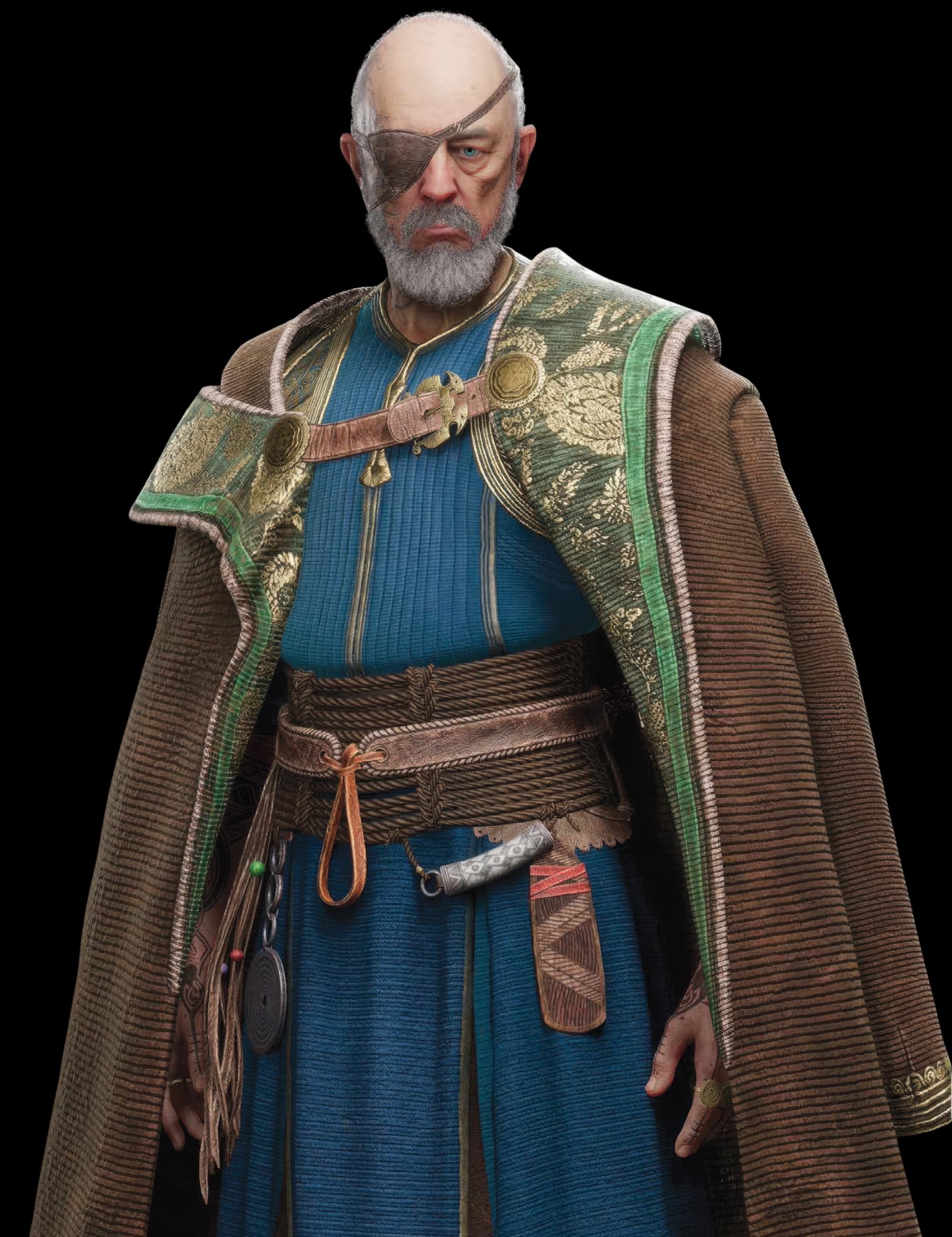
Odin
Odin was the King of the Aesir and ruler of the Nine Realms, the All-Father who slew the first giant Ymir to found Asgard. Obsessed with knowledge and terrified of his own prophesied death, he waged war across the realms and orchestrated the events that brought Ragnarok to his doorstep.
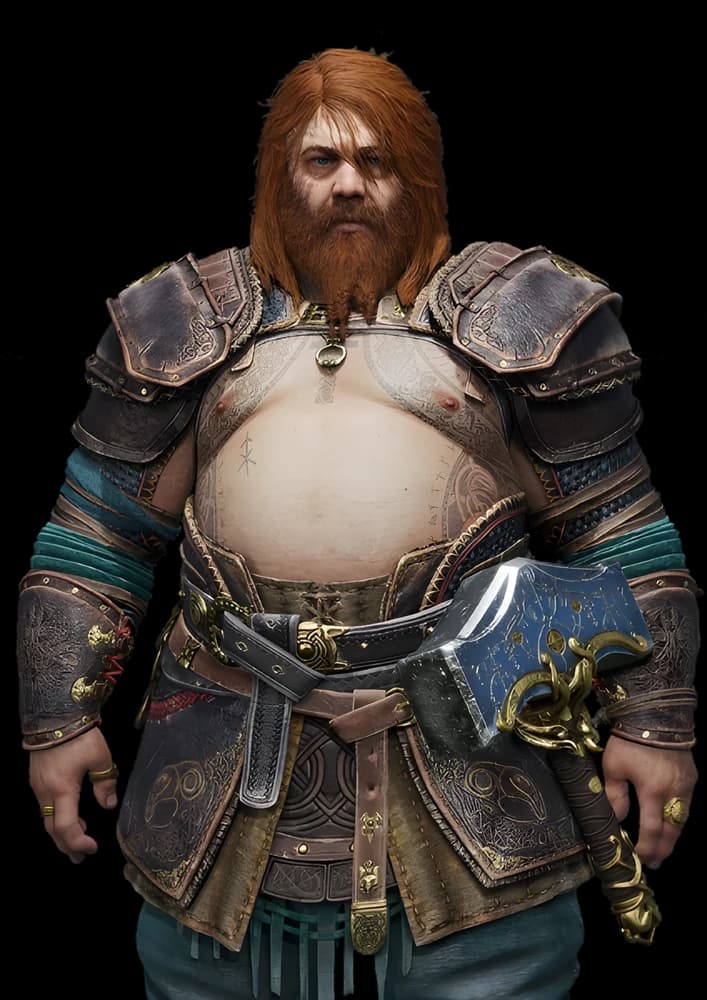
Thor: Odin's enforcer, killed by Odin
Odin ordered Thor to wipe out the giants of Midgard with Mjolnir. When Thor finally refused to fight, his father ran him through with Gungnir.
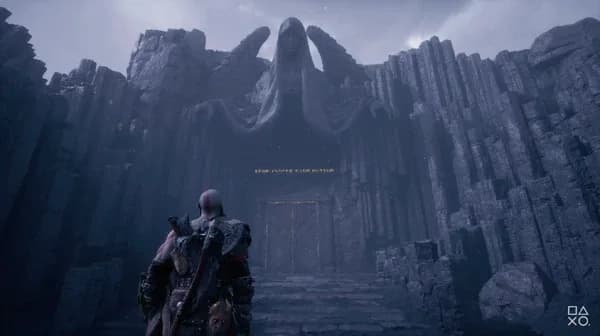
God of War Ragnarök: Valhalla Story Explained
The story of Valhalla, the 2023 epilogue to God of War Ragnarök, in order. Tyr's letter, Kratos's trials among his memories of Greece, the head of Helios, and why the ending has him take up the title of God of War again.
Mentioned in72 entries
Aesir Prison Wreckage: Odin's fallen prison in Niflheim
The Aesir Prison Wreckage was a region of Niflheim formed after Ragnarok, when an entire prison of Asgard crashed whole into the ice east of the Raven Tree. Within its cells Kratos and Freya found the true Tyr, whom Odin had hidden away, along with the tuning fork Sindri used to trigger Hrimthur's Flaw.
Aesir Royal Family: the Ruling Dynasty of Asgard
The Aesir Royal Family was the ruling dynasty of gods who reigned from Asgard over the Nine Realms. Descended from the first god Buri and led by Odin the Allfather, the line counted Odin's brothers Vili and Ve and his sons Thor, Tyr, Heimdall, and Baldur among its most prominent members.
Alfheim: the elves' war over the Light
Light and Dark Elves fought for centuries over the Light of Alfheim, the source that powers the Bifrost. It changed hands more than two hundred times.
Alrik
Alrik, the Barbarian King, was the leader of the Barbarian horde from the east and one of Kratos' oldest enemies. His assault drove Kratos to pledge his soul to Ares, beginning the Spartan's tragedy, and his hatred outlasted even death.
Ancient Egypt
Ancient Egypt was a distant southern land, home to the Egyptian gods and to a civilization both old and advanced. Known as the River Empire and the Land of the Pharaoh, it touched the saga of Kratos from the wars of Greece to the treasures of the Norse realms.
Asgard
Asgard was the realm of the Aesir gods, perched in the crown of Yggdrasil and ruled by Odin from the hall of Gladsheim. Behind the great wall of Hrimthur it stood as a fortress against the prophesied doom of Ragnarok, until Kratos breached it and the realm fell.
Atreus (Loki): Kratos's Son and the Truth of His Name
Atreus was the son of Kratos and the Jotunn Faye, born in Midgard and given the hidden name Loki. Across two great journeys he grew from a sickly boy into the prophesied champion of the Giants, the god of mischief whose fate was bound to Ragnarok.
Aurvangar Wetlands: gateway swamps of Svartalfheim
The Aurvangar Wetlands were the warm, geyser dotted swamps at the southern entrance of Svartalfheim, the main waterway to the Dwarven city of Nidavellir. Abandoned by the Dwarves and infested with Grim and Wretches, they were the first ground Kratos and Atreus walked in the Dwarven domain during their search for Tyr.
Bergelmir: the Beloved King of the Giants
Bergelmir was a Frost Giant who, with his wife, alone survived the flood of Ymir's blood that drowned the rest of his race. He found a new land, named it Jotunheim, and repopulated the Jotnar as its king, refusing all vengeance against Odin. He died of old age surrounded by his kin and was remembered ever after as Bergelmir the Beloved.
Blades of Exile
The Blades of Exile were a refashioned form of the Blades of Athena, the third and final set of chained blades that Kratos wielded in Greece. Created by the astral form of Athena from his ruined weapons, they carried him through his last war against Olympus.
Brok: the Huldra brother Odin murdered
Brok forged Mjolnir and the Leviathan Axe with his brother Sindri. Killed once and revived with an incomplete soul, he was stabbed by Odin disguised as Tyr.
Council of Valkyries: The Hidden Throne Circle of Midgard
The Council of Valkyries, known in the old tongue as the Rocstoll aff Valkyrs, was a secluded council chamber in Midgard where the Valkyries met in private, away from the eyes of Odin. Left ruined and abandoned after the All Father cursed the sisterhood, it became the place where Kratos and Atreus summoned and slew Queen Sigrun, and later the campsite from which a vengeful Freya hunted them through Fimbulwinter.
+ 60 more
Get new articles in your inbox
No spam. New lore drops, canon conflicts, and deep dives only when they’re worth reading.
Some links on Lore Fortress are affiliate links. If you buy through them we earn a small commission at no extra cost to you.