Svartalfheim: where Brok and Sindri forged
home of the Dwarves
The richest of the Nine Realms in minerals, and home to the dwarven smiths. Odin sealed the path to it for generations and bent its trade to Asgard.
Svartalfheim, whose capital was Niðavellir, was one of the Nine Realms of the World Tree and the homeland of the Dwarves. A warm, wet, and colorful land traversed by vast expanses of azure water, it was the richest of the realms in minerals and natural resources, and so became the financial heart of the Norse world. Its smiths, among them Brok and Sindri, were renowned across the realms. The path to Svartalfheim was sealed by Odin for generations, until Kratos and Atreus reached it in search of the imprisoned Norse God of War, Tyr. (God of War (2018); God of War Ragnarök)
The Dwarven homeland#
Svartalfheim was a warm and moist land of azure waters, spouting geysers, and vast networks of mines, in stark contrast to the cold and inhospitable Midgard with which it was often compared. Its particular geology favored Dwarven infrastructure, and the people raised small, well built cities of magnificent architecture rather than dwelling in the dark caves of legend. It held resources such as pure iron of a quality known across the realms as Svartalfheim steel. (God of War Ragnarök)
The Dwarves were a coquettish, comfort loving, and naturally suspicious people, generally hostile to the foreigners foolhardy enough to visit. They were unwilling to share the secrets of their homeworld or mix with other races, an attitude only deepened by long isolation. (God of War Ragnarök)
Conquest by economic means#
The smithing skill and wealth of Svartalfheim drew the attention of Odin. Rather than taking it by force, he chose to subdue the Dwarves through economic blackmail, acting on the advice of Mimir, who later confessed deep guilt over his part in it. Faced with the choice between alliance and war, the Dwarves submitted to Asgard and forfeited their independence. (God of War Ragnarök)
The Aesir imposed a forced industrialization, raising mining rigs across the land to harvest ore for armaments and fat from sea creatures for oil, all to Asgard's benefit. The pollution of this campaign forced the Dwarves to rely on Asgard for food, tightening Odin's hold. To keep the Dwarves content, Odin granted them privileged treatment over the others, and monuments to the All-Father were raised across Svartalfheim. The Dwarves even built high technology war machines to help Odin prepare for Ragnarök. Odin sealed the road there entirely, keeping its riches for Asgard and preventing any alliance between the Dwarves and the Vanir. (God of War (2018); God of War Ragnarök)
The quest for Tyr#
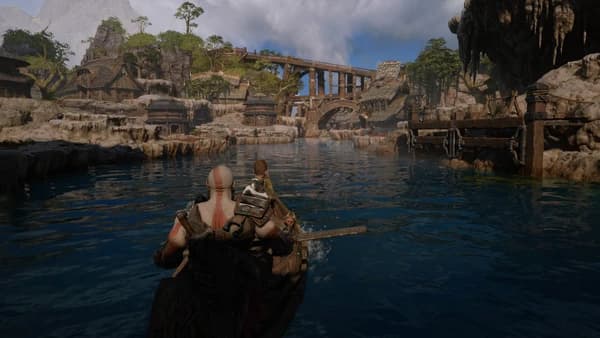
Shortly after the end of Fimbulwinter, the seal was broken when Sindri and Brok modified the Mystic Gateway and crafted Yggdrasil seeds to replace the Bifrost. Kratos, Atreus, and Mimir traveled to Svartalfheim believing the Norse God of War was held captive there. They landed in the Aurvangar Wetlands, a humid region of channels and geysers, and made their way by boat toward Niðavellir, the capital. (God of War Ragnarök)
The city met them with hostility, its people fleeing indoors at the sight of strangers and an alarm sounding at their arrival. From there they passed into the Bay of Bounty, where Mimir guided them to shut down the mining rigs he had once helped raise, among them Radsvinn's Rig and Althjof's Rig. They at last reached the Jarnsmida Pitmines, where, beyond a door guarded by Asgardian soldiers, they found Tyr in chains and freed him. Only later did they learn that the prisoner was Odin in disguise. (God of War Ragnarök)
Loyalty to Asgard and independence#
Even when Ragnarök came, Svartalfheim remained loyal to the Aesir until the end, offering no support to Kratos and his allies and fighting indirectly on Asgard's side through its Dwarven war machines. With the fall of Asgard the Aesir hold appears to have collapsed, and Svartalfheim seems to have regained the independence it had surrendered long before. (God of War Ragnarök)
Frequently asked questions
- What is Svartalfheim in God of War?
- Svartalfheim, whose capital was Nidavellir, was one of the Nine Realms of the World Tree and the homeland of the Dwarves. A warm, wet, and colorful realm of azure waters, it was the richest of the realms in minerals and natural resources.
- Why is Svartalfheim known for smithing?
- Its smiths, among them Brok and Sindri, were renowned across the realms, and the realm held pure iron of a quality known as Svartalfheim steel. The Dwarves raised small, well built cities of magnificent architecture rather than dwelling in dark caves.
- How did Odin take control of Svartalfheim?
- Rather than conquering by force, Odin subdued the Dwarves through economic blackmail on Mimir's advice. The Aesir imposed forced industrialization, and pollution from mining made the Dwarves rely on Asgard for food, tightening Odin's hold.
- Why did Kratos and Atreus travel to Svartalfheim?
- After Sindri and Brok broke Odin's seal on the realm, Kratos, Atreus, and Mimir traveled there believing the Norse God of War was held captive. They found a chained Tyr in the Jarnsmida Pitmines and freed him, though the prisoner was really Odin in disguise.
- What happened to Svartalfheim after Ragnarok?
- Svartalfheim remained loyal to the Aesir to the end, offering no support to Kratos and fighting indirectly on Asgard's side through its Dwarven war machines. With the fall of Asgard the Aesir hold on the realm seems to have collapsed, leaving it free again.
Sources
- GameGod of War (2018), Santa Monica Studio, 2018
- GameGod of War Ragnarök, Santa Monica Studio, 2022
Spotted a factual error or a primary source we missed? Email a correction. Every flagged claim gets reviewed.
Followed from this entry
Aurvangar Wetlands: gateway swamps of Svartalfheim
The Aurvangar Wetlands were the warm, geyser dotted swamps at the southern entrance of Svartalfheim, the main waterway to the Dwarven city of Nidavellir. Abandoned by the Dwarves and infested with Grim and Wretches, they were the first ground Kratos and Atreus walked in the Dwarven domain during their search for Tyr.
Asgard
Asgard was the realm of the Aesir gods, perched in the crown of Yggdrasil and ruled by Odin from the hall of Gladsheim. Behind the great wall of Hrimthur it stood as a fortress against the prophesied doom of Ragnarok, until Kratos breached it and the realm fell.
Midgard: Kratos' home, shaped from Ymir
Odin shaped Midgard from the body of the giant Ymir. Kratos settled there after leaving Greece, and Fimbulwinter later froze the Lake of Nine.
Yggdrasil: the yew that holds the realms
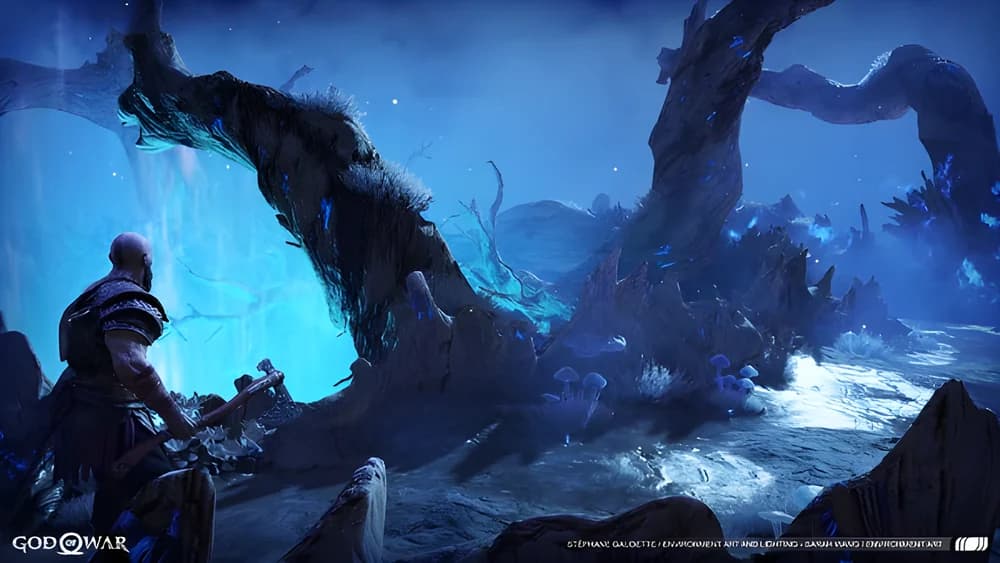
The World Tree grew out of the Lake of Nine and its branches held the Nine Realms. It was said to have no beginning, and it shook when Asgard fell.
The Aesir
The Aesir were one of the two tribes of Norse gods, natives of Asgard known for their war-like nature and their hunger for knowledge. Descended from the slain primordial Ymir and ruled by Odin, they claimed dominion over all creation, waging genocide upon the Jotnar and war upon the Vanir before their fall in Ragnarok.
Atreus (Loki): Kratos's Son and the Truth of His Name
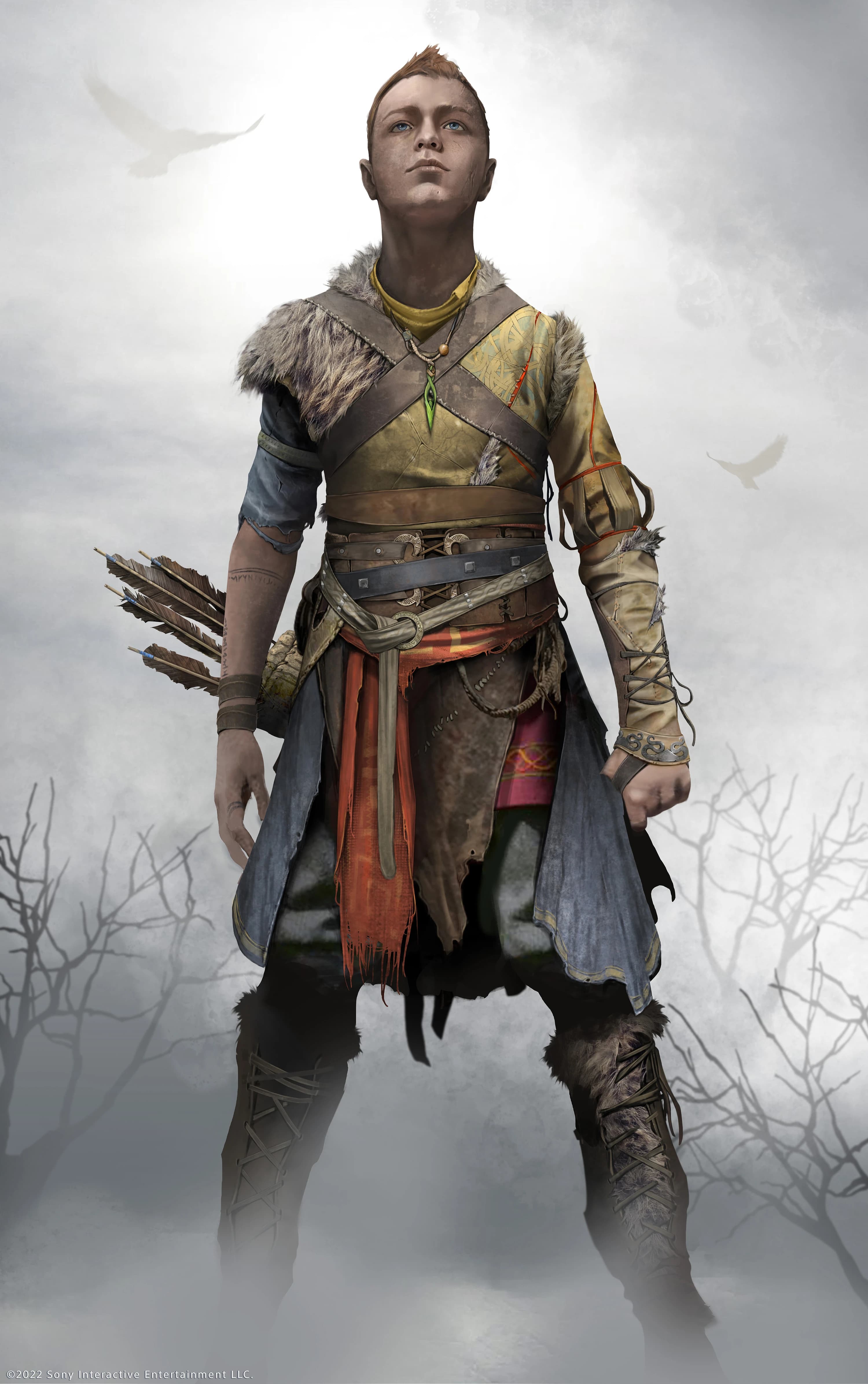
Atreus was the son of Kratos and the Jotunn Faye, born in Midgard and given the hidden name Loki. Across two great journeys he grew from a sickly boy into the prophesied champion of the Giants, the god of mischief whose fate was bound to Ragnarok.
Mentioned in45 entries
Alberich Hollow: tunnel road of the Bay of Bounty
Alberich Hollow was a tunnel region in the north of Svartalfheim's Bay of Bounty, entered from the great wooden walkway above Dragon Beach. Its abandoned dwarven works held half of the seed that opened the road to Muspelheim, a rift into Yggdrasil, and the lair of the dreadful Grim Ormstunga.
Alberich Island: deserted shore of the Bay of Bounty
Alberich Island was a small shoreline in the far north of Svartalfheim's Bay of Bounty, abandoned by the Dwarves and overgrown with dry vegetation. Kratos, Atreus, and Mimir passed its shore during their voyage across the bay, and its heights held a rift in Yggdrasil, the gravestone of a berserker, and a fragment of the Amulet of Yggdrasil.
Alvíss Stonefoot: the Warden of Svartalfheim
Alvíss Stonefoot was a dwarf of Svartalfheim, renowned as its warden. With his sharp mind he trapped the most dangerous creatures of the Nine Realms, and a great statue was raised in his honor for the protection he gave his people.
Amulet of Yggdrasil
The Amulet of Yggdrasil was a piece of jewellery Kratos claimed after slaying the dragon Nidhogg. Worn as part of his armour, it held empty settings into which he fitted enchantments gathered from across the Nine Realms.
Andvari: the enchanter trapped in a ring
Andvari was a dwarven enchanter and master of soul magic who created the dreaded Soul Eaters. When one of his own creations turned on him, he sealed his soul inside his ring to survive, and in that form he aided Kratos and Atreus before being lost.
Asgard
Asgard was the realm of the Aesir gods, perched in the crown of Yggdrasil and ruled by Odin from the hall of Gladsheim. Behind the great wall of Hrimthur it stood as a fortress against the prophesied doom of Ragnarok, until Kratos breached it and the realm fell.
Atreus (Loki): Kratos's Son and the Truth of His Name
Atreus was the son of Kratos and the Jotunn Faye, born in Midgard and given the hidden name Loki. Across two great journeys he grew from a sickly boy into the prophesied champion of the Giants, the god of mischief whose fate was bound to Ragnarok.
Aurvangar Wetlands: gateway swamps of Svartalfheim
The Aurvangar Wetlands were the warm, geyser dotted swamps at the southern entrance of Svartalfheim, the main waterway to the Dwarven city of Nidavellir. Abandoned by the Dwarves and infested with Grim and Wretches, they were the first ground Kratos and Atreus walked in the Dwarven domain during their search for Tyr.
Brok: the Huldra brother Odin murdered
Brok forged Mjolnir and the Leviathan Axe with his brother Sindri. Killed once and revived with an incomplete soul, he was stabbed by Odin disguised as Tyr.
Dragon Beach: bone strewn shore of the Bay of Bounty
Dragon Beach was a geyser pocked shore on the eastern edge of the Bay of Bounty in Svartalfheim, scattered with colossal remains and the ruins of an abandoned Dwarven settlement. A dragon that seemed carved from stone waited at its southern end, and the ghost of a treasure seeking sailor lingered on the ledges above its sands.
Dragons
Dragons were massive reptilian predators that roamed the Norse realms, breathing fire laced with lightning and capable of flight. Several distinct kinds existed, from the six-limbed Dragons of Midgard to the wingless Drakes of Alfheim.
Draupnir Spear
The Draupnir Spear was a wind-imbued spear forged for Kratos from the enchanted ring Draupnir, created by the Lady of the Forge and sanctified with a drop of his blood. Built to be the undoing of Heimdall, it could endlessly duplicate itself and command the wind.
+ 33 more
Get new articles in your inbox
No spam. New lore drops, canon conflicts, and deep dives only when they’re worth reading.
Some links on Lore Fortress are affiliate links. If you buy through them we earn a small commission at no extra cost to you.