Thor: Odin's enforcer, killed by Odin
the God of Thunder, Champion of the Aesir
Odin ordered Thor to wipe out the giants of Midgard with Mjolnir. When Thor finally refused to fight, his father ran him through with Gungnir.
Thor, also known as Thor Odinson, was the Norse Aesir God of Thunder and Prince of Asgard. The firstborn son of Odin and the giantess Fjorgyn, he was the husband of Sif, the father of Magni, Modi, and Thrud, and the older half-brother of Tyr, Heimdall, and Baldur. Wielding the hammer Mjolnir, he became the symbol of the Aesir's rampage across the Nine Realms and the All-Father's most feared enforcer. Behind his cruelty lay a tragic figure, raised in fear and warped into a weapon by his own father. (God of War (2018); God of War Ragnarök)
Birth and the making of a weapon#
Thor was born to Odin and the giantess Fjorgyn, the firstborn of the All-Father's sons. He was raised in a violent household, taught fear and obedience, and had a hatred of the giants instilled in him as part of Odin's design to break his spirit and make him malleable. After his mother's death he rejected his maternal heritage and took up his place as the Aesir's chosen fighter. Odin commissioned the dwarves Brok and Sindri to forge Mjolnir for him, a weapon they would come to regret making as Thor used it to spread death across the realms. (God of War (2018); God of War Ragnarök)
In his youth Thor killed the stone giant Hrungnir at a feast in Asgard, smashing the giant's head with Mjolnir, though the corpse fell upon him and no Aesir could lift it until his young sons Magni and Modi freed him. He also slew the giant stonemason Thamur, whose falling body crushed a fishing village, and murdered the Vanir poet Kvasir in a drunken rage. (God of War (2018); God of War Ragnarök)
The genocide of the giants#
After the giants discovered Odin trying to steal their knowledge of the future and expelled him from Jotunheim, the All-Father ordered Thor to use Mjolnir to slaughter every giant in Midgard he could find. By the time the giant Laufey died, Thor had already killed most of the giants of Midgard, with Jormungandr the one he could not finish. His reputation as the strongest god in the Nine Realms was built on this slaughter. (God of War (2018); God of War Ragnarök)
Thor's hatred reached its peak when the Aesir confronted the World Serpent Jormungandr in Midgard. The two fought a brutal battle that ended in a stalemate, forcing Thor to return to Odin empty-handed. The two were destined to slay one another at Ragnarok, and their rivalry endured ever after. (God of War (2018))
The duel with the Ghost of Sparta#
Three years after Fimbulwinter began, Thor appeared at the door of Kratos, summoning a storm and revealing Mjolnir before unexpectedly offering a drink of mead. Odin soon joined them to negotiate, and when Kratos refused the All-Father's terms, Odin gave Thor the signal to fight. Thor caught Kratos with an uppercut that sent him soaring across Midgard and introduced him to the Aesir tradition of "blood payments," demanding payment for the deaths of his sons. (God of War Ragnarök)
The two fought a ferocious duel. Thor goaded Kratos, hoping to see the true Ghost of Sparta, and even revived him with Mjolnir after a near-fatal blow rather than let him die. When Thor threatened Atreus, Kratos lost control and struck him hard enough to knock out a tooth. Satisfied at last that Kratos lived up to his reputation, Thor declared the blood debt paid and departed. (God of War Ragnarök)
Servitude and breaking point#
Back in Asgard, Odin set Thor to escort Atreus on the hunt for the pieces of the mask. Thor reluctantly served as the young man's bodyguard, threatening him in private yet honoring the mission, only to be denied any credit by Odin, who openly mocked him and remarked that he preferred Thor as a drunk. Belittled at every turn, Thor relapsed into drinking, and his daughter Thrud and wife Sif both pleaded with him to stand up to the All-Father. (God of War Ragnarök)
The breaking point came on Niflheim, when the completed mask drew Odin's congratulations to Atreus while Thor was ignored. When Sif arrived and reminded Thor that Odin had sacrificed their sons, Thor lacked the courage to face his father. Instead he turned his rage on Atreus, swinging a fatal strike that was foiled only by a teleportation device. His impulsiveness forced Atreus to flee with the mask, forced Odin back into his disguise as Tyr, and helped drive Kratos to trigger Ragnarok early. (God of War Ragnarök)
The final battle and death#
When Ragnarok came to Asgard, Odin ordered Thor to deal with Kratos after he had finished Jormungandr. Thor fought the World Serpent through the burning city, eventually hitting it hard enough to splinter Yggdrasil and send the creature back in time, removing it from the battle. Seeing Kratos standing beside Thrud and wrongly believing the Spartan was attacking her, Thor flew to engage Kratos one last time before the Great Lodge. (God of War Ragnarök)
This time Kratos was battle-hardened and wary. Thor unleashed the full extent of his power, cloaking himself in lightning, but Kratos wore him down, disarmed him, and pinned his hand to neutralize his powers. Exhausted and beaten, Thor expected to be killed, but Kratos sheathed his axe and urged him to change for the sake of their children. Thor finally stood down. When Odin appeared and ordered him to resume the fight, Thor at last realized his father had never cared for him. He dropped Mjolnir and openly refused, and Odin immediately impaled him through the chest with Gungnir. In his dying moments Thor reached out toward his daughter Thrud before fading away. (God of War Ragnarök)
After Asgard's destruction, Thrud recovered Mjolnir on Alfheim and claimed it for herself, vowing to make her father proud. The dwarf Lunda hoped the hammer had at last found a worthier bearer than Thor. (God of War Ragnarök)
Frequently asked questions
- Who is Thor in God of War?
- Thor, also known as Thor Odinson, was the Norse Aesir God of Thunder, Champion of the Aesir, and Prince of Asgard. The firstborn son of Odin and the giantess Fjorgyn, he wielded the hammer Mjolnir and became the symbol of the Aesir's rampage across the Nine Realms and the All-Father's most feared enforcer.
- Why did Thor kill the giants?
- After the giants discovered Odin trying to steal their knowledge of the future and expelled him from Jotunheim, the All-Father ordered Thor to use Mjolnir to slaughter every giant in Midgard he could find. By the time the giant Laufey died, Thor had already killed most of the giants of Midgard, though Jormungandr was one he could not finish, and his reputation as the strongest god was built on this slaughter.
- What was Thor's relationship with his father Odin?
- Thor was raised in a violent household and taught to hate the giants as part of Odin's design to break his spirit and make him malleable. Odin constantly belittled him, openly mocked him, and remarked that he preferred Thor as a drunk, which drove Thor back into drinking despite his service as the All-Father's enforcer.
- How did Thor die in God of War Ragnarok?
- After Kratos defeated Thor a final time but spared him and urged him to change for the sake of their children, Thor stood down. When Odin appeared and ordered him to resume the fight, Thor realized his father had never cared for him, dropped Mjolnir, and openly refused, whereupon Odin immediately impaled him through the chest with Gungnir.
- What happened to Mjolnir after Thor died?
- After Asgard's destruction, Thor's daughter Thrud recovered Mjolnir on Alfheim and claimed it for herself, vowing to make her father proud. The dwarf Lunda hoped the hammer had at last found a worthier bearer than Thor.
Sources
- GameGod of War (2018), Santa Monica Studio, 2018
- GameGod of War Ragnarök, Santa Monica Studio, 2022
Spotted a factual error or a primary source we missed? Email a correction. Every flagged claim gets reviewed.
Followed from this entry
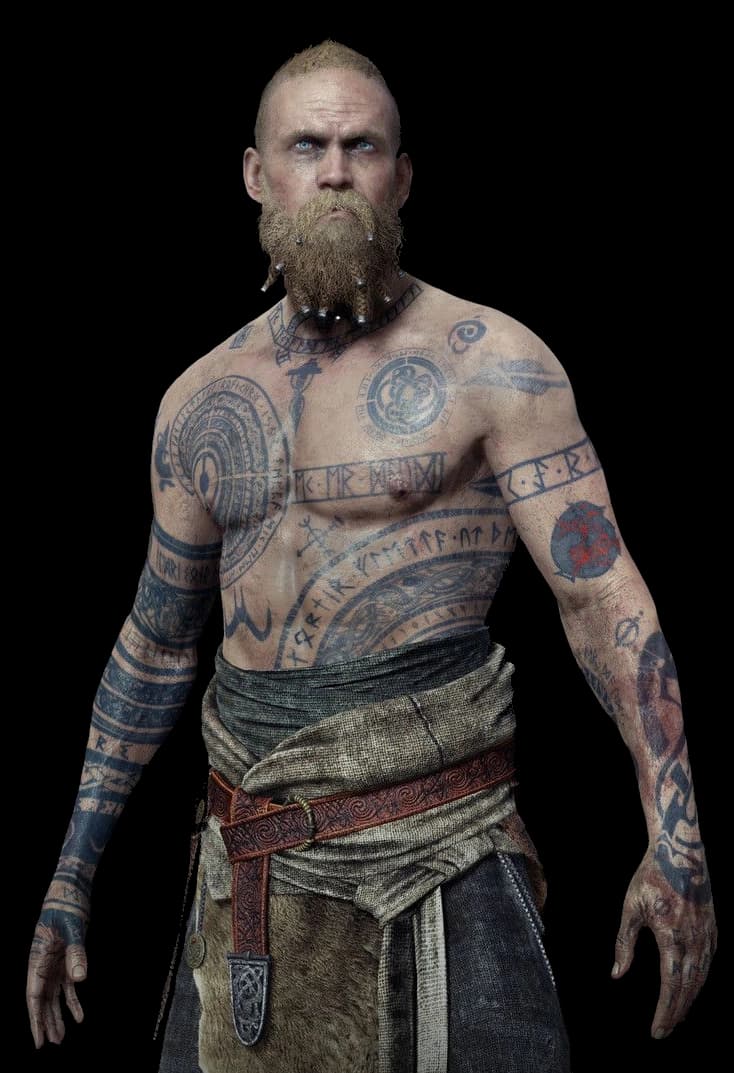
Baldur: the god who could feel nothing
Freya's spell made Baldur invulnerable but stripped every sensation from him, and a century of numbness drove him mad. Kratos killed him beside Thamur's corpse.
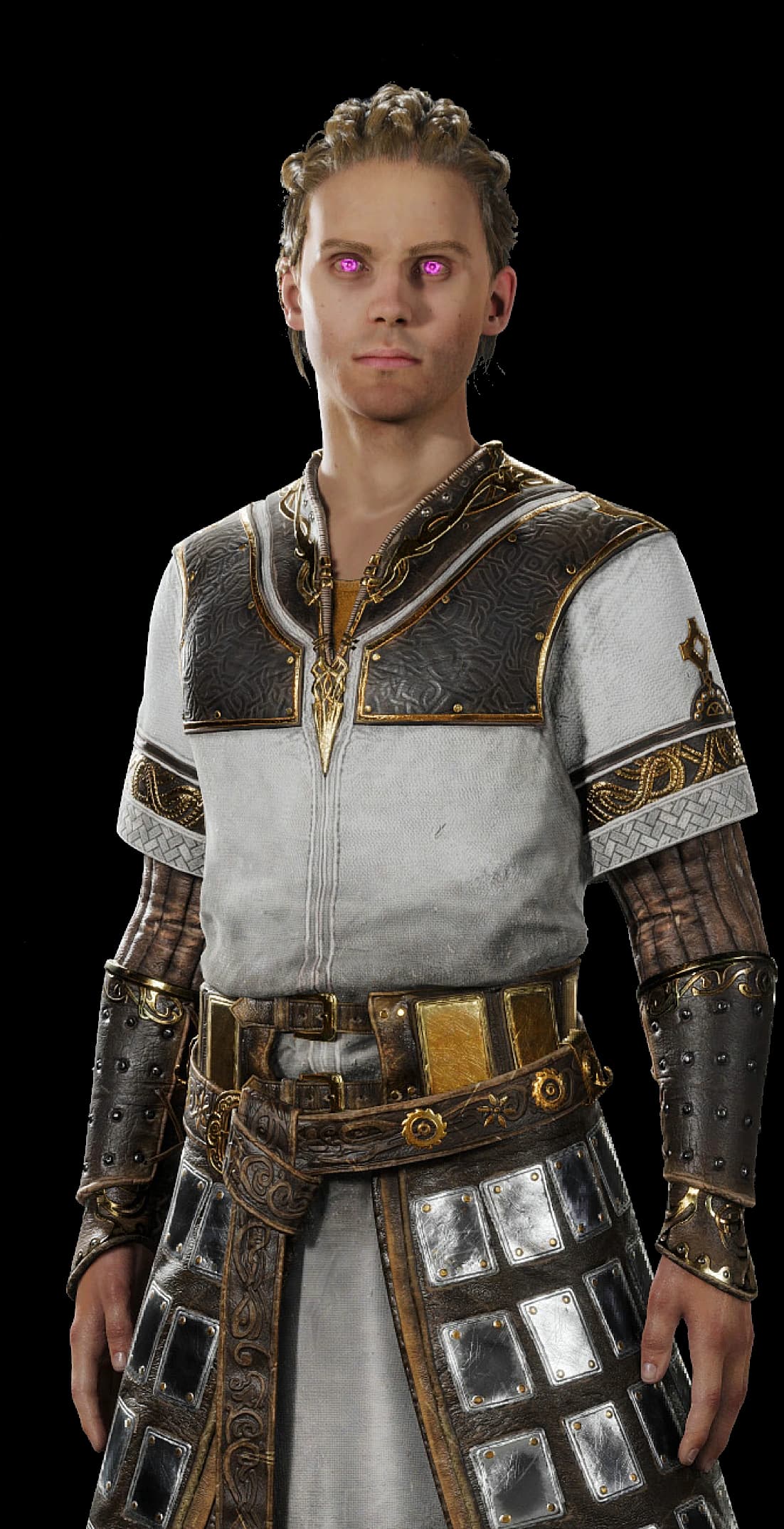
Heimdall: the watchman who saw every attack
Heimdall's foresight let him read minds and dodge any blow, until Brok worked out it could be overwhelmed. The Draupnir Spear got past it, and Kratos killed him.
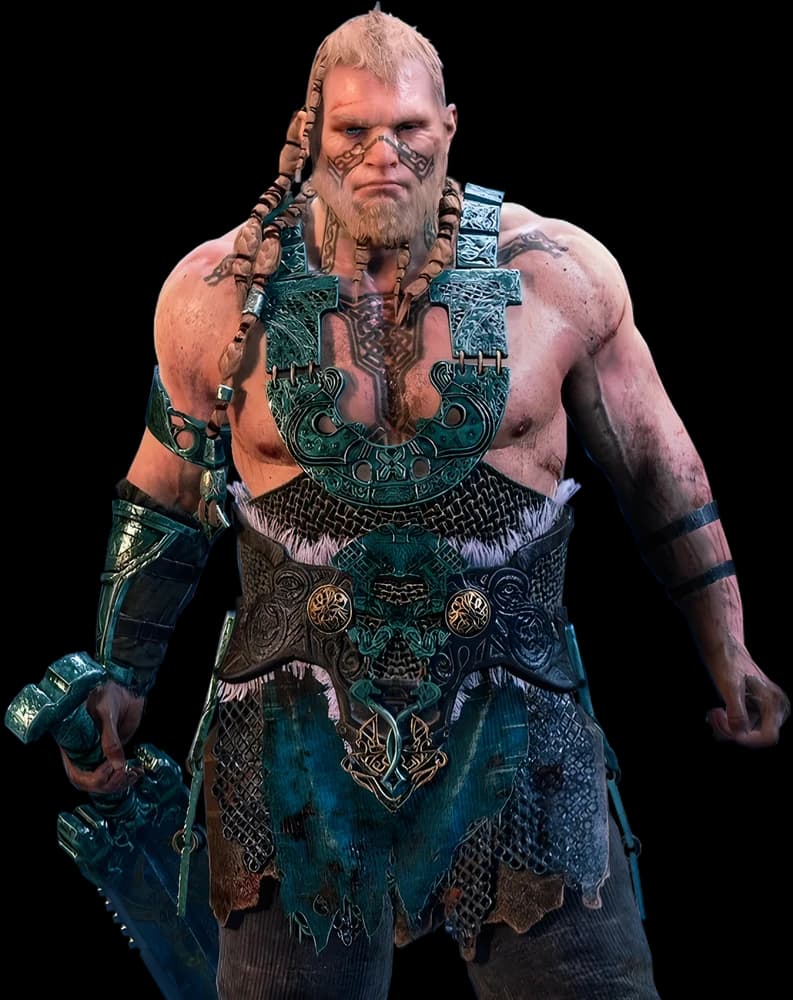
Magni: Thor's eldest son, killed by Kratos
Magni was Thor's firstborn and Odin's favoured grandson. He hunted Kratos and Atreus with Baldur, and Kratos buried an axe in his skull at Thamur's corpse.
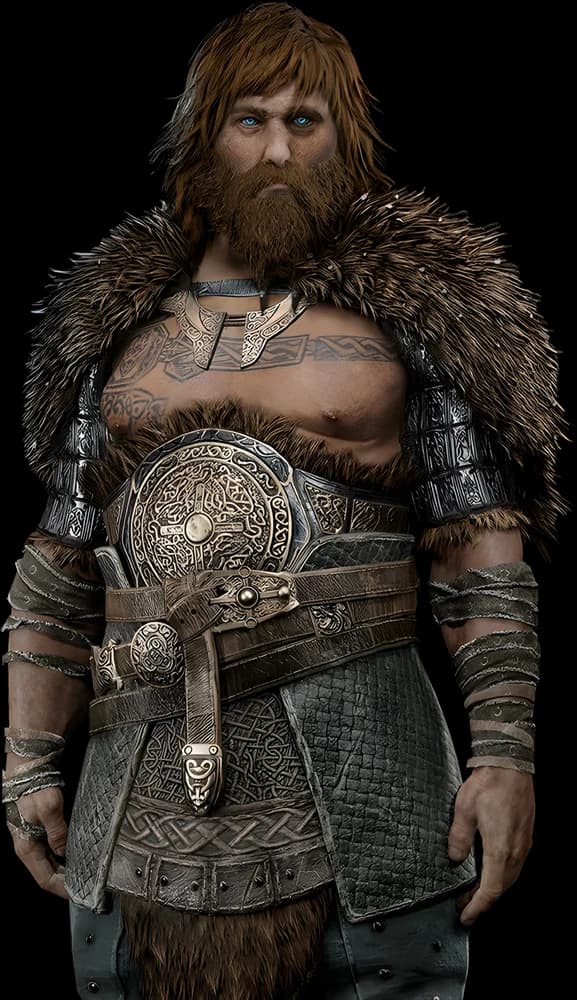
Modi: Thor's second son, killed by Atreus
Modi lived in the shadow of his brother Magni. After Magni died, Thor beat him nearly to death for cowardice, and Atreus stabbed him in the neck.
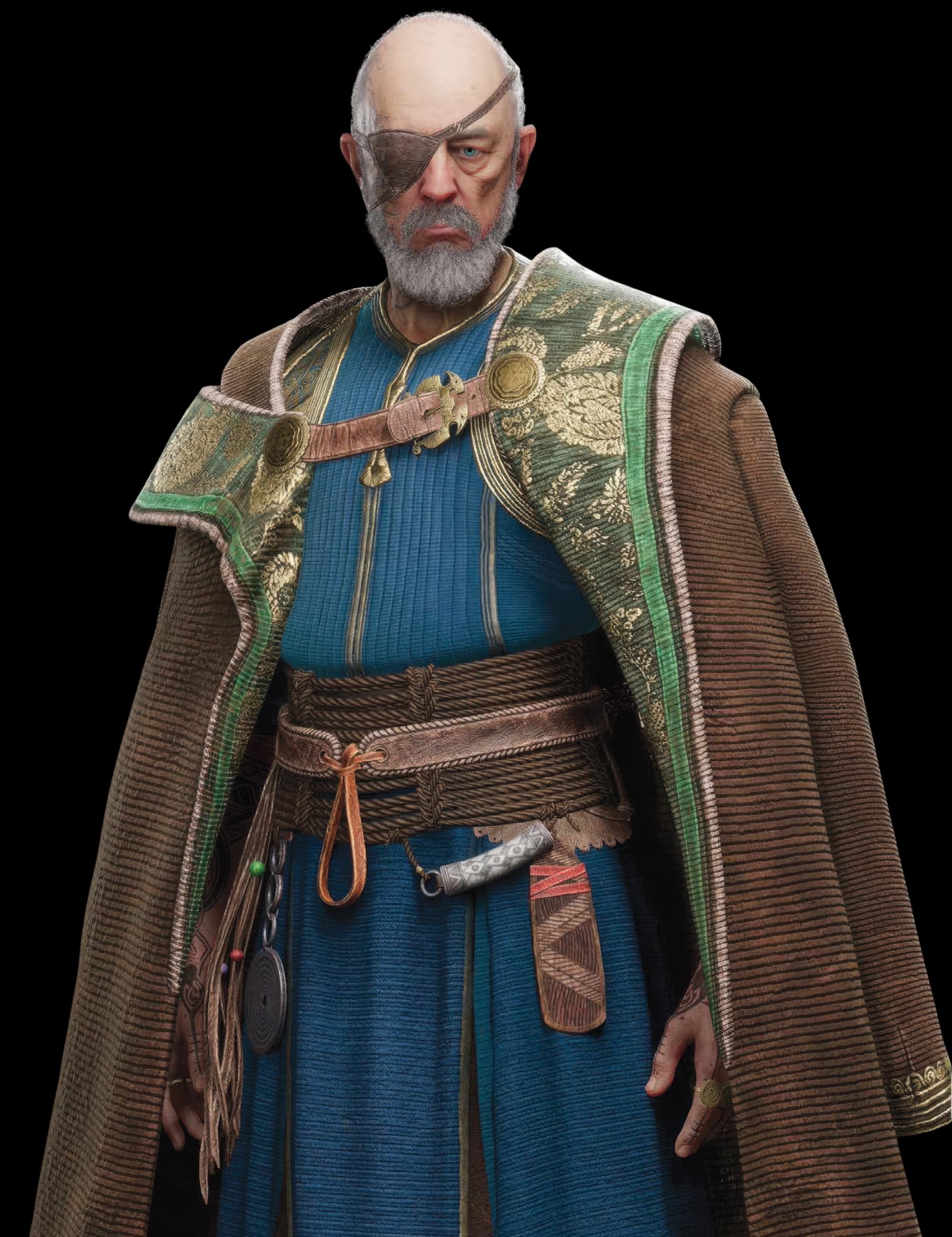
Odin
Odin was the King of the Aesir and ruler of the Nine Realms, the All-Father who slew the first giant Ymir to found Asgard. Obsessed with knowledge and terrified of his own prophesied death, he waged war across the realms and orchestrated the events that brought Ragnarok to his doorstep.
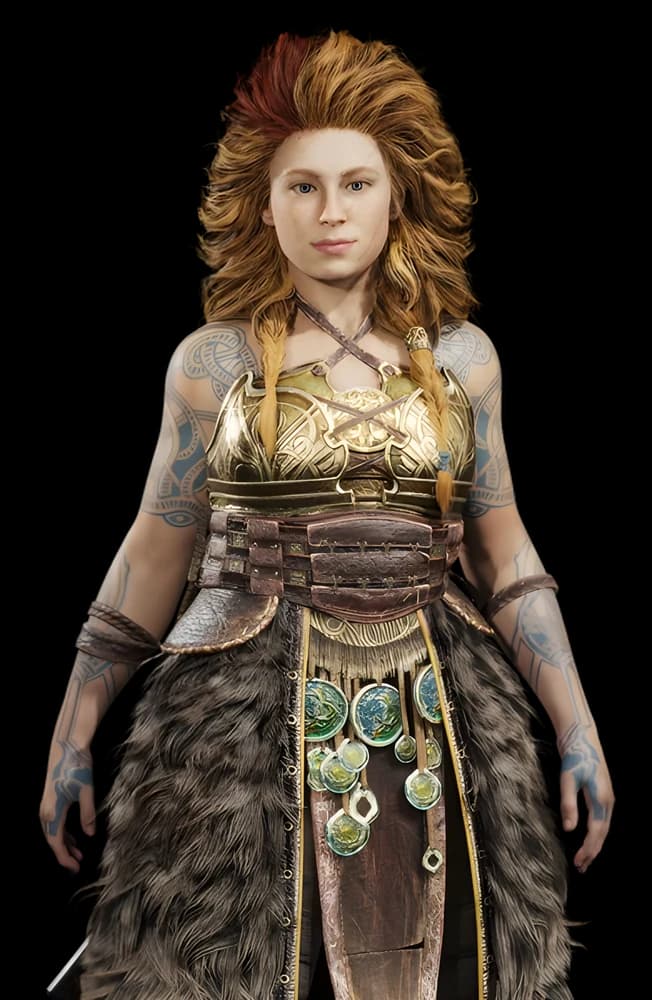
Thrud: Thor's daughter, heir to Mjolnir
Thrud was the daughter of Thor and Sif who dreamed of joining the Valkyries. After Odin killed her father at Ragnarok, she claimed Mjolnir for herself.
Mentioned in88 entries
Aesir Royal Family: the Ruling Dynasty of Asgard
The Aesir Royal Family was the ruling dynasty of gods who reigned from Asgard over the Nine Realms. Descended from the first god Buri and led by Odin the Allfather, the line counted Odin's brothers Vili and Ve and his sons Thor, Tyr, Heimdall, and Baldur among its most prominent members.
Aesir-Vanir War
The Aesir-Vanir War was the long and brutal conflict between the two tribes of Norse gods, fought ages before Kratos came to the Northlands. It ended in an uneasy peace sealed by the marriage of Odin and Freya, only for Odin's treachery to reignite it.
Angrboda: the last giantess of Ironwood
Angrboda grew up almost alone in Ironwood, painting the prophecy of Ragnarok. She gave Atreus the soul marbles of the lost Giants and made him their keeper.
Asgard
Asgard was the realm of the Aesir gods, perched in the crown of Yggdrasil and ruled by Odin from the hall of Gladsheim. Behind the great wall of Hrimthur it stood as a fortress against the prophesied doom of Ragnarok, until Kratos breached it and the realm fell.
Atreus (Loki): Kratos's Son and the Truth of His Name
Atreus was the son of Kratos and the Jotunn Faye, born in Midgard and given the hidden name Loki. Across two great journeys he grew from a sickly boy into the prophesied champion of the Giants, the god of mischief whose fate was bound to Ragnarok.
Baldur: the god who could feel nothing
Freya's spell made Baldur invulnerable but stripped every sensation from him, and a century of numbness drove him mad. Kratos killed him beside Thamur's corpse.
Baldur's Curse: the spell of invulnerability
Baldur's curse was a spell of protection that Freya wove around her son to cheat a prophecy of his pointless death. It made Baldur impervious to every wound, whether dealt by weapon or sorcery, but it stripped him of all physical sensation, drove him into madness, and left mistletoe as its single fatal flaw.
Baldur's Death: mistletoe and a broken neck
A mistletoe arrow broke Freya's spell of invulnerability over Baldur, and Kratos snapped his neck as he moved to strangle her. Fimbulwinter followed.
Bergelmir: the Beloved King of the Giants
Bergelmir was a Frost Giant who, with his wife, alone survived the flood of Ymir's blood that drowned the rest of his race. He found a new land, named it Jotunheim, and repopulated the Jotnar as its king, refusing all vengeance against Odin. He died of old age surrounded by his kin and was remembered ever after as Bergelmir the Beloved.
Brok: the Huldra brother Odin murdered
Brok forged Mjolnir and the Leviathan Axe with his brother Sindri. Killed once and revived with an incomplete soul, he was stabbed by Odin disguised as Tyr.
Dark Elves: Alfheim's insectoid Dokkalfar
The Dokkalfar nested in the dark caves of Alfheim and fought the Light Elves for the Light. Their war ran on until the days of Ragnarok ended it.
Demigod: the mortal children of the gods
Demigods were the offspring of a god and a mortal, half-human and half-divine. Mortal yet possessed of superhuman strength and the fighting prowess of a god, the worthiest among them could rise to godhood. Kratos himself was one such demigod before he claimed the throne of war.
+ 76 more
Get new articles in your inbox
No spam. New lore drops, canon conflicts, and deep dives only when they’re worth reading.
Some links on Lore Fortress are affiliate links. If you buy through them we earn a small commission at no extra cost to you.