Garm
the Hound of Hel
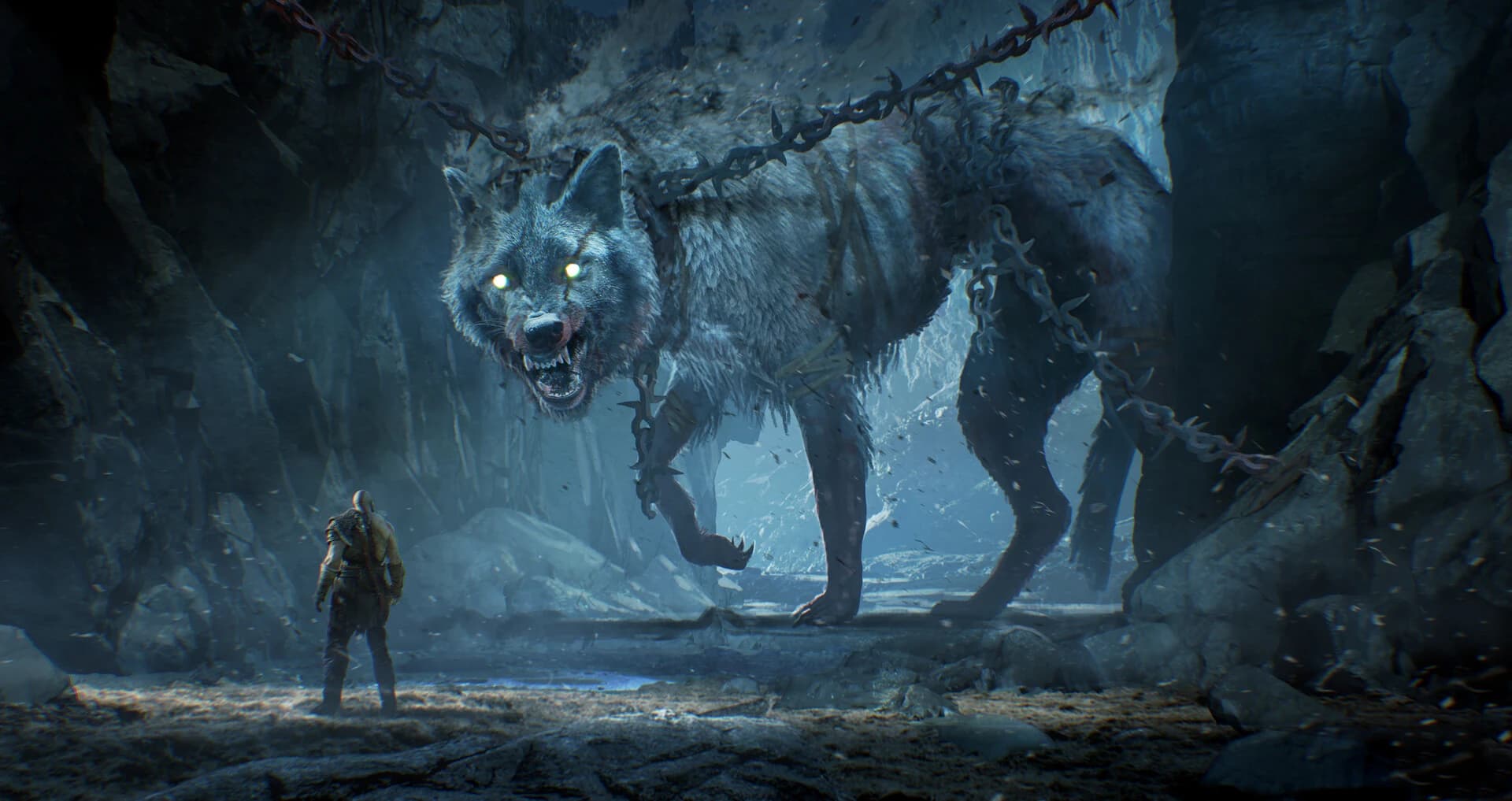
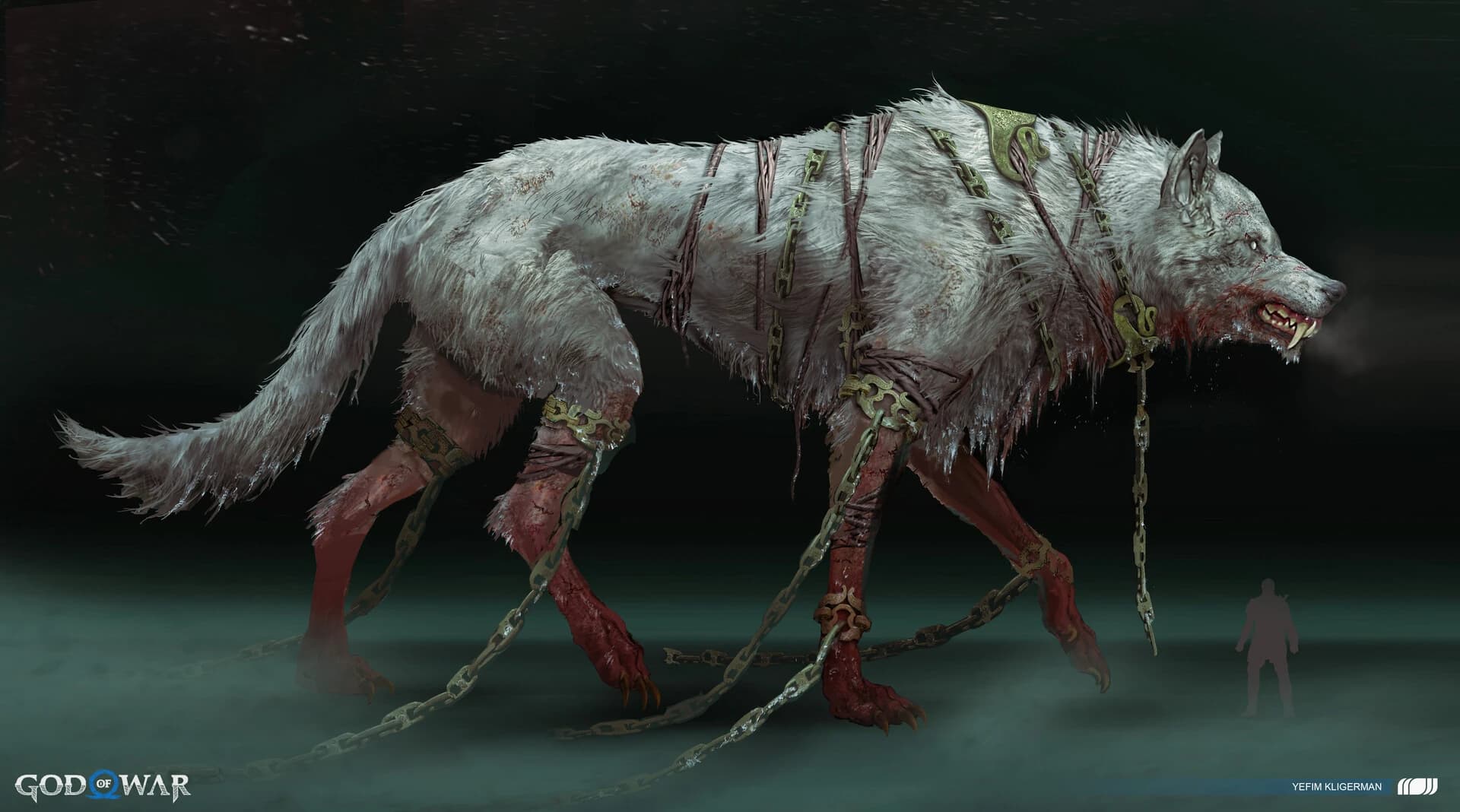
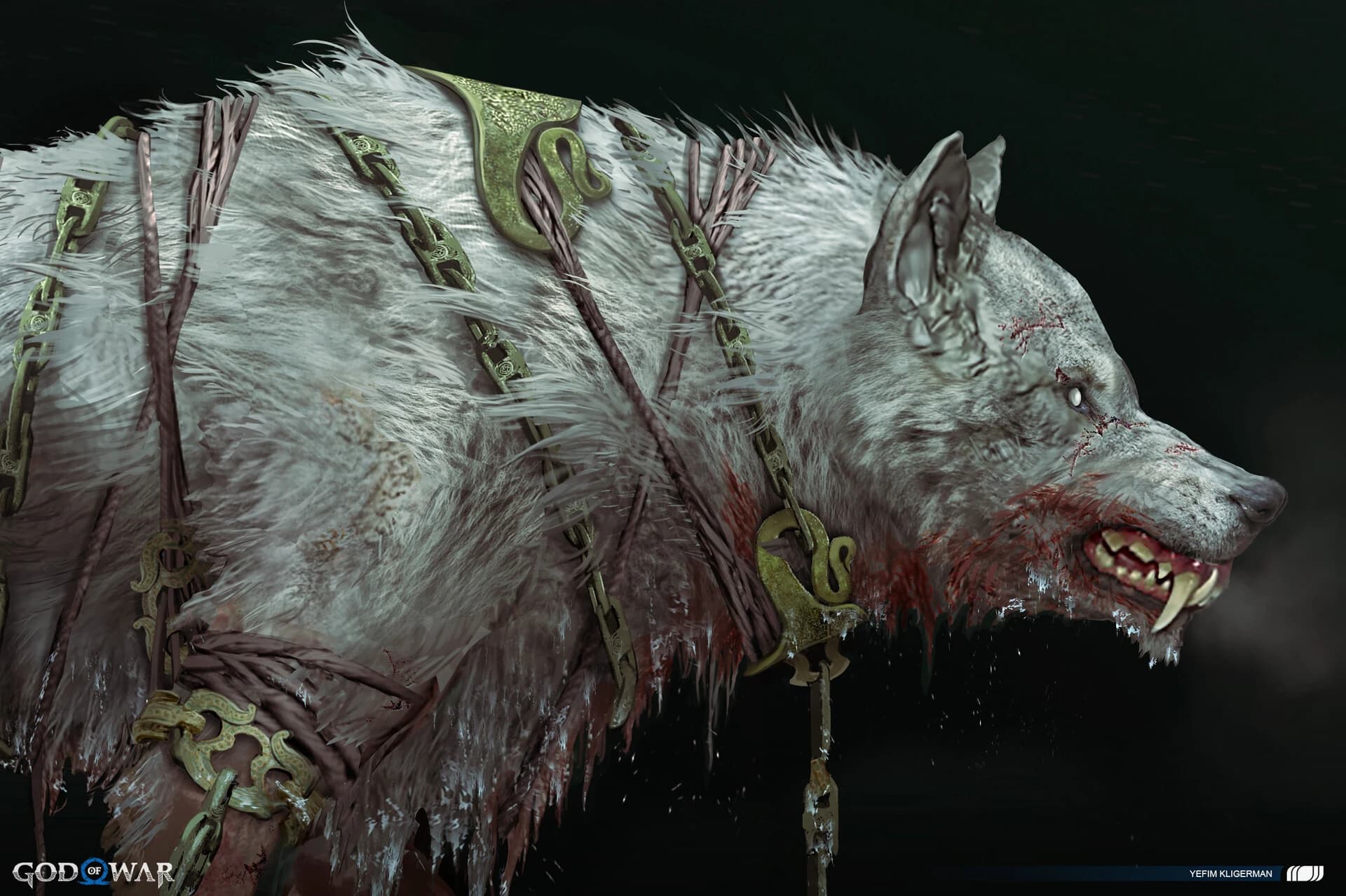
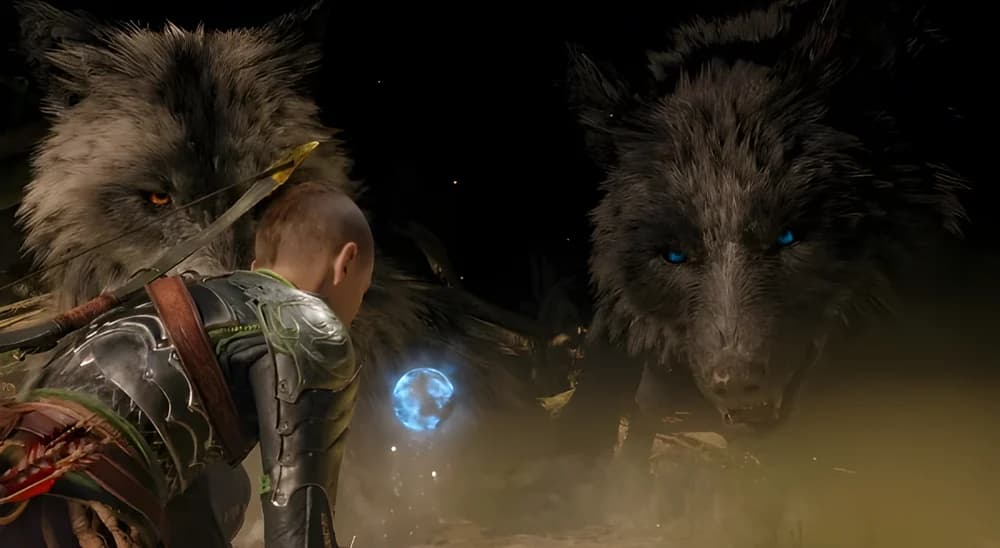
Garm was a soulless, near-unkillable Jötunn wolf who could tear holes between the realms and devour entire concepts of reality. Chained in Helheim by Tyr and freed by Atreus, he was at last subdued and became the vessel for the resurrection of Fenrir.
Garm, called Hrodvitnir by the Aesir and the Hound of Hel, was a monstrous Jötunn wolf imprisoned in Helheim and the father of Skoll and Hati. Soulless, feral, and able to tear rifts between the realms and devour entire concepts of reality, he was among the most dangerous beings in all the Nine Realms. Freed by Atreus and later subdued by him and Kratos, Garm became the vessel into which the soul of the wolf Fenrir was transplanted. (God of War Ragnarök)
The pup who devoured a season#
Centuries ago Garm was only a small pup, but he soon began eating parts of Midgard, including whole mountain ranges. More dangerously still, he chewed through the very fabric of the realms and consumed metaphysical things. Among them was a season that had once existed between winter and spring: Garm devoured it so completely that it no longer existed and could no longer even be identified, its name and nature lost to all, though everyone retained the faint certainty that it had once been real. (God of War Ragnarök)
Seeing the threat in him, the Norse God of War Tyr lured the wolf to a safer place, letting Garm gnaw on his arm as a distraction while he led him into a trap. Once the gates of Helheim opened, Garm realized he had been deceived, and in his rage tore off Tyr's arm, though the god would in time regrow it. As one of the Jötnar and the father of Skoll and Hati, Garm was a sworn enemy of the Aesir; Odin took his children hostage to make him cease his fighting against them. (God of War Ragnarök)
Loosed upon the realms#
Garm was found chained in Helheim by Atreus and Thrud, who were searching for the last piece of Odin's mask. Seeing the beast in chains and in poor shape, Atreus naively wished to free him, ignorant of who he was, and Thrud's warnings could not dissuade him. To pass behind him they had to loosen some of his chains, waking him, and with his bonds already weakened the wolf tore the last chain from the ground and fled, free to wreak havoc. (God of War Ragnarök)
His freedom proved disastrous, as Heimdall had warned. When Atreus returned to Sindri's house, he found it under attack by Hel-Walkers that had come through rifts Garm had torn. After a long fight the attackers were slain, and Freya and Atreus sealed the rifts, but the others were horrified to learn what Atreus had done. Tyr called freeing the wolf madness, and Freya warned that Garm would chew through the fabric of the realms now that he was loose. Kratos defended his son, insisting it had been a mistake they would fix together, and the two returned to Helheim. (God of War Ragnarök)
Subdued and reborn#
Atreus first hoped to tame Garm as he might any other wolf, but when that failed Kratos resolved that they would have to kill the beast. In the Silent Clearing they wrapped his chain around a pillar and snapped his neck, seemingly killing him. Yet as they tried to leave, a revived Garm attacked again, and they found that no matter how near death he came, he could always restore himself. Atreus reasoned that the wolf had no soul to kill in the first place, which gave him an idea. With Kratos boosting him onto the beast's head, Atreus drove in his knife, which he now realized held the soul of his pet wolf Fenrir. (God of War Ragnarök)
Garm ran off in pain, and they pursued him, finding his bindings scattered across Helheim and the wolf at last whining and hiding in a cave. When Atreus noticed the color of the wolf's eyes and asked whether he was truly Fenrir, the beast emerged to lick the boy's face. Fenrir's tame and gentle soul had overridden Garm's soulless body, averting the threat of a hound who could unmake the realms and giving Kratos and Atreus a powerful and loyal ally. (God of War Ragnarök)
Eater of worlds#
Garm's most fearsome power was his ability to tear open holes between the realms, allowing him to travel anywhere and to admit Hel-Walkers wherever he went. Beyond consuming matter, he could devour entire concepts, as he had with the lost season. He possessed immense strength, able to break through the stone and ice of Helheim with ease and to wield his torn chain as a weapon, along with tremendous durability. Most troubling of all was his amortality: Garm recovered from any wound and revived even from death, which Atreus believed stemmed from his lack of a soul, or from already residing in the underworld, where with no essence to part with he simply rose again. He could also loose blasts of ice from his mouth and erupt ice from the ground with a stomp. By his nature, his dangerous abilities, and his feral state, he stood as one of the greatest threats the realms had ever faced. (God of War Ragnarök)
Frequently asked questions
- What is Garm in God of War?
- Garm, called Hrodvitnir by the Aesir and the Hound of Hel, was a monstrous Jotunn wolf imprisoned in Helheim and the father of Skoll and Hati. Soulless and feral, he could tear rifts between the realms and devour entire concepts of reality.
- How did Garm devour a season?
- As a pup, Garm chewed through the fabric of the realms and consumed metaphysical things, including a season that had once existed between winter and spring. He devoured it so completely that its name and nature were lost to all, though everyone retained a faint certainty that it had once been real.
- How was Garm originally imprisoned?
- The Norse God of War Tyr lured Garm to Helheim, letting the wolf gnaw on his arm as a distraction while he led him into a trap. When the gates of Helheim opened and Garm realized he had been deceived, he tore off Tyr's arm in his rage, though the god would in time regrow it.
- How was Garm freed and what happened afterward?
- Atreus found Garm chained and in poor shape in Helheim and freed him out of pity, ignorant of who he was. The loosed wolf tore rifts through which Hel-Walkers poured, attacking Sindri's house, and Kratos and Atreus returned to Helheim to stop him.
- How was Garm subdued?
- Garm could not be killed, reviving each time he fell, which Atreus reasoned was because the wolf had no soul. With Kratos boosting him onto the beast's head, Atreus drove in his knife, which carried the soul of his pet wolf Fenrir, and Fenrir's gentle soul overrode Garm's soulless body, turning him into a loyal ally.
Gallery
Images via God of War Wiki
Sources
- GameGod of War Ragnarök, Santa Monica Studio, 2022
Spotted a factual error or a primary source we missed? Email a correction. Every flagged claim gets reviewed.
Followed from this entry
Fenrir: the wolf whose soul Atreus carried in his knife
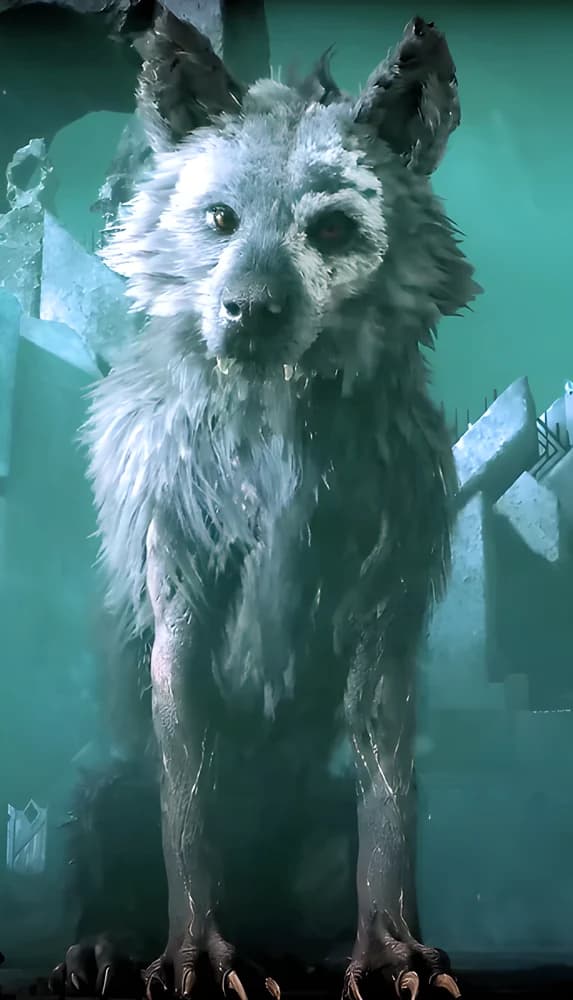
Fenrir was the old wolf Kratos and Atreus kept during Fimbulwinter. He died in Atreus' lap, his soul drawn into the boy's knife, and that knife later put him in the body of the Hel-hound Garm, reborn as a giant wolf who tore rifts between realms and fought at Ragnarök.
Skoll and Hati
Skoll and Hati were two giant celestial wolves, sons of the archwolf Hrodvitnir, who chased the sun and moon across the sky. Cast to the heavens by Odin, their eventual catch of their prey was foretold to mark the dawn of Ragnarok.
Atreus (Loki): Kratos's Son and the Truth of His Name
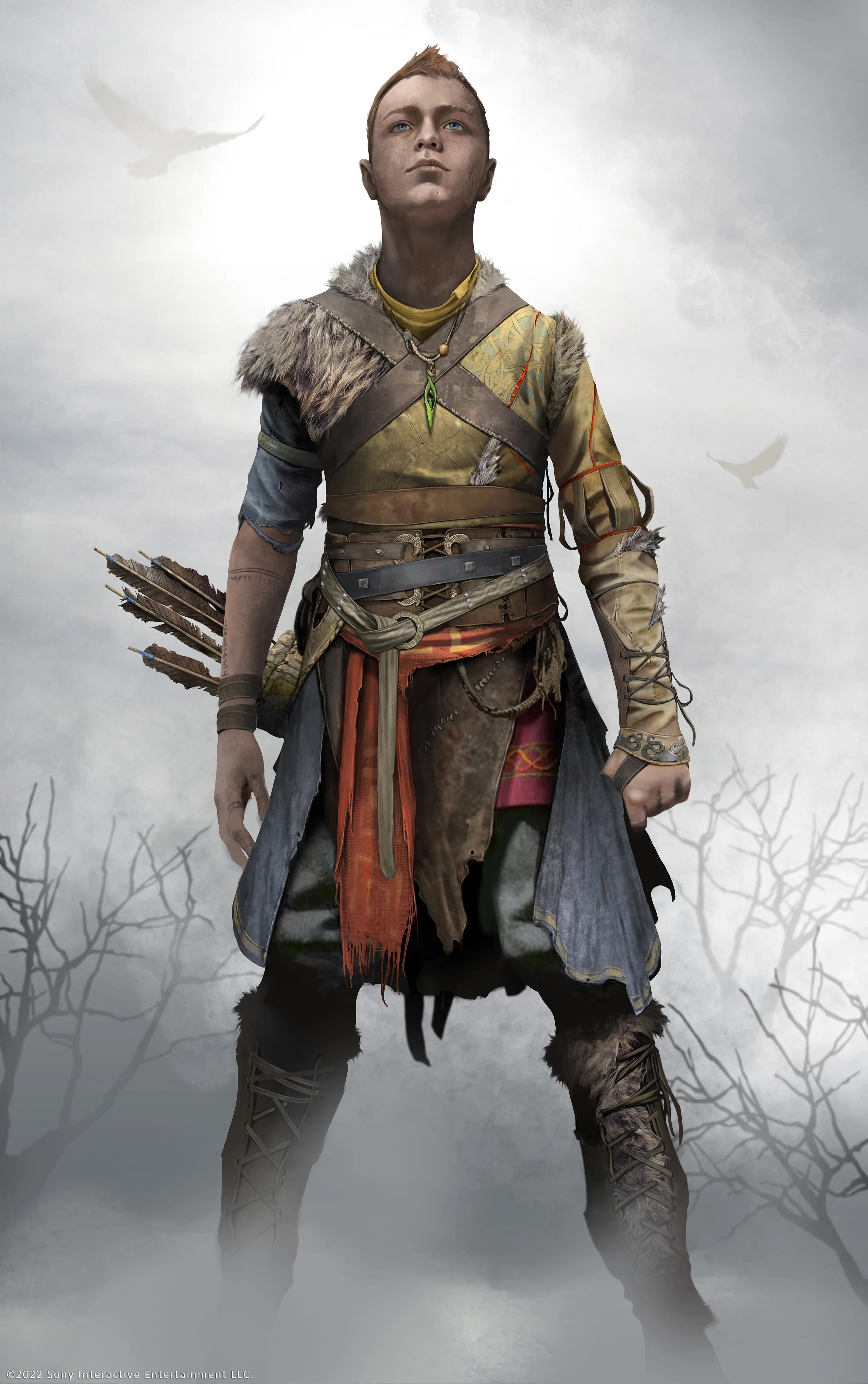
Atreus was the son of Kratos and the Jotunn Faye, born in Midgard and given the hidden name Loki. Across two great journeys he grew from a sickly boy into the prophesied champion of the Giants, the god of mischief whose fate was bound to Ragnarok.

Freya
Freya was the Vanir goddess of love, war, and magic who married Odin to end the Aesir-Vanir War and was cursed to remain in Midgard. Once the Witch of the Woods, she aided Kratos and Atreus, swore vengeance after the death of her son Baldur, and at last turned her wrath on Odin himself.
God of War: the divine title
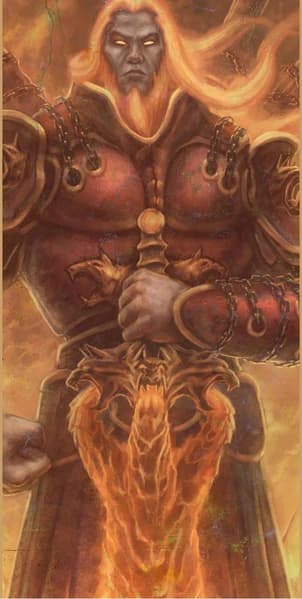
The God of War was a title held by a deity unmatched in battle, wielding peerless combat skill and brutal godly power. It passed from Ares to Kratos in the Greek age, while the Norse realms knew their own God of War in Tyr.
Heimdall: the watchman who saw every attack
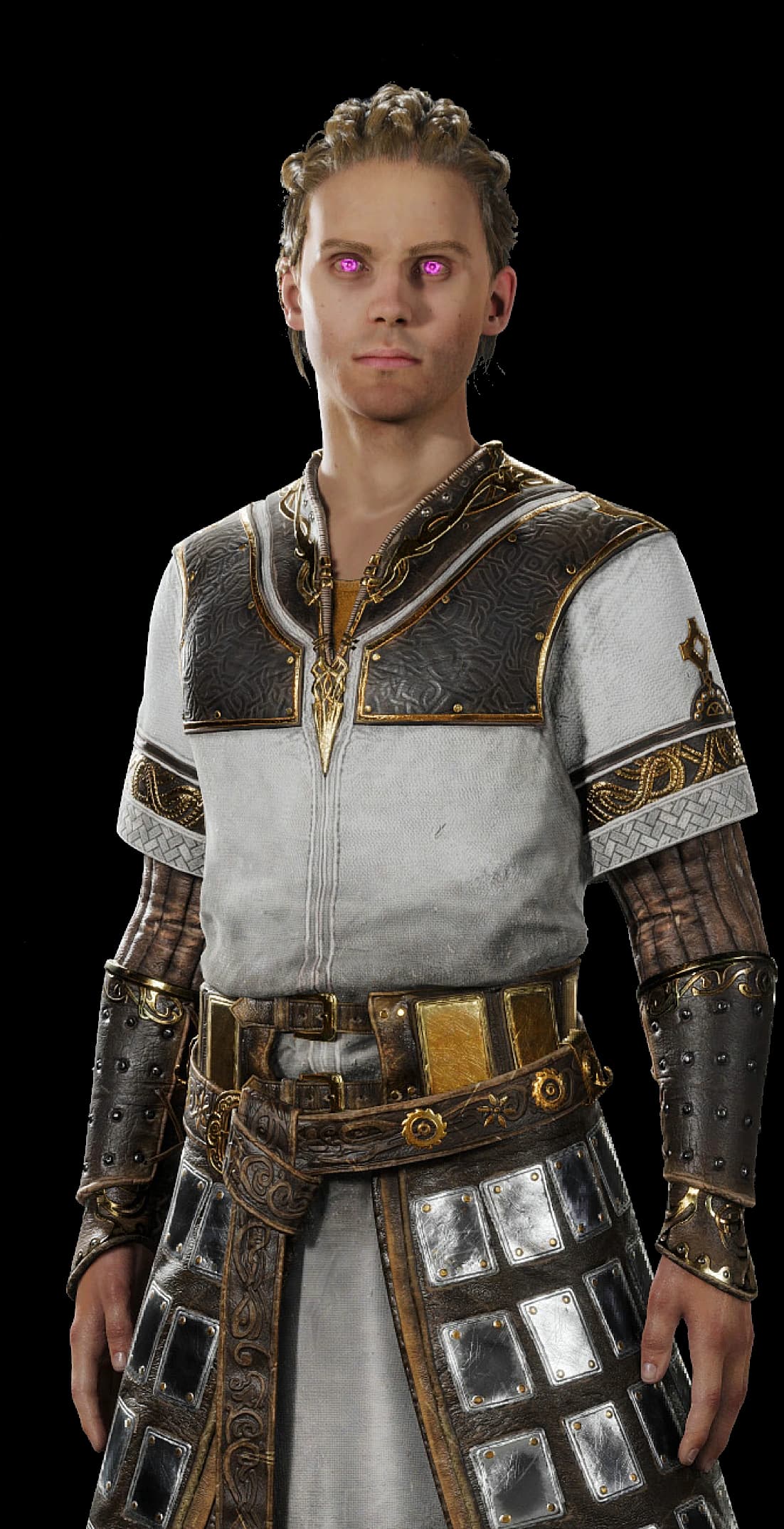
Heimdall's foresight let him read minds and dodge any blow, until Brok worked out it could be overwhelmed. The Draupnir Spear got past it, and Kratos killed him.
Mentioned in17 entries
Asgard
Asgard was the realm of the Aesir gods, perched in the crown of Yggdrasil and ruled by Odin from the hall of Gladsheim. Behind the great wall of Hrimthur it stood as a fortress against the prophesied doom of Ragnarok, until Kratos breached it and the realm fell.
Fenrir: the wolf whose soul Atreus carried in his knife
Fenrir was the old wolf Kratos and Atreus kept during Fimbulwinter. He died in Atreus' lap, his soul drawn into the boy's knife, and that knife later put him in the body of the Hel-hound Garm, reborn as a giant wolf who tore rifts between realms and fought at Ragnarök.
God of War Ragnarök Ending Explained: the Full Story and What It Means
The whole plot of God of War Ragnarök in order, then the ending explained. Odin is destroyed, Thor and Freyr die, Asgard falls, Kratos survives the prophecy, and Atreus leaves to find the last of the giants.
God of War Ragnarök Quiz: Test Your Knowledge of the Story
Twelve questions on God of War Ragnarök, from Thor and Odin at the door to the false Tyr, Brok's death and the fall of Asgard. Every answer comes with a short explanation and a link to the page that covers it.
God of War Timeline: every major event from the Primordials to Valhalla
The full in-universe chronology of God of War, from the war of the Primordials and the fall of the Titans to Kratos's life in Sparta, his war on Olympus, and the end of the Aesir at Ragnarök. The games give almost no calendar years, so events are ordered by story sequence and grouped into eras, with notes wherever the games' own placement is vague.
Heimdall: the watchman who saw every attack
Heimdall's foresight let him read minds and dodge any blow, until Brok worked out it could be overwhelmed. The Draupnir Spear got past it, and Kratos killed him.
Helheim: the frozen hell even Odin feared
Those who died of age, disease or crime were sent to Helheim, a dark and unyielding cold where no fire burned. Even Odin could not last there long.
Hræsvelgr
Hræsvelgr was the Jötunn ruler of Helheim, a colossal eagle perched atop the realm's tallest spire and known to the Nine Realms as Hel. Indifferent to the living and the dead alike, she sought only someone to take her place so that she might at last lay down her long reign.
Huginn and Muninn
Huginn and Muninn were a pair of ravens who served as the personal spies of Odin, flying across the Nine Realms to bring him word of all that passed. Bound to the All-Father's will and granted speech and unnatural speed, the two were among the few creatures Odin truly cherished.
Jotnar: the giants Odin nearly wiped out
The Jotnar were the oldest race of the Norse cosmos, gifted with precognition. Odin envied that gift, forged Mjolnir, and set Thor to exterminate them.
Kratos' Cabin: the homestead in the Wildwoods
Kratos' Cabin was the home that Faye and Kratos made together in the Wildwoods of Midgard, where their son Atreus was raised. Hidden for years behind a magical grove of marked trees, it endured the coming of Baldur, the sieges of Fimbulwinter, and the visit of Odin and Thor, and it remained the family's anchor through the war that ended the Aesir.
Norse Mythology: the North Germanic myths behind God of War's Nine Worlds
Norse mythology is the body of North Germanic myth the God of War saga draws its Norse era from, built around Nine Worlds flanking the sacred tree Yggdrasil and a cosmos made from the flesh of Ymir.
+ 5 more
Get new articles in your inbox
No spam. New lore drops, canon conflicts, and deep dives only when they’re worth reading.
Some links on Lore Fortress are affiliate links. If you buy through them we earn a small commission at no extra cost to you.