Fenrir: the wolf whose soul Atreus carried in his knife
the wolf reborn in Helheim
Fenrir was the old wolf Kratos and Atreus kept during Fimbulwinter. He died in Atreus' lap, his soul drawn into the boy's knife, and that knife later put him in the body of the Hel-hound Garm, reborn as a giant wolf who tore rifts between realms and fought at Ragnarök.
Fenrir was the old and ailing wolf kept by Kratos and Atreus. When he died, Atreus unknowingly cast a spell that drew the wolf's soul into his knife, and that soul was later transplanted into the body of Garm, the hound who tore holes between the realms, resurrecting Fenrir as a giant wolf who aided them through the events of Ragnarök. (God of War Ragnarök)
The wolf at the cabin#
During the long winter of Fimbulwinter, Kratos and Atreus took in Fenrir, along with the wolves Speki and Svanna, and the boy grew deeply fond of him. Fenrir was already old, and his age left him in failing health. Atreus believed that with enough care he would recover, but the wolf only worsened. In the end Fenrir died in Atreus' lap as the boy did his best to comfort him, never realizing that in those final moments he was drawing the wolf's soul into his own knife. Grief-stricken, Atreus buried him in the woods. (God of War Ragnarök)
The soul in the knife#
While the two were together in Ironwood, Angrboda sensed that Fenrir's soul rested within Atreus' knife, something the boy had no knowledge of. Despite his questions, she felt it best not to tell him whose soul it was, saying that he would come to understand it in time. (God of War Ragnarök)
Reborn in Helheim#
Fenrir came back in Helheim. There Kratos and Atreus faced Garm, a soulless and seemingly unkillable hound that could tear holes in the fabric of the realms. Remembering what Angrboda had taught him about souls, and how he had once placed a giant's soul into the body of a snake, Atreus drove his knife, which carried Fenrir's soul, into Garm's head. The wolf fled in pain and confusion until Kratos and Atreus found him whimpering in a cave. Atreus had hoped the soul would only temper Garm's destructive nature, but to his surprise Fenrir's gentle soul overtook the body entirely. Recognizing the wolf by the color of his eyes, Atreus called his name, and Fenrir emerged to lick the boy's face and obey Kratos' command to sit. He at once revealed his new power to tear a rift in the realms, opening a way back to Midgard. Atreus soon entrusted his care to Angrboda, better suited to handle the now-giant wolf. (God of War Ragnarök)
Ally in Ragnarök#
During Ragnarök, Fenrir carried Angrboda into battle, scattering Odin's forces and destroying the dwarven-built war machines, and was seen tearing apart and devouring a dragon that blocked Kratos and Atreus' path. When the new Valkyrie queen Gna swept in to attack Angrboda, Fenrir opened a rift and carried Gna away through it. He returned with Angrboda to rescue Kratos and his allies as the fire giant Surtr prepared to bring down Asgard. In the days after, he was seen at rest in Jötunheim in Angrboda's company. (God of War Ragnarök)
A giant reborn#
As a giant Hel-hound reborn, Fenrir was among the most powerful beings in the realms. He inherited Garm's vast strength, enough to wreck Odin's war machines and kill a dragon, along with his great durability and his power to tear rifts between the realms and travel instantly from one to the next. He carried the usual loyalty and intelligence of a dog, obeying commands with ease, though he mastered the rift-creation power with no training at all. His original grave could still be found in the woods of Midgard, and in the days after Ragnarök it bloomed with a bed of flowers. (God of War Ragnarök)
Frequently asked questions
- Who is Fenrir in God of War?
- Fenrir was an aging wolf kept by Kratos and Atreus, found during Fimbulwinter alongside the wolves Speki and Svanna. When he died of old age, his soul was unknowingly drawn into Atreus' knife, and he was later reborn as a giant wolf.
- How did Fenrir die?
- Fenrir was already old when Kratos and Atreus took him in, and his age left him in failing health. Despite Atreus' care he only worsened, and he died in the boy's lap, his soul drawn unknowingly into Atreus' knife.
- How was Fenrir reborn?
- In Helheim, Kratos and Atreus faced Garm, a soulless and seemingly unkillable hound that could tear holes in the realms. Atreus drove his soul-bearing knife into Garm's head, and Fenrir's gentle soul overtook the body entirely, reviving him as a giant wolf.
- What powers did the reborn Fenrir have?
- As a giant Hel-hound, Fenrir inherited Garm's vast strength, great durability and the power to tear rifts between realms and travel instantly between them. He mastered the rift-creation power with no training at all while keeping the loyalty and intelligence of a dog.
- What did Fenrir do during Ragnarok?
- During Ragnarok, Fenrir carried Angrboda into battle, scattered Odin's forces, destroyed dwarven war machines, and devoured a dragon that blocked Kratos and Atreus' path. He carried the Valkyrie queen Gna away through a rift and returned to rescue Kratos and his allies as Surtr prepared to bring down Asgard.
Sources
- GameGod of War Ragnarök, Santa Monica Studio, 2022
Spotted a factual error or a primary source we missed? Email a correction. Every flagged claim gets reviewed.
Followed from this entry
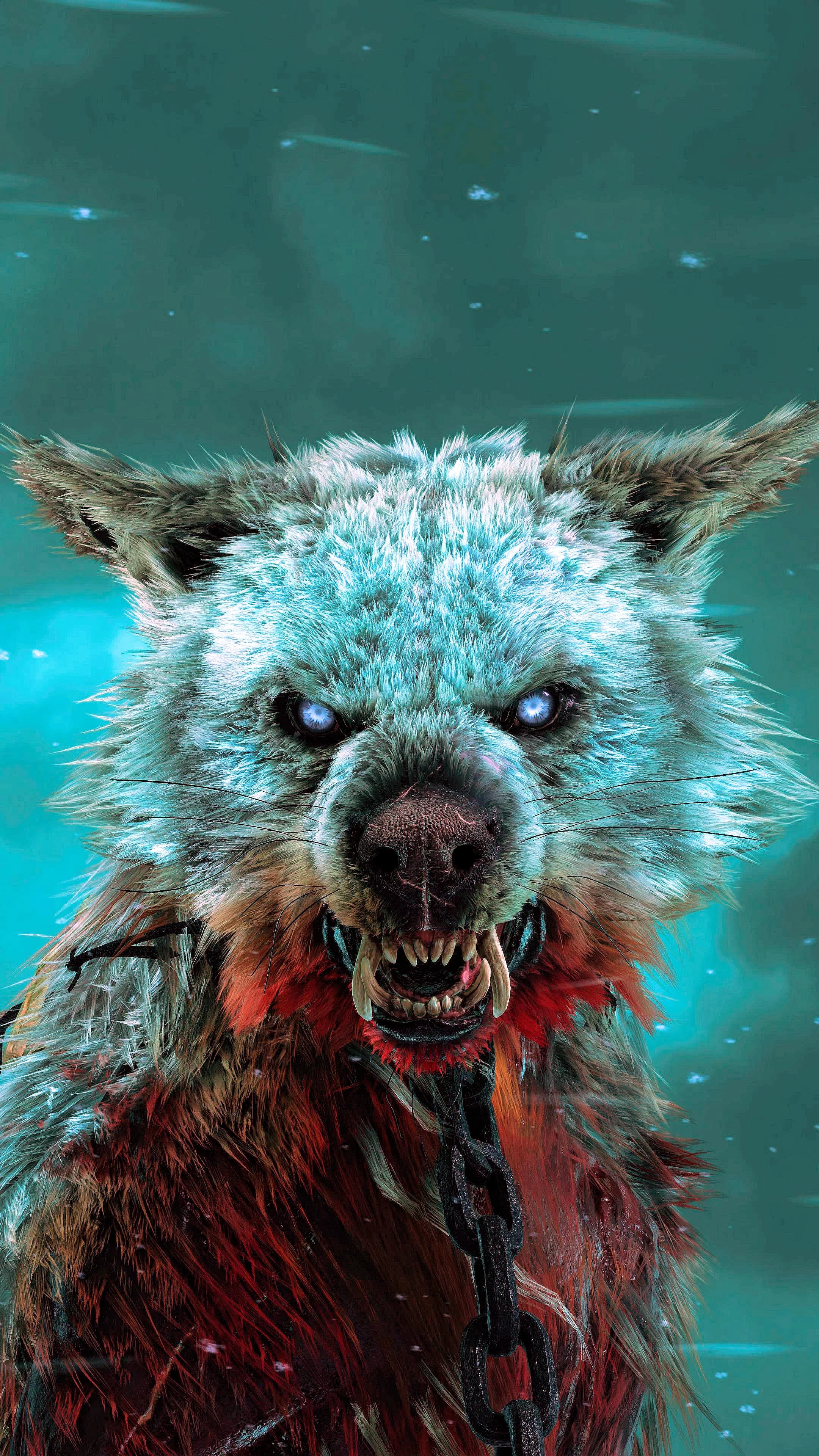
Garm
Garm was a soulless, near-unkillable Jötunn wolf who could tear holes between the realms and devour entire concepts of reality. Chained in Helheim by Tyr and freed by Atreus, he was at last subdued and became the vessel for the resurrection of Fenrir.
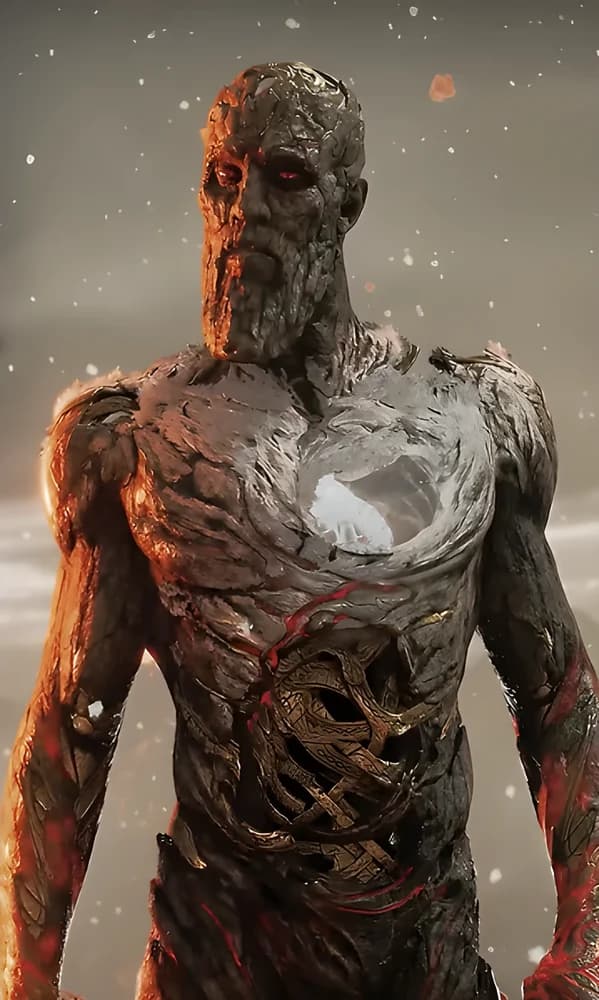
Surtr: the fire giant who became Ragnarok
Surtr was the first fire giant, born from Ginnungagap after Ymir. He gave himself up to become Ragnarok and drove his blade into the heart of Asgard.
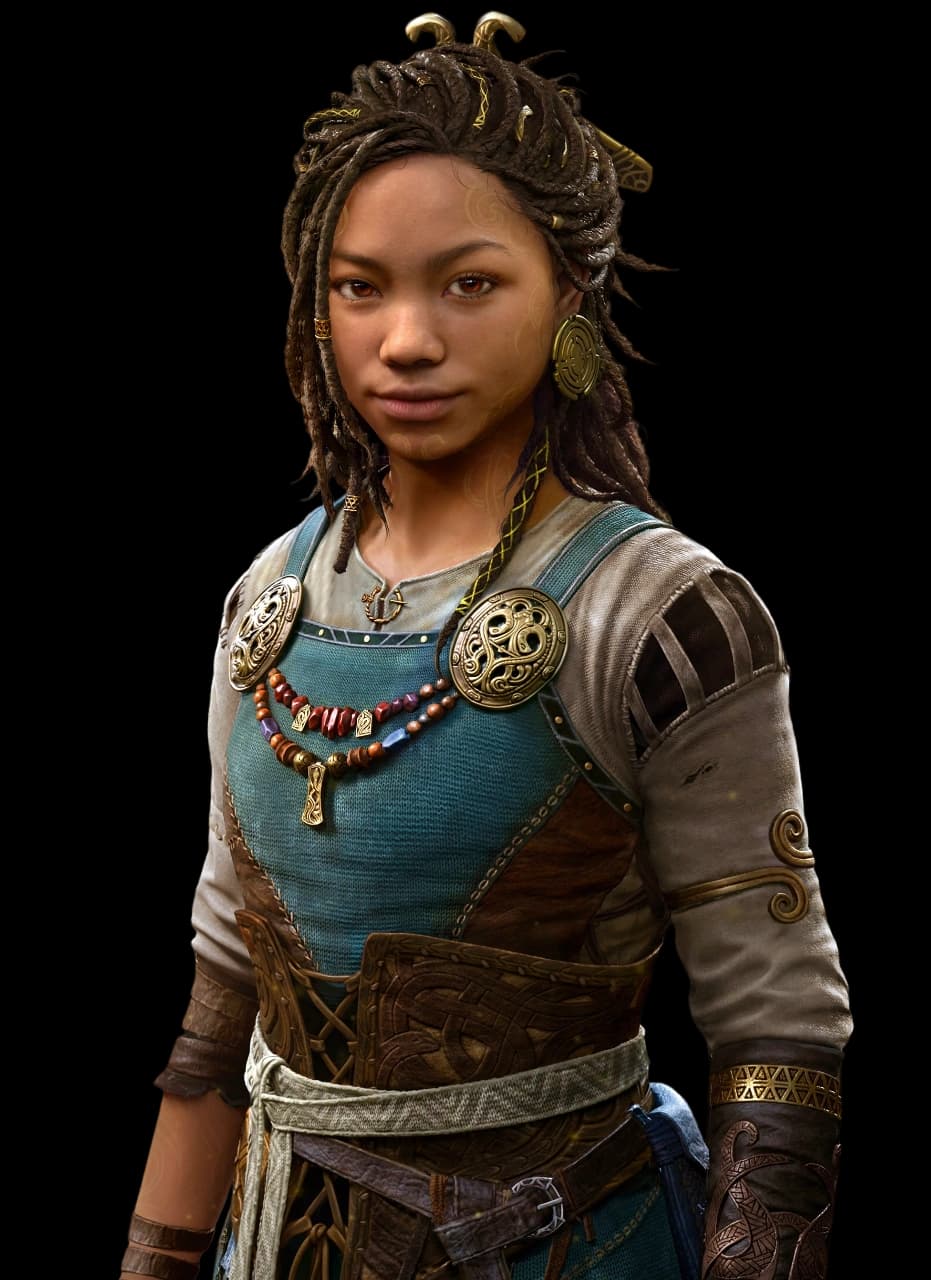
Angrboda: the last giantess of Ironwood
Angrboda grew up almost alone in Ironwood, painting the prophecy of Ragnarok. She gave Atreus the soul marbles of the lost Giants and made him their keeper.
Asgard
Asgard was the realm of the Aesir gods, perched in the crown of Yggdrasil and ruled by Odin from the hall of Gladsheim. Behind the great wall of Hrimthur it stood as a fortress against the prophesied doom of Ragnarok, until Kratos breached it and the realm fell.
Atreus (Loki): Kratos's Son and the Truth of His Name
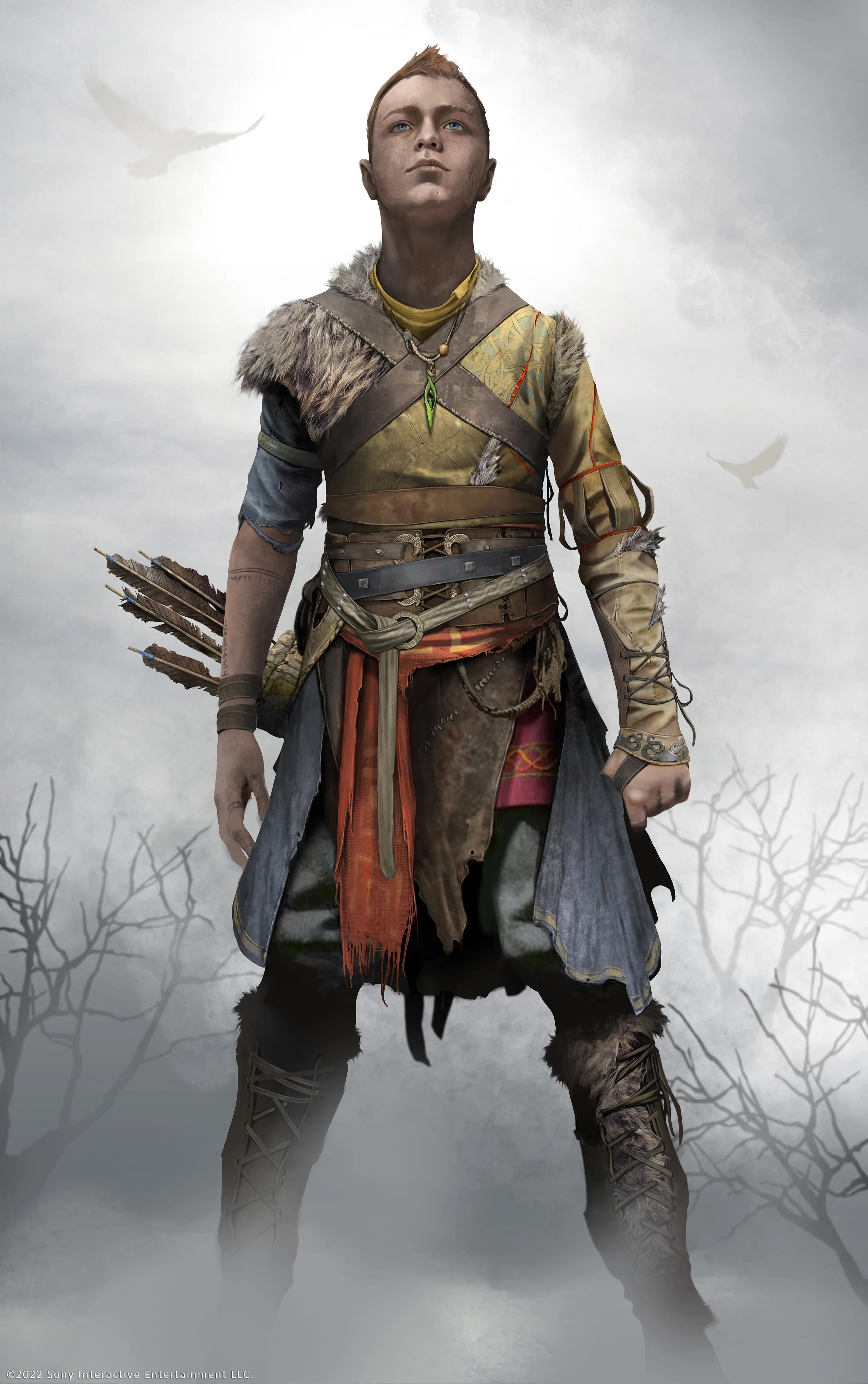
Atreus was the son of Kratos and the Jotunn Faye, born in Midgard and given the hidden name Loki. Across two great journeys he grew from a sickly boy into the prophesied champion of the Giants, the god of mischief whose fate was bound to Ragnarok.
Fimbulwinter: the three-year winter
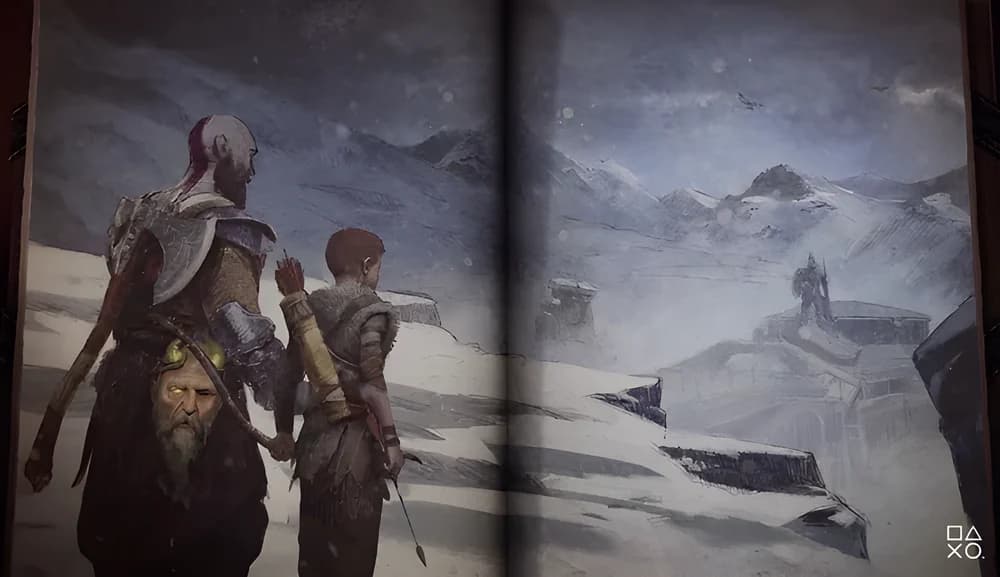
Fimbulwinter was the three-year winter that began with Baldur's death and ended with Ragnarok. Being magical, it weakened curses across the Nine Realms.
Mentioned in18 entries
Angrboda: the last giantess of Ironwood
Angrboda grew up almost alone in Ironwood, painting the prophecy of Ragnarok. She gave Atreus the soul marbles of the lost Giants and made him their keeper.
Asgard
Asgard was the realm of the Aesir gods, perched in the crown of Yggdrasil and ruled by Odin from the hall of Gladsheim. Behind the great wall of Hrimthur it stood as a fortress against the prophesied doom of Ragnarok, until Kratos breached it and the realm fell.
Atreus (Loki): Kratos's Son and the Truth of His Name
Atreus was the son of Kratos and the Jotunn Faye, born in Midgard and given the hidden name Loki. Across two great journeys he grew from a sickly boy into the prophesied champion of the Giants, the god of mischief whose fate was bound to Ragnarok.
Garm
Garm was a soulless, near-unkillable Jötunn wolf who could tear holes between the realms and devour entire concepts of reality. Chained in Helheim by Tyr and freed by Atreus, he was at last subdued and became the vessel for the resurrection of Fenrir.
Gna
Gna was the Vanir goddess of swift travel and Freya's former handmaiden, who pledged herself to Odin and rose to become the final Queen of the Valkyries. Loyal to Asgard until death, she fell at last to Freya's blade in Muspelheim.
God of War Ragnarök Ending Explained: the Full Story and What It Means
The whole plot of God of War Ragnarök in order, then the ending explained. Odin is destroyed, Thor and Freyr die, Asgard falls, Kratos survives the prophecy, and Atreus leaves to find the last of the giants.
God of War Ragnarök Quiz: Test Your Knowledge of the Story
Twelve questions on God of War Ragnarök, from Thor and Odin at the door to the false Tyr, Brok's death and the fall of Asgard. Every answer comes with a short explanation and a link to the page that covers it.
God of War Timeline: every major event from the Primordials to Valhalla
The full in-universe chronology of God of War, from the war of the Primordials and the fall of the Titans to Kratos's life in Sparta, his war on Olympus, and the end of the Aesir at Ragnarök. The games give almost no calendar years, so events are ordered by story sequence and grouped into eras, with notes wherever the games' own placement is vague.
Hel: Goddess of the Dishonored Dead
Hel was the foretold daughter of Loki and Angrboda, the figure Norse myth makes goddess of the dead and ruler of Helheim. In the age of Kratos she remained unborn, though the giants had long recorded her destiny among the children of Loki who were fated to shape the end of the Aesir.
Helheim: the frozen hell even Odin feared
Those who died of age, disease or crime were sent to Helheim, a dark and unyielding cold where no fire burned. Even Odin could not last there long.
Ironwood
Ironwood was a region in Jotunheim, the home of Angrboda and Fenrir and the birthplace of a young Jormungandr. Long thought a mere metaphor for paradise, it proved to be a real and hidden sanctuary of the last giants.
Kratos
Kratos was the demigod son of Zeus who rose from a Spartan general to the Greek God of War, destroyed the pantheon of Olympus in a quest for vengeance, and then began again in the Norse realms as a father seeking to leave his bloody past behind.
+ 6 more
Get new articles in your inbox
No spam. New lore drops, canon conflicts, and deep dives only when they’re worth reading.
Some links on Lore Fortress are affiliate links. If you buy through them we earn a small commission at no extra cost to you.