God of War Timeline: every major event from the Primordials to Valhalla
The full in-universe chronology of God of War, from the war of the Primordials and the fall of the Titans to Kratos's life in Sparta, his war on Olympus, and the end of the Aesir at Ragnarök. The games give almost no calendar years, so events are ordered by story sequence and grouped into eras, with notes wherever the games' own placement is vague.
This timeline covers the God of War series from the war of the Primordials, before the Titans existed, to the trials of Valhalla after the fall of Asgard. The games almost never give years. The Greek saga counts time in relation to Kratos's oath to Ares and his "ten years" of service to the gods, and the Norse saga counts it by the three-year Fimbulwinter. Everything below is ordered by in-universe story sequence rather than release date: the series began with God of War in 2005, but its earliest chapters were told later, in Ascension (2013) and Sons of Sparta (2026). The two comic series are included only where they add events of their own, and they are labelled as comics.
The Primordials and the Titans (before the gods of Olympus)#
Greek creation in God of War is a chain of wars, each generation of gods overthrowing the last. None of it is dated, only ordered.
- Before the Titans: A war among the Primordials, the first beings, shaped the earth from their struggle. In the same ancient age the three Furies came into being, neither god nor mortal, with the task of punishing anyone who broke an oath. (God of War: Ascension)
- The age of the Titans: Before the gods, the world belonged to the Titans, the children of Gaia, with Cronos as their king. (God of War II; God of War III)
- The age of Cronos: Warned that one of his children would overthrow him, Cronos swallowed them as they were born. Rhea hid the infant Zeus from him. (God of War II)
- The Great War: Grown to manhood, Zeus freed his siblings and led them against the Titans in the Titanomachy. The war shook the world for an age. Zeus freed the Cyclopes and the Hecatonchires from Tartarus, and the Cyclopes forged the weapons the gods used to win. (God of War II; God of War III)
- The end of the Great War: Zeus forged the Blade of Olympus and used it to end the war. The defeated Titans were cast into Tartarus or given lasting punishments. Atlas was condemned there, Prometheus was later chained for giving fire to mortals, and Cronos was chained beneath Pandora's Temple and made to wander the Desert of Lost Souls. (God of War (2005); God of War II)
- After the Great War: The evils left by the war were sealed in Pandora's Box, and the Box was hidden in the temple on Cronos's back. Hephaestus later said he had forged the Box, and that the Flame of Olympus was set around it as a guard. (God of War (2005); God of War III)
- The first broken oath: The Hecatonchire Aegaeon swore an oath to Zeus and broke it. The Furies punished him by turning his body into a prison for oath breakers. (God of War: Ascension)
- The reign of Olympus: Typhon was imprisoned inside a mountain, and the Olympians ruled Greece from Mount Olympus. Hephaestus later built Pandora, a girl of flesh made to be the key to the Flame of Olympus. (God of War II; God of War III)
Kratos before the oath (childhood to the death of his family)#
Kratos's early life comes in fragments from several games told out of order. Ghost of Sparta supplies his childhood, Sons of Sparta his training, and the first God of War his fall.
- Childhood: Kratos was born to the mortal Callisto. His father, never named to him then, was Zeus. Callisto raised Kratos and his younger brother Deimos in Sparta. (God of War: Ghost of Sparta; God of War II)
- Age thirteen: Kratos and Deimos trained together in the Spartan agoge. When their classmate Vasilis went missing and Sparta did nothing, the brothers searched Laconia for him and found that a monster, Koteros, had killed him. Kratos was denied a place in the Vanguard Circle that year. (God of War Sons of Sparta)
- Deimos taken: A prophecy foretold that a marked warrior would bring the fall of Olympus. Ares and Athena came to Sparta and seized Deimos because of his birthmark, scarring Kratos's eye when he tried to stop them. Deimos was handed to Thanatos and imprisoned for years. Kratos later marked his own skin with a red tattoo in his brother's memory. (God of War: Ghost of Sparta)
- A Spartan captain: Kratos rose to command in the Spartan army and married Lysandra. Their daughter Calliope was born during a plague on Sparta's newborns, and in the comic series Kratos sought the healing Ambrosia to save her from being cast out as unfit. (God of War (2010 comic); God of War Sons of Sparta)
- The Barbarian war: Leading his army in the east, Kratos was overwhelmed by a Barbarian horde. As the Barbarian King, Alrik, raised his hammer to kill him, Kratos offered his life to Ares in exchange for victory. Ares destroyed the Barbarians and bound the Blades of Chaos to Kratos's arms, and Kratos beheaded the king. (God of War (2005); God of War (2010 comic))
- The death of his family: Kratos led Ares's campaigns across Greece. At a village of Athena's worshippers he slaughtered everyone in the temple, then found Lysandra and Calliope among the dead. Ares had placed them there. The village oracle cursed him to wear their ashes on his skin, and he became the Ghost of Sparta. (God of War (2005))
Ascension and the broken oath (not long after the deaths)#
Ascension is the first chapter of Kratos's life after his family's death. The game makes clear it comes soon after, and before his ten years of service, but it never gives an exact interval.
- The oath broken: Kratos renounced his blood oath to Ares. The Furies captured him and chained him inside Aegaeon's prison, where Megaera tormented him. Kratos broke free, killed Megaera, and Aegaeon died with her. (God of War: Ascension)
- Before the prison: In the time leading up to his capture, Kratos was aided by Orkos, the son of Ares and the Fury queen Alecto, who served as the Oath Keeper. The Furies had torn out the eyes of the Oracle of Delphi, Aletheia, to hide her knowledge of a plot between Ares and the Furies against Olympus. Kratos reached her, but she was fatally hurt, and used her last moments to tell him what she knew. (God of War: Ascension)
- The Furies destroyed: Kratos killed Tisiphone and Alecto after Alecto tried to trap him in an illusion of his old family life. Orkos then revealed that while he lived, Kratos's bond to Ares stayed in force, and he asked Kratos to kill him. Kratos did, and was free of the oath, though his nightmares remained. (God of War: Ascension)
The ten years of service (Chains of Olympus to the death of Ares)#
With the oath gone, Kratos served the other gods of Olympus for ten years, hoping they would take away his visions. Chains of Olympus falls inside these years, though the game does not say which year.
- During the ten years: While Kratos repelled a Persian invasion of Attica, Helios vanished and the sun fell from the sky. Morpheus spread his sleep over the world in the sun's absence. Helios's sister Eos asked Kratos to find him, and he followed the sun god's trail into the Underworld. (God of War: Chains of Olympus)
- Persephone's plot: Persephone had freed Atlas to destroy the Pillar of the World and end all life. In Elysium she offered Kratos a reunion with Calliope if he gave up his powers. He accepted, then took them back to stop the Pillar's fall, leaving his daughter behind. (God of War: Chains of Olympus)
- Atlas chained: Kratos killed Persephone with the Gauntlet of Zeus and chained Atlas to hold up the sky. Helios was returned to his place. (God of War: Chains of Olympus)
- The tenth year: Kratos killed the Hydra for Poseidon. Athena then sent him to stop Ares, who was laying siege to Athens, and promised that the gods would forgive his past if he killed the War God. (God of War (2005))
- The road to the Box: In the ruins of Athens Kratos killed Medusa and rescued the Oracle of Athens. He then crossed the Desert of Lost Souls and climbed Pandora's Temple on Cronos's back. (God of War (2005))
- Death and return: Ares killed Kratos as he carried the Box from the temple. Kratos climbed out of the Underworld, opened the Box, and killed Ares with the Blade of the Gods. (God of War (2005))
- God of War: The gods forgave his sins but would not take away his nightmares. Kratos threw himself from a cliff, but Athena saved him and raised him to Olympus as the new God of War. (God of War (2005))
Kratos the God of War (Ghost of Sparta to Rhodes)#
These chapters sit between the first God of War and God of War II. Ghost of Sparta comes first, while Kratos is still new to his throne. Betrayal follows, during the Spartan campaigns that lead into God of War II.
- The call from Atlantis: Haunted by visions of his past, Kratos sailed to Atlantis to find his mother. There Callisto told him Deimos still lived and that his father had forbidden her to speak. She became a monster as she tried to name him, and Kratos had to kill her. Freeing a Titan from beneath the city, he caused an eruption that sank Atlantis. (God of War: Ghost of Sparta)
- Deimos found: Kratos returned to Sparta, then reached the Domain of Death and freed Deimos, who hated him for never coming. The brothers reconciled and fought Thanatos together. Thanatos killed Deimos, and Kratos killed Thanatos and buried his brother beside their mother. (God of War: Ghost of Sparta)
- The Spartan campaigns: Kratos sent the Spartan army across Greece, angering the gods. Framed for the death of Hera's guardian Argos, he hunted the real killer and slew Ceryx, the son of Hermes, sent by Zeus to stop him. The killing set Olympus further against him. (God of War: Betrayal)
- The siege of Rhodes: Kratos came down from Olympus to lead the siege of Rhodes. Zeus, in the form of an eagle, drained his godhood into the Colossus of Rhodes. Kratos destroyed the Colossus by pouring the last of his power into the Blade of Olympus, and Zeus killed him with it. (God of War II)
The war on Olympus (God of War II to God of War III)#
Here time itself gets bent. Kratos changes the past through the Loom of Fate, and the Titans step out of the Great War into his present.
- Rescued by Gaia: Gaia pulled Kratos back from the Underworld and sent him to the Sisters of Fate on the Island of Creation, who could let him undo his death. Riding Pegasus, he took a weapon from Typhon's lair and freed Prometheus from his torment. (God of War II)
- The road to the Fates: Kratos killed Theseus, Perseus and Icarus on the island. He also struck down the Last Spartan, a loyal soldier he did not recognise until too late. (God of War II)
- Fate defied: Kratos killed Lahkesis, Atropos and Clotho, took the Loom of Fate, and returned to the moment of his death at Rhodes. When he moved to kill Zeus, Athena threw herself in the way and died, revealing with her last words that Zeus was Kratos's father. Kratos then went back to the Great War and brought the Titans forward to his own time. (God of War II)
- The assault on Olympus: Kratos and the Titans climbed Mount Olympus in the Second Titanomachy. Kratos killed Poseidon, and the seas flooded Greece. Zeus struck Kratos from the mountain, and Gaia let him fall, admitting he had only been her tool. (God of War III)
- Out of the Underworld: Guided by Athena's spirit, Kratos fought out of the Underworld and killed Hades. He tore off Helios's head and killed Hermes, Hercules and Hera. Each death spread darkness, plague and famine across Greece. (God of War III)
- Pandora and the Flame: Hephaestus sent Kratos into Tartarus, where he killed Cronos, then tried to kill Kratos and died himself. Kratos found Pandora in Daedalus's Labyrinth. She gave her life to put out the Flame of Olympus, but Pandora's Box was empty. (God of War III)
- The death of Zeus: Kratos fought Zeus through the ruins of Olympus, killed Gaia along the way, and beat Zeus to death. Athena asked for the power left in the Box. Kratos instead drove the Blade of Olympus into himself and released Hope to the people of Greece. His body was gone when Athena looked again, leaving only a trail of blood. (God of War III)
The gap years (after Greece, before Midgard)#
How long Kratos spent between the ruin of Greece and his life in Midgard is never stated. The games show only the end of it: a man living in the north with a wife, a son, and the Blades of Chaos hidden under his floor.
- Exile in Egypt: In the Fallen God comic, Kratos wandered into Egypt and found his name already feared there. He tried again and again to rid himself of the Blades of Chaos, but they kept returning. He met the god Thoth in several disguises and killed monsters that threatened a village. (God of War: Fallen God)
- North to Midgard: Kratos came to Midgard. There he met the giant Faye, who hid her true nature and her name, Laufey. They built a home in the Wildwoods, and Kratos hid the Blades of Chaos beneath the floorboards. (God of War (2018))
- Atreus born: Faye bore a son. She wanted to name him Loki, but Kratos named him Atreus. Faye raised the boy, taught him to hunt and read, and made his bow. (God of War (2018))
The Norse world before Kratos (from Ymir to the giants' exile)#
This history runs alongside the Greek ages rather than after them. It comes almost entirely from what Mimir, the Jotnar shrines and the murals reveal during the Norse saga, so the order is clear but the dates are not.
- The beginning: Ymir, the first being, came from the void when fire and ice met. Odin and his brothers killed him and shaped Midgard and most of the Nine Realms from his body. Ymir's blood drowned nearly all of his giant children. (God of War (2018); God of War Ragnarök)
- The first fire: Surtr was born soon after Ymir. Told that he and the frost giant Sinmara would merge to destroy Asgard at Ragnarök, he parted from her to spare her life. (God of War Ragnarök)
- The Aesir-Vanir War: The Aesir tortured the Vanir god Freyr when the magic he taught them went wrong. Skirmishes went on for centuries, and when Odin finally marched on Vanaheim, the Aesir-Vanir War ended in stalemate. (God of War (2018); God of War Ragnarök)
- Peace through marriage: Mimir, then Odin's adviser, arranged Odin's marriage to Freya, the leader of the Vanir, to end the war. Freya also led the Valkyries. (God of War (2018); God of War Ragnarök)
- Baldur's curse: When Freya bore Baldur, she learned he would die a pointless death and put a spell on him that no weapon could pierce. The spell also took away all feeling. He lived with it for a very long time, and it slowly drove him mad. (God of War (2018))
- Freya banished: Freya refused to put the same spell on Odin. He stripped her of her wings and her warrior spirit and cursed her never to leave Midgard. Freyr, who felt betrayed by her marriage, had left Alfheim and the elves who worshipped him. (God of War (2018); God of War Ragnarök)
- The War for the Light: The Light Elves and Dark Elves of Alfheim fought for centuries over the Light of the Ringed Temple, the War for the Light, with control changing hands many times. (God of War (2018); God of War Ragnarök)
- The forging of Mjolnir: The dwarf brothers Brok and Sindri forged Mjolnir for Thor. They later made the Leviathan Axe for Faye. (God of War (2018))
- Groa's vision: The giant seer Groa had a vision of Ragnarök. When she refused to share it with Odin, he strangled her. (God of War Ragnarök)
- Thor and the World Serpent: Thor fought Jormungandr in a battle felt across the Nine Realms. The serpent then slept in the Lake of Nine. Where he came from was explained only during Ragnarök. (God of War (2018); God of War Ragnarök)
- The giants' exile: Tyr arranged a peace meeting between Odin and the Jotnar, but Odin used it to spy on their prophecies and was thrown out. He sent Thor to slaughter the giants of Midgard in the Extermination of the Giants. Tyr helped the survivors escape to Jotunheim, and the way there was hidden. (God of War (2018); God of War Ragnarök)
- Odin's prisoners: Odin imprisoned Tyr and let the Nine Realms believe he was dead. He also trapped Mimir in a tree, where he was tortured for more than a century. (God of War (2018); God of War Ragnarök)
God of War (2018) (the death of Faye to the death of Baldur)#
The Norse saga opens on Faye's funeral. Every event in this section follows from her last wish, that her ashes be scattered from the highest peak in the Nine Realms.
- Faye's funeral: Kratos and Atreus burned Faye's body on a pyre at their home. Soon after, Baldur came to the door hunting a giant, fought Kratos, and was left for dead. (God of War (2018))
- The Witch of the Woods: Freya, living in Midgard as a witch, helped father and son. At Tyr's temple on the Lake of Nine, Jormungandr told them the way forward. (God of War (2018))
- Mimir freed: Kratos cut off Mimir's head at his own request, and Freya brought the head back to life. Mimir guided them for the rest of the trip. (God of War (2018))
- Alfheim: Kratos and Atreus freed the Light of the Ringed Temple from the Dark Elves. (God of War (2018))
- Thor's sons: Magni and Modi joined the hunt. Kratos killed Magni at Thamur's corpse, and Modi fled. (God of War (2018))
- Helheim and the Blades: Atreus fell gravely ill, a sickness caused by the god in him that he did not yet know about. Kratos dug the Blades of Chaos out of their hiding place and went to Helheim for what Freya needed to cure him. (God of War (2018))
- The truth told: Kratos told Atreus that they were both gods. The boy grew arrogant, and when Modi returned and insulted Faye, Atreus killed him. (God of War (2018))
- The death of Baldur: Freya defended Baldur against Kratos. A mistletoe arrow in Atreus's quiver broke Baldur's curse, and when he tried to kill his mother, Kratos snapped his neck. Freya swore revenge, and Fimbulwinter began. See Baldur's death. (God of War (2018))
- Jotunheim: Kratos and Atreus reached Jotunheim and scattered Faye's ashes. A mural there showed that Faye was Laufey and that the giants called Atreus Loki. It also seemed to show Atreus holding his dying father. (God of War (2018))
- The vision of Thor: That night Atreus dreamed of Thor arriving at their door. (God of War (2018))
Fimbulwinter and Ragnarök (three years later)#
Ragnarök opens three years into Fimbulwinter and runs to the fall of Asgard. It is the only part of the Norse saga with a firm count of years.
- Three years of winter: Freya hunted Kratos and Atreus for three years as the winter deepened. The old wolf Fenrir died in Atreus's arms. (God of War Ragnarök)
- Thor and Odin at the door: Thor and Odin came to the house. Odin offered to forget Baldur's death if Atreus stopped searching for Tyr. The talks broke down and Kratos fought Thor. (God of War Ragnarök)
- The false Tyr: Kratos and Atreus freed a prisoner they thought was Tyr from a cell in Svartalfheim. He was Odin in disguise. (God of War Ragnarök)
- Atreus in Jotunheim: Atreus found Angrboda in Ironwood, who taught him about the giants and gave him their souls to keep. He later went to Asgard under the name Loki and worked for Odin, befriending Thrud. (God of War Ragnarök)
- Freya and Heimdall: Kratos helped Freya in Vanaheim, and she came to forgive him. Kratos killed Heimdall when the god threatened Atreus. (God of War Ragnarök)
- Fenrir reborn: In Helheim, Atreus put Fenrir's soul into the body of the hound Garm, and Fenrir returned as a giant wolf. (God of War Ragnarök)
- The truth about the serpent: Atreus placed a giant's soul in a great snake in Ironwood. That snake grew into Jormungandr, whose later battle with Thor would throw him back through time to the Lake of Nine, closing the loop. (God of War Ragnarök)
- Brok murdered: Odin, still posing as Tyr, killed Brok when the dwarf grew suspicious, then revealed himself. (God of War Ragnarök)
- Ragnarök: Kratos sounded the Gjallarhorn and the armies of the Nine Realms invaded Asgard. Odin killed Thor for refusing to fight on. Kratos, Atreus and Freya defeated Odin, whose soul was caught in a marble that Sindri crushed. Freyr died blocking the blows of the fire giant to buy his allies time, and Surtr, joined with Sinmara's frozen heart to become Ragnarök, destroyed Asgard. (God of War Ragnarök)
- The aftermath: The real Tyr was found alive in a fragment of Asgard that fell into Niflheim. Brok was given a funeral. A hidden shrine showed Kratos a final mural of himself alive and loved as a leader, and Atreus left to find the giants who had scattered. (God of War Ragnarök)
Valhalla (after the fall of Asgard)#
The Valhalla epilogue takes place soon after Ragnarök. It looks backwards, to Greece, more than forwards.
- The invitation: A letter from Tyr led Kratos and Mimir to Valhalla. Freya could not enter, since only those who had died could pass. (God of War Ragnarök: Valhalla)
- The trials: Inside, Kratos relived his Greek past in a series of trials, with Tyr questioning him about who he had been. He faced his own younger self as the old God of War. (God of War Ragnarök: Valhalla)
- A new God of War: Kratos accepted the title he had tried to leave behind, determined that a God of War could also be a source of hope, and took his place beside Freya in rebuilding the Nine Realms. (God of War Ragnarök: Valhalla)
God of War games in order#
The timeline above runs in story order. The games came out in a different one, because the series kept going back to fill in Kratos's past.
Release order#
- God of War (2005)
- God of War II (2007)
- God of War: Betrayal (2007)
- God of War: Chains of Olympus (2008)
- God of War III (2010)
- God of War: Ghost of Sparta (2010)
- God of War: Ascension (2013)
- God of War (2018)
- God of War Ragnarök (2022)
- God of War Ragnarök: Valhalla (2023)
- God of War Sons of Sparta (2026)
Story order#
- God of War Sons of Sparta (2026)
- God of War: Ascension (2013)
- God of War: Chains of Olympus (2008)
- God of War (2005)
- God of War: Ghost of Sparta (2010)
- God of War: Betrayal (2007)
- God of War II (2007)
- God of War III (2010)
- God of War (2018)
- God of War Ragnarök (2022)
- God of War Ragnarök: Valhalla (2023)
New players should go in release order. The prequels were written for people who already knew Kratos, so their twists land harder that way. Betrayal was a 2007 mobile phone game and is hard to find now, and skipping it costs very little.
Where the story stands#
The latest point in the chronology is Kratos after Valhalla. Odin, Thor and the Aesir rule are gone, Asgard lies in ruins, and Fimbulwinter is over. Freya, Mimir and the true Tyr are working to rebuild the Nine Realms with Kratos at the centre of their council. Atreus is away searching for the scattered giants with their souls in his keeping, and the mural Kratos found in Jotunheim suggests he will live to see the peace he helped make. (God of War Ragnarök; God of War Ragnarök: Valhalla)
Frequently asked questions
- What is the chronological order of the God of War games?
- In story order: Sons of Sparta, Ascension, Chains of Olympus, God of War (2005), Ghost of Sparta, Betrayal, God of War II, God of War III, then God of War (2018), God of War Ragnarök and the Valhalla epilogue. The Fallen God comic sits in the gap between God of War III and the 2018 game.
- Where does Chains of Olympus fit in the God of War timeline?
- Chains of Olympus takes place during Kratos's ten years of service to the gods, after Ascension and before the first God of War. The game never names the exact year of service it falls in.
- When does Ghost of Sparta take place?
- Ghost of Sparta is set after the first God of War, once Kratos has replaced Ares as God of War, and before God of War II. Betrayal follows it, as Kratos's Spartan army campaigns across Greece.
- How long after God of War III does God of War (2018) take place?
- The games never give a number. Kratos has had time to leave Greece, settle in Midgard, marry Faye and raise Atreus to boyhood, so it is many years at the least, but any precise figure is a fan estimate.
- How long does Fimbulwinter last?
- Fimbulwinter lasts three years. It begins with Baldur's death at the end of God of War (2018), and God of War Ragnarök opens three years into it.
- Where does God of War Sons of Sparta fit in the timeline?
- Sons of Sparta is the earliest game in the chronology. It shows a thirteen-year-old Kratos training in the Spartan agoge with his brother Deimos, before Deimos was taken by the gods, framed as a story the adult Kratos tells his daughter Calliope.
- What order should I play God of War in?
- Play them in release order, starting with God of War (2005) and finishing with God of War Ragnarök and its Valhalla epilogue. If you only want the Norse saga, God of War (2018) works as a starting point on its own.
Sources
- GameGod of War (2005), Santa Monica Studio, 2005
- GameGod of War II, Santa Monica Studio, 2007
- GameGod of War: Betrayal, Javaground, mobile phones, 2007
- GameGod of War: Chains of Olympus, Ready at Dawn, 2008
- GameGod of War III, Santa Monica Studio, 2010
- GameGod of War: Ghost of Sparta, Ready at Dawn, 2010
- GameGod of War: Ascension, Santa Monica Studio, 2013
- GameGod of War (2018), Santa Monica Studio, 2018
- GameGod of War Ragnarök, Santa Monica Studio, 2022
- GameGod of War Ragnarök: Valhalla, Santa Monica Studio, 2023
- GameGod of War Sons of Sparta, Mega Cat Studios and Santa Monica Studio, 2026
- ComicGod of War (2010 comic), Marv Wolfman and Andrea Sorrentino, WildStorm/DC Comics, 2010 to 2011
- ComicGod of War: Fallen God, Chris Roberson and Tony Parker, Dark Horse Comics, 2021
Spotted a factual error or a primary source we missed? Email a correction. Every flagged claim gets reviewed.
Followed from this entry
God of War Games in Order: Release Order and Story Order
Every God of War game in the order it came out and in the order the story happens, from Kratos's boyhood in Sparta to the trials of Valhalla. Plus where to start, and which remasters, mobile games, comics and novels you can skip.
God of War Story Explained: the Whole Saga from Sparta to Ragnarök
The full God of War story in order, one main game at a time. Kratos serves Ares, kills him, destroys Olympus, starts again in the Norse lands and finally ends Odin, with the Valhalla epilogue as the last word.
The Labyrinth: the prison Zeus built for Pandora
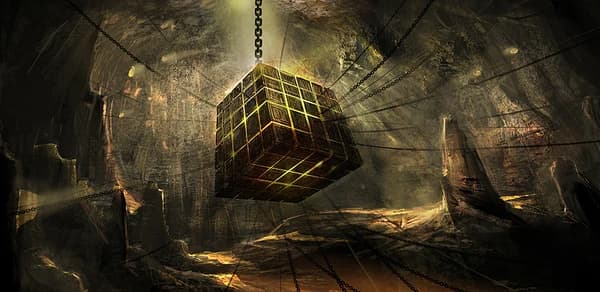
The Labyrinth was a shifting maze of stone cubes raised inside Mount Olympus by the Athenian craftsman Daedalus at the command of Zeus, built for the sole purpose of holding Pandora away from the Flame of Olympus. Its heart hung from the Chain of Balance and the Three Judges of the dead served as the final latch of its lock.
Aletheia: the Oracle of Delphi
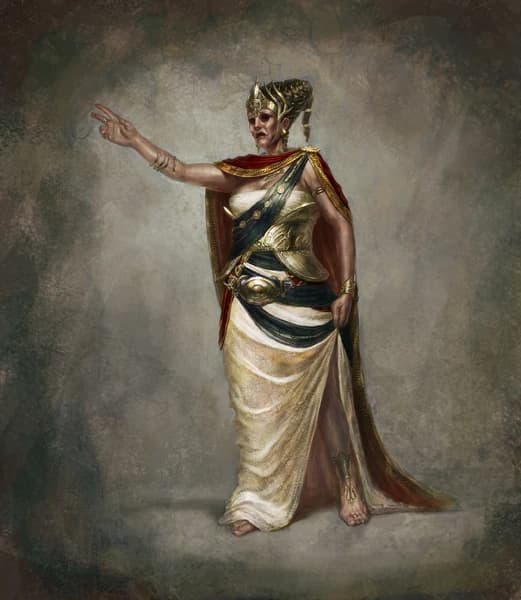
Aletheia was the mortal Oracle of Delphi, a seer whose eyes granted her visions of the future and the power to pierce any illusion. When she uncovered the plot of Ares and the Furies to overthrow Olympus, the Furies tore out her eyes and forged them into the Eyes of Truth, and with her dying breath she set Kratos on the path that freed him from his blood oath.
Desert of Lost Souls: the wasteland east of Athens
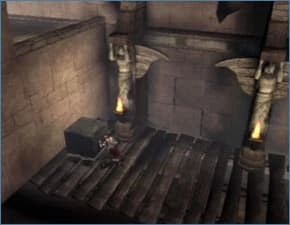
The Desert of Lost Souls was a vast, monster haunted desert far to the east of Athens, the place where Zeus condemned the Titan Cronos to wander with Pandora's Temple chained to his back. Kratos crossed its sands in his quest for Pandora's Box, and there Ares struck him down with a pillar hurled from the ruins of Athens.
Hope: the greatest weapon in the world
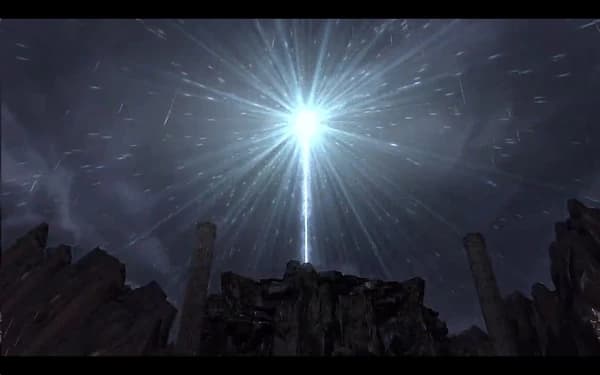
Hope was a blessed power strong enough to kill a god, hidden by Athena at the bottom of Pandora's Box as a counterweight to the evils sealed there after the Great War. Kratos absorbed it without knowing when he opened the Box to slay Ares, awakened it through forgiveness to destroy Zeus, and released it to mankind on the point of the Blade of Olympus.
Mentioned in29 entries
Aesir-Vanir War
The Aesir-Vanir War was the long and brutal conflict between the two tribes of Norse gods, fought ages before Kratos came to the Northlands. It ended in an uneasy peace sealed by the marriage of Odin and Freya, only for Odin's treachery to reignite it.
Atreus (Loki): Kratos's Son and the Truth of His Name
Atreus was the son of Kratos and the Jotunn Faye, born in Midgard and given the hidden name Loki. Across two great journeys he grew from a sickly boy into the prophesied champion of the Giants, the god of mischief whose fate was bound to Ragnarok.
Baldur's Death: mistletoe and a broken neck
A mistletoe arrow broke Freya's spell of invulnerability over Baldur, and Kratos snapped his neck as he moved to strangle her. Fimbulwinter followed.
Boots of Hermes: the Winged Boots Kratos Cut from Hermes in God of War III
The Boots of Hermes are the messenger god's winged greaves, which Kratos takes by cutting off Hermes's legs in God of War III. They let him sprint, dash and run on certain walls, and they are one of the few things Zeus fails to take from him.
Deimos: the brother Kratos failed to save
Ares and Athena seized Deimos as a boy because his birthmark matched the prophecy of the Marked Warrior. Thanatos crushed him at Suicide Bluffs.
Extermination of the Giants of Midgard: the Aesir Carnage
The Extermination of the Giants of Midgard, also called the Aesir Carnage, was the last great genocide ordered by Odin against the Jotnar. Enraged at his banishment from Jotunheim, he sent Thor to slaughter every giant in Midgard, driving the race to the edge of extinction.
Faye: Laufey the Just, mother of Atreus
Faye was the Jotunn Laufey, wife of Kratos and mother of Atreus. Her foresight showed her own death, so she planned the route her ashes would take.
Fimbulwinter: the three-year winter
Fimbulwinter was the three-year winter that began with Baldur's death and ended with Ragnarok. Being magical, it weakened curses across the Nine Realms.
God of War (2005) Story Explained: Plot Summary and Ending
The whole story of the first God of War in order, from the Hydra in the Aegean to the death of Ares at Athens. Then the ending in plain terms: why Kratos jumped from the cliff, why Athena saved him, and how he ended up on Ares's throne.
God of War (2018) Story Explained: Plot Summary and Ending
The full plot of God of War (2018) in order, from Faye's funeral pyre to the mural in Jotunheim. Kratos and Atreus set out to scatter her ashes, kill Baldur on the way, and learn who Atreus really is.
God of War Games in Order: Release Order and Story Order
Every God of War game in the order it came out and in the order the story happens, from Kratos's boyhood in Sparta to the trials of Valhalla. Plus where to start, and which remasters, mobile games, comics and novels you can skip.
God of War II Story Explained: Plot Summary and Ending
The whole story of God of War II in order, from Zeus's betrayal at Rhodes to the Titans climbing Mount Olympus. Then the ending in plain terms: why Athena died, what she told Kratos about his father, and how it sets up God of War III.
+ 17 more
Get new articles in your inbox
No spam. New lore drops, canon conflicts, and deep dives only when they’re worth reading.
Some links on Lore Fortress are affiliate links. If you buy through them we earn a small commission at no extra cost to you.