Jotnar: the giants Odin nearly wiped out
the Giants of the Norse realms
The Jotnar were the oldest race of the Norse cosmos, gifted with precognition. Odin envied that gift, forged Mjolnir, and set Thor to exterminate them.
The Jotnar, commonly called the Giants, were the most ancient race of the Norse cosmos, native to Jotunheim, Muspelheim, and Niflheim. Long at war with the Aesir, they were a gifted and largely peaceful people whose power of precognition earned them the eternal hatred of Odin. Hunted nearly to extinction by Odin and Thor, they locked their souls away in the hope of a future return. (God of War (2018); God of War Ragnarök)
Origins and the first kingdom#
The Jotnar were the most ancient race in the cosmos, and the progenitor of all of them was Ymir, the largest Giant there ever was. Ymir brought forth more of his kind from his own body, and they in turn had offspring, marking the beginning of the race. Then Odin slew the primordial Giant, in Snorri's account together with his brothers Vili and Ve. Ymir's bleeding fluids drowned nearly all of his descendants, and the only survivors were the Giant Bergelmir and his wife. (God of War (2018); Prose Edda)
Bergelmir and his wife searched for a land where their people could be safe, and found it in Jotunheim. As king and queen they reproduced greatly and ensured that the Jotnar alone would rule their new home. Bergelmir never sought revenge against the Aesir, desiring only that his people prosper, and for this the first king of the Giants was remembered ever after as Bergelmir the Beloved. (God of War (2018))
A civilized and gifted people#
Despite their name, not all of the Jotnar were large, and many were no bigger than mortals, while others took the shapes of animals. They were an intelligent and civilized race who practised architecture, masonry, art, trade, and prophecy, and counted famous warriors and hunters among them. They spoke their own native tongue, the Ancient Tongue, said to be so old it predated the mountains. (God of War (2018); God of War Ragnarök)
Most notable of all their gifts was precognition, the power to see visions of the future. This allowed the Jotnar to foresee the twilight of the gods, a secret they guarded closely. They also possessed the innate ability to shapeshift, which at times passed to those who carried their blood, and they were gifted magicians whose mastery was as great as that of the Vanir. Many Giants visited and lived in Midgard, where they once kept a marketplace and traded with many races. (God of War (2018); God of War Ragnarök)
The varieties of Giants#
The Jotnar took several forms. The Frost Giants were the most numerous line, descended from Bergelmir and his wife. The only known Stone Giant was Hrungnir. The Fire Giants were all born in burning Muspelheim, beginning and ending with Surtr, the first being born after Ymir, who was said to have created the sun and stars with his primordial flames. There were also Animal Giants, such as Hraesvelgr, who was naturally a great raven, the wolf-giant Garm, and the colossal World Serpent Jormungandr, a Giant whose soul was placed inside a snake. (God of War (2018); God of War Ragnarök)
Odin's hunt#
The Jotnar were a mostly peaceful race who kept clear of the war between the Aesir and the Vanir, lacking even an organised army. Yet their gift of foresight made them a target, for Odin both feared their knowledge of Ragnarok and coveted the precognition he himself did not possess. To this end he commissioned the creation of Mjolnir, the weapon that would become the bane of Giant-kind. (God of War (2018))
After the Giants helped Tyr build his temple, they invited Odin to Jotunheim in the hope of peace. Instead, Odin used the visit to memorise the events shown on their tapestries and triptychs, until a watchful Giant noticed and sounded the alarm. Odin transformed into a hawk and fled. The Giants spared Tyr, knowing his heart was noble, but made him swear to sunder his temple's connection to Jotunheim, and announced that they would recall every Giant in Midgard so they might live in solitude. Enraged at being driven off before he could steal more, Odin ordered Thor to carry out a genocide of the Jotnar still in Midgard. With Tyr's help many escaped home, and Tyr then severed the road by destroying the original travel crystal and hiding the corresponding tower, leaving the gate atop Midgard's highest mountain the only way left into Jotunheim. (God of War (2018); God of War Ragnarök)
The locked souls#
Fearing that Odin would in time find a way into their home, the Jotnar made a final choice. The magic of Angrboda's father was used, before his death, to lock their souls into magical marbles inscribed with their names. These marbles were hidden all across the Nine Realms by the last living Frost Giants, and corpses were left throughout the mountains of Jotunheim to confuse Odin. Only someone with knowledge of the old magic could transfer a soul back into a body. Not all the Giants made this choice, for some fled to the corners of Jotunheim and others vanished, never to be seen again. (God of War Ragnarök)
Angrboda, her grandmother Gryla, and Sinmara are counted among the last living Giants of pure blood, while Laufey, who stayed behind in Midgard, and Jormungandr were the last Giants in the Middle Realm. Atreus, himself half Giant through his mother, took up the task of finding and freeing the locked souls, so that the Jotnar might once again return to the realms. (God of War Ragnarök)
Frequently asked questions
- Who are the Jotnar?
- The Jotnar, commonly known as the Giants, were the most ancient race in the Norse cosmos, native to Jotunheim, Muspelheim, and Niflheim. Despite their name, not all of them were large, and they came in many forms, including Frost, Fire, Stone, and Animal Giants.
- Why did Odin hunt the Jotnar?
- The Jotnar possessed the gift of precognition, which allowed them to see visions of the future, including the twilight of the gods. Odin, who lacked this power, both envied their knowledge and feared their role in Ragnarok, and so he commissioned Mjolnir and ordered Thor to carry out a genocide of the Giants.
- How did the Jotnar try to survive Odin's hunt?
- After Odin tried to steal their visions, the Giants recalled their kin from Midgard to Jotunheim and had Tyr sever his temple's connection to the realm. Fearing Odin would still find them, they locked their souls into magical marbles inscribed with their names, hidden across the Nine Realms, so that they might one day be revived.
- Are any Jotnar still alive?
- Angrboda, Gryla, and Sinmara are among the last known living Giants of pure blood. Laufey, who lived in Midgard, and the World Serpent Jormungandr were the last Giants in the Middle Realm, while figures such as Tyr and Atreus carry partial Jotunn blood.
- What is the difference between the Jotnar and the Greek Titans?
- Both were colossal races that opposed the gods of their world, but the Jotnar were a race of their own rather than gods. Unlike the Titans, the Jotnar were a largely peaceful people who were never imprisoned, but instead hid the access to their realm with Tyr's help.
Sources
- GameGod of War (2018), Santa Monica Studio, 2018
- GameGod of War Ragnarök, Santa Monica Studio, 2022
- BookProse Edda, Snorri Sturluson, around 1220
Spotted a factual error or a primary source we missed? Email a correction. Every flagged claim gets reviewed.
Followed from this entry
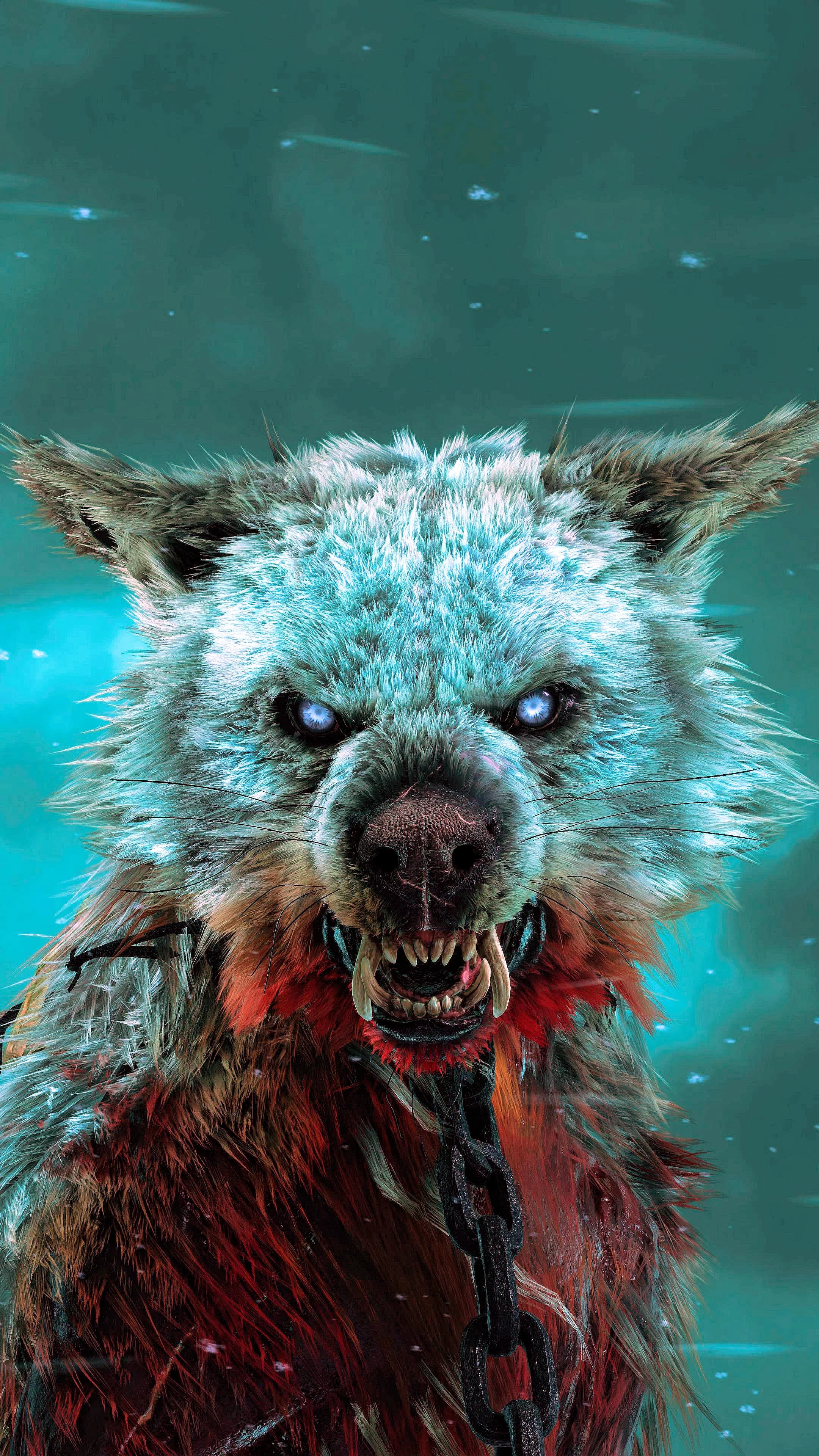
Garm
Garm was a soulless, near-unkillable Jötunn wolf who could tear holes between the realms and devour entire concepts of reality. Chained in Helheim by Tyr and freed by Atreus, he was at last subdued and became the vessel for the resurrection of Fenrir.
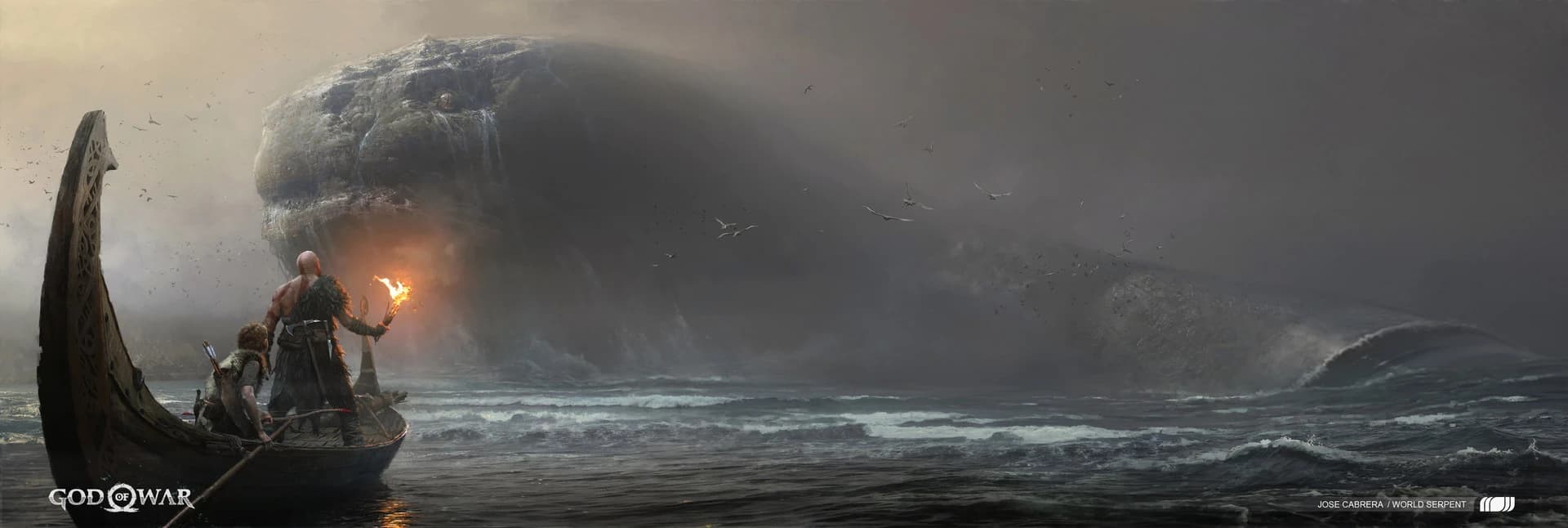
Jormungandr: the World Serpent of Midgard
Jormungandr was so vast he encircled all of Midgard within the Lake of Nine. Thor struck him so hard at Ragnarok that he was hurled backward through time.
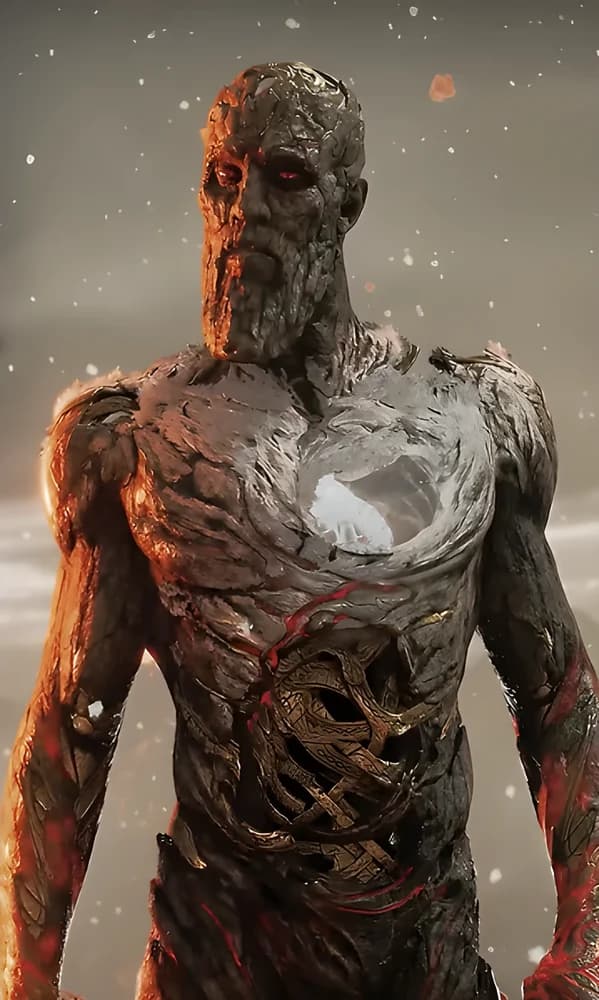
Surtr: the fire giant who became Ragnarok
Surtr was the first fire giant, born from Ginnungagap after Ymir. He gave himself up to become Ragnarok and drove his blade into the heart of Asgard.
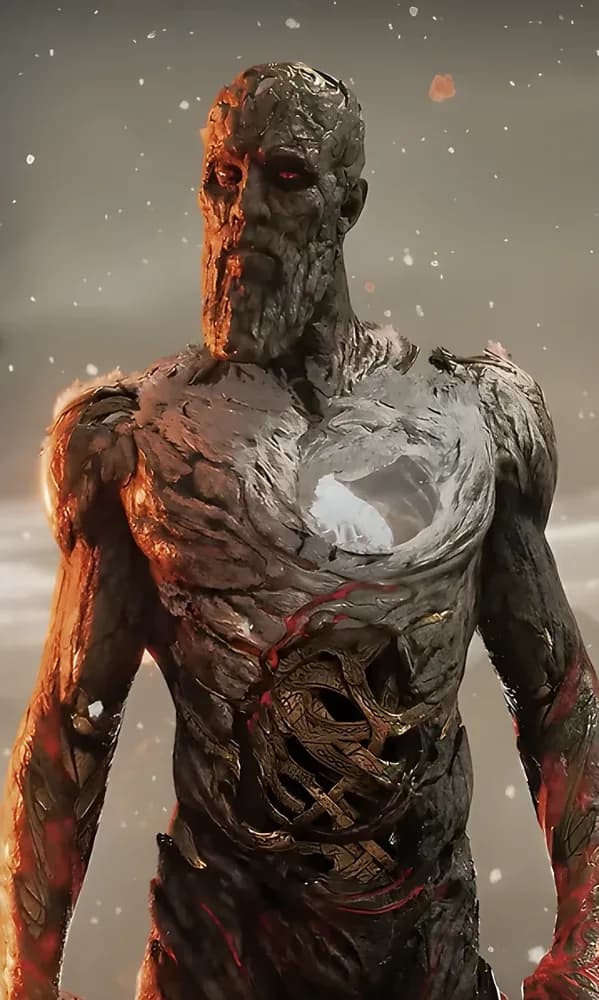
Sinmara: Surtr's Frost Giant Wife in God of War Ragnarök
Sinmara is the giantess Surtr loved and married, and the reason he spent eons trying to dodge his own prophecy. She never shows her face in God of War Ragnarök, but her frozen heart is what turns Surtr into Ragnarök.
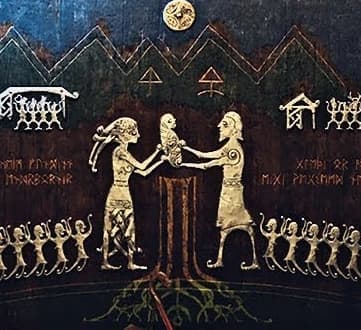
Bergelmir: the Beloved King of the Giants
Bergelmir was a Frost Giant who, with his wife, alone survived the flood of Ymir's blood that drowned the rest of his race. He found a new land, named it Jotunheim, and repopulated the Jotnar as its king, refusing all vengeance against Odin. He died of old age surrounded by his kin and was remembered ever after as Bergelmir the Beloved.
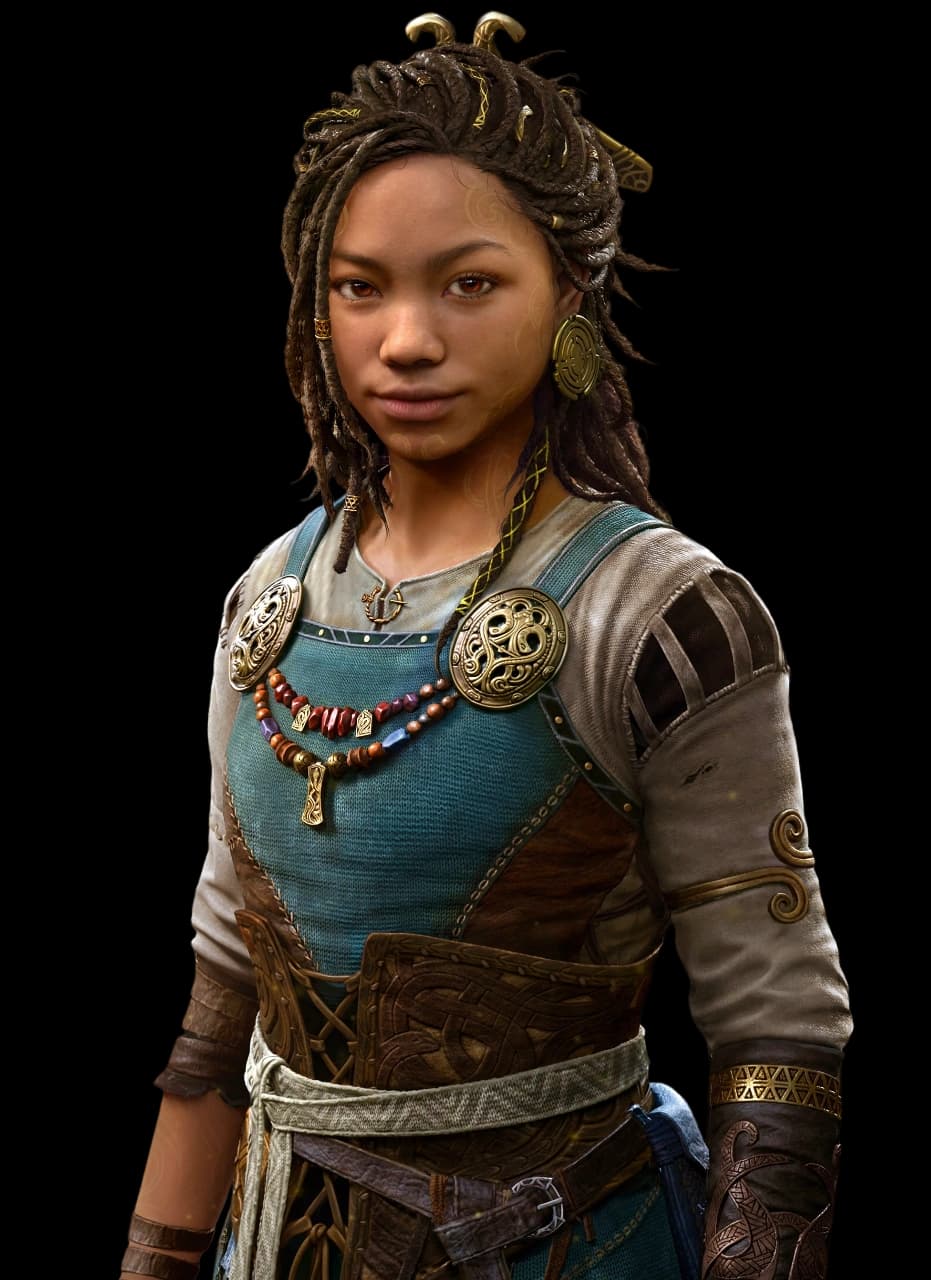
Angrboda: the last giantess of Ironwood
Angrboda grew up almost alone in Ironwood, painting the prophecy of Ragnarok. She gave Atreus the soul marbles of the lost Giants and made him their keeper.
Mentioned in36 entries
Aesir Royal Family: the Ruling Dynasty of Asgard
The Aesir Royal Family was the ruling dynasty of gods who reigned from Asgard over the Nine Realms. Descended from the first god Buri and led by Odin the Allfather, the line counted Odin's brothers Vili and Ve and his sons Thor, Tyr, Heimdall, and Baldur among its most prominent members.
Aesir-Vanir War
The Aesir-Vanir War was the long and brutal conflict between the two tribes of Norse gods, fought ages before Kratos came to the Northlands. It ended in an uneasy peace sealed by the marriage of Odin and Freya, only for Odin's treachery to reignite it.
Angrboda: the last giantess of Ironwood
Angrboda grew up almost alone in Ironwood, painting the prophecy of Ragnarok. She gave Atreus the soul marbles of the lost Giants and made him their keeper.
Asgard
Asgard was the realm of the Aesir gods, perched in the crown of Yggdrasil and ruled by Odin from the hall of Gladsheim. Behind the great wall of Hrimthur it stood as a fortress against the prophesied doom of Ragnarok, until Kratos breached it and the realm fell.
Atreus (Loki): Kratos's Son and the Truth of His Name
Atreus was the son of Kratos and the Jotunn Faye, born in Midgard and given the hidden name Loki. Across two great journeys he grew from a sickly boy into the prophesied champion of the Giants, the god of mischief whose fate was bound to Ragnarok.
Brok: the Huldra brother Odin murdered
Brok forged Mjolnir and the Leviathan Axe with his brother Sindri. Killed once and revived with an incomplete soul, he was stabbed by Odin disguised as Tyr.
Duraþrór
Duraþrór was one of the four seasonal stags that roamed the Nine Realms, the Stag of Winter known also as the Thriving Slumber. Honored by the Jotnar, his likeness aided Kratos and Atreus on their passage through the mountain of Midgard.
Dwarves
The Dwarves were a race of short humanoids native to Svartalfheim, renowned across the Nine Realms as peerless smiths, builders, and alchemists. Their craft was sought by mortals and gods alike, though their service to Odin came at a bitter cost.
Extermination of the Giants of Midgard: the Aesir Carnage
The Extermination of the Giants of Midgard, also called the Aesir Carnage, was the last great genocide ordered by Odin against the Jotnar. Enraged at his banishment from Jotunheim, he sent Thor to slaughter every giant in Midgard, driving the race to the edge of extinction.
Faye: Laufey the Just, mother of Atreus
Faye was the Jotunn Laufey, wife of Kratos and mother of Atreus. Her foresight showed her own death, so she planned the route her ashes would take.
God of War (2018) Story Explained: Plot Summary and Ending
The full plot of God of War (2018) in order, from Faye's funeral pyre to the mural in Jotunheim. Kratos and Atreus set out to scatter her ashes, kill Baldur on the way, and learn who Atreus really is.
God of War Timeline: every major event from the Primordials to Valhalla
The full in-universe chronology of God of War, from the war of the Primordials and the fall of the Titans to Kratos's life in Sparta, his war on Olympus, and the end of the Aesir at Ragnarök. The games give almost no calendar years, so events are ordered by story sequence and grouped into eras, with notes wherever the games' own placement is vague.
+ 24 more
Get new articles in your inbox
No spam. New lore drops, canon conflicts, and deep dives only when they’re worth reading.
Some links on Lore Fortress are affiliate links. If you buy through them we earn a small commission at no extra cost to you.