Sinmara: Surtr's Frost Giant Wife in God of War Ragnarök
Sinmara is the giantess Surtr loved and married, and the reason he spent eons trying to dodge his own prophecy. She never shows her face in God of War Ragnarök, but her frozen heart is what turns Surtr into Ragnarök.
Sinmara is a frost giant from Niflheim and the wife of Surtr, the first fire giant, in God of War Ragnarök. The prophecy of Ragnarök said the two of them would merge into one monstrous giant to destroy Asgard, and that it would kill them both. She never appears on screen, but her frozen heart is the key to how Ragnarök finally happens. (God of War Ragnarök)
Who is Sinmara in God of War Ragnarök?#
Sinmara is one of the oldest beings in the Norse cosmos, a Jötunn counted among the Primordials, who existed before the Nine Realms were made. She and Surtr didn't start well. They were hostile when they first met, until other enemies came for them both. They won that fight together, fell in love and married. (God of War Ragnarök)
Then they learned what the prophecy had planned for them. At Ragnarök they would combine into one huge giant, carry a great sword to Asgard and plunge it into its heart, and the act would destroy them both. Surtr couldn't accept Sinmara dying with him. So he parted from her, and before they separated they exchanged hearts, so that each would always carry a piece of the other. Sinmara went back to Niflheim and Surtr stayed in Muspelheim with her frozen heart in his chest. (God of War Ragnarök)
The pairing is fire and ice. Surtr is the first fire giant, born from Ginnungagap soon after Ymir, and Sinmara belongs to frozen Niflheim on the other side of the void. (God of War Ragnarök)
How Sinmara's heart made Ragnarök#
Sinmara's heart is why Surtr wouldn't help at first. When Kratos and Atreus reached his forge to ask him to become Ragnarök, he turned them away. Odin deserved to die, he agreed, but he would not let Sinmara be sacrificed to make it happen. He had spent eons forging swords in the hope of destroying Asgard on his own, and none of them had been strong enough. (God of War Ragnarök)
What changed his mind was the Blades of Chaos. Surtr sensed primordial fire in them and saw a way to change without her. At the Spark of the World he poured his own fire into the blades, then told Kratos to stab them into Sinmara's frozen heart, still beating inside his chest. The blow started his transformation, and Ragnarök rose without Sinmara ever being part of it. (God of War Ragnarök)
Surtr insisted on one more thing. Sinmara was to be kept out of it, and when Atreus asked whether they should tell her what he was doing, Surtr refused. (God of War Ragnarök)
Does Sinmara appear in the game?#
No, not in person. Her story comes out in two ways. The first is Surtr's shrine in Muspelheim, which Atreus and Angrboda find together. The carvings show the fire giant and the frost giant falling in love, and Angrboda uses them to explain where Ragnarök comes from. The second is Surtr himself, who talks about her when Kratos and Atreus come to his forge. (God of War Ragnarök)
After Ragnarök burns Asgard down, Sinmara is the one left behind. When Kratos returns to Niflheim with Mimir and Freya, her grieving can be heard somewhere in the mist. Mimir suggests finding her to tell her what happened to Surtr. Kratos says she already knows. (God of War Ragnarök)
Tyr hears her too, after Kratos frees him from the Asgardian prison in Niflheim. When the group meets him again at the Spark of the World in Muspelheim, he asks them to leave her alone with her grief, and they agree. (God of War Ragnarök)
Sinmara in Norse myth vs the game#
The real Sinmara comes from Fjölsvinnsmál, an eddic poem that survives in later manuscripts and is usually printed alongside the Poetic Edda. In it the hero Svipdagr questions the giant watchman Fjölsviðr about a guarded hall, and Sinmara comes up as the keeper of the weapon Lævateinn. The poem says Lopt, a name for Loki, made it, and that Sinmara keeps it in a chest held by nine locks. (Fjölsvinnsmál)
The poem also sets up a riddle with no way out. Lævateinn is the only thing that can kill the bright rooster Víðófnir, but Sinmara will only hand the weapon over to someone who brings her a shining feather from that same rooster's tail. (Fjölsvinnsmál)
Her link to Surtr is thin in the myth. It rests on one line about Víðófnir troubling "Both Surt and Sinmora", as Bellows prints it, which is an editor's emendation rather than what the manuscripts actually say. Henry Adams Bellows, in his 1923 translation, calls her "presumably Surt's wife", and that guess is where the marriage comes from. (Fjölsvinnsmál)
God of War takes that guess and builds a whole love story on it. The game drops Lævateinn and the rooster riddle, makes Sinmara a frost giant of Niflheim, and gives the couple the swapped hearts and the shared prophecy. The myth never says what kind of giant she is. (God of War Ragnarök; Fjölsvinnsmál)
Frequently asked questions
- Who is Sinmara in God of War?
- Sinmara is a frost giant from Niflheim and the wife of the fire giant Surtr. Her heart, which Surtr carried in his chest, is the piece Kratos stabs with the Blades of Chaos to turn Surtr into Ragnarök.
- Is Sinmara a fire giant?
- Not in God of War. The game makes her a frost giant of Niflheim and pairs her with Surtr, the first fire giant of Muspelheim, so the two of them are fire and ice.
- Does Sinmara appear in God of War Ragnarök?
- Not on screen. She is told of through Surtr's shrine and his own words, and after the ending you can hear her grieving in the mists of Niflheim.
- Is Sinmara in Norse mythology?
- Yes. She is named in the eddic poem Fjölsvinnsmál as the keeper of the weapon Lævateinn, and one reading of the poem pairs her with Surtr, which is why she is often called his wife.
- Is Sinmara dead in God of War Ragnarök?
- No. Surtr found a way to become Ragnarök without her, so she survives the end of the game and mourns him in Niflheim.
Sources
- GameGod of War Ragnarök, Santa Monica Studio, 2022
- BookFjölsvinnsmál, Eddic poem, translated in Henry Adams Bellows, The Poetic Edda, 1923
Spotted a factual error or a primary source we missed? Email a correction. Every flagged claim gets reviewed.
Followed from this entry
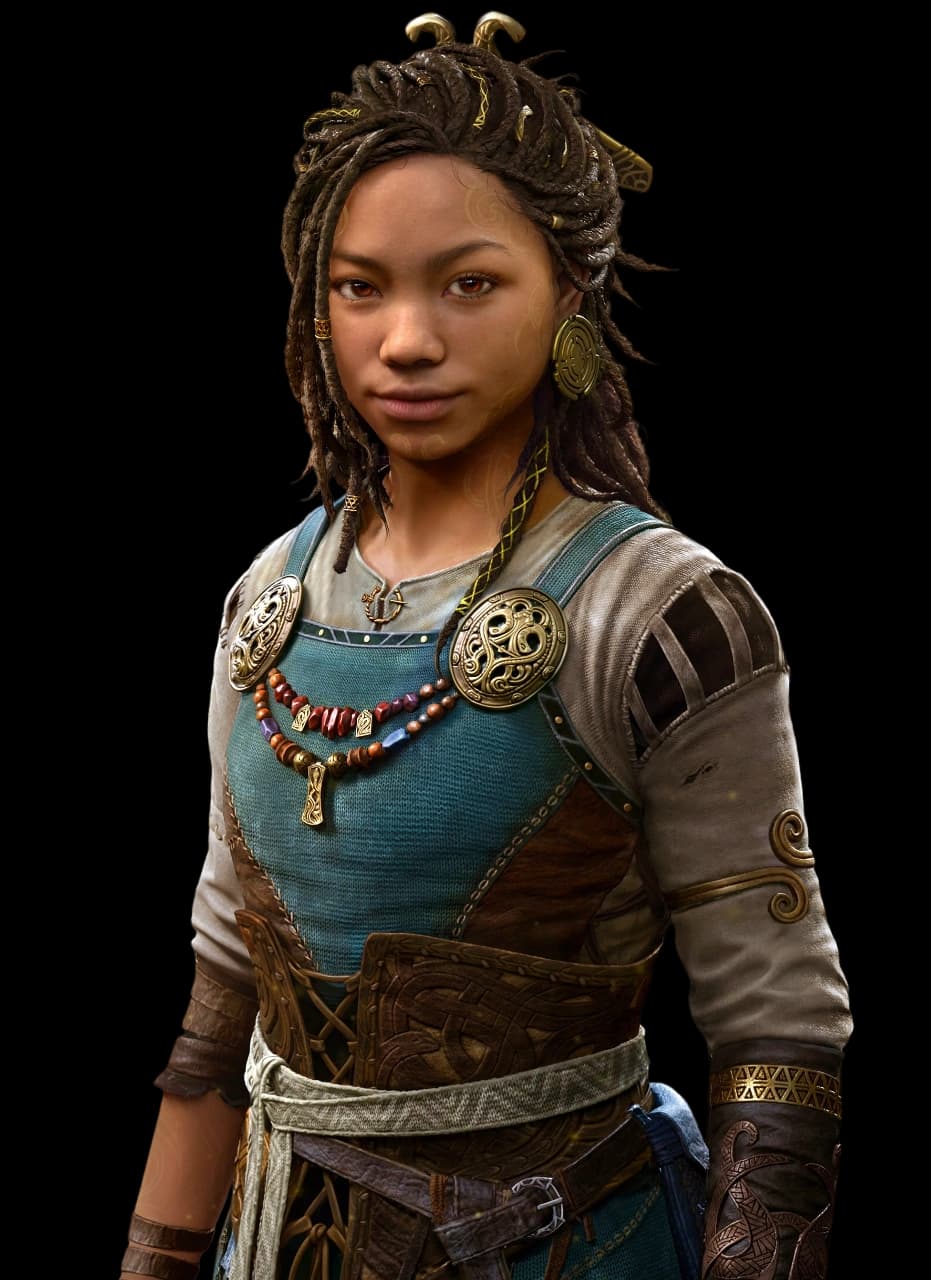
Angrboda: the last giantess of Ironwood
Angrboda grew up almost alone in Ironwood, painting the prophecy of Ragnarok. She gave Atreus the soul marbles of the lost Giants and made him their keeper.
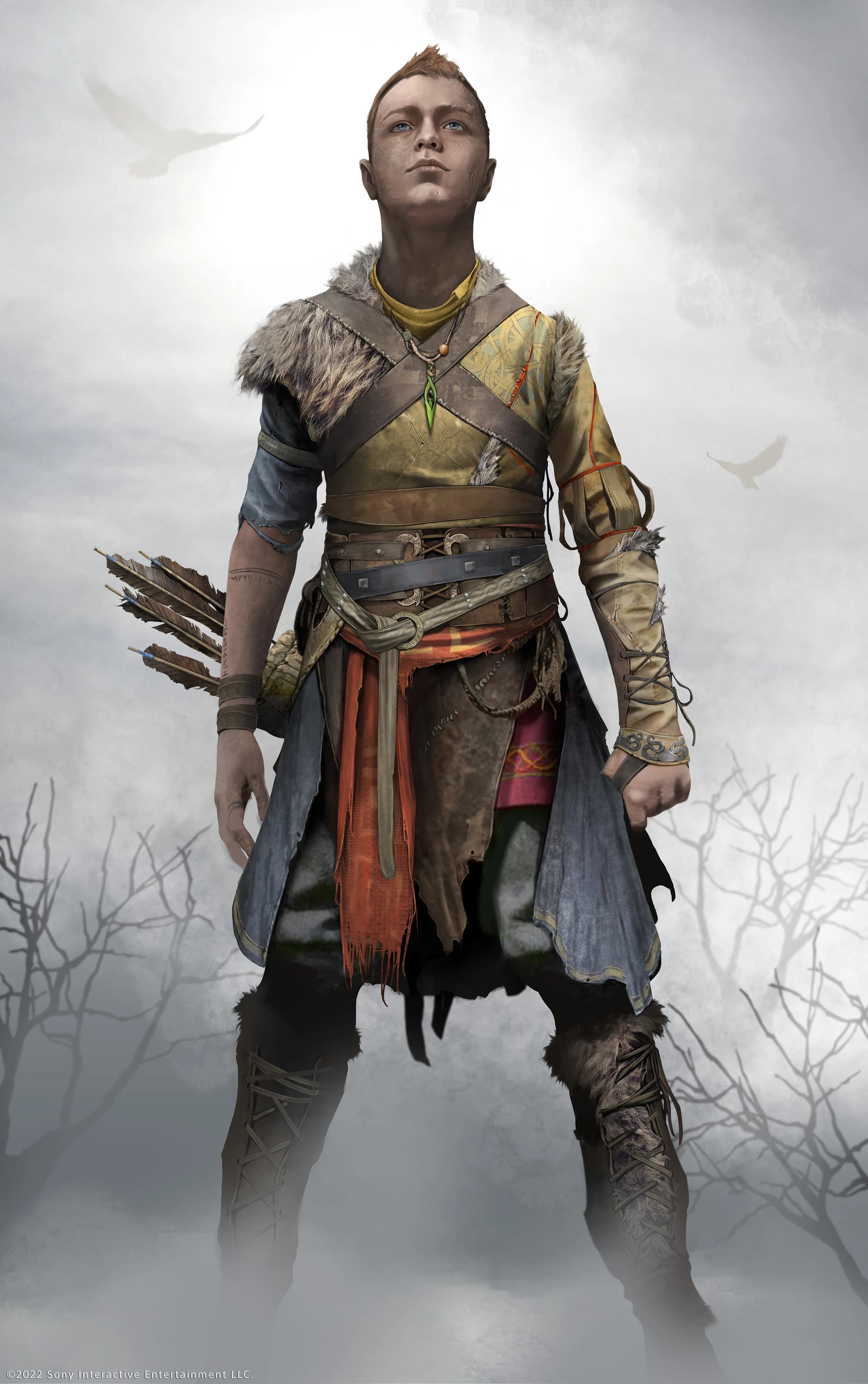
Atreus (Loki): Kratos's Son and the Truth of His Name
Atreus was the son of Kratos and the Jotunn Faye, born in Midgard and given the hidden name Loki. Across two great journeys he grew from a sickly boy into the prophesied champion of the Giants, the god of mischief whose fate was bound to Ragnarok.
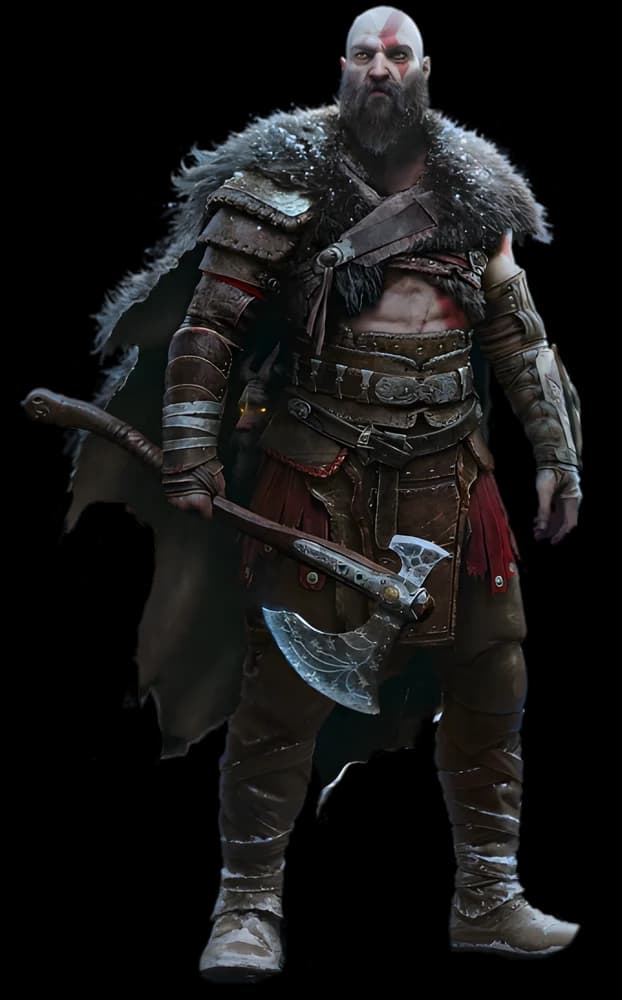
Kratos
Kratos was the demigod son of Zeus who rose from a Spartan general to the Greek God of War, destroyed the pantheon of Olympus in a quest for vengeance, and then began again in the Norse realms as a father seeking to leave his bloody past behind.
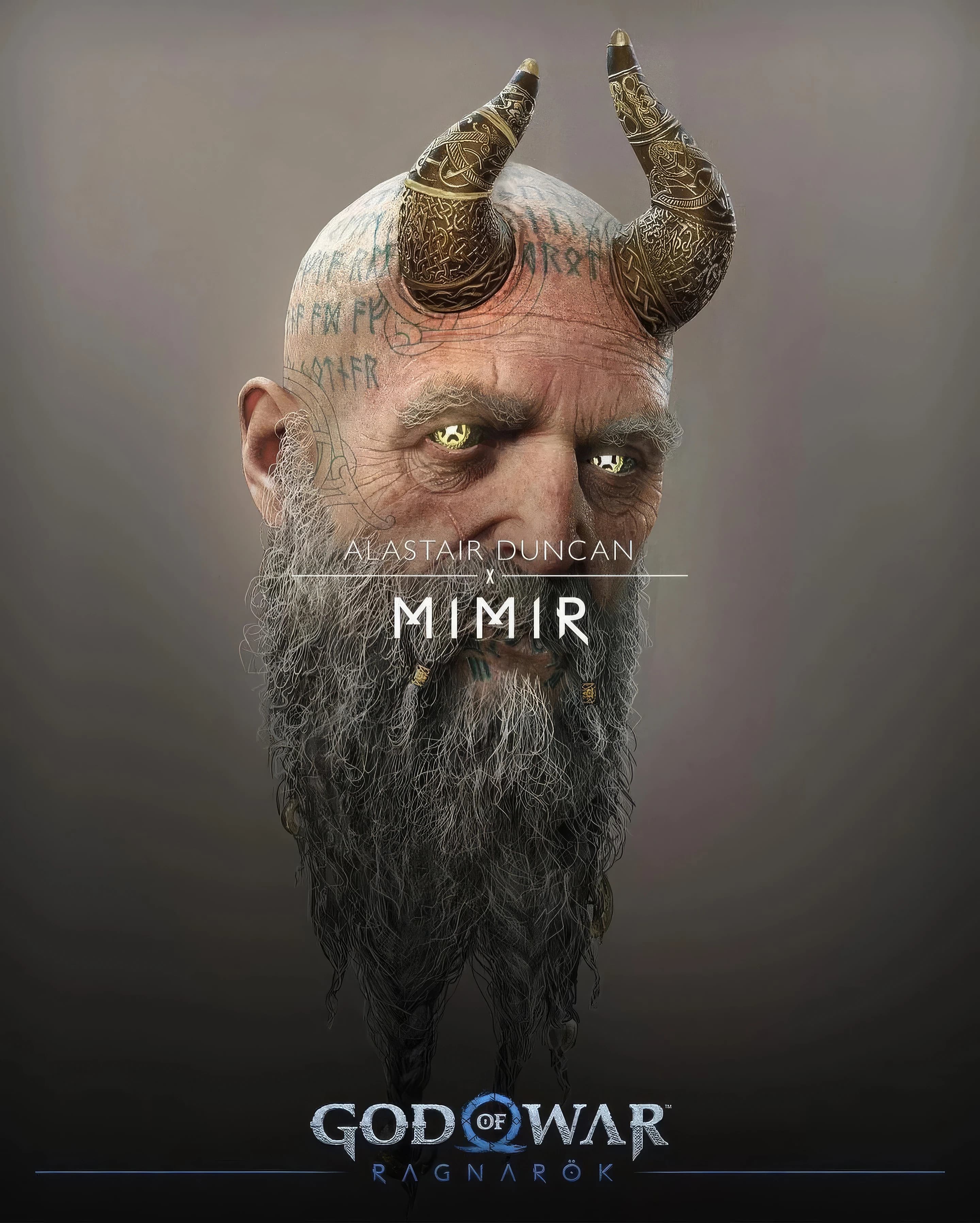
Mimir
Mimir was a Celtic fae who rose to become Odin's advisor and the ambassador of the Aesir before the All-Father imprisoned him for over a century. Freed and reanimated as a disembodied head by Kratos and Atreus, he became their guide, conscience, and friend across the Nine Realms.
Ymir: the first being of the Nine Realms
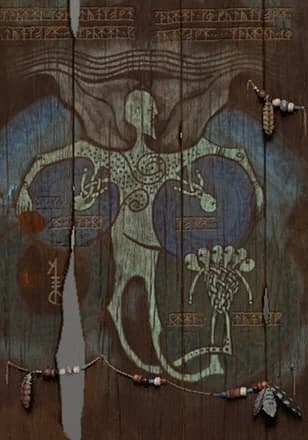
Ymir was the original Jotunn, the first sentient being to take form in the void of Ginnungagap and the progenitor of every god, giant, and mortal that followed. Slain by Odin and his brothers, his torn body became the raw material of the realms themselves, and his murder seeded a hatred between Aesir and Jotnar that endured until Ragnarok.
Asgard
Asgard was the realm of the Aesir gods, perched in the crown of Yggdrasil and ruled by Odin from the hall of Gladsheim. Behind the great wall of Hrimthur it stood as a fortress against the prophesied doom of Ragnarok, until Kratos breached it and the realm fell.
Mentioned in5 entries
Jotnar: the giants Odin nearly wiped out
The Jotnar were the oldest race of the Norse cosmos, gifted with precognition. Odin envied that gift, forged Mjolnir, and set Thor to exterminate them.
Niflheim: the fog that hid Tyr's prison
Ivaldi's curse turned the mist of Niflheim into a deadly fog around his workshop. Kratos and Freya later found the true Tyr imprisoned there.
Norse Gods: the pantheon of the Nine Realms
The Norse Gods were the pantheon that ruled over Scandinavia, the lands known in their own cosmos as the Nine Realms of Yggdrasil. Divided into the warlike Aesir of Asgard and the nature-bound Vanir of Vanaheim, they counted among the most powerful races of the realms and were held to be the protectors of Midgard and humanity.
Surtr: the fire giant who became Ragnarok
Surtr was the first fire giant, born from Ginnungagap after Ymir. He gave himself up to become Ragnarok and drove his blade into the heart of Asgard.
Tyr: the god of war who chose peace
Tyr was the Aesir god of war who turned to peace and built the Temple in the Lake of Nine. Odin imprisoned him, faked his death, and took his face.
Get new articles in your inbox
No spam. New lore drops, canon conflicts, and deep dives only when they’re worth reading.
Some links on Lore Fortress are affiliate links. If you buy through them we earn a small commission at no extra cost to you.