Norse Gods: the pantheon of the Nine Realms
The Norse Gods were the pantheon that ruled over Scandinavia, the lands known in their own cosmos as the Nine Realms of Yggdrasil. Divided into the warlike Aesir of Asgard and the nature-bound Vanir of Vanaheim, they counted among the most powerful races of the realms and were held to be the protectors of Midgard and humanity.
The Norse Gods were the pantheon that ruled over Scandinavia, the lands known within their own cosmos as the Nine Realms of Yggdrasil. One of the most powerful races ever to inhabit the realms, they were regarded as the protectors of Midgard and of humanity. The pantheon was divided into two nations of gods and two royal families: the warriors of Asgard, the Aesir, and the sorcerers of Vanaheim, the Vanir. Around these two tribes gathered stranger company besides, gods born of god and giant, the fate-reading Nornir, primordial beings older than the realms themselves, and in the final age two foreign gods, Mimir and Kratos, who came from other lands and made the North their home. (God of War (2018); God of War Ragnarök)
Two tribes, two royal families#
The pantheon was defined by the division between its two nations. The Aesir, natives of Asgard, were the more aggressive and warlike of the tribes, standing for the brute strength and raw power of nature. They held that the only honourable death was to fall in battle, and that every other end was cowardly and shameful. The Vanir, natives of Vanaheim, were known instead for their bond with nature and their gift for magic. Each tribe kept its own royal line, the house of Odin in Asgard and the rulers of the Vanir in Vanaheim, and the history of the whole pantheon turned on the rivalry, war, and uneasy marriage between the two. (God of War (2018); God of War Ragnarök)
The Aesir of Asgard#
Nine of the Aesir walked openly in the recorded history of the age. At their head stood Odin, son of Borr, the All-Father and King of the Aesir, a god of the sky, death, knowledge, wisdom, victory, ravens, the runic alphabet, and magic. His son Thor, god of thunder, lightning, storm, and strength, was the foremost warrior of the Aesir, and Thor's wife Sif was goddess of the harvest and of family. Heimdall, another son of Odin, was the watchman and sentinel of the Aesir, gifted with foresight. Tyr, also a son of Odin, was the Norse god of war, and with it of law, justice, and oaths. Baldur, youngest of Odin's sons, was god of light. Thor's own children carried the line onward: Magni, Modi, and Thrud. (God of War (2018); God of War Ragnarök)
Behind these stood elder generations remembered only in lore. Buri, the first of the gods, fathered Borr, who with the giantess Bestla brought forth Odin and his brothers Vili and Ve. Other Aesir were spoken of without ever being seen in those days: Bragi, god of music and poetry, and his wife Idunn, keeper of the golden apples; Nanna, wife of Baldur, and their son Forseti, god of justice and reconciliation; Hodr, god of darkness and winter; Vidar, Ullr, Hoenir, the sea gods Aegir and Ran with their nine daughters of the waves. Of the great Aesir who walked the realms, only Sif, Thrud, and Tyr were known to remain alive when the age had run its course; Odin, Thor, Heimdall, Baldur, Magni, and Modi all perished. (Prose Edda; God of War (2018); God of War Ragnarök)
The Vanir of Vanaheim#
Four of the Vanir took open part in the history of the era. Freya was goddess of sorcery, love, beauty, war, death, and fertility, the former wife of Odin, and in her time both Queen of the Valkyries and Queen of the Aesir. Her twin brother Freyr was god of fertility, kingship, prosperity, sunshine, and abundance. Hildisvini stayed at Freya's side, and Gna ruled as Queen of the Valkyries in later days. (God of War Ragnarök)
The rest of the tribe lived on in name and memory. Njord, god of the sea, seafaring, and wealth, was King of the Vanir, and Nerthus, goddess of fertility and magic, was its Queen. Kvasir was the god of peace, mead, and wisdom. Skirnir was Freyr's personal messenger, and his family crest could still be found in Vanaheim. By the close of the age Freya and Hildisvini endured, while Freyr and Gna had given their lives. (God of War Ragnarök)
The First Great War and the marriage of Odin and Freya#
The two tribes did not share the realms in peace. Their simmering tensions broke into open war, remembered as the Aesir-Vanir War, the First Great War, and the fighting dragged on until both sides, bled by heavy casualties, reached a stalemate. Mimir, then serving as ambassador for Odin, saw the way out: Odin agreed to marry Freya, queen of the Vanir, ending the war and, in secret, giving the All-Father a path to learn her magic. Together Odin and Freya produced Baldur, the youngest of Odin's sons, and for a time the marriage bound the two royal families into one pantheon. The peace did not hold; Odin's hunger for knowledge and his war on the giants outlasted his love, the marriage ended, and Freya was left a former queen of a tribe she despised. (God of War (2018); God of War Ragnarök)
Gods born of god and giant#
A rarer kind of god arose where the bloodlines of god and giant crossed. Such Jotunn gods were born of a god and a Giant and possessed the powers of both races. The only known god of this kind was Loki, the name the Jotnar gave to Atreus, son of Kratos and the giantess Faye. Loki was hailed as god of mischief, stories, magic, chaos, and change, and as the foremost warrior of the Jotnar. The lore of the giants also counted goddesses among their kin: Fjorgyn, goddess of earth and trees, Skadi, goddess of the hunt, skiing, winter, and mountains, and Hel, foretold as a daughter of Loki and Angrboda, goddess of the dead and future ruler of the underworld. (God of War (2018); God of War Ragnarök)
The Nornir and the primordials#
Above and beside the tribes stood older powers. The Nornir were the Norse goddesses of fate, the northern counterpart of the Greek Sisters of Fate. Unlike the Sisters, the Nornir neither controlled fate nor necessarily believed in it; they saw what mortals and gods called fate as nothing more than a being's inability to change, and that insight made them seem omniscient. Three sisters bore the burden: Urd, goddess of the past, Verdandi, goddess of the present, and Skuld, goddess of the future. (God of War Ragnarök)
Older still were the primordial beings. Surtr, the first and last Fire Giant, ruled as chief of Muspelheim, with his wife Sinmara, a primordial of Niflheim. Audumbla, the primordial cow, belonged to the first days of creation, and Nidhogg, the primordial lindwyrm, guarded the roots of Yggdrasil itself. (God of War Ragnarök)
Foreign gods among the pantheon#
Two gods of the North were born of other lands entirely. Mimir, god of wisdom and knowledge, had once been a fae of the Celtic lands; forced by the fairy king to leave his homeland, he came into the service of the Aesir, rose to be Odin's ambassador, and stood guardian of the Well of Knowledge before he broke with the All-Father. Kratos came for a darker reason: he had no homeland left, having killed the gods of Greece as the second Greek God of War. In the North he was known among the Jotnar as Farbauti, the "cruel striker," and by the end of Ragnarok Angrboda's last painting showed him as a god the mortals of the North would come to worship, a foreign god who had become one of the pantheon's own. The dwarves and giants who fought beside these gods are covered in our guide to every major God of War character. (God of War (2018); God of War Ragnarök)
Sources
- GameGod of War (2018), Santa Monica Studio, 2018
- GameGod of War Ragnarök, Santa Monica Studio, 2022
- BookProse Edda, Snorri Sturluson, c. 1220
Spotted a factual error or a primary source we missed? Email a correction. Every flagged claim gets reviewed.
Followed from this entry
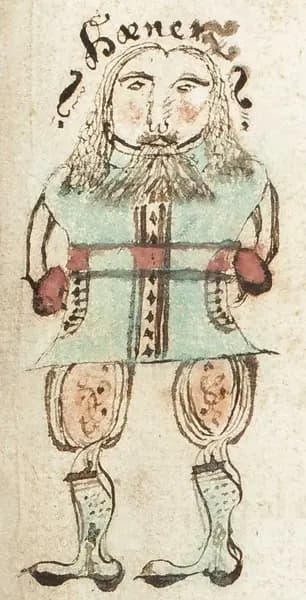
Hoenir: the silent god of the Aesir
Hoenir was the Aesir god of silence, indecision, mystery, and avoidance, a kind but simple minded young god who needed constant care. Odin sent him to Vanaheim under the guise of a cultural exchange, and the Vanir families welcomed him as one of their own. When Hoenir learned that the All-Father had sent him away out of disgust, he took his own life.
The Aesir
The Aesir were one of the two tribes of Norse gods, natives of Asgard known for their war-like nature and their hunger for knowledge. Descended from the slain primordial Ymir and ruled by Odin, they claimed dominion over all creation, waging genocide upon the Jotnar and war upon the Vanir before their fall in Ragnarok.
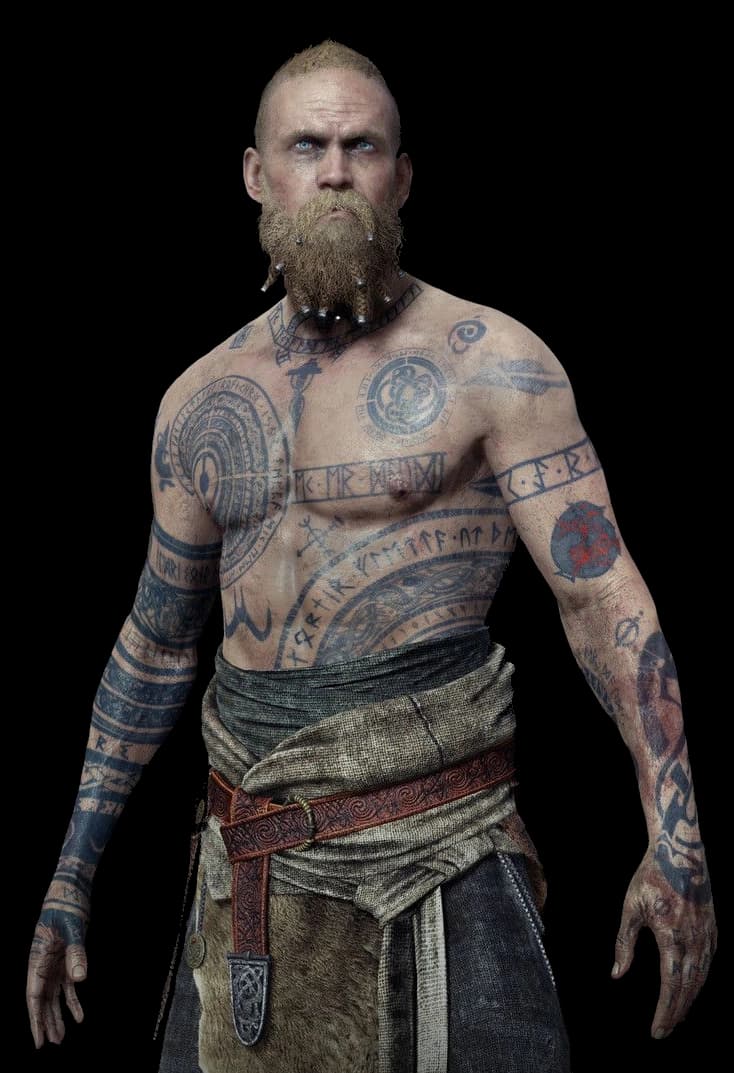
Baldur: the god who could feel nothing
Freya's spell made Baldur invulnerable but stripped every sensation from him, and a century of numbness drove him mad. Kratos killed him beside Thamur's corpse.
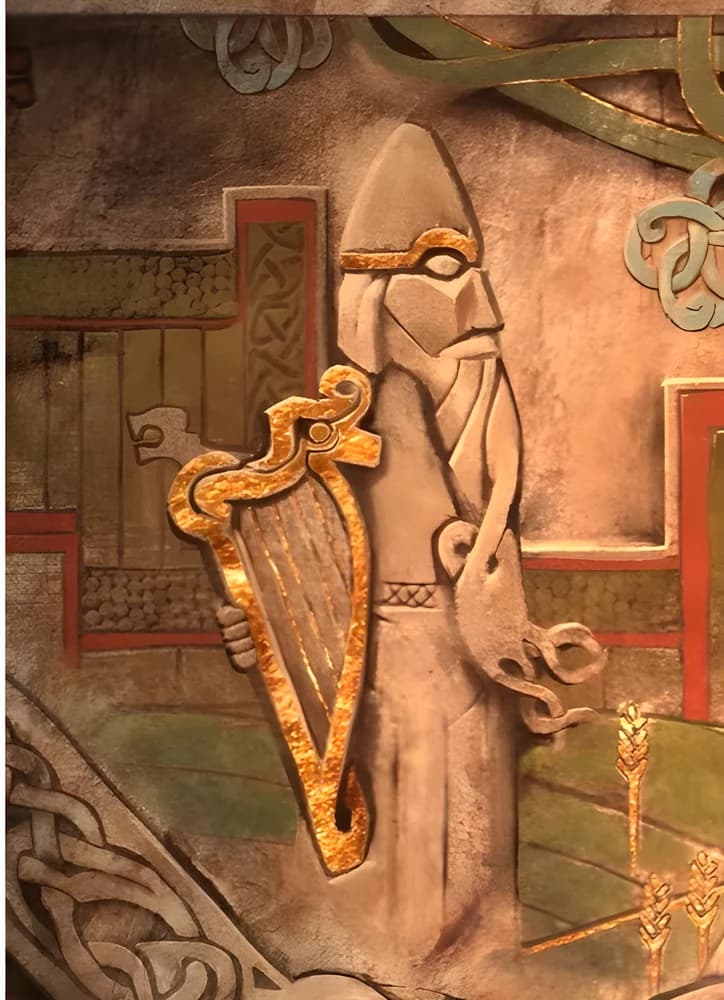
Bragi
Bragi was one of the Aesir of Asgard, the god of poetry in Norse myth and husband of Idunn. He never appears in the games, but Mimir names him among the drunken Aesir who jeered as Freyr burned, the insult that helped start the First Great War.
Forseti
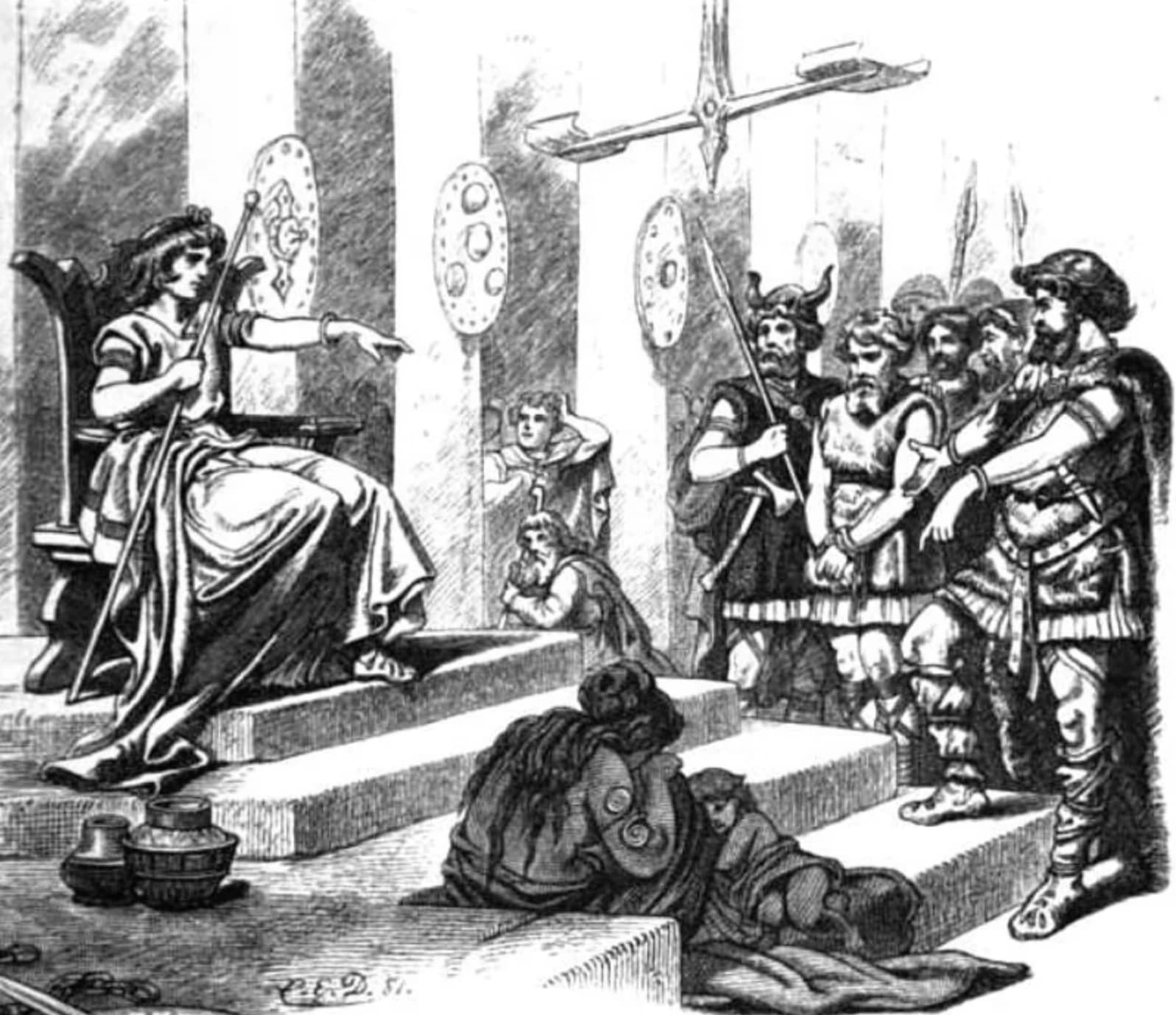
Forseti was the Norse god of justice and reconciliation, son of Baldur and a member of the Aesir royal family. Paranoid and watchful, he uncovered the truth of Heimdall's death and set the Valkyries after Atreus.

Freya
Freya was the Vanir goddess of love, war, and magic who married Odin to end the Aesir-Vanir War and was cursed to remain in Midgard. Once the Witch of the Woods, she aided Kratos and Atreus, swore vengeance after the death of her son Baldur, and at last turned her wrath on Odin himself.
Mentioned in1 entry
Get new articles in your inbox
No spam. New lore drops, canon conflicts, and deep dives only when they’re worth reading.
Some links on Lore Fortress are affiliate links. If you buy through them we earn a small commission at no extra cost to you.