Norse Mythology: the North Germanic myths behind God of War's Nine Worlds
the source material for the Norse era
Norse mythology is the body of North Germanic myth the God of War saga draws its Norse era from, built around Nine Worlds flanking the sacred tree Yggdrasil and a cosmos made from the flesh of Ymir.
Norse mythology is the body of myths belonging to the North Germanic peoples, stemming from Old Norse religion, surviving the Christianization of Scandinavia and carrying on into the Nordic folklore of the modern period. It is the primary theme source for the Norse era of the God of War saga, and almost every god, giant, dwarf and monster Kratos meets after leaving Greece has a name recorded in it. (Poetic Edda; Prose Edda; God of War (2018))
What is Norse mythology?#
It is the body of myth belonging to the North Germanic peoples, drawn from Old Norse religion and carried forward into Nordic folklore long after Scandinavia was Christianized, which makes it the northernmost branch of Germanic mythology. The tales come from numerous sources on both sides of the pagan period: medieval manuscripts, archaeological representations and folk tradition. Its source texts name the thunder god Thor, the raven flanked Odin, the goddess Freyja and a long roll of other deities. (Poetic Edda; Prose Edda)
Most of the surviving material is not cosmology at all. It is the plights of the gods and their interaction with other beings, above all humanity and the jötnar, who may be friends, lovers, foes or family members of the gods depending on the tale. Units of time and elements of cosmology are personified as deities or beings in their own right. (Poetic Edda; Prose Edda)
The cosmos consists of Nine Worlds that flank a central sacred tree, Yggdrasil. Various forms of a creation myth are recounted, in which the world is made from the flesh of the primordial being Ymir, and the first two humans are Ask and Embla. (Poetic Edda; Prose Edda)
Which peoples live in the Nine Worlds?#
Seven kinds share them, and the God of War telling gives most of those peoples a harder edge than the source material does, starting with gods who are, for the most part, tyrants. The Aesir and the Vanir are the two types of deity. Humans are the mortals who worship them, more often out of fear than love. The dwarves are a short people gifted at forging tools and sculpting wondrous structures. The jötnar are a mostly giant people, intelligent and talented. The Light Elves are the fair inhabitants of Alfheim and the Dark Elves the warlike inhabitants of Svartalfheim. The trolls were once a powerful civilisation, almost exterminated by the Aesir. (God of War (2018); God of War Ragnarök)
The gods#
Odin heads the Aesir as the cruel and paranoid Raven King, the Allfather. Týr is the Norse god of war and a believer in peace, imprisoned by Odin for it. Thor is the god of thunder, half Jötunn, slayer of the giants. Baldur is the god of light, son of Odin and Freya, and the pride of the Aesir. Heimdall watches for them and heralds Ragnarök. Sif is the goddess of wheat and Odin's diplomat, Thrúd the goddess of strength and a Valkyrie in training, and Gná the current Valkyrie Queen, once Frigg's messenger and once of the Vanir. (God of War (2018); God of War Ragnarök)
Fewer Vanir are named. Freya is the goddess of fertility, former leader of the Vanir and mother of Baldur. Freyr is her twin brother and the former king of Alfheim. Njörd was the Vanir god of the sea and king of Vanaheim, and his wife Nerthus was its queen until Magni and Modi killed her. Two foreign gods are counted alongside them: Mimir, Odin's former adviser and the smartest man alive, and Kratos, the former Greek god of war. (God of War (2018); God of War Ragnarök)
The jötnar carry their own roll. Ymir was the first being and the first frost giant, and Surtr the second being and the first fire giant. Bergelmir was their beloved king. Laufey was the last guardian of the jötnar and Kratos's wife, Angrboda is the giantess of Ironwood, and Jörmungandr is the world serpent that surrounds Midgard. Garm is the arch wolf Hróðvitnir, hound of Hel. (God of War (2018); God of War Ragnarök)
Worlds and endings#
Asgard is the heavenly home of the Aesir and Odin's kingdom. Vanaheim belongs to the Vanir and Midgard to humans. Alfheim and Svartalfheim hold the two elf peoples, Jötunheim the jötnar. Niflheim is the world of great cold and Muspelheim the great fiery one. Helheim is the abode of the dead. Outside the nine sit Valhalla, the paradise and home of the gods ruled by Odin, and the Spark of the World, also called the Ginnungagap, the space between Muspelheim and Niflheim where everything originated. (God of War (2018); God of War Ragnarök)
Two events close the story out. Fimbulwinter is the long winter that runs ahead of it. Ragnarök is the end itself. (Prose Edda; God of War (2018); God of War Ragnarök)
Frequently asked questions
- What is Norse mythology?
- Norse mythology is the body of myths belonging to the North Germanic peoples. It stems from Old Norse religion, continued after the Christianization of Scandinavia, and carried on into the Nordic folklore of the modern period. It is the northernmost extension of Germanic mythology and grows out of Proto-Germanic folklore.
- Where does what we know about Norse mythology come from?
- The tales of the deities, beings and heroes come from numerous sources dating from both before and after the pagan period, including medieval manuscripts, archaeological representations and folk tradition. The surviving material centres largely on the plights of the gods and their dealings with other beings.
- What are the Nine Worlds?
- The cosmos of Norse mythology consists of Nine Worlds that flank a central sacred tree, Yggdrasil. In God of War they are Asgard, Vanaheim, Midgard, Alfheim, Svartalfheim, Jötunheim, Niflheim, Muspelheim and Helheim.
- How does Norse mythology relate to God of War?
- Norse mythology is the primary theme source for the Norse era of the God of War saga, supplying its gods, its giants, its dwarves, its Nine Worlds and the events of Fimbulwinter and Ragnarök.
- Who are the jötnar in Norse mythology?
- The jötnar are a mostly giant people, described as intelligent and talented. Much of the surviving mythology turns on the interaction between the gods and the jötnar, who may be friends, lovers, foes or family members of the gods.
Sources
- BookPoetic Edda, anonymous, compiled c. 1270
- BookProse Edda, Snorri Sturluson, c. 1220
- GameGod of War (2018), Santa Monica Studio, 2018
- GameGod of War Ragnarök, Santa Monica Studio, 2022
Spotted a factual error or a primary source we missed? Email a correction. Every flagged claim gets reviewed.
Followed from this entry
Bergelmir: the Beloved King of the Giants
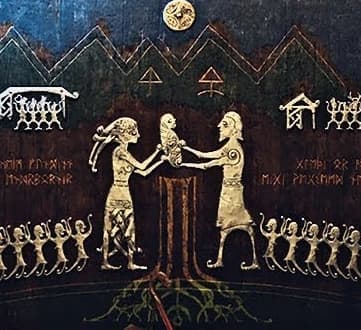
Bergelmir was a Frost Giant who, with his wife, alone survived the flood of Ymir's blood that drowned the rest of his race. He found a new land, named it Jotunheim, and repopulated the Jotnar as its king, refusing all vengeance against Odin. He died of old age surrounded by his kin and was remembered ever after as Bergelmir the Beloved.
Ymir: the first being of the Nine Realms
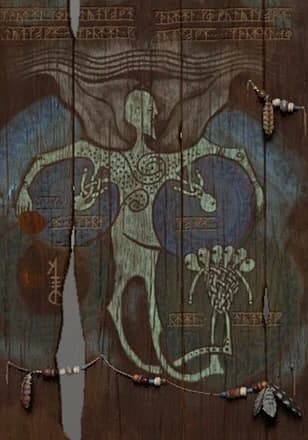
Ymir was the original Jotunn, the first sentient being to take form in the void of Ginnungagap and the progenitor of every god, giant, and mortal that followed. Slain by Odin and his brothers, his torn body became the raw material of the realms themselves, and his murder seeded a hatred between Aesir and Jotnar that endured until Ragnarok.
The Aesir
The Aesir were one of the two tribes of Norse gods, natives of Asgard known for their war-like nature and their hunger for knowledge. Descended from the slain primordial Ymir and ruled by Odin, they claimed dominion over all creation, waging genocide upon the Jotnar and war upon the Vanir before their fall in Ragnarok.
Alfheim: the elves' war over the Light
Light and Dark Elves fought for centuries over the Light of Alfheim, the source that powers the Bifrost. It changed hands more than two hundred times.
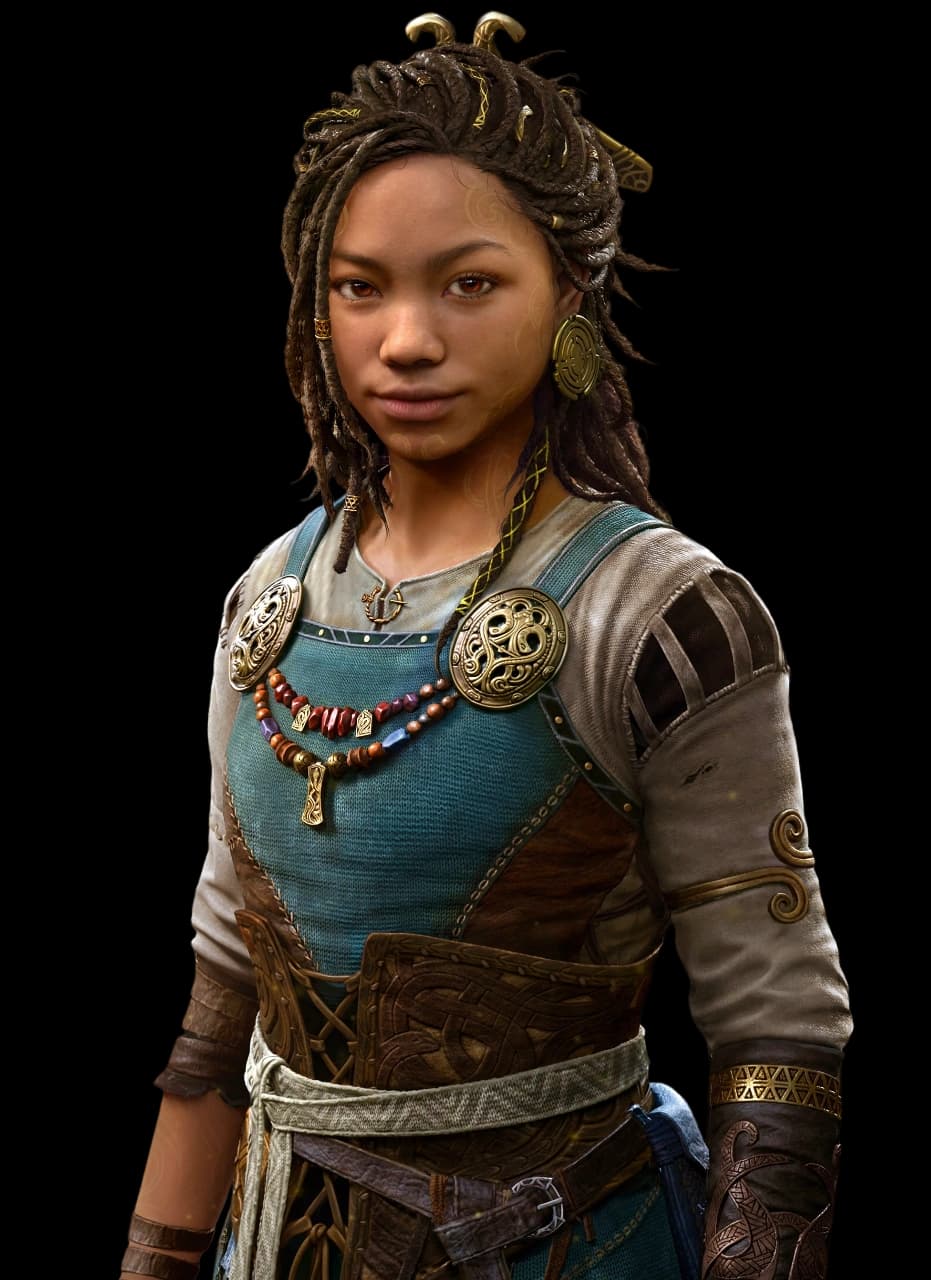
Angrboda: the last giantess of Ironwood
Angrboda grew up almost alone in Ironwood, painting the prophecy of Ragnarok. She gave Atreus the soul marbles of the lost Giants and made him their keeper.
Asgard
Asgard was the realm of the Aesir gods, perched in the crown of Yggdrasil and ruled by Odin from the hall of Gladsheim. Behind the great wall of Hrimthur it stood as a fortress against the prophesied doom of Ragnarok, until Kratos breached it and the realm fell.
Mentioned in1 entry
Get new articles in your inbox
No spam. New lore drops, canon conflicts, and deep dives only when they’re worth reading.
Some links on Lore Fortress are affiliate links. If you buy through them we earn a small commission at no extra cost to you.