Kratos in Greek Mythology vs God of War: the Real Myth Behind the Ghost of Sparta
Kratos was a real figure in Greek myth: the god of strength, son of Pallas and Styx, and the enforcer who chained Prometheus to a rock. Here's what the old poems say about him, what Santa Monica kept for its Spartan, and where Atreus and the series' other borrowed names come from.
Kratos in Greek mythology is the god of strength, a son of the Titan Pallas and the goddess Styx and Zeus's enforcer, and his best-known scene is the one where he chains Prometheus to a mountain. He shares nothing with Kratos of God of War except the name and a link to Zeus. The game's Kratos is a Spartan son of Zeus who kills his father, while the mythical one lives beside Zeus and never leaves. (Theogony; Prometheus Bound; God of War III)
Who is Kratos in Greek mythology?#
Kratos is the Greek word for strength or power, and in myth he's that idea given a body. Hesiod's Theogony lists him among the children of Styx, daughter of Ocean, and the Titan Pallas: Zelus (rivalry or zeal), Nike (victory), Kratos and Bia (force). Pallas himself is a son of the Titans Crius and Eurybia. (Theogony)
The reason these four matter is the war against the Titans. When Zeus called the immortals to Olympus and promised honours to anyone who fought with him, Styx came first and brought her children. Zeus rewarded her by making her the great oath of the gods, and he took her children to live with him forever. Hesiod says they have no home apart from Zeus and go nowhere he doesn't lead. That's the whole of Kratos's place in the order of things: he's what Zeus's rule looks like when it uses force. (Theogony)
Of his siblings, only Nike became a major figure, as the winged goddess of victory. Bia and Zelus, like Kratos, stay as abstractions with little story. (Theogony)
Kratos and Prometheus in Prometheus Bound#
The one place the mythical Kratos speaks is the opening of Prometheus Bound, a tragedy traditionally credited to Aeschylus, though scholars have long doubted that. Kratos and Bia bring the captured Prometheus to a desolate crag in Scythia at the edge of the world, on Zeus's orders, as punishment for stealing fire for mortals. Hephaestus has to do the actual chaining. (Prometheus Bound)
The scene is built on the contrast between them. Hephaestus pities his kinsman and hates the job. Kratos bullies him through it, mocks his reluctance and tells him to drive the spike through Prometheus's chest. Bia never says a word. Kratos's last lines sneer at Prometheus's name, which means forethought, since he couldn't foresee his way out of this. Brute obedience to Zeus is the point of the character. (Prometheus Bound)
Hesiod tells the punishment without Kratos. Zeus binds Prometheus in chains and sends an eagle to eat his liver, which grows back each night, until Heracles kills the eagle and frees him from his torment. (Theogony)
What God of War took and what it changed#
The game's Kratos keeps the name and the closeness to Zeus, then turns both inside out. He starts as a mortal, a Spartan captain who pledges himself to Ares, is tricked into killing his wife Lysandra and daughter Calliope, and is cursed to wear their ashes, which turns his skin white and earns him the name Ghost of Sparta. He kills Ares and takes his place as God of War. (God of War (2005))
Instead of Zeus's servant, he's Zeus's son. Athena tells him so as she dies in God of War II, and his mother is the mortal Callisto. His brother is Deimos, taken by Ares and Athena because of a prophecy that a marked warrior would bring down Olympus, a story told in Ghost of Sparta. Where the mythical Kratos enforces Zeus's will, the game's Kratos beats Zeus to death in God of War III. (God of War II; God of War: Ghost of Sparta; God of War III)
The Prometheus story is flipped the same way. In God of War II, Prometheus hangs chained to the hand of the Titan Typhon, his liver eaten each day by an eagle. He begs for release, and Kratos shoots through the chain with the bow Typhon's Bane and lets him fall into the fire below, ending his suffering. So the god who chained Prometheus in Aeschylus becomes the man who frees him, and his rescue loosely echoes Heracles ending the torment in Hesiod. (God of War II; Prometheus Bound; Theogony)
Some details carry over loosely. The River Styx, named for the mythical Kratos's mother, is a place Kratos has to cross in the Underworld, not a parent. Heracles appears as Hercules, Kratos's half-brother through Zeus, and Kratos kills him. (God of War II; God of War III)
Atreus in Greek mythology and the House of Atreus#
Atreus is also a Greek name, and a heavy one. In myth Atreus was a king of Mycenae and the father of Agamemnon and Menelaus. He quarrelled with his brother Thyestes, killed Thyestes's sons and served them to him at a feast, and the family curse that followed ran down to Agamemnon's murder by his wife Clytemnestra and her lover Aegisthus, Thyestes's surviving son. Aeschylus's Agamemnon has Cassandra see the murdered children in a vision, and Aegisthus tells the story of the feast himself. (Agamemnon)
The game gives a plainer reason for the name. After Faye's ashes are scattered, Kratos tells his son that his mother wanted to call him Loki, and he talked her into Atreus instead, after a Spartan soldier who stood out among his comrades for his kindness and joy. The soldier is covered on the Eis page. Still, a boy named after the founder of Greece's most famous cursed family, whose father is trying to stop a cycle of fathers and sons destroying each other, fits the series well. (God of War (2018); Agamemnon)
The other borrowed names in God of War#
Santa Monica uses Greek and Norse names freely, keeping a few traits and rewriting the family trees. (God of War III; God of War (2018))
- Deimos: in Hesiod, Deimos (fear or dread) is a son of Ares and Aphrodite, with his brother Phobos. In the games he's Kratos's brother, son of Zeus and Callisto. (Theogony; God of War: Ghost of Sparta)
- Callisto: in Ovid she's a nymph whom Jupiter (Zeus) seduces, who is turned into a bear and set among the stars. The games keep the affair with Zeus and make her Kratos's mortal mother. (Metamorphoses; God of War: Ghost of Sparta)
- Pandora: Hesiod's Pandora is the first woman, made by Hephaestus on Zeus's orders, who opens a jar of evils and leaves only Hope inside. God of War keeps Hephaestus as her maker and Hope as what lay in Pandora's Box, but makes Pandora a girl who walks into the Flame of Olympus so the Box can be reached. Kratos opens it himself and finds it empty. (Works and Days; God of War III)
- Faye and Loki: in the Prose Edda, Laufey is Loki's mother. The Norse games make Laufey the giant name of Faye, Kratos's second wife, and Atreus turns out to be the Loki of the giants' prophecy. (Prose Edda; God of War (2018))
For the Norse side of the series in more depth, see Norse mythology, and for how the games treat the gods of different lands sharing one world, see mythology. The full story of both eras is on God of War story explained. (God of War (2018); God of War Ragnarök)
Frequently asked questions
- Is Kratos a real god in Greek mythology?
- Yes. Kratos (often spelt Cratos) is the Greek personification of strength and power. He's a minor god who appears in Hesiod's Theogony and opens the play Prometheus Bound, but he has almost no stories of his own.
- Who are the parents of Kratos in Greek mythology?
- The Titan Pallas and the goddess Styx. His siblings are Nike (victory), Bia (force) and Zelus (rivalry), and all four live at Zeus's side.
- Is Kratos the son of Zeus in Greek mythology?
- No. That's the game's invention. In myth Kratos is Zeus's servant and enforcer, not his son, and he never turns on him.
- Is Atreus from Greek mythology?
- The name is. The mythical Atreus was a king of Mycenae and the father of Agamemnon and Menelaus, whose family was cursed. The God of War Atreus is a different character, named after a Spartan soldier Kratos knew.
- Did the real Kratos fight Prometheus?
- He chained him. In Prometheus Bound, Kratos and Bia drag Prometheus to a remote crag and make Hephaestus nail him there. In God of War II the game's Kratos does the opposite and sets Prometheus free.
Sources
- BookTheogony, Hesiod, around 700 BC
- BookWorks and Days, Hesiod, around 700 BC
- BookPrometheus Bound, Attributed to Aeschylus, 5th century BC
- BookAgamemnon, Aeschylus, 458 BC
- BookMetamorphoses, Ovid, AD 8
- BookProse Edda, Snorri Sturluson, around 1220
- GameGod of War (2005), Santa Monica Studio, 2005
- GameGod of War II, Santa Monica Studio, 2007
- GameGod of War: Ghost of Sparta, Ready at Dawn, 2010
- GameGod of War III, Santa Monica Studio, 2010
- GameGod of War (2018), Santa Monica Studio, 2018
- GameGod of War Ragnarök, Santa Monica Studio, 2022
Spotted a factual error or a primary source we missed? Email a correction. Every flagged claim gets reviewed.
Followed from this entry
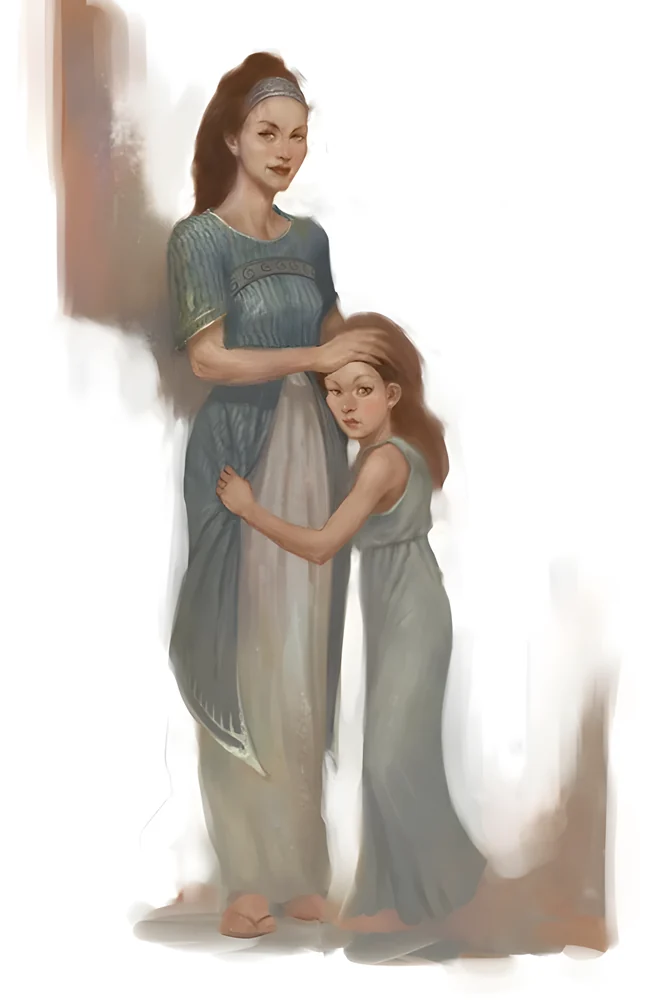
Kratos's Wives: Lysandra and Faye
Kratos has had two wives. Lysandra, his Spartan first wife, died by his own hand in a temple Ares sent him to burn. Faye, the giant Laufey, married him in Midgard, raised Atreus and planned her own funeral. Here is each marriage, how each ended, and how they shaped him.
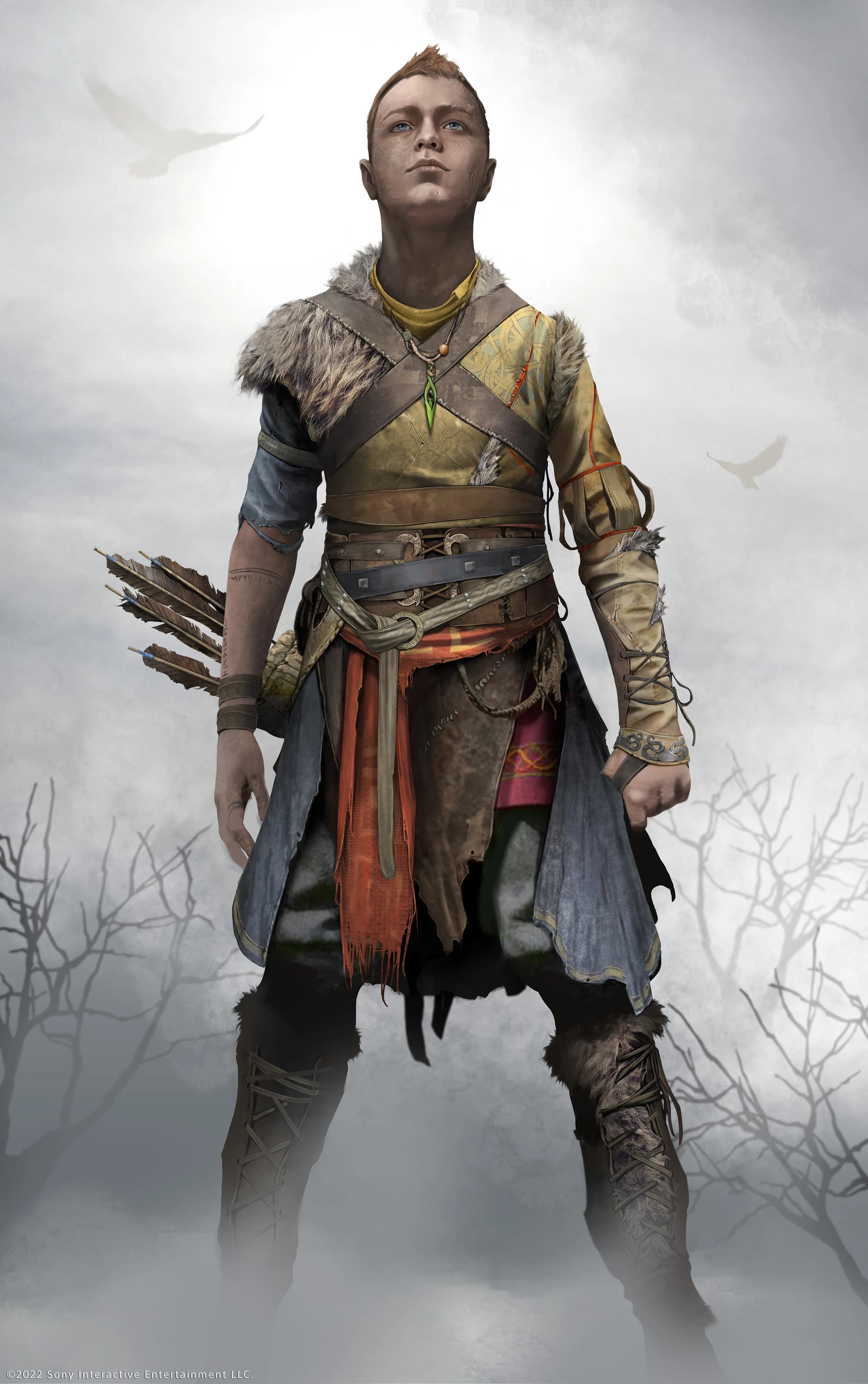
Atreus (Loki): Kratos's Son and the Truth of His Name
Atreus was the son of Kratos and the Jotunn Faye, born in Midgard and given the hidden name Loki. Across two great journeys he grew from a sickly boy into the prophesied champion of the Giants, the god of mischief whose fate was bound to Ragnarok.
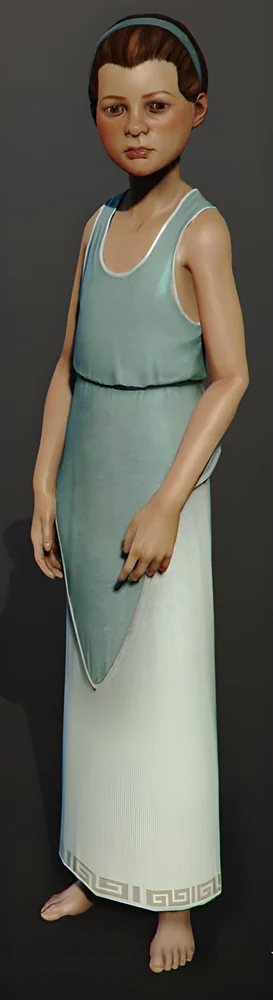
Calliope
Calliope was the beloved daughter of Kratos and Lysandra, a gentle and innocent child of Sparta. Killed by her father during a frenzy contrived by Ares, she found rest in the Elysium Fields, only for Kratos to be forced to abandon her there to save the world.
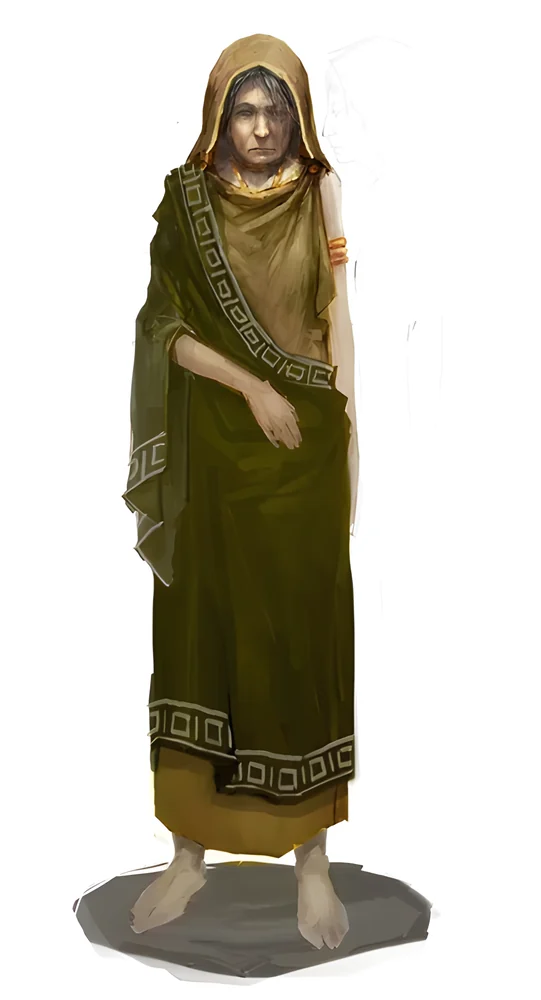
Callisto
Callisto was a Spartan woman and one of the many mortal lovers of Zeus, mother of Kratos and Deimos. Kept hidden in Atlantis and cursed by the King of the Gods, she died at her own son's hands while trying to name his father.
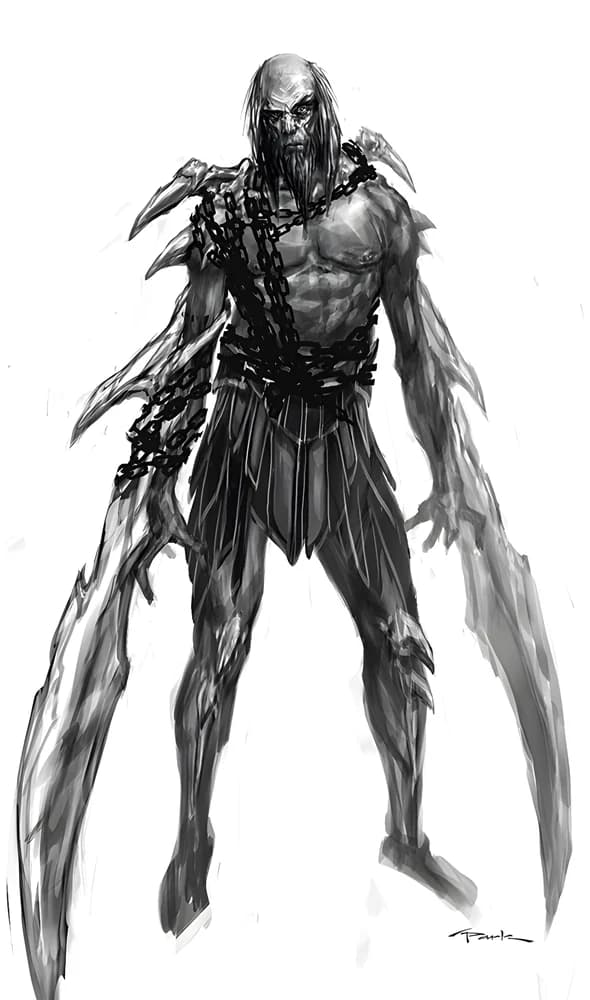
Deimos: the brother Kratos failed to save
Ares and Athena seized Deimos as a boy because his birthmark matched the prophecy of the Marked Warrior. Thanatos crushed him at Suicide Bluffs.
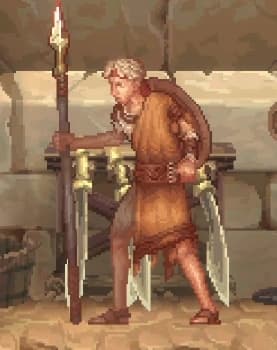
Eis: the Spartan who gave Atreus his name
Eis, also called Atreus of Sparta, was a Spartan Agoge cadet who fought alongside Kratos and was known for his good nature even in the worst of times. He sacrificed himself in battle, and years later Kratos named his son after him.
Mentioned in6 entries
Atreus (Loki): Kratos's Son and the Truth of His Name
Atreus was the son of Kratos and the Jotunn Faye, born in Midgard and given the hidden name Loki. Across two great journeys he grew from a sickly boy into the prophesied champion of the Giants, the god of mischief whose fate was bound to Ragnarok.
Deimos: the brother Kratos failed to save
Ares and Athena seized Deimos as a boy because his birthmark matched the prophecy of the Marked Warrior. Thanatos crushed him at Suicide Bluffs.
Kratos
Kratos was the demigod son of Zeus who rose from a Spartan general to the Greek God of War, destroyed the pantheon of Olympus in a quest for vengeance, and then began again in the Norse realms as a father seeking to leave his bloody past behind.
Mythology: the many faiths of one world
In the world Kratos walked, mythology was not belief but fact. Every body of myth that mankind told was true within its own land, from the Olympians of Greece to the Aesir of the north, with the gods of Egypt, Persia, and lands further still holding dominion over their own corners of the earth.
Nike
Nike was the Olympian goddess of victory, daughter of the Titan Pallas and the water goddess Styx. Though she never crossed Kratos' path in the flesh, her likeness was honored across Greece in statues, carvings, and murals raised to celebrate triumph in war.
Prometheus
Prometheus was the Titan of forethought and the creator of mankind, who defected to the Olympians in the Great War. When Zeus withheld fire from mortals, Prometheus stole it and was condemned to have his liver devoured each day until Kratos granted him death.
Get new articles in your inbox
No spam. New lore drops, canon conflicts, and deep dives only when they’re worth reading.
Some links on Lore Fortress are affiliate links. If you buy through them we earn a small commission at no extra cost to you.