God of War: Ghost of Sparta Story Explained
The plot of Ghost of Sparta in order, from Kratos's visions of his mother to the death of his brother Deimos in the Domain of Death. Then the ending explained: the marked warrior prophecy, Athena's apology, and why Kratos leaves at war with Olympus.
God of War: Ghost of Sparta came out in November 2010 on the PSP, made by Ready at Dawn. It's a prequel to God of War II, set while Kratos is still the new God of War on Olympus, and it fills in his family: his mother, his lost brother, and a prophecy that explains why the gods feared him. In story order it comes fourth, between the first game and God of War II. This page has full spoilers, ending included. (God of War: Ghost of Sparta)
Before the story begins#
At the end of the first God of War, Kratos killed Ares with the power of Pandora's Box and took his empty throne as the new God of War. The gods had forgiven his sins but couldn't take away his memories, and being a god didn't help. (God of War (2005))
What Kratos didn't know was that the gods had already taken someone from him long before Ares tricked him into killing his family. As boys, he and his younger brother Deimos trained together in Sparta, where they lived with their mother Callisto. Neither knew their father was Zeus. Ghost of Sparta tells the rest in flashbacks. (God of War: Ghost of Sparta)
Callisto in Atlantis#
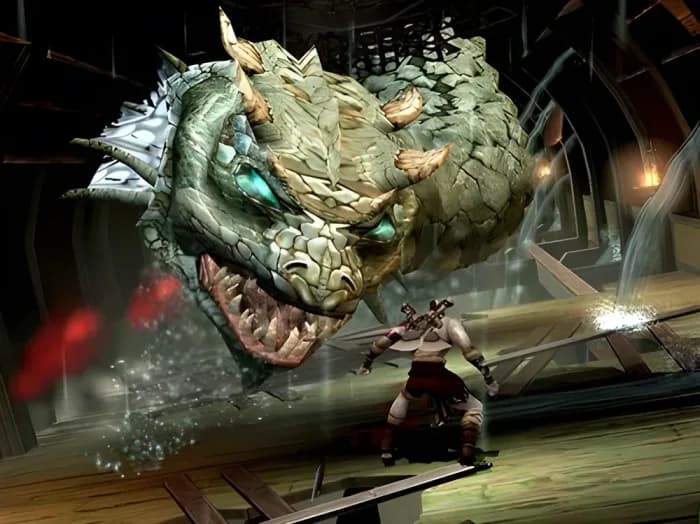
Kratos began to see visions of his mother held captive in the Temple of Poseidon in Atlantis. He knew they weren't ordinary dreams and sailed there. Athena tried to talk him out of it, and he ignored her. Near Atlantis Poseidon set the sea monster Scylla on his fleet. She crushed his ship, and the fight carried on onto the Atlantean shore. (God of War: Ghost of Sparta)
He drove the monster off and reached the temple, where he found Callisto, weak and ill. He had come to believe she was dead. She tried to tell him who his father was, but he couldn't make out her words, and she told him his brother Deimos was alive and suffering in the Domain of Death. Before she could say more, she turned into a huge beast and attacked. (God of War: Ghost of Sparta)
Kratos had to fight her. Badly wounded, Callisto changed back. She thanked him for freeing her and begged him to save Deimos. The way into the Domain of Death could only be opened with the Skull of Keres, and the skull was in the Temple of Ares in Sparta. (God of War: Ghost of Sparta)
Kratos had lost another family member, and he blamed the gods. He shouted at a statue of Athena that they had lied to him about his brother. She warned him to stop, and he smashed the statue. (God of War: Ghost of Sparta)
The volcano and the sinking of Atlantis#
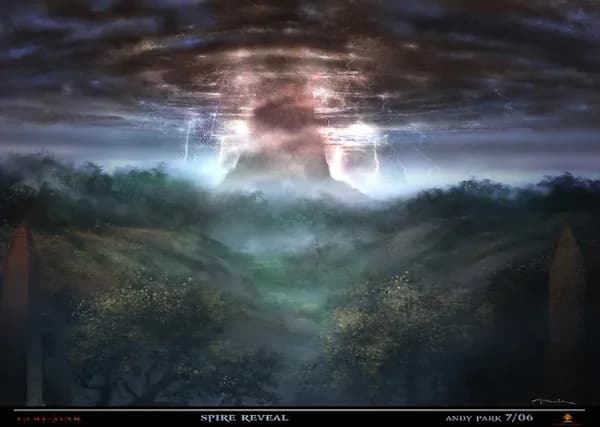
Scylla struck again and tried to drag Kratos under, which carried him to the Methana volcano, where Poseidon had imprisoned the Titan Thera. Thera begged to be freed. Kratos drove his Blades of Athena into her and took her fire, and that set her loose. As she tore off her chains the volcano began to erupt. Kratos finally killed Scylla, and the eruption destroyed Atlantis and Poseidon's temple with it. (God of War: Ghost of Sparta)
In the city of Heraklion on Crete, Kratos met the Grave Digger, the old man who had helped him out of the Underworld in the first game. He warned that destroying Poseidon's kingdom would not go down well on Olympus and told him to turn back. Kratos ignored him. (God of War: Ghost of Sparta)
Erinys and Sparta#
Thanatos, god of death, had sent his daughter Erinys to stop Kratos. She had been killing Spartan soldiers as a warning to him. Kratos met her at the Aroania Pass and cut off her wings, and when she grew them back and turned into a giant armoured bird, he drove his Thera-fired blades into her neck and finished her when she fell. (God of War: Ghost of Sparta)
In the Canyons of Sorrow Thanatos himself tried to talk Kratos out of looking for his brother, and failed. Further on, Kratos found King Midas grieving beside a river of lava for the daughter he had turned to gold. Kratos threw him into the lava, and his touch turned the whole stream to solid gold so Kratos could climb across. (God of War: Ghost of Sparta)
In Sparta the people hailed him, and he found Spartans tearing down a statue of Ares to put up one of him. In the Temple of Ares a mirror threw a ghostly image of his younger self at him. Kratos smashed it and found the Skull of Keres behind it. The Spartans gave him his old weapons, the Arms of Sparta, and he sailed back to Atlantis. Poseidon's creatures sank his ship near the ruins and killed his crew, and through a statue Poseidon swore Kratos would pay for destroying his city. (God of War: Ghost of Sparta)
Athena's apology and the Domain of Death#
As Kratos searched the ruins for the gate, Athena spoke to him through a statue and told him it wasn't too late to turn back. Deimos was a threat to Olympus, she said, and then she asked his forgiveness. Hearing it, Kratos remembered. On the day Deimos was taken, Ares and Athena came to Sparta. Ares grabbed the boy because of his strange birthmark, and when the young Kratos went for him, Ares struck him across the face. That blow left the scar over his right eye. Ares would have killed him, but Athena stopped him, and before they left with Deimos she said the same thing, in the same voice: she was sorry. (God of War: Ghost of Sparta)
Kratos demanded to know why she hadn't saved Deimos then. She said there was more to it than he could know. He opened the gate with the Skull of Keres and went into the Domain of Death, where Thanatos ruled. There he found Deimos at last and broke him free. (God of War: Ghost of Sparta)
Deimos wasn't grateful. He'd spent years waiting for his brother to come, and the waiting had turned to hate. He said he would never forgive Kratos, attacked him and beat him. Then Thanatos snatched Deimos away. Kratos followed them to a cliff and saved his brother from falling, and the two of them made peace. Kratos gave Deimos the Arms of Sparta, and they fought on the same side. (God of War: Ghost of Sparta)
The ending explained#
Thanatos told them the truth. An oracle had foretold that a marked warrior would bring down Olympus, and Ares and Athena had taken Deimos for his birthmark. They had the wrong brother. Kratos was the marked warrior, and it should have been him in the Domain of Death. It didn't matter now, Thanatos said, because he would kill them both. (God of War: Ghost of Sparta)
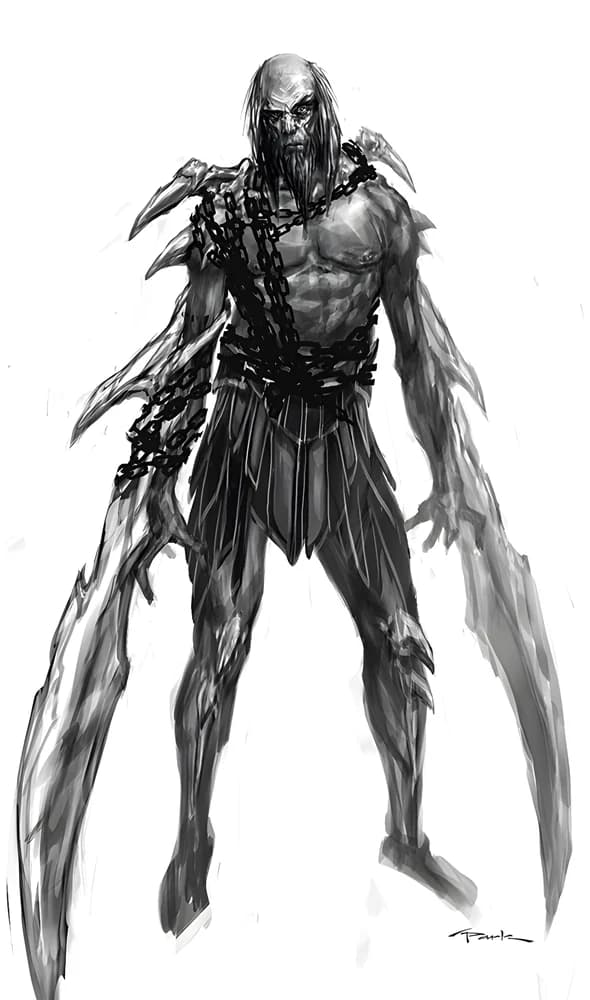
Thanatos turned into a huge black monster and killed Deimos. Kratos killed Thanatos in a rage. Then he carried Deimos up to the cliffs, where the Grave Digger had a grave ready, and laid him in it with the Arms of Sparta as his marker. His brother was free now, he told him. (God of War: Ghost of Sparta)
At the cliff's edge Kratos nearly jumped again, then stopped and asked what he had become. The Grave Digger answered: death, the destroyer of worlds. Athena offered to raise Kratos to his full power as a god, and he refused her. He told her the gods would pay. As he left she whispered that he should forgive her, and called him brother. The Grave Digger buried Callisto, saying only one remained, beside a third, empty grave. In the final scene Kratos sat on his throne in new armour, furious, and sent the Spartans to war. (God of War: Ghost of Sparta)
What it means. Ghost of Sparta explains why the gods feared Kratos and why he would come to hate them. They had stolen his brother to stop a prophecy and, by doing it, created the very warrior they were afraid of. Kratos lost his mother and brother in one story, and his red tattoo copies Deimos's birthmark, which many players read as a way of carrying his brother with him. Athena's last word is the game's big reveal. She knew all along that Kratos was Zeus's son. (God of War: Ghost of Sparta)
What it leaves open. Athena speaks quietly as Kratos walks away, and nothing he does later suggests he took it in. He still doesn't know who his father is. The game hints at it with the empty grave and the Grave Digger's "only one remains", without saying who the old man is. (God of War: Ghost of Sparta)
Where it fits#
The last scene leads straight into God of War II, which opens with Kratos and the Spartan army attacking Rhodes and Zeus deciding his son has gone too far. There Athena finally tells Kratos the truth about his father. For the whole saga see the God of War story explained and the God of War timeline. (God of War: Ghost of Sparta; God of War II)
Frequently asked questions
- When does Ghost of Sparta take place?
- After the first God of War, while Kratos is still new to Ares's old throne, and before God of War II. Its last scene leads straight into the Spartan attack on Rhodes that opens God of War II.
- Who is Deimos in God of War?
- Kratos's younger brother, also a son of Zeus and Callisto. Ares and Athena took him from Sparta as a boy because a birthmark made them think he was the marked warrior foretold to destroy Olympus, and gave him to Thanatos. Kratos's red tattoo copies Deimos's birthmark in his memory.
- What happens to Kratos's mother in Ghost of Sparta?
- Kratos finds Callisto alive in Atlantis. She starts to tell him who his father is, but a curse turns her into a monster and he has to fight her. Back in her own form, she thanks him for freeing her and asks him to save Deimos before she dies.
- Was Deimos the marked warrior?
- No. Thanatos tells the brothers that the gods got it wrong. The prophecy was about Kratos, and taking Deimos only set Kratos on the path to fulfilling it.
- Does Deimos die in Ghost of Sparta?
- Yes. He and Kratos fight Thanatos together, and Thanatos crushes him. Kratos kills Thanatos and buries his brother in a grave dug by the Grave Digger.
- Why does Athena call Kratos brother?
- Because they share a father, Zeus. Athena says it quietly as Kratos walks away at the end of Ghost of Sparta. He doesn't learn who his father is until God of War II.
Sources
- GameGod of War: Ghost of Sparta, Ready at Dawn, 2010
- GameGod of War (2005), Santa Monica Studio, 2005
- GameGod of War II, Santa Monica Studio, 2007
Spotted a factual error or a primary source we missed? Email a correction. Every flagged claim gets reviewed.
Followed from this entry
God of War II Story Explained: Plot Summary and Ending
The whole story of God of War II in order, from Zeus's betrayal at Rhodes to the Titans climbing Mount Olympus. Then the ending in plain terms: why Athena died, what she told Kratos about his father, and how it sets up God of War III.
God of War (2005) Story Explained: Plot Summary and Ending
The whole story of the first God of War in order, from the Hydra in the Aegean to the death of Ares at Athens. Then the ending in plain terms: why Kratos jumped from the cliff, why Athena saved him, and how he ended up on Ares's throne.
What Happened to Kratos's Brother?
Kratos's younger brother Deimos was taken from Sparta as a boy by Ares and Athena, held for years in the Domain of Death, and killed by Thanatos soon after Kratos finally freed him. Here is the whole story from Ghost of Sparta, and how it still weighs on Kratos in Ragnarök.
God of War Story Explained: the Whole Saga from Sparta to Ragnarök
The full God of War story in order, one main game at a time. Kratos serves Ares, kills him, destroys Olympus, starts again in the Norse lands and finally ends Odin, with the Valhalla epilogue as the last word.
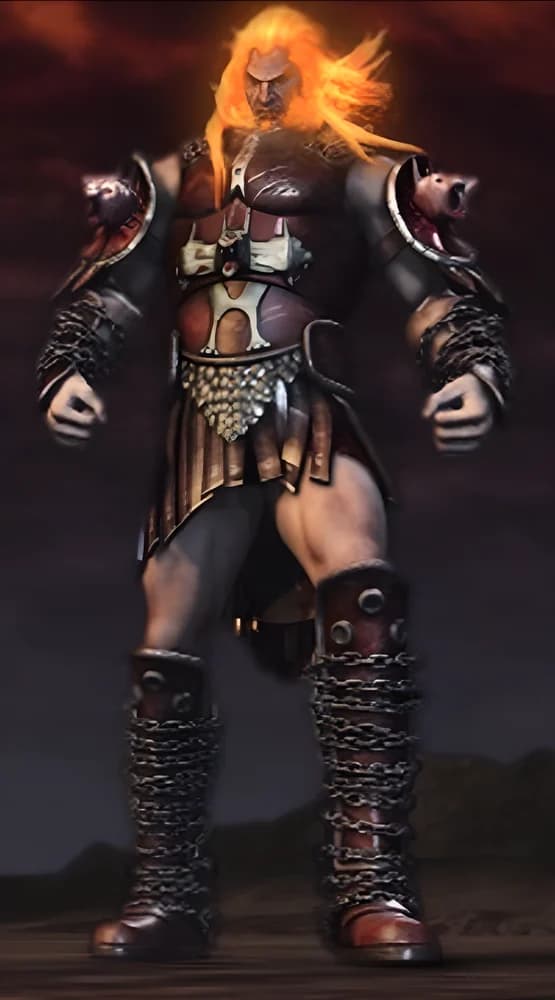
Ares: the god who made Kratos a killer
Ares tricked Kratos into slaughtering his own wife and daughter to bind him as a weapon. Kratos killed him at Athens and took his place as God of War.
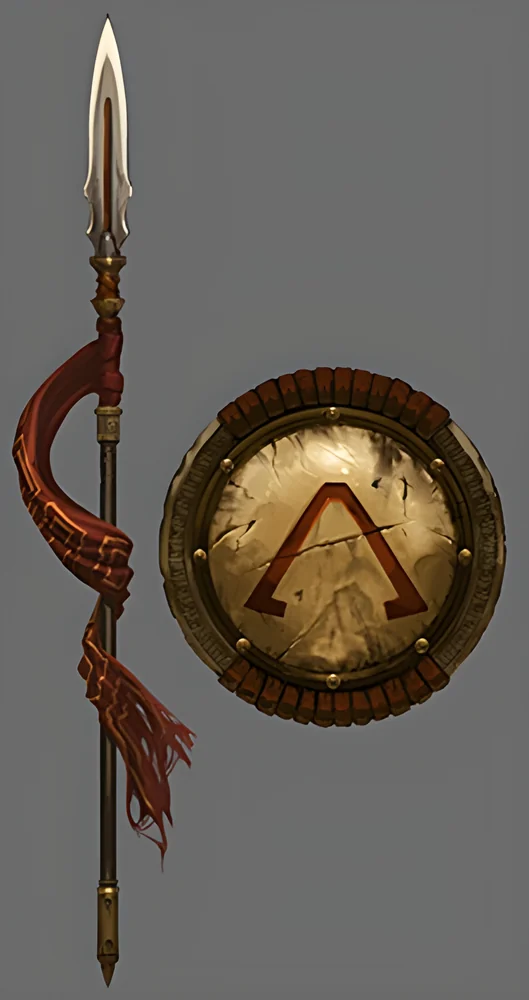
Arms of Sparta
The Arms of Sparta were the spear and shield Kratos carried as a mortal general before he served Ares. The Last Spartan kept them in his absence and returned them to him during the search for Deimos, after which Kratos gave them to his brother and left them at his grave.
Mentioned in13 entries
Atlantis
Atlantis was the great sea-faring city of Poseidon, home to his mightiest temple and guarded by the monster Scylla. It was where Kratos found his dying mother Callisto, and his battle there sank the ancient city beneath the waves.
Callisto
Callisto was a Spartan woman and one of the many mortal lovers of Zeus, mother of Kratos and Deimos. Kept hidden in Atlantis and cursed by the King of the Gods, she died at her own son's hands while trying to name his father.
Deimos: the brother Kratos failed to save
Ares and Athena seized Deimos as a boy because his birthmark matched the prophecy of the Marked Warrior. Thanatos crushed him at Suicide Bluffs.
God of War (2005) Story Explained: Plot Summary and Ending
The whole story of the first God of War in order, from the Hydra in the Aegean to the death of Ares at Athens. Then the ending in plain terms: why Kratos jumped from the cliff, why Athena saved him, and how he ended up on Ares's throne.
God of War Games in Order: Release Order and Story Order
Every God of War game in the order it came out and in the order the story happens, from Kratos's boyhood in Sparta to the trials of Valhalla. Plus where to start, and which remasters, mobile games, comics and novels you can skip.
God of War II Story Explained: Plot Summary and Ending
The whole story of God of War II in order, from Zeus's betrayal at Rhodes to the Titans climbing Mount Olympus. Then the ending in plain terms: why Athena died, what she told Kratos about his father, and how it sets up God of War III.
God of War Lore Quiz: 15 Questions for Real Fans
Fifteen questions on the story of Kratos, from his oath to Ares and the fall of Olympus to Baldur, Odin and Ragnarök. Every answer links to a cited explainer if you want the full story.
God of War Story Explained: the Whole Saga from Sparta to Ragnarök
The full God of War story in order, one main game at a time. Kratos serves Ares, kills him, destroys Olympus, starts again in the Norse lands and finally ends Odin, with the Valhalla epilogue as the last word.
Kratos in Greek Mythology vs God of War: the Real Myth Behind the Ghost of Sparta
Kratos was a real figure in Greek myth: the god of strength, son of Pallas and Styx, and the enforcer who chained Prometheus to a rock. Here's what the old poems say about him, what Santa Monica kept for its Spartan, and where Atreus and the series' other borrowed names come from.
Thanatos
Thanatos was the primordial God of Death, an entity older than the Olympians who ruled the Domain of Death and imprisoned Deimos for years. When Kratos came to free his brother, Thanatos killed Deimos before the Spartan destroyed the God of Death.
What Happened to Kratos's Brother?
Kratos's younger brother Deimos was taken from Sparta as a boy by Ares and Athena, held for years in the Domain of Death, and killed by Thanatos soon after Kratos finally freed him. Here is the whole story from Ghost of Sparta, and how it still weighs on Kratos in Ragnarök.
Why Did Kratos Kill Zeus?
Kratos killed Zeus for revenge. Zeus betrayed him at Rhodes, stripped him of his godhood and killed him, all because he feared his son would overthrow him. Here is how the feud built across three games and how it ended.
+ 1 more
Get new articles in your inbox
No spam. New lore drops, canon conflicts, and deep dives only when they’re worth reading.
Some links on Lore Fortress are affiliate links. If you buy through them we earn a small commission at no extra cost to you.