God of War: Chains of Olympus Story Explained
The plot of Chains of Olympus in order, from the Persian attack on Attica to Kratos holding his daughter in Elysium and letting her go. Then the ending explained: what Persephone wanted, why Atlas holds up the world, and where it leaves Kratos.
God of War: Chains of Olympus came out in March 2008 on the PSP, made by Ready at Dawn. It was a prequel, released after God of War II but set years before the first game, during Kratos's ten years serving the gods of Olympus. In story order it comes second, after Ascension. It's the shortest of the Greek stories and maybe the saddest. This page has full spoilers, ending included. (God of War: Chains of Olympus)
Before the story begins#
Kratos had pledged himself to Ares to win a battle, and Ares tricked him into killing his wife Lysandra and daughter Calliope. In Ascension he broke that oath. He was free of Ares but not of the nightmares, so he agreed to serve the other gods of Olympus for ten years in return for their promise to take the visions away. He didn't really believe them. Chains of Olympus is one of those missions. (God of War: Ascension; God of War: Chains of Olympus)
Attica and the falling sun#
The gods sent Kratos to Attica, where a Persian army was attacking with a giant basilisk. Chasing the beast through the burning city, he ran into the Persian king and beat him in a fight. The king begged for his life and offered anything he had. Kratos said he wouldn't take his riches, only his life, and smashed his skull with a chest of gold. He went on to kill the basilisk. (God of War: Chains of Olympus)
The answer was the sun dropping out of the sky. The world went dark. Kratos followed a strange light to the city of Marathon, which was being swallowed by a black mist full of shadow soldiers. Somewhere in the mist he kept hearing a tune he half recognised. (God of War: Chains of Olympus)
In the ruins he reached the Temple of Helios, where the last of the light was coming from. A statue of Athena told him that Helios had been taken from the sky. Without the sun, Morpheus, god of dreams, had been able to put the gods of Olympus into a deep sleep and spread his mist across Greece. Kratos was to find Helios and bring him back. (God of War: Chains of Olympus)
The Temple of Helios and Eos#
Deeper in the temple, Eos, goddess of the dawn and Helios's sister, told Kratos that the Titan Atlas had escaped Tartarus and kidnapped her brother. She told him to find Helios's Sun Shield, and promised that if he saved Helios, her brother would ask Zeus to take away Kratos's nightmares. Kratos had heard promises like that for years, but without the sun everyone would die anyway. (God of War: Chains of Olympus)
He used the Primordial Fire, the source of Helios's power, to wake the god's fire horses. As he got ready to ride, the tune came again, and this time he knew it. It was the melody Calliope used to play on her flute. (God of War: Chains of Olympus)
Into the Underworld#
He woke to find the horses had carried him down into the Underworld and left him there. In the distance he could see the light of Helios in front of the Pillar of the World, the column that holds up the Greek world. Between him and it lay the River Styx. (God of War: Chains of Olympus)
He rang for Charon, the ferryman, who refused to carry a living man and, when Kratos fought him, threw him down into Tartarus. There, in the prison where Zeus had chained the Titans after the Great War, Kratos saw the chains that held Atlas break, so Eos had told the truth. He also found the Gauntlet of Zeus, the weapon Hephaestus forged to bind the Titans. (God of War: Chains of Olympus)
Kratos climbed back out, beat Charon with the Gauntlet and took his boat across the Styx. On the shore by the Temple of Persephone he saw Calliope, and she vanished inside before he could reach her. (God of War: Chains of Olympus)
Persephone and Elysium#
Kratos followed her in and found the queen of the Underworld instead. Persephone told him she understood him. She had been carried off to the Underworld and forced to marry Hades, and the gods had left her there. Kratos didn't care. He wanted his daughter. (God of War: Chains of Olympus)
Persephone said Calliope was in the Elysian Fields, where the good and pure went after death, and she would let him in. But nobody could enter Elysium carrying the power he had. Persephone warned him the world would suffer for his choice. Kratos poured his powers, weapons and magic into a tree at the gate and walked in. Calliope ran to him and he held her. For the first time since he became the Ghost of Sparta, he was happy. (God of War: Chains of Olympus)
Then Persephone told him the rest. She was the one who had freed Atlas and sent him to take Helios. She had joined with Morpheus to put the gods to sleep so nobody could stop her. While Kratos was giving up his powers, Atlas was tearing down the Pillar of the World, which holds up the world and Olympus with it. That would end everything, the gods, mortals, and the Underworld she was trapped in, and Persephone herself. Elysium would go with it. (God of War: Chains of Olympus)
The ending explained#
Kratos had a choice that wasn't really a choice. If he stayed with Calliope, the Pillar would fall and she would be destroyed with the rest of the world. To stop it he needed the powers he had given up, and the only way to get them back was to kill the souls of Elysium around him. He did it, and became the Ghost of Sparta again. Calliope broke down crying at the sight of him, and he left her there. (God of War: Chains of Olympus)
He caught Persephone at the base of the Pillar. She took on a winged, armoured form and flew to the top, where Atlas was tearing at it, and Kratos hung on and followed. When she ordered Atlas to crush him, Kratos used the Gauntlet of Zeus to chain the Titan into the gap between the Pillar and the world above. Then he killed Persephone. As she died her body exploded and severed the Pillar, leaving the chained Titan holding up the world on his own. Atlas mocked him about what the gods really had planned for him. Kratos said serving them was the only hope he had left. (God of War: Chains of Olympus)
Kratos kept his side of the bargain and returned Helios to the sky, which ended Morpheus's hold on the world. Exhausted, he fell from the sun chariot, but something stopped his fall and set him down on a cliff above the Aegean Sea. Athena and Helios praised his work, took back the Sun Shield and the Gauntlet of Zeus, and left him there unconscious. When Helios suggested helping him further, Athena said he'd live. (God of War: Chains of Olympus)
What it means. It's the cruellest thing that happens to Kratos in the Greek games, and he does it to himself. He finally had the one thing ten years of service was meant to earn, and he gave it up to save a world and a pantheon he hated. The gods slept through all of it. Nobody on Olympus thanked him or learned what it cost him, and he went straight back to serving them. (God of War: Chains of Olympus)
What it leaves open. The game never shows Morpheus face to face or says what became of him. It also doesn't fix Kratos's nightmares, which is the point. The promise he clings to on the Pillar is the one Athena will finally refuse at the end of the first game. (God of War: Chains of Olympus; God of War (2005))
Where it fits#
The next story is the first God of War, set in the tenth year of this service, where Athena sends Kratos to kill Ares. Atlas doesn't forget Kratos either. When they meet again in God of War II, the Titan wants to crush him, until he learns Kratos is now Zeus's enemy. For the whole saga see the God of War story explained and the God of War timeline. (God of War (2005); God of War II)
Frequently asked questions
- When does Chains of Olympus take place?
- During Kratos's ten years of service to the gods of Olympus, after he broke his oath to Ares in Ascension and before the first God of War, which is set in the tenth and final year.
- Why does Kratos leave Calliope in Elysium?
- Persephone let him into Elysium only if he gave up his powers. Once he was inside, she revealed she meant to destroy the Pillar of the World, which would have wiped out Elysium along with everything else. To stop her he had to take his powers back, and that meant leaving his daughter behind for good.
- Who is the villain of Chains of Olympus?
- Persephone, queen of the Underworld. Bitter at being forced into marriage with Hades and bound to the Underworld forever, she freed the Titan Atlas, had him capture Helios, and worked with Morpheus to put the gods to sleep while she brought down the Pillar of the World.
- Why is Atlas holding up the world in God of War?
- At the end of Chains of Olympus Kratos chained Atlas at the top of the Pillar of the World. When Persephone's death severed the Pillar, Atlas was left holding the world on his shoulders. He's still there, and still angry about it, when Kratos meets him again in God of War II.
- Do you need to play Chains of Olympus?
- Not for the main story. It was made after God of War II as a prequel and stands on its own. Its Elysium scene is one of the best looks at Kratos's grief, and it explains why Atlas hates him in God of War II.
Sources
- GameGod of War: Chains of Olympus, Ready at Dawn, 2008
- GameGod of War: Ascension, Santa Monica Studio, 2013
- GameGod of War (2005), Santa Monica Studio, 2005
- GameGod of War II, Santa Monica Studio, 2007
Spotted a factual error or a primary source we missed? Email a correction. Every flagged claim gets reviewed.
Followed from this entry
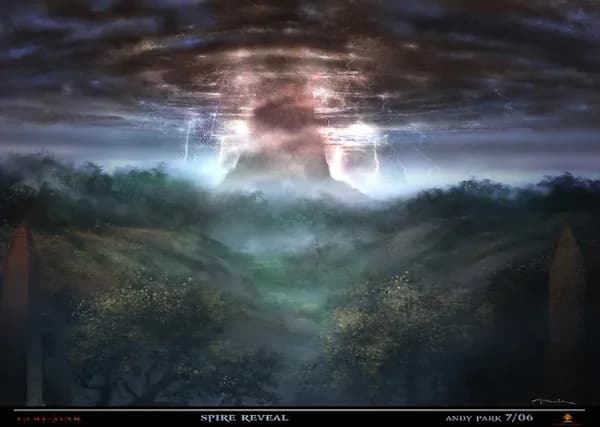
God of War II Story Explained: Plot Summary and Ending
The whole story of God of War II in order, from Zeus's betrayal at Rhodes to the Titans climbing Mount Olympus. Then the ending in plain terms: why Athena died, what she told Kratos about his father, and how it sets up God of War III.
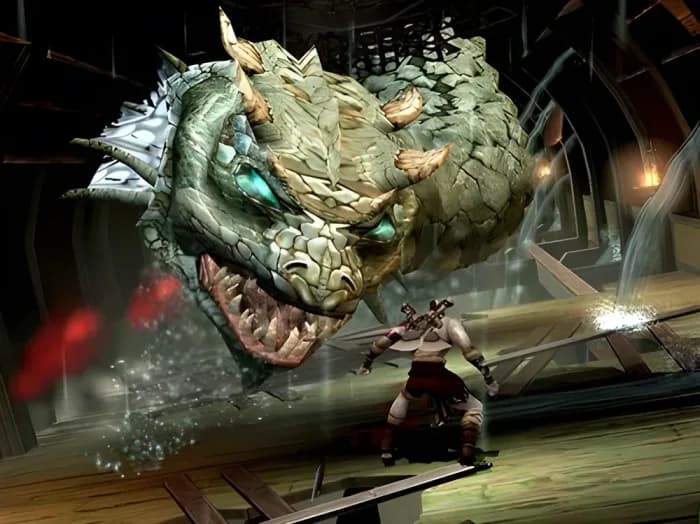
God of War (2005) Story Explained: Plot Summary and Ending
The whole story of the first God of War in order, from the Hydra in the Aegean to the death of Ares at Athens. Then the ending in plain terms: why Kratos jumped from the cliff, why Athena saved him, and how he ended up on Ares's throne.
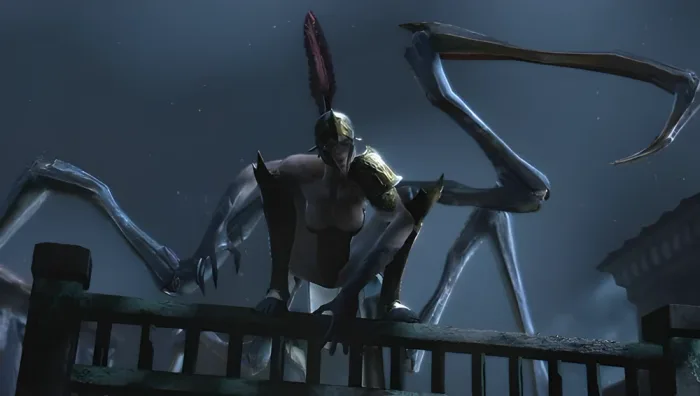
God of War: Ascension Story Explained
The plot of God of War: Ascension in story order, from Kratos breaking his blood oath to Ares to the deaths of the three Furies and Orkos. Plus how its ending sets up the rest of the Greek saga and where it sits in the timeline.
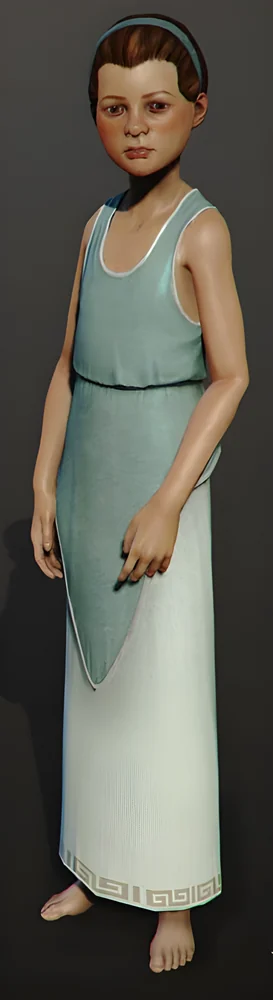
What Happened to Kratos's Daughter?
Kratos killed his daughter Calliope by accident, in a temple Ares tricked him into raiding. Her soul went to Elysium, where Kratos found her years later and had to leave her again to save the world. Here is her whole story, from Sparta to Valhalla.
God of War Story Explained: the Whole Saga from Sparta to Ragnarök
The full God of War story in order, one main game at a time. Kratos serves Ares, kills him, destroys Olympus, starts again in the Norse lands and finally ends Odin, with the Valhalla epilogue as the last word.
River Styx: the river of hatred beneath Greece
The River Styx was the great river of the Greek Underworld, a barrier that killed the living on contact and carried the souls of the dead toward judgement. Charon ferried across it, the Path of Hades bridged it, and Kratos crossed, fell into and finally swam it more times than any mortal.
Mentioned in10 entries
Eos
Eos was the goddess of the dawn, sister of Helios and daughter of the Titan Hyperion. When her brother vanished and the world fell to endless sleep, she sent Kratos to find him, her own powers fading with the missing sun.
God of War (2005) Story Explained: Plot Summary and Ending
The whole story of the first God of War in order, from the Hydra in the Aegean to the death of Ares at Athens. Then the ending in plain terms: why Kratos jumped from the cliff, why Athena saved him, and how he ended up on Ares's throne.
God of War Games in Order: Release Order and Story Order
Every God of War game in the order it came out and in the order the story happens, from Kratos's boyhood in Sparta to the trials of Valhalla. Plus where to start, and which remasters, mobile games, comics and novels you can skip.
God of War II Story Explained: Plot Summary and Ending
The whole story of God of War II in order, from Zeus's betrayal at Rhodes to the Titans climbing Mount Olympus. Then the ending in plain terms: why Athena died, what she told Kratos about his father, and how it sets up God of War III.
God of War Lore Quiz: 15 Questions for Real Fans
Fifteen questions on the story of Kratos, from his oath to Ares and the fall of Olympus to Baldur, Odin and Ragnarök. Every answer links to a cited explainer if you want the full story.
God of War Story Explained: the Whole Saga from Sparta to Ragnarök
The full God of War story in order, one main game at a time. Kratos serves Ares, kills him, destroys Olympus, starts again in the Norse lands and finally ends Odin, with the Valhalla epilogue as the last word.
God of War: Ascension Story Explained
The plot of God of War: Ascension in story order, from Kratos breaking his blood oath to Ares to the deaths of the three Furies and Orkos. Plus how its ending sets up the rest of the Greek saga and where it sits in the timeline.
Morpheus
Morpheus was the Greek God of Dreams, a power of night who ruled the Realm of Dreams. When Helios was torn from the sky, he seized his chance to cast the gods and mortals into slumber and wrap the world in black fog, retreating only when Kratos returned the sun to the heavens.
Persephone: the queen who wanted it over
Forced into marriage with Hades, Persephone set out to end the Greek world and herself with it. Kratos struck her down at the Pillar of the World.
Pillar of the World
The Pillar of the World was a great column in the Underworld that held up the Greek world and kept it from collapse. Partly broken in the battle between Kratos and Persephone, it became the eternal burden of the Titan Atlas.
Get new articles in your inbox
No spam. New lore drops, canon conflicts, and deep dives only when they’re worth reading.
Some links on Lore Fortress are affiliate links. If you buy through them we earn a small commission at no extra cost to you.