Hephaestus: the smith who made the Blades
the Smith God of Olympus
He forged Pandora's Box for Zeus and the Blades of Chaos for Ares, and lost everything for it. Kratos killed him in the Underworld, defending his daughter.
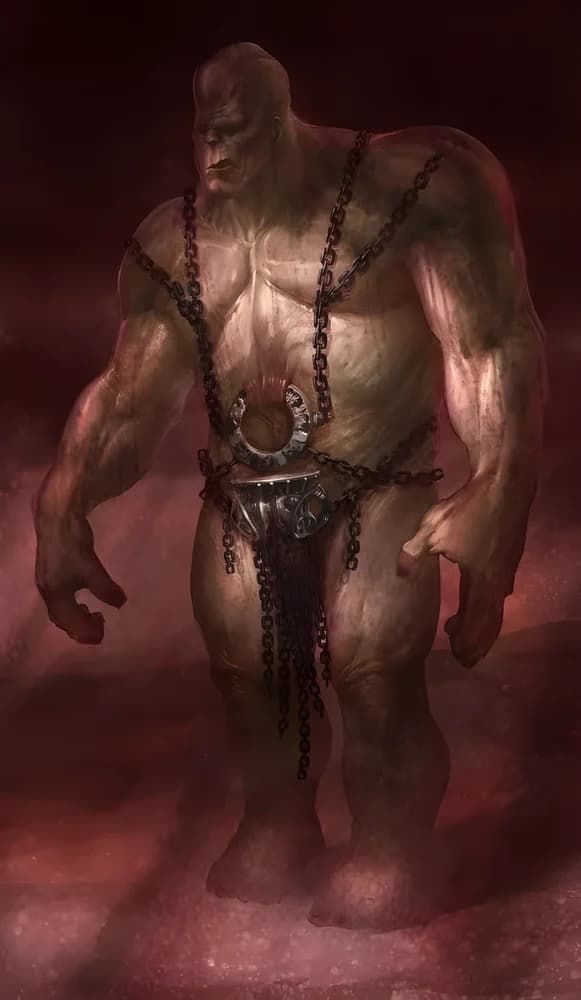
Hephaestus was the Craftsman of Olympus, the god of smithery and metalwork who forged the weapons and machinery of the gods. Once the most prized artisan of the Olympian pantheon, he was rewarded by Zeus with marriage to Aphrodite and entrusted with the making of Pandora's Box from the supreme power of the Flame of Olympus. His fall began the day Kratos killed his brother Ares, an event that turned Zeus against him and cost him his beloved daughter Pandora. Cast into the Underworld, he ended his days as a broken smith who at last raised his hammer against the Ghost of Sparta. (God of War III)
The smith of Olympus#
Hephaestus was born to Hera and stood as the blacksmith of the gods, charged with forging the powerful weapons and armor of Olympus along with machinery such as Talos and automatons set to labor across the world. His siblings Ares and Athena, as well as Artemis and Apollo, relied on him for their divine arms, and many of the heroes of legend could not have achieved their feats without his favor. For his skill he was given Aphrodite in marriage, though she held no love for him and turned to Ares and others. (God of War III)
In the novelization of the first game, it was Hephaestus who forged the dark Blades of Chaos in the Underworld for Ares, who intended to bestow them on a future earthly servant. He also crafted the Gauntlet of Zeus at the king's demand, a weapon made to bind the Titans to the walls of Tartarus. (God of War (novel); God of War: Chains of Olympus)
Pandora and the Box#
After the gods triumphed over the Titans, Hephaestus forged Pandora's Box from the Flame of Olympus to forever contain the evils of the war. He judged the Flame itself the safest place to keep the Box, but retrieving it required a key, and that key took the form of Pandora, a girl given life from the heart of the Flame. Hephaestus came to love her as his own daughter, and he could not bear to leave the Box where her sacrifice would be needed. (God of War III)
To protect her, he told Zeus the Box would be safer on the back of the Titan Cronos, reasoning that no mortal could best the Titan. When this deception was uncovered, an enraged Zeus beat him until he confessed, seized Pandora and left her in the Labyrinth, and cast Hephaestus into the Underworld. His scarred and broken appearance came from this punishment. (God of War III)
Imprisonment in the Underworld#
Kratos found Hephaestus at his forge in the Underworld during his march against Zeus. At first the smith spoke only of the Flame of Olympus and warned that its fire was lethal to man and god alike. On a later meeting he told Kratos of his fall from grace and asked the Spartan to retrieve Pandora, reminding him of his own role as a father. When Kratos returned again and revealed he sought the Labyrinth, Hephaestus understood that Kratos meant to find Pandora and use her to reach the Flame, and he turned on him, demanding he stay away from her. (God of War III)
The betrayal and death#
Feigning aid, Hephaestus told Kratos that the death of Zeus would outweigh the loss of Pandora, and offered to forge a new weapon for him. He sent Kratos to retrieve the Omphalos Stone from the Pits of Tartarus, knowing the Stone lay inside Cronos and expecting the Titan to kill him. Kratos instead slew Cronos and returned with the Stone. (God of War III)
Hephaestus forged the Nemesis Whip from the Omphalos Stone with his bare hands, then made a final attempt on Kratos's life, loosing lightning from his ring and crying out for retribution. Kratos shrugged off the assault, turned the Whip's power back on the smith, and triggered an anvil spike that impaled Hephaestus through the stomach. In his last breath he pleaded with Kratos to spare Pandora and begged her forgiveness. Kratos bore him no lasting ill will, later telling Pandora that Hephaestus had died doing what any father should do, protecting the life of his child. Long after, in the Norse realms, Kratos told the smith's tragic story without naming him, and in Valhalla he expressed deep regret over what had befallen Hephaestus and Pandora. (God of War III; God of War Ragnarök; God of War Ragnarök: Valhalla)
Frequently asked questions
- Who is Hephaestus in God of War?
- Hephaestus was the Craftsman of Olympus, the god of smithery and metalwork who forged the weapons and machinery of the gods. Once the most prized artisan of the Olympian pantheon, he was cast into the Underworld and ended his days as a broken smith.
- What did Hephaestus create?
- Hephaestus forged the Blades of Chaos for Ares, the Gauntlet of Zeus to bind the Titans, and Pandora's Box itself from the Flame of Olympus. He also crafted machinery such as Talos and automatons, and later made the Nemesis Whip.
- Why was Hephaestus cast into the Underworld?
- To protect his daughter Pandora, whose sacrifice was needed to retrieve Pandora's Box, Hephaestus deceived Zeus by telling him the Box would be safer on the back of the Titan Cronos. When the deception was uncovered, an enraged Zeus beat him, seized Pandora, and cast him into the Underworld.
- How did Hephaestus die?
- After sending Kratos to retrieve the Omphalos Stone in the hope the Titan Cronos would kill him, Hephaestus forged the Nemesis Whip and made a final attempt on Kratos's life with lightning from his ring. Kratos turned the Whip's power back on him and triggered an anvil spike that impaled the smith through the stomach.
- Why did Hephaestus turn against Kratos?
- Hephaestus turned on Kratos to protect his daughter Pandora once he realized Kratos meant to find her and use her to reach the Flame of Olympus. With his dying words he pleaded with Kratos to spare Pandora, and Kratos later said Hephaestus had died doing what any father should, protecting the life of his child.
Sources
- GameGod of War III, Santa Monica Studio, 2010
- GameGod of War: Chains of Olympus, Ready at Dawn, 2008
- GameGod of War Ragnarök, Santa Monica Studio, 2022
- GameGod of War Ragnarök: Valhalla, Santa Monica Studio, 2023
- BookGod of War (novel), Matthew Stover and Robert E. Vardeman, Del Rey, 2010
Spotted a factual error or a primary source we missed? Email a correction. Every flagged claim gets reviewed.
Followed from this entry
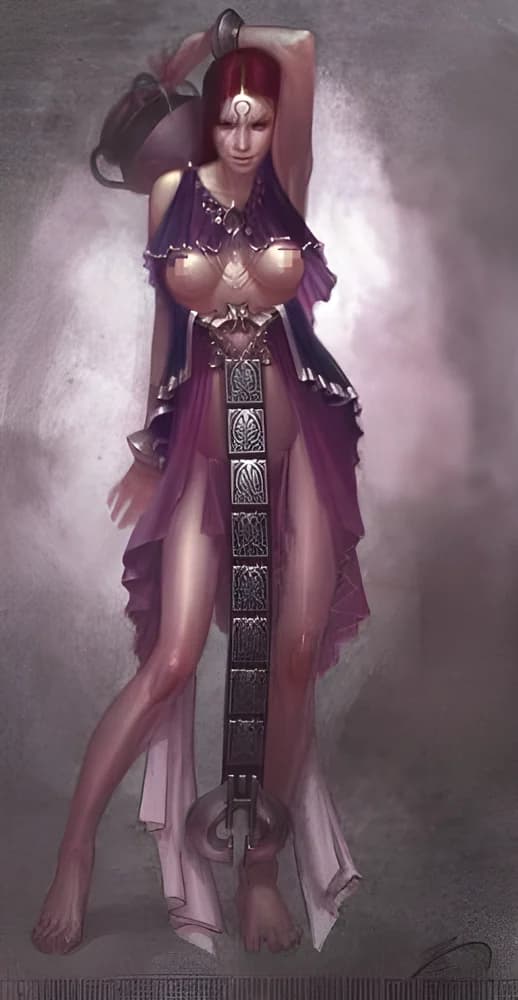
Aphrodite: Hephaestus' wife, lover of Ares
Aphrodite was married to the smith Hephaestus but had no love for him. In myth she took Ares as a lover, and in the games she gave Kratos Medusa's gaze.
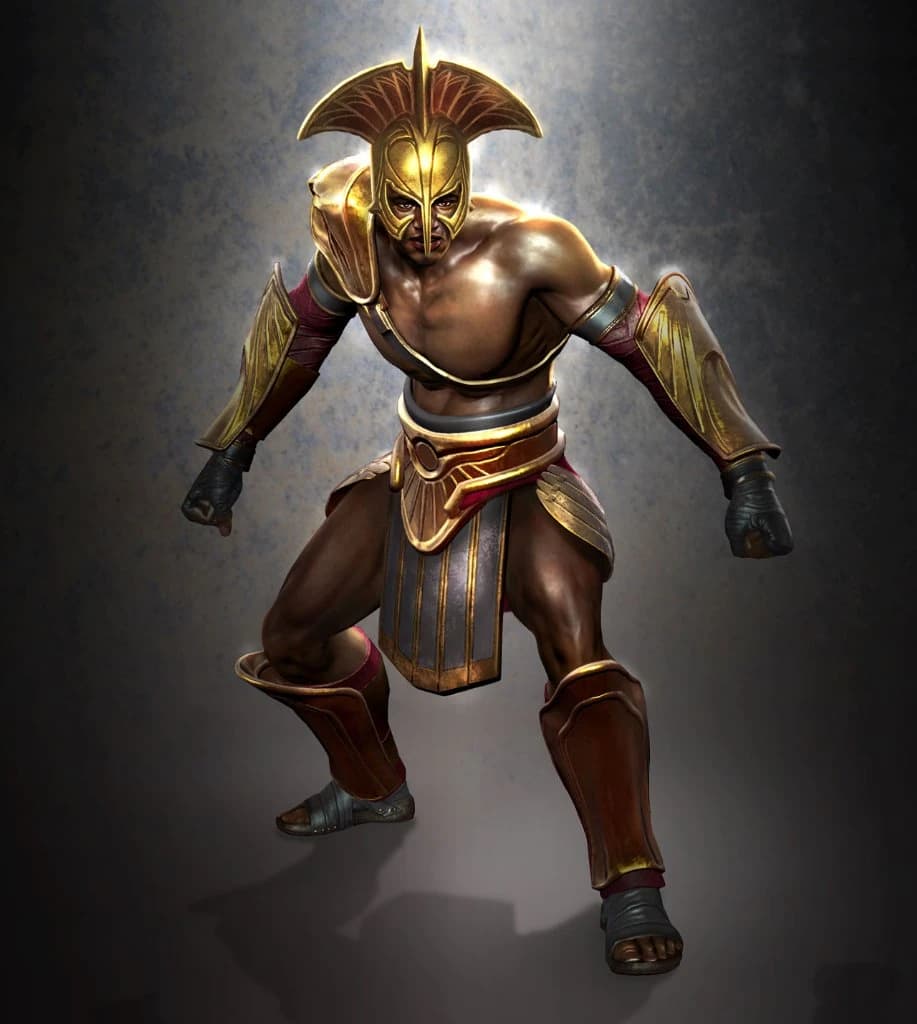
Apollo: the Olympian who escaped Kratos
Apollo never faced Kratos in the flesh. His Flame lit the way to the Tree of Life, his Bow lay in the Underworld, and he survived the slaughter.
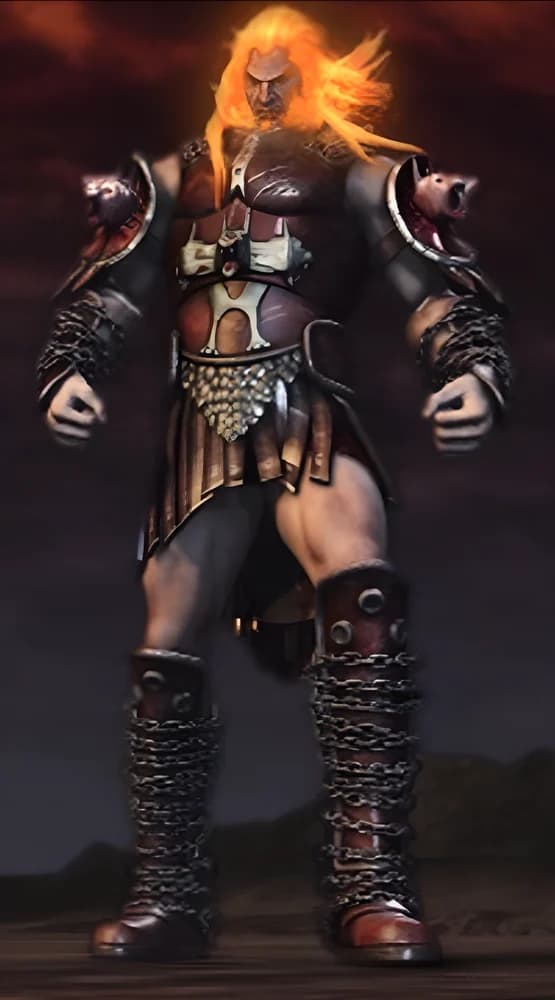
Ares: the god who made Kratos a killer
Ares tricked Kratos into slaughtering his own wife and daughter to bind him as a weapon. Kratos killed him at Athens and took his place as God of War.

Artemis
Artemis was the Olympian Goddess of the Hunt, daughter of Zeus and twin sister of Apollo. When Ares besieged Athens, she turned the beasts of the wild against his armies, and later gave Kratos the Blade of Artemis, a weapon she had wielded against the Titans, to aid him in the conquest of Pandora's Temple.
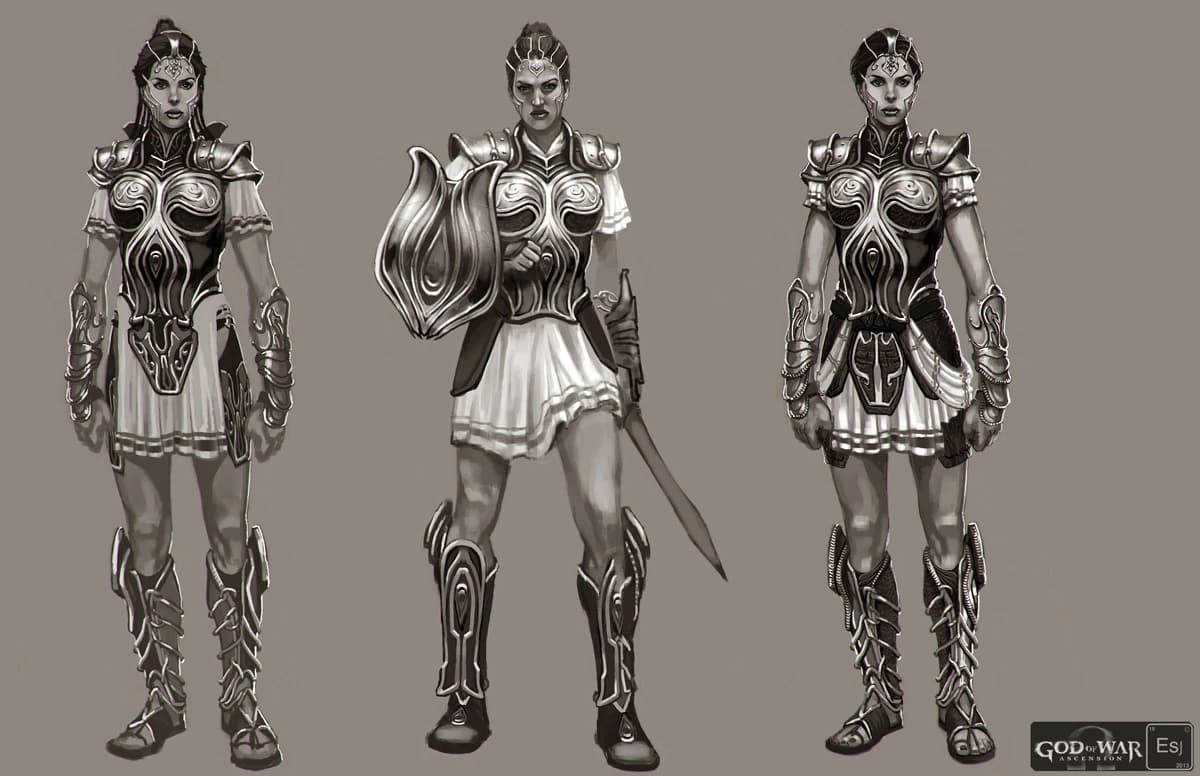
Athena: from Kratos' guide to his enemy
Athena set Kratos against Ares to save Athens, then turned on him when his reign grew worse. She died taking a blow meant for Zeus, and named Kratos his son.
Cronos: the Titan who ate his children
Warned that his own children would depose him, Cronos swallowed each at birth. Rhea hid Zeus, Zeus deposed him anyway, and Kratos finished him.
Mentioned in34 entries
Aphrodite: Hephaestus' wife, lover of Ares
Aphrodite was married to the smith Hephaestus but had no love for him. In myth she took Ares as a lover, and in the games she gave Kratos Medusa's gaze.
Ares: the god who made Kratos a killer
Ares tricked Kratos into slaughtering his own wife and daughter to bind him as a weapon. Kratos killed him at Athens and took his place as God of War.
Blade of Olympus: Zeus' god-killing sword
Zeus forged the Blade of Olympus from the heavens and the earth to banish the Titans to Tartarus. It could kill gods and Titans, and it killed Zeus himself.
Blades of Chaos: chained to Kratos' arms
The Blades of Chaos were forged in the Underworld for Ares, who seared their chains onto Kratos' forearms. They burn with the fire of Tartarus.
Cronos: the Titan who ate his children
Warned that his own children would depose him, Cronos swallowed each at birth. Rhea hid Zeus, Zeus deposed him anyway, and Kratos finished him.
Daedalus
Daedalus was the master craftsman of Athens who built the great Labyrinth for Zeus in return for the promise of his lost son Icarus. Driven to madness in years of servitude and chained within his own creation, he was crushed when Kratos set the Labyrinth turning, and died grateful at last to be free.
Desert of Lost Souls: the wasteland east of Athens
The Desert of Lost Souls was a vast, monster haunted desert far to the east of Athens, the place where Zeus condemned the Titan Cronos to wander with Pandora's Temple chained to his back. Kratos crossed its sands in his quest for Pandora's Box, and there Ares struck him down with a pillar hurled from the ruins of Athens.
Flame of Olympus
The Flame of Olympus was an absolute power, mightier than the gods themselves and lethal to any who touched it. Within it Pandora's Box was hidden, and only by extinguishing the flame could the King of the Gods be made to fall.
Gauntlet of Zeus
The Gauntlet of Zeus was a colossal gauntlet forged by Hephaestus and used by Zeus to chain the Titans in the depths of Tartarus. Recovered by Kratos from the Temple of Zeus, it became the weapon with which he slew Persephone.
God of War Characters: Every Major Character, Greek and Norse
Every major God of War character in one place, from Kratos and the Olympians of the Greek games to Atreus, Freya, Odin and the Aesir of the Norse saga. Each entry says who they are, what they do in the story and how it ends for them.
God of War III Story and Ending Explained: Plot Summary
The whole story of God of War III in order, from the Titans' climb up Mount Olympus to the death of Zeus. Then the ending in plain terms: why Kratos drove the Blade of Olympus into himself, what Athena wanted, and where that trail of blood leads.
God of War Story Explained: the Whole Saga from Sparta to Ragnarök
The full God of War story in order, one main game at a time. Kratos serves Ares, kills him, destroys Olympus, starts again in the Norse lands and finally ends Odin, with the Valhalla epilogue as the last word.
+ 22 more
Get new articles in your inbox
No spam. New lore drops, canon conflicts, and deep dives only when they’re worth reading.
Some links on Lore Fortress are affiliate links. If you buy through them we earn a small commission at no extra cost to you.