Apollo: the Olympian who escaped Kratos
God of Light and the Sun
Apollo never faced Kratos in the flesh. His Flame lit the way to the Tree of Life, his Bow lay in the Underworld, and he survived the slaughter.
Apollo was the Olympian God of Light, Music, the Sun, Healing, Archery, Truth, and Prophecy, among the most versatile of the gods. A son of Zeus and the younger twin of Artemis, he never stood before Kratos in the flesh, yet his works and gifts touched the Spartan's path more than once, and unlike most Olympians he is never shown dying in the slaughter that ended the age of the gods. (God of War: Ascension; God of War III; God of War (2010 comic))
Birth and the slaying of Python#
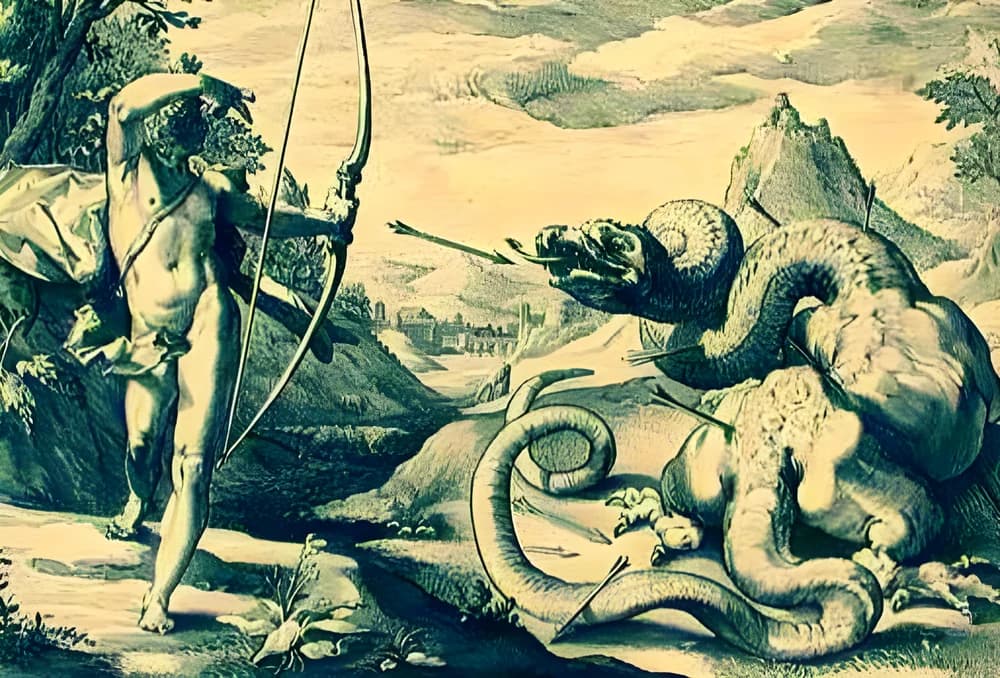
The games never tell Apollo's early story, but the Greek myths behind it are clear. Apollo was the son of Zeus by the Titan Leto, whose union with the King of the Gods had drawn the wrath of Hera. The Queen of the Gods tormented Leto and loosed the monster Python to chase her across the world so that she could find no safe place to bear her children. Leto at last found haven on the isle of Delos, where she gave birth first to Artemis and then to Apollo. Only days after his birth, Apollo tracked Python to its nest at Delphi and slew the monster in vengeance for his mother. He then strode into the great hall of Olympus with his bow drawn, throwing the elder gods into panic, but Zeus welcomed his son and honored his prowess, and Apollo took his place among the Olympians. God of War: Ascension nods to this myth with a mural of his fight with Python in the Temple of Delphi. (Homeric Hymn to Apollo; Hyginus, Fabulae; Apollodorus, Library; God of War: Ascension)
As the god of music he led the choir of the Muses, and the lyre that Hermes had fashioned for him became his enduring symbol. He fathered many children, the most renowned being the healer Asclepius, whose skill in medicine grew so great that he could revive the dead. When this angered Hades, Zeus struck Asclepius down with a thunderbolt at his brother's request. In his grief and fury Apollo slew the Cyclopes who had forged those thunderbolts, and as punishment Zeus made him mortal and bound him to a year of servitude on Earth. (Homeric Hymn to Hermes; Apollodorus, Library)
Apollo's Flame#
In the God of War comics Apollo backs no mortal in the Wager of the Gods, but his power reaches Kratos all the same. On the Spartan's first journey to retrieve the Ambrosia, a mysterious Healer placed Apollo's Flame in his hands. The flame guided Kratos to the Tree of Life, and years afterward it served him again in battle, for with it he slew the giant Gyges. (God of War (2010 comic))
Honored across Greece#
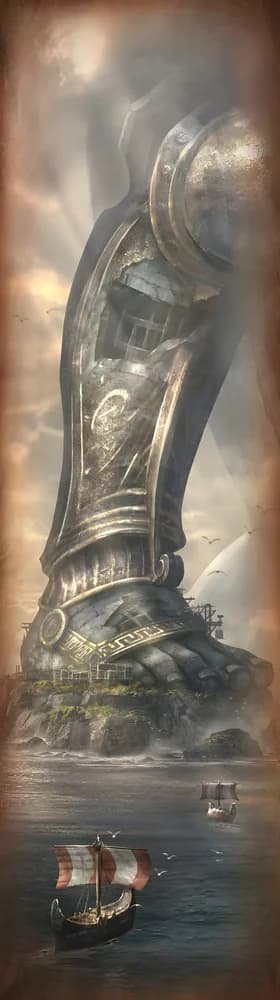
Apollo never appeared before Kratos, but his deeds were carved into the world he walked. In God of War: Ascension, a mural within the Temple of Delphi honored his victory over Python, and the Oracle herself rested upon the hands of a statue raised in his image. On the island of Delos stood a truly enormous Statue of Apollo, built in his honor by the architect Archimedes. By the time Kratos reached it the statue had fallen into decay, and the Spartan restored it to its full glory by the power of the Amulet of Uroborus. (God of War: Ascension)
In God of War III his famed Bow surfaced again in the depths of the Underworld, held by Peirithous, a former hero imprisoned there by Hades. Apollo himself never appears in the game, so unlike most of his kin he is never shown falling to Kratos. (God of War III)
Frequently asked questions
- Who is Apollo in God of War?
- Apollo was the Olympian God of Light, Music, the Sun, Healing, Archery, Truth, and Prophecy. He was a son of Zeus and the younger twin of Artemis.
- How was Apollo born and how did he slay Python?
- In Greek myth, Apollo was the son of Zeus by the Titan Leto, who found haven on the isle of Delos and gave birth first to Artemis and then to Apollo. Only days after his birth, Apollo tracked the monster Python to its nest at Delphi and slew it in vengeance for his mother.
- What is Apollo's Flame in God of War?
- In the God of War comics, Apollo's Flame was placed in Kratos' hands by a mysterious Healer during his first journey to retrieve the Ambrosia. The flame guided Kratos to the Tree of Life, and years later he used it to slay the giant Gyges.
- Why did Zeus make Apollo mortal?
- In Greek myth, after Zeus struck down Apollo's son Asclepius with a thunderbolt, Apollo slew the Cyclopes who had forged those thunderbolts. As punishment, Zeus made him mortal and bound him to a year of servitude on Earth.
- What happened to Apollo during the fall of the gods?
- Apollo never appeared before Kratos in the flesh and remained absent through the fall of the gods. He never appears in God of War III, so the games never show him dying.
Gallery

Images via God of War Wiki
Sources
- GameGod of War: Ascension, Santa Monica Studio, 2013
- GameGod of War III, Santa Monica Studio, 2010
- ComicGod of War (2010 comic), Marv Wolfman and Andrea Sorrentino, WildStorm/DC Comics, 2010 to 2011
- BookHomeric Hymn to Apollo, Anonymous, around 6th century BC
- BookHomeric Hymn to Hermes, Anonymous, around 6th century BC
- BookFabulae, Hyginus, 1st century AD
- BookLibrary (Bibliotheca), Pseudo-Apollodorus, 1st or 2nd century AD
Spotted a factual error or a primary source we missed? Email a correction. Every flagged claim gets reviewed.
Followed from this entry

Artemis
Artemis was the Olympian Goddess of the Hunt, daughter of Zeus and twin sister of Apollo. When Ares besieged Athens, she turned the beasts of the wild against his armies, and later gave Kratos the Blade of Artemis, a weapon she had wielded against the Titans, to aid him in the conquest of Pandora's Temple.
Hades: the god whose soul Kratos tore out
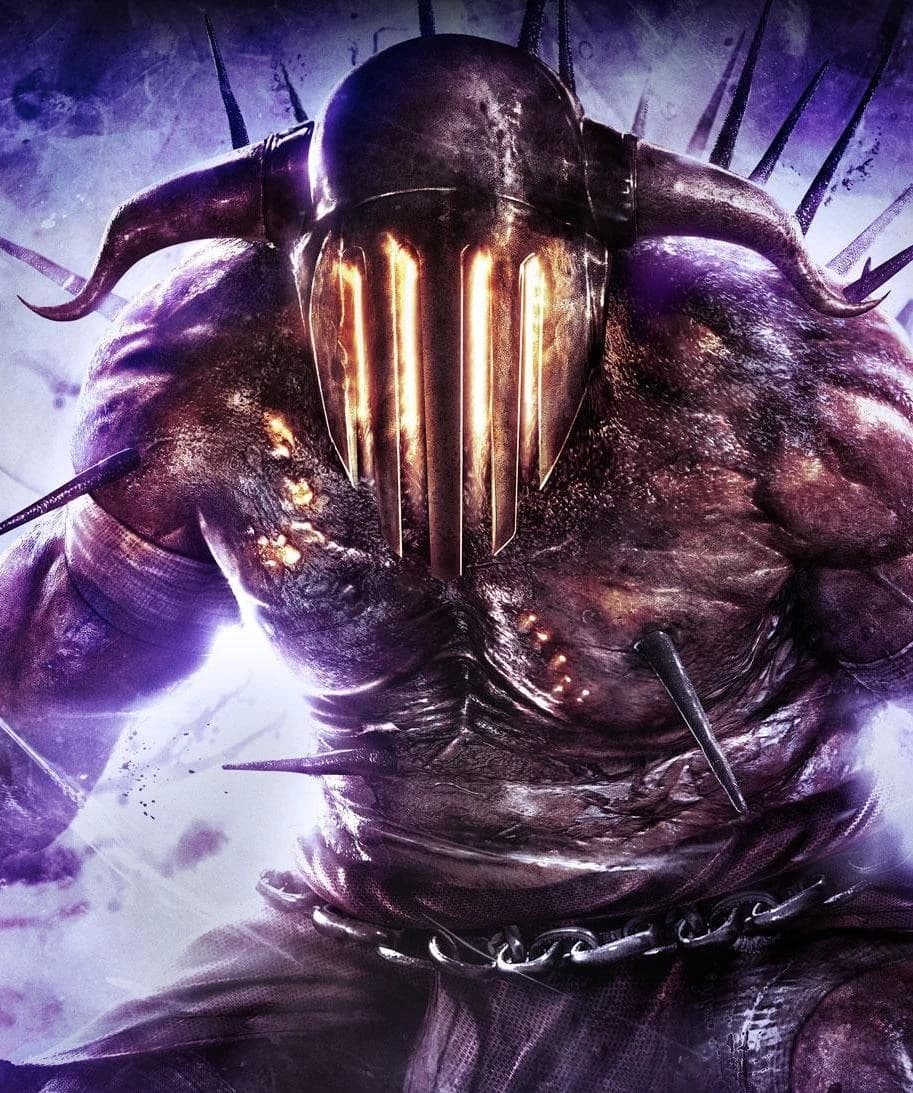
Eldest son of Cronos, Hades ruled the Underworld and held life and death in balance. Kratos turned the Claws of Hades on him and ripped his soul out.
Hera
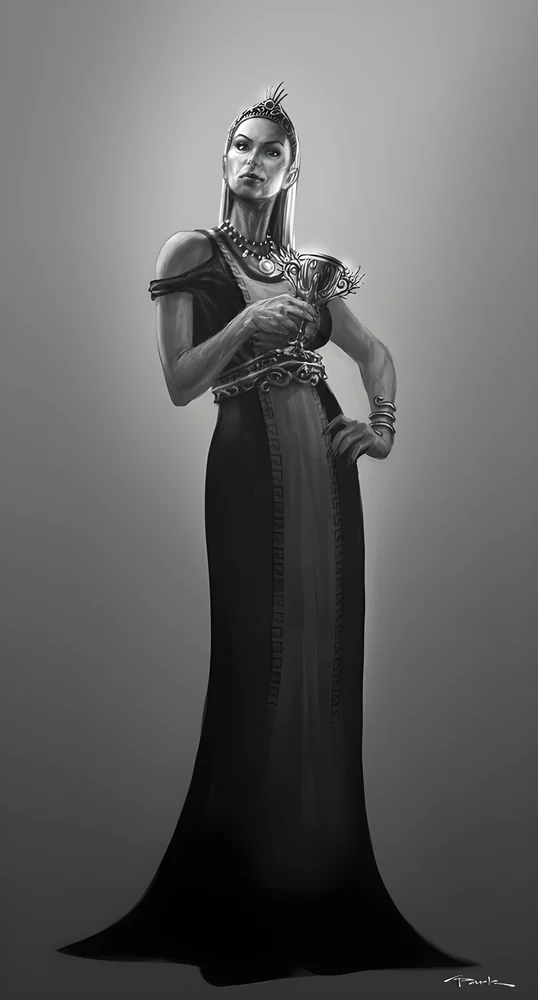
Hera was the Olympian Goddess of Marriage and Queen of the Gods, the sister and wife of Zeus and mother of Ares. Embittered by her husband's affairs and her withering garden, she set Hercules against Kratos before the Spartan snapped her neck and the world's flora died with her.

Hermes: the swift god Kratos crippled
Hermes taunted Kratos through a long chase across Olympus. The Spartan cornered him, severed his legs at the knee and took the winged boots for himself.
Olympians: the gods Kratos killed off
Zeus led the third generation of Greek gods to victory over the Titans. Kratos then destroyed almost every one of them, and Greece fell with them.

Zeus
Zeus was the King of Olympus and ruler of the Greek Pantheon, the youngest son of Cronos who freed his siblings, ended the Great War, and claimed the heavens. Father of Kratos, he became the great antagonist of the Greek age and fell at last to the very son he had tried to destroy.
Mentioned in23 entries
Alecto
Alecto was the Queen of the Furies and the Goddess of Anger, the sister who ruled the trio that hunted Kratos. She mated with Ares to bear the disowned Orkos, ensnared her victims in illusion and black goo, and transformed into a monstrous sea creature before falling to the Spartan's blades.
Aletheia: the Oracle of Delphi
Aletheia was the mortal Oracle of Delphi, a seer whose eyes granted her visions of the future and the power to pierce any illusion. When she uncovered the plot of Ares and the Furies to overthrow Olympus, the Furies tore out her eyes and forged them into the Eyes of Truth, and with her dying breath she set Kratos on the path that freed him from his blood oath.
Amulet of Uroborus: the gem that bent time
The Amulet of Uroborus was a golden amulet set with a blue-green gem that could manipulate time and space. Stolen from the Oracle Aletheia and turned against Kratos, it passed into his hands and let him rebuild what had been broken.
Artemis
Artemis was the Olympian Goddess of the Hunt, daughter of Zeus and twin sister of Apollo. When Ares besieged Athens, she turned the beasts of the wild against his armies, and later gave Kratos the Blade of Artemis, a weapon she had wielded against the Titans, to aid him in the conquest of Pandora's Temple.
Bow of Apollo
The Bow of Apollo was a fire-imbued bow named for the sun god Apollo. Kratos took it from Peirithous, the doomed lover of Persephone, who was imprisoned in the Underworld within a cage of brambles.
Calliope
Calliope was the beloved daughter of Kratos and Lysandra, a gentle and innocent child of Sparta. Killed by her father during a frenzy contrived by Ares, she found rest in the Elysium Fields, only for Kratos to be forced to abandon her there to save the world.
God of War: Ascension Story Explained
The plot of God of War: Ascension in story order, from Kratos breaking his blood oath to Ares to the deaths of the three Furies and Orkos. Plus how its ending sets up the rest of the Greek saga and where it sits in the timeline.
Greek Gods
The Greek Gods were the pantheon that ruled over Greece across three generations, the Primordials, the Titans, and the Olympians. Once the masters of mortals, monsters, and the natural world, they were brought to near extinction by Kratos in his war of vengeance against Olympus.
Hephaestus: the smith who made the Blades
He forged Pandora's Box for Zeus and the Blades of Chaos for Ares, and lost everything for it. Kratos killed him in the Underworld, defending his daughter.
Hestia
Hestia was the Olympian Goddess of the Hearth, Fire, and Family, the firstborn child of Cronos and Rhea. A virgin goddess who tended the royal hearth of Olympus, she never appears in the games, but in the God of War II novelisation she voices her contempt for the destruction Kratos and his Spartan armies brought upon the worshipers of the gods.
Juggernaut
The Juggernaut, once called the Elephantaur, was a towering elephant-shaped monster that walked upright and bore Persian war-armor. Met from Kirra to Delos, it stood among the heaviest beasts Kratos faced in his hunt for the Furies.
Manticore
The Manticore was a flying monster of the Greek world, a creature with a lion's face, dragon wings, and the venomous tail of a scorpion. A great female of its kind nested in Delphi, and Kratos fought and slew the beast both at the Tower of Delphi and again on the island of Delos.
+ 11 more
Get new articles in your inbox
No spam. New lore drops, canon conflicts, and deep dives only when they’re worth reading.
Some links on Lore Fortress are affiliate links. If you buy through them we earn a small commission at no extra cost to you.