Cyclopes: the one-eyed giants of Greece
The Cyclopes were a race of burly, one-eyed giants of the Greek world. Once peaceful shepherds, they were dragged into the first War of the Titans and used thereafter as beasts of war in the armies of the gods.
The Cyclopes were a race of burly, one-eyed giants of the Greek world, immensely powerful creatures encountered throughout the long history of Kratos. Once peaceful shepherds, they were forced to fight in the Great War against the Titans and used thereafter as beasts of war in the armies of the gods. (God of War; God of War II; God of War III; God of War Ragnarök: Valhalla)
Origins and the Great War#
In the journal Kratos keeps in Valhalla, he remembers the Cyclopes as once peaceful sheep herders who lived solitary lives on the islands of his Greek homeland. The older myths add that neither the Skyfather Ouranos nor the Titan Lord Cronos would let the first Cyclopes go free during their reigns, and they spent long ages locked away beneath the earth. (God of War Ragnarök: Valhalla; Hesiod, Theogony)
During the first War of the Titans, Kratos writes, the Cyclopes were enslaved and made to fight. In the myths it was Zeus who freed the elder Cyclopes from their prison, and in return they forged the thunder and lightning he used against the Titans. (God of War Ragnarök: Valhalla; Hesiod, Theogony)
Beasts of war#
After that war, Kratos notes, the practice of using these powerful brutes in combat became all too common, and in time they were simply beasts of war in the armies of the gods. The most famous Cyclops of all, Polyphemus, is in myth a son of Poseidon, the sea god. In God of War: Ascension he appears as a towering boss in the Desert of Lost Souls multiplayer map. (God of War Ragnarök: Valhalla; Homer, Odyssey; God of War: Ascension)
The Cyclopes appeared in many forms and roles across the wars of Greece. They were turned loose by Ares during the siege of Athens, serving largely as shock infantry, and were set to guard parts of Pandora's Temple. Elsewhere they were enslaved by the Persian King and driven against the city of Attica alongside a great Basilisk. In later ages, armored Cyclopes stood among the guardians of Olympus itself, attacking in large groups to protect the most important passages, while feral varieties dwelt in the wild places and the domain of the Sisters of Fate. (God of War; God of War: Chains of Olympus; God of War II; God of War III)
Greek lineage#
In the older lore of Greece, the first Cyclopes were three giants named Brontes, Steropes, and Arges, children of Ouranos born alongside the Hecatonchires. Ouranos hated his children and hid them away within Gaia, causing their mother great pain, until she moved Cronos to overthrow him. Cronos then kept the Cyclopes and Hecatonchires locked up himself. It was Zeus, son of Cronos and leader of the Olympians, who freed the Cyclopes, and in gratitude they forged the thunderbolt for Zeus, along with weapons for his brothers, which helped the gods beat the Titans. These elder Cyclopes were a different breed from the later race of sheep-herding giants Odysseus meets on their island. (Hesiod, Theogony; Apollodorus, Library; Homer, Odyssey)
Frequently asked questions
- What are the Cyclopes in God of War?
- The Cyclopes were a race of burly, one-eyed giants found throughout the Greek world. Kratos remembers them as once peaceful sheep herders who were forced to fight in the first War of the Titans and used as beasts of war ever after.
- Where did the Cyclopes come from in God of War?
- In the journal Kratos keeps in God of War Ragnarök: Valhalla, he writes that the Cyclopes were once peaceful sheep herders living solitary lives on the islands of Greece, until they were enslaved and made to fight in the first War of the Titans. In Greek myth, Ouranos and then Cronos kept the first Cyclopes imprisoned until Zeus freed them.
- How did the Cyclopes help win the Great War?
- In Greek myth, Zeus freed the Cyclopes during the war with the Titans, and in return they forged his thunder and lightning, the weapons that helped the Olympians win.
- Who was the most powerful Cyclops in God of War?
- The best known is Polyphemus, in myth a son of Poseidon, who appears as a giant boss in the Desert of Lost Souls multiplayer map of God of War: Ascension.
Sources
- GameGod of War, Santa Monica Studio, 2005
- GameGod of War II, Santa Monica Studio, 2007
- GameGod of War: Chains of Olympus, Ready at Dawn, 2008
- GameGod of War III, Santa Monica Studio, 2010
- GameGod of War: Ascension, Santa Monica Studio, 2013
- GameGod of War Ragnarök: Valhalla, Santa Monica Studio, 2023 (DLC)
- BookTheogony, Hesiod, around 700 BC
- BookOdyssey, Homer, around 8th century BC
- BookLibrary (Bibliotheca), Pseudo-Apollodorus, 1st or 2nd century AD
Spotted a factual error or a primary source we missed? Email a correction. Every flagged claim gets reviewed.
Followed from this entry
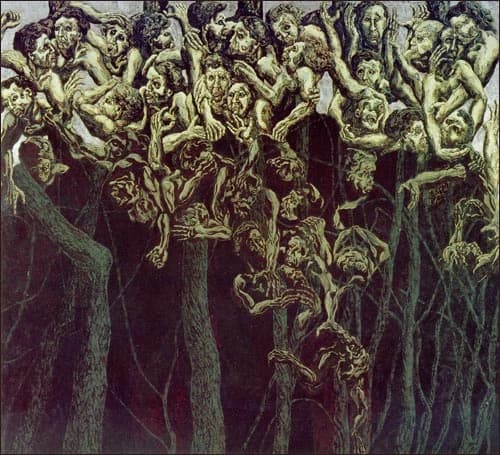
Hecatonchires
The Hecatonchires were three giants of immense strength born of Ouranos and Gaia, mightier even than the Titans they helped to overthrow. One of their number, Aegaeon, was transformed by the Furies into a vast living prison for those who broke a blood oath with the gods.
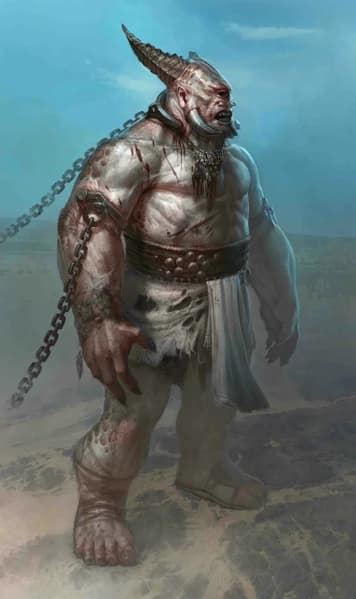
Polyphemus
Polyphemus was a gigantic one-eyed Cyclops and a son of Poseidon. Famed in Homer for his clash with Odysseus, in God of War he appears only in the multiplayer of Ascension, bound in chains within the Desert of Lost Souls.
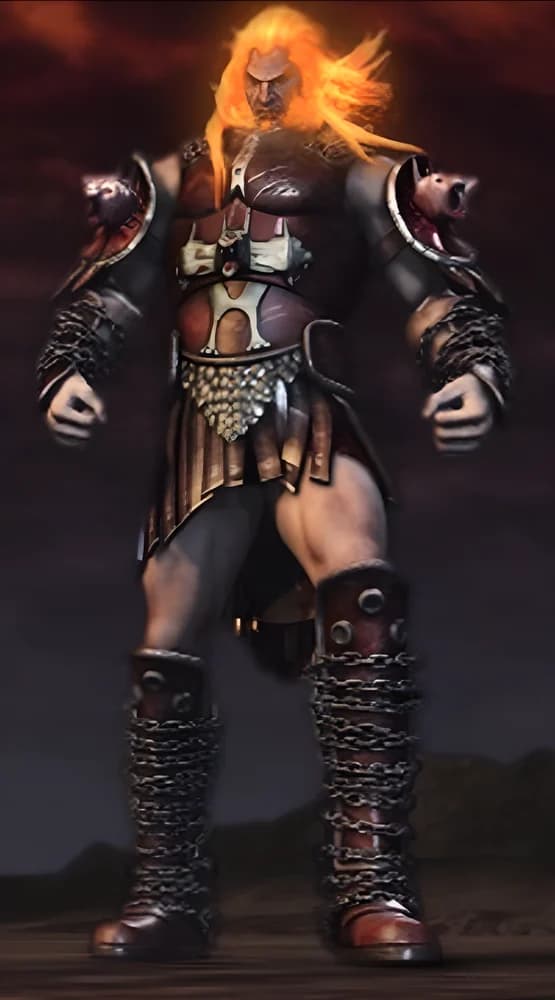
Ares: the god who made Kratos a killer
Ares tricked Kratos into slaughtering his own wife and daughter to bind him as a weapon. Kratos killed him at Athens and took his place as God of War.

Athens: Athena's city, besieged by Ares
Ares laid siege to Athens out of hatred for his sister Athena. Kratos was sent to save it, and killed Ares there to become the new God of War.
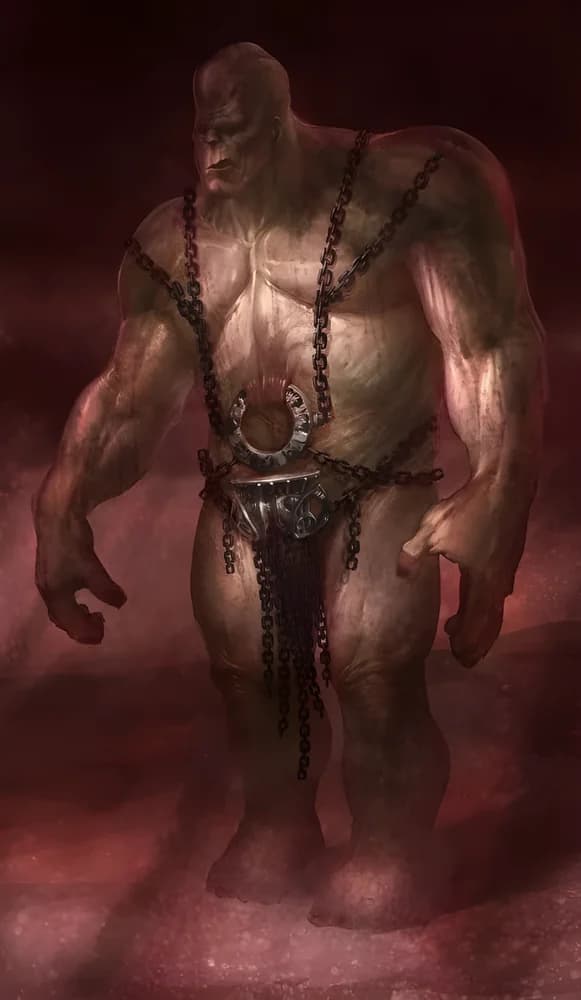
Cronos: the Titan who ate his children
Warned that his own children would depose him, Cronos swallowed each at birth. Rhea hid Zeus, Zeus deposed him anyway, and Kratos finished him.
Gaia: Mother Earth, betrayed by Kratos
Gaia bore the Titans, hid the infant Zeus from Cronos, and allied with Kratos against Olympus. He ran the Blade of Olympus through her heart.
Mentioned in15 entries
Apollo: the Olympian who escaped Kratos
Apollo never faced Kratos in the flesh. His Flame lit the way to the Tree of Life, his Bow lay in the Underworld, and he survived the slaughter.
Artemis
Artemis was the Olympian Goddess of the Hunt, daughter of Zeus and twin sister of Apollo. When Ares besieged Athens, she turned the beasts of the wild against his armies, and later gave Kratos the Blade of Artemis, a weapon she had wielded against the Titans, to aid him in the conquest of Pandora's Temple.
Atlantis
Atlantis was the great sea-faring city of Poseidon, home to his mightiest temple and guarded by the monster Scylla. It was where Kratos found his dying mother Callisto, and his battle there sank the ancient city beneath the waves.
Body Burner: the cursed keeper of Pandora's Gate
The Body Burner was the first mortal to enter Pandora's Temple and, by his own account, the first to die there. Cursed by the gods for his failure, he kept watch year after year on the cliff beyond Pandora's Bridge, burning the corpses of every challenger who followed him, until Kratos passed his gate and carried Pandora's Box out of the temple.
Cyclops
The Cyclopes were burly, one-eyed giants who fought as beasts of war across the Greek games, from Ares's siege of Athens to the fall of Olympus. In the old myth the series draws on, they were sons of Heaven and Earth whom Zeus freed to fight the Titans.
Gaia: Mother Earth, betrayed by Kratos
Gaia bore the Titans, hid the infant Zeus from Cronos, and allied with Kratos against Olympus. He ran the Blade of Olympus through her heart.
God of War Timeline: every major event from the Primordials to Valhalla
The full in-universe chronology of God of War, from the war of the Primordials and the fall of the Titans to Kratos's life in Sparta, his war on Olympus, and the end of the Aesir at Ragnarök. The games give almost no calendar years, so events are ordered by story sequence and grouped into eras, with notes wherever the games' own placement is vague.
Hades' Helm
Hades' Helm, known also as the Helm of Darkness and the Cap of Hades, is the helm of invisibility that the Cyclopes forged for Hades in Greek myth. In the games Hades wears a flaming horned helm, and the hero Perseus turns invisible with a magic helm in his duel against Kratos.
Hecatonchires
The Hecatonchires were three giants of immense strength born of Ouranos and Gaia, mightier even than the Titans they helped to overthrow. One of their number, Aegaeon, was transformed by the Furies into a vast living prison for those who broke a blood oath with the gods.
Monster: the beasts of the mythic world
Monsters, also called Beasts, were the hostile creatures of the mythic world, beings that could be counted neither as mortals nor as gods or Titans. From the minotaurs and gorgons of Greece to the trolls and dragons of the Norse realms, they haunted every land that Kratos ever walked.
Ouranos: the sky god Cronos castrated
The first ruler of creation fathered the Titans on Gaia and banished his monstrous children. His son Cronos castrated him and took the throne.
Polyphemus
Polyphemus was a gigantic one-eyed Cyclops and a son of Poseidon. Famed in Homer for his clash with Odysseus, in God of War he appears only in the multiplayer of Ascension, bound in chains within the Desert of Lost Souls.
+ 3 more
Get new articles in your inbox
No spam. New lore drops, canon conflicts, and deep dives only when they’re worth reading.
Some links on Lore Fortress are affiliate links. If you buy through them we earn a small commission at no extra cost to you.