Manticore
the winged beast of Delphi
The Manticore was a flying monster of the Greek world, a creature with a lion's face, dragon wings, and the venomous tail of a scorpion. A great female of its kind nested in Delphi, and Kratos fought and slew the beast both at the Tower of Delphi and again on the island of Delos.
The Manticore was a flying monster of the Greek world, a creature with the face of a lion, the wings of a dragon, and a scorpion's venomous tail. A great female of the breed nested in the heights of Delphi, and Kratos brought it down there before facing another of its kind above the island of Delos. (God of War: Ascension)
A beast of many parts#
The Manticore was a monster assembled from many creatures. It bore a lion-like face set with the jaw of a shark that could become unhinged, the leathery wings of a dragon, a human torso and arms, and a long scorpion tail. Plates like a scorpion's lined its back, and the spines of its tail were venomous and could be flung at prey from a distance. In flight it spat fire, and on the ground it fought with its tail, throwing spikes and slamming the earth, while a clap of its wings together could blow a warrior off his feet. (God of War: Ascension)
The Manticore of Delphi#
The greatest of these beasts was the Manticore of Delphi, a female who nested among the heights of the city where Kratos sought the Oracle. Patches of her eggs could be found throughout the mountains of Delphi, scattered around the mechanized remains of the great serpent Python that powered the climbing of the tower. (God of War: Ascension)
She first attacked Kratos as he ascended the Python machinery, trying to make him fall to his death, and fought him briefly in the air. Their true battle came at the summit of the Tower of Delphi. There she flew above him and spat fire, and when she came to ground she struck with her tail and hurled venomous spikes that had to be wrenched free at once if they struck home. Kratos drove a blade into her and, as she flew back, hauled her in by the blade's chain. After evading her aerial assaults he pulled himself to her and tore away the wing that served also as her frontal left leg, robbing her of flight. He then leapt upon her belly and stabbed her chest, and finished her by seizing her tail, cutting off its sting, and driving it into her mouth. (God of War: Ascension)
The beast of Delos#
A second Manticore was found in the air over Delos, near the great fallen Statue of Apollo. Kratos leapt upon the creature and used it to carry him from the statue to its lantern, forcing the beast to collide with the sharp roof of the lantern and so shearing off its left wing and leg. Crippled, it fought him as the first had after losing its wing, and it died in the same way, its sting torn loose and turned against it. (God of War: Ascension)
Hatchlings of the breed#
The small young of the Manticore, the Hatchlings, came from eggs that could be found in many places but most thickly in Delphi. The Hatchlings were weak alone but dangerous in numbers, and they breathed fire much as the Harpies of Greece struck from the air. A rarer and stronger kind dwelt on Delos, wielding lightning rather than flame and seeking to choke their prey with an electric tail. (God of War: Ascension)
Frequently asked questions
- What is the Manticore in God of War?
- The Manticore was a flying monster of the Greek world, a beast with a lion-like face, the unhinging jaw of a shark, dragon wings, human arms and torso, and a scorpion tail lined with venomous spines. A great female of the breed nested in Delphi.
- How did Kratos kill the Manticore?
- Kratos pulled the Manticore down by his blade and chain, tore off the wing that served as her frontal left leg so she could no longer fly, then stabbed her chest before cutting the sting from her tail and driving it into her mouth.
- What are Manticore Hatchlings?
- Manticore Hatchlings were the small young of the breed, born from eggs found in great numbers around Delphi. Weak alone but dangerous in swarms, they breathed fire, and a rarer kind found on Delos wielded lightning instead.
Sources
- GameGod of War: Ascension, Santa Monica Studio, 2013
Spotted a factual error or a primary source we missed? Email a correction. Every flagged claim gets reviewed.
Followed from this entry
Harpies
Harpies were monstrous winged creatures of the Greek world, part woman and part bird or bat, that hunted in flocks across Greece and the Underworld. They served the God of War Ares and were the beasts that first carried the Blades of Chaos to Kratos.
Apollo: the Olympian who escaped Kratos
Apollo never faced Kratos in the flesh. His Flame lit the way to the Tree of Life, his Bow lay in the Underworld, and he survived the slaughter.
Kratos
Kratos was the demigod son of Zeus who rose from a Spartan general to the Greek God of War, destroyed the pantheon of Olympus in a quest for vengeance, and then began again in the Norse realms as a father seeking to leave his bloody past behind.
Also in Greek Era
Cerberus Mongrel: the lesser hounds of the Underworld
The Cerberus Mongrels were the weakest breed of the Cerberi, gaunt three-headed hounds that served the lord of the dead. Kratos beat them into submission across two eras of his life, riding them as living weapons and turning the fire of one upon Peirithous to claim the Bow of Apollo.
Hoplite: the undead soldiery of the dead lands
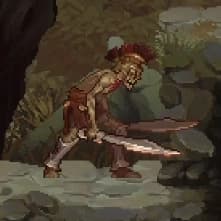
The Hoplites were undead soldiers of the Greek world, skeletal corpses clad in the armor of Greece that fought with twin swords. Kratos cut through their ranks in Asphodel, in the depths of Tartarus, and even in the Elysium Fields, where their stronger breeds bore shields of bronze and iron.
Kraken: the sea beast of the Island of Creation
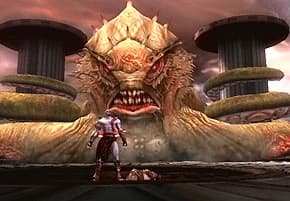
The Kraken was a giant meat-eating sea monster, an octopus-like horror of armored tentacles and a fanged maw. One rose against Kratos on the Island of Creation after the death of the Last Spartan and nearly crushed him before he impaled her through the mouth, while in the Norse realms a hatchling of the same breed lived as the pet of the dwarf Durlin.
Mentioned in1 entry
Get new articles in your inbox
No spam. New lore drops, canon conflicts, and deep dives only when they’re worth reading.
Some links on Lore Fortress are affiliate links. If you buy through them we earn a small commission at no extra cost to you.