Monster: the beasts of the mythic world
Monsters, also called Beasts, were the hostile creatures of the mythic world, beings that could be counted neither as mortals nor as gods or Titans. From the minotaurs and gorgons of Greece to the trolls and dragons of the Norse realms, they haunted every land that Kratos ever walked.
Monsters, also called Beasts, were the hostile creatures of the mythic world, beings that could be counted neither among mortals nor among the gods and Titans. They belonged to no single species. The Minotaur, the Chimera, Medusa the Gorgon, the trolls and ogres of the north, all were reckoned monsters, and countless others crawled, flew, and burrowed through every land that Kratos ever walked. The greater number of them rose from the legends of Greece and of the Norse realms, but beasts of Egyptian, Persian, and Arabian lore also stalked the wider world. (God of War (2005); God of War III; God of War (2018); God of War Ragnarök)
Nature and kind#
The word covered a vast breadth of beings, but the monsters of the mythic world shared a common character. They were supernatural and aggressive, strange or grotesque in appearance, and they struck terror into their victims. Many resembled animals grown bizarre, deformed, or swollen far beyond natural size, while others wore the shapes of men and women, or of ghosts and risen corpses. Some possessed powers beyond mere fang and claw: the petrifying gaze of the gorgons, the seductive voices of the sirens, the fire of the Chimera. What bound them together was what they were not. A monster was no mortal, no god, and no Titan, but something apart from all three, and wherever such creatures gathered, death followed for the people who lived near them. Kratos faced them without pause through both eras of his long life, first across Greece and its islands, and later beside his son Atreus throughout the Nine Realms. (God of War (2005); God of War (2018); God of War Ragnarök)
Monsters of the Greek world#
Greece bred living beasts in extraordinary variety. Minotaurs, creatures half man and half bull, served as brute soldiers, and cyclopes, the one eyed giants, towered over battlefields. The gorgons, humanoid females crowned with serpents in place of hair, could turn men and monsters alike to stone with their gaze, and Medusa reigned as their queen. Satyrs, goat legged warriors of roughly two meters in height, fought with a duelist's skill, while sirens lured victims with beautiful voices that belied their ugliness. Centaurs joined the body of a man to the legs of a horse, harpies paired the heads of deformed women with the bodies of bats, and the great three headed hounds called Cerberus prowled both the mortal world and the Underworld, where one of their kind stood guardian. Cerberus seeds, small green whelps, could grow into full hounds in moments. (God of War (2005); God of War II; God of War III)
Beyond these common breeds ran rarer beasts. Griffins soared as vast eagles with the bodies of lions. Hippocampi, the water horses of Poseidon, swam his seas, and Tritons served as the marine soldiers of Atlantis. Argos, a monster of a hundred eyes, was kept as the pet of Hera, and the Nemean Lion, whose resistant hide made it famous, fell to Hercules. The giant snake Python was slain by Apollo, the Piraeus Lion was a gigantic feline horror, and the Manticore combined a lion's face, a shark's unhinging jaw, dragon wings, a human torso, and a scorpion's tail and plating. Stranger still were the Empusa, a fiery female monster with green spikes in place of limbs, the lamia, half woman and half snake, and the beasts that boiled up from the fog of Morpheus, dark sabertoothed tigers born of the god of dreams. (God of War II; God of War III; God of War: Chains of Olympus; God of War: Ghost of Sparta; God of War: Ascension; God of War: Betrayal; God of War Sons of Sparta)
The dead and the forged#
Not every Greek monster drew breath. The Undead Legionnaires, dead warriors belonging to the Underworld, marched in endless ranks, joined by armored cursed legionnaires, undead hoplites, shades, and the cursed remains of resurrected skeletons. Wraiths, the vengeful ghosts of those who died in combat opposing Ares, clawed their way out of the earth, Hades fiends hurled fire, Hyperion guards fought on as armored spirits, and skeletal Olympus sentries filled the ranks of the mountain's soldiery. Even the dead of Tartarus rose again, for undead cyclopes were found nowhere else. (God of War (2005); God of War II; God of War III; God of War: Chains of Olympus; God of War: Ghost of Sparta)
Other horrors were made rather than born. Stone Talos and bronze Talos, statues given motion, guarded temples and treasuries, and automatons of metal fought like living things. Statues in the likeness of Atlas, called Geryon, carried giant spheres as weapons. The Sisters of Fate commanded a household of their own creatures: goat legged Fates sentries, armored Fates juggernauts, and the high priests of the Fates, spell casters who could vanish from one place to another and summon fresh servants to their side. (God of War II; God of War III; God of War: Ghost of Sparta)
Guardians and singular horrors#
Certain monsters were bound to a single place or purpose. The Hydra, a giant sea serpent whose king head rose flanked by two others, terrorized the shipping of the Aegean Sea until Kratos slew it. Pandora's Guardian, an undead minotaur some twenty feet tall and clad in nearly impenetrable armor, kept the tomb of the Architect's son within the segment of Pandora's Temple dedicated to Hades. Skorpius, a gigantic scorpion queen, guarded the maze of Daedalus, and the legendary sea monster Scylla hunted the waters with a brood of small spiderlike creatures in her wake. The Dredge of Boreas was a giant of ice, and a basilisk, brought forth by the Persians in their bid to conquer Greece, rampaged through the burning streets of Attica. The Fury Megaera carried her own plague of monsters, tiny green parasites that infected men and hounds and twisted them into mutated minions, and her sister Tisiphone kept the winged Daimon as a pet. (God of War (2005); God of War III; God of War: Chains of Olympus; God of War: Ghost of Sparta; God of War: Ascension)
Monsters of the Norse realms#
When Kratos crossed into the lands of the north, he found the wilds no less crowded. The draugr, reanimated corpses, haunted old battlefields, and the hel-walkers, blue and white figures of the frozen dead, populated Helheim in many forms. Trolls carried massive stone pillars as weapons and bore great tusks at the edges of their faces, ogres fought with a gorilla's bulk and brutality, and dragons, flying reptilian creatures of terrible power, nested in Midgard. Revenants appeared out of fog and called other creatures to do their bidding, wulvers stalked on their hind legs as wolflike men, and nightmares, floating eyes wreathed in magic, spat sorcery from the air. Both elven races of Alfheim, the dark elves and the light elves, were counted among the realms' hostile beings, the dark elves flying to battle with spears and magical projectiles. (God of War (2018); God of War Ragnarök)
The deeper wilds held stranger things. The Ancients, towering golems suffused with fire, frost, stone, or forest, were said to come from the flesh of the primordial Jotunn Ymir himself. Travelers, giant armored warriors, bore swords and shields of matching enormity, and tatzelwurms burst from beneath the ground. Reavers corrupted by Seidr magic lost their humanity along with their former shape, and stalkers, antlered creatures with centaur bodies, fought with whatever weapons they had scavenged. Svartalfheim bred the dreki, giant crocodilian beasts, while the grims, bipedal lizards, included a cursed breed that spat toxic bile and a giant kind called the bergsra that spawned wretches. Gradungr charged like great horned lions, gulon hunted in packs through Vanaheim, and the goblinlike nokken sang horrific chants that mended the creatures fighting beside them. Wisps drifted as spirits of elemental power, wights loomed as six armed spectres, and phantoms, elemental creatures of chaos, arose where multiple runic springs drew destructive power together. Above them all coiled Nidhogg, the great dragon who lived between the branches of the world tree Yggdrasil, and her children, the lindwyrms. (God of War (2018); God of War Ragnarök)
Beasts of distant lands#
The monsters of the world were not confined to Greece and Scandinavia. In the comic God of War: Fallen God, Kratos fought chaos beasts in Egypt, one like a crocodile and one like a hippo. The Persians brought the basilisk, a giant reptilian creature that served under the orders of the Persian King, against Greece. In the 2010 comics, rocs, giant birds out of Persian and Arabian legend, guarded the Ambrosia and swooped on Kratos's Spartans, and from the Arabian lands came the Efreet, a demonic spirit of fire that Kratos could call on as a magic. Wherever men built cities and told stories, the beasts were already there, and for two lifetimes it fell to Kratos to kill them. (God of War: Chains of Olympus; God of War (2010 comic); God of War: Fallen God)
Frequently asked questions
- What counted as a monster in the world of God of War?
- A monster, also called a beast, was any hostile creature that could not be reckoned a mortal, a god, or a Titan. They belonged to no single species and ranged from the minotaurs and gorgons of Greece to the trolls, ogres, and dragons of the Norse realms.
- What monsters did Kratos face in Greece?
- Kratos fought minotaurs, cyclopes, gorgons, satyrs, sirens, centaurs, harpies, and the hounds of Cerberus, along with singular horrors such as the Hydra of the Aegean, the armored guardian of Pandora's tomb, and the scorpion queen Skorpius within the maze of Daedalus.
- Did monsters exist beyond Greece and the Norse realms?
- Yes. In the comic God of War: Fallen God, Kratos fought chaos beasts in Egypt. The Persians brought a basilisk against Greece under their king's command, the 2010 comics have giant rocs guarding the Ambrosia, and the Arabian fire spirit known as the Efreet served Kratos as a magic.
Sources
- GameGod of War (2005), Santa Monica Studio, 2005
- GameGod of War II, Santa Monica Studio, 2007
- GameGod of War III, Santa Monica Studio, 2010
- GameGod of War: Chains of Olympus, Ready at Dawn, 2008
- GameGod of War: Ghost of Sparta, Ready at Dawn, 2010
- GameGod of War: Ascension, Santa Monica Studio, 2013
- GameGod of War: Betrayal, Javaground and Sony Online Entertainment, Sony Pictures Digital, mobile phones, 2007
- GameGod of War Sons of Sparta, Mega Cat Studios and Santa Monica Studio, 2026
- GameGod of War (2018), Santa Monica Studio, 2018
- GameGod of War Ragnarök, Santa Monica Studio, 2022
- ComicGod of War (2010 comic), Marv Wolfman and Andrea Sorrentino, WildStorm/DC Comics, 2010 to 2011
- ComicGod of War: Fallen God, Chris Roberson and Tony Parker, Dark Horse Comics, 2021
Spotted a factual error or a primary source we missed? Email a correction. Every flagged claim gets reviewed.
Followed from this entry
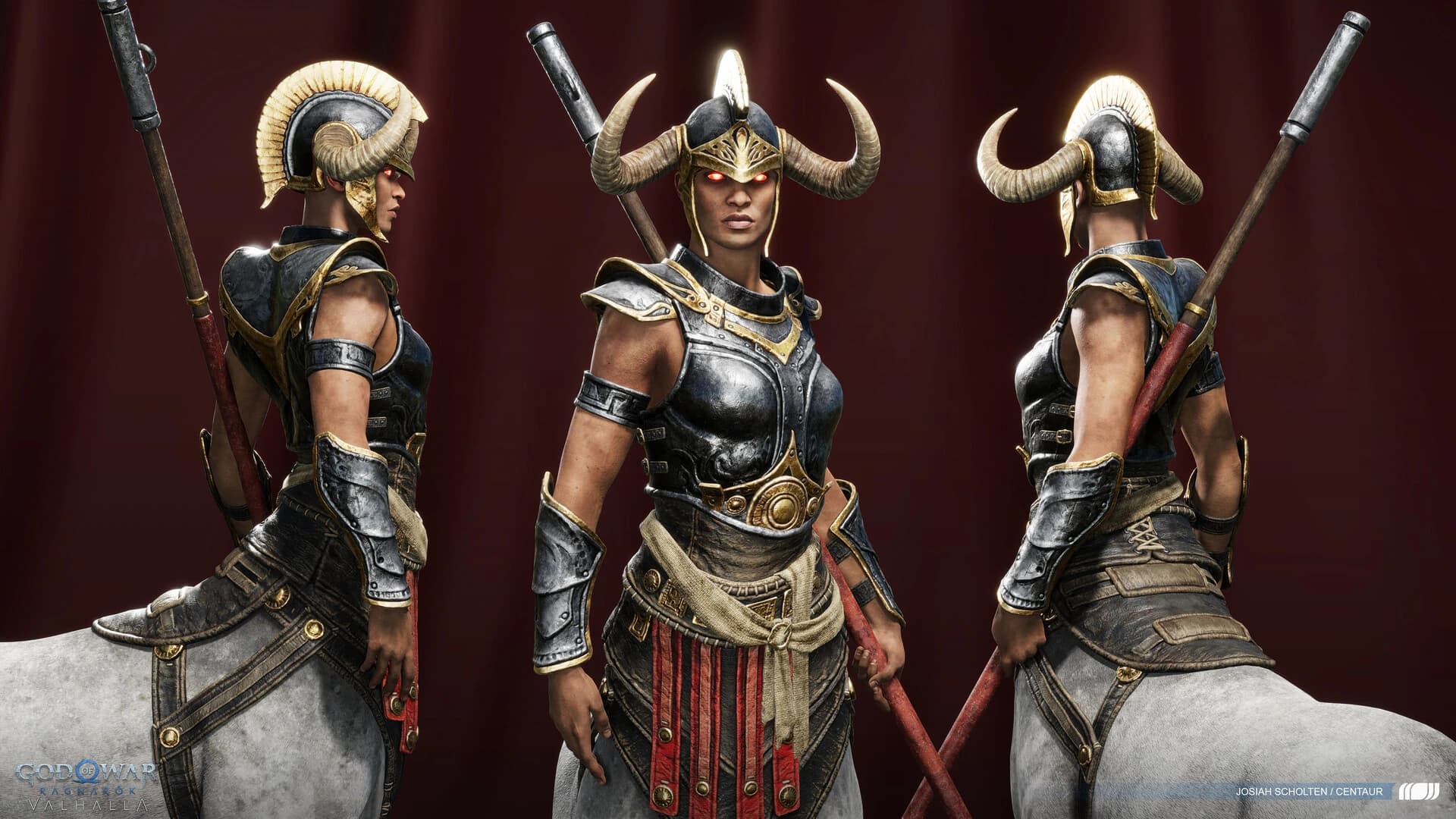
Centaur
The Centaurs were monsters of the Greek world, part man and part horse, once renowned for poetry and wine-making in the forests of Mount Pelion. When the Lapiths encroached on their woods they took up arms, and in time were recruited across Greece for their martial prowess.
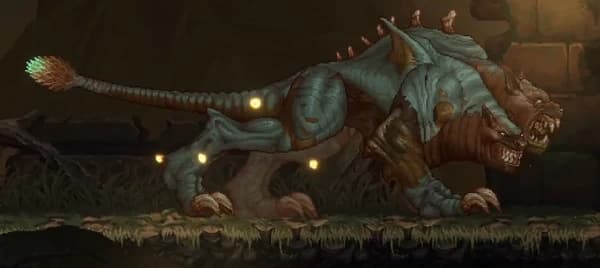
Cerberus: the multi-headed hounds of Hades
The Cerberi were a race of fierce multi-headed hounds, most of them kept as the beasts of Hades in the Underworld. Kratos faced them across many of his journeys, from the breeders of Pandora's Temple to the Mole Cerberus that had swallowed Jason and the Golden Fleece.
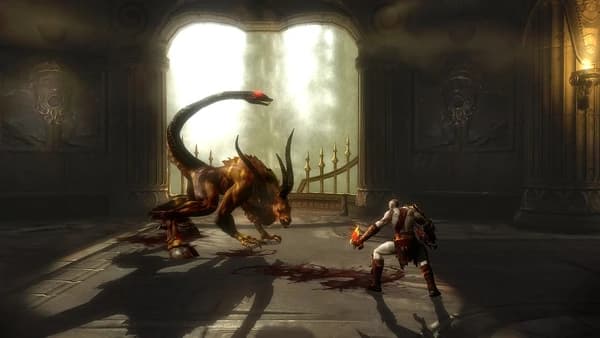
Chimera
The Chimera was a great three-natured monster, bearing the heads of a goat and a lion and a serpent for a tail. Loosed as a minion of Olympus, it breathed fire and venom against Kratos in the temples and ruins of Greece.
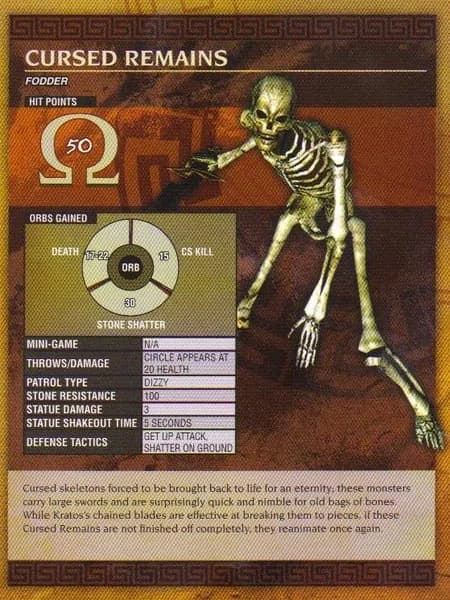
Cursed Remains: the rising bones of the dead
The Cursed Remains were animated skeletons that rose from scattered piles of bone to fight the living. Encountered across the Greek lands, they were weak alone but dangerous in numbers, collapsing and reforming to escape a final death.
Cyclopes: the one-eyed giants of Greece
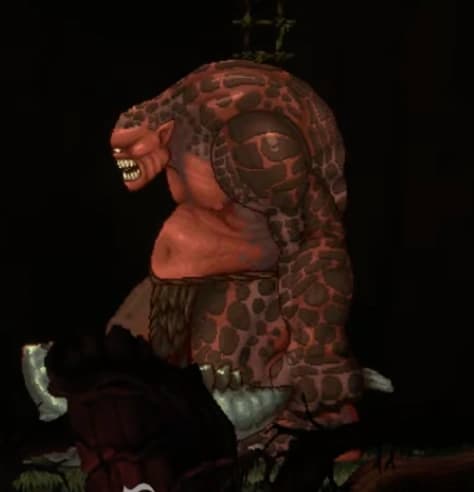
The Cyclopes were a race of burly, one-eyed giants of the Greek world. Once peaceful shepherds, they were dragged into the first War of the Titans and used thereafter as beasts of war in the armies of the gods.
Dark Elves: Alfheim's insectoid Dokkalfar
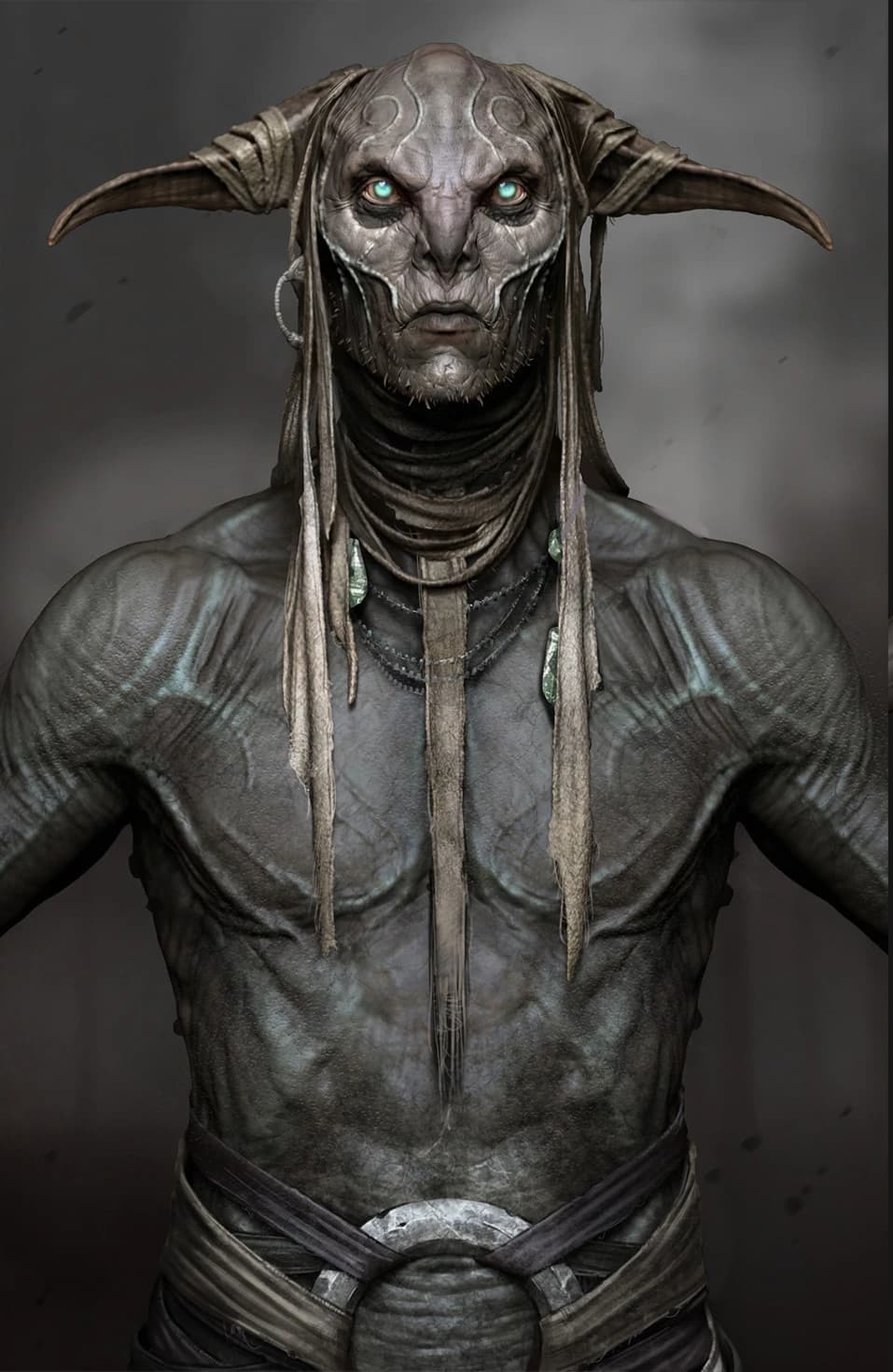
The Dokkalfar nested in the dark caves of Alfheim and fought the Light Elves for the Light. Their war ran on until the days of Ragnarok ended it.
Get new articles in your inbox
No spam. New lore drops, canon conflicts, and deep dives only when they’re worth reading.
Some links on Lore Fortress are affiliate links. If you buy through them we earn a small commission at no extra cost to you.