The Nine Realms
The Norse World
The Nine Realms were the worlds of the Norse gods and the countless races who dwelt along the branches of Yggdrasil. From the void of Ginnungagap and the body of Ymir they took shape, and they endured through the fall of Asgard at Ragnarok.
The Nine Realms, known to their inhabitants as the Norse World and to foreigners as the Northlands, were the worlds of the Norse gods and the many races who lived along the branches of the World Tree, Yggdrasil. They numbered nine: Midgard, Alfheim, Asgard, Vanaheim, Niflheim, Muspelheim, Helheim, Svartalfheim, and Jotunheim, bound together by the tree and joined by the Realm Between Realms, an in-between space among them. It was to these realms that Kratos and his son Atreus came after Greece, and it was here that the prophecy of Ragnarok ran its course. (God of War: Lore and Legends; God of War (2018); God of War Ragnarök)
Origins from Ginnungagap#
The realms existed among the branches of Yggdrasil, a tree said to lie beyond time and space and therefore to have no beginning. But there was a time when no realms existed, only the void called Ginnungagap, in which fire and ice met. Where they touched they created what would become the Spark of the World, and from that meeting came a mystic water carrying the life-blood of something new. From this water rose Ymir, the first of the Jotnar, a being of pure creation and chaos who was mother and father to all that followed, for every god, man, and beast first came from his flesh. (God of War (2018))
Seeking to dominate the rest of creation, the Aesir killed Ymir, with Odin spilling his blood with the spear Gungnir under the pretext of bringing order. From Ymir's flesh Odin shaped Midgard, where humanity would live alongside most of the animals, and so the worlds of the Norse cosmos took their familiar form. (God of War (2018))
The realms of gods and mortals#
Asgard was the centerpiece of the gods' civilization, ruled by Odin and sealed off from the rest of the world, the final home of the greatest fallen warriors until Ragnarok came. Vanaheim was the most mysterious of the realms, an ethereal expanse of colorful forests and shining lakes home to the Vanir, the Aesir's great rivals, whose mastery of magic made it impossible to enter without their permission. Jotunheim, the ancestral home of the giants, held the tallest mountains of all the realms and, after Odin's genocide, an endless field of giant corpses; once the giants retreated there, no one could enter again. (God of War (2018); God of War Ragnarök)
Midgard was the middle ground among the realms, a vast and cold land of forests, mountains, and waterways dominated by the great Lake of Nine, at whose center stood Tyr's Temple. Alfheim was a Realm of lush forests and tranquil waters torn by an endless war between the Light Elves and the Dark Elves over its great Light. Svartalfheim was the homeland of the cunning, inventive dwarves, off-limits to all but their own kind, where their greatest works were forged. (God of War (2018); God of War Ragnarök)
The harsher realms and the afterlife#
Niflheim was a small but deadly Realm of magical mists, once home to a breakaway colony of dwarves led by the craftsman Ivaldi, where a maze rearranged itself with every entry and a cursed fog born of Odin's wrath drained the life of any who lingered. Muspelheim was a land of primordial fire and blistering heat, an expanse of lava flows and volcanic ash where a tribe of fire giants slumbered, ruled by Surtr, whose famous sword stood embedded in its highest volcano awaiting Ragnarok. (God of War (2018); God of War Ragnarök)
Helheim, also called Hel, was the primary Norse afterlife, a freezing Realm where those who did not die honorably in battle came to be tormented by illusions of their greatest regrets. Unlike Valhalla, which received only those who fell honorably in combat, Helheim housed the vast majority of the dead, and Hel-Walkers roamed it freely. (God of War (2018); God of War Ragnarök)
The age of the Aesir and its end#
For centuries the Aesir under Odin held political and economic dominion over the Nine Realms, sealing some away, conquering others, and ruling through fear, information, and the endless armies of the Einherjar. That grasp was broken at Ragnarok. When Kratos and his allies raised the realms in revolt and brought down Odin, only Asgard was destroyed; the fire giant Surtr, transformed into Ragnarok itself, shattered it, and its burning remnants fell across the other worlds. (God of War Ragnarök)
The other eight realms survived. With the death of Odin and the fall of Asgard, the Aesir's centuries-long reign ended, and the realms achieved full independence and freedom at last, free to thrive after generations under the All-Father's rule. The God of War timeline follows those centuries from Ymir's death to the fall of Asgard. (God of War Ragnarök)
Frequently asked questions
- What are the Nine Realms?
- The Nine Realms were the worlds of the Norse gods and the many races who lived along the branches of the World Tree, Yggdrasil. They were known to their inhabitants as the Norse World and to foreigners as the Northlands.
- What are the names of the Nine Realms?
- The nine were Midgard, Alfheim, Asgard, Vanaheim, Niflheim, Muspelheim, Helheim, Svartalfheim, and Jotunheim. They were bound together by Yggdrasil and joined by the Realm Between Realms, an in-between space among them.
- How were the Nine Realms created?
- Before the realms existed there was only the void called Ginnungagap, where fire and ice met and created the Spark of the World, from which rose Ymir, the first of the Jotnar. The Aesir killed Ymir to dominate creation, and Odin shaped the realm of Midgard from his flesh.
- Who ruled the Nine Realms?
- For centuries the Aesir under Odin held political and economic dominion over the Nine Realms, sealing some away, conquering others, and ruling through fear, information, and the armies of the Einherjar.
- What happened to the Nine Realms at Ragnarok?
- When Kratos and his allies raised the realms in revolt and brought down Odin, only Asgard was destroyed, shattered by the fire giant Surtr transformed into Ragnarok itself. The other eight realms survived, and with Odin's death and Asgard's fall the Aesir's reign ended and the realms achieved full independence.
Sources
- GameGod of War (2018), Santa Monica Studio, 2018
- GameGod of War Ragnarök, Santa Monica Studio, 2022
- BookGod of War: Lore and Legends, Rick Barba, Dark Horse Books, 2020
Spotted a factual error or a primary source we missed? Email a correction. Every flagged claim gets reviewed.
Followed from this entry
Alfheim: the elves' war over the Light
Light and Dark Elves fought for centuries over the Light of Alfheim, the source that powers the Bifrost. It changed hands more than two hundred times.
Asgard
Asgard was the realm of the Aesir gods, perched in the crown of Yggdrasil and ruled by Odin from the hall of Gladsheim. Behind the great wall of Hrimthur it stood as a fortress against the prophesied doom of Ragnarok, until Kratos breached it and the realm fell.
Helheim: the frozen hell even Odin feared
Those who died of age, disease or crime were sent to Helheim, a dark and unyielding cold where no fire burned. Even Odin could not last there long.
Jotunheim: where Tyr hid the last giants
Tyr sealed the giants' homeland away as Odin hunted the Jotnar to extinction. Kratos and Atreus reached it at last to scatter Faye's ashes there.
Lake of Nine
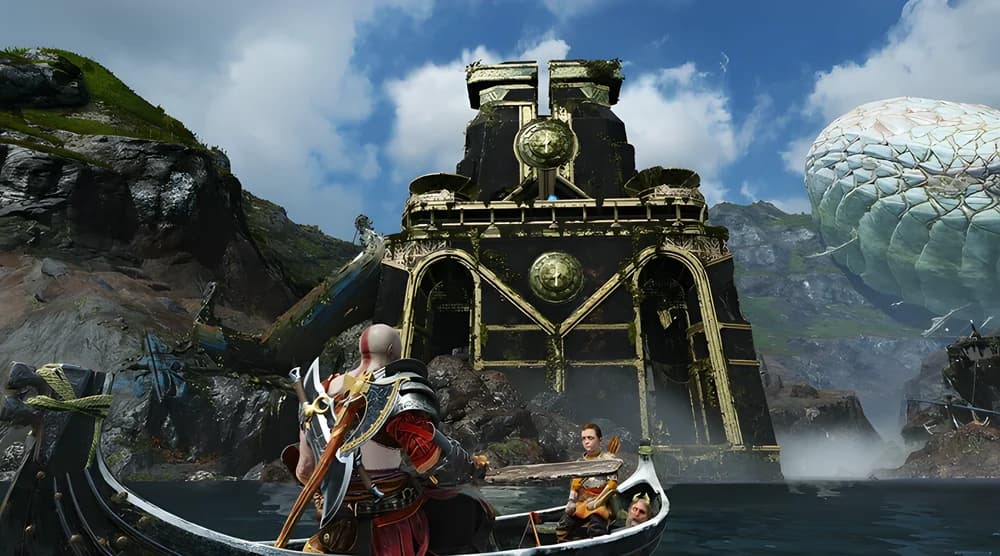
The Lake of Nine was the great central lake of Midgard, ringed by the towers of the Nine Realms and crossed by the World Serpent. It served as the hub from which Kratos and Atreus reached the far regions of the realm.
Midgard: Kratos' home, shaped from Ymir
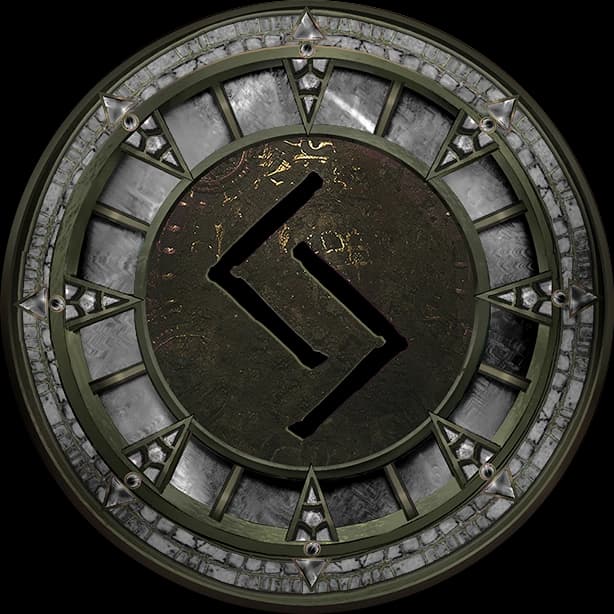
Odin shaped Midgard from the body of the giant Ymir. Kratos settled there after leaving Greece, and Fimbulwinter later froze the Lake of Nine.
Mentioned in16 entries
Fafnir: the dwarf thief who became a dragon
Fafnir Hreidmarson was a dwarf of Svartalfheim who ranged across the realms stealing treasure and made himself a nuisance to Aesir and Vanir alike. He was turned into a dragon by something he took, most likely a Vanir mirror, and was later chained in his own plundered storeroom by the dwarven king Mótsognir.
God of War Story Explained: the Whole Saga from Sparta to Ragnarök
The full God of War story in order, one main game at a time. Kratos serves Ares, kills him, destroys Olympus, starts again in the Norse lands and finally ends Odin, with the Valhalla epilogue as the last word.
God of War Timeline: every major event from the Primordials to Valhalla
The full in-universe chronology of God of War, from the war of the Primordials and the fall of the Titans to Kratos's life in Sparta, his war on Olympus, and the end of the Aesir at Ragnarök. The games give almost no calendar years, so events are ordered by story sequence and grouped into eras, with notes wherever the games' own placement is vague.
God of War Weapons List: the Name of Every Weapon Kratos Has Used
Kratos has carried two dozen weapons across two lifetimes, from a Spartan spear to a spear built from a ring that copies itself. This list runs through them in the order he got them, Greek era first, then Norse.
Hope: the greatest weapon in the world
Hope was a blessed power strong enough to kill a god, hidden by Athena at the bottom of Pandora's Box as a counterweight to the evils sealed there after the Great War. Kratos absorbed it without knowing when he opened the Box to slay Ares, awakened it through forgiveness to destroy Zeus, and released it to mankind on the point of the Blade of Olympus.
Ivaldi: the dwarf who poisoned Niflheim
Ivaldi was a dwarven alchemist who built a workshop in the realm of ice and learned to harness its frost, producing marvels that unsettled men and gods alike. When Odin moved against him he answered with lethal contrivances, reached for forces beyond his measure, and cursed the mists of Niflheim into a killing fog that took him as its first victim.
Mask of Creation
The Mask of Creation was a primordial wooden mask bound to the Rift of Creation, sought by Odin for the boundless knowledge it was said to grant. Its pieces were scattered across the Nine Realms, and Atreus restored it before destroying it during Ragnarok.
Monster: the beasts of the mythic world
Monsters, also called Beasts, were the hostile creatures of the mythic world, beings that could be counted neither as mortals nor as gods or Titans. From the minotaurs and gorgons of Greece to the trolls and dragons of the Norse realms, they haunted every land that Kratos ever walked.
Mythology: the many faiths of one world
In the world Kratos walked, mythology was not belief but fact. Every body of myth that mankind told was true within its own land, from the Olympians of Greece to the Aesir of the north, with the gods of Egypt, Persia, and lands further still holding dominion over their own corners of the earth.
Oluf Nautson: chief of the Kol Raiders
Oluf Nautson was a mortal Midgardian chieftain who led the Kol Raiders through the years of Fimbulwinter, a masked giant of a man whose band hunted and ate the wolves of Midgard. His cruelty brought him against Kratos, who killed him at his own keep and later faced his shade again in Valhalla.
Skjöldr: the farm boy of New Midgard
Skjöldr was a young Midgardian farm boy resettled on the outskirts of Asgard after the Desolation destroyed his homeland. He befriended Atreus at the foot of the great wall, survived being thrown into the battle of Ragnarök as one of Odin's mortal shields, and afterward led the displaced Midgardians as they rebuilt their lives in Midgard.
The Great Lodge
The Great Lodge, also called Odin's Hall, was the seat of the All-Father's power, a vast Viking longhouse at the centre of Gladsheim where Odin lived, studied, and ruled the Nine Realms. It was built above the Rift, the place where Odin slew Ymir, and fell with the rest of Asgard at Ragnarok.
+ 4 more
Get new articles in your inbox
No spam. New lore drops, canon conflicts, and deep dives only when they’re worth reading.
Some links on Lore Fortress are affiliate links. If you buy through them we earn a small commission at no extra cost to you.