Boreas
God of the North Wind
Boreas was the Olympian God of the North Wind, Storms, and Winter, who led the Chariot of Helios across the sky as the Devouring One. Awakened by Kratos to find the captive Sun God, he lent his name and his frozen power to shrines, weapons, and beasts scattered across the snowbound reaches of Greece.
Boreas was the Olympian God of the North Wind, Storms, and Winter, who led the Chariot of Helios across the heavens. Greater than his brother wind gods, he was known as the Devouring One, and his frozen power was woven through the snowbound corners of Greece that Kratos crossed in his quests. (God of War: Chains of Olympus; God of War: Ghost of Sparta; God of War II; God of War III)
The Devouring One#
Boreas was the eldest of the four wind gods and the most powerful by far, the god of the north wind, of storms, and of winter. Where his brothers Notos, Euros, and Zephyros remained minor, Boreas held a place of true prominence, leading the Fire Steeds of Helios as an entity rather than as a horse among them. Known as the Devouring One, he had a shrine raised in his honor among the snowy heights of the Mounts of Aroania, and a stone likeness carved at the Palace of the Fates that stood not only for the north wind but for ice, cold, snow, and winter alike. (God of War: Chains of Olympus; God of War: Ghost of Sparta; God of War II)
Awakening the Sun Chariot#
When Helios vanished and the world was swallowed in darkness and the Black Fog of Morpheus, Kratos awakened Boreas. The god led the Chariot of Helios to where the Sun God himself was being held, deep in the Underworld, guiding the Spartan toward the captive deity. (God of War: Chains of Olympus)
Relics of the north wind#
Through the snowbound reaches of Greece, the cold power of Boreas marked weapon, shrine, and beast. Within the ice caves of the snow mountains lay the Shrine of Boreas, where Kratos could claim the Horn of Boreas, and among those same peaks dwelt the Dredge of Boreas, a minotaur-like beast that bore its young, the Boreas Spawns, upon its back. In the Palace of the Fates, Kratos took up the Hail of Boreas and used it to open a doorway carved in the god's image, reaching the spire where the Sisters of Fate resided. Later still, after slaying Skorpius within the Labyrinth, the Spartan claimed Boreas' Icestorm and used it to activate the great maze and its workings. (God of War: Ghost of Sparta; God of War II; God of War III)
Frequently asked questions
- Who is Boreas in God of War?
- Boreas was the Olympian God of the North Wind, Storms, and Winter, who led the Chariot of Helios across the heavens. Known as the Devouring One, he was the eldest and most powerful of the four wind gods.
- Why was Boreas called the Devouring One?
- The Devouring One was the title Boreas held as the eldest and by far the most powerful of the four wind gods. Where his brothers Notos, Euros, and Zephyros remained minor, Boreas held a place of true prominence, leading the Fire Steeds of Helios as an entity rather than as a horse among them.
- How did Kratos use Boreas to find Helios?
- When Helios vanished and the world was swallowed in darkness and the Black Fog of Morpheus, Kratos awakened Boreas. The god then led the Chariot of Helios to where the Sun God was being held captive, deep in the Underworld.
- What relics of Boreas did Kratos claim?
- Kratos claimed the Horn of Boreas at the Shrine of Boreas in the ice caves of the snow mountains, and took up the Hail of Boreas in the Palace of the Fates to open a doorway to the Sisters of Fate. After slaying Skorpius in the Labyrinth, he claimed Boreas' Icestorm and used it to activate the great maze.
- What is the Dredge of Boreas?
- The Dredge of Boreas was a minotaur-like beast that dwelt among the snow mountain peaks. It bore its young, the Boreas Spawns, upon its back.
Sources
- GameGod of War II, Santa Monica Studio, 2007
- GameGod of War: Chains of Olympus, Ready at Dawn, 2008
- GameGod of War III, Santa Monica Studio, 2010
- GameGod of War: Ghost of Sparta, Ready at Dawn, 2010
Spotted a factual error or a primary source we missed? Email a correction. Every flagged claim gets reviewed.
Followed from this entry

Helios: the sun god Kratos beheaded
Kratos once saved Helios from the Titan Atlas. Years later he tore the sun god's head from his body and carried it through Olympus as a lantern.
Morpheus
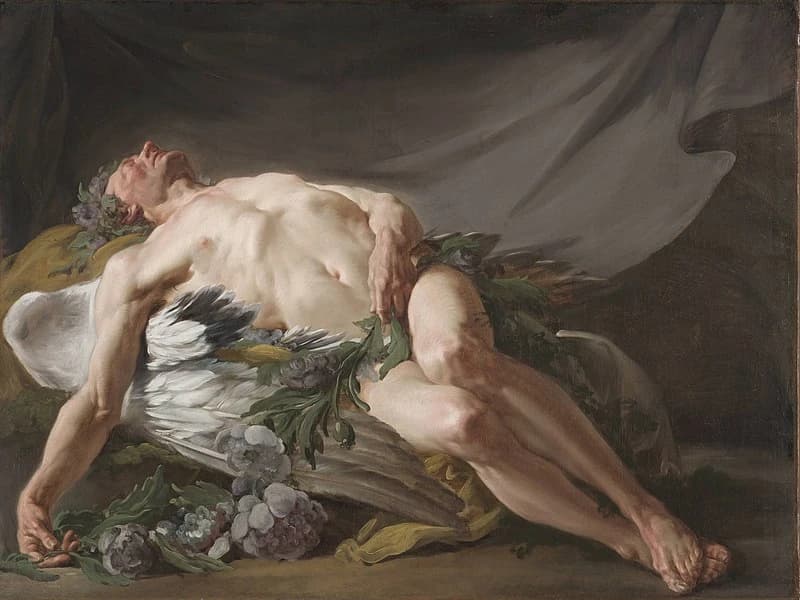
Morpheus was the Greek God of Dreams, a power of night who ruled the Realm of Dreams. When Helios was torn from the sky, he seized his chance to cast the gods and mortals into slumber and wrap the world in black fog, retreating only when Kratos returned the sun to the heavens.
Kratos
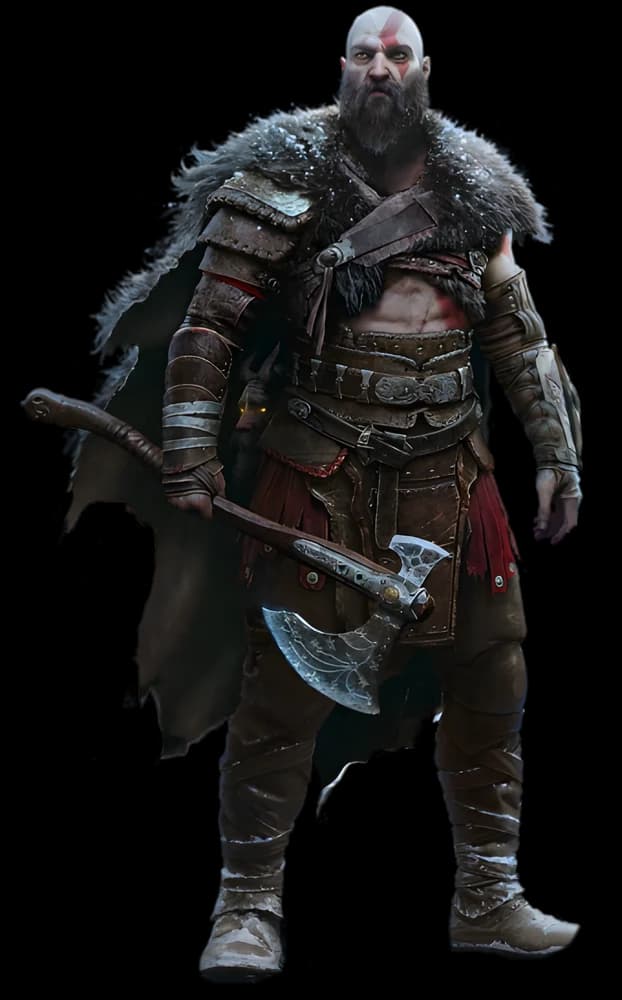
Kratos was the demigod son of Zeus who rose from a Spartan general to the Greek God of War, destroyed the pantheon of Olympus in a quest for vengeance, and then began again in the Norse realms as a father seeking to leave his bloody past behind.
Skorpius
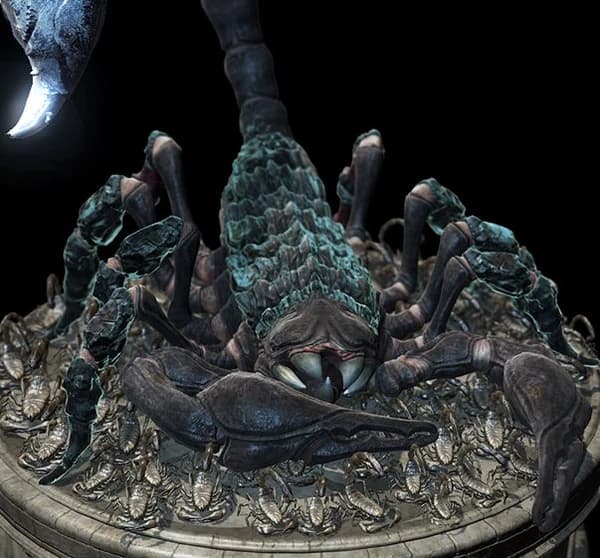
Skorpius was the Queen of the Scorpions, a vast scorpion that dwelt in the Labyrinth deep beneath Mount Olympus. Her exoskeleton was infused with onyx crystals, and Kratos slew her amid the rising cubes of the Labyrinth to claim Boreas' Icestorm.
Also in Greek Era
Ariadne: the Cretan princess who became a goddess
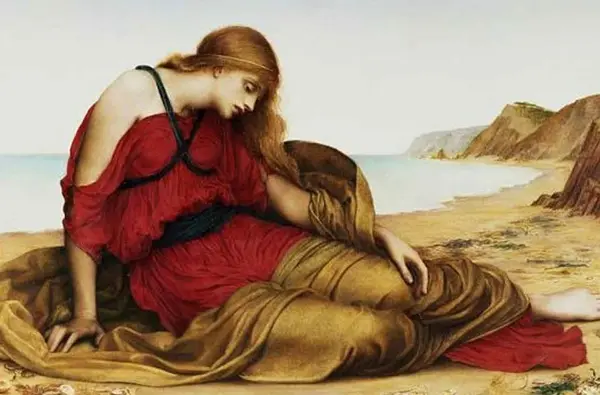
Ariadne was a princess of Crete, daughter of King Minos, who gave Theseus the thread that carried him out of the Cretan maze. Taken from the hero by Dionysus, she was raised to godhood as his wife, while the man she once saved gave the rest of his life to the hope of winning her back.
Erebus: the Primordial of Darkness
Erebus was the Primordial entity of Darkness, one of the first deities born from Chaos in the Void and the brother and consort of Nyx, the Night. His dark mists filled the deep hollows of the earth, his name clung to the netherworld of the dead, and later writers counted the ferryman Charon and the Fates among his children. His own end was never recorded.
Mentioned in3 entries
Daedalus
Daedalus was the master craftsman of Athens who built the great Labyrinth for Zeus in return for the promise of his lost son Icarus. Driven to madness in years of servitude and chained within his own creation, he was crushed when Kratos set the Labyrinth turning, and died grateful at last to be free.
Monster: the beasts of the mythic world
Monsters, also called Beasts, were the hostile creatures of the mythic world, beings that could be counted neither as mortals nor as gods or Titans. From the minotaurs and gorgons of Greece to the trolls and dragons of the Norse realms, they haunted every land that Kratos ever walked.
Skorpius
Skorpius was the Queen of the Scorpions, a vast scorpion that dwelt in the Labyrinth deep beneath Mount Olympus. Her exoskeleton was infused with onyx crystals, and Kratos slew her amid the rising cubes of the Labyrinth to claim Boreas' Icestorm.
Get new articles in your inbox
No spam. New lore drops, canon conflicts, and deep dives only when they’re worth reading.
Some links on Lore Fortress are affiliate links. If you buy through them we earn a small commission at no extra cost to you.