Medusa
Queen of the Gorgons
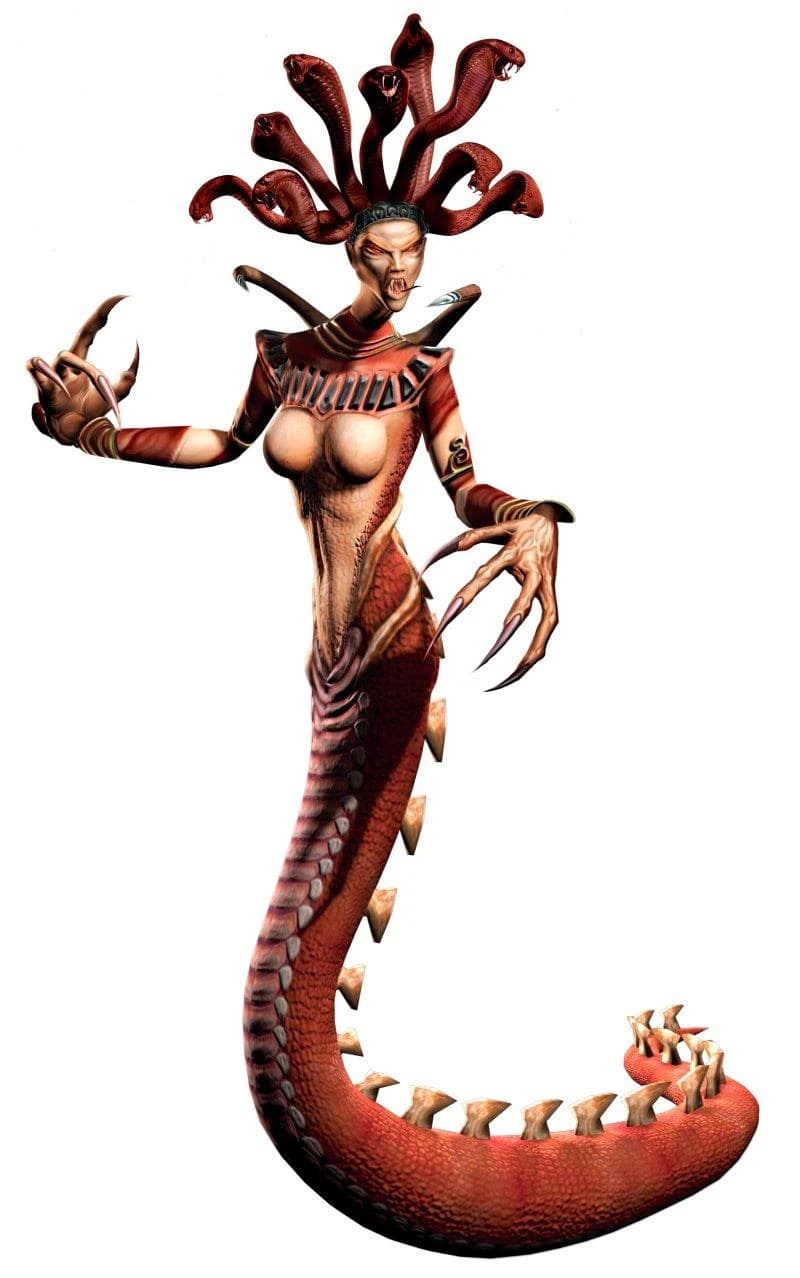
Medusa was a Gorgon queen who fought among the armies of Ares during the siege of Athens. Slain by Kratos at the command of Aphrodite, her severed head granted him the petrifying power of Medusa's Gaze.
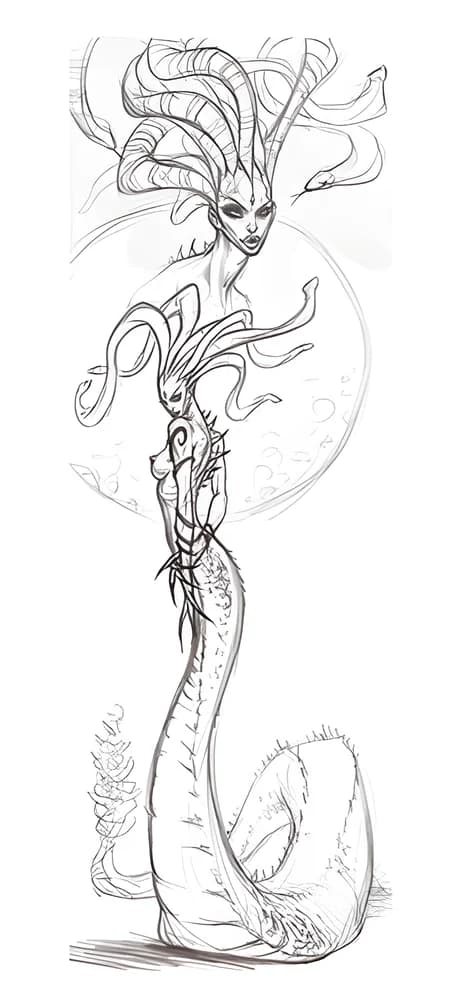
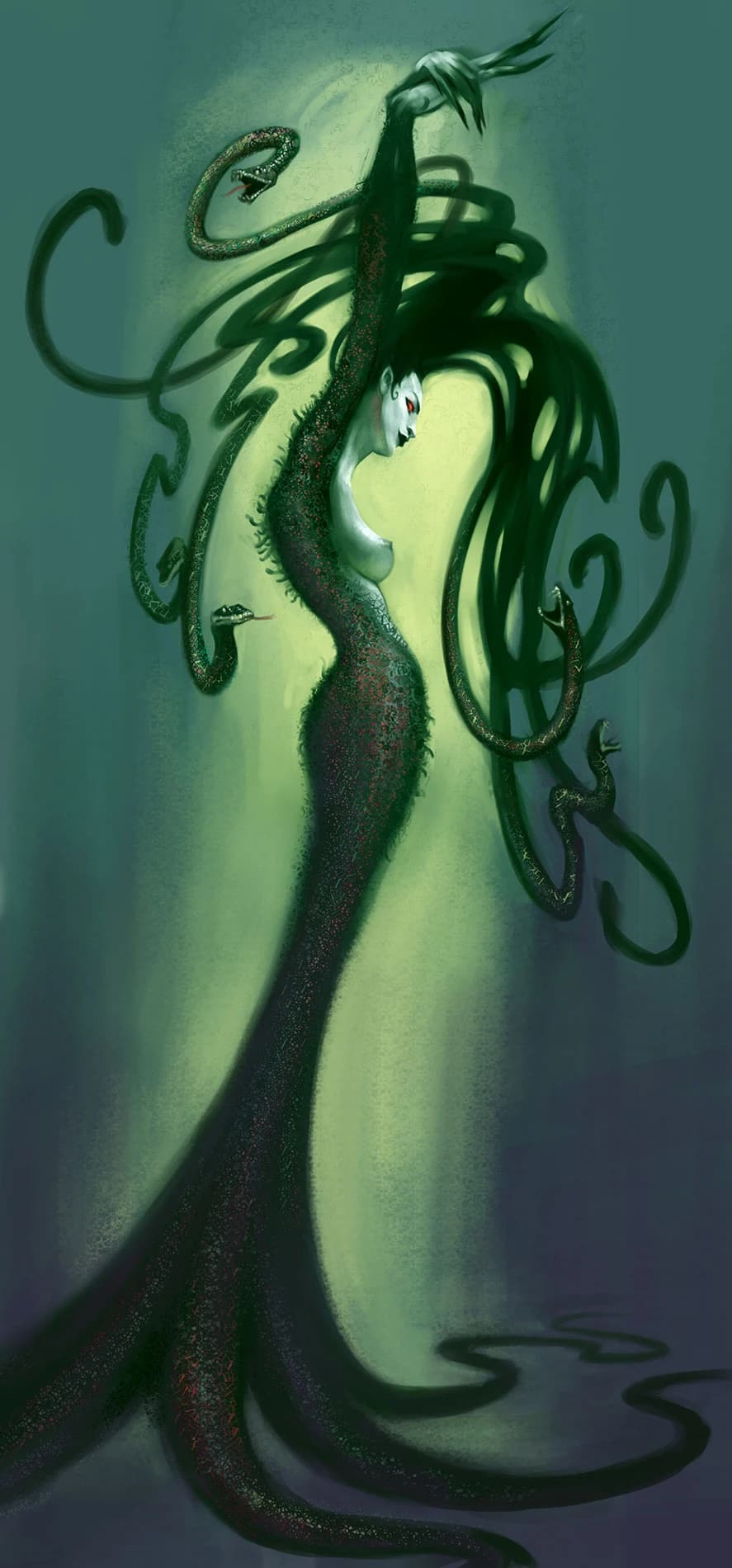
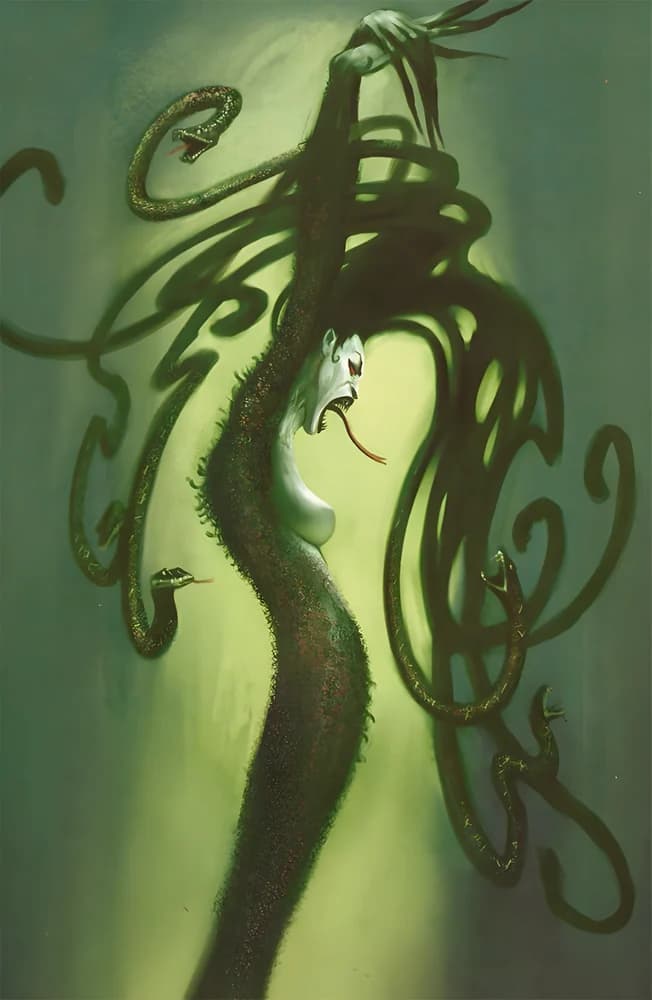
Medusa was a Gorgon who bore the title Queen of the Gorgons, a serpentine creature whose gaze could turn flesh to stone. She fought among the armies of Ares during the siege of Athens and was slain there by Kratos, who tore the head from her body and wielded its power against his enemies. (God of War (2005))
The siege of Athens#
During the siege of Athens, Medusa held the title of Queen of the Gorgons, and she and her race marched among the armies of Ares, the host besieging the city of Athena. As Kratos pressed through the ruins of the city he met Aphrodite, who charged him to slay Medusa by taking off her head. The hissing Gorgon rose from the shadows to face him, and after a struggle Kratos tore her head from her body with his bare hands. Pleased with the deed, Aphrodite granted him the power of Medusa's Gaze, which he turned at once against a group of Minotaurs, turning them to stone. (God of War (2005))
With Medusa's death, her sisters Euryale and Stheno were left to lead the Gorgons. Euryale would later fall to Kratos as well, while Stheno endured, suggesting that Medusa had in fact been a later queen of her kind rather than the first. The multiplayer of God of War: Ascension says the hero Perseus had slain Medusa with a blade given to him by Athena, so how she came to stand alive in Athens is never explained; one possibility is that Ares raised her from the dead to swell his largely undead host. (God of War (2005); God of War II; God of War: Ascension)
Powers#
Like the lesser Gorgons, Medusa could turn her foes to stone with her gaze, and though she was reputed to be more than an ordinary Gorgon, her power was much the same as theirs, save that she was somewhat harder to kill and demanded more blows to bring down. She could vanish and reappear in a cloud of blood-red smoke, as she did when she first confronted Kratos, and she was swift, lashing out with her serpent's tail. The head Kratos took from her retained its petrifying power as a weapon in his hands, the Gaze of Medusa, and long afterward, in the Norse realms, he would recall her among the opponents whose battle strategies he described to the goddess Freya. (God of War (2005); God of War Ragnarök)
Frequently asked questions
- Who is Medusa in God of War?
- Medusa was a Gorgon who bore the title Queen of the Gorgons, a serpentine creature whose gaze could turn flesh to stone. She fought among the armies of Ares during the siege of Athens.
- Why did Medusa fight for Ares?
- The game never spells out her reasons. Medusa and her race simply marched among the monstrous armies of Ares during the siege of Athens, the city of his sister Athena.
- How did Kratos kill Medusa?
- As Kratos pressed through the ruins of Athens, Aphrodite charged him to slay Medusa by taking off her head. The hissing Gorgon rose from the shadows to face him, and after a struggle Kratos tore her head from her body with his bare hands.
- What did Kratos gain from killing Medusa?
- Pleased with the deed, Aphrodite granted Kratos the power of Medusa's Gaze, which he turned at once against a group of Minotaurs, turning them to stone. The severed head retained its petrifying power as a weapon in his hands.
- What happened to the Gorgons after Medusa died?
- With Medusa's death, her sisters Euryale and Stheno were left to lead the Gorgons. Euryale would later fall to Kratos as well, while Stheno endured.
Gallery
Images via God of War Wiki
Sources
- GameGod of War (2005), Santa Monica Studio, 2005
- GameGod of War II, Santa Monica Studio, 2007
- GameGod of War: Ascension, Santa Monica Studio, 2013
- GameGod of War Ragnarök, Santa Monica Studio, 2022
Spotted a factual error or a primary source we missed? Email a correction. Every flagged claim gets reviewed.
Followed from this entry
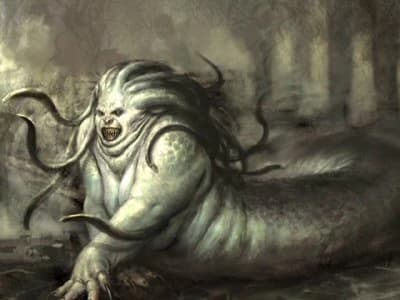
Euryale
Euryale was an immortal Gorgon and the sister of Medusa, who took the throne of the Gorgons after Kratos slew her kin. From her temple on the Island of Creation she sought to sacrifice the Ghost of Sparta to the Sisters of Fate, until he cut off her head and turned it against his enemies.
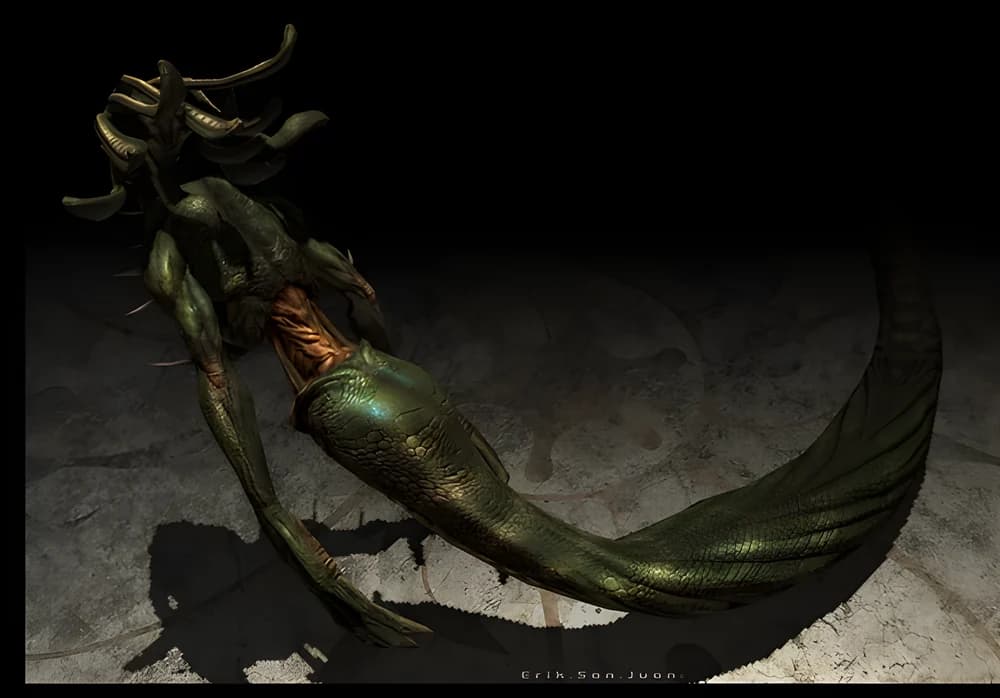
Gorgon
The Gorgons were a serpentine race of female monsters whose gaze turned the living to stone. Ruled by three matriarchs, Medusa, Euryale, and Stheno, they marched in the army of Ares and were hunted across Greece by Kratos, who claimed their severed heads as weapons.
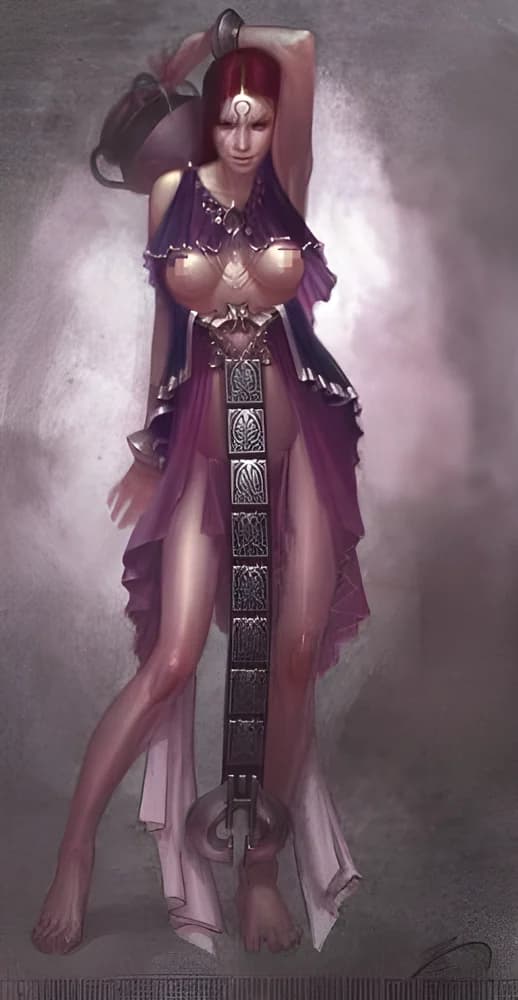
Aphrodite: Hephaestus' wife, lover of Ares
Aphrodite was married to the smith Hephaestus but had no love for him. In myth she took Ares as a lover, and in the games she gave Kratos Medusa's gaze.
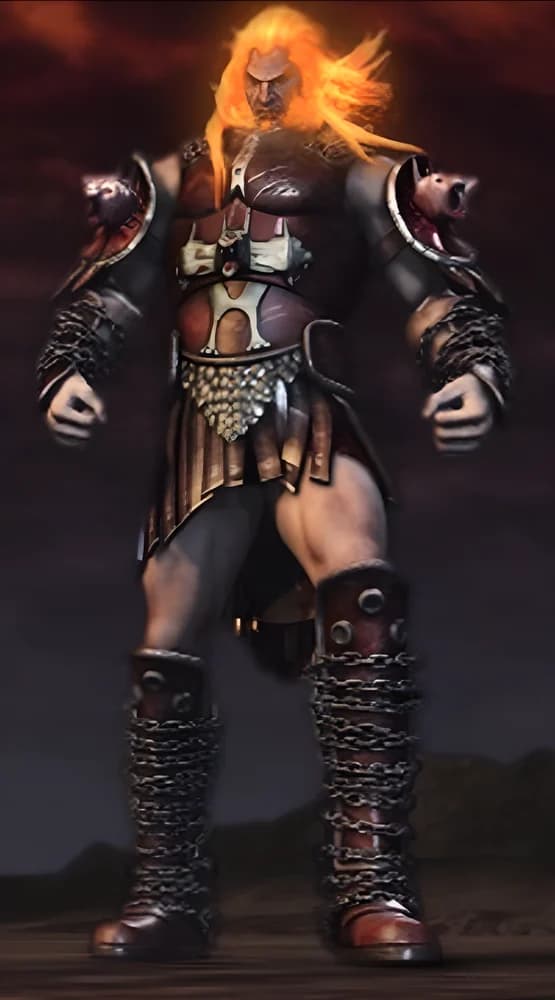
Ares: the god who made Kratos a killer
Ares tricked Kratos into slaughtering his own wife and daughter to bind him as a weapon. Kratos killed him at Athens and took his place as God of War.
Athena: from Kratos' guide to his enemy
Athena set Kratos against Ares to save Athens, then turned on him when his reign grew worse. She died taking a blow meant for Zeus, and named Kratos his son.

Athens: Athena's city, besieged by Ares
Ares laid siege to Athens out of hatred for his sister Athena. Kratos was sent to save it, and killed Ares there to become the new God of War.
Mentioned in10 entries
Aphrodite: Hephaestus' wife, lover of Ares
Aphrodite was married to the smith Hephaestus but had no love for him. In myth she took Ares as a lover, and in the games she gave Kratos Medusa's gaze.
Blades of Chaos: chained to Kratos' arms
The Blades of Chaos were forged in the Underworld for Ares, who seared their chains onto Kratos' forearms. They burn with the fire of Tartarus.
Euryale
Euryale was an immortal Gorgon and the sister of Medusa, who took the throne of the Gorgons after Kratos slew her kin. From her temple on the Island of Creation she sought to sacrifice the Ghost of Sparta to the Sisters of Fate, until he cut off her head and turned it against his enemies.
God of War (2005) Story Explained: Plot Summary and Ending
The whole story of the first God of War in order, from the Hydra in the Aegean to the death of Ares at Athens. Then the ending in plain terms: why Kratos jumped from the cliff, why Athena saved him, and how he ended up on Ares's throne.
God of War Timeline: every major event from the Primordials to Valhalla
The full in-universe chronology of God of War, from the war of the Primordials and the fall of the Titans to Kratos's life in Sparta, his war on Olympus, and the end of the Aesir at Ragnarök. The games give almost no calendar years, so events are ordered by story sequence and grouped into eras, with notes wherever the games' own placement is vague.
God of War Weapons List: the Name of Every Weapon Kratos Has Used
Kratos has carried two dozen weapons across two lifetimes, from a Spartan spear to a spear built from a ring that copies itself. This list runs through them in the order he got them, Greek era first, then Norse.
Gorgon
The Gorgons were a serpentine race of female monsters whose gaze turned the living to stone. Ruled by three matriarchs, Medusa, Euryale, and Stheno, they marched in the army of Ares and were hunted across Greece by Kratos, who claimed their severed heads as weapons.
Monster: the beasts of the mythic world
Monsters, also called Beasts, were the hostile creatures of the mythic world, beings that could be counted neither as mortals nor as gods or Titans. From the minotaurs and gorgons of Greece to the trolls and dragons of the Norse realms, they haunted every land that Kratos ever walked.
Pegasus
Pegasus was a great winged horse of the Greek world, gray of coat with wings wreathed in flame. Sent forth by Gaia, he carried Kratos through the skies on his second war against Olympus until the Dark Rider struck him from the air above the Island of Creation.
Perseus
Perseus was a Greek demigod hero, a son of Zeus and half-brother of Kratos. Driven mad by his imprisonment on the Island of Creation, where he sought the Sisters of Fate to revive his lost love Andromeda, he was slain by Kratos.
Get new articles in your inbox
No spam. New lore drops, canon conflicts, and deep dives only when they’re worth reading.
Some links on Lore Fortress are affiliate links. If you buy through them we earn a small commission at no extra cost to you.