Mythology: the many faiths of one world
In the world Kratos walked, mythology was not belief but fact. Every body of myth that mankind told was true within its own land, from the Olympians of Greece to the Aesir of the north, with the gods of Egypt, Persia, and lands further still holding dominion over their own corners of the earth.
A mythology was a people's collection of myths, the stories a culture told to explain nature, history, and custom. In most worlds such stories would be a matter of faith. In the World that Kratos walked, they were a matter of fact. The games treat the Greek myths, the Norse myths and hints of many others as all true at once on the same earth, each holding sway over its own part of the world. The pantheon of Zeus ruled Greece, the pantheon of Odin ruled the Norse lands, and neither account of creation cancelled the other, for each was true within its own borders. (God of War; God of War (2018))
Many truths upon one earth#
The central fact of the World was that its mythologies did not compete for truth. Greece and Scandinavia held entirely different conceptions of how the universe began and what shape it took, and yet both were correct simultaneously. Each region of the earth carried its own complete universe, with its own creation, its own monsters, its own magic, and its own afterlife, and the gods of each tradition held dominion over that universe and no other. What separated one mythology from the next was geography. A traveler who went far enough left the reach of one pantheon and entered the reach of another, the way an ordinary journey carried a man from one kingdom into the next. (God of War (2018); God of War Ragnarök)
This arrangement had a hard consequence that the Greek world learned in fire. When Kratos brought ruin upon Olympus and the lands beneath it, the destruction he wrought unmade the Greek world alone. The other mythologies endured untouched. No single tradition, however violently it ended, could drag the rest of the earth down with it. (God of War III; God of War (2018))
The Greek tradition#
The Greek world was ruled by the Olympians, the gods of the heavens, under Zeus as their king. Its order of beings ran from the gods themselves through the Titans, the elder generation who had ruled Greece before the Olympians overthrew them, down to demigods born of unions between gods and mortals, and finally to the mortals who worshipped the gods largely out of fear. Its geography reached from Mount Olympus, seat of the pantheon, to mortal cities such as Sparta, and its dead passed into an underworld ruled by its own god. (God of War; God of War III)
This was the tradition into which Kratos was born, the tradition whose god of war he killed and replaced, and the tradition he finally tore down entirely. By the time he crossed into the north, the Greek mythology survived chiefly in his memory, and in the Blades of Chaos he carried. How much of Kratos himself was taken from those old Greek sources is covered in Kratos versus his mythological namesake. (God of War; God of War III; God of War (2018))
The Norse tradition#
Far to the north, an entirely different universe held sway. The Norse world was arranged as the Nine Realms upon the branches of the World Tree, Yggdrasil, and its gods were divided into two tribes, the Aesir of Asgard and the Vanir of Vanaheim. Odin, the Allfather, led the Aesir and through them ruled most of the realms. Where the Greek order had known Titans and demigods, the Norse order held dwarves gifted in forging, light elves and dark elves locked in their long war, the giants called Jotnar, and trolls, a once powerful people the Aesir had nearly exterminated. Its creation story began with the primordial being Ymir, from whose flesh the world was made, and its prophecies ran forward to Ragnarok, the doom of the gods. (God of War (2018); God of War Ragnarök)
None of this contradicted the Greek account in any way that mattered, because within the northern lands the Norse account was simply true. When Kratos settled in Midgard with Faye and raised Atreus there, he lived under Norse skies, subject to Norse fates, in a universe that had never been governed by Olympus. (God of War (2018))
Traditions beyond Greece and the north#
The record of the other mythologies was thinner, preserved mostly in the accounts of travelers and in relics. Egypt was home to an ancient and advanced civilization known as the River Empire, ruled by numerous gods who were half human and half animal and who were said to govern with wisdom and humility, a reputation unlike anything told of the Olympians or the Aesir. Mimir never went there himself, though he had heard it was lovely, and Egypt still stood among the best attested of these lands, with Egyptian treasures kept in Tyr's vault. (God of War (2018); God of War Ragnarök)
Persia lay to the east of Greece and pressed against the Greek world directly, its armies attacking Attica in an attempted invasion. Its king owned an Efreet, a genie of fire, and after Kratos defeated the Persian King at Attica he took the power to summon the creature for himself. The Celtic tradition was attested by Mimir's tales of his own homeland and by a triskelion on a triptych that depicted the travels of Tyr, the Norse god of war who visited foreign pantheons as a peaceful ambassador. In the far Southern Lands lived the Mayan gods, said to possess unmatched wisdom and generosity; their king, called the ruler of the heavens, freely shared writing, farming, the calendar, and the sciences with humanity, though their god of death tormented the souls of the dead with fire and water. Of Japan the record preserved little more than a few symbols among Tyr's tapestries, enough to show that it, too, existed somewhere upon the same earth. (God of War: Chains of Olympus; God of War (2018); God of War Ragnarök)
Walkers between mythologies#
Passage from one mythology into another was possible, though rare and poorly understood. Kratos made the crossing once and permanently, leaving the wreck of Greece for Midgard without ever telling how the journey was accomplished. Mimir made it gradually, drifting north from his island homeland through a succession of lands and masters until he ended in Odin's service. Tyr made it deliberately and repeatedly, traveling abroad to visit the pantheons of other lands and returning with tributes and treasures from worlds his kin never saw. (God of War (2018))
Their journeys proved that the mythologies, for all their separate skies and separate truths, shared one earth between them. The borders that divided Zeus's dominion from Odin's, and both from the gods of the River Empire or the ruler of the heavens in the south, were real but not absolute. A god could die in one world and walk into the next, and the stories mankind told would go on being true in every land at once. (God of War (2018); God of War Ragnarök)
Sources
- GameGod of War, Santa Monica Studio, 2005
- GameGod of War: Chains of Olympus, Ready at Dawn, 2008
- GameGod of War III, Santa Monica Studio, 2010
- GameGod of War (2018), Santa Monica Studio, 2018
- GameGod of War Ragnarök, Santa Monica Studio, 2022
Spotted a factual error or a primary source we missed? Email a correction. Every flagged claim gets reviewed.
Followed from this entry
The World: the many lands and mythologies of one earth
The World was the whole of creation known to gods and mortals, a single earth upon which many mythologies coexisted despite their contradictions. Each region held its own gods, monsters, magic, cosmology, and afterlife, from Greece and the Norse domains to Egypt, Persia, and lands known only through rumor and relic.
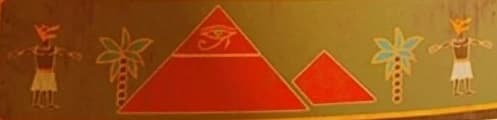
Ancient Egypt
Ancient Egypt was a distant southern land, home to the Egyptian gods and to a civilization both old and advanced. Known as the River Empire and the Land of the Pharaoh, it touched the saga of Kratos from the wars of Greece to the treasures of the Norse realms.
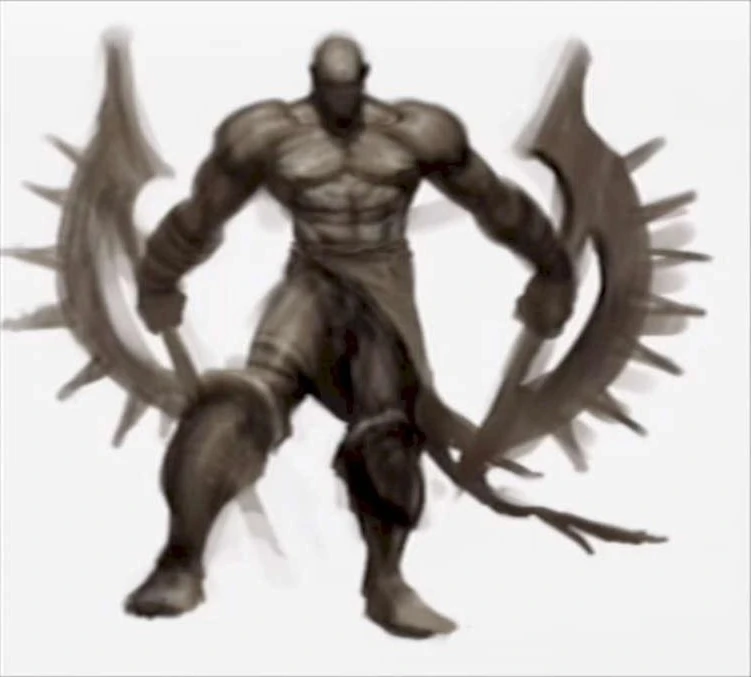
Blades of Chaos: chained to Kratos' arms
The Blades of Chaos were forged in the Underworld for Ares, who seared their chains onto Kratos' forearms. They burn with the fire of Tartarus.
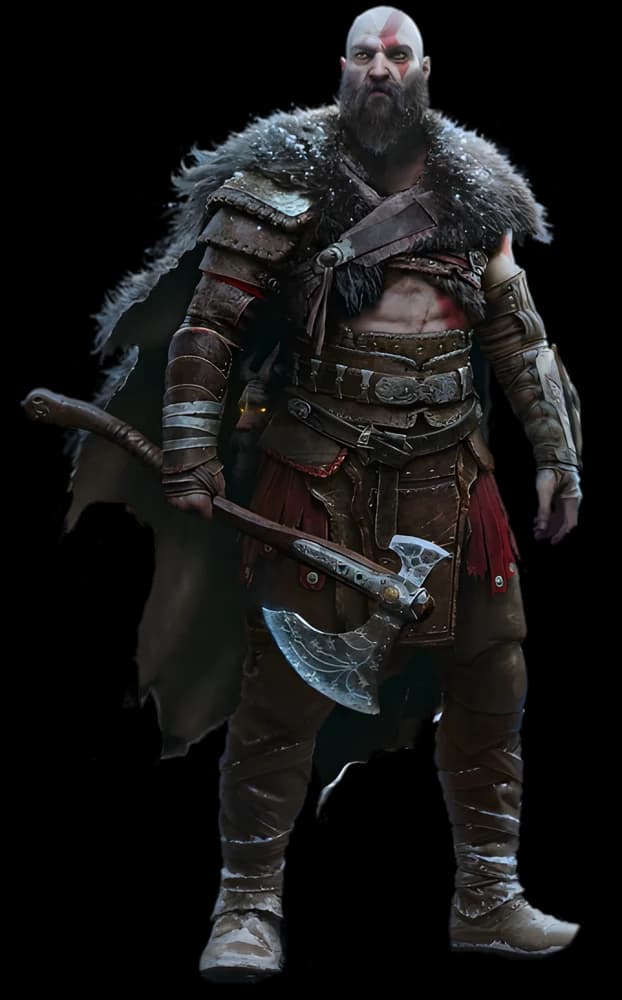
Kratos
Kratos was the demigod son of Zeus who rose from a Spartan general to the Greek God of War, destroyed the pantheon of Olympus in a quest for vengeance, and then began again in the Norse realms as a father seeking to leave his bloody past behind.
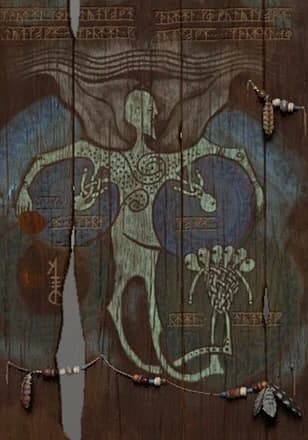
Ymir: the first being of the Nine Realms
Ymir was the original Jotunn, the first sentient being to take form in the void of Ginnungagap and the progenitor of every god, giant, and mortal that followed. Slain by Odin and his brothers, his torn body became the raw material of the realms themselves, and his murder seeded a hatred between Aesir and Jotnar that endured until Ragnarok.
The Aesir
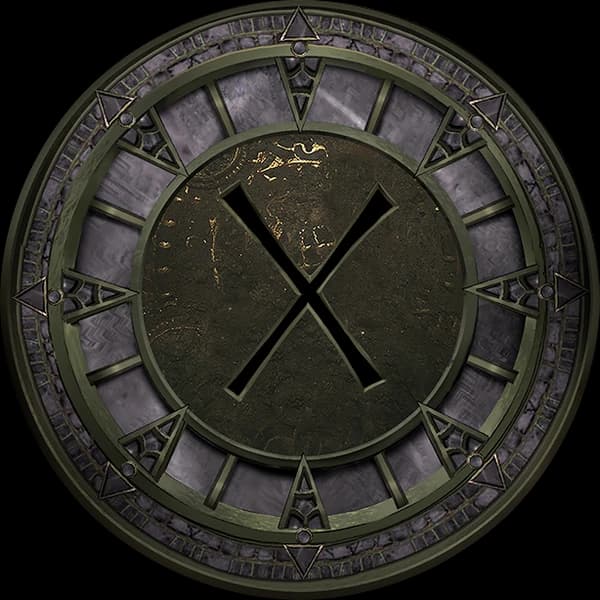
The Aesir were one of the two tribes of Norse gods, natives of Asgard known for their war-like nature and their hunger for knowledge. Descended from the slain primordial Ymir and ruled by Odin, they claimed dominion over all creation, waging genocide upon the Jotnar and war upon the Vanir before their fall in Ragnarok.
Mentioned in1 entry
Get new articles in your inbox
No spam. New lore drops, canon conflicts, and deep dives only when they’re worth reading.
Some links on Lore Fortress are affiliate links. If you buy through them we earn a small commission at no extra cost to you.