The World: the many lands and mythologies of one earth
The World was the whole of creation known to gods and mortals, a single earth upon which many mythologies coexisted despite their contradictions. Each region held its own gods, monsters, magic, cosmology, and afterlife, from Greece and the Norse domains to Egypt, Persia, and lands known only through rumor and relic.
The World was the whole of the earth as gods and mortals knew it, a single creation that somehow held many mythologies at once. Greece and its Olympian gods, the Norse domains bound to the branches of Yggdrasil, the animal-headed gods of Egypt, and pantheons further south, east, and west all coexisted upon it, each region a complete universe unto itself with its own creation, its own monsters, and its own afterlife. Kratos crossed from one of these worlds into another, leaving a ruined Greece behind him for the northern land of Midgard, and in doing so proved that the borders between mythologies could be walked. (God of War III; God of War (2018))
One earth, many mythologies#
The defining truth of the World was that many mythologies coexisted upon it despite their contradictions. The Greek and Norse worlds held completely different conceptions of the universe and of how it was created, and yet both were true and existed simultaneously. The games never explain how this works. The gods of each region held dominion over their own cosmos, complete with its own magic, its own monsters, and its own afterlife, and no single account of creation or destruction governed the rest. (God of War III; God of War (2018))
Nor do they spell out how far apart these worlds lie, or whether reaching one from another is only a journey over land and sea. What they show is that the borders could be crossed, and that Mimir, who had seen more of the earth than most, knew the World was larger than any one pantheon's claim upon it. (God of War (2018))
Passage between worlds#
Movement from one mythological world to another was possible, though the means differed and were not always clear. Kratos left Greece behind after destroying it, fleeing north to Midgard, and never told how he made the crossing. The land he abandoned did not die with its gods. Greece was later said to show signs of recovery without them, sustained by the power of Hope that Kratos had released to mankind when he ended his war on Olympus. (God of War (2018); God of War Ragnarök)
Mimir made a slower migration. He left his island homeland somewhere to the south of Midgard and served a succession of different masters further and further north, until he finally ended up in service under Odin himself. Tyr, the Norse god of war, traveled furthest of all, visiting the pantheons of other lands as a peaceful ambassador and returning with tributes and treasures from worlds his kin had never seen. How he made those crossings was never settled. (God of War (2018); God of War Ragnarök)
The Nine Domains of the north#
The Norse world was comprised of the Nine Realms, and its structure set it apart from every other land. All nine occupied the same physical space as reflections of each other, existing on different planes and coexisting on the branches of the World Tree, Yggdrasil, separated only by the Bifrost light of Alfheim. Most of them were ruled by Odin from his seat in Asgard. The void outside Yggdrasil was known as the space between worlds, an in-between region that lay outside the nine. (God of War (2018))
The origin of the Norse world was still marked upon it. The place where the worlds of Muspelheim and Niflheim had met each other in Ginnungagap at the start of time became known as the Spark of the World, and it was from that meeting of fire and ice that the creation of the world originated. Midgard, the world of mankind at the center of the nine, was the north country to which Kratos fled and where he raised his son Atreus. (Prose Edda; God of War (2018))
Egypt, the River Empire#
South and east of the lands Kratos knew lay Egypt, a desert country and home to an ancient and advanced civilization known as "the River Empire." It was ruled by numerous gods, half human and half animal, who were said to rule with wisdom and humility, a reputation that set them apart from the jealous Olympians and the tyrannical Aesir. Of all the foreign lands, Egypt was among the best attested. (God of War (2018); God of War Ragnarök)
Persia, land of the eastern invasion#
Persia was a land to the east of Greece, and the only foreign land known to have marched against the Greek world in force. In Chains of Olympus its armies, led by the Persian King and backed by monstrous beasts, attacked Attica, and the assault was broken and turned back. Whether Persia was a world of its own or simply a part of the Greek world was unclear, for its armies moved into Greek lands without any recorded crossing between mythologies. (God of War: Chains of Olympus)
Lands known only by rumor and relic#
The rest of the World was known mostly through travelers' accounts and the treasures Tyr brought home. Mimir's homeland was an island somewhere to the south of Midgard, and the water horses called Kelpies came from that country. Further still lay the Southern Lands, home to a southern empire and to the lands of the Mayan gods, who were said to possess exceptional wisdom and generosity. (God of War Ragnarök)
The East was a region alluded to only by relics among Tyr's treasures, and the name may have served as a catch-all for the lands of Arabian and Indian mythology, perhaps reaching as far as the Persian and Japanese worlds. The Western Lands were fainter still, attested by a single object: the Dream Charm, a tribute to Freyr whose magic Tyr had carried back from the west. Beyond these fragments the World kept its own counsel, its far pantheons unrecorded, waiting at the edges of every map that gods or mortals had yet drawn. (God of War (2018); God of War Ragnarök)
Sources
- GameGod of War: Chains of Olympus, Ready at Dawn, 2008
- GameGod of War III, Santa Monica Studio, 2010
- GameGod of War (2018), Santa Monica Studio, 2018
- GameGod of War Ragnarök, Santa Monica Studio, 2022
- BookProse Edda, Snorri Sturluson, around 1220
Spotted a factual error or a primary source we missed? Email a correction. Every flagged claim gets reviewed.
Followed from this entry
Hope: the greatest weapon in the world
Hope was a blessed power strong enough to kill a god, hidden by Athena at the bottom of Pandora's Box as a counterweight to the evils sealed there after the Great War. Kratos absorbed it without knowing when he opened the Box to slay Ares, awakened it through forgiveness to destroy Zeus, and released it to mankind on the point of the Blade of Olympus.
Ancient Egypt
Ancient Egypt was a distant southern land, home to the Egyptian gods and to a civilization both old and advanced. Known as the River Empire and the Land of the Pharaoh, it touched the saga of Kratos from the wars of Greece to the treasures of the Norse realms.
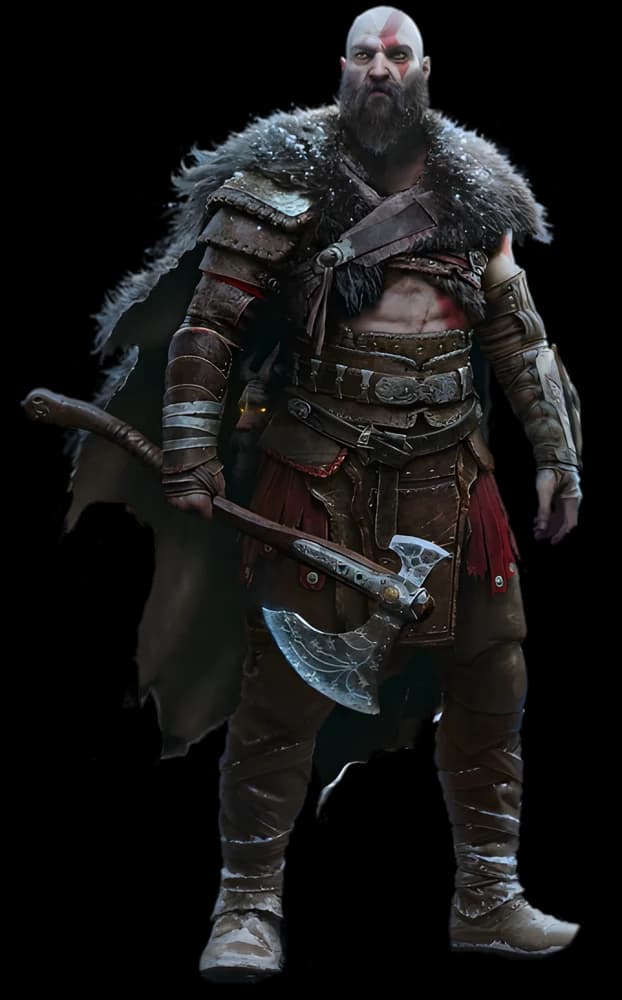
Kratos
Kratos was the demigod son of Zeus who rose from a Spartan general to the Greek God of War, destroyed the pantheon of Olympus in a quest for vengeance, and then began again in the Norse realms as a father seeking to leave his bloody past behind.
The Aesir
The Aesir were one of the two tribes of Norse gods, natives of Asgard known for their war-like nature and their hunger for knowledge. Descended from the slain primordial Ymir and ruled by Odin, they claimed dominion over all creation, waging genocide upon the Jotnar and war upon the Vanir before their fall in Ragnarok.
Alfheim: the elves' war over the Light
Light and Dark Elves fought for centuries over the Light of Alfheim, the source that powers the Bifrost. It changed hands more than two hundred times.
Asgard
Asgard was the realm of the Aesir gods, perched in the crown of Yggdrasil and ruled by Odin from the hall of Gladsheim. Behind the great wall of Hrimthur it stood as a fortress against the prophesied doom of Ragnarok, until Kratos breached it and the realm fell.
Mentioned in1 entry
Get new articles in your inbox
No spam. New lore drops, canon conflicts, and deep dives only when they’re worth reading.
Some links on Lore Fortress are affiliate links. If you buy through them we earn a small commission at no extra cost to you.