Gods: the ageless rulers of the world
Gods were a race of ageless humanoids with magical powers who ruled over the lands of the world and were worshiped by the mortals beneath them. They gathered in distinct pantheons, from the Olympians and Titans of Greece to the Aesir and Vanir of Scandinavia, with still others reigning in distant lands.
Gods were a race of ageless humanoids with magical powers who ruled over various parts of the world and were commonly worshiped by the mortal inhabitants of the lands they claimed. They did not rule as one people but as several distinct pantheons, such as the Olympians and Titans who held Greece, or the Aesir and Vanir who fought for control over Scandinavia. Within each pantheon, every god filled a certain role, and those roles often had counterparts in the pantheons of other lands. Tyr held the mantle of God of War among the Aesir, while in Greece that same office belonged to the Olympian Ares, until Kratos killed him and took the title for himself. (God of War (2005); God of War (2018); God of War Ragnarök)
A race apart from mortals#
What set the gods apart from the mortals who prayed to them was not merely power but constitution. Gods did not age, they shrugged off wounds that would destroy any human, and no disease could touch them. Yet they were not beyond destruction. How a god could die varied from pantheon to pantheon. The gods of Greece could be killed only by godly power or by weapons of divine origin, while the gods of the Norse lands could be brought down by mortals wielding ordinary, non-divine arms. (God of War III; God of War (2018))
Among the Greeks at least, godhood itself rested on a form of divine energy carried within the god. When that energy was drained away entirely, godhood went with it. Kratos proved this in his own flesh when he poured all of his godly power into the Blade of Olympus and became mortal once more, a mortality that Zeus exploited to strike him down. (God of War II)
The limits of divine durability were demonstrated most thoroughly by Kratos himself. In his war of revenge against his father Zeus, he killed most of the Greek pantheon one after another, and by the end of his vengeance all of Greece had been left in chaos. (God of War III)
One role in every pantheon#
A pantheon was not a loose gathering of powerful beings but an ordered court, in which each god held a defined office such as "God of War" or "God of Light." These offices repeated themselves across the world, so that a role held by one god in Greece often had its mirror in Scandinavia or beyond. The clearest example was the mantle of war itself. Among the Aesir it belonged to Tyr, and among the Olympians it belonged to Ares. Both offices eventually passed to the same successor, for Kratos slew Ares and replaced him as the Greek God of War, and in the Norse age he came to carry that legacy into a second pantheon. (God of War (2005); God of War (2018); God of War Ragnarök)
The pantheons of the known world#
The gods of Greece were the pantheon whose history was recorded in the greatest detail. They were first led by Cronos, who ruled over the Titan gods from Mount Othrys, until his son Zeus overthrew him and reigned over the Olympian gods from Mount Olympus. Their line was long and their members many, but a great part of the pantheon was wiped out by Kratos, and their fall marked the end of divine rule in Greece. A fuller account of their generations is preserved in the record of the Greek Gods. (God of War II; God of War III; Theogony)
The Norse Gods were split between two tribes. The warlike Aesir were led by the knowledge-hungry Odin, and the nature-loving Vanir were led by the witch-like Freya. The two tribes warred for control of Scandinavia before an uneasy peace joined them, and their rivalry shaped the Nine Realms for generations. (God of War (2018); God of War Ragnarök)
Gods beyond the known horizons#
Greece and Scandinavia did not exhaust the world's divinity. The Egyptian gods were half-human, half-animal beings who, from what Mimir had heard, ruled with wisdom and humility. Mimir also held that they were many, and not so simple as to be sorted into "good" or "evil." They appeared on a woven mural recording Tyr's journeys, and the Eye of Ra marked one of the missing panels of Tyr's triptych. Of their number, only Thoth has appeared in person, in the comic God of War: Fallen God. (God of War (2018); God of War Ragnarök; God of War: Fallen God)
Further south ruled the gods of the Maya. According to Tyr's own writings, these southern gods possessed extraordinary wisdom and generosity. Their "Ruler of the Heavens" saw fit to gift humanity with advances such as writing, farming, the calendar, and the sciences. Their "God of Death," by contrast, took great pleasure in torturing expired souls with fire and water. (God of War Ragnarök)
Fainter traces pointed to pantheons still farther afield. A torii gate and the written character for kami appeared among the records of Tyr's travels, and a three-fold tomoe marked another missing panel of his triptych. A Celtic triskelion appeared on the triptych as well, evidence that the gods of that people also existed somewhere beyond the horizon. (God of War (2018))
Monsters who spread misery#
The pantheons were not sealed off from one another. Tyr, the Norse God of War, journeyed across different realms and dealt with other pantheons directly, and his travels left behind the tapestries and panels that recorded them. Mimir, likewise, possessed prior knowledge of Athena, Zeus, and the rest of the Greek pantheon, as well as of their destruction at the hands of Kratos, which strongly implied that at least particular gods of different lands were aware of one another's existence. (God of War (2018))
The harshest judgment of the race came from one of its own. Kratos, who had suffered under Olympians and Titans alike, taught his son Atreus that gods cared nothing for their worshipers and that worshiping them was foolishness. "The Gods care nothing for them," he said. "Men should not pray to monsters." When Atreus asked his father why the gods caused so much trouble, Kratos answered that it was simply in their nature, and that the gods would continue to spread misery. Yet even Kratos's verdict admitted an exception. Tyr cared greatly for mortals and preferred pacifism over violence, proof that the nature of gods, however dark, was not beyond defiance by the gods themselves. (God of War (2018); God of War Ragnarök)
Sources
- GameGod of War (2005), Santa Monica Studio, 2005
- GameGod of War II, Santa Monica Studio, 2007
- GameGod of War III, Santa Monica Studio, 2010
- GameGod of War (2018), Santa Monica Studio, 2018
- GameGod of War Ragnarök, Santa Monica Studio, 2022
- ComicGod of War: Fallen God, Chris Roberson and Tony Parker, Dark Horse Comics, 2021
- BookTheogony, Hesiod, around 700 BC
Spotted a factual error or a primary source we missed? Email a correction. Every flagged claim gets reviewed.
Followed from this entry
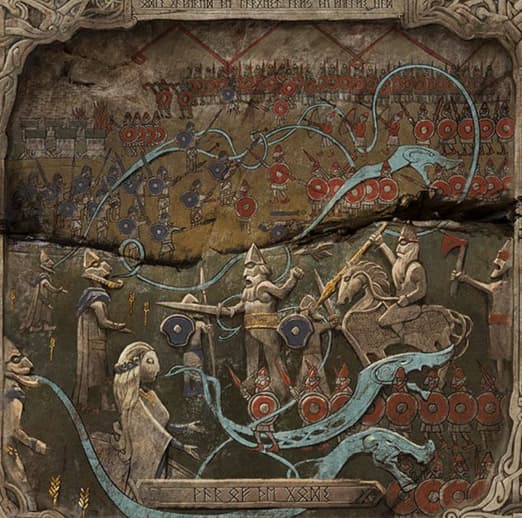
Norse Gods: the pantheon of the Nine Realms
The Norse Gods were the pantheon that ruled over Scandinavia, the lands known in their own cosmos as the Nine Realms of Yggdrasil. Divided into the warlike Aesir of Asgard and the nature-bound Vanir of Vanaheim, they counted among the most powerful races of the realms and were held to be the protectors of Midgard and humanity.
The Aesir
The Aesir were one of the two tribes of Norse gods, natives of Asgard known for their war-like nature and their hunger for knowledge. Descended from the slain primordial Ymir and ruled by Odin, they claimed dominion over all creation, waging genocide upon the Jotnar and war upon the Vanir before their fall in Ragnarok.
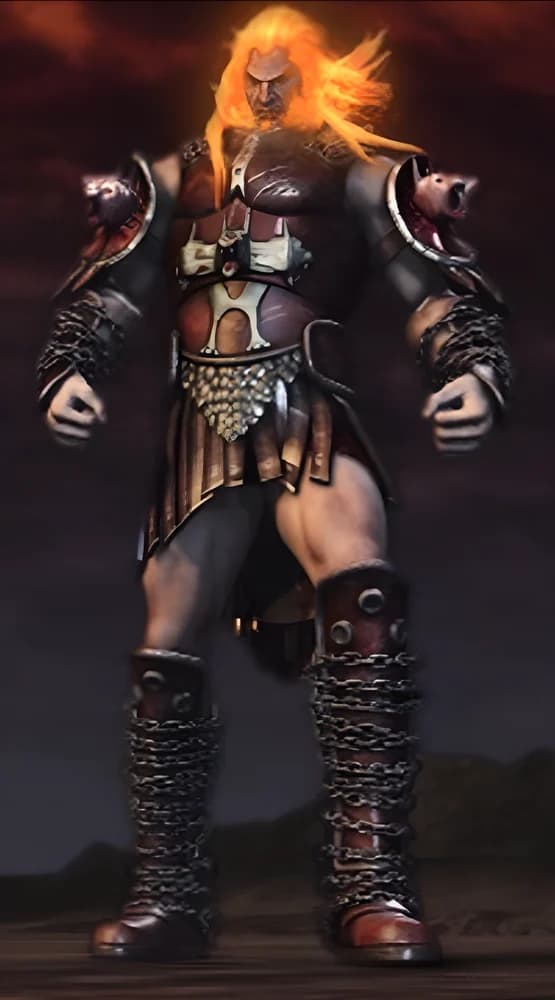
Ares: the god who made Kratos a killer
Ares tricked Kratos into slaughtering his own wife and daughter to bind him as a weapon. Kratos killed him at Athens and took his place as God of War.
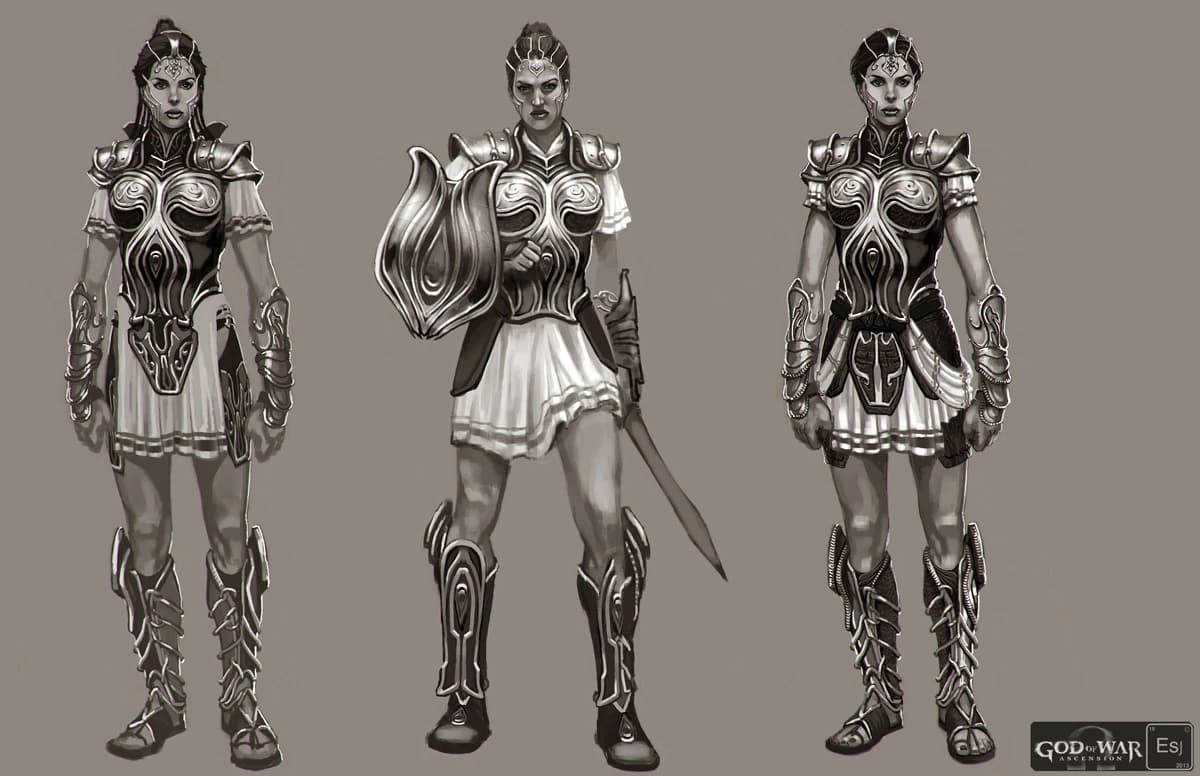
Athena: from Kratos' guide to his enemy
Athena set Kratos against Ares to save Athens, then turned on him when his reign grew worse. She died taking a blow meant for Zeus, and named Kratos his son.
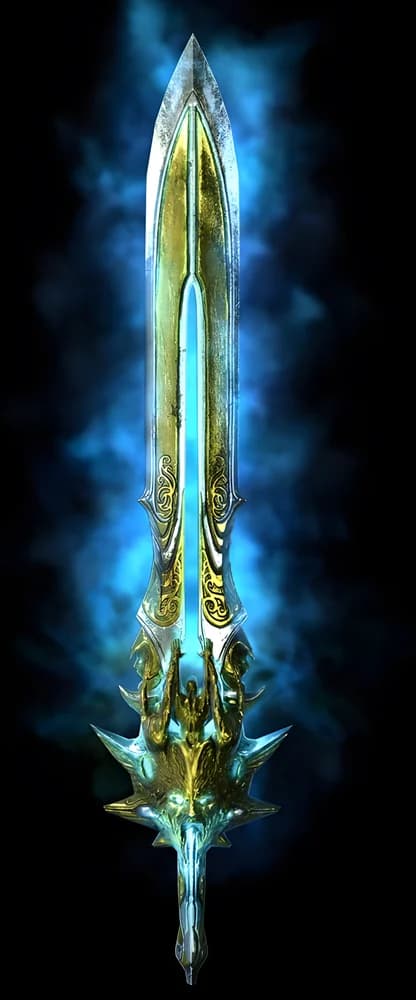
Blade of Olympus: Zeus' god-killing sword
Zeus forged the Blade of Olympus from the heavens and the earth to banish the Titans to Tartarus. It could kill gods and Titans, and it killed Zeus himself.
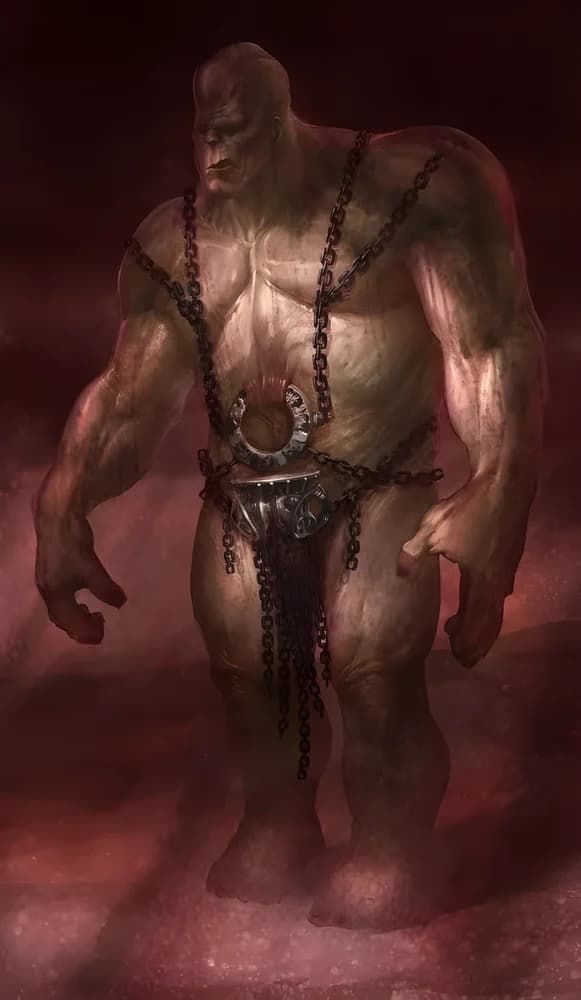
Cronos: the Titan who ate his children
Warned that his own children would depose him, Cronos swallowed each at birth. Rhea hid Zeus, Zeus deposed him anyway, and Kratos finished him.
Get new articles in your inbox
No spam. New lore drops, canon conflicts, and deep dives only when they’re worth reading.
Some links on Lore Fortress are affiliate links. If you buy through them we earn a small commission at no extra cost to you.