Thoth
The Egyptian God of Wisdom
Thoth was the Egyptian god of the Moon, wisdom, writing, and judgment, and a son of Ra. During Kratos' wandering through the deserts of Egypt, Thoth pursued the Ghost of Sparta in many forms, insisting that no man or god could outrun his destiny.
Thoth was the Egyptian god of the Moon, wisdom, writing, knowledge, time, magic, and judgment, counted as a son of the sun god Ra. In the comic God of War: Fallen God, he crossed paths with Kratos during the Spartan's wandering through the deserts of Egypt, pursuing him in many forms and pressing upon him a single message: that no man and no god could outrun the destiny written for him. (God of War: Fallen God)
God of the Moon and wisdom#
Thoth held dominion over the Moon, wisdom, writing, knowledge, hieroglyphs, science, mathematics, time, magic, art, and judgment, and was reckoned a son of Ra. His consort was Maat, goddess of truth, balance, order, harmony, law, morality, and justice. Among the Egyptian gods he was depicted as a man bearing the head of an ibis or a baboon, the two creatures held sacred to him, and he was said to maintain the order of the universe. Alongside Maat he stood upon the solar barque, the vessel by which the sun god Ra crossed the sky. (Book of the Dead)
The pursuit through the desert#
When Kratos sought to free himself from the curse that bound him to the Blades of Chaos, his wanderings carried him to a distant village in the Egyptian desert. The villagers fled at the sight of him, and as the Spartan stood confused, an old man with a slate and stylus approached and named him the Ghost of Sparta, known to them through the stories. The old man declared that the mortals did not understand Kratos' destiny within the land of the pharaohs, and that his arrival had been no accident. Kratos scorned the talk of destiny and shoved the old man aside, but the stranger rose calmly and warned that no man or god could halt what was written, nor could Kratos run from it. (God of War: Fallen God)
The old man's words went unheeded, yet he followed Kratos across the sands. He appeared again as a baboon, urging the Spartan to embrace his purpose, and later as an ibis, telling him it was folly to resist and that his destiny would be his destination wherever he traveled. When Kratos collapsed exhausted, he woke to find the Blades of Chaos returned to him and the old man waiting with the same question. Kratos cast the blades into a lake and pressed on, only to find himself drawn back to the very village he had first entered months before. (God of War: Fallen God)
The Chaos Beast and Kratos' fate#
This time the villagers did not flee but begged Kratos to save them from a Chaos Beast that had risen from the river. They had prayed to the gods and received no answer, and took his return as the salvation they awaited. The old man appeared among them and reasoned that the beast's coming and Kratos' return at their hour of need had been written upon his slate. Furious at their pleading, Kratos threw the villagers aside and threatened to kill them, but the old man stepped between them, reminding the Spartan that he had once wanted mercy for those he had lost and asking whether he would not grant the same to these mortals. Kratos refused to be drawn into another's battle, and his rage scattered the villagers. The old man, disappointed that Kratos would let innocents die to delay the inevitable, vanished as the Spartan turned to face the beast. (God of War: Fallen God)
After Kratos slew the creature, the old man returned to tell him his destiny was not yet complete, for an even greater beast had risen from the river. In Kratos' dream the stranger revealed his true form as Thoth, appearing beside the apparition of Athena, who reminded the Ghost of Sparta that he could flee his responsibilities no longer. Thoth added that it was Kratos' duty to face the threats set before him, and that his role would remain the same in whatever land he sought refuge. Unable to escape their words, Kratos took up the Blades of Chaos and destroyed the beast. Satisfied with the outcome, Thoth wished him well upon his journey and disappeared. (God of War: Fallen God)
Forms and powers#
Thoth first showed himself as a withered, brown-skinned old man with wiry white hair and silver eyes, clad in a yellow tunic beneath a tattered blue and red cloak, carrying a red stylus and a grey slate with his left hand bandaged. In his divine form he appeared as a regal being in a white gown adorned with gold at the neck, waist, and arms, crowned by the head of a black-feathered ibis. He could shift between these shapes and the form of a baboon at will, and he moved unseen across the desert, vanishing and reappearing through teleportation. He entered the dreams of others, and his foresight let him know of Kratos' coming and of the village he was fated to save before either had come to pass. In his bearing he was patient and tolerant, untroubled even by violence against him, and though he drew Kratos back toward his fate he showed a measure of care, sorrowing for the Spartan's burden even as he sent him onward. (God of War: Fallen God)
Frequently asked questions
- Who was Thoth?
- Thoth was the Egyptian god of the Moon, wisdom, writing, knowledge, time, magic, and judgment, and a son of the sun god Ra. His consort was Maat, goddess of truth and order, and he was depicted with the head of an ibis or a baboon, his sacred animals.
- Where did Kratos meet Thoth?
- Kratos encountered Thoth during his wandering through the deserts of Egypt, where the god first approached him as an elderly scribe carrying a slate and stylus. Thoth then trailed the Ghost of Sparta across the sands in the forms of a baboon and an ibis, urging him to accept his destiny.
- What powers did Thoth display?
- Thoth could shapeshift between human and animal forms, teleport at will, enter the dreams of others, and foresee events, having known of Kratos' arrival and his role in saving a desert village before either came to pass.
Sources
- ComicGod of War: Fallen God, Chris Roberson and Tony Parker, Dark Horse Comics, 2021
- BookBook of the Dead, Ancient Egyptian funerary texts, New Kingdom, from around 1550 BC
Spotted a factual error or a primary source we missed? Email a correction. Every flagged claim gets reviewed.
Followed from this entry
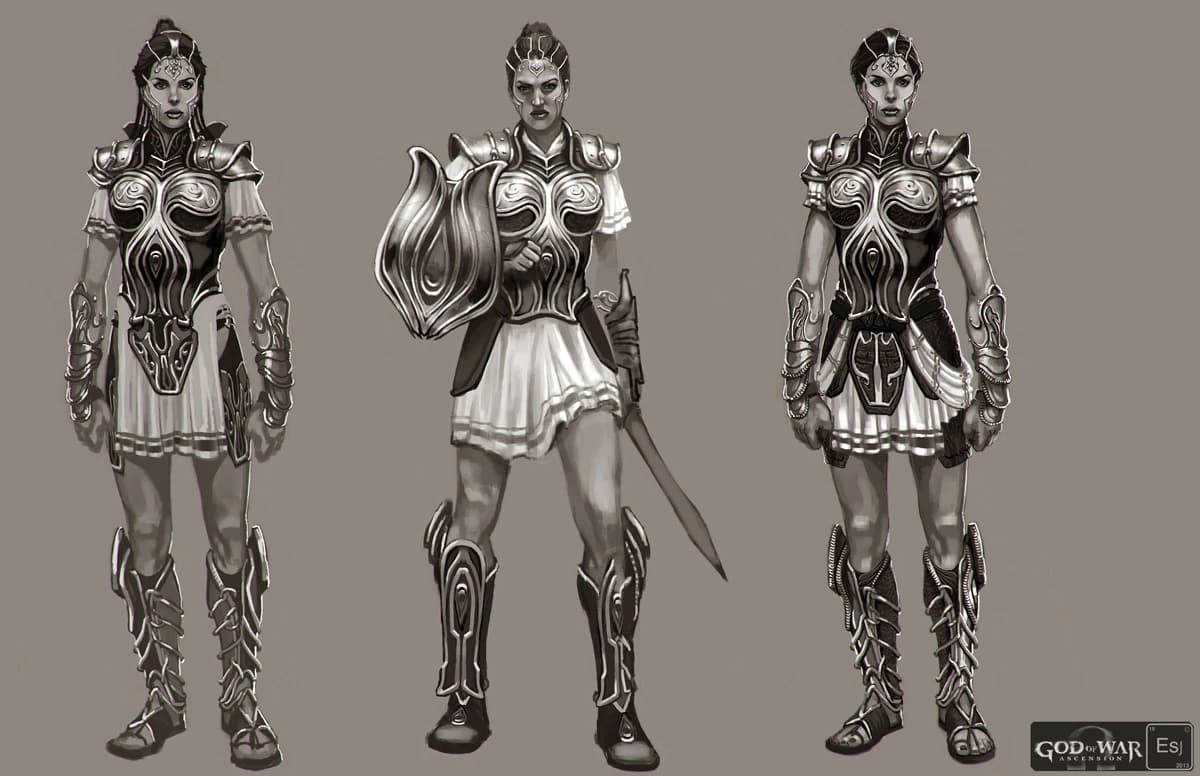
Athena: from Kratos' guide to his enemy
Athena set Kratos against Ares to save Athens, then turned on him when his reign grew worse. She died taking a blow meant for Zeus, and named Kratos his son.
Blades of Chaos: chained to Kratos' arms
The Blades of Chaos were forged in the Underworld for Ares, who seared their chains onto Kratos' forearms. They burn with the fire of Tartarus.
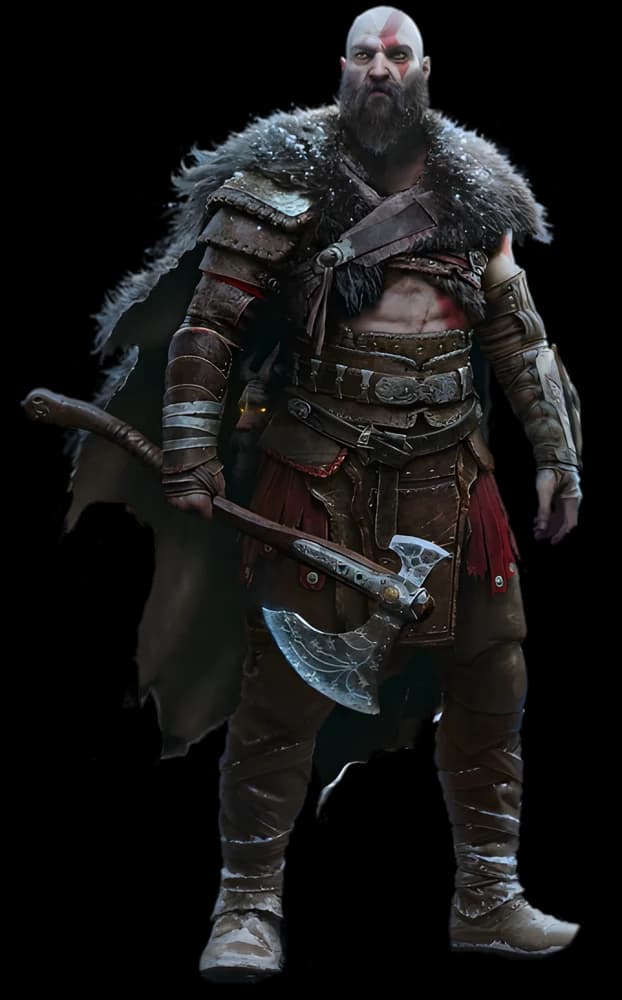
Kratos
Kratos was the demigod son of Zeus who rose from a Spartan general to the Greek God of War, destroyed the pantheon of Olympus in a quest for vengeance, and then began again in the Norse realms as a father seeking to leave his bloody past behind.
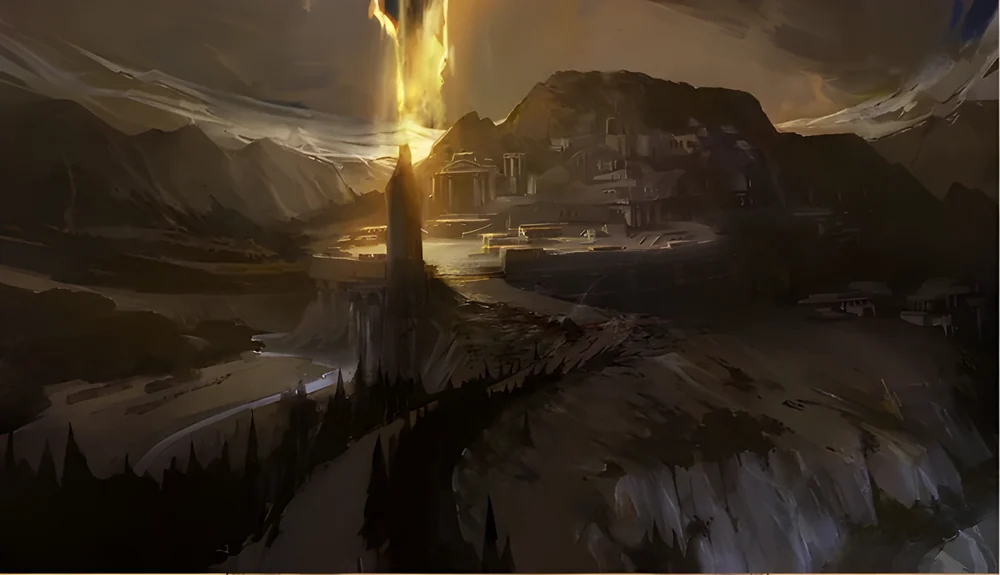
Sparta: Kratos' city, razed by Zeus
Sparta raised Kratos, worshipped Ares, then took Kratos himself as its patron god. Zeus destroyed the city in revenge for the Spartan's defiance.
Also in Greek Era
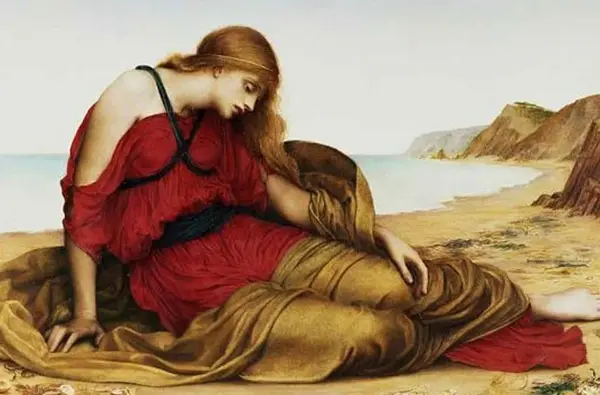
Ariadne: the Cretan princess who became a goddess
Ariadne was a princess of Crete, daughter of King Minos, who gave Theseus the thread that carried him out of the Cretan maze. Taken from the hero by Dionysus, she was raised to godhood as his wife, while the man she once saved gave the rest of his life to the hope of winning her back.
Erebus: the Primordial of Darkness
Erebus was the Primordial entity of Darkness, one of the first deities born from Chaos in the Void and the brother and consort of Nyx, the Night. His dark mists filled the deep hollows of the earth, his name clung to the netherworld of the dead, and later writers counted the ferryman Charon and the Fates among his children. His own end was never recorded.
Mentioned in3 entries
Ancient Egypt
Ancient Egypt was a distant southern land, home to the Egyptian gods and to a civilization both old and advanced. Known as the River Empire and the Land of the Pharaoh, it touched the saga of Kratos from the wars of Greece to the treasures of the Norse realms.
God of War Timeline: every major event from the Primordials to Valhalla
The full in-universe chronology of God of War, from the war of the Primordials and the fall of the Titans to Kratos's life in Sparta, his war on Olympus, and the end of the Aesir at Ragnarök. The games give almost no calendar years, so events are ordered by story sequence and grouped into eras, with notes wherever the games' own placement is vague.
Gods: the ageless rulers of the world
Gods were a race of ageless humanoids with magical powers who ruled over the lands of the world and were worshiped by the mortals beneath them. They gathered in distinct pantheons, from the Olympians and Titans of Greece to the Aesir and Vanir of Scandinavia, with still others reigning in distant lands.
Get new articles in your inbox
No spam. New lore drops, canon conflicts, and deep dives only when they’re worth reading.
Some links on Lore Fortress are affiliate links. If you buy through them we earn a small commission at no extra cost to you.