Odin's Wedding to Freya
the marriage that ended the Aesir-Vanir War
Odin's marriage to Freya was a peace treaty that ended the war between the Aesir and the Vanir. Though it brought a fragile harmony to the realms, the Vanir branded Freya a traitor, and the union ended in her banishment.
The marriage of Odin and Freya was a peace treaty that ended the Aesir-Vanir War, joining the king of the Aesir to the leader of the Vanir. Proposed by Mimir, it brought a fragile harmony to the realms, but the Vanir saw it as a betrayal, and in the end it brought Freya only banishment. (God of War (2018); God of War Ragnarök)
Prelude#
For a very long age the Aesir and the Vanir were at odds. Seeking peace, the Vanir god Freyr had once traveled to Asgard to teach the Aesir to raise bountiful crops with magic, but the Aesir were too impatient and undisciplined and got everything wrong. Blaming Freyr, they burned him, though he survived and escaped home. Outraged, the Vanir swore revenge, and the long war between the two peoples broke out. (God of War Ragnarök)
When neither side could break the other, Mimir, Odin's advisor and arbiter among the gods, settled on a single solution. Odin would marry his deadliest enemy, Freya, renowned both for her beauty and for the magic the All-Father had long desired to master. Freya remained resentful of Odin for the suffering inflicted on her people and on her brother, yet she agreed to the marriage in the belief that it would bring peace to the nine realms. (God of War (2018); God of War Ragnarök)
The wedding#
The ceremony was held at a shrine in Vanaheim, attended by all the Aesir and Vanir, among them Odin's sons Thor, Tyr, and Heimdall, and his grandsons Magni and Modi. Some Vanir had etched the word Traitor onto one of the shrine's walls, for they had been tricked into believing that Freya had betrayed and abandoned them. She was hated and denounced by her own people, even her worshippers, who in their rage vandalized a temple they had raised in her honor. Freyr regarded his sister's marriage as selfish and spoke harsh words to her. (God of War Ragnarök)
That night Odin and Freya drank from a chalice called the Lover's Chalice until they could no longer stand. Odin fashioned a beautiful circlet crown for his bride as a symbol of his commitment, the first of many he would make for her, each finer than the last. To mark their union the couple thrust a sword into a stone, which would serve as Freya's final tie to Asgard. A great feast followed, filled with delicacies and mead prepared by both peoples, and the celebration ran late into the night. (God of War Ragnarök)
Peace and its end#
With the wedding the realms fell at peace. While Freya dwelt in Asgard, her people sent her gifts so that she would not miss her home, though they stopped after her son Baldur was born. For a time she and Odin were genuinely happy, and Mimir later recalled seeing in Odin the same joy he had held for Fjorgyn, the mother of Thor. Freya taught her husband to master Vanir magic, but refused to teach him the Old Magic, and Odin granted many of her wishes, including a measure of freedom for the Valkyries. Yet for all his love, he had wed her only to learn her magic in secret, which he achieved. (God of War (2018); God of War Ragnarök)
The peace did not last. Odin became consumed by the Jotnar prophecy of Ragnarok. After the Huldra brothers Brok and Sindri forged the hammer Mjolnir, Odin gave it to Thor and ordered him to slay every giant he could find, punishing the Jotnar for expelling the All-Father from Jotunheim after they caught him spying and stealing their secrets. Freya came to loathe the Aesir for their crimes. (God of War (2018); God of War Ragnarök)
Freya's banishment#
At last Odin revealed his true nature and demanded that Freya grant him the same invulnerability spell she had placed on Baldur. Knowing the consequences such a gift had already brought, she refused. Odin flew into a rage, and Freya left him. In answer the All-Father stripped her of her Valkyrie wings and her warrior spirit, rendering her unable to fight even in her own defense, and banished her from Asgard to be trapped in Midgard. To ensure she could never escape, he tied several branches of Yggdrasil into a knot that would drag her back to Midgard should she travel to any Realm but Asgard, making the dragon Nidhogg, caretaker of the world tree, his unwitting pawn. (God of War (2018); God of War Ragnarök)
The marriage left scars beyond Asgard. Freyr abandoned Alfheim and its Light Elves in response, leaving it to be overrun by the Dark Elves and their king. Vanaheim suffered worst of all, as the Einherjar established a military foothold there and scattered the Vanir, forcing Freyr to raise a resistance of his friends and allies. For centuries afterward Freya was haunted by the marriage and its consequences, until, before the onset of Ragnarok, she journeyed with Kratos to Vanaheim and freed herself at last of her bonds to Asgard. (God of War Ragnarök)
Frequently asked questions
- Why did Odin marry Freya?
- The marriage was a peace treaty proposed by Mimir to end the stalemated Aesir-Vanir War, joining Odin, king of the Aesir, to Freya, leader of the Vanir. In truth Odin wed her chiefly to learn her Vanir magic, which he had long desired to master, and he later achieved this in secret.
- Why did the Vanir call Freya a traitor?
- The Vanir believed that by marrying the All-Father, Freya had betrayed and abandoned her own people. Some etched the word Traitor onto the shrine wall, and her worshippers denounced her and vandalized a temple raised in her honor. Her brother Freyr was especially bitter at the union.
- How did the marriage end?
- The happiness faded as Odin grew obsessed with the prophecy of Ragnarok. When Freya refused to grant him the invulnerability she had given their son Baldur, Odin stripped her of her Valkyrie wings and warrior spirit and banished her from Asgard to Midgard, binding her so she could not leave.
Sources
- GameGod of War (2018), Santa Monica Studio, 2018
- GameGod of War Ragnarök, Santa Monica Studio, 2022
Spotted a factual error or a primary source we missed? Email a correction. Every flagged claim gets reviewed.
Followed from this entry
Aesir-Vanir War
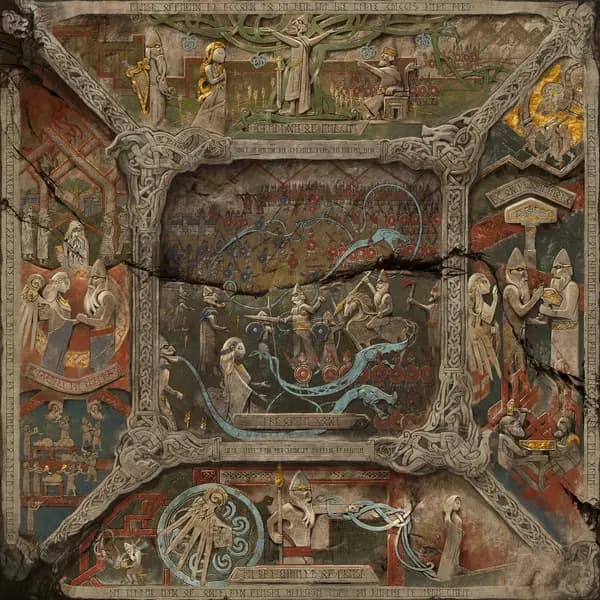
The Aesir-Vanir War was the long and brutal conflict between the two tribes of Norse gods, fought ages before Kratos came to the Northlands. It ended in an uneasy peace sealed by the marriage of Odin and Freya, only for Odin's treachery to reignite it.
Ragnarok: the war that only Asgard lost
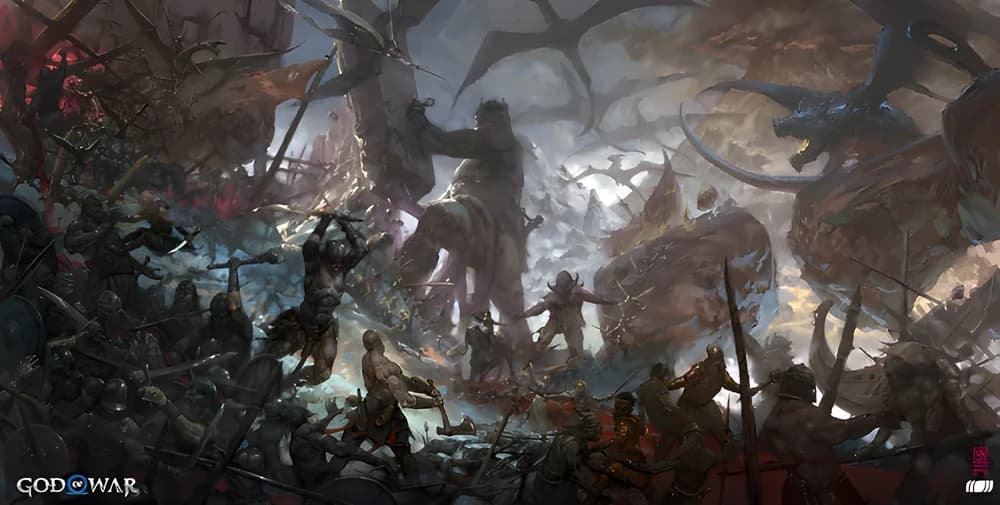
The seeress Groa foresaw the death of the gods. When it came, Odin and Thor died and Surtr burned Asgard, but the other eight realms survived.
Alfheim: the elves' war over the Light
Light and Dark Elves fought for centuries over the Light of Alfheim, the source that powers the Bifrost. It changed hands more than two hundred times.
Asgard
Asgard was the realm of the Aesir gods, perched in the crown of Yggdrasil and ruled by Odin from the hall of Gladsheim. Behind the great wall of Hrimthur it stood as a fortress against the prophesied doom of Ragnarok, until Kratos breached it and the realm fell.

Baldur: the god who could feel nothing
Freya's spell made Baldur invulnerable but stripped every sensation from him, and a century of numbness drove him mad. Kratos killed him beside Thamur's corpse.

Brok: the Huldra brother Odin murdered
Brok forged Mjolnir and the Leviathan Axe with his brother Sindri. Killed once and revived with an incomplete soul, he was stabbed by Odin disguised as Tyr.
Mentioned in1 entry
Get new articles in your inbox
No spam. New lore drops, canon conflicts, and deep dives only when they’re worth reading.
Some links on Lore Fortress are affiliate links. If you buy through them we earn a small commission at no extra cost to you.