Desert of Lost Souls: the wasteland east of Athens
The Desert of Lost Souls was a vast, monster haunted desert far to the east of Athens, the place where Zeus condemned the Titan Cronos to wander with Pandora's Temple chained to his back. Kratos crossed its sands in his quest for Pandora's Box, and there Ares struck him down with a pillar hurled from the ruins of Athens.
The Desert of Lost Souls was an extremely large open desert that lay far to the east of Athens, cut off from every pocket of civilization and haunted by Sirens and other monsters. Beneath its shifting sands lay many ruins, the remains of what may once have been a city, swallowed whole across endless time. The wasteland served Zeus as a place of punishment, for it was there that the Titan Cronos was condemned to wander forever with Pandora's Temple chained upon his back. It was there too that Kratos came in search of Pandora's Box, the one weapon that could grant him the power to kill Ares. (God of War (2005))
A wasteland far to the east#
The Oracle of Athens described the desert as lying far to the east of her city, and every account of the place agreed that it stood apart from the known world. No settlement bordered it and no road led into it, and travellers who entered its sands did so alone. The Sirens that haunted the wastes were monstrous women who menaced any who crossed their territory with magic powers, and they were far from the only creatures that made the desert their hunting ground. (God of War (2005))
The desert's remoteness went beyond ordinary distance. Its heat was deadly, and it lay so far from Greece proper that daylight still burned over its sands while night covered Athens. When Ares struck Kratos down there, the god stood among his soldiers under a moonlit Athenian sky while his victim died in broad desert daylight. The Oracle herself did not simply point the way but used her magic to open a gateway to the desert, and through it the sunlit wastes could be seen from the darkened city. In the novelization, Kratos, crossing the sands on foot, felt more alone than at any other point in his life. The vast emptiness recalled the tales of the Titans' punishments in Tartarus, and the Spartan wondered whether the Oracle had tricked him and banished him from the company of mankind into some dreadful exile. (God of War (2005); God of War (novel))
Scattered through the wastes stood the remnants of older builders. The many ruins half buried in the sand suggested that a city might once have stood there before the desert covered it entirely, and its name outlived whatever people had raised it. (God of War (2005))
The punishment of Cronos#
After the first Titanomachy, Zeus captured his father Cronos and made the desert his prison. The gods ordered the architect Pathos Verdes III to raise Pandora's Temple upon the Titan's chained back, and Zeus then exiled Cronos into the Desert of Lost Souls, condemned to wander its wastes forever while carrying the temple, until the desert sands ripped the very flesh from his bones. The sentence was as much a safeguard as a torment, for the temple held Pandora's Box, and a wandering mountain of a Titan was meant to keep it beyond the reach of any who might seek it. (God of War (2005))
For long years the arrangement held. The temple could not be found by searching, for Cronos never stopped moving, and the only way to reach it was to call the Titan to oneself and brave the climb up his body to the structure on his back. (God of War (2005))
Kratos and the Desert Sirens#
During the siege of Athens, Athena set Kratos on the quest for Pandora's Box, the item he needed to kill Ares, and the Oracle of Athens opened the gate to the desert and told him where the Box lay. The Box waited inside Pandora's Temple as its greatest treasure, still chained to the back of Cronos, and to reach it the Spartan had to cross the desert and overcome its guardians. (God of War (2005))
His first task was to hunt down and kill the three Desert Sirens, the monstrous women who preyed on the desert's travellers. Slaying them released their souls, and their release opened a door into a ruin that led deeper into the wastes. At the end of those Desert Ruins stood the Titan Horn, itself guarded by Sirens, and it was the only means by which anyone who wished to brave the dangers of Pandora's Temple could bring Cronos to them. Kratos sounded the Horn, and the Titan Lord came striding through the sands toward him. The Spartan leapt onto Cronos's body and climbed toward the temple far above, carving through the countless creatures and monsters of the temple with the Blades of Chaos as he went. (God of War (2005))
The pillar hurled from Athens#
When Kratos finally retrieved Pandora's Box from the temple's depths, Ares sensed what had happened, though he stood far away amid the ruin of besieged Athens. The god of war tore a great pillar from the wreckage of the city and hurled it across the impossible distance with perfect aim, and it pierced Kratos through the chest. As the Spartan slowly died in the desert daylight, he watched helplessly while Ares's Harpies took the Box and carried it back to their master. (God of War (2005))
Kratos fell into the Underworld along with many other souls, but death did not end his quest. He escaped the domain of the dead, returned to Athens, reclaimed the Box from Ares, and used its power to slay the god. The desert had claimed his life once, yet it could not keep him. (God of War (2005))
The chained cyclops of the ruined city#
In the heart of the desert stood a ruined city, and at its center the giant Cyclops Polyphemus lay enchained. Warriors who faced the Trial of the Gods fought their way through those ruins against horde after horde of the desert's creatures, among them Satyrs, Harpies, Elephantaurs, Feral Hounds, Wraiths, Fire Taloses, Ice Chimeras, and Amazons, while fire pits and beds of spikes among the ruins claimed the unwary. The chained Polyphemus himself lashed out at any who came within reach of his hands. When the gods chose to intervene in the trial, the Spear of Olympus fell from the sky, and a warrior who claimed it could wound the giant cyclops and bring even that enormous prisoner to his end. (God of War: Ascension)
Vanishing and echo in Valhalla#
After Kratos opened Pandora's Box and slew Ares, Zeus learned of the Spartan's victory and unmade the desert's oldest sentence. The King of Olympus, with the evil of Fear consuming him, removed Cronos from the desert and banished him to the pits of Tartarus with Pandora's Temple still chained upon his back. In the same season of wrath he punished Hephaestus for his deceit, casting the smith god into the Forge beside Tartarus, and took Hephaestus's daughter Pandora and imprisoned her within a sprawling underground maze. (God of War III)
With its Titan gone, the Desert of Lost Souls passed out of every account. When the death of Poseidon loosed the flood that drowned the Greek world, the desert is held to have vanished beneath the waters with the rest of that ruined land. Yet the wasteland was not wholly lost. Ages later and worlds away, when Kratos entered Valhalla in the Norse lands, that place took advantage of his past and recreated the Desert of Lost Souls within itself, and the Ghost of Sparta walked its burning sands once more. (God of War III; God of War Ragnarök: Valhalla)
Sources
- GameGod of War: Ascension, Santa Monica Studio, 2013
- GameGod of War (2005), Santa Monica Studio, 2005
- GameGod of War III, Santa Monica Studio, 2010
- GameGod of War Ragnarök: Valhalla, Santa Monica Studio, 2023
- BookGod of War (novel), Matthew Stover and Robert E. Vardeman, Del Rey, 2010
Spotted a factual error or a primary source we missed? Email a correction. Every flagged claim gets reviewed.
Followed from this entry

Athens: Athena's city, besieged by Ares
Ares laid siege to Athens out of hatred for his sister Athena. Kratos was sent to save it, and killed Ares there to become the new God of War.
Pandora's Temple: The Vault of Pandora's Box
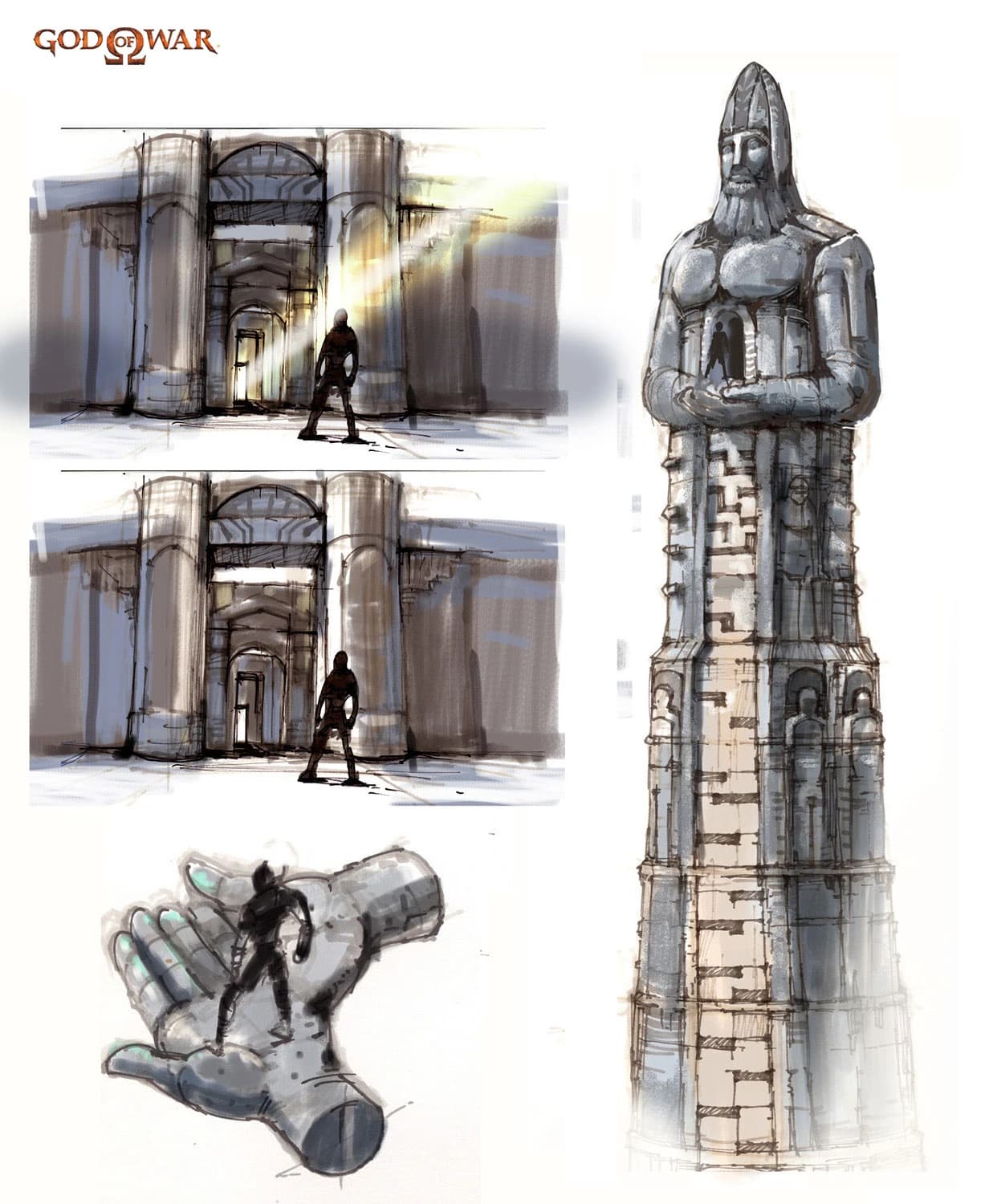
Pandora's Temple was a vast trap-laden temple built upon the back of the wandering Titan Cronos to house Pandora's Box and keep it from the enemies of Olympus. After failed attempts by countless heroes, Kratos became the only mortal to reach the Box within.

Tartarus: the abyss that caged the Titans
Tartarus was the deepest pit of the Underworld, and in Greek myth one of the first beings. Zeus bound the Titans there, and Kratos killed Cronos in its depths.

The Underworld
The Underworld was the realm of the dead in Greece, a hellish landscape below the living world where the River Styx carried mortal souls to their rest. It was ruled by Hades until his death, and Kratos descended into it many times across his Greek campaigns.
God of War (2005) Story Explained: Plot Summary and Ending
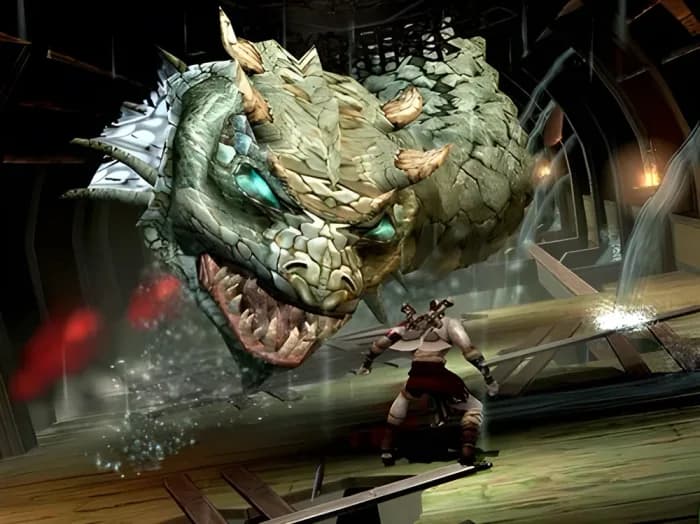
The whole story of the first God of War in order, from the Hydra in the Aegean to the death of Ares at Athens. Then the ending in plain terms: why Kratos jumped from the cliff, why Athena saved him, and how he ended up on Ares's throne.

Oracle of Athens: seer of the besieged city
The Oracle of Athens was the mortal seer of Athena's city, gifted with foresight and the power to read the memories of any being. During the siege of Athens she alone held the secret of how a god could be killed, and she set Kratos on the road to Pandora's Box.
Mentioned in4 entries
God of War (2005) Story Explained: Plot Summary and Ending
The whole story of the first God of War in order, from the Hydra in the Aegean to the death of Ares at Athens. Then the ending in plain terms: why Kratos jumped from the cliff, why Athena saved him, and how he ended up on Ares's throne.
God of War Story Explained: the Whole Saga from Sparta to Ragnarök
The full God of War story in order, one main game at a time. Kratos serves Ares, kills him, destroys Olympus, starts again in the Norse lands and finally ends Odin, with the Valhalla epilogue as the last word.
God of War Timeline: every major event from the Primordials to Valhalla
The full in-universe chronology of God of War, from the war of the Primordials and the fall of the Titans to Kratos's life in Sparta, his war on Olympus, and the end of the Aesir at Ragnarök. The games give almost no calendar years, so events are ordered by story sequence and grouped into eras, with notes wherever the games' own placement is vague.
Oracle of Athens: seer of the besieged city
The Oracle of Athens was the mortal seer of Athena's city, gifted with foresight and the power to read the memories of any being. During the siege of Athens she alone held the secret of how a god could be killed, and she set Kratos on the road to Pandora's Box.
Get new articles in your inbox
No spam. New lore drops, canon conflicts, and deep dives only when they’re worth reading.
Some links on Lore Fortress are affiliate links. If you buy through them we earn a small commission at no extra cost to you.