Island of Creation: cradle of the Greek world
The Island of Creation was the place where all life in Greece began, lying at the very edge of the world. It became the seat of the Sisters of Fate and one of the most heavily guarded places known to man, until Kratos broke through its defenses, slew its guardians, and left it in ruin.
The Island of Creation was the place where all life began in Greece, a landmass at the very edge of the Greek world and the home of the Sisters of Fate. The novelisation puts it so far from any civilisation that reaching it from near the centre of Greece took at least six days of riding a Pegasus without rest. It was counted among the most heavily guarded places known to man, for any who could defeat the Sisters would gain the power to change their own fate and control time itself. In the end it was Kratos who did exactly that, directed to the island by Gaia so that he might turn back time and take his revenge upon Zeus. (God of War II; God of War II (novel))
The birth of an island and a world#
The games call the island the place where all life in Greece began, and Gaia tells Kratos it was made to keep all from reaching the three Sisters. The novelisation fills in the rest. Gaia and Ouranos joined, and Gaia gave birth to the Titans on the island. (God of War II; God of War II (novel))
The Titans lived on the island in the early age of the world, but they shared it with the Sisters of Fate, and they came to fear the Sisters' power over their destinies. In the end they left it behind to explore and rule the wider world. From that time forward the island belonged to the three Sisters, and the fate of every god, Titan, and mortal was measured within its temples. (God of War II (novel))
The Steeds of Time and the drifting edge#
As the Titans filled out the rest of Greece, the world grew more and more crowded, and the Island of Creation began to drift toward the edge of the world. Its slow slide toward oblivion was halted by Cronos, who gave the Sisters the Steeds of Time to pull the island away from the brink. The gift served two purposes at once: it prevented the island's demise, and it was meant to sway the Sisters in the Titan's favor. (God of War II)
The great horses remained yoked to the island through the ages that followed. After Zeus began his rule, the hero Theseus entered the service of the King of the Gods and became Keeper of the Horses, standing watch over the Steeds and the key that bound the island to its outer fortress. (God of War II)
A graveyard of heroes#
Under the reign of Zeus, many heroes attempted to change their fate by venturing onto the island, and none of them ever made it through. The island's defenses were too strong, and those brave enough to make the attempt all met their demise upon it. Jason and the Argonauts journeyed there with the Golden Fleece in their possession, only to be killed by the monsters that infested the Bog of the Forgotten. Perseus came seeking an audience with the Sisters after the death of his beloved Andromeda, for the Graeae had told him that only the Fates could restore her to life. (God of War II; God of War II (novel))
Others came with darker purposes. Alrik, the Barbarian King, escaped the Underworld with the aid of Lahkesis herself, who loosed him upon the island in the hope that he would stop Kratos. Alrik believed that, like the others, he might change his fate and take his revenge on the Spartan, but Lahkesis never considered him worthy of an audience and never intended to rewrite his destiny. The crazed Icarus haunted the island's cliffs on his battered wings, and wild Cerberus hounds, living apart from the packs of the Underworld, roamed its wilder country. A Phoenix slept within the island's depths, waiting to be roused from its ashes. (God of War II; God of War II (novel))
Regions of the island#
The island was less a single landmass than a chain of temples, chasms, and wilds, each one an obstacle set between the outer sea and the throne rooms of the Fates. Travelers who survived the Steeds of Time passed through the Temple of Lahkesis and Destiny's Atrium into the Bog of the Forgotten, a deep, dense swampland forest that held the temple of the Gorgon sisters, where Euryale brooded over the remains of those who had come before. Beyond the bog lay the Courtyard of Atropos, the Lowlands, and the Great Chasm, a rent in the island that dropped away toward the roots of the world. The Pillar of the World, the column that held up all of Greece, stood directly beneath the island, and it was in the depths of the chasm that the condemned Titan Atlas bore his burden. (God of War II)
The final approach ran through the Palace of the Fates, the Spire, and at last the Temple of the Fates itself, with its twin auditoriums, the Throne of Lahkesis, and the Loom Chamber where the threads of every life were spun and cut. Within the palace grounds stood the Garden of the Gods, a hall of golden statues of the Olympians. There a statue of Athena warned Kratos not to listen to Gaia or the Titans, and a statue of Ares named the dead Olympian "The Fallen God of War". (God of War II)
The coming of Kratos#
Betrayed and slain by Zeus, Kratos was drawn out of the Underworld by Gaia, who directed him to the Island of Creation to find the Sisters of Fate and use their power to go back in time. The Spartan broke through the island's primary defenses with ease. He fought his way to the Steeds of Time, killed Theseus, and took the Horse Keeper's Key that connected the island to its fortress. (God of War II)
Returning to the island proper, Kratos passed through the Temple of Lahkesis, the Bog of the Forgotten, and the Lowlands, cutting down every guardian the island set against him. He slew Euryale in her temple, broke Alrik and the cursed steed the Barbarian King rode, put down the Mole Cerberus, and killed Perseus, who had mistaken him for a final test of the Sisters. During his battle with Icarus, Kratos was dragged off the cliffs and fell into the Great Chasm, where he met Atlas before climbing back to the surface. Among the relics he claimed on the island were the Golden Fleece, the Barbarian Hammer, the Shield of Perseus, the Head of Euryale, the Icarus Wings, and the Spear of Destiny. (God of War II)
Near the end of his crossing, Kratos fought the Last Spartan, who with his dying words told him of Zeus' attack on Sparta. After killing the Kraken that guarded the way, the Spartan reached the Palace of the Fates and located the temple hidden within it. (God of War II)
The fall of the Fates and the island's end#
Within the Temple of the Fates, Kratos defeated all three Sisters. Lahkesis and Atropos fell together, the latter trapped inside her own mirror, and Clotho was slain at her loom. With the Sisters overthrown, Kratos took control of the Threads of Fate, and with them the power to command time itself. He reached back through his own thread to the moment of his death and returned to face Zeus with the outcome unwritten. (God of War II)
The island did not survive his victory. As Kratos worked the threads a second time, drawing the Titans out of the age of the Titanomachy and into his own, the Island of Creation began to shake. Its destruction followed from the Spartan's triumph over the Sisters and from the rampage he then carried to Mount Olympus. The place where all life in Greece had begun ended as a casualty of the war that unmade the Greek world. (God of War II; God of War III)
Sources
- GameGod of War II, Santa Monica Studio, 2007
- GameGod of War III, Santa Monica Studio, 2010
- BookGod of War II (novel), Robert E. Vardeman, Del Rey, 2013
Spotted a factual error or a primary source we missed? Email a correction. Every flagged claim gets reviewed.
Followed from this entry
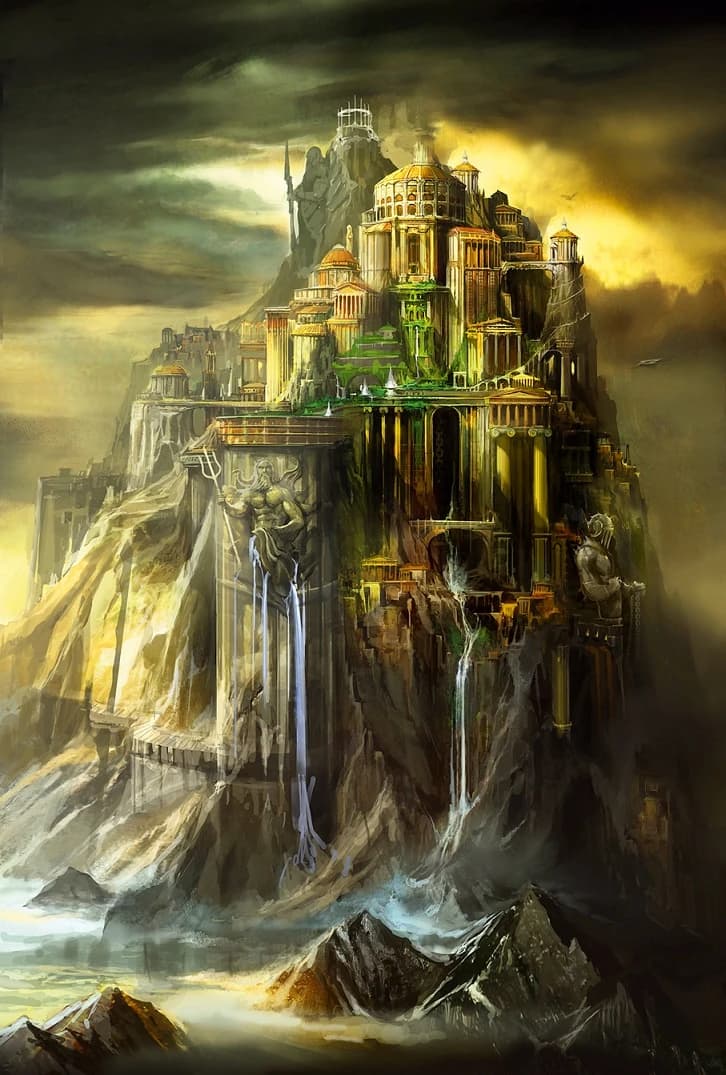
Mount Olympus: Zeus' seat, torn down
The golden mountain became the seat of the gods after the first Titanomachy, and none but a god could set foot on it. Kratos brought the whole thing down.
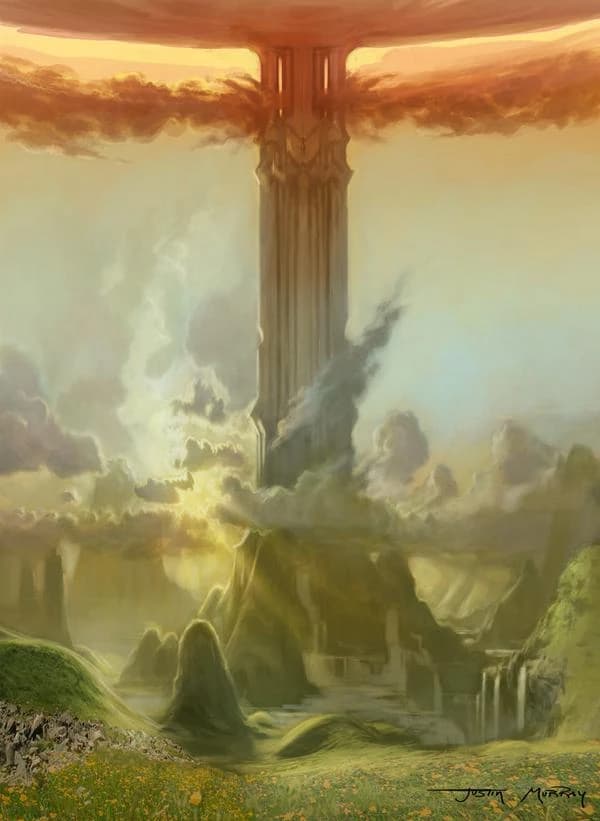
Pillar of the World
The Pillar of the World was a great column in the Underworld that held up the Greek world and kept it from collapse. Partly broken in the battle between Kratos and Persephone, it became the eternal burden of the Titan Atlas.
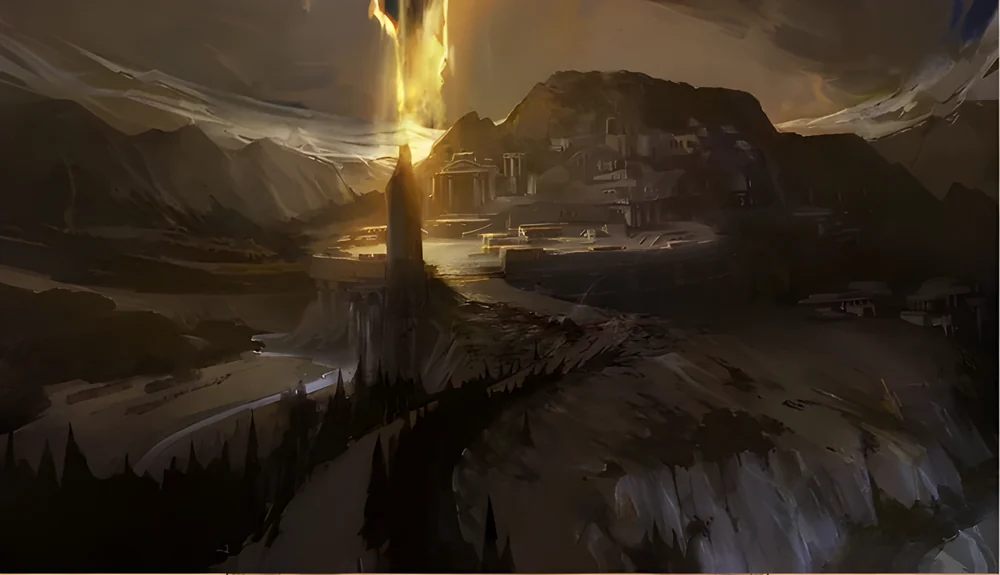
Sparta: Kratos' city, razed by Zeus
Sparta raised Kratos, worshipped Ares, then took Kratos himself as its patron god. Zeus destroyed the city in revenge for the Spartan's defiance.
Kraken: the sea beast of the Island of Creation
The Kraken was a giant meat-eating sea monster, an octopus-like horror of armored tentacles and a fanged maw. One rose against Kratos on the Island of Creation after the death of the Last Spartan and nearly crushed him before he impaled her through the mouth, while in the Norse realms a hatchling of the same breed lived as the pet of the dwarf Durlin.
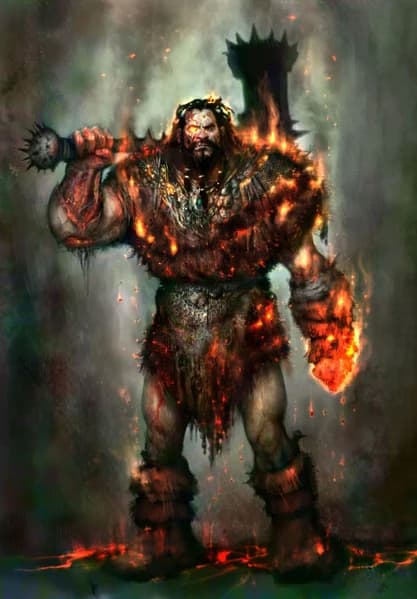
Alrik
Alrik, the Barbarian King, was the leader of the Barbarian horde from the east and one of Kratos' oldest enemies. His assault drove Kratos to pledge his soul to Ares, beginning the Spartan's tragedy, and his hatred outlasted even death.
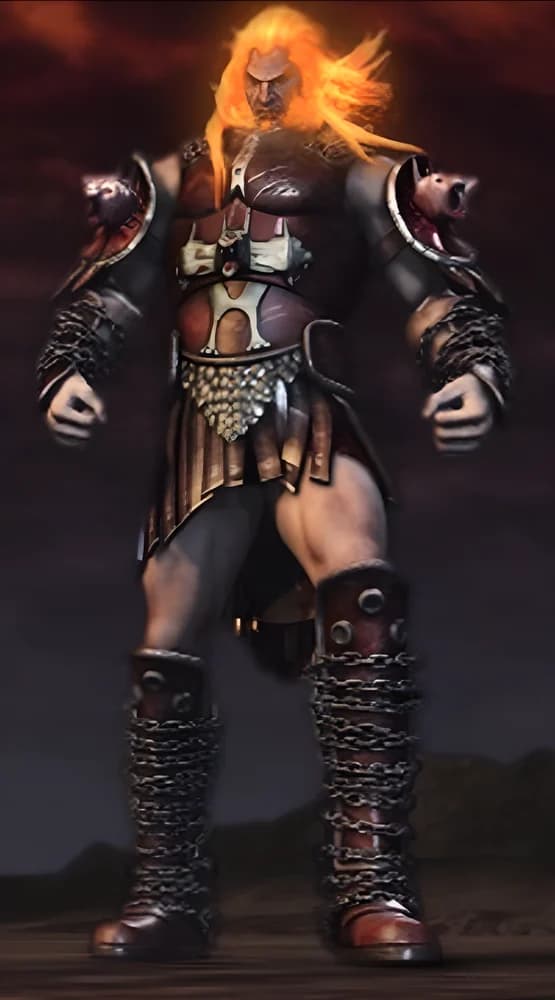
Ares: the god who made Kratos a killer
Ares tricked Kratos into slaughtering his own wife and daughter to bind him as a weapon. Kratos killed him at Athens and took his place as God of War.
Mentioned in9 entries
Dark Rider: the Warrior of Destiny
The Dark Rider, called the Warrior of Destiny in the novelization, was the leader of the Griffin Riders who guarded the skies around the Island of Creation. Armed by the Sisters of Fate with the Spear of Destiny, he intercepted Kratos on his flight to the island and died in a duel fought on the back of his own Griffin.
Erebus: the Primordial of Darkness
Erebus was the Primordial entity of Darkness, one of the first deities born from Chaos in the Void and the brother and consort of Nyx, the Night. His dark mists filled the deep hollows of the earth, his name clung to the netherworld of the dead, and later writers counted the ferryman Charon and the Fates among his children. His own end was never recorded.
God of War II Story Explained: Plot Summary and Ending
The whole story of God of War II in order, from Zeus's betrayal at Rhodes to the Titans climbing Mount Olympus. Then the ending in plain terms: why Athena died, what she told Kratos about his father, and how it sets up God of War III.
God of War Story Explained: the Whole Saga from Sparta to Ragnarök
The full God of War story in order, one main game at a time. Kratos serves Ares, kills him, destroys Olympus, starts again in the Norse lands and finally ends Odin, with the Valhalla epilogue as the last word.
God of War Timeline: every major event from the Primordials to Valhalla
The full in-universe chronology of God of War, from the war of the Primordials and the fall of the Titans to Kratos's life in Sparta, his war on Olympus, and the end of the Aesir at Ragnarök. The games give almost no calendar years, so events are ordered by story sequence and grouped into eras, with notes wherever the games' own placement is vague.
God of War Weapons List: the Name of Every Weapon Kratos Has Used
Kratos has carried two dozen weapons across two lifetimes, from a Spartan spear to a spear built from a ring that copies itself. This list runs through them in the order he got them, Greek era first, then Norse.
Kraken: the sea beast of the Island of Creation
The Kraken was a giant meat-eating sea monster, an octopus-like horror of armored tentacles and a fanged maw. One rose against Kratos on the Island of Creation after the death of the Last Spartan and nearly crushed him before he impaled her through the mouth, while in the Norse realms a hatchling of the same breed lived as the pet of the dwarf Durlin.
The Argonauts: the crew that carried the Golden Fleece
The Argonauts were the company of Greek heroes who sailed under Jason aboard the Argo and took the Golden Fleece out of Colchis. Their last voyage brought them to the Island of Creation, where the monsters of the Bog of the Forgotten killed every one of them and a Mole Cerberus swallowed the Fleece.
The Undead: the dead who would not rest
The Undead were the dead returned to motion, raised by curse, godly power, or magic to serve the masters of the afterlife. In Greece they marched as soulless corpses in the armies of Ares and Hades, while in the Nine Realms the Draugr, Hel-Walkers, and Einherjar overran the living world as Ragnarok drew near.
Get new articles in your inbox
No spam. New lore drops, canon conflicts, and deep dives only when they’re worth reading.
Some links on Lore Fortress are affiliate links. If you buy through them we earn a small commission at no extra cost to you.