Erebus: the Primordial of Darkness
Erebus was the Primordial entity of Darkness, one of the first deities born from Chaos in the Void and the brother and consort of Nyx, the Night. His dark mists filled the deep hollows of the earth, his name clung to the netherworld of the dead, and later writers counted the ferryman Charon and the Fates among his children. His own end was never recorded.
Erebus was the Primordial entity of Darkness, one of the first deities born from Chaos at the beginning of creation. He came into being in the Void before the world had shape, the brother of Gaia and Nyx and a sibling of Tartarus and Eros, the eldest generation of the Primordials. Called the Embodiment of Darkness and honored as God of Darkness and God of Shadows, he took Nyx as his consort, and the two dark powers together brought forth some of the oldest forces in the Greek cosmos. Where his sister Gaia became the living earth and Ouranos the starry heavens, Erebus was the gloom beneath and between all things, the shadow that pooled in the hollows of the world and gathered thickest in the Underworld, the domain that came to carry his name. (Theogony)
Born from Chaos#
In the beginning there was Chaos, the void from which all of creation came, at once the disordered state of the young universe and the deity embedded within it. From that formlessness emerged the first of the Protogenoi, the primordial gods who preceded Titans and Olympians alike. The earth, Gaia, came forth, and the infernal pit of Tartarus, and Eros, the force of new life. Then Chaos spawned the darkness, Erebus, and the night, Nyx, completing the eldest company of the Primordials. (Theogony)
Erebus was darkness itself given divine form. The Greeks understood his substance as the dark mists that encircled the world and filled the deep hollows of the earth, present wherever light failed. He was counted among the most prominent of the first gods beside Chaos, Gaia, Ouranos, Nyx, and Tartarus, though unlike his siblings who shaped and warred over the surface of creation, Erebus left few deeds on record. Like his consort Nyx, he endured where lesser powers of that first age did not. (Theogony)
Consort of the Night#
Erebus took his sister Nyx as his consort, and the darkness and the night formed the first couple of Greek history, a union in which no rift or trouble was ever recorded. In this the pair stood apart from Gaia and Ouranos, whose marriage ended in mutilation and hatred. The loyalty between Erebus and Nyx never wavered through the long ages that followed. (Theogony)
Their first children were their own opposites. From the union of Darkness and Night came Aether, the light of the upper air, and Hemera, the day. In the reckoning of the ancient Greeks, the heavenly ether and the dark mists of the netherworld were the true sources of day and night rather than the sun. In the evening Nyx drew the darkness of Erebus across the sky, bringing night upon the world, and at dawn their daughter Hemera scattered it, revealing the shining air beneath. So the turning of every day and night was, in the oldest accounts, the working of this one family. (Theogony)
Father of dark children#
Later writers ran the line of Erebus deeper into the dark places of creation. Cicero names Charon, the grim ferryman who carried the souls of the dead across the waters of the Underworld, as a son of Erebus and Night, and Hyginus counts the three Fates among their children. In God of War II those Sisters of Fate, Clotho, Lahkesis, and Atropos, rule from the Island of Creation and hold power over past, present, and future, and their rule over the destiny of every mortal, god, and Titan was one that none could defy. That the all-ruling Fates were counted among the offspring of Darkness spoke to the stature of their father, however quietly he kept to his own domain. (De Natura Deorum; Fabulae; God of War II)
Hesiod says many of Nyx's later children were brought forth by the goddess alone, gods who personified the abstractions of nature, among them Thanatos, Hypnos the sleep, Nemesis the retribution and the tribe of dreams. Hyginus extends the fatherhood of Erebus to most of these powers and to other dark spirits besides. Whatever the true count of his children, nearly every power of night, death, and destiny in the Greek cosmos traced its blood to the house of Darkness and Night. (Theogony; Fabulae)
The darkness below#
The name of Erebus was also given to a place. Among the Greeks, Erebus served as a byword for the netherworld domain of Hades, for the dark mists of the Primordial were held to fill the sunless hollows beneath the earth, and the god himself was placed within the Underworld. Long after the first age of creation, his name still marked the deepest reaches of the land of the dead. (Odyssey)
It was there, in the old god's dark country, that the Spartan Kratos came to the Three Judges of the dead during his final descent into the Underworld. He was made to pass a trial before them, in which a wandering soul was transformed into a hulking horned beast that the Spartan cut down. Completing it partially lifted the great Chain of Balance held by the Judges, exposing the Onyx that locked it in place within Hades' domain, a barrier Kratos later shattered with the Nemean Cestus after freeing Pandora from the maze that held her. (God of War III)
The name of Darkness surfaced elsewhere in that age as well. Near the Steeds of Time on the Island of Creation, the hero Theseus called up ice-wreathed beasts known as Erebus Minotaurs to fight in his stead, creatures that bore the old god's name into battle against the Ghost of Sparta. (God of War II)
An unrecorded fate#
Erebus himself was never seen to act in the wars that consumed the Greek world. While Kratos toppled the Olympians and the earth-mother Gaia perished with them, the god of Darkness remained apart, as he had through every recorded age. Of the eldest generation of Primordials, Gaia and Ouranos both met their ends, yet Erebus, like Nyx and Tartarus, endured within his own domain, and no chronicle ever counted him among the fallen. (God of War III)
What became of him after the ruin of Olympus was never told. Darkness itself did not pass from the world, and the mists of the netherworld did not lift. As with his brother Eros, the histories left the first god of Darkness where they found him, unseen and undiminished, at work wherever light failed. His status remained unknown. (God of War III)
Sources
- BookTheogony, Hesiod, around 700 BC
- BookOdyssey, Homer, around the 8th century BC
- BookDe Natura Deorum, Cicero, 45 BC
- BookFabulae, Attributed to Hyginus, 1st or 2nd century AD
- GameGod of War II, Santa Monica Studio, 2007
- GameGod of War III, Santa Monica Studio, 2010
Spotted a factual error or a primary source we missed? Email a correction. Every flagged claim gets reviewed.
Followed from this entry
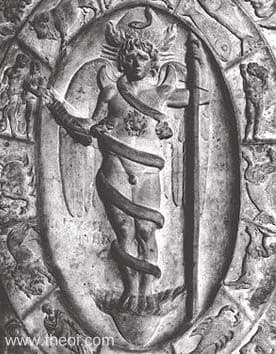
Eros: the Primordial of Love and Desire
Eros was the Primordial entity of Love and Desire, one of the first beings to come out of Chaos in the Void before the world took shape. He embodied the force that brought new life into the young cosmos. His name was still invoked in the age of Kratos, though his own fate was never recorded.
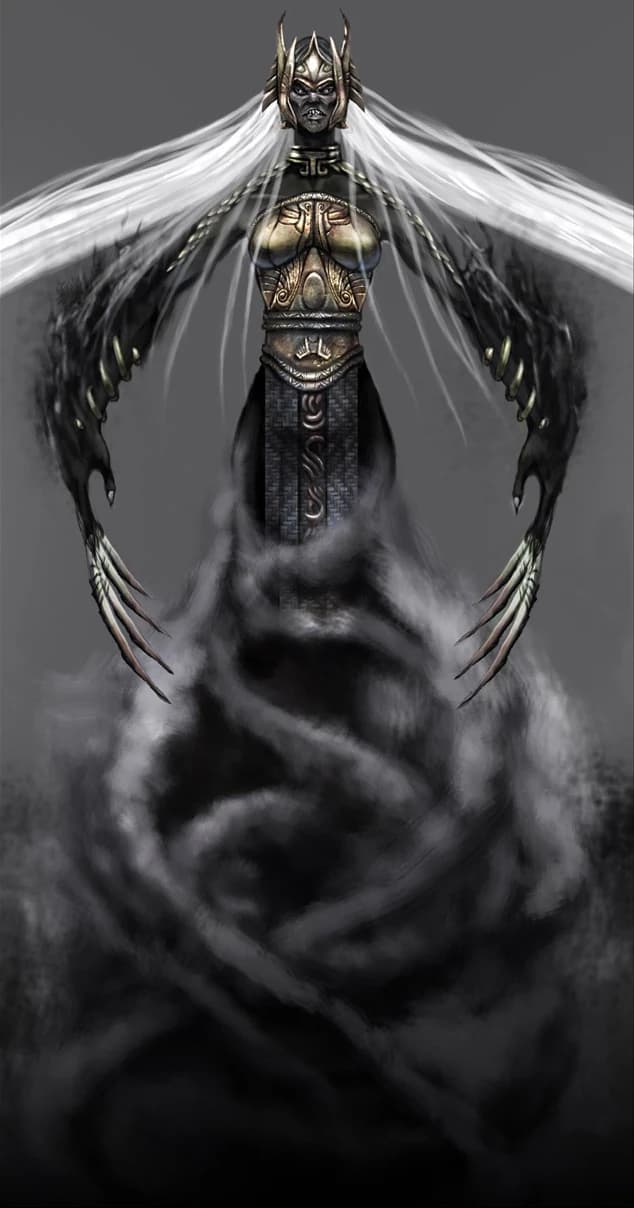
Atropos
Atropos was the eldest and cruelest Sister of Fate, the cutter who ended every life with her razor claws. She dragged Kratos into his own past to undo him, but the Spartan turned her sisters against one another and sealed her within a shattered mirror.
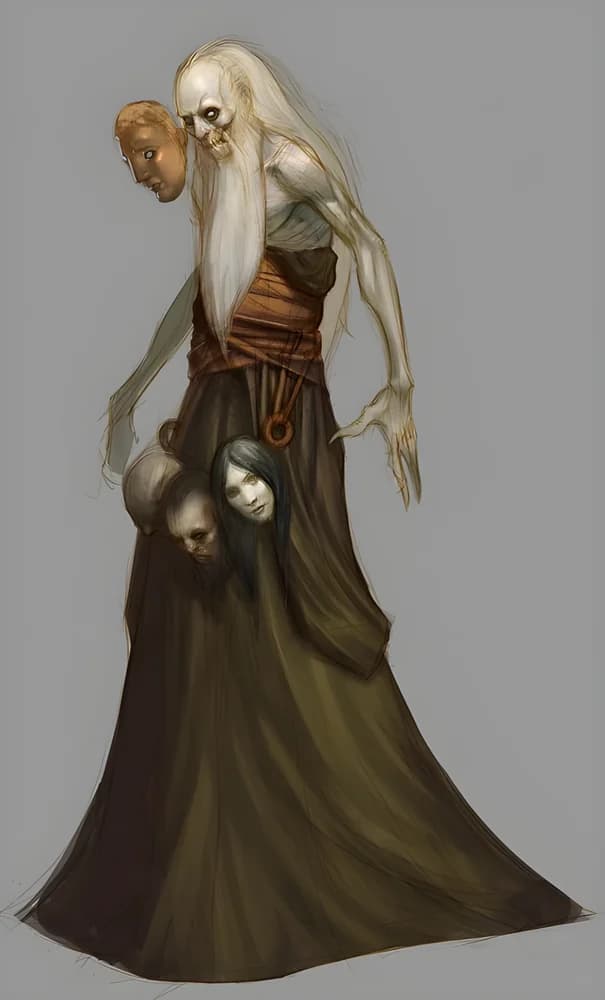
Charon
Charon was the ferryman who carried the souls of the dead across the River Styx, a servant of Hades and Persephone. When Kratos came to his docks still living, Charon refused him passage and cast him into Tartarus before the Spartan returned to kill him.
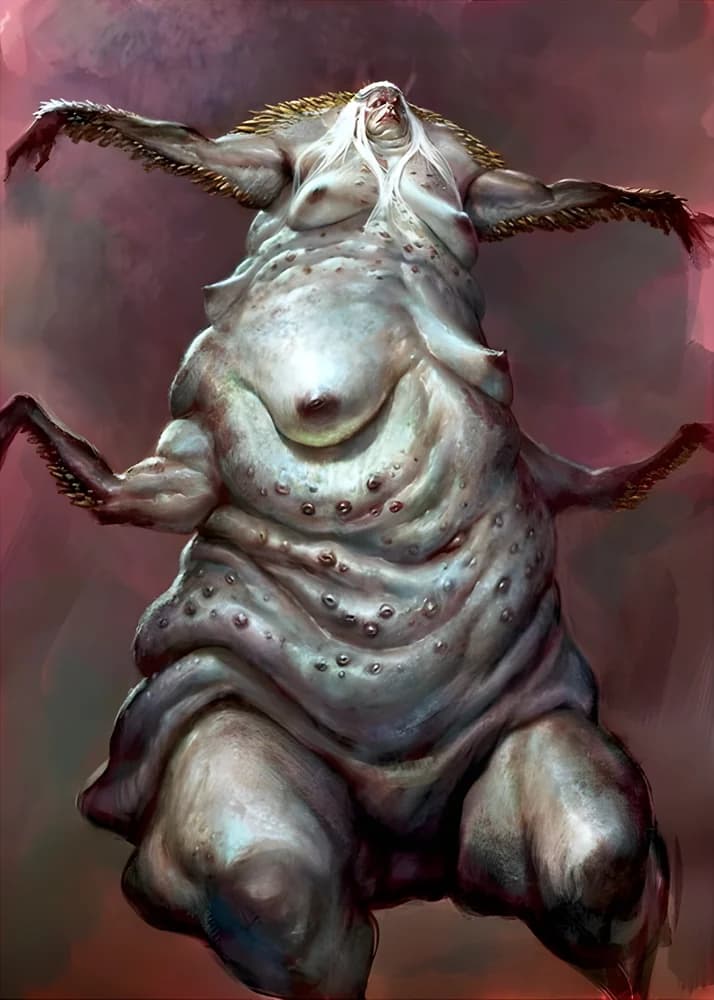
Clotho
Clotho was the youngest of the three Sisters of Fate, the spinner who began each life and decided who would be born. Dwelling in the Loom Chamber of the Palace of the Fates, she warned Kratos against tampering with destiny, and when he defied her she became the only sister he killed in the flesh.
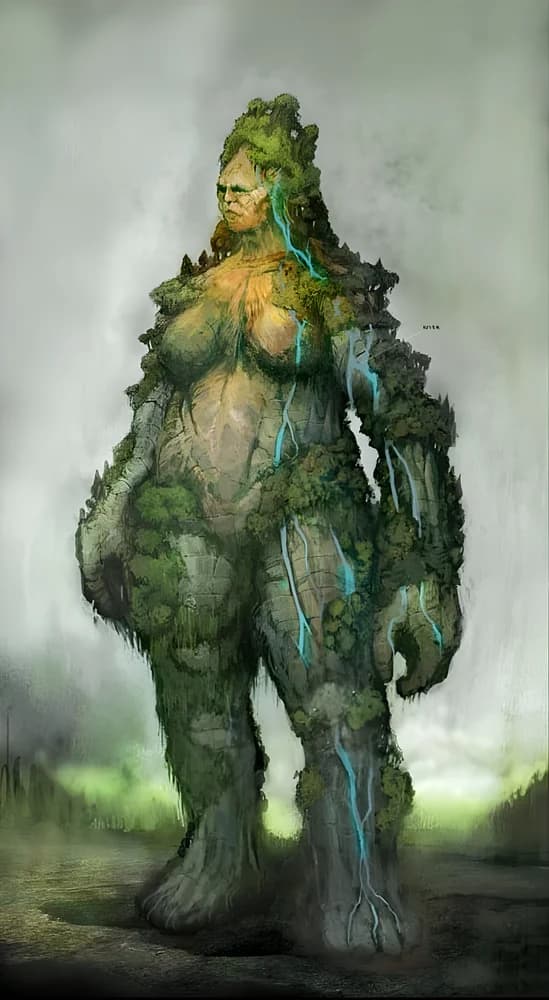
Gaia: Mother Earth, betrayed by Kratos
Gaia bore the Titans, hid the infant Zeus from Cronos, and allied with Kratos against Olympus. He ran the Blade of Olympus through her heart.
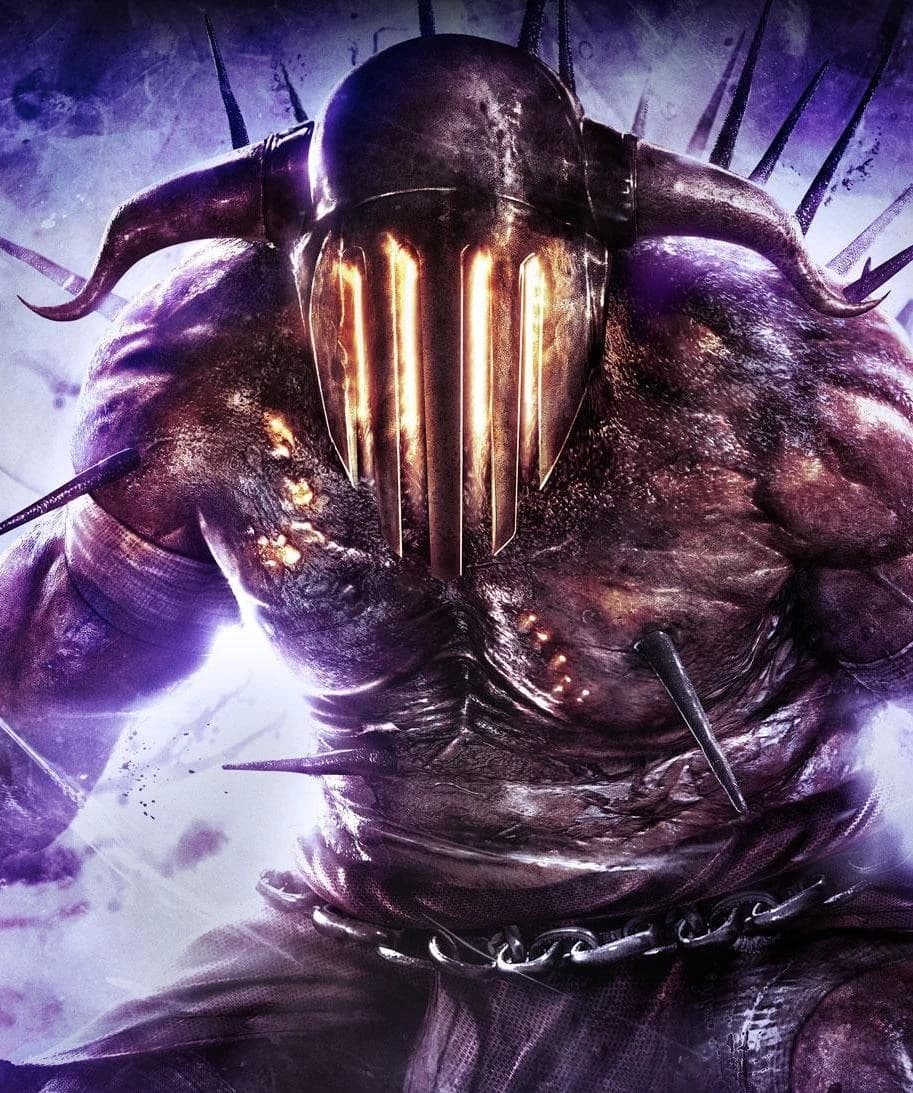
Hades: the god whose soul Kratos tore out
Eldest son of Cronos, Hades ruled the Underworld and held life and death in balance. Kratos turned the Claws of Hades on him and ripped his soul out.
Mentioned in8 entries
Eros: the Primordial of Love and Desire
Eros was the Primordial entity of Love and Desire, one of the first beings to come out of Chaos in the Void before the world took shape. He embodied the force that brought new life into the young cosmos. His name was still invoked in the age of Kratos, though his own fate was never recorded.
Greek Gods
The Greek Gods were the pantheon that ruled over Greece across three generations, the Primordials, the Titans, and the Olympians. Once the masters of mortals, monsters, and the natural world, they were brought to near extinction by Kratos in his war of vengeance against Olympus.
Minotaur
The Minotaurs were a species of towering bull-headed warriors first bred by Ares as brutes for his armies. From the labyrinth-bound Asterion of legend to the armored guardian of Pandora's Temple, they served as beasts of war across Greece and were a recurring foe of Kratos.
Nyx
Nyx was the Primordial of Night, one of the first beings born from Chaos and the sister-consort of Erebus. From the darkness she brought forth a host of lesser primordial gods, drawing her cloak of night across the Greek heavens before withdrawing to her own world of eternal gloom.
Primordials: the First Beings in Existence
The Primordials were the first beings to come into existence at the dawn of creation, ancient cosmic forces who predated the Titans and Olympians of Greece and the Jotnar, Aesir, and Vanir of the Nine Realms. From their wars and unions the worlds themselves were formed.
The Undead: the dead who would not rest
The Undead were the dead returned to motion, raised by curse, godly power, or magic to serve the masters of the afterlife. In Greece they marched as soulless corpses in the armies of Ares and Hades, while in the Nine Realms the Draugr, Hel-Walkers, and Einherjar overran the living world as Ragnarok drew near.
The Underworld
The Underworld was the realm of the dead in Greece, a hellish landscape below the living world where the River Styx carried mortal souls to their rest. It was ruled by Hades until his death, and Kratos descended into it many times across his Greek campaigns.
Theseus
Theseus was a Greek demigod, son of Poseidon and former hero-king of Athens, celebrated for slaying the Minotaur. Worn down by old griefs, he gave himself to the service of the Sisters of Fate as Keeper of the Horse Key, guarding the Steeds of Time until Kratos cut him down to claim the way forward.
Get new articles in your inbox
No spam. New lore drops, canon conflicts, and deep dives only when they’re worth reading.
Some links on Lore Fortress are affiliate links. If you buy through them we earn a small commission at no extra cost to you.