Eros: the Primordial of Love and Desire
Eros was the Primordial entity of Love and Desire, one of the first beings to come out of Chaos in the Void before the world took shape. He embodied the force that brought new life into the young cosmos. His name was still invoked in the age of Kratos, though his own fate was never recorded.
Eros was the Primordial entity of Love and Desire, one of the first beings born out of Chaos at the beginning of creation. He came into existence in the Void before the world had form, a sibling of Gaia, Erebus, Nyx, and Tartarus, the eldest generation of the Primordials. Where his brothers and sisters embodied the earth, the heavens, the darkness, the night, and the abyss, Eros was the act of procreating new life through love, the force that drove generation itself in the early cosmos. He takes no part in the wars the games show, yet his name survived on mortal tongues into the age of Kratos. (Theogony; God of War: Ascension)
Born out of Chaos#
In the beginning there was Chaos, the void from which all of creation came, at once a disordered state of the universe and the deity embedded within it. Out of that formlessness emerged the first of the Protogenoi, the primordial gods who came before Titans and Olympians alike. The earth, named Gaia, came out of Chaos first, and after her the infernal pit named Tartarus. Then came the act of procreating new life through love, and that force the Greeks called Eros. Soon afterward Chaos spawned the darkness, Erebus, and the night, Nyx, who joined together to bring forth the light, Aether, and the day, Hemera. So the young cosmos filled with its first powers, and Eros was counted among the most prominent of the Primordials beside Chaos, Gaia, Erebus, Nyx, and Tartarus. (Theogony)
Eros emerged self-formed at the beginning of time alongside his siblings, and he was the driving force behind the generation of new life in the early cosmos. Where the other elder Primordials were places and states of being, Eros was a principle at work within all of them, desire itself given divine form. Other Greek accounts told his birth differently. In Aristophanes' comedy Birds, black-winged Night laid a wind-egg in the depths of Erebus, and from it sprang Eros with golden wings, who then mated with Chaos and brought forth the race of birds. (Theogony; Birds)
Power over love and desire#
As the god of Love and Desire, Eros ruled over love, lust, and desire, the same domain that Aphrodite, the Olympian goddess of love, governed in a later age. Hesiod calls him the fairest of the deathless gods, the loosener of limbs who overpowers the mind and good counsel of gods and men alike. (Theogony)
The winged son of Aphrodite#
The Greeks did not tell a single story of Eros. In some accounts he was the eldest of powers, self-created out of Chaos before the world began. In others he was a far younger god, the son of Ares and Aphrodite, pictured as a winged youth armed with a bow and arrows. That younger likeness was honored in the home of the love goddess herself: two statues of a winged youth bearing bows and arrows crowned the frame of Aphrodite's bed within her chamber, images in the manner of her demigod son. (Theogony; Simonides, fragment 575; God of War III)
One tradition told of a trouble in his childhood. Aphrodite grew worried that her son remained a child and might stay one forever, and she brought the boy to Themis for counsel. Themis judged that Eros was not growing because of his solitude, and she told Aphrodite to give him a brother. Aphrodite then bore a second god of love, Anteros, and in his brother's company Eros at last began to grow. In this younger form he was the god of erotic desire, the kindler of passion between mortals and immortals alike, a gentler office than the world-shaping generation the eldest accounts ascribed to him. (Orations 24)
A name invoked in the age of Kratos#
Eros took no known hand in the wars that consumed the Olympian age, yet his name endured among mortals. When the Spartan Kratos broke his blood oath to Ares and was hunted by The Furies, the Fury Tisiphone sought to snare the Spartan's mind with illusions of pleasure and ease. Within one such vision, a woman, delighted by Kratos's presence, hailed him as a gift Eros had sent them, glorying in his arrival. (God of War: Ascension)
The greeting was spoken inside a Fury's deception, yet it reflected how the mortals of that age understood the god. To them Eros remained the giver of love's gifts, a power to be praised when desire was answered, and his name came readily to those who lived for pleasure. Whether the Primordial himself still watched the mortal world by then, no record tells. Among the first beings of creation, he remained the least seen and the most quietly present, at work wherever new life was made. (God of War: Ascension)
Sources
- BookTheogony, Hesiod, around 700 BC
- BookBirds, Aristophanes, 414 BC
- BookSimonides, fragment 575, Simonides of Ceos, late 6th to early 5th century BC
- BookOrations 24, Themistius, 4th century AD
- GameGod of War III, Santa Monica Studio, 2010
- GameGod of War: Ascension, Santa Monica Studio, 2013
Spotted a factual error or a primary source we missed? Email a correction. Every flagged claim gets reviewed.
Followed from this entry
Erebus: the Primordial of Darkness
Erebus was the Primordial entity of Darkness, one of the first deities born from Chaos in the Void and the brother and consort of Nyx, the Night. His dark mists filled the deep hollows of the earth, his name clung to the netherworld of the dead, and later writers counted the ferryman Charon and the Fates among his children. His own end was never recorded.
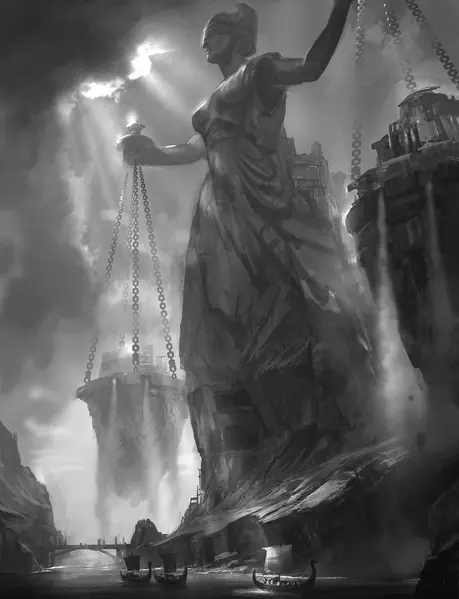
Themis: Titaness of Justice and Goddess of Law
Themis was the Titaness of Justice, the embodiment of divine order, law, and custom, a daughter of Gaia who held the oracle at Delphi before Apollo and sided with Zeus in the war against the Titans. In God of War she is only a name and a colossal statue near Delos.
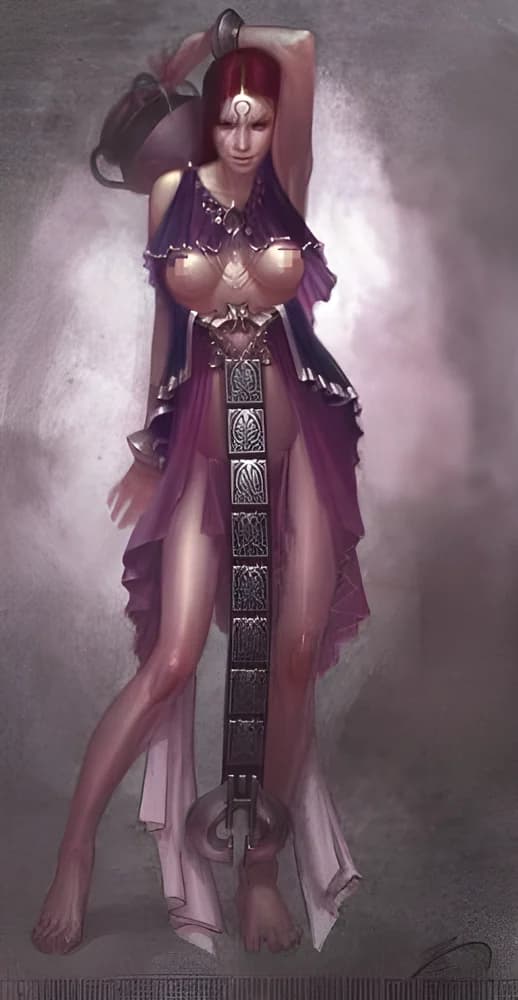
Aphrodite: Hephaestus' wife, lover of Ares
Aphrodite was married to the smith Hephaestus but had no love for him. In myth she took Ares as a lover, and in the games she gave Kratos Medusa's gaze.
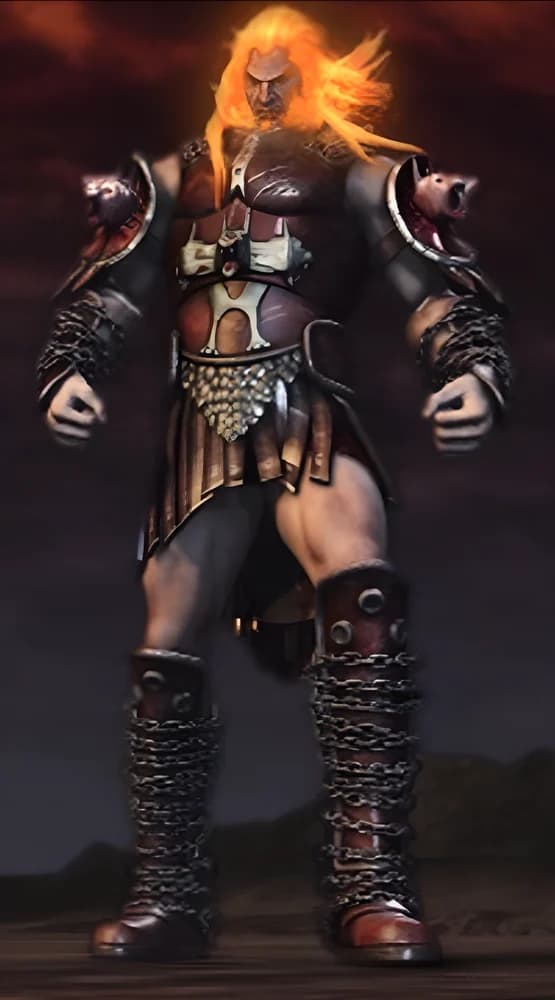
Ares: the god who made Kratos a killer
Ares tricked Kratos into slaughtering his own wife and daughter to bind him as a weapon. Kratos killed him at Athens and took his place as God of War.

Gaia: Mother Earth, betrayed by Kratos
Gaia bore the Titans, hid the infant Zeus from Cronos, and allied with Kratos against Olympus. He ran the Blade of Olympus through her heart.
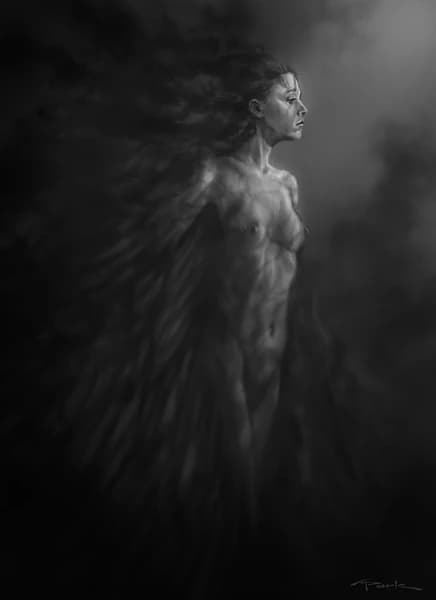
Nyx
Nyx was the Primordial of Night, one of the first beings born from Chaos and the sister-consort of Erebus. From the darkness she brought forth a host of lesser primordial gods, drawing her cloak of night across the Greek heavens before withdrawing to her own world of eternal gloom.
Mentioned in1 entry
Get new articles in your inbox
No spam. New lore drops, canon conflicts, and deep dives only when they’re worth reading.
Some links on Lore Fortress are affiliate links. If you buy through them we earn a small commission at no extra cost to you.