Ixion: the kin-slayer bound to the wheel
Ixion was the king of the Lapiths of Thessaly and the first mortal ever to slay his own kin. Pardoned by Zeus and welcomed to Olympus, he repaid the gods by lusting after Hera, and for that treachery he was bound to a winged wheel of fire. In the age of Kratos his ruined body hung chained in the prison of the damned.
Ixion was the king of the Lapiths, the most ancient tribe of Thessaly, and the first mortal in the Greek world to slay his own kin. Pardoned by Zeus and seated at the table of the gods, he repaid that mercy by lusting after Hera, and for his treachery he was lashed to a winged wheel of fire that never ceased to turn. Long ages afterward, in the days when Kratos fought his way free of the Furies, a broken body remembered only as the Martyr hung chained within the prison of the damned, and the old king's endless punishment was made to serve one last purpose. (God of War: Ascension; Pythian Odes)
The king of the Lapiths#
Ixion ruled the Lapiths, reckoned the most ancient tribe in all of Thessaly. His infamy began with his marriage. Ixion took as his wife Dia, the daughter of Deioneus, and to seal the match he promised her father a valuable present. The present was never paid. Cheated of the bride price, Deioneus took his own repayment and stole a number of Ixion's horses. (Library of History)
Ixion hid his resentment. He invited Deioneus to Larissa for a feast, and when his father-in-law arrived, the king pushed him into a bed of burning wood and coal. Deioneus was burned alive. With that single act Ixion became the first mortal ever to commit the slaying of his own kin, and the crime defiled him utterly. The guilt of it drove him mad. (Library of History; Pythian Odes)
There existed rites by which a man stained with blood might be cleansed, but the murder of a guest and kinsman was an offense so monstrous, and so complete a violation of the law of hospitality, that the neighboring princes refused to perform them. Ixion's reputation was ruined beyond repair. From that day forward he was branded an outlaw and shunned by everyone, a king with no table in the Greek world willing to receive him. (Library of History)
A guest at the table of the gods#
One power alone took pity on the outcast. Zeus himself invited Ixion to Mount Olympus and gave the kin-slayer a place at the table of the gods, a mercy granted to few mortals in any age. Ixion answered it with a second betrayal. Seated among the Olympians, he became lustful of Hera, the wife of his host. (Library of History; Pythian Odes)
Zeus discovered his guest's intentions and laid a trap in place of a punishment. He created Nephele, a cloud nymph who bore the very shape of Hera, and Ixion was tricked into coupling with the phantom. From that union was born a son, called Imbros or Centauros, who would become the father of the Centaurs. And so the kin-slayer's blood ran on in the wild, hoofed tribes that plagued the Greek world long after his fall. (Pythian Odes; Library of History)
For the outrage itself there was no second pardon. Ixion was evicted from Olympus by a blast of Zeus's thunderbolt, and the king of the Olympians ordered his son Hermes, the messenger god, to tie Ixion to a winged, fiery wheel that spun without stopping. From that point on Ixion remained bound to the solar wheel forever, turning endlessly across the heavens. The chronicles record only one reprieve in all the ages that followed. When the Thracian bard Orpheus played his lyre in the underworld, the wheel to which Ixion was bound stopped spinning for a while, and then turned on. (Pythian Odes; Fabulae; Metamorphoses)
The Martyr of the prison of the damned#
The accounts of where Ixion's punishment finally came to rest did not agree. Some chroniclers of the Greek world counted him among the prisoners of Tartarus. What is certain is that in the days when Kratos was cast into the prison of the damned, the living dungeon that the Furies had made of the Hecatonchires Aegaeon, a tormented body hung within a chamber known as the Martyr's Room. The game never names him, but concept art made for it identifies the Martyr as Ixion. (Aeneid; God of War: Ascension)
His body was chained to a rack in the middle of the room and stretched taut upon it, the strain tearing open his stomach, his wrists, his upper arms, and his legs. The chamber itself echoed his ancient sentence, for within it a wheel turned ceaselessly, dragging corpses through fire. Such refinements of agony were the signature of Megaera, the Fury who tormented the flesh, and the Martyr's condition looked very much like her work. (God of War: Ascension)
When Kratos passed through the Martyr's Room during his escape, the old king's suffering was put to use one final time. The Spartan rotted away the mechanism that held the racked body in place, and the sudden release sent it lurching upward. Nearby, a second corpse lay clamped in a sprung bear trap. Kratos freed that corpse and hung Ixion's body in its place, chained by the wrists, and the shifted weight raised a great box that cleared the road ahead. The freed corpse he laid upon a pressure plate to hold a second mechanism firm, for without that support the added weight of a living man upon the box would have snapped Ixion's arms outright. By such grim arithmetic of hanging bodies and counterweights the Ghost of Sparta won his passage, and the Martyr was left behind in his chains. (God of War: Ascension)
The line of Ixion#
Though Ixion himself ended as a nameless body in a torture chamber, his blood left a long mark on the Greek world. Through Centauros came the whole race of the Centaurs. His wife Dia bore a son, Peirithous, who ruled the Lapiths after him and was fathered, so the accounts said, either by Ixion or by Zeus himself. That son inherited something of his father's appetites as well as his throne, for Peirithous too dared to covet the wife of a god and ended imprisoned in the underworld for it. Twice over, then, the house of Ixion taught the same lesson the Greek world never tired of repeating: that the gods might forgive a mortal much, but never the reaching of a mortal hand toward what was theirs. (Iliad; Bibliotheca)
Sources
- GameGod of War: Ascension, Santa Monica Studio, 2013
- BookBibliotheca, Attributed to Apollodorus, 1st or 2nd century AD
- BookPythian Odes, Pindar, 5th century BC (Pythian 2)
- BookLibrary of History, Diodorus Siculus, 1st century BC
- BookFabulae, Attributed to Hyginus, 1st century AD
- BookMetamorphoses, Ovid, AD 8
- BookAeneid, Virgil, 19 BC
- BookIliad, Homer, around 8th century BC
Spotted a factual error or a primary source we missed? Email a correction. Every flagged claim gets reviewed.
Followed from this entry
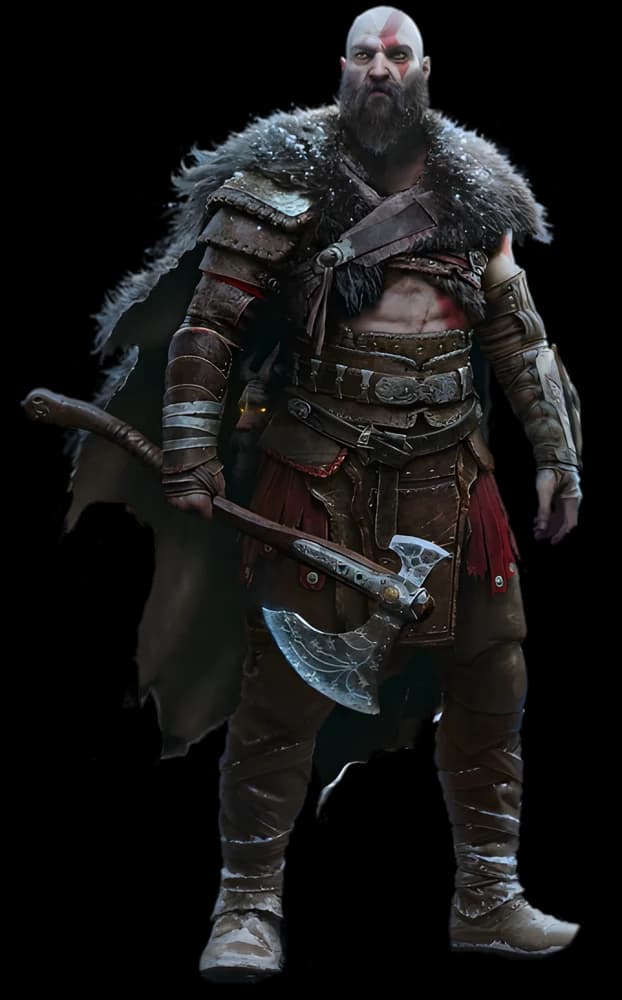
Kratos
Kratos was the demigod son of Zeus who rose from a Spartan general to the Greek God of War, destroyed the pantheon of Olympus in a quest for vengeance, and then began again in the Norse realms as a father seeking to leave his bloody past behind.
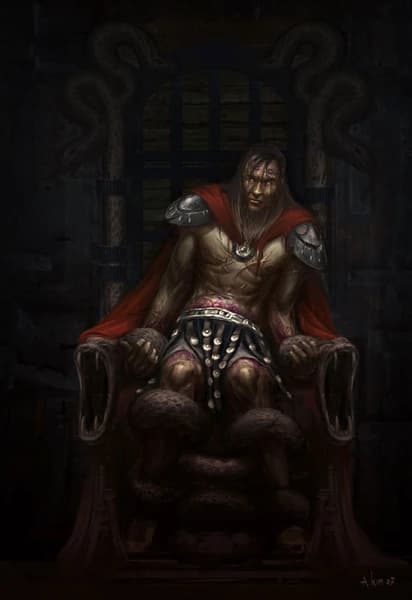
Peirithous
Peirithous was a demigod of Thessaly who descended into the Underworld to claim Persephone and was condemned by Hades to eternal suffering. Caged behind brambles, he bargained the Bow of Apollo for his freedom and burned to death at Kratos' hand.
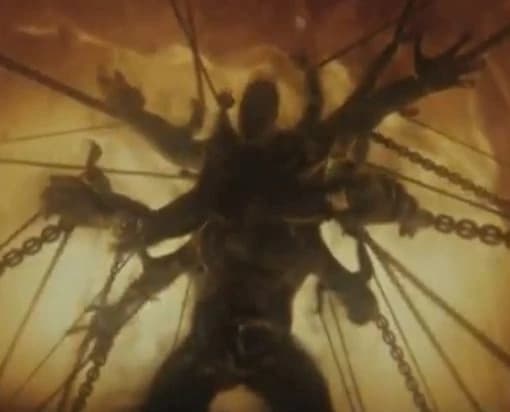
Aegaeon: the Hecatonchires made a prison
Aegaeon was one of the three Hecatonchires, a giant of many hands who broke a blood oath with Zeus and was punished by the Furies. His vast body was transformed into the living dungeon called the Prison of the Damned, in which Kratos was once chained.
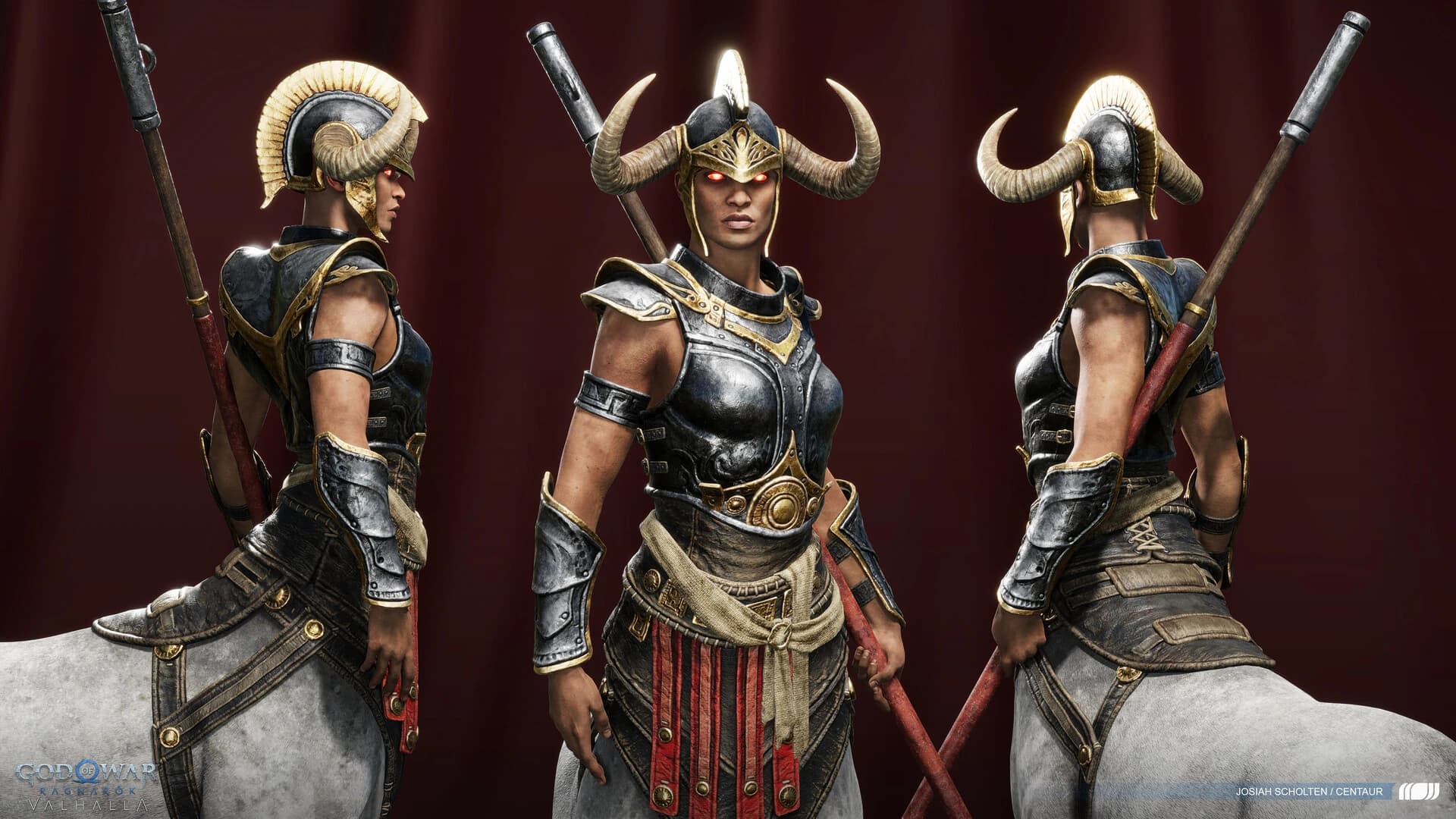
Centaur
The Centaurs were monsters of the Greek world, part man and part horse, once renowned for poetry and wine-making in the forests of Mount Pelion. When the Lapiths encroached on their woods they took up arms, and in time were recruited across Greece for their martial prowess.
Hecatonchires
The Hecatonchires were three giants of immense strength born of Ouranos and Gaia, mightier even than the Titans they helped to overthrow. One of their number, Aegaeon, was transformed by the Furies into a vast living prison for those who broke a blood oath with the gods.
Hera
Hera was the Olympian Goddess of Marriage and Queen of the Gods, the sister and wife of Zeus and mother of Ares. Embittered by her husband's affairs and her withering garden, she set Hercules against Kratos before the Spartan snapped her neck and the world's flora died with her.
Get new articles in your inbox
No spam. New lore drops, canon conflicts, and deep dives only when they’re worth reading.
Some links on Lore Fortress are affiliate links. If you buy through them we earn a small commission at no extra cost to you.