The Labyrinth: the prison Zeus built for Pandora
The Labyrinth was a shifting maze of stone cubes raised inside Mount Olympus by the Athenian craftsman Daedalus at the command of Zeus, built for the sole purpose of holding Pandora away from the Flame of Olympus. Its heart hung from the Chain of Balance and the Three Judges of the dead served as the final latch of its lock.
The Labyrinth was a vast shifting maze raised inside Mount Olympus by the Athenian craftsman Daedalus at the command of Zeus. It existed for one purpose, to hold Pandora, the living key that could quiet the Flame of Olympus and so open Pandora's Box, which lay sealed inside it. The Labyrinth itself hung from the Chain of Balance, the enormous links that tied Olympus to the Underworld, and the Three Judges of the dead gripped that chain as the final latch of the lock. Daedalus spent the last years of his life chained inside his own work, waiting for a son who had already fallen. Kratos solved the maze, killed its builder in the solving, and then dragged the whole structure up the mountain. (God of War III)
Why Zeus raised it#
The Labyrinth was built to keep one prisoner. Hephaestus had forged Pandora's Box using the Flame of Olympus, and he had shaped a key out of the heart of that same fire, a girl he called Pandora and raised as his daughter. When the Box was first sealed the smith lied to his father about the lock, persuading Zeus to fix it instead upon the back of Cronos so that no key would ever be needed. That deception held until Kratos opened the Box in the temple on the Titan's back and used its power to kill Ares. Afterward the Box was returned to the lock Hephaestus had originally intended for it, the Flame itself, which killed anything that touched it, god or mortal alike. Only Pandora could pacify the fire, and Zeus at last learned that she existed. (God of War (2005); God of War III)
The King of the Gods therefore needed somewhere to put her that no one would ever reach. He gave the commission to Daedalus, the most gifted mortal builder in Greece, and the work consumed him utterly. Zeus refused to let the architect take on repair duties or any other labour, holding him to the one great structure until it was finished. The tally of days Daedalus kept while he worked ran past four thousand six hundred, more than twelve years given over to a single maze. (God of War III)
A maze hung on the Chain of Balance#
The Labyrinth was assembled from enormous cubes of worked stone, each one a sealed chamber of traps, and the whole was stored inactive within the Caverns of Olympus at the centre of the mountain. Daedalus regarded it as his finest achievement and thought it a greater work than the Chain of Balance itself, the colossal chain that bound Mount Olympus to the Underworld and held the two worlds in equilibrium. (God of War III)
The cunning of the design lay in where it hung. The heart of the Labyrinth was fixed to the Chain of Balance, which meant it sat between Olympus above and the Underworld below. If either world rose or sank, the maze shifted with it, so its interior could never settle into a fixed shape that an intruder might learn. The chain was held by the Three Judges of the dead, and the architect built their grip into the mechanism as the last catch of the lock. Nothing could be raised out of the caverns while the Judges kept their hold. (God of War III)
The maze needed two opposing forces to move at all. Its mechanisms ran on the meeting of extreme cold and the Liquid Fire that flowed through the mountain, and without a source of cold the whole apparatus lay dead in its cavern. (God of War III)
Daedalus, chained in his own work#
Zeus had paid for the Labyrinth with a promise. In return for the maze, Daedalus was to have his son Icarus returned to him. The King of the Gods appears never to have intended to keep that bargain. The architect was chained inside the completed structure and left there, and his notes record a man who understood exactly what was being done to him. (God of War III)
In one note Daedalus wrote that Zeus hovered endlessly over his shoulder, his presence felt even when he was gone. The Heart of the Labyrinth, he reasoned, would be both a lock and a key, with the Judges of Hades as the final latch, and he swore that if he did not get his son, the only thing it would open the way to was destruction and chaos. (God of War III)
That note was dated to the three thousand two hundred and eighty seventh day of his labour. By the time Kratos came through the caverns the old man had gone mad, muttering to himself about Icarus and about the inventions that had let him build the place. Seeing a figure approach through the gloom, he took the Spartan for his son, and only when Kratos stepped into the light did he understand his mistake. Told that Icarus was dead, Daedalus was left with nothing at all. He also seemed to be one of the very few mortals in Greece untouched by the plague that swept the land, perhaps because he had been sealed inside the mountain while the world above rotted. (God of War III)
The trials within#
Kratos came to the caverns by way of the Path of Eos, riding an Icarus Vent up into the heart of the mountain, and found the Labyrinth lying dormant above him. Reaching Pandora meant first setting the thing in motion. (God of War III)
The Caverns of Olympus were the lair of Skorpius, queen of the scorpions, whose exoskeleton was shot through with Onyx that ordinary weapons could not break. Kratos broke the Onyx from her legs with the Nemean Cestus, crippled her, and finally drove her own stinger through her head. The strike crystallised her, and out of her shattered remains he took Boreas' Icestorm, a gem holding the frozen breath of the north wind. That cold was the missing half of the mechanism. Applied to the Labyrinth, it woke every cube in the structure. (God of War III)
Daedalus begged him not to activate it. Kratos ignored him, and the architect was caught in the middle of the moving mass and killed by his own creation. In the last chamber of the maze the Spartan found the old man's body still chained where the mechanism had left it, and beside it a final note written in Daedalus' own blood. (God of War III)
The trials themselves were a catalogue of the builder's ingenuity. Bronze Talos, the animated bronze guardians, waited in the first trial. Elsewhere Minotaurs worked at the chains holding a whole section of the maze in place, and Kratos rode a Cerberus Mongrel through them to stop the section from falling. Pandora herself, once found, proved able to reach mechanisms and switches the Spartan could not, and the two of them worked through the remaining chambers together. (God of War III)
Raising the Labyrinth#
Freeing Pandora was only half the problem. She had to be brought to the Flame of Olympus, and the Flame stood far above the caverns where the maze was stored. The only way to move it was to break the lock at the bottom. (God of War III)
Kratos descended into the Underworld a second time and hunted down the Three Judges. Using the Nemean Cestus he destroyed all three, and as they died their hands came off the Chain of Balance. He then turned the Cestus on the chain itself and shattered it. With nothing holding it down, the Labyrinth was free, and a crank set beside the Flame let him haul the whole structure up through the body of the mountain. (God of War III)
The ascent was ruinous. As the maze climbed, it tore through the interior of Mount Olympus and wrecked most of the mountain's supports from the inside, and the foundations of the home of the gods began to crumble. What Daedalus had promised in his note came true almost to the word. In the end Pandora went into the Flame, the fire went out, and the Box she had guarded was found to be empty, so that the greatest prison ever built in Greece had been raised, held and finally destroyed over a thing that was no longer there. (God of War III)
Sources
- GameGod of War (2005), Santa Monica Studio, 2005
- GameGod of War III, Santa Monica Studio, 2010
Spotted a factual error or a primary source we missed? Email a correction. Every flagged claim gets reviewed.
Followed from this entry
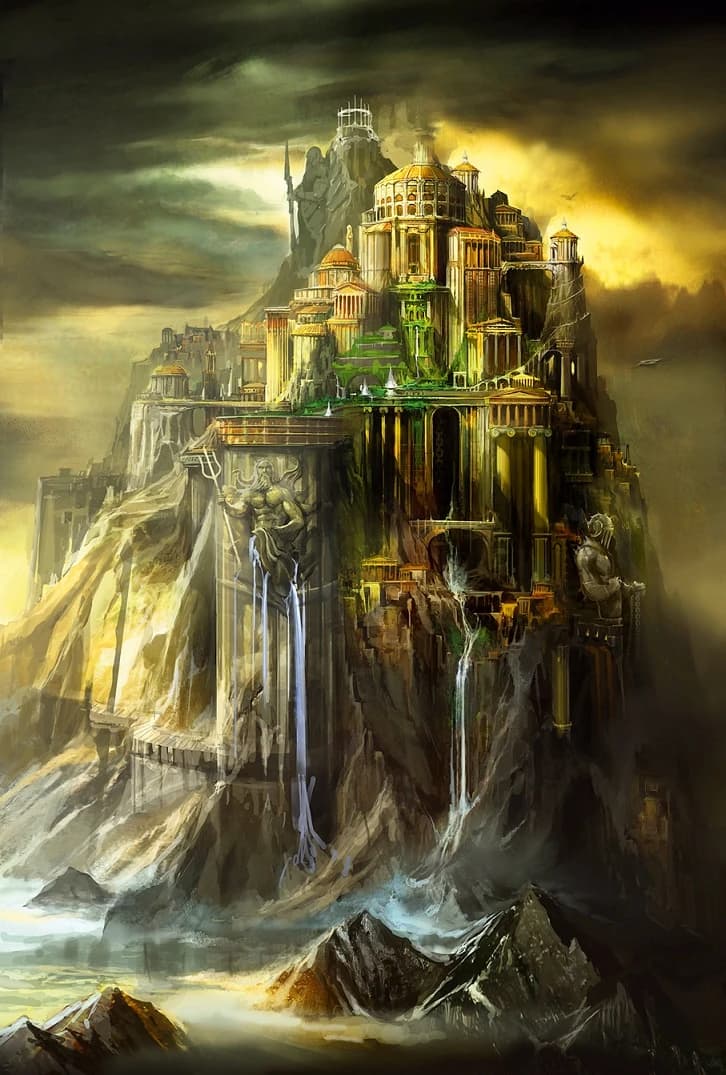
Mount Olympus: Zeus' seat, torn down
The golden mountain became the seat of the gods after the first Titanomachy, and none but a god could set foot on it. Kratos brought the whole thing down.

The Underworld
The Underworld was the realm of the dead in Greece, a hellish landscape below the living world where the River Styx carried mortal souls to their rest. It was ruled by Hades until his death, and Kratos descended into it many times across his Greek campaigns.
Cerberus Mongrel: the lesser hounds of the Underworld
The Cerberus Mongrels were the weakest breed of the Cerberi, gaunt three-headed hounds that served the lord of the dead. Kratos beat them into submission across two eras of his life, riding them as living weapons and turning the fire of one upon Peirithous to claim the Bow of Apollo.
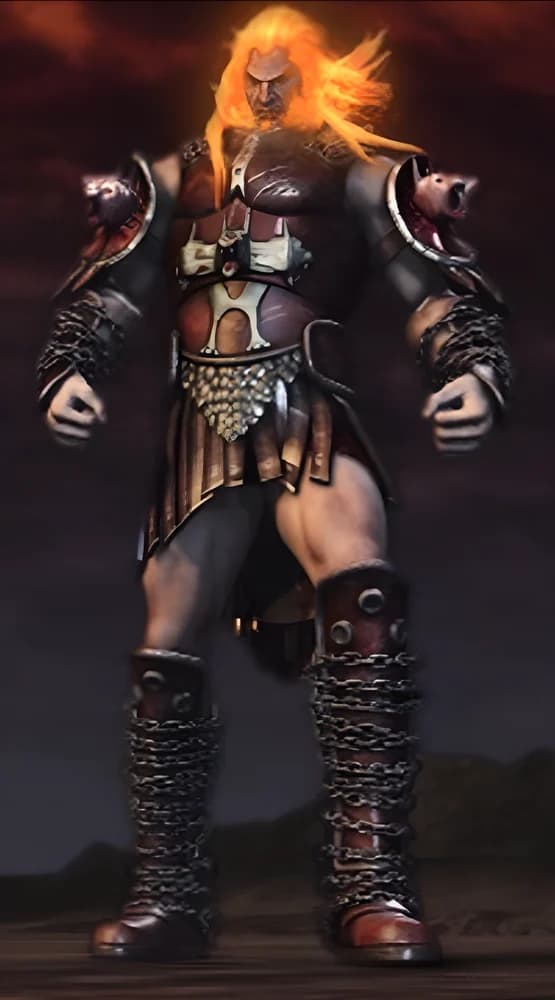
Ares: the god who made Kratos a killer
Ares tricked Kratos into slaughtering his own wife and daughter to bind him as a weapon. Kratos killed him at Athens and took his place as God of War.
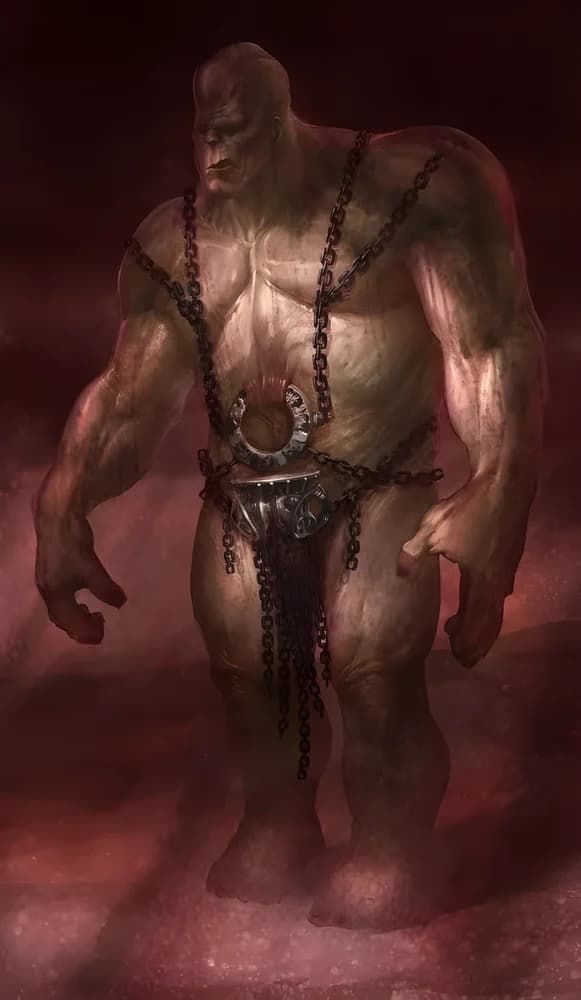
Cronos: the Titan who ate his children
Warned that his own children would depose him, Cronos swallowed each at birth. Rhea hid Zeus, Zeus deposed him anyway, and Kratos finished him.
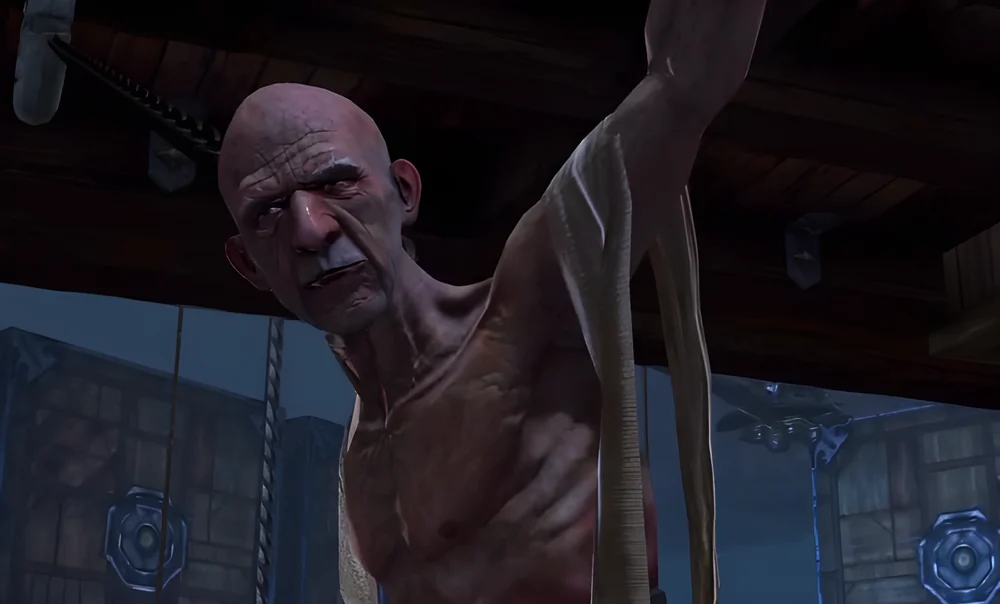
Daedalus
Daedalus was the master craftsman of Athens who built the great Labyrinth for Zeus in return for the promise of his lost son Icarus. Driven to madness in years of servitude and chained within his own creation, he was crushed when Kratos set the Labyrinth turning, and died grateful at last to be free.
Mentioned in2 entries
God of War III Story and Ending Explained: Plot Summary
The whole story of God of War III in order, from the Titans' climb up Mount Olympus to the death of Zeus. Then the ending in plain terms: why Kratos drove the Blade of Olympus into himself, what Athena wanted, and where that trail of blood leads.
God of War Timeline: every major event from the Primordials to Valhalla
The full in-universe chronology of God of War, from the war of the Primordials and the fall of the Titans to Kratos's life in Sparta, his war on Olympus, and the end of the Aesir at Ragnarök. The games give almost no calendar years, so events are ordered by story sequence and grouped into eras, with notes wherever the games' own placement is vague.
Get new articles in your inbox
No spam. New lore drops, canon conflicts, and deep dives only when they’re worth reading.
Some links on Lore Fortress are affiliate links. If you buy through them we earn a small commission at no extra cost to you.