Raiders
the beast-souled marauders of Fimbulwinter
The Raiders were berserker marauders of Midgard who chose to endure the killing cold of Fimbulwinter rather than flee. By twisting their guardian spirits they took on the traits of beasts, and they fell upon any outsider who crossed into their lands.
The Raiders were berserker marauders of Midgard who chose to endure the killing cold of Fimbulwinter rather than flee to safer realms. By twisting their guardian spirits they took on the traits of beasts, and like the Reavers they fell upon any outsider who crossed into their lands, among them Kratos and Atreus. (God of War (2018); God of War Ragnarök)
Survivors of the long winter#
When the desolation of Fimbulwinter fell upon Midgard, most of its people fled to safer places, but the Raiders chose to remain and endure. Few humans were left in the Wildwoods in those days; those who stayed either hid themselves away in the warmest places they could find or, refusing to hide, fended off the cold by transmogrifying their fylgia, their guardian spirit. This part of the soul took on the traits of a beast, allowing the warriors to adapt to the unforgiving climate. Because of the extremity of their ways, they grew hostile to any outsider, and those who were slain were frequently raised again as undead Hel-Walkers. (God of War Ragnarök)
The beast-souls#
The Raiders took different beasts for their fylgia, and these set them apart from one another. Most favored the strength and pride of the stag, clad in deer hides and antlered masks and armed with maces shaped like antlers. The scouts among them, drawn from the women, took the owl for its sharp eyes and sharper talons, wearing owl feathers and masks or tribal paint and wielding deadly bladed slings to hurl projectiles from afar. The chiefs took the mighty ox, hooded in pelts hung with tusk-like ornaments so that they resembled mammoths, and bore great bone bidents; they were the strongest of any tribe and ruled it. By their own tradition a chief was chosen through days and nights of combat trials so brutal that most who entered died, though their dwindling numbers had likely forced them to change such customs. (God of War Ragnarök)
Apart from the common Raiders stood the Kol Raiders, who had turned their devotion from blood to fire and were known for setting themselves alight upon death, even as they kept the castes of animal fylgia and the same lethal hatred of outsiders. (God of War Ragnarök)
Enemies of Kratos#
The Raiders turned their fury upon Kratos through the hand of Freya. In her grief and hunger for revenge after he slew her son Baldur, she convinced them that the Spartan was the cause of Fimbulwinter and that his death would bring the winter to an end. So they hunted him relentlessly through the Wildwoods, and it was said that they meant to devour him once he was dead. Those Raiders who died in these battles often rose again as frozen, frenzied Hel-Raiders, more dangerous in death than they had been in life. (God of War Ragnarök)
Frequently asked questions
- Who are the Raiders in God of War Ragnarok?
- The Raiders were berserker marauders of Midgard who chose to survive the brutal cold of Fimbulwinter rather than flee to safer realms. By using magic to transform their fylgia, or guardian spirit, they took on the traits of animals and adapted to the frozen wilds, attacking any outsider on sight.
- How did the Raiders survive Fimbulwinter?
- Like the Reavers, the Raiders adapted to the endless winter by transmogrifying their fylgia, the part of the soul that they twisted to take on animal traits. The stag, the owl, and the ox were favored, lending the warriors the strength, sight, or bulk of those beasts.
- Why did the Raiders attack Kratos?
- Freya, in her hunger for revenge against Kratos for slaying her son Baldur, convinced the Raiders that the Spartan was the cause of Fimbulwinter and that killing him would end the winter. They are also said to have meant to cannibalize him after his death.
Sources
- GameGod of War (2018), Santa Monica Studio, 2018
- GameGod of War Ragnarök, Santa Monica Studio, 2022
Spotted a factual error or a primary source we missed? Email a correction. Every flagged claim gets reviewed.
Followed from this entry
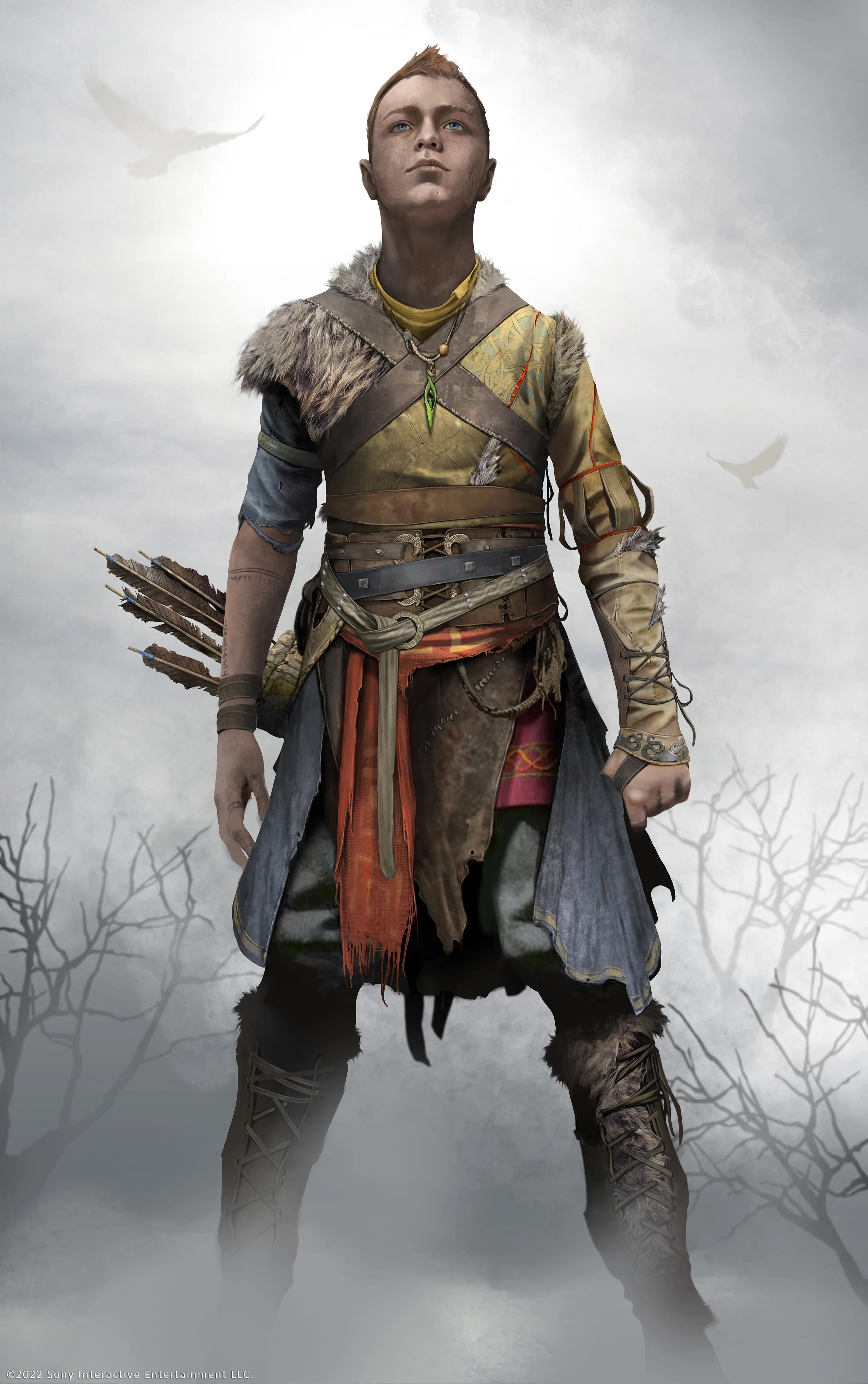
Atreus (Loki): Kratos's Son and the Truth of His Name
Atreus was the son of Kratos and the Jotunn Faye, born in Midgard and given the hidden name Loki. Across two great journeys he grew from a sickly boy into the prophesied champion of the Giants, the god of mischief whose fate was bound to Ragnarok.
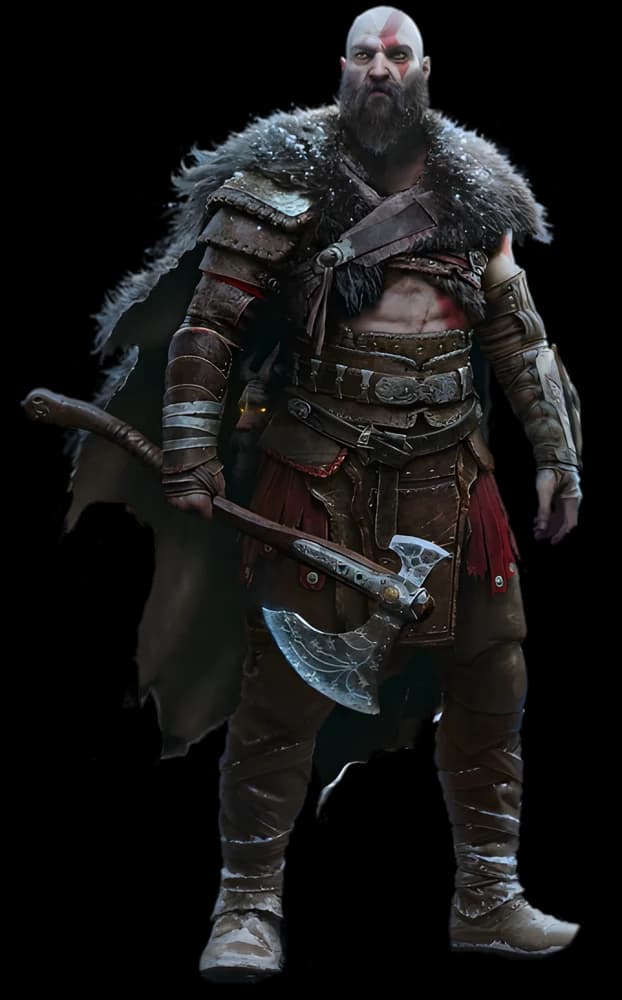
Kratos
Kratos was the demigod son of Zeus who rose from a Spartan general to the Greek God of War, destroyed the pantheon of Olympus in a quest for vengeance, and then began again in the Norse realms as a father seeking to leave his bloody past behind.
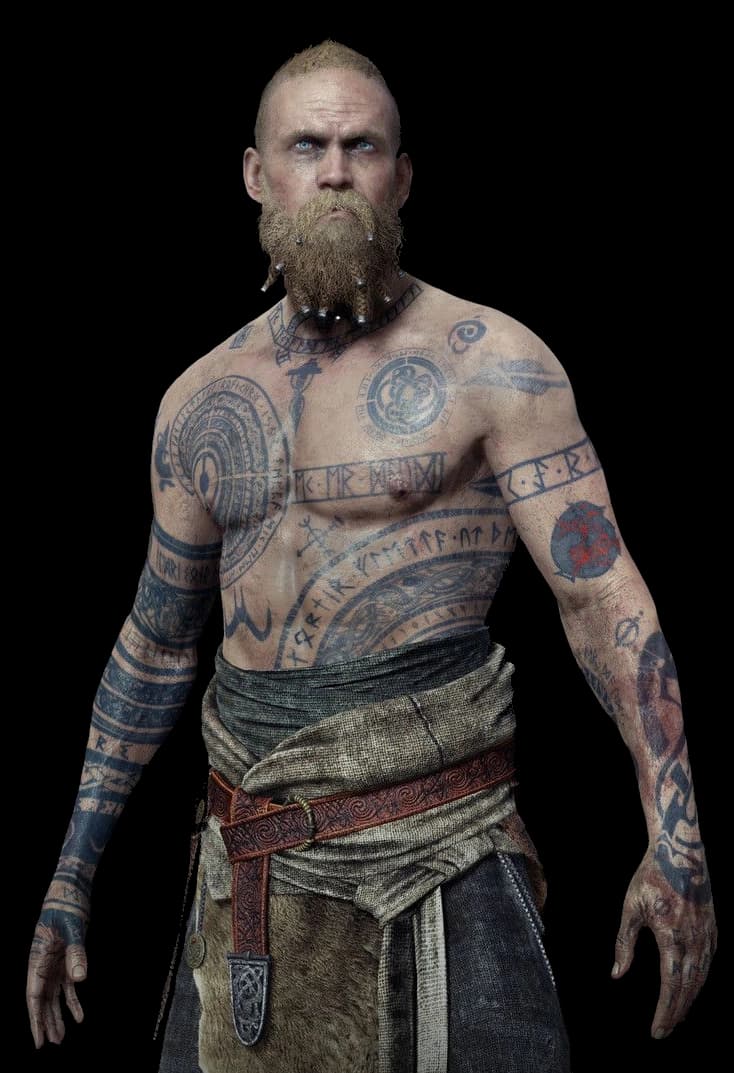
Baldur: the god who could feel nothing
Freya's spell made Baldur invulnerable but stripped every sensation from him, and a century of numbness drove him mad. Kratos killed him beside Thamur's corpse.
Fimbulwinter: the three-year winter
Fimbulwinter was the three-year winter that began with Baldur's death and ended with Ragnarok. Being magical, it weakened curses across the Nine Realms.

Freya
Freya was the Vanir goddess of love, war, and magic who married Odin to end the Aesir-Vanir War and was cursed to remain in Midgard. Once the Witch of the Woods, she aided Kratos and Atreus, swore vengeance after the death of her son Baldur, and at last turned her wrath on Odin himself.
Midgard: Kratos' home, shaped from Ymir
Odin shaped Midgard from the body of the giant Ymir. Kratos settled there after leaving Greece, and Fimbulwinter later froze the Lake of Nine.
Mentioned in2 entries
Kratos' Cabin: the homestead in the Wildwoods
Kratos' Cabin was the home that Faye and Kratos made together in the Wildwoods of Midgard, where their son Atreus was raised. Hidden for years behind a magical grove of marked trees, it endured the coming of Baldur, the sieges of Fimbulwinter, and the visit of Odin and Thor, and it remained the family's anchor through the war that ended the Aesir.
Oluf Nautson: chief of the Kol Raiders
Oluf Nautson was a mortal Midgardian chieftain who led the Kol Raiders through the years of Fimbulwinter, a masked giant of a man whose band hunted and ate the wolves of Midgard. His cruelty brought him against Kratos, who killed him at his own keep and later faced his shade again in Valhalla.
Get new articles in your inbox
No spam. New lore drops, canon conflicts, and deep dives only when they’re worth reading.
Some links on Lore Fortress are affiliate links. If you buy through them we earn a small commission at no extra cost to you.