The Catapult Scorpion
A savage scorpion Rahi of Po-Metru that launched hardened balls of magma from its stinger, nested beneath the Sculpture Fields, and trailed the Kikanalo herds across the plains.
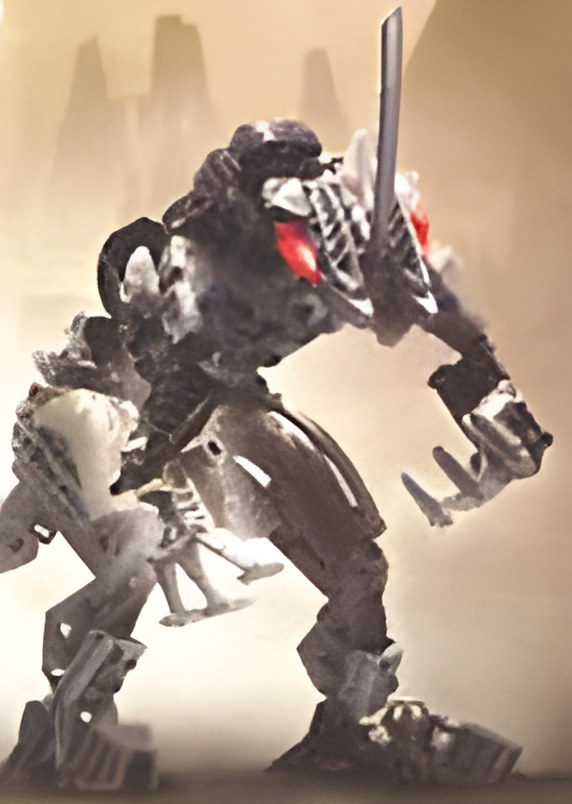
The Catapult Scorpion was a savage RahiRahiThe Rahi were the biomechanical wildlife of the Matoran Universe, built largely by the Brotherhood of Makuta, ranging from background fauna to engineered war beasts. of Po-MetruPo-MetruMetru Nui's Stone District, home to carvers whose work defined the city and site of an ancient conflict that threatened to divide it., a heavily armoured scorpion species equipped with razor-edged pincers, sharp teeth, and a horned head whose distinguishing weapon was a stinger capable of catapulting hardened balls of magma at its prey. The species nested in caverns beneath the Sculpture FieldsSculpture FieldsThe Sculpture Fields were the open Po-Metru courtyards where Po-Matoran carvers worked statues too large for any building, hid one of the Great Disks, and gave Onewa his first confrontation with Ahkmou's betrayal. of Po-MetruPo-MetruMetru Nui's Stone District, home to carvers whose work defined the city and site of an ancient conflict that threatened to divide it., trailed the KikanaloKikanaloBionicle's most underestimated Rahi: intelligent herd creatures whose stampedes terrified even Dark Hunters on Metru Nui. herds for food, and was first documented in the BIONICLE: Rahi BeastsBIONICLE Reference BooksSeven Scholastic and AMEET reference titles published between 2003 and 2009 back up the printed story of the Matoran Universe. This page catalogs what each book contains and where the editions diverge. reference book. (BIONICLE: Rahi Beasts)


Habitat and range#
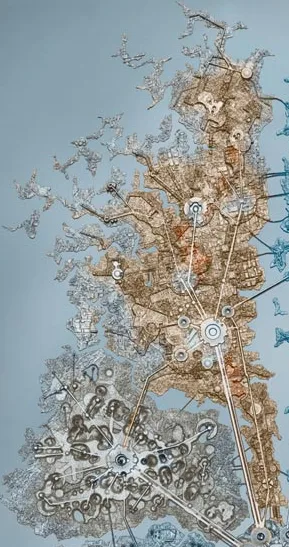
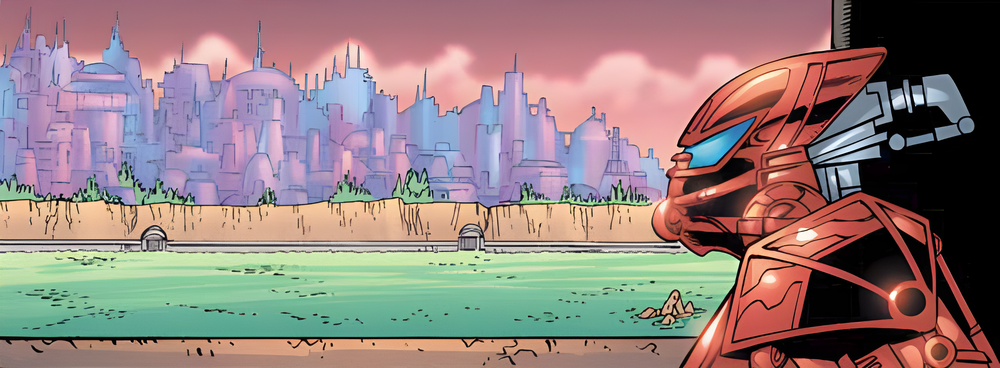
The Catapult Scorpion was native to Po-MetruPo-MetruMetru Nui's Stone District, home to carvers whose work defined the city and site of an ancient conflict that threatened to divide it., the carving district of Metru NuiMetru NuiThe city beneath Mata Nui functions as the Great Spirit's brain, housing the Matoran whose labor keeps the god alive., and confined almost entirely to the cavern systems beneath the Sculpture FieldsSculpture FieldsThe Sculpture Fields were the open Po-Metru courtyards where Po-Matoran carvers worked statues too large for any building, hid one of the Great Disks, and gave Onewa his first confrontation with Ahkmou's betrayal. that dominated the metru's surface. The Sculpture FieldsSculpture FieldsThe Sculpture Fields were the open Po-Metru courtyards where Po-Matoran carvers worked statues too large for any building, hid one of the Great Disks, and gave Onewa his first confrontation with Ahkmou's betrayal. were the open plains on which Po-MatoranPo-MatoranThe Stone-element Matoran of Po-Metru and Po-Koro, carvers and quarry workers, the most athletic of the Matoran types and the population behind the Kohlii and Akilini circuits. carvers worked the rough slabs of protodermisProtodermisThe engineered substance building the Matoran Universe, protodermis exists in countless refined states from mundane metal to diamond-hard crystal to the destruction-or-transformation force of energized form. into the figures and architectural pieces for which the metru was known. Below those fields ran a substantial network of natural caverns, and it was in those caverns that the scorpions made their nests. (BIONICLE: Rahi Beasts)
Surface activity was rare. The species spent most of its life within its caverns and emerged onto the Sculpture FieldsSculpture FieldsThe Sculpture Fields were the open Po-Metru courtyards where Po-Matoran carvers worked statues too large for any building, hid one of the Great Disks, and gave Onewa his first confrontation with Ahkmou's betrayal. only periodically, usually when food was scarce. When it did surface the Po-MatoranPo-MatoranThe Stone-element Matoran of Po-Metru and Po-Koro, carvers and quarry workers, the most athletic of the Matoran types and the population behind the Kohlii and Akilini circuits. carvers cleared the area, and the other large RahiRahiThe Rahi were the biomechanical wildlife of the Matoran Universe, built largely by the Brotherhood of Makuta, ranging from background fauna to engineered war beasts. of the plains followed suit. Phase DragonsPhase DragonSpeed-obsessed Rahi with the rare ability to phase through solid matter, gentle when stimulated but dangerous when bored., Rock RaptorsRock RaptorCunning Po-Metru Rahi that hunt Kikanalo using engineered avalanches., and TunnelersTunnelerA Rahi that absorbs any power directed at it, but becomes fragile when turned to glass. were all named in the record as creatures that knew to stay away from an active Catapult Scorpion, on the understanding that any of them was a potential target. The only major species of Po-MetruPo-MetruMetru Nui's Stone District, home to carvers whose work defined the city and site of an ancient conflict that threatened to divide it. that the scorpions did not attack on sight was the KikanaloKikanaloBionicle's most underestimated Rahi: intelligent herd creatures whose stampedes terrified even Dark Hunters on Metru Nui.. (BIONICLE: Rahi Beasts)


The species was created by the MakutaMakuta (Species)Shadowy Antidermis beings and the Brotherhood's elite, Makuta commanded darkness and shaped the Matoran Universe's fate. ChiroxChiroxA Makuta of the Brotherhood who questioned Teridax's plans before being sent to Karda Nui., using viruses and liquid protodermis, as one of the Rahi meant to populate the Matoran UniverseMatoran UniverseA civilization of biomechanical beings living inside a colossal robot, destroyed when Teridax seized control.. No story follows it after the evacuation of Metru NuiMetru NuiThe city beneath Mata Nui functions as the Great Spirit's brain, housing the Matoran whose labor keeps the god alive., though writer Greg Farshtey later said many Catapult Scorpions moved to Spherus MagnaSpherus MagnaA desert world of ancient conflict that became the merger point of the Matoran Universe and Bionicle's true endpoint. after the Great Spirit robot was wrecked. (BIONICLE: Makuta's Guide to the Universe)


The catapult stinger#
The Catapult Scorpion's distinguishing weapon was the stinger that gave the species its name. The mechanism was unusual among Po-MetruPo-MetruMetru Nui's Stone District, home to carvers whose work defined the city and site of an ancient conflict that threatened to divide it. RahiRahiThe Rahi were the biomechanical wildlife of the Matoran Universe, built largely by the Brotherhood of Makuta, ranging from background fauna to engineered war beasts. for being a projectile system rather than a contact weapon. The scorpion was able to materialise a ball of molten magma at the tip of its tail, harden that ball into a solid rock over a very short interval, and then snap the stinger forward in a whip motion that catapulted the rock at the target. Its range and rate of fire are never given, but the list of large Rahi that feared it says enough. (BIONICLE: Rahi Beasts)
The biological process by which the scorpion produced the molten magma at its stinger tip was not explained in any surviving documentation. The end result was effectively a self-loading rock catapult, and a Catapult Scorpion in cover could engage a target at distance without exposing its body to retaliation. The combination of the stinger projectile, the razor-edged pincers for close work, and the heavily horned and spined head that protected the creature from frontal attack made the Catapult Scorpion one of the most heavily armed RahiRahiThe Rahi were the biomechanical wildlife of the Matoran Universe, built largely by the Brotherhood of Makuta, ranging from background fauna to engineered war beasts. of Po-MetruPo-MetruMetru Nui's Stone District, home to carvers whose work defined the city and site of an ancient conflict that threatened to divide it. on a per-individual basis. (BIONICLE: Rahi Beasts)
Confusion with the Nui-Jaga#
The Catapult Scorpion was commonly mistaken for a large Nui-JagaNui-JagaGiant scorpions with lethal stingers that were hunted for profit despite a grim death toll., the more widely known scorpion RahiRahiThe Rahi were the biomechanical wildlife of the Matoran Universe, built largely by the Brotherhood of Makuta, ranging from background fauna to engineered war beasts. of the Matoran UniverseMatoran UniverseA civilization of biomechanical beings living inside a colossal robot, destroyed when Teridax seized control.. The visual similarity was real: both species were massive scorpions with prominent stingers. The distinction was practical rather than taxonomic. Catapult Scorpions were substantially more hostile and substantially more dangerous than Nui-JagaNui-JagaGiant scorpions with lethal stingers that were hunted for profit despite a grim death toll., and an observer who treated an active scorpion in Po-MetruPo-MetruMetru Nui's Stone District, home to carvers whose work defined the city and site of an ancient conflict that threatened to divide it. as the more familiar species risked underestimating the threat. (BIONICLE: Rahi Beasts)
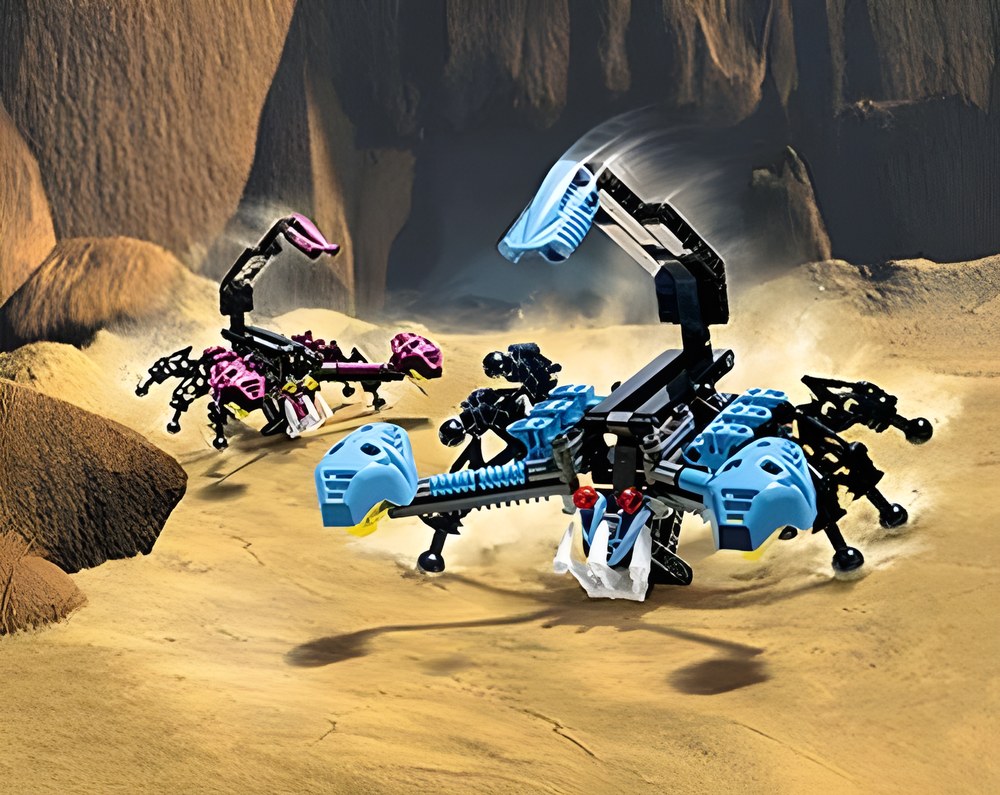
When a Catapult Scorpion came out of its nest, it destroyed everything in its path and attacked almost anything that moved. The two species are never said to be related. (BIONICLE: Rahi Beasts)
Diet and the Kikanalo#
The Catapult Scorpion's tolerance of the KikanaloKikanaloBionicle's most underestimated Rahi: intelligent herd creatures whose stampedes terrified even Dark Hunters on Metru Nui. was the species' single observed exception to its general hostility, and the explanation was nutritional. The scorpion ate solid protodermisProtodermisThe engineered substance building the Matoran Universe, protodermis exists in countless refined states from mundane metal to diamond-hard crystal to the destruction-or-transformation force of energized form., and its preferred method of acquiring it was to trail KikanaloKikanaloBionicle's most underestimated Rahi: intelligent herd creatures whose stampedes terrified even Dark Hunters on Metru Nui. herds across the Sculpture FieldsSculpture FieldsThe Sculpture Fields were the open Po-Metru courtyards where Po-Matoran carvers worked statues too large for any building, hid one of the Great Disks, and gave Onewa his first confrontation with Ahkmou's betrayal. and scavenge whatever the larger creatures' horns dug up. The KikanaloKikanaloBionicle's most underestimated Rahi: intelligent herd creatures whose stampedes terrified even Dark Hunters on Metru Nui. were heavy-bodied RahiRahiThe Rahi were the biomechanical wildlife of the Matoran Universe, built largely by the Brotherhood of Makuta, ranging from background fauna to engineered war beasts. that moved in herds and ploughed surface material with their horns as they grazed, and the displaced protodermisProtodermisThe engineered substance building the Matoran Universe, protodermis exists in countless refined states from mundane metal to diamond-hard crystal to the destruction-or-transformation force of energized form. was substantial enough to feed a Catapult Scorpion population. (BIONICLE: Rahi Beasts)
Because the scorpions relied on the herds to dig up their food, the KikanaloKikanaloBionicle's most underestimated Rahi: intelligent herd creatures whose stampedes terrified even Dark Hunters on Metru Nui. were the one creature they left alone. Everything else that moved was fair game. (BIONICLE: Rahi Beasts)
Place in the record#
The Catapult Scorpion entered the documented RahiRahiThe Rahi were the biomechanical wildlife of the Matoran Universe, built largely by the Brotherhood of Makuta, ranging from background fauna to engineered war beasts. catalogue through the reference work BIONICLE: Rahi BeastsBIONICLE Reference BooksSeven Scholastic and AMEET reference titles published between 2003 and 2009 back up the printed story of the Matoran Universe. This page catalogs what each book contains and where the editions diverge., the principal compendium of Matoran UniverseMatoran UniverseA civilization of biomechanical beings living inside a colossal robot, destroyed when Teridax seized control. creatures. The catalogue treated the Catapult Scorpion alongside the Archives MoleArchives MoleSmall, harmless burrowing Rahi engineered by the Makuta, originally native to Po-Metru and forced into the shadowy recesses of the Onu-Metru Archives, where their cooperative behaviour built living ladders and bridges through the lower levels., the Cable CrawlerCable CrawlerClimbing-type Rahi of Metru Nui's Le-Metru cable network, created by the Makuta and notorious among Matoran for severing power lines and raiding airship cargo holds., the Dermis TurtleDermis TurtleThe Dermis Turtle is a silver-shelled Rahi of Ga-Metru whose night-time singing some Matoran came to enjoy, and which hides in its shell when a storm is on the way., and other RahiRahiThe Rahi were the biomechanical wildlife of the Matoran Universe, built largely by the Brotherhood of Makuta, ranging from background fauna to engineered war beasts. drawn from the carving district and the wider city. The species was recorded again as a reference entry in both BIONICLE: EncyclopediaBIONICLE Reference BooksSeven Scholastic and AMEET reference titles published between 2003 and 2009 back up the printed story of the Matoran Universe. This page catalogs what each book contains and where the editions diverge. and its updated edition, though without additional narrative detail beyond what Rahi BeastsBIONICLE Reference BooksSeven Scholastic and AMEET reference titles published between 2003 and 2009 back up the printed story of the Matoran Universe. This page catalogs what each book contains and where the editions diverge. had originally documented. (BIONICLE: Rahi Beasts; BIONICLE: Encyclopedia; BIONICLE: Encyclopedia Updated)


The Catapult Scorpion's permanent place in the Po-MetruPo-MetruMetru Nui's Stone District, home to carvers whose work defined the city and site of an ancient conflict that threatened to divide it. wildlife rested on the combination of its weapon, its diet, and its general hostility. Few other RahiRahiThe Rahi were the biomechanical wildlife of the Matoran Universe, built largely by the Brotherhood of Makuta, ranging from background fauna to engineered war beasts. of the carving district matched the species' offensive capability, fewer still scavenged in the wake of a herding species, and none combined those traits with a stinger that operated as a self-loading projectile system. The Sculpture FieldsSculpture FieldsThe Sculpture Fields were the open Po-Metru courtyards where Po-Matoran carvers worked statues too large for any building, hid one of the Great Disks, and gave Onewa his first confrontation with Ahkmou's betrayal. beneath which the species nested were the same plains across which the Toa MetruToa Metru and Toa HordikaSix Matoran elevated by Lhikan to save their city, mutated by Visorak venom, and restored in time to deliver the population to safety. and the MatoranMatoranThe most abundant species in the Matoran Universe, chosen by Mata Nui to inhabit and maintain his cosmic body. carvers worked through the central events of Metru NuiMetru NuiThe city beneath Mata Nui functions as the Great Spirit's brain, housing the Matoran whose labor keeps the god alive., and the Catapult Scorpion was therefore a constant background feature of the region without ever being the explicit subject of a major narrative. (BIONICLE: Rahi Beasts)
Frequently asked questions
- What is the Catapult Scorpion?
- The Catapult Scorpion was a savage scorpion Rahi of Po-Metru, a heavily armoured species with razor-edged pincers, sharp teeth, and a horned head. Its distinguishing weapon was a stinger that could launch hardened balls of magma at its prey.
- How did the Catapult Scorpion's stinger work?
- The scorpion could materialise a ball of molten magma at the tip of its tail, harden it into solid rock over a short interval, and then snap the stinger forward in a whip motion to catapult the rock at a target. This made it effectively a self-loading rock catapult that could engage targets at distance from cover.
- What did the Catapult Scorpion eat?
- The Catapult Scorpion ate solid protodermis. Its preferred method was to trail Kikanalo herds across the Sculpture Fields and scavenge the protodermis that the larger creatures' horns dug up as they grazed.
- Why did the Catapult Scorpion leave the Kikanalo alone?
- The Kikanalo were the species' single exception to its general hostility, and the reason was nutritional. The scorpions trailed the herds to eat whatever protodermis their horns dug up.
- Why was the Catapult Scorpion confused with the Nui-Jaga?
- Both species are massive scorpions with prominent stingers. Catapult Scorpions were far more savage and dangerous than Nui-Jaga, and the two are never said to be related.
Sources
- BookBIONICLE: Rahi Beasts, Greg Farshtey and Jeff James, Scholastic, 2005
- BookBIONICLE: Encyclopedia, Greg Farshtey, Scholastic, 2005
- BookBIONICLE: Encyclopedia Updated, Greg Farshtey, Scholastic, 2007
- BookBIONICLE: Makuta's Guide to the Universe, Greg Farshtey, AMEET, 2008
Spotted a factual error or a primary source we missed? Email a correction. Every flagged claim gets reviewed.
Followed from this entry
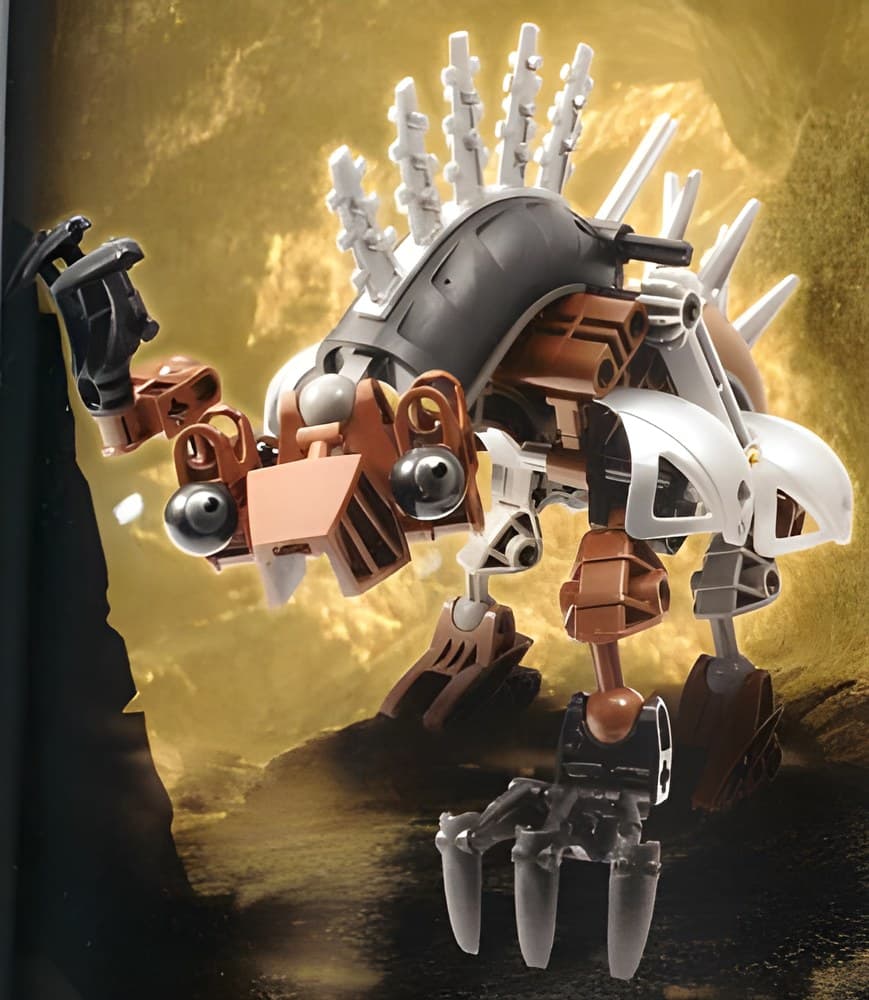
Archives Mole
Small, harmless burrowing Rahi engineered by the Makuta, originally native to Po-Metru and forced into the shadowy recesses of the Onu-Metru Archives, where their cooperative behaviour built living ladders and bridges through the lower levels.
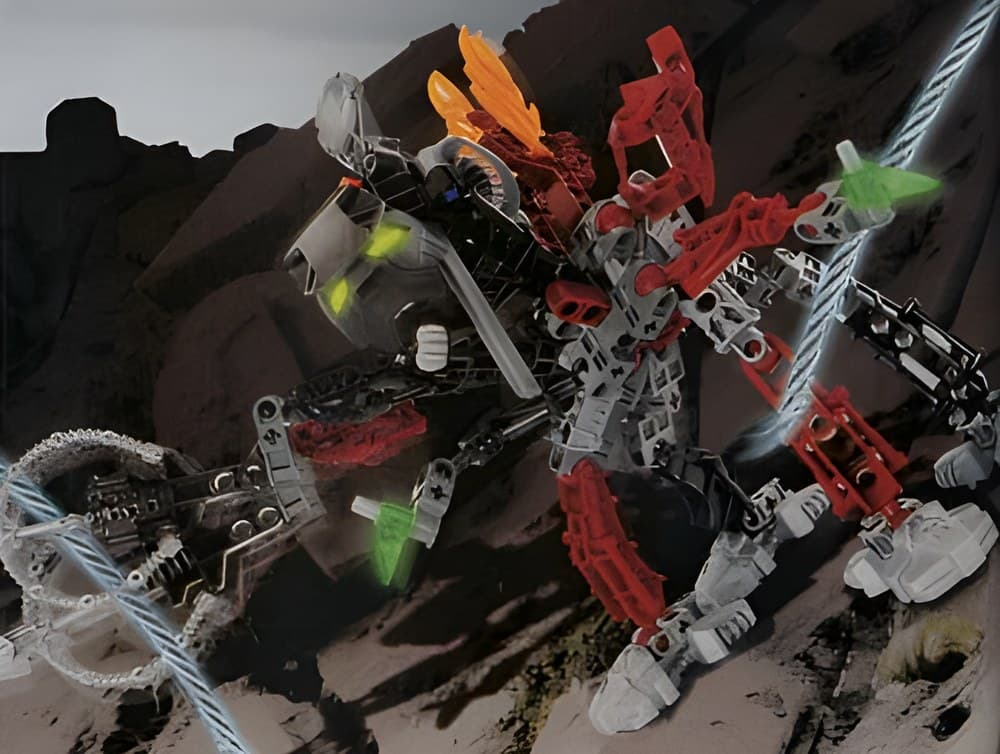
Cable Crawler
Climbing-type Rahi of Metru Nui's Le-Metru cable network, created by the Makuta and notorious among Matoran for severing power lines and raiding airship cargo holds.
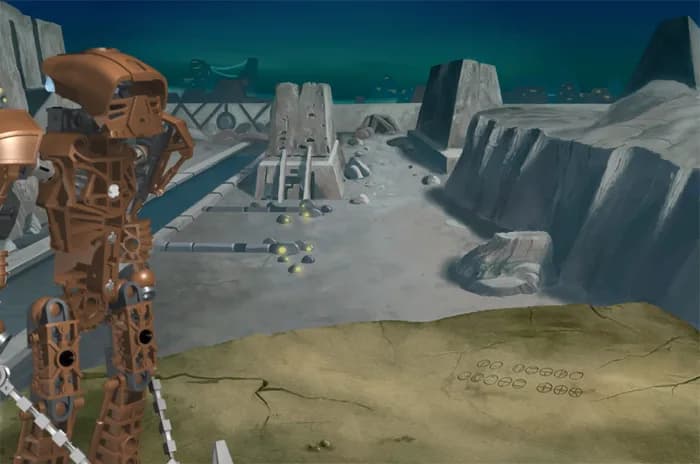
Sculpture Fields
The Sculpture Fields were the open Po-Metru courtyards where Po-Matoran carvers worked statues too large for any building, hid one of the Great Disks, and gave Onewa his first confrontation with Ahkmou's betrayal.
Dermis Turtle
The Dermis Turtle is a silver-shelled Rahi of Ga-Metru whose night-time singing some Matoran came to enjoy, and which hides in its shell when a storm is on the way.
Kikanalo
Bionicle's most underestimated Rahi: intelligent herd creatures whose stampedes terrified even Dark Hunters on Metru Nui.

Rock Raptor
Cunning Po-Metru Rahi that hunt Kikanalo using engineered avalanches.
Mentioned in1 entry
Get new articles in your inbox
No spam. New lore drops, canon conflicts, and deep dives only when they’re worth reading.
Some links on Lore Fortress are affiliate links. If you buy through them we earn a small commission at no extra cost to you.