Wheezer
Gas-Generating Necromorph
The Wheezer was a stationary Necromorph that generated and exhaled poisonous gas, fouling the air around it without ever attacking directly. Its gas made whole rooms toxic to the living.
The Wheezer was a stationary Necromorph form that generated and exhaled poisonous gas, fouling the air around it without ever attacking the living. It resembled a human more closely than most other Necromorphs, set apart chiefly by its enormous lungs, and it had no means of attack at all. Its role was environmental: it rendered a space toxic to the living. (Dead Space; Dead Space (2023); Dead Space 3)
Anatomy and behavior#
The Wheezer resembled a human more than almost any other Necromorph form, with one glaring exception. Its lungs were many times the normal size and had been relocated outside the body, taking up most of its back. Its arms and legs were fused together, which left it permanently in a kneeling position and incapable of any movement. A distinct strained breathing sound could be heard in the vicinity of a Wheezer, the trait that gave the creature its name. (Dead Space; Dead Space (2023))
The Wheezer had no offensive capability of its own. It ignored all human presence around it. It was, however, far from safe to be near. The poisonous gas it produced was an environmental property that filled the room and drained the air supply of anyone inside, and the gas only dissipated once the Wheezer itself was eliminated. In effect it remade the air of a space into something hostile to the living while other forms did the hunting. (Dead Space; Dead Space (2023))
On the USG Ishimura#
Wheezers were encountered aboard the USG Ishimura during the outbreak there. They were responsible for poisoning the air, and they fouled the atmosphere around the food storage container in which the Leviathan resided. Several were scattered through the Hydroponics Deck, where individual grow chambers and control rooms held poisoned air until the Wheezer inside each was killed. Clearing them was the only way to make those spaces survivable and to reach the chamber beyond. (Dead Space; Dead Space (2023))
On Tau Volantis#
Wheezers were among the Necromorph forms that did not appear during the fall of Titan Station but later reappeared on Tau Volantis. Two were found in an archaeology warehouse on the frozen world, poisoning a section of the structure. Isaac Clarke and John Carver were forced to kill them in order to move on through the warehouse and continue their mission. (Dead Space 3)
Frequently asked questions
- What was a Wheezer in Dead Space?
- A Wheezer was a stationary Necromorph form that generated and exhaled poisonous gases. It resembled a human more than most other Necromorphs, except that its lungs were many times the normal size and located outside its body, taking up most of its back. It fouled the air around it but had no means of attacking directly.
- Why was the Wheezer dangerous if it could not attack?
- A Wheezer had no offensive capability and ignored any human presence near it, but the poisonous gas it produced filled the surrounding space and drained the air supply of anyone in the room. The gas only dissipated once the Wheezer was killed, which made it a hazard even though the creature itself was harmless.
- Where did Wheezers appear?
- Wheezers were found aboard the USG Ishimura, where they poisoned the air around the food storage container that held the Leviathan and had to be cleared to reach it. Two Wheezers also appeared later on Tau Volantis, poisoning a section of an archaeology warehouse that Isaac Clarke and John Carver needed to pass through.
Sources
- GameDead Space, EA Redwood Shores, 2008
- GameDead Space (2023), Motive Studio, 2023
- GameDead Space 3, Visceral Games, 2013
Spotted a factual error or a primary source we missed? Email a correction. Every flagged claim gets reviewed.
Followed from this entry
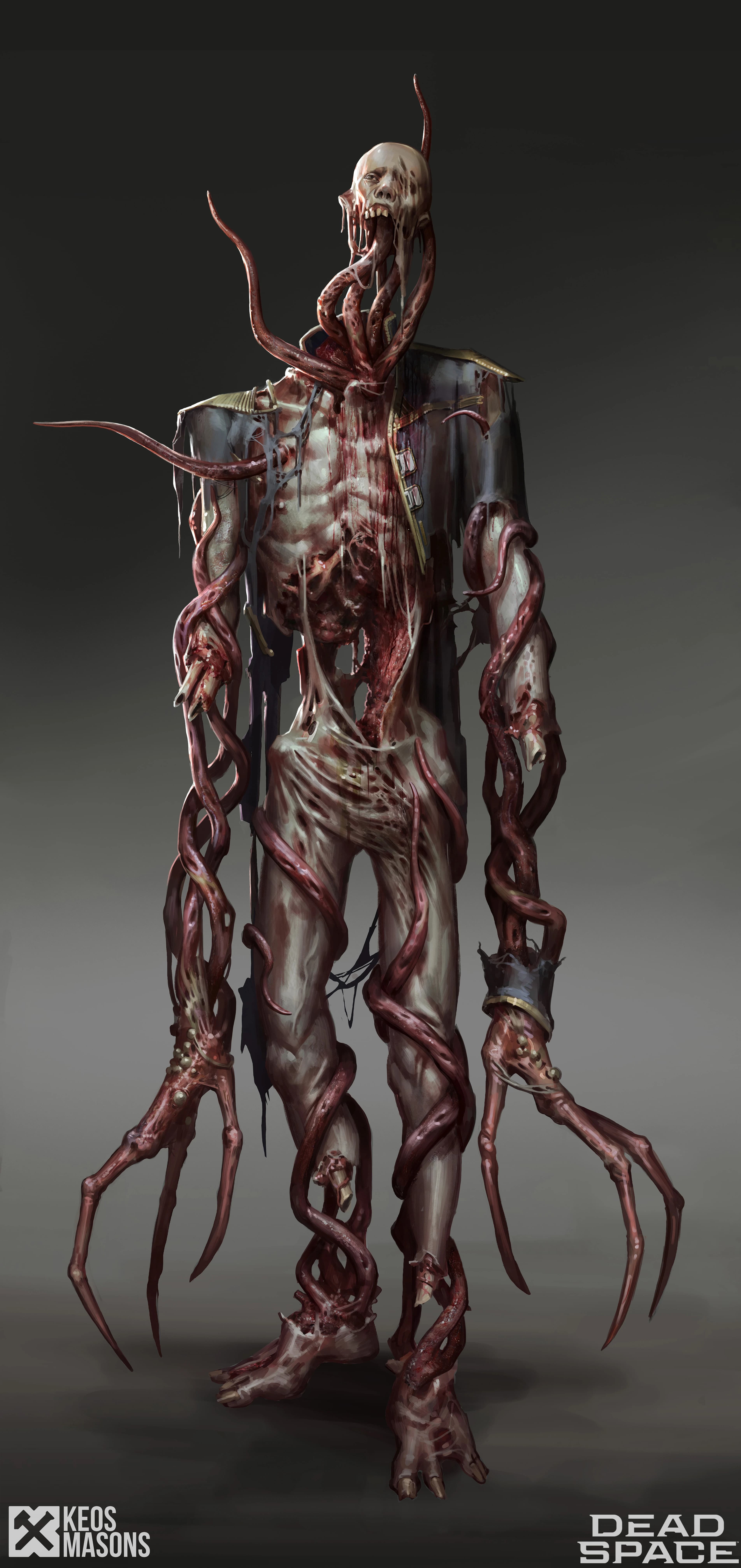
Necromorph
Necromorphs were aggressive creatures formed when the Markers' electromagnetic signal reshaped dead tissue into monstrous new forms. Driven to kill the living and gather corpses for Convergence, they were the recurring plague that destroyed the Aegis VII colony, the USG Ishimura, and Titan Station.
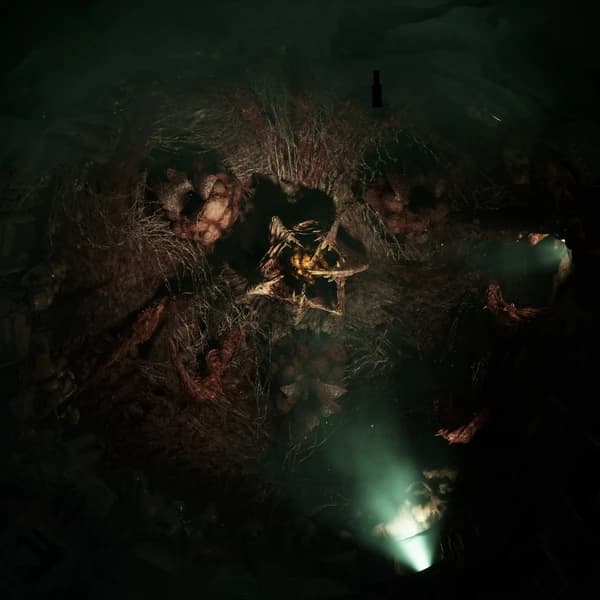
The Leviathan
The Leviathan was a massive, amorphous Necromorph that lodged in the USG Ishimura's Food Storage and barricaded the Hydroponics Deck. Named by Elizabeth Cross, it choked the deck with the Corruption before Isaac Clarke destroyed it.
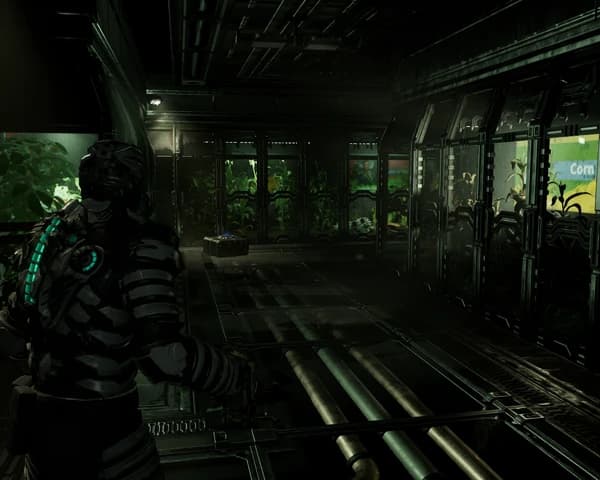
Hydroponics Deck
The Hydroponics Deck was the USG Ishimura's internal farm, growing the food and producing the oxygen needed to sustain the ship's crew. During the 2508 outbreak the deck was overtaken by the Leviathan, which polluted its air and destroyed the ship's food supply.
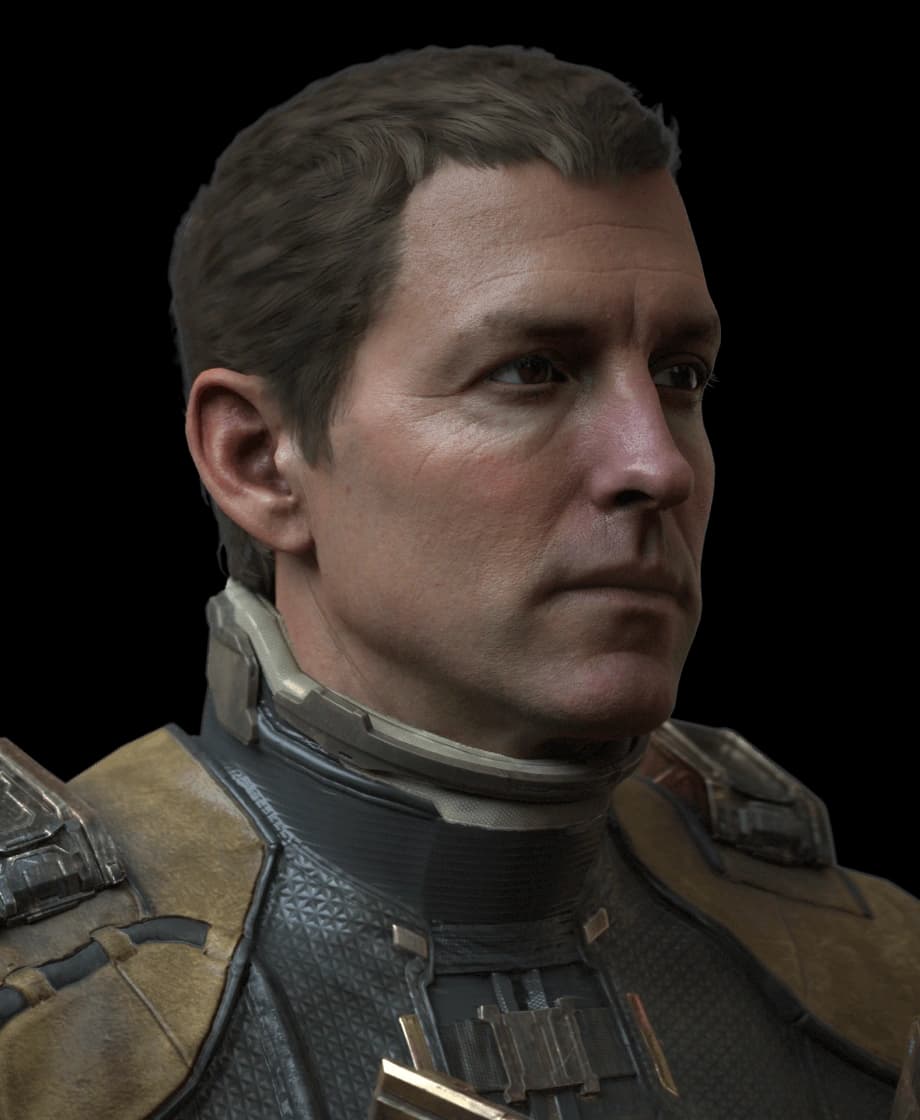
Isaac Clarke
Isaac Clarke was a ship systems engineer for the Concordance Extraction Corporation who survived the Necromorph outbreak aboard the USG Ishimura, became a host for the Markers' replication blueprints, and spent years hunted by EarthGov and the Church of Unitology as he fought to destroy the Markers.
John Carver
John Carver was an Earth Defense Force sergeant who lost his wife and son to a Necromorph outbreak on Uxor and joined Isaac Clarke on the expedition to Tau Volantis to destroy the apparent source of the Marker signal.
Tau Volantis
Tau Volantis was a frozen planet where, two million years ago, an alien civilization flash-froze their own world to halt a Convergence Event. Mistaken for the Marker homeworld, it became the site of the final clash over the Brethren Moons.
Mentioned in4 entries
Dead Space Chapters: the Story of All 12 Chapters
Dead Space has 12 chapters, from New Arrivals to Dead Space, and the 2023 remake keeps the same names and order. This is what happens in each one, with full spoilers and notes on where the remake tells it differently.
Every Necromorph Type in Dead Space: all forms from Slashers to the Brethren Moons
A full list of Necromorph types across the Dead Space games, films and novels. Each entry says what the creature is, what it was made from where the series tells us, and which games it shows up in.
PFM-100 Hydrazine Torch Flamethrower
The PFM-100 Hydrazine Torch Flamethrower was an industrial tool built to melt the ice that trapped ore inside comets and frozen meteors. Survivors of the Necromorph outbreaks repurposed its long cone of hydrazine flame as a weapon.
Tripod's Nest: the Corruption growth that housed the Sprawl's Tripods
The Tripod's Nest was a large formation of the Corruption grown inside the Fuel Mega Storage area of the CEC Facility on Titan Station, shaped to accommodate the station's Tripods. Isaac Clarke destroyed it by pitching explosives into the surrounding fuel tanks, taking the nest, its residents and most of the facility with it.
Get new articles in your inbox
No spam. New lore drops, canon conflicts, and deep dives only when they’re worth reading.
Some links on Lore Fortress are affiliate links. If you buy through them we earn a small commission at no extra cost to you.