Arc Welder: The Schofield Tools Welding Gun
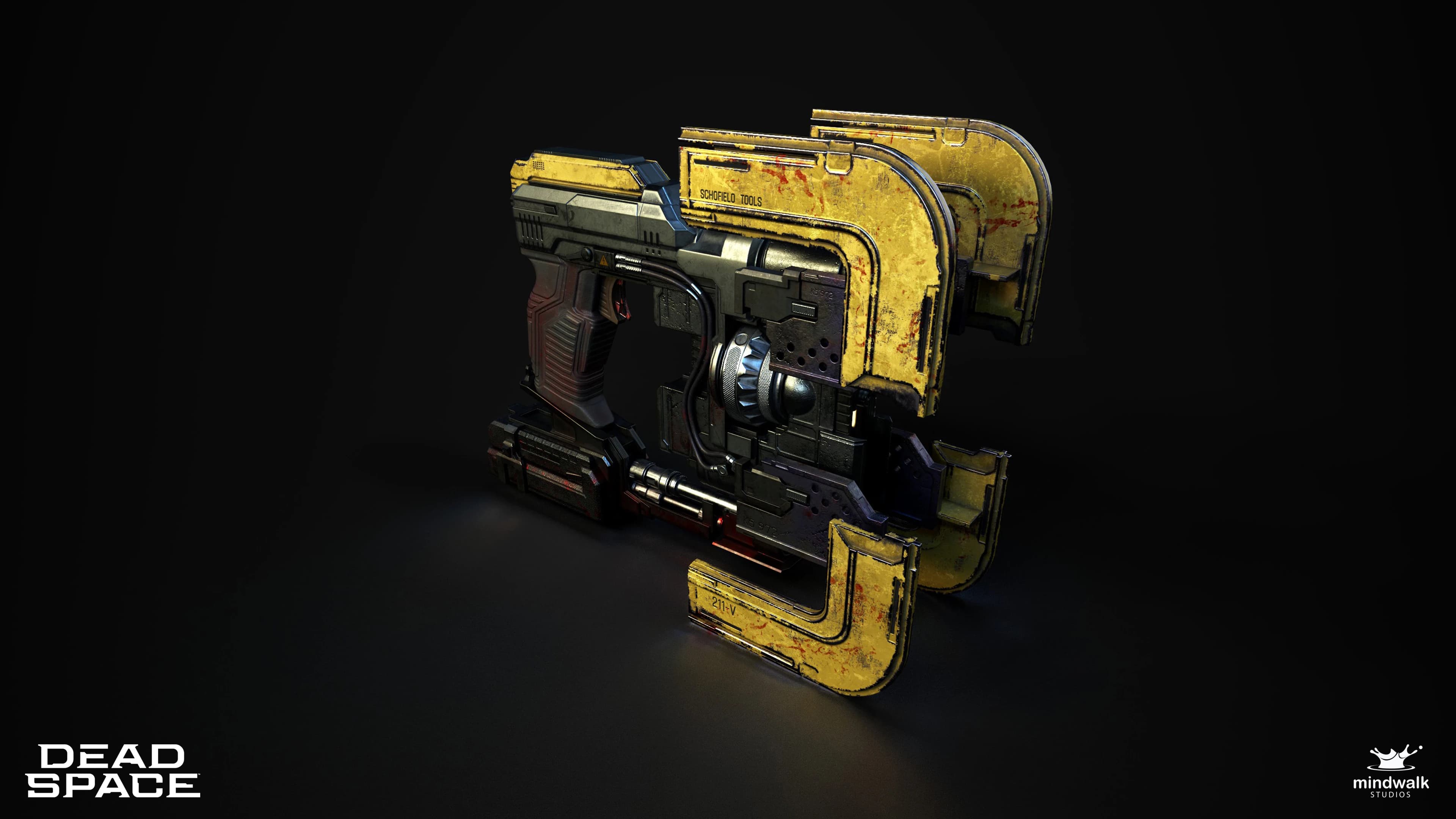
The Arc Welding Gun was an engineering tool designed by Schofield Tools to repair structural damage by welding metal with a concentrated electrical arc. During the Second Aegis VII Incident, survivors of the Necromorph outbreak turned its arcing discharge on the dead and found it strong enough to dismember them.
The Arc Welding Gun, known in common use as the Arc Welder, was an engineering tool designed by Schofield Tools for repairing structural damage on any platform. Engineering crews preferred it to the Rivet Gun, which was reserved for work where an Arc Welder could not be had. Like the Plasma Cutter and the other Schofield equipment carried into deep space by Concordance Extraction Corporation crews, it was never meant to be pointed at anything living. That changed during the Second Aegis VII Incident, when survivors fleeing the Necromorph infestation of the Aegis VII colony and the USG Ishimura discovered that its electrical discharge could tear the reanimated dead apart. (Dead Space: Extraction)
Design and function#
The Arc Welder was a compact instrument, roughly the size of a Force Gun, built around a single working principle: the projection of a concentrated bolt of electricity. In its intended role the bolt fused pieces of metal together, closing hull breaches and mending damaged structure wherever an engineering crew needed a weld. The same property that made it effective also made it dangerous. The electrical bolt was capable of arcing from its point of contact to nearby regions, and operators were trained to exercise extreme caution whenever the tool was live, since a careless discharge could jump to equipment, structure, or crewmates standing too close to the work. (Dead Space: Extraction)
The tool projected its charge as a constant stream, in the manner of a hydrazine torch throwing flame, with electricity in place of fire. A secondary function released the tool's charge in a different form, firing a concentrated ball of electrical discharge that spent energy heavily in exchange for effect across a wide area. (Dead Space: Extraction)
Within the Schofield Tools catalogue the Arc Welder sat above the Rivet Gun in the repair hierarchy. Where a weld could be made, crews made it; riveting was the fallback for platforms and postings where no Arc Welder was available. (Dead Space: Extraction)
The Second Aegis VII Incident#
The Arc Welder entered recorded history as a weapon during the outbreak that consumed the Aegis VII colony and the USG Ishimura. The survivors who fought their way off the planet and through the stricken vessel carried whatever engineering stock they could recover, and the welding gun proved among the most dependable of it. Its discharge was strong enough to physically dismember both humans and Necromorphs, which placed it in rare company among improvised weapons, since severing limbs was the only reliable means of stopping the reanimated dead. (Dead Space: Extraction)
The tool saw its most desperate recorded use on the Ishimura's hull. There the P-Sec detective Nathan McNeill, having just shut down the ship's ADS cannons, was attacked by the massive Necromorph known as the Spider. The Arc Welder was among the most effective instruments turned against the creature. Its fire burst the yellow pustules the Spider exposed during its attacks, and the concentrated ball of the secondary discharge destroyed the glowing sacs the creature shielded as well as the Leapers that emerged to defend it. McNeill survived the encounter, though the Spider pinned his arm with a spike and he had to cut the limb off to get back inside. (Dead Space: Extraction)
Handling against the Necromorphs#
Survivors who carried the Arc Welder learned to exploit the arcing behavior that made it hazardous as a repair tool. When several creatures charged at once, a bolt placed into the leading Necromorph would jump to those beside it, spreading harm through the group without the operator shifting aim. The effect was decisive against Swarmers, the smallest of the Necromorphs, which attacked in crawling masses; a sustained stream from the welding gun could destroy a large group of them quickly, and the ball discharge answered the moments when a survivor was surrounded. Against the winged Fliers of Aegis VII the tool asked only that the operator hold the stream on a moving target, since the charge would arc outward to other creatures in the air nearby. (Dead Space: Extraction)
The Arc Welder's weakness was its appetite. Apart from the flamethrower, no tool in a survivor's kit consumed its reserves faster, and recovered charges were never generous. The secondary discharge in particular spent energy so heavily that survivors judged its habitual use inadvisable, holding the concentrated ball in reserve for waves of attackers and spending the primary stream in controlled bursts. (Dead Space: Extraction)
Among electrical weapons#
Devices that fought with pure electrical energy remained rare throughout the recorded history of the outbreaks. The Tesla Enervator, a Sovereign Colonies device recovered on Tau Volantis long after the fall of the Ishimura, was among the only other weapons known to rely wholly on electrical discharge. The welding gun's principle also outlived the tool itself. Among the equipment scavenged and rebuilt during the later events on Tau Volantis, a Tesla core mounted on a compact frame reproduced the effect in improvised form, generating a lethal electric arc that fired in single discharges. The Arc Welder itself belonged to the first outbreak, one of the ordinary instruments of shipboard labor that the survivors of Aegis VII turned against the dead. (Dead Space 3; Dead Space: Extraction)
Sources
- GameDead Space: Extraction, Visceral Games and Eurocom, 2009
- GameDead Space 3, Visceral Games, 2013
Spotted a factual error or a primary source we missed? Email a correction. Every flagged claim gets reviewed.
Followed from this entry
Plasma Cutter
The Plasma Cutter was a family of handheld mining tools built to cut through ore and rock with a focused bolt of ionized plasma. Compact and precise, it became the most common improvised weapon of survivors during the Necromorph outbreaks.
Aegis VII
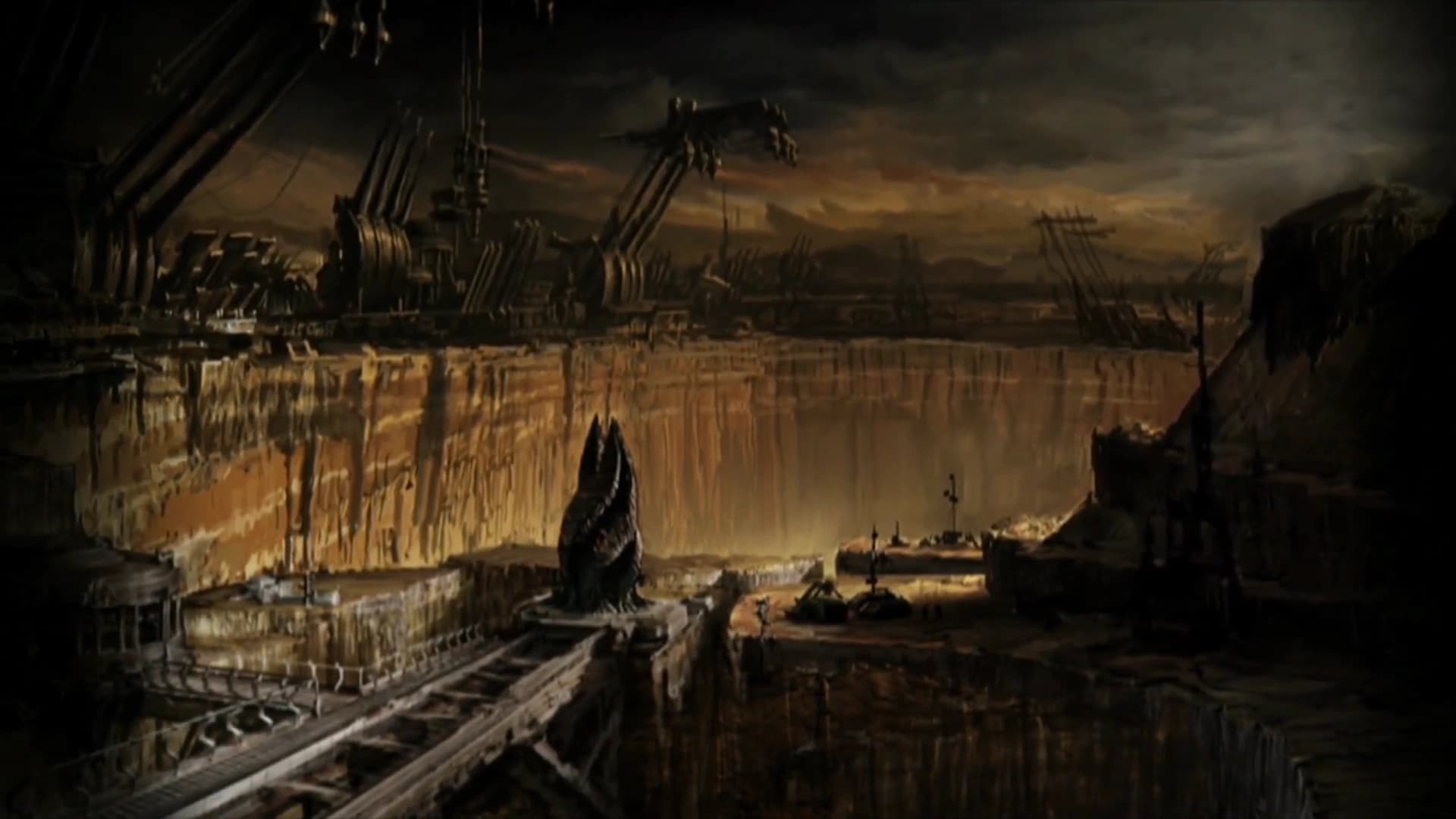
Aegis VII was a remote, metal-rich planet in the Cygnus system used by the Sovereign Colonies as a secret test site for Marker 3A. Two Necromorph outbreaks scarred the world, and after Isaac Clarke returned the Marker to its pedestal in 2508 the planet broke apart entirely.

Concordance Extraction Corporation: The Planet-Crackers
The Concordance Extraction Corporation was the mining concern that pioneered Planet Cracking and ended the Resource Wars, operating the deep-space fleet led by the USG Ishimura. Its reach made it a vehicle for the Church of Unitology and the retrieval of Marker 3A.
Flier
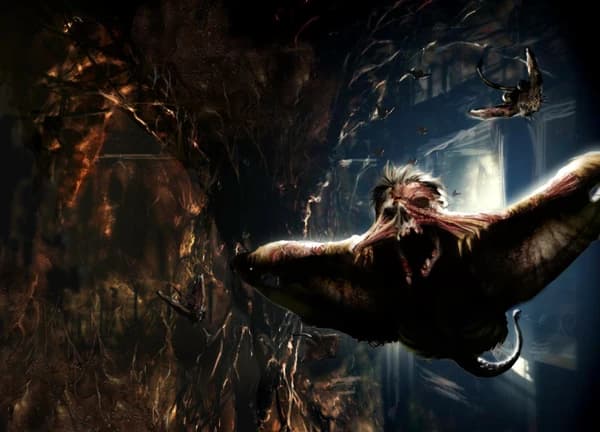
The Flier was a winged Necromorph encountered during the outbreak on Aegis VII, capable of sustained flight and striking its prey from above. Survivors often heard the creatures before they saw them.
Leaper
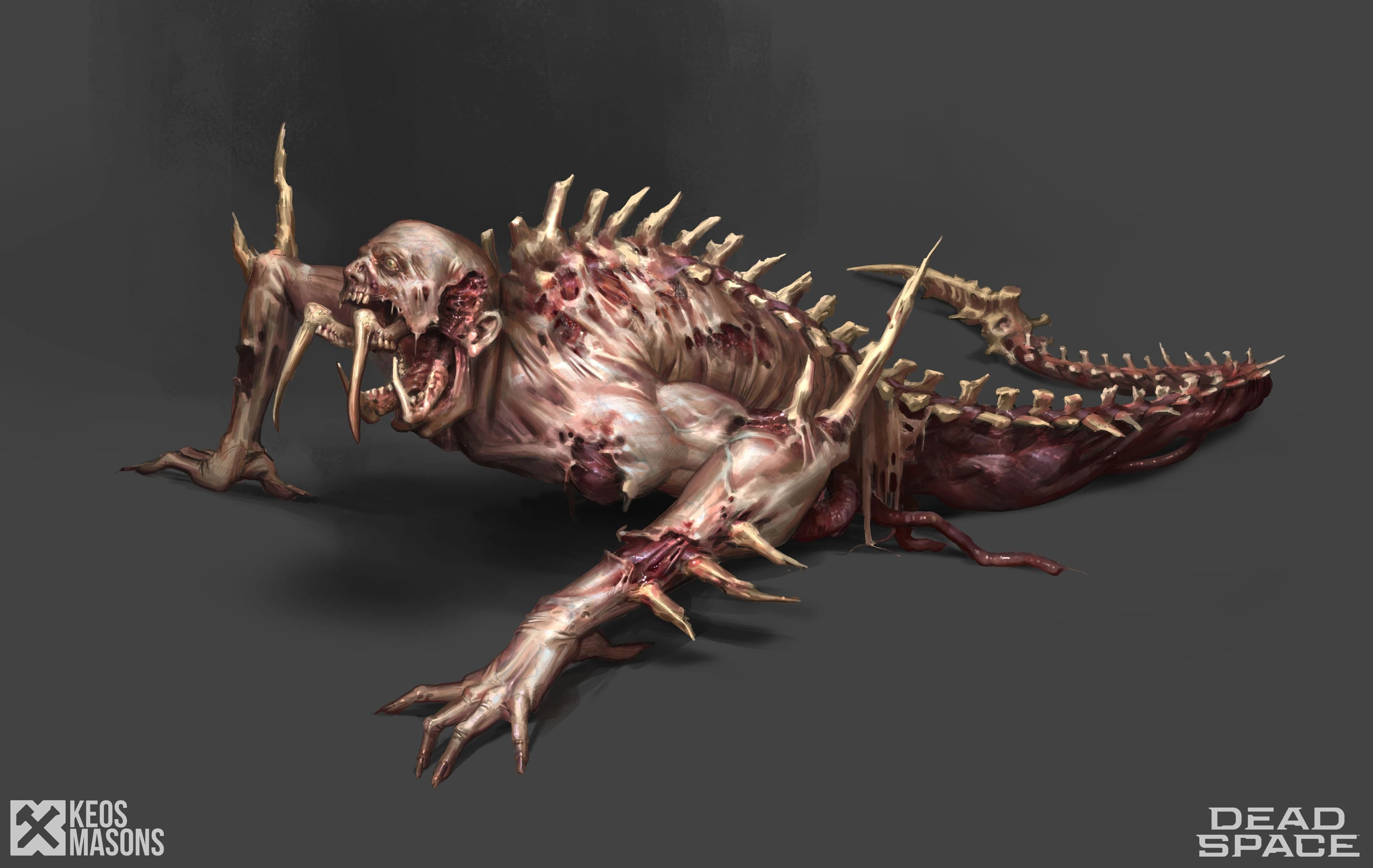
The Leaper was a Necromorph reanimated from a single corpse whose legs were fused into a long, scythe-tipped tail. It used that tail to launch itself great distances at its prey and to stab like a scorpion, making it one of the most agile and deadly of the common forms.

Nathan McNeill
Nathan McNeill was a P-Sec detective on the Aegis VII Colony and a veteran of the Resource Wars who survived the outbreak on the colony and aboard the USG Ishimura. He escaped toward the Sprawl only to succumb to his wounds and reanimate as a Necromorph.
Mentioned in2 entries
935 Bonder Rivet Gun
The 935 Bonder Rivet Gun was a construction tool built by Schofield Tools for CEC crews on deep space mining operations, driving high velocity rivets into paneling and bulkhead supports. During the fall of the Aegis VII colony it served survivors as both a barricade builder and a weapon against the Necromorphs.
Every Dead Space Weapon and Tool, Explained
Isaac Clarke's weapons are mostly mining and engineering tools, and that is the point. This guide goes through every major Dead Space weapon and tool, what it was built for in the story, who made it and which games it appears in, from the Plasma Cutter to the military rifles of Dead Space 3.
Get new articles in your inbox
No spam. New lore drops, canon conflicts, and deep dives only when they’re worth reading.
Some links on Lore Fortress are affiliate links. If you buy through them we earn a small commission at no extra cost to you.